Artery Clean-Up Enzyme
Ad Copy
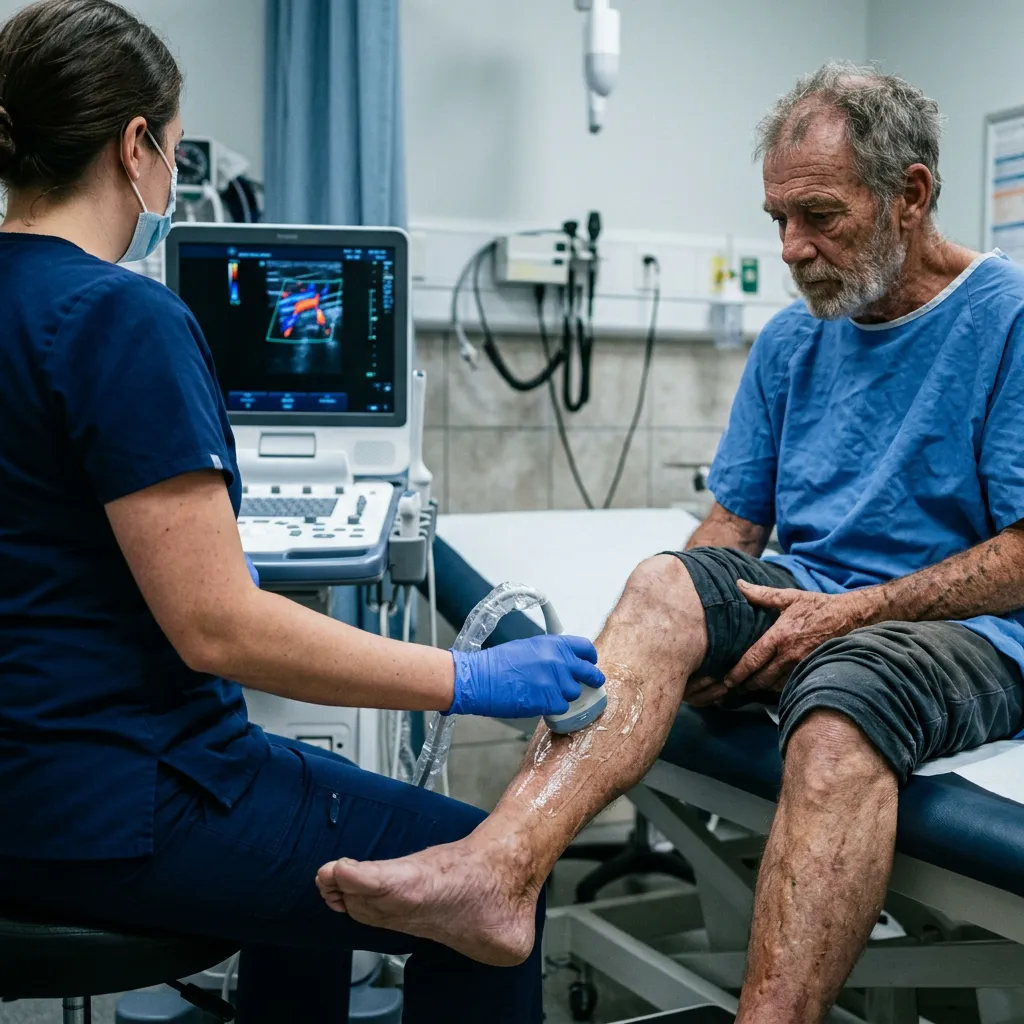
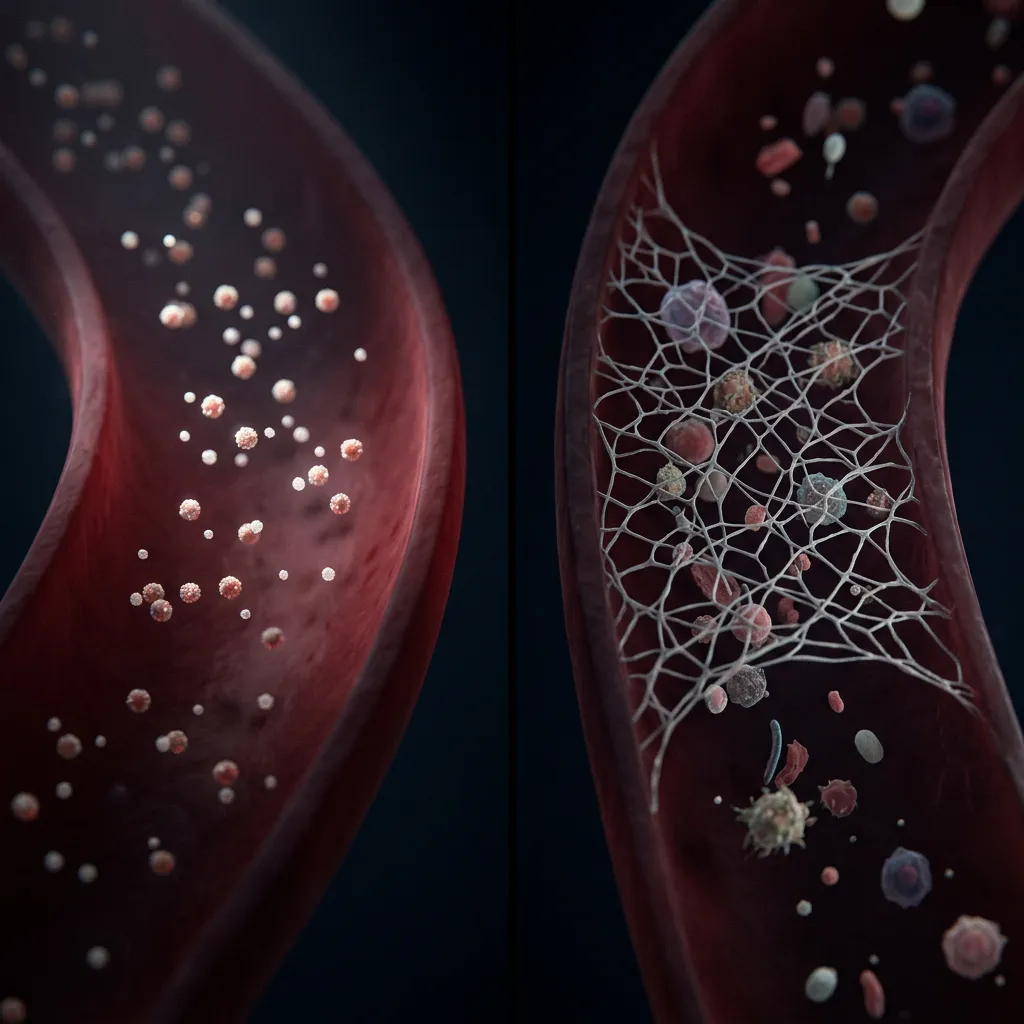
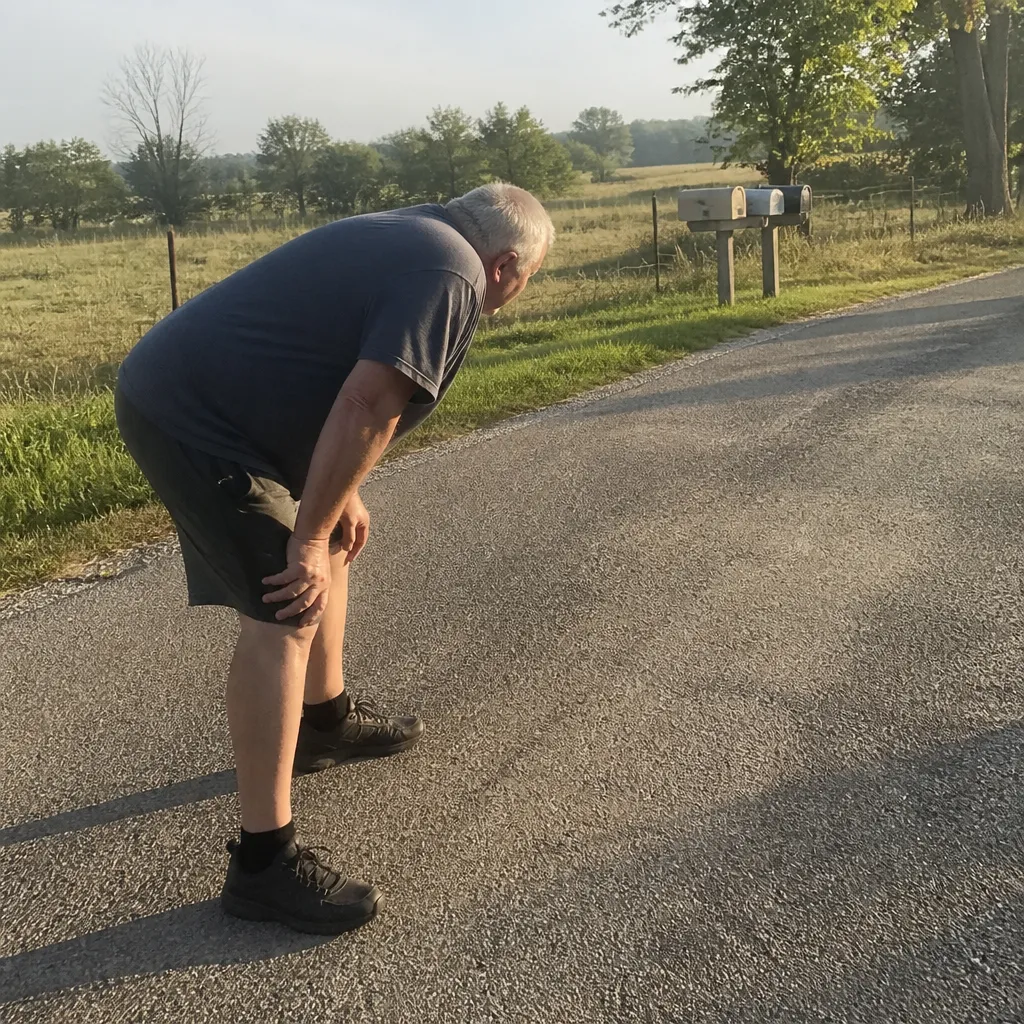
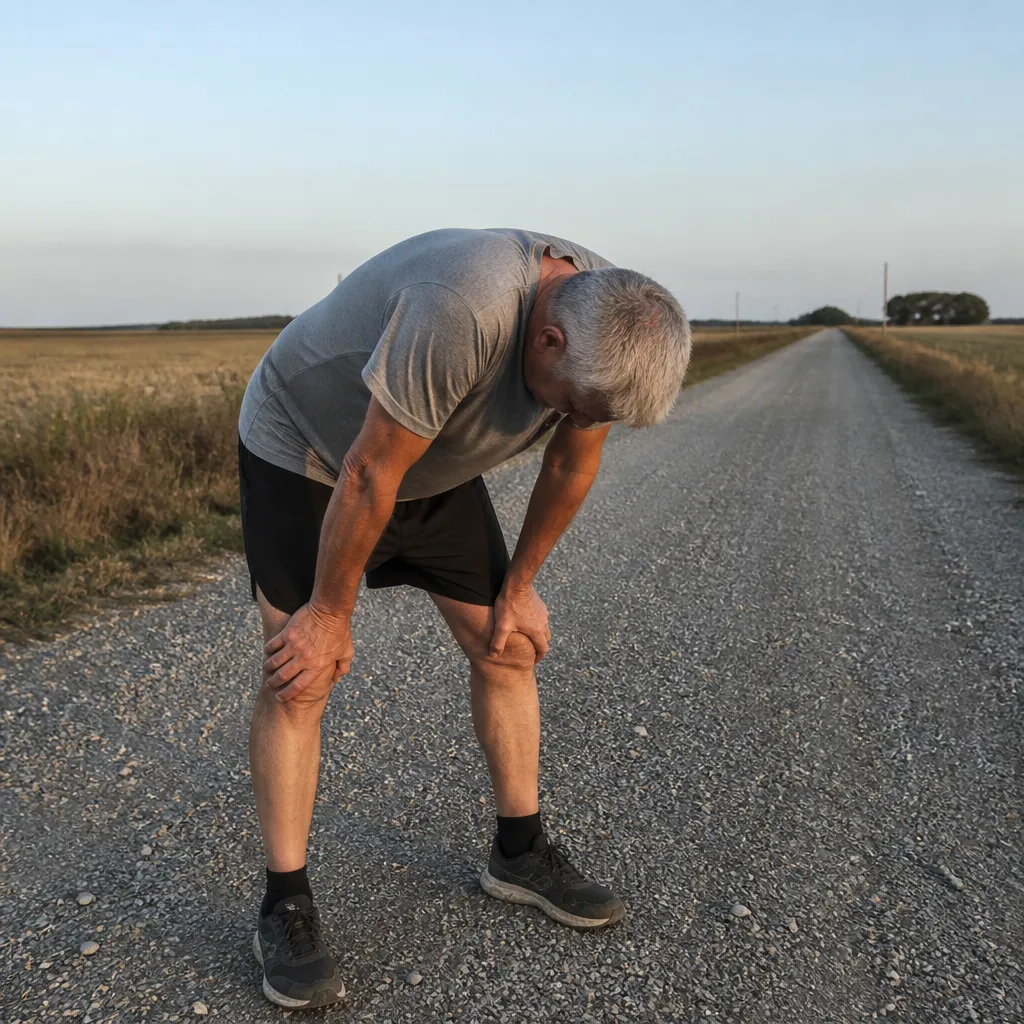
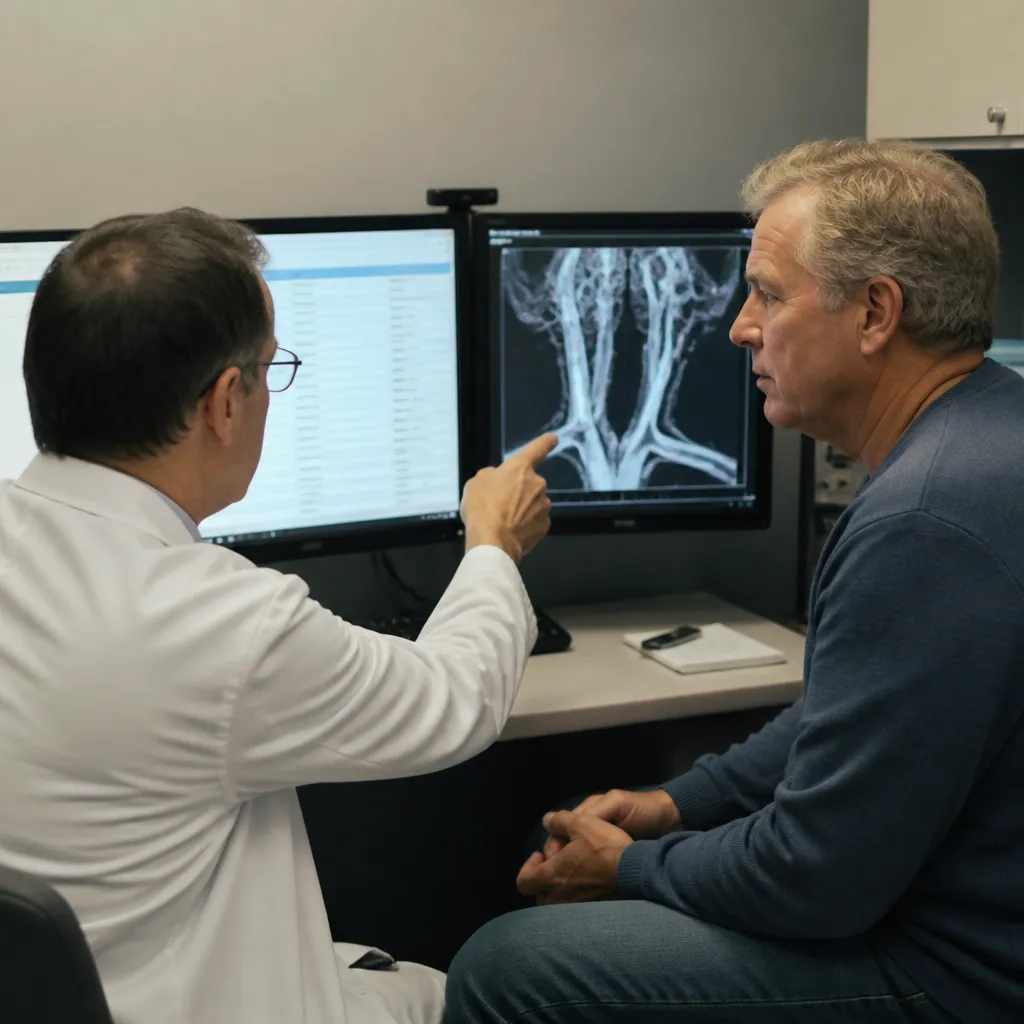
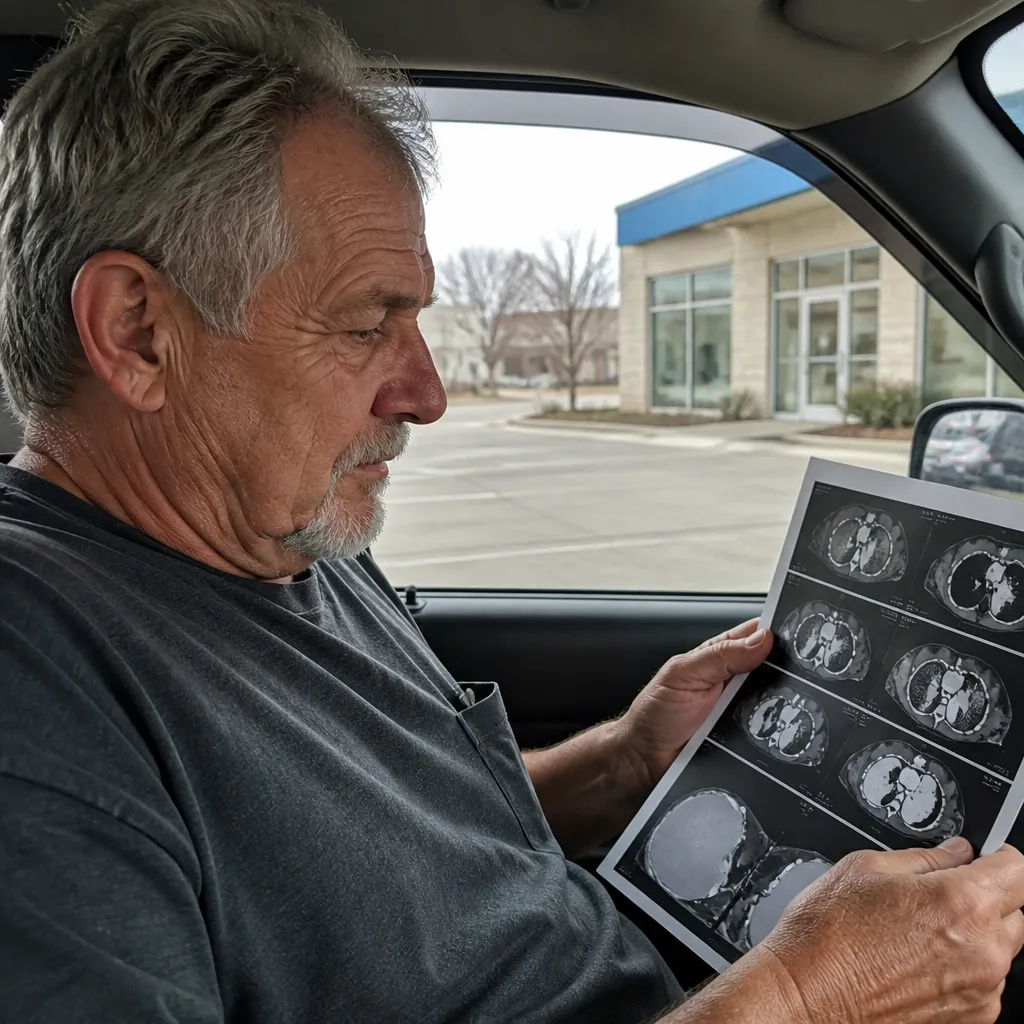
My wife handed me a pair of walking shoes yesterday morning and I couldn't lace them up. Not because the shoes were wrong. They were perfect. Trail runners, the good kind from REI, with a little card tucked inside that said "For our spring walks. Love, Janet." She'd been planning a trip to Cades Cove for April. Walking. The loop road. Something we used to do every year before my legs turned into something I couldn't trust to carry me a quarter mile without stopping, let alone six miles around a valley floor. I sat on the edge of the bed holding those shoes and I couldn't lace them up because the thought of putting them on meant the thought of trying to walk in them, and trying meant failing in front of her again. Janet was standing in the doorway watching me. She had this look. The look of a woman who had spent $140 on a pair of shoes and booked a cabin in the mountains because she missed her husband and was running out of ways to reach him. I said, "These are really nice, Jan." She said, "Try them on." I looked at the shoes. I looked at my legs. My calves ached just from the stairs that morning. "Maybe later," I said. "When I've broken them in a little." We both knew what I meant. She nodded. She left the room. I heard her start the coffee maker and I sat there holding a pair of walking shoes I couldn't wear to a valley I couldn't walk and I understood for the first time that whatever was happening inside my body was taking my marriage apart one canceled plan at a time. My name is Gary. I'm 64. I live in Knoxville, Tennessee, in a brick colonial that Janet and I bought in 2003 when our kids were in middle school and everything was in motion. I was a shop teacher for 26 years at a public high school in west Knoxville. I taught woodworking, metalworking, small engine repair. I spent my entire career on my feet, on concrete floors, in a shop that was too hot in September and too cold in January, surrounded by teenagers who didn't know which end of a chisel to hold and who I loved like they were my own. I retired at 60. I was ready. I had plans. The workshop in the garage. The trails in the Smokies with Janet. Saturday mornings at Pete's place working on his '69 Camaro. A life built around using my hands and my legs and my lungs the way I'd used them for thirty years. The first year was good. I built a new workbench. Hiked Laurel Falls twice. Helped my neighbor re-pour a section of his driveway. I could still do things. I was still the man who did things. The second year, the things started leaving. It wasn't dramatic. Nobody calls an ambulance for what I'm describing. It was quiet. Incremental. Like someone turning a dial one click at a time until the music is so low you can barely hear it but you can't point to the moment it changed. The stairs. I noticed the stairs first. A flight I'd taken two at a time for twenty years suddenly required a hand on the railing and a pause at the top. Not a long pause. Just a beat. Just long enough to feel my calves burn and my breathing catch up to my body. Then the walks. Janet and I walked the greenway along the river every Saturday morning. Three miles. We'd been doing it since 2015. By the end of my second year of retirement, I was asking to turn around at the bridge. Two miles instead of three. Then at the parking lot by the boat ramp. A mile and a half. Then I stopped suggesting the walk at all and Janet stopped asking. Then the cold. Not outside cold. Inside cold. My hands on the steering wheel in November, white at the fingertips, cold in a way that didn't match the heater blowing warm across the dash. My feet in bed at night, cold against Janet's calves, cold enough that she'd flinch and then pretend she hadn't. Then the weight. Not on the scale. In my legs. A heaviness that settled into my thighs and calves like something had thickened inside them. Walking from the truck to the mailbox felt like walking through water. Not painful. Just costly. Every step required more than it should have, and by evening the account was overdrawn. I went for a checkup. Routine panel. Numbers came back flagged. The doctor explained the results, explained the risk, and wrote a prescription before I'd finished processing the first sentence. I filled it. I took it. Because that's what men my age do. The doctor says take it. You take it. The leg cramps started around month three. Deep, bruising cramps in my thighs that would wake me up at 2 AM with my leg locked straight and Janet sitting up next to me saying "Gary, flex your foot, flex your foot" while I wrestled with a muscle that felt like it had been poured in concrete. The fatigue came next. Not sleepiness. Something heavier. A feeling that my battery was draining faster than it could charge. I'd mow the front yard and need to sit on the tailgate for twenty minutes before I could even think about the back. I told my doctor. He said the cramps were a known side effect. He said we could try a different one. I said I'd already tried two and the cramps came with both. He said there was a third option. I didn't want a third option. I wanted someone to explain to me why my legs were cramping, my hands were going cold, and I couldn't walk up a flight of stairs at 62 when I'd spent three decades carrying condensers up ladders for other men's HVAC systems. He didn't have that explanation. He had the standard panel. He had the standard numbers. He had the standard next step. And I had cramps in my legs and cold fingers on the steering wheel and a walk that used to be three miles and was now zero. Then I started what Janet later called "the shopping years." Fish oil. The triple-strength kind from the warehouse store. Four capsules a day for eight months. My joints loosened slightly. My legs didn't notice. CoQ10. 200 milligrams a day for six months. My energy came up half a notch. The cold hands stayed. Beet powder. Mixed into a glass of water every morning. It tasted like the earth had been juiced and strained through a boot. I drank it for four months because a man on a hunting forum said it had changed his life. It did not change mine. Garlic capsules. Odorless, which is a strange word to put on the label of something you're swallowing for your arteries when the question isn't how it smells but whether it works. It didn't. Arginine. A powder I mixed into protein shakes. For the blood flow, according to the guy at the supplement shop who was maybe 28 and had forearms like bridge cables and was clearly not the target audience for circulation support. Turmeric. The kind with black pepper extract for absorption. A golden paste I stirred into warm milk every evening because someone on the internet said it was a miracle. The miracle did not arrive. Magnesium. Three kinds. Oxide from CVS. Citrate from Amazon. Glycinate from a health food store because someone on a Facebook group said glycinate "absorbs better." None of them absorbed well enough to matter for the thing that actually mattered. I had a shelf in the garage, next to my toolbox, where I kept all of them. Nine bottles and a canister of beet powder lined up like a squad that had been deployed to a war zone and come home without firing a round. Janet called it "the museum." I know the exact count because I lined them up one night at 1 AM the way you count things when you can't sleep and you need something to do with the frustration. Nine things. Not one of them touched what was actually happening. I sold my woodworking tools in 2022. All of them. The table saw I'd had since I was 30. The router. The planer. The chisels I'd collected from estate sales for twenty years. I sold them to a younger teacher who was setting up his own shop and he was so excited about the chisels that he almost forgot to pay me and I thought about telling him to take care of himself because one day those concrete floors would come for him too. I stopped going to Pete's garage on Saturdays where we used to work on the Camaro because standing on concrete for three hours wasn't worth the two days of heavy legs that followed. I stopped doing yard work. I stopped going to the hardware store because walking the aisles had become a calculation I was tired of making. I stopped going to Cades Cove. Janet and I had walked that loop road every spring since 2008. Six miles of valley floor. Elk in the meadows. Old homesteads. Janet went once with her sister. She came back with photos and I looked at them and I felt something I don't want to name. She booked the cabin anyway. She bought the shoes. She tucked a card inside that said "For our spring walks." She was reaching for me with the only language she had left. And I couldn't lace them up. That was December. I need to tell you what happened between December and April because a man I met at a fish fry in February changed everything. I was at a Lenten fish fry at our parish. Janet had signed us up to help and by "help" she meant she would work the serving line and I would sit at a table near the kitchen and hand out napkins and plastic forks because that was a task I could do from a chair. There was a man sitting at the end of my table eating a piece of catfish. Maybe 71. Thin. Windbreaker. Ball cap from a plumbing supply company. He was eating slowly and watching the room the way men who've been alone a lot watch rooms, grateful to be somewhere with people. We started talking. His name was Luther. Retired plumber. Forty years. He asked me what I did. I told him. He asked me why I was sitting down handing out forks instead of standing up working the line. I told him. The walks. The stairs. The cold hands. The cramps. The heaviness in my legs that I couldn't explain and nobody else could explain in a way that led to anything other than another prescription. His face changed. He set his fork down and he looked at me and he said, "How long?" "Three years that I've noticed. Probably longer." "And what are they treating?" "Cholesterol. The numbers on the panel." He nodded slowly. The nod of a man who has heard this exact story because it was his story first. "Can I tell you something?" he said. "Because somebody told me this three years ago at a table not too different from this one and it's the reason I'm sitting here eating catfish at 71 instead of watching my wife eat it while I sit in a recliner wondering if I'll ever feel like a man who can carry his own groceries again." I said yes. He pushed his plate to the side. He folded his hands on the table. "Everything they measured on your panel is real. The numbers are real. I'm not telling you they're wrong. I'm telling you they looked at what was in the blood and never looked at what was happening in the walls." He explained it the way a plumber would explain it, and it made more sense than anything anyone in a white coat had told me in three years. "Your blood moves through vessels. Those vessels get micro-damaged constantly. Pressure. Inflammation. The accumulated wear that comes with decades of being alive and having blood move through you six thousand times a day." "The body patches those micro-injuries the same way it patches a cut on your skin. It sends in a protein called fibrin. Fibrin is a fiber. It forms a mesh. Like a net. Like a web. It lays across the damaged spot and seals it. That's a repair system. That's the body doing exactly what it's supposed to do." "Now. The body also makes its own enzymes that are supposed to come in after the repair is done and clear that mesh away. Sweep the scaffolding once the building is finished. Pull the net out of the drain once the clog is cleared. That's the second half of the system. Patch, then clean." He paused. He looked at me to make sure I was following. "After 50, the second half slows down. The cleanup enzymes your body produces start declining. The fibrin mesh gets laid down at the same rate it always has. Micro-damage, fibrin patch, micro-damage, fibrin patch. That part doesn't slow down. But the cleanup does. The mesh stops getting cleared." "Now you have fibrin accumulating inside the vessel walls. Mesh on top of mesh. Layer on top of layer. And here's the part that changed everything for me." He leaned forward. "That leftover fibrin becomes scaffolding. It catches things. Debris that would have passed through freely now settles into the mesh and stays. The buildup you're worried about, the thing your doctor is measuring on the panel, that's not forming out of thin air. It's settling onto a structure that was supposed to be temporary and became permanent because the cleanup crew stopped showing up." "Think of it like a lint trap," he said. "You ever leave a lint trap in the dryer for four, five, six loads without cleaning it? First load barely leaves a film. By the sixth load, nothing's getting through. The lint didn't change. The trap just never got emptied." I sat at that table with a plastic fork in my hand and felt something crack open in my understanding. "The trap never got emptied," I said. "The trap never got emptied. And Gary, that's not what the panel measures. The panel measures what's in the blood. Cholesterol. Triglycerides. Glucose. Those are the numbers. Those are the targets. And if the numbers are the targets, the tools are built for the numbers." "Fibrin accumulation doesn't show up on the standard panel. What doesn't get measured doesn't get discussed. What doesn't get discussed doesn't get addressed. And what doesn't get addressed keeps building. Year after year. Mesh on mesh. While everyone is staring at the printout." I asked him how he knew this. He said a retired cardiologist he'd done plumbing work for had explained it to him over coffee in the man's kitchen after Luther had described the same symptoms I'd just described to him. The same heavy legs. The same cold hands. The same stairs that used to be nothing and had become a negotiation. "He told me the thing that made me angry," Luther said. "He told me that every single supplement I'd been taking was aimed at a real mechanism. Fish oil supports the blood itself. Real. CoQ10 supports cellular energy. Real. Beet powder supports nitric oxide, which helps vessels relax. Real. Garlic supports healthy lipid levels. Real." "Every one of them works. And not one of them is an enzyme. Not one of them touches the mesh that everything else is settling onto." "They're all working on different floors of a building that has a structural problem in the foundation. The foundation is the fibrin. And enzymes are the only thing that supports the body's ability to manage it." He let that sit. Then he told me about 1980. A Japanese researcher named Hiroyuki Sumi, working in a university lab, studying traditional fermented foods. He was looking at natto. Fermented soybeans. Sticky, stringy, pungent. The kind of food Japanese grandmothers have eaten every morning for over a thousand years and that most Americans would push to the edge of the plate without trying. Sumi isolated an enzyme from the natto. He called it nattokinase. And what he observed in the lab was that this enzyme had fibrinolytic activity. It supported the body's natural ability to manage fibrin. Not the cholesterol. Not the triglycerides. Not the vessel walls. The fibrin. The mesh. The scaffolding. The lint trap that nobody had been cleaning. "A thousand years," Luther said. "Populations in the regions of Japan where natto is eaten daily, generation after generation. Researchers have studied those populations for decades. And in 1980 Sumi finally pulled the specific enzyme out and documented what it does." A food tradition older than any modern protocol. And an enzyme that modern research is only now catching up to. I asked Luther what he was taking. He laughed. "That's the next part, and you're not going to like it." He told me to go look. Walk the supplement aisle. Read labels. I did. And he was right. Most nattokinase products list milligrams. Milligrams tell you the weight of the powder in the capsule. For an enzyme, weight is the wrong measurement. Enzyme activity is measured in FU. Fibrinolytic units. That's the number that tells you whether the enzyme is actually active and at what level. Most labels don't print FU at all. The ones that do usually say 2,000 FU. Luther said the research documenting meaningful fibrinolytic activity used significantly higher amounts. 2,000 FU is common on shelves because it's cheap to produce. Not because it's the number that matters. Then there are the blends. "Circulatory support complex." "Vascular wellness formula." Eight ingredients. Twelve ingredients. Nattokinase buried somewhere in the middle of a proprietary mix alongside garlic extract, hawthorn berry, cayenne, and whatever else fills the capsule. There is no room in a single capsule for a meaningful amount of nattokinase when it's sharing space with eleven other ingredients. You're buying a label, not an enzyme. Then the processing. Enzymes are proteins. Proteins are fragile. Heat during manufacturing degrades the enzyme's activity before the bottle is even sealed. If the facility runs hot, the FU number on the label is a ghost. The activity existed when the raw material arrived. It didn't survive the capsule. Then the stomach. Stomach acid degrades enzyme proteins. If the capsule opens in the stomach before the enzyme reaches the intestine, a significant portion of the activity is lost before it ever enters the bloodstream. Then the verification. Most brands test for weight. Milligrams. They confirm the powder is in the capsule. They do not confirm the powder is active. Third-party enzyme activity testing costs more. Most brands skip it. "So you walk through the supplement aisle," Luther said, "and you see nattokinase on every fourth bottle. And most of them are underdosed, buried in blends, heat-damaged, unprotected, and unverified. You're paying for a name on a label. Not for a working enzyme." Luther had gone through the same process. Tried two brands that did nothing before he found the one he stayed with. MAÏA Nattokinase. 5,000 FU per capsule. Not milligrams. Fibrinolytic units. Printed on the label. Single ingredient. Not a blend. Not a complex. One enzyme. At the activity level the research has actually studied. Fermented from non-GMO soybeans. Processed to protect enzyme activity through manufacturing. Third-party tested for activity. Not weight. Activity. Luther hammered this distinction into me until I understood it: you are not swallowing powder. You are swallowing a protein that either works or doesn't, and the only way to know is to test for activity, not mass. One capsule. Every morning. That's the entire protocol. "I've been taking it for three years," Luther said. "I'm 71 years old. I crawled under a house last month to fix a water heater for my daughter. I was on cold concrete for two hours. My knees complained. My back complained. My legs didn't say a word." He looked at me across the table. "You've got a shelf full of things that are each doing a real job. A real job that isn't this job. You need one thing aimed at the mesh. That's it. That's the whole answer. Support the cleanup that stopped keeping up. The rest takes care of itself." I went home that night. Janet was already in bed. I sat at the kitchen table with my laptop and I read until 4 AM. Everything Luther said was there. In published research. In studies I could find and read and verify. Fibrinolytic activity. Nattokinase. Fibrin accumulation. Sumi's 1980 research. The fermentation tradition. The enzyme's documented role in supporting healthy fibrin levels. I ordered a bottle at 4:17 AM from my kitchen table. It arrived on a Thursday. I took my first capsule Friday morning. With water. Standing at the kitchen counter in the early light. Janet watched me take it. She didn't say anything. She'd watched me try nine things. She'd learned to watch quietly. I want to tell you the truth about what happened. Not the version where everything changes overnight. The real version. Because I think the reason people give up on things that actually work is that nobody tells them what the first two weeks actually feel like, which is nothing. Week one. Nothing. I took the capsule every morning. Legs were the same. Hands were the same. I sat in my chair in the evening with the same heaviness in my calves I'd been sitting with for three years. Week two. Still nothing I could point to. Janet didn't ask. I didn't offer. But around day 12 I noticed something I almost dismissed. I woke up at 5:10 AM. To the light coming through the curtain. Not to a leg cramp. I lay there and I tested my legs the way I always did, carefully, the way you test a bruise. I flexed my calves under the blanket. Stretched my toes toward the footboard. No cramp. No locking. No concrete-poured tightness that made me grab the headboard and grit my teeth. Just legs. Under a blanket. Doing what legs do when nothing is wrong with them. I did not tell Janet. I could not handle the possibility that it was a fluke and I would have to watch her face fall again. Week three. The cold hands. This is the thing I noticed on a Tuesday morning standing at the kitchen counter making coffee. I looked down at my hands wrapped around the mug. Both hands. All fingers. Warm. Warm the way hands are supposed to be when they're holding something hot on a February morning. I hadn't noticed the absence of cold. I noticed the presence of warmth. There's a difference. One is something stopping. The other is something returning. I slept through five nights in a row. Five. Without a cramp. Without Janet saying "flex your foot." Without the 2 AM wrestling match with a locked muscle. Just sleep. Five nights. I had not slept through two consecutive nights since 2021. On the sixth morning I came downstairs and Janet was making coffee and I walked past her to the back door, stepped onto the porch in bare feet, and stood there looking at the yard. She came to the door behind me. "Gary. Are you standing out there barefoot?" "Yeah." "On the cold porch?" "My feet are fine." She was quiet for about ten seconds. Then she said, "Okay. I'm not going to make a big deal about this. I'm just going to make coffee. And you're going to stand there. And we're just going to let this be normal." We stood there and it was the most normal extraordinary morning of our lives. Week four. I added the distance back. Janet and I drove to the greenway. The one along the river we'd walked every Saturday before I started shortening it, then skipping it, then pretending it didn't exist. We parked at the trailhead. We started walking. Past the boat ramp where I used to turn around. Past the bridge where I used to stop. My calves talked to me. They didn't yell. There was effort. There was work. The good kind. The kind that means your body is doing something it was built for. The heaviness, the shortage feeling, the sense that something inside the vessels was being withheld from the muscles that needed it, that was quieter. We walked the full three miles. I stood at the turnaround point, where the trail bends toward the overlook above the river, and I didn't say anything because there was nobody there but Janet and she already knew. I could feel her not saying it. The way wives don't say the thing they most want to say because they're afraid of jinxing it. Week five. I put on the shoes. I need you to understand what that means. I sat on the edge of the bed and I picked up the trail runners Janet had given me. The REI ones. With the card that said "For our spring walks." They'd been sitting in my closet for three months because I couldn't look at them without feeling the weight of every walk I'd canceled and every trip I'd ruined and every time Janet had reached for me and I hadn't been available to reach back. I laced one up. Then the other. I stood. I walked to the kitchen. Walked back. Bounced on the balls of my feet the way you do when shoes fit right and your legs feel solid under you. Just shoes. The way shoes felt when I was 45 and lacing up was nothing and walking was nothing and you could just put things on your body and go places without calculating how far you could make it before your legs started negotiating. I wore them all day. When Janet came home from errands I was sitting on the porch in a lawn chair with my feet up on the railing and those trail runners on and she stopped on the walkway and stared. "Are those..." "Yeah." "You're wearing them." "I'm wearing them." She sat down next to me. She didn't say anything for a while. Then she reached over and put her hand on my knee. Week six. I called Pete. I said, "Is the Camaro still in pieces?" He said, "Gary, you haven't been over here in two years." I said, "I know. Is the Camaro still in pieces?" "Yeah." "I'm coming Saturday." I went to Pete's garage. I stood on his concrete floor for three hours. We pulled the carburetor. We argued about the timing. I lay on a creeper and rolled under the car and looked at the exhaust and I lay there under a 1969 Camaro RS and I felt like myself for the first time in three years. Pete handed me a beer when I slid out. He looked at me for a long second and said, "Whatever happened to your legs, man, I'm glad it unhappened." About seven weeks in, my supply ran out before my next order arrived. Four days without it. Day two the heaviness started seeping back into my calves. Subtle. Like a faucet someone had cracked open just enough to drip. By day three my hands were cold on the steering wheel again. By day four I woke at 2 AM with a cramp in my right thigh, the old locked-muscle grip, Janet sitting up saying the old words. She heard me breathing through it and she came awake and her face did the thing it used to do and I said, "I ran out. The new bottle is coming tomorrow." When it arrived I started again. Within three days the cramps stopped and the warmth came back to my hands. That gap was the most important four days since this started. Because now I know. This is not wishful thinking. This is not the placebo effect. When I stop, the symptoms return. When I start, they quiet down. That is a real input producing a real output. I keep three bottles in the kitchen cabinet now. I am never running out again. Week ten. I drove to Gatlinburg. With Janet. In the truck. Three hours. I wore the trail runners. We checked into the cabin she'd booked. We unpacked. We made dinner on the little stove. We went to bed early because we had a trail in the morning. I woke up at 5:30. Laced up the shoes. Put on the hiking socks, the wool ones, the REI ones with the card. We drove to the trailhead for Laurel Falls. 2.6 miles round trip. Moderate elevation gain. Rocky in places. The kind of trail that used to be nothing for us and had become everything I'd taken away from her. We started walking. I want to tell you about the walk but I don't have the words for what it feels like to do something you'd written off as gone. The trail was the same. The trees were the same. The sound of water getting louder as you get closer to the falls was the same. What was different was me. My legs carrying me uphill. My calves working without the shortage. My hands swinging warm at my sides on a cool mountain morning. Janet was ahead of me on a switchback and she turned around to say something and she saw my face and she stopped talking and she just looked at me. And I just looked at her. And we stood there on the trail about a quarter mile from the falls with hikers passing us on both sides and we didn't say anything because what was there to say. We were there. We were on the trail. My legs were carrying me. That was enough. We made it to the falls. We stood there watching the water come over the ledge. I was standing on wet rock in hiking boots and my legs were solid under me and my hands were warm in my pockets. On the way back down Janet reached for my hand. We walked the last mile like that. The way we used to walk. Side by side. Connected. Moving through the world together instead of me sitting in a chair watching her move through it alone. In the car on the way home she said, "The cabin's available again in October." I said, "Book it." She already had her phone out. She'd booked it before she asked. That night at home, sitting on the back porch after dinner, she told me something I didn't know. "When you sat down on the landing at Kristen's house that day. When you couldn't carry the dishes up the stairs. I called my sister that night." I looked at her. "I told her I was scared. I told her it looked like what happened to your father. I told her I didn't know what to do." My father had a vascular event at 64. I was 62 when I sat down on those stairs. I knew I was on a road that had a warning sign on it. I didn't know Janet had seen the same sign and had been carrying it alone. "When did you stop being scared?" I said. "The groceries," she said. "Last month. You carried all eight bags from the truck. Both hands. You didn't make two trips. You didn't even think about it. That's when I knew the man I married was coming back." I want to say this directly to whoever is reading this right now. The fibrin mesh is building. Every day you are over 50, the cleanup enzymes your body produces are slowing down. The mesh stays. Debris settles onto it. And every supplement on your shelf, every capsule you're swallowing, is aimed at a real part of the system. A real part that isn't this part. Fish oil supports the blood. Real. CoQ10 supports cellular energy. Real. Beet powder supports nitric oxide. Real. Garlic supports healthy lipid levels. Real. None of them are enzymes. None of them support healthy fibrin activity. That's a different job. A job that requires a different tool. A tool that has been sitting inside a traditional Japanese fermented food for a thousand years while the supplement aisle stocks everything except the one thing aimed at the mesh. MAÏA Nattokinase. 5,000 FU. Single ingredient. Fermented from non-GMO soybeans. Third-party verified for enzyme activity, not weight. One capsule every morning. 30-day money-back guarantee. Full refund if you don't feel the difference. After the museum, that was the only reason I tried it. At least this one would give the money back. https://www.buymaia.com/shocking-discovery-nattokinase-plaque They are a small company. They ferment in controlled batches. When a batch sells out, it's out until the next one finishes. I've had my order delayed once and during that four-day gap I felt the cramps return in my legs within 72 hours. I keep a backup bottle in the kitchen cabinet now. I will not go without it again. Keep every appointment you have. Do not change anything your doctor has told you. Do not stop anything you're currently taking without their guidance. This is not a replacement for any of that. This is the piece that was missing. The one aimed at the mesh. The one that doesn't show up on the standard panel. The one a retired plumber at a Lenten fish fry explained to me in ten minutes while eating catfish, better than anyone in a white coat had explained anything in three years. I am not paid by MAÏA. I don't work for them. I get nothing from telling you this except the knowledge that somebody might read it and look down at their cold hands or rub their aching calves and think, maybe the mesh is the thing. https://www.buymaia.com/shocking-discovery-nattokinase-plaque The mesh is the thing. P.S. Luther is 71. He called me last weekend. He'd spent the morning on his hands and knees tiling his bathroom floor. On his hands and knees. At 71. With legs that couldn't carry him up a flight of stairs four years ago. He said the grout lines were the straightest he'd ever laid and that his wife told him to stop admiring them and come eat lunch. I like Luther. You would like Luther. P.P.S. The nine bottles are still on the shelf in my garage. I leave them there. Janet asked me if I wanted to clear them out. I said no. They stay. Not because they failed. Because they each did exactly what they were designed to do. They worked on the fluid. The fuel. The vessel walls. The flexibility. Real mechanisms. Every one. And not one of them was an enzyme. Not one of them was aimed at the fibrin mesh that everything else was settling onto. They were nine good answers to a question nobody was asking. The question was always the mesh. One capsule. One enzyme. Every morning. That's the answer. P.P.P.S. Janet and I are going back to Gatlinburg in October. She booked the cabin. She booked a longer trail this time. Chimney Tops. 3.8 miles. Steep. Rocky. The kind of trail we did in our forties when our legs were nothing and the mountain was everything. She asked me if I was sure. I told her I was sure. She smiled the way she used to smile when I'd say yes to something before she finished asking. I am 64 years old and I am going to hike Chimney Tops with my wife. I am going to walk uphill on loose rock and feel my calves work the good way and breathe hard at the top and stand on the ridge looking out over the valley and she is going to reach for my hand the way she reaches for my hand and I am going to take it. My legs will carry me. My hands will be warm. And when we get back to the cabin she is going to hang those hiking socks over the porch railing to dry and I am going to look at them and think about the morning I couldn't put them on and the man at the fish fry who told me about the mesh and the one capsule that supports what nine bottles on a shelf never touched. If you are sitting in the chair, stand up. If your hands are cold, look at them. The mesh is building. The cleanup slowed down years ago. And every bottle on your shelf is doing a job that isn't this job. One capsule. Every morning. The enzyme that supports what nothing else on your shelf is aimed at. Please try it. Please. https://www.buymaia.com/shocking-discovery-nattokinase-plaque
More from Natural Wellness Magazine

Artery Clean-Up Enzyme
Natural Wellness Magazine

Artery Clean-Up Enzyme
Natural Wellness Magazine
Artery Clean-Up Enzyme
Natural Wellness Magazine
Artery Clean-Up Enzyme
Natural Wellness Magazine
Artery Clean-Up Enzyme
Natural Wellness Magazine
Artery Clean-Up Enzyme
Natural Wellness Magazine
Artery Clean-Up Enzyme
Natural Wellness Magazine
Artery Clean-Up Enzyme
Natural Wellness Magazine
Artery Clean-Up Enzyme
Natural Wellness Magazine
Artery Clean-Up Enzyme
Natural Wellness Magazine
Artery Clean-Up Enzyme
Natural Wellness Magazine
Artery Clean-Up Enzyme
Natural Wellness Magazine

 Add to Chrome