Artery Clean-Up Enzyme
Ad Copy
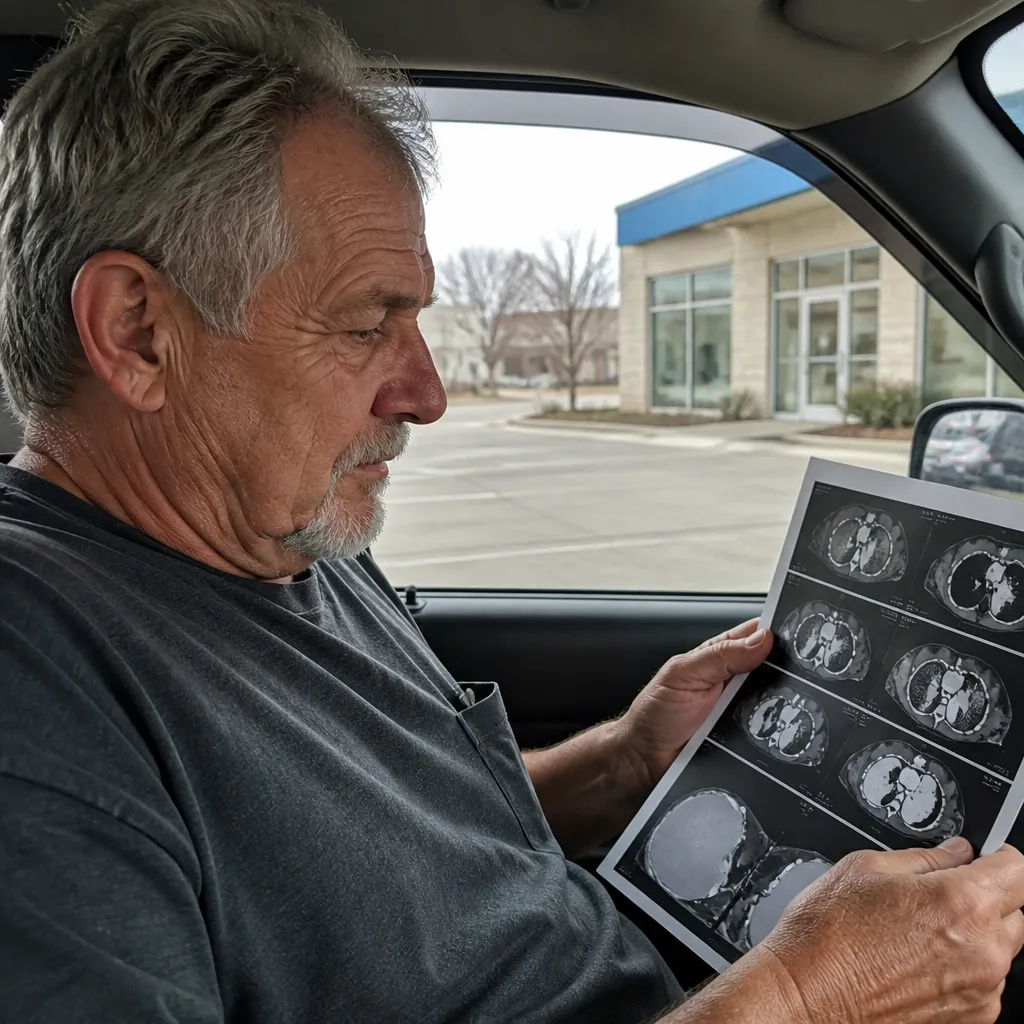
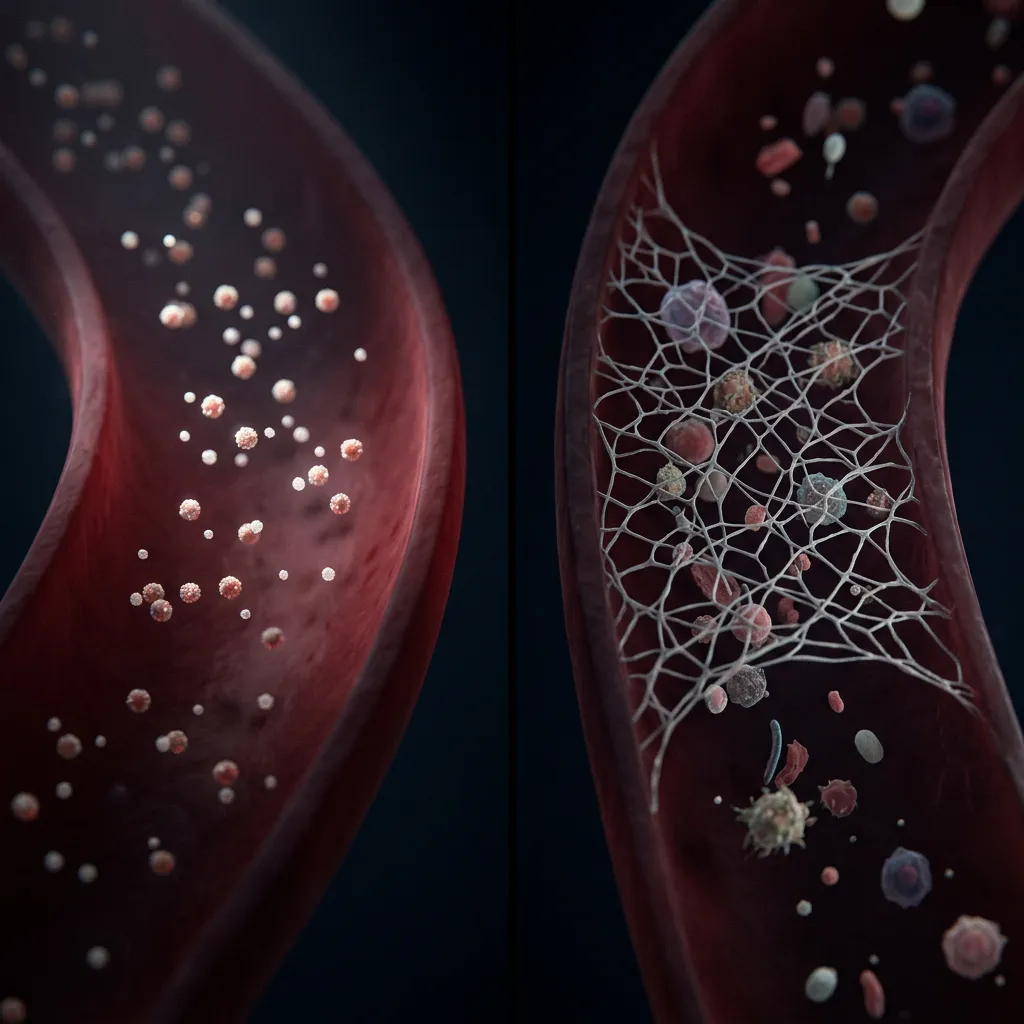
You already know plaque builds up inside your arteries. But what it actually builds ON? Nobody explains that part. Not one person in nine years explained it to me, and once a man who never went to medical school finally did, I got my Octobers back. I'm 61. Name's Hank. Thirty-four years running a tool and die shop in Michigan, sold it in 2019, kept the garage. And for four years I felt like I was disappearing at about the same speed every year. Not tired. That word is too small. Hollowed out. Like somebody had turned the pressure down on the whole house and everything still ran, just weaker. Cold hands in September. Feet that stayed cold under the blankets no matter how long I lay there. A dull heaviness behind both eyes that never fully lifted. And the stairs. Fourteen steps in my own house, and I started planning trips around them. Carrying two things up at once so I wouldn't have to go twice. The three-mile road loop with the dog became two, then became the stretch down to the mailboxes and back, which I told myself still counted because I was walking it faster. Every October my brother Dale and I cut and split for both houses. In 2022 I split through the first armload, set the maul on the block, and told him my shoulder was acting up. My shoulder was fine. I sat on the tailgate in the cold and watched my little brother do the rest of it, and he had the decency not to look over at me, which was worse than if he had. Here is the part that made me feel like I was going out of my mind. I had done everything. Nine years of doing everything. Salt out of the cooking. Red meat gone. Nineteen pounds off and kept off. Walking every single morning at six whether it was raining or not. The cured meats I actually loved out of the refrigerator for good. Fish oil three times a day for two years. Garlic capsules that made the truck smell like somebody's kitchen. CoQ10. Niacin. K2. Red yeast rice. L-arginine, and then L-citrulline when the arginine stopped doing anything I could feel. Beet powder every morning for fourteen months, stirred into cold water, tasting like the underside of a garden. Two circulation products from the health food store, recommended by a kid who looked about twenty-four. A cardio blend from the warehouse store with a photograph of a man on a bicycle on the front. A green powder my wife came home with that smelled like a barn floor. And every appointment, the same sentence. They turn the monitor toward you. They look at the panel. And they say some version of: "Everything here looks good. Some of this is just age." Age. I built jigs to a thousandth of an inch for thirty-four years. I know the difference between a machine wearing normally and a machine with something wrong in it. I was not describing sixty-one. I was describing a man getting quietly smaller every single year while his paperwork got better. So last spring I did something my wife thought was ridiculous. I paid for a scan myself. Out of pocket, no referral, at a place off the interstate that advertises on the radio. I laid on a table for eleven minutes. And when the report came, there it was in black and white. Buildup. Described in the report with the words "moderately to severely elevated." I sat in my truck in that parking lot for a long time, and I want to tell you what I actually felt, because it was not fear. It was relief. Proof. Finally. On paper. That I had not been imagining a single thing for four years. And then, two days later, the anger showed up. Because I had been doing everything on the list for nine years and the list had never once mentioned whatever this was. Now here is where it turns, and it isn't a specialist. I belong to a woodworking co-op in town. Old building, dust collection that never quite works, twelve guys and a coffee pot. There's a man there named Emil. He's 74. Retired after thirty-one years running the county sanitary district, which is a career spent thinking about screens, flow, and what happens to a system when the thing that clears buildup falls behind the thing that creates it. He asked me on a Tuesday why I was sitting down between cuts. I told him. All of it. The scan, the report, the nine years, the tailgate. He listened the whole way through without interrupting, which nobody else had done. Then he pulled a scrap of poplar over and took a carpenter's pencil out of his shirt pocket. He said, "Hank. Do you know what the debris is actually sticking to?" I said cholesterol sticks to the artery wall. That's the picture everybody has. He said, "Nothing sticks to a clean wall. Ask anybody who's ever pulled a screen out of a wet well. Debris needs a texture." And then he wrote two things on that piece of poplar, in order, and told me not to skip the order. I'm going to give you what he explained, because it is the entire reason I'm typing any of this out. Your arteries take small damage constantly. Nothing dramatic. Ordinary wear from blood moving under pressure through the same bend a hundred thousand times a day, plus whatever your particular sixty years piled on top of it. Your body patches that damage immediately, the way any competent crew patches a hairline crack before it turns into a real problem. The patch material is a protein called fibrin. Fibrin is stranded, and it is not smooth. Picture a net laid across the spot, holding the repair in place while the wall underneath does its healing. That system is not a defect. It's the only reason you don't bleed out from a paper cut. Here is the half nobody had ever said to me. The patch is supposed to be temporary. Your body makes its own enzymes whose entire job is the housekeeping end of that process. The net goes up, the wall heals underneath, and the housekeeping crew comes through and takes the leftover mesh back down. Damage, patch, heal, turnover. That loop has been running your whole life while you were standing at a machine thinking about something else. After 50, the housekeeping half slows down. The patching doesn't. That side stays enthusiastic well into your eighties. It's the cleanup that loses a step, then another one, and two halves of a system that stayed balanced for five decades quietly stop being balanced. So the nets stay up. A little more this year than last year. Never enough to notice in any particular month, which is exactly why nobody notices. And leftover mesh does not sit there being neutral. It becomes structure. Rough, stranded, sticky structure on a surface that is supposed to be as smooth as the inside of a wet glass. Which brings me to the number I had spent nine years driving down. Cholesterol is debris. Debris needs something to catch on. Emil put it the way a sanitary district man puts it. He said you can treat the water all day long, and you should, but if the screen has loaded up, the flow through that channel next year is not the flow it had last year, and no amount of treating the water changes the screen. Think about the lint trap you have never once pulled all the way out of your dryer. That screen isn't the flaw in the design. It's doing precisely the job it was built to do. But nobody empties it, and the airflow through that machine in year ten is not the airflow it had in year one. Or think about scaffolding. A crew puts it up because they need it, the work gets finished, and then nobody takes it down, and now every leaf and paper cup and piece of blown trash in that neighborhood has somewhere to lodge. That is the mesh. That is the actual first step of the thing every man over 50 lies in the dark thinking about, and in nine years of appointments and printouts and pharmacy counters I had never seen the word fibrin. So I asked Emil the obvious question. Why has nobody told me this. He said, "Because there's no test for it on your form." The standard panel measures cholesterol because cholesterol is cheap to measure, simple to chart, and there is a prescription that moves it. Fibrin turnover isn't on that panel. It isn't on the sheet they hand you at the desk on your way out. No billing code, no reference range in the margin, nothing for the software to flag in red. What doesn't get measured doesn't get discussed. A man can spend nine years moving one line on a page in the correct direction, doing every single thing he was told, and never once be informed there is a second half of the story with no line item anywhere on it. That was when I finally understood why the whole shelf had failed me. Beet powder and arginine work on the vessel wall's ability to relax. Fish oil works on the fluid moving through it. CoQ10 works on how your cells burn fuel. Red yeast rice works upstream on production, nowhere near the wall itself. Every one of them is doing something real, on a different floor of the same building. None of them is an enzyme. A mesh is not a chemistry problem. A mesh is a housekeeping problem. Now here's what Emil actually wrote on that piece of poplar, and why he told me the order mattered. FIRST. You're looking for an enzyme, not another antioxidant. There is exactly one that men have been eating on purpose for a thousand years, and it comes out of fermented soybeans. SECOND. When you go buy it, ignore the milligrams. Milligrams tell you nothing about an enzyme. The only figure that means anything is the FU. I asked him how a sewer man knew that. He said, "Because I spent thirty-one years buying enzymes by the drum for digesters. You don't buy the weight. You buy the activity. Anybody who sells you the weight is selling you the label." Fermented soybeans. Natto. The stringy, sticky breakfast dish Japanese grandmothers have been eating for about a thousand years. Smells like a barn. Pulls into threads when you lift the spoon. I laughed out loud in that shop. I had spent nine years and a small fortune, and the answer was a peasant breakfast. I went home and got on my laptop and was still at the kitchen table at two in the morning. In 1980, a Japanese researcher named Hiroyuki Sumi was working with traditional natto in a lab and isolated the enzyme that the fermentation produces. Not the soybean. The enzyme the bacteria make while the beans ferment. He put it in a dish, watched what happened, and what he observed changed how researchers thought about fermented food for the next forty years. He named it nattokinase. And once you know it's in there, the population thread is hard to unsee. There are whole regions of Japan where natto is on the table every single morning, generation after generation, in families where nobody considers it health food any more than you consider eggs health food. Researchers have been circling those regions for decades. An old food, and modern research finally catching up to somebody's grandmother. Then I did the thing Emil told me to do, which was go look at what's actually sold in this country before I bought anything. This is the part that should make you angry. The first bottle I picked up said 100 mg on the front in confident type. Weight is the easiest thing on earth to certify and the least useful thing to know. You can fill a capsule with enzyme that got cooked into uselessness in a factory back in March, weigh it, certify it, and print 100 mg on that label with a completely straight face. Enzyme activity is measured in FU. Fibrinolytic units. Most brands don't print it at all. When they do print it, it's low. Two thousand FU is everywhere on that shelf. The research that got anybody interested in the first place was not run at 2,000 FU. Then there's the blend problem. Most nattokinase sold here is buried inside a twelve-ingredient formula, sharing one capsule with hawthorn and a dusting of eight other things. Divide a single capsule twelve ways and there's no room for a serious amount of anything. The blend exists so the label looks generous. Enzymes are fragile on top of all of it. Heat during manufacturing degrades activity before the bottle is ever sealed, and no manufacturer is going to volunteer that on the packaging. Stomach acid handles whatever survived if there's nothing protecting it. And almost nobody third-party tests for activity. They test for weight, because weight is easy and weight always passes. I read labels for a week and a half. I put six bottles back on six shelves. Then I went where I should have gone first, which was not a brand's website. Forums. Two of them. A Facebook group for men over 55 that you have to answer three questions to get into. Real men, in their own words, not a testimonial page. One guy wrote that week five was when he noticed he'd stopped putting his gloves on in the truck. Another wrote that his wife told him before he figured it out himself. One post I read four times: "Nine years of my specialist being pleased with me and not one of them ever used the word fibrin. I'm fifty-eight and I had to learn it from a stranger on the internet." Same shelf came up over and over in those groups. MAÏA Nattokinase. I ordered it at 1:14 in the morning. Here's what's actually on that bottle. Five thousand FU per capsule, printed on the label where you can read it before you spend a dollar. One ingredient. Nattokinase. That's the entire bottle. Fermented from non-GMO soybeans, processed to protect the enzyme activity instead of to hit a price point. Third-party tested for activity rather than weight. K2-free, which mattered to me because I'd been taking K2 on its own for years and had no interest in guessing at my total. One capsule each morning with coffee. That's the whole protocol. Nothing to schedule, nothing to stir into water, nothing to hold your nose for at six in the morning. It's studied for its role in supporting healthy circulation, and traditionally it's been used to support healthy fibrin levels, which after that night at my kitchen table was the only thing I had found anywhere aimed at the half of the story nobody had put on my paperwork. WEEK 1. Nothing. I want to be straight with you about that, because it's the part everybody leaves out. Seven mornings, seven capsules, and I felt exactly the way I'd felt the week before. I remember standing at the sink on day six thinking a 61-year-old tool and die man had just mailed money to a soybean company. WEEK 2. My wife took my hand across the breakfast table, the way she does without thinking about it, and then she held on a beat longer and turned to look at me. She said, "You're warm." I hadn't noticed. That's the strange part. It wasn't a moment of feeling better. It was the absence of something I'd been quietly working around so long that I had stopped registering it at all, and it took her hand to point it out. WEEK 3. I stopped waking up at three in the morning. Then I did it again the next night, and the night after that. And the stairs stopped being a decision, which will only make sense to you if you have ever stood at the bottom of your own staircase and calculated whether you needed the thing up there badly enough to go get it. WEEK 5. The road loop was three miles again. I only realized it because I found myself standing out past the culvert at the far turn, looking at a field I hadn't stood in front of in two years. WEEK 8. I carried both coolers out to the truck. Not one at a time with a breather in between. Both, the way I always used to, without staging them by the door first. The heaviness behind my eyes was gone and I could not tell you which week it left. WEEK 12. It was October. Dale came over on a Saturday with the trailer and we cut and split a cord and a half for the two houses, and I did my half of it. All of it. My hands hurt that night the way hands are supposed to hurt after a day like that, and I sat on the porch with a beer feeling like a man who had done something. Dale didn't say anything about it out there. He said it in the driveway, loading the maul into his truck. He said, "You're back." That night my wife came out and sat down next to me on the step and didn't say anything for a while. Then she told me that for the last two years she had been keeping her phone on the nightstand instead of on the kitchen charger. That she'd started listening for me on the stairs. That the afternoon I came home from Dale's and told her about my shoulder, she went upstairs, sat on the edge of the tub, and cried, and then came down and made dinner and never said one word about any of it. Two years of that. In the same house, ten feet away from me. I did not know. I want you to understand that I did not have the first idea. I go back for another scan in the spring. I'm not going to sit here and tell you what it's going to say, because I don't know, and any man who tells you he knows is selling you something. What I know is what October felt like, and what my hands feel like at the breakfast table, and what my wife stopped listening for at night. So if you're reading this and you're the man I was. If your paperwork keeps coming back fine while you quietly stop doing the things that made you who you are. If somebody in a white coat has told you it's just age, and you know the difference between a machine wearing normally and a machine with something wrong in it. You're not lazy. You're not imagining it. And you have not been failing at a list you followed perfectly for nine years. The list is incomplete. You were handed one half of a system and told it was the whole thing, and the other half has no line on your printout, no billing code, and no prescription attached to it. It also does not stop running while you decide what to do about it. This is an accumulation. Accumulation is a process, and a process does not politely pause. What's up there this year is up there next year, plus whatever gets added. The only variable you control is when you start paying attention to it. MAÏA backs it with a 30-day money-back guarantee, and that was honestly the only reason I had the nerve to order from a company I'd never heard of at one in the morning. Take it for a month. If nothing happens, send it back and you're out nothing but thirty days you were going to spend anyway. https://www.buymaia.com/shocking-discovery-nattokinase-plaque I do owe you an apology in advance. They're small, and fermentation batches don't scale on demand. They run out. Last time I reordered, my shipment sat nine days behind, and I spent that week looking into the bottom of the bottle like a man rationing water. So there's a real chance you click below and find it sold out, and if that happens, I'm sorry for sending you. But if it's there, get it. The link is below. P.S. It's been 274 days since a 74-year-old sewer engineer wrote two words on a piece of poplar for me in a dusty shop, which is 274 days longer than nine years of appointments ever got me. Ask the next person who turns a monitor toward you when they last said the word fibrin out loud. Watch what happens. Then decide who's actually going to look after the half of this that has no test on the form. P.P.S. Next October, Dale's going to back that trailer into my driveway again, and there's going to be a maul in the bed of it, and one of us is going to reach for it first. Two years ago I sat on a tailgate and watched my little brother do my half. I'd like you to have your version of that Saturday back too. The link is below. https://www.buymaia.com/shocking-discovery-nattokinase-plaque
More from Natural Wellness Magazine

Artery Clean-Up Enzyme
Natural Wellness Magazine

Artery Clean-Up Enzyme
Natural Wellness Magazine

Artery Clean-Up Enzyme
Natural Wellness Magazine

Artery Clean-Up Enzyme
Natural Wellness Magazine
Artery Clean-Up Enzyme
Natural Wellness Magazine
Artery Clean-Up Enzyme
Natural Wellness Magazine

Artery Clean-Up Enzyme
Natural Wellness Magazine

Artery Clean-Up Enzyme
Natural Wellness Magazine

Artery Clean-Up Enzyme
Natural Wellness Magazine
Artery Clean-Up Enzyme
Natural Wellness Magazine
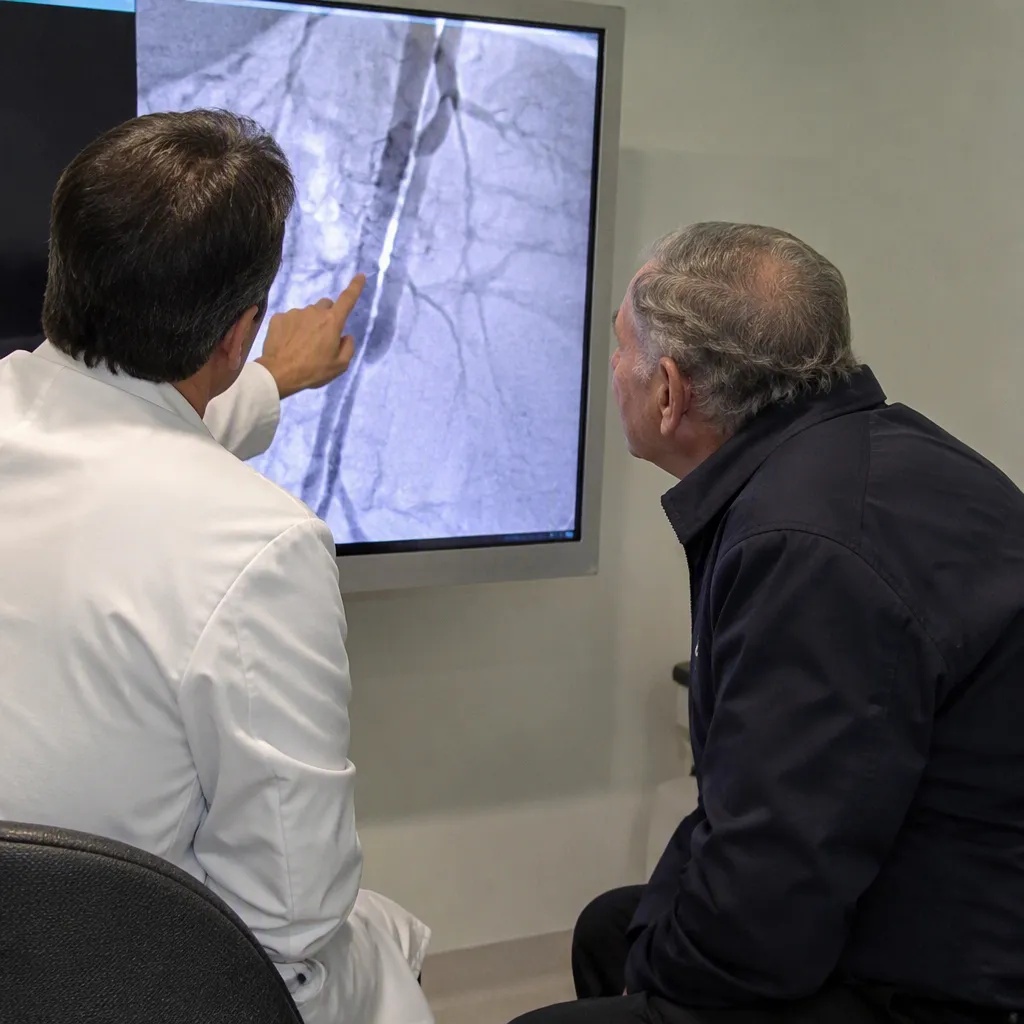
Artery Clean-Up Enzyme
Natural Wellness Magazine

Artery Clean-Up Enzyme
Natural Wellness Magazine

 Add to Chrome