Support stamina and heart health every day
Ad Copy
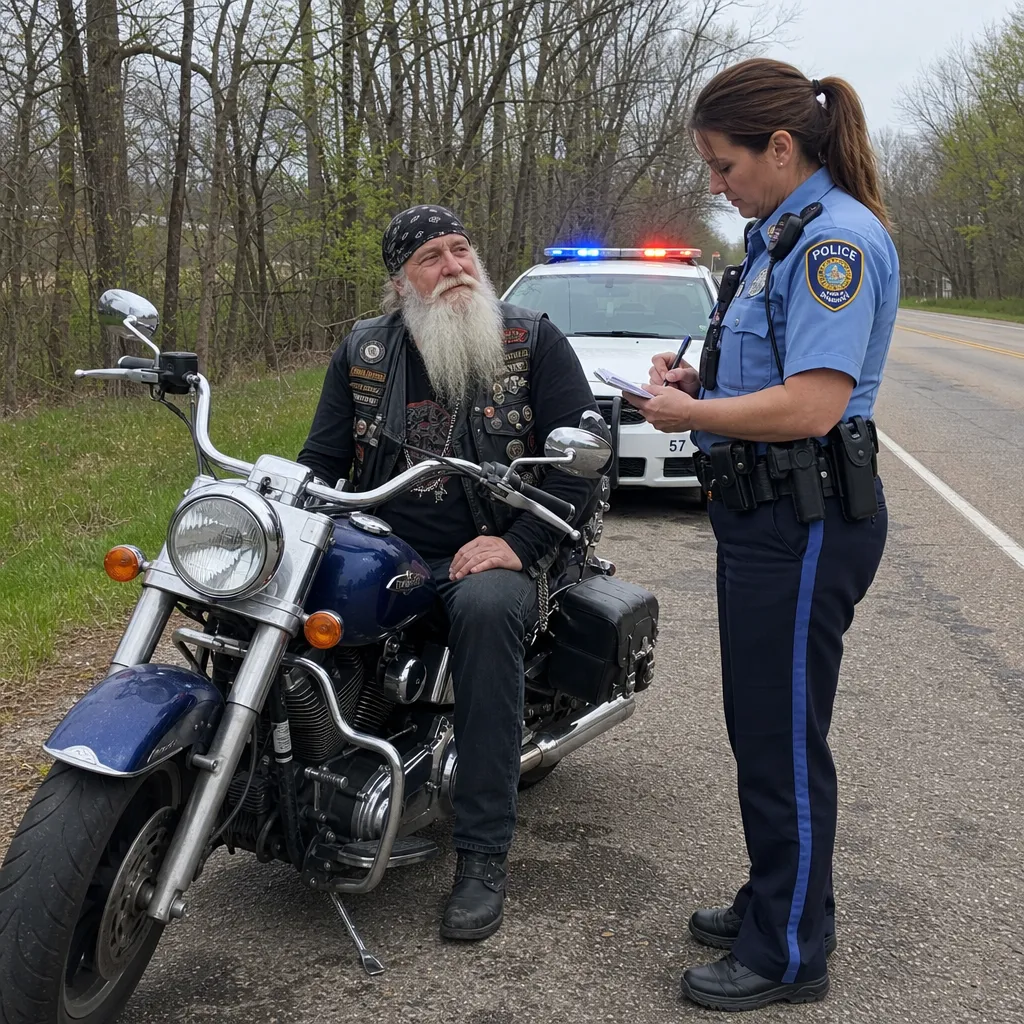
My daughter spent 31 years believing I was a dangerous man. Last month she pulled me over for a broken taillight — and I prayed she wouldn't recognize me. Not because I've ever hurt anyone. Because of what her mother told her the night they disappeared. The officer stared at my license. Then at me. Then back at the license. "Robert McAllister?" "Yes ma'am." She didn't recognize it. I didn't expect her to. Amy would have changed it. Changed everything. That was the whole point of leaving. But she couldn't change the birthmark. I'd seen it the second she walked up to my window. Below her left ear. Small. Shaped like a crescent moon. The same birthmark I used to press my lips against every night when she was two years old and still small enough to fall asleep on my chest. Thirty-one years. I'd imagined this moment a thousand times. In motel rooms. On highways at 3 AM with nothing but engine noise and the yellow center line pulling me forward. I imagined finding her in a grocery store. At a gas station. I imagined her recognizing me. Running to me. I imagined her asking where I'd been. I never imagined her in a uniform. Writing me a ticket. "Sir, are you aware your left taillight is out?" "No. I wasn't." My voice didn't sound like my voice. My hands were shaking against the gas tank. She had my mother's eyes. Brown with gold flecks near the center. My nose. The jaw she got from Amy's side — the stubborn one. She wrote the ticket. I watched her hand move across the pad. Steady. Professional. She had no idea who I was. "Drive safe, Mr. McAllister." She walked back to her cruiser. I sat on my bike in the gravel shoulder of Highway 49 and watched her pull away. Her taillights disappeared around a curve and I sat there for eleven more minutes. I know because I looked at my phone when I finally started the engine and my hands had stopped shaking enough to grip the throttle. Her name was on the ticket. Officer S. Chen. Sarah. Amy named her Sarah because I asked her to. It was my grandmother's name. I didn't know if Amy had kept it. She kept it. I rode home. Parked in the garage. Sat in the dark with the engine ticking. Held the ticket under the dome light and read her badge number, her precinct, her name. Read it again. Folded the ticket and put it in the inside pocket of my jacket, against my chest, where it stayed for the next three weeks. I didn't sleep that night. Didn't try. Sat on the edge of my bed with the lights off and my boots still on and thought about every choice I'd made since the morning I woke up and the apartment was empty. No note. No forwarding address. Just gone. My daughter's crib still had the sheets on it. Her stuffed rabbit was still in the corner. Amy took everything else. I spent four years looking. Burned through every dollar I had. Hired a guy who said he could find anyone. He couldn't find them. Filed police reports. Called Amy's family — they said they didn't know where she was. Maybe they were telling the truth. Maybe not. After four years I stopped looking. Not because I stopped caring. Because the looking was killing me. Every dead end was another funeral for the same person. So I became the nickname. Ghost. I'd gotten it in my twenties because I'd disappear on long rides. Weeks sometimes. Just me and the road and the sound of the engine drowning out everything I didn't want to hear. After Sarah disappeared, the nickname stopped being funny. I was a ghost. I haunted my own life. I went to work. Welded pipe. Came home. Rode with the club on weekends. Drank too much. Ate whatever was closest. Stopped going to the doctor because what was the point. Stayed alive out of habit, not intention. Thirty-one years of that. And then a broken taillight on Highway 49. It took me three weeks to go back. Not to the precinct — I couldn't walk into a police station looking like me and ask to see an officer I claimed was my daughter. I'd end up in a holding cell. So I found her. I'm not proud of how. I sat in a parking lot across from the precinct for two days until I saw her leave in her personal vehicle. Followed her to a coffee shop. Sat in the parking lot for forty minutes convincing myself not to leave. Then I went inside. She was in a booth by the window. Reading something on her phone. A cup of coffee in front of her. Her jacket over the back of the chair. Off duty. Smaller than she looked in uniform. I walked up to her table. She looked up. Cop eyes — assessing, measuring, already cataloging my description in case she needed it later. "Can I help you?" "You pulled me over three weeks ago. Highway 49. Broken taillight." Her expression didn't change. "I pull over a lot of people." "My name is Robert McAllister." Nothing. "Your mother's name is Amy Chen. She was Amy McAllister when I knew her. You were born on March 14th, 1993 at St. Joseph's Hospital. You weighed six pounds eleven ounces. You had a birthmark below your left ear shaped like a crescent moon and I used to kiss it every night before I put you in your crib." Her face went white. Not slowly. All at once. Like someone pulled a plug. "You need to leave." "Sarah — " "You need to leave right now." "I have a photo." She stared at me. I could see her deciding. Cop brain running the threat assessment. Man. Large. Biker. Knows personal details. Possibly delusional. Possibly dangerous. Possibly telling the truth. "One photo," she said. "Then you leave." I pulled it out. I'd carried it in my wallet for 31 years. The edges were soft. The color had faded. But you could see it clearly — me at 26, holding a baby girl in a hospital room. The baby had a crescent moon birthmark below her left ear. The man had the same nose she saw in her mirror every morning. She looked at the photo. Looked at my face. Back at the photo. Then she touched the birthmark below her own ear. Unconsciously. The way you touch something that suddenly means something different than it did a minute ago. She didn't say anything for a long time. "My mother told me you left," she finally said. "She said you didn't want us." My chest caved in. "I woke up and you were gone. Both of you. I spent four years looking. I spent everything I had." "She said you were dangerous." "I wasn't." "She said a lot of things." She was quiet for a minute. Then: "She told me you hit her. That's why she left. She said she was protecting me from you." I put my hands flat on the table. The hands she could see. The hands that have never hit anything that wasn't metal. "I never touched your mother. Not once." She looked at my hands on the table. Then at my face. And I watched thirty-one years of someone else's story crack down the middle of her expression like ice on a spring river. We sat in that booth for two hours. She told me what Amy had told her. I told her what happened. The two stories didn't match. She knew they didn't match — she'd known for years, she said. There were holes in Amy's version she'd been sticking her fingers into since she was old enough to ask questions. She didn't call me Dad. She called me Robert. That was fine. Robert was more than I'd had in thirty-one years. Over the next two months, I learned who she was. Bits at a time. Coffee became dinner. Dinner became weekends. She was careful — she had a cop's instinct for people who wanted things from her, and she was watching me for signs that I wanted something I hadn't earned. I didn't push. I showed up when she said I could. Answered every question she asked, even the ones that hurt. Didn't ask to meet her family until she offered. She had two kids. Ethan, seven. Lily, four. My grandchildren. The first time I saw them I was standing in Sarah's doorway and Ethan was hiding behind her leg looking up at me. I'm a big man. Leather jacket. Grey beard. I look like exactly what I am — a guy who's spent thirty years on motorcycles. I could see him trying to figure out whether I was safe. "Ethan, this is Robert. He's my father." "Your dad?" "Yes." "How come I never met him before?" Sarah looked at me. I looked at her. Neither of us had a good answer for a seven-year-old. "I was lost," I said. "Your mom found me." He accepted that. Kids do. Lily didn't care about any of it. She walked up to me, pointed at my beard, and said "fuzzy." Then she went back to her coloring book. That night I sat in my apartment and cried for the first time in twenty years. Not because I was sad. Because I could feel how close I'd come to never knowing they existed. One working taillight and I drive past her on Highway 49 and never stop. Never see the birthmark. Never sit in that booth. Never stand in that doorway. Never hear a four-year-old call my beard fuzzy. Every day since has felt borrowed. Like someone reached into the machinery of my life and rerouted something at the last second. But borrowed time has a price. You have to be alive to spend it. It was a Thursday night. Dinner at Sarah's. Ethan was in his room and Lily had fallen asleep on the couch halfway through a cartoon. Sarah asked me to carry her upstairs. I picked her up. She weighed nothing — maybe thirty pounds. Her head fell against my shoulder the way it does with sleeping children, boneless and total, the kind of trust that only exists before the world teaches you not to. I made it to the fourth step. My chest squeezed. Not pain — pressure. Like someone had put their palm flat against my sternum and pushed. My vision narrowed. Not black, not gone — just gray around the edges, like the hallway at the top of the stairs was pulling away from me. I stopped. Stood on the fourth step holding my granddaughter and waited for my heart to decide what it was going to do. Lily shifted against my shoulder. "Robert? Go." I couldn't move. Couldn't go up. Couldn't go down. Couldn't let go of her because if my legs buckled she'd hit the stairs. Five seconds. Maybe ten. The longest ten seconds of my life. Longer than the thirty-one years before the taillight. Because those years I'd been waiting to live. This was waiting to find out if I was going to die holding a child I'd known for six weeks. The gray pulled back. The pressure eased. I climbed the rest of the stairs slowly, one hand gripping the railing, and laid Lily in her bed. Pulled the blanket up. My hands were shaking. I walked out of her room and Sarah was standing at the bottom of the stairs. She'd seen it. All of it. The stop. The grip on the railing. The color draining from my face. Cop eyes miss nothing. She didn't say anything. She sat down on the bottom step. I sat down next to her. She put her hand on my back. I put my head in my hands. We sat there for a long time. The next morning she brought it up. "When was the last time you saw a doctor?" "I don't know." "Robert." "I don't know. Long time." "How long?" "Years." She put her coffee down. "You're fifty-nine. You haven't seen a doctor in years. You couldn't make it up my stairs last night carrying a thirty-pound child." "I'm fine." "You're not fine." "Sarah — " "I spent thirty-one years without a father. I just found you. I'm not watching you die because you're too stubborn to sit in a waiting room." That's the sentence that did it. Not because she yelled. Because her voice cracked. Just barely. On the word "die." And I realized this wasn't a daughter nagging. This was a woman who'd lost me once and was terrified of losing me again, and this time it wouldn't be because someone took me — it would be because my own body failed and I let it happen. I went to the doctor. First time in eight years. The nurse took my blood pressure and didn't say anything but she wrote something down and circled it. They drew blood. Sent me home. Two days later the doctor called me in. Dr. Meredith. Young guy. Earnest. Sat across from me with a laptop open and a look on his face like he was about to deliver a verdict. "Robert, your LDL cholesterol is 194. Your total cholesterol is 271. Your blood pressure is elevated. Your triglycerides are high." I sat there. "I'd like to start you on atorvastatin. Ten milligrams daily. It's the standard treatment for — " "No." He blinked. "Mr. McAllister — " "No statins." "Your numbers put you at significant cardiovascular risk. With your age and your family history — " "What family history? You don't know my family history." "You indicated on your intake form that your father had heart disease." I had. Because he did. Died at 63. But that wasn't why I was saying no. Dr. Meredith was still talking. I could see his mouth moving. Something about risk factors and arterial plaque and early intervention. But I wasn't in that room anymore. I was saying no because of Duke. Duke Rawlins. Rode with our club for fifteen years. Built custom bikes in his garage that were works of art — the kind of builds where every weld was a signature and every curve had a reason. His hands were the steadiest I'd ever seen on a man. He could hold a torch line within a sixteenth of an inch without a jig. Three years ago his doctor put him on rosuvastatin. The generic for Crestor. His cholesterol had been running high and they wanted to get it under control. Within six months his hands shook so badly he couldn't hold a wrench steady. His shoulders ached. His knees got so stiff he had trouble throwing a leg over his bike. He'd stand up from a chair and you could see the effort it took — like his muscles had turned to concrete overnight. A year in, his mind started going. Not dementia — not yet — but a fog. He'd lose words mid-sentence. Forget where he put things. Walk into his own shop and stand there looking at his tools like he'd never seen them before. By year two he'd stopped riding. Stopped building. Sold three of his bikes because he couldn't maintain them anymore. The guy who could hold a torch line to a sixteenth of an inch couldn't close his fist around a socket wrench. His doctor said his numbers looked great. I watched Duke disappear in slow motion. I watched his hands — the most precise, capable hands I'd ever seen — betray him. And I made a decision sitting in his garage on a Saturday afternoon, watching him try to grip a beer can with both hands, that I would never take a statin. I'd rather die with my hands than live without them. So when Dr. Meredith said atorvastatin, I heard Duke's hands shaking around a beer can. "No." He tried for another ten minutes. I let him talk. Then I stood up and left. I sat in the parking lot. Looked at my phone. A text from Sarah. How'd it go? I didn't answer. Drove home. Sat with it. The next morning I went to work. Tried to put the number out of my head. Picked up my torch. Started a bead on a pipe joint — routine work, the kind I'd done ten thousand times. Halfway down the seam my hand trembled. Just once. Just enough. The bead wandered a sixteenth of an inch off the line. I stopped. Stared at the weld. Stared at my hand. Ground out the bead. Cleaned the joint. Started over. This time my hand held. It was nothing — a bad night, no sleep, a number I couldn't stop seeing. But for half a second I'd watched Duke's hands at the end of my own wrists, and I couldn't unsee it. I thought about Duke. His hands. The builds he couldn't finish. The bikes he sold because he couldn't maintain them. The torch line to a sixteenth of an inch that he'd never hold again. And I thought about the bottle of atorvastatin I hadn't filled. The prescription sitting in my jacket pocket next to a traffic ticket with my daughter's name on it. If I take the pills, my hands go. I watched it happen to Duke. I watched the steadiest hands I've ever known turn to shaking, useless things that couldn't close around a wrench. I weld pipe for a living. My hands are the only thing I've been good at for thirty years. If the pills take my hands, I lose the one thing that still makes me me. If I don't take the pills, my heart goes. And I lose the only people I've been given in thirty-one years. A daughter who just started calling. A boy who's building spaceships. A girl who falls asleep on my chest. I stood at my welding station holding a torch I wasn't sure I'd be able to hold next year either way and felt the walls close in. So I did what I could. Cleaned up my diet. Cut the drinking. Started walking in the mornings. Rode more, figuring the exercise couldn't hurt. For three months I did everything short of taking the prescription. Went back. Got retested. LDL: 188. Three months of discipline and my numbers had barely moved. Dr. Meredith sat across from me with the same look. "Robert, I understand your concerns about statins. But lifestyle changes alone aren't getting the job done. Your LDL is still well above — " "I know what my LDL is." "Then you know we need to act." I left again. Sat in the parking lot again. This time I answered Sarah's text. 188. Still high. He wants the pills. Are you going to take them? No. Then what are you going to do? I didn't have an answer. Two weeks later, after a Saturday ride, six of us were sitting around a table at Callahan's — the bar the club uses as an informal clubhouse. Pitchers on the table. Burgers. The usual. I don't remember how it came up. Someone was talking about getting older, falling apart. The usual jokes. I mentioned my numbers. 188. The doctor. The statins. Most of the guys shrugged. Bikers don't sit around discussing cholesterol. Snake said something about bacon. Tony laughed. Boone didn't laugh. Boone — real name David Beaumont — was the quietest guy in the club. Retired paramedic. Twenty-two years on ambulances before his knees gave out. He never talked about the job unless someone asked, and nobody asked because the stories were the kind that stayed with you. After the others cleared out, Boone slid his chair closer. "You done talking about this or you actually want to hear something?" "What?" "Your cholesterol. You want the real conversation or the one where I tell you to eat more fish?" "Say what you're going to say." He took a drink. Set the glass down. Looked at me straight. "I pulled guys off bathroom floors for twenty-two years. Heart attacks. Strokes. Collapses. You know what most of them had in common?" "High cholesterol." "No. Controlled cholesterol. That's the thing nobody tells you. Half the cardiac events I responded to were people on statins. People whose doctors were smiling at their lab reports. LDL in the low hundreds. Total cholesterol under 200. Perfect numbers. And I'm loading them onto a stretcher at 6 AM on a Tuesday." He paused. Leaned in. "Your doctor is looking at the wrong thing, Ghost." "What do you mean?" "LDL isn't the problem. I'm not saying it doesn't matter — I'm saying it's not the thing that kills you. LDL is a transport molecule. Your body makes it on purpose. Your brain runs on it. Your hormones depend on it." He grabbed a napkin. Pulled a pen out of his jacket. Drew a circle. "This is an LDL particle. Normal. Healthy. Doing its job." Then he drew small jagged marks around it. Like tiny lightning bolts. "These are free radicals. And when they attack this particle — " he drew an X through the circle " — the cholesterol oxidizes. It rusts. Same word as the rust on an old fender, same thing that happens to a sliced apple gone brown on the counter. Nobody added anything to the apple. The air did it. Oxidation did it." He drew arrows from the X to a line he'd drawn on the napkin. "That rusted, oxidized cholesterol turns sticky. It burrows into your artery walls and packs in, layer over layer, year after year, and hardens into plaque. Then one day a piece of that buildup tears loose, the artery jams shut, and that's the heart attack." He tapped the napkin. "That's the thing that actually kills people. Not the cholesterol you have. The cholesterol that's gone rancid. The rust." I stared at the napkin. "And here's the part nobody explains," he said. "The number your doctor watches counts how much cholesterol you've got. It says nothing — nothing — about how much of it has already gone brown. You can have a beautiful number and rusting arteries in the same body." "So Duke's numbers were perfect — " "And the rust was building the entire time. Every year. His doctor checked the number, smiled, said keep going. Meanwhile the cholesterol he had left was oxidizing and packing into his arteries and nobody was testing for it. The number was the cover of the book. Nobody ever read what was inside." I thought about Duke standing in his own shop, staring at his tools like he didn't recognize them. His doctor saying his numbers looked great. "It gets worse. When your cholesterol rusts, your body reads that rust as damage — an injury — so it makes more cholesterol to patch it. Which gives the rust more to work on. Which the body reads as more damage. So it makes more still. It's a wheel. The rust drives you to overproduce, and the more you make, the more there is to rust, and round it goes." He drew a circle with an arrow chasing its own tail. "That's the loop your statin can never break. Because the statin only ever chops at the number — the amount. It never touches the rust that's spinning the wheel. It bails water as fast as it can and never once finds the hole the water's coming in through." My phone buzzed on the bar. I glanced down. A photo from Sarah. Ethan at the kitchen table holding up a drawing — a motorcycle, barely recognizable, with a stick figure riding it. The stick figure had a grey beard. He says this is you. I didn't have the heart to tell him motorcycles don't have six wheels. I looked at the drawing. Looked at the napkin with its circles and its wheel chasing its own tail. My grandson drew a picture of me. And the thing that was rusting in my arteries right now — the thing the napkin was trying to explain — was the thing that could take me out of his drawings permanently. "How do you know all this?" Boone leaned back. Rubbed his face. "Because they put me on rosuvastatin four years ago. Same thing Duke's on. Within three months I had the muscle pain. The stiffness. I'm a medic — I know what rhabdomyolysis looks like when it's starting. I told my doctor. He said it was normal adjustment." He held up his hand. Turned it over. "I started dropping things. My grip went. My shoulders felt like someone had poured concrete into the joints. And I thought — I spent twenty-two years keeping my body strong enough to lift patients off floors, and now a pill is taking it from me." "What'd you do?" "What I should have done before I started the prescription. I read the research myself. I didn't go to WebMD or some blog. I went to PubMed. Medical journals. I have the training to read them. And I found what Duke's doctor and my doctor never mentioned." "The rust." "The rust. And why the pill was taking my hands." He set the pen down. "That production line the statin shuts down in your liver to lower the number? It doesn't only make cholesterol. It also makes something called CoQ10 — the spark every muscle in your body burns to do its work. Your heart, your legs, your hands. "Clamp that line shut to force the number down, and you throttle the spark at the same time. Same switch. You can't shut off one without the other." He held his hand out flat. "The tiredness sleep never touches. The grip going soft. The fog that eats the back half of your own sentences. That's not the cholesterol — high cholesterol has no symptoms at all, it's silent. And it's not your age. It's the pill, draining the spark out of every muscle you've got. They call it a side effect. It isn't. It's the drug doing exactly what it's built to do." Duke's fog. The words that wouldn't come. His hands around a beer can. "So the pill fails twice," Boone said. "It never stops the rust that's actually killing you. And it drains the spark that keeps you standing. What Duke needs — what you need — is the opposite of that. Something that does two things at once. Stops the rust. And leaves the spark alone." "And you found it." "In the last place I expected. It wasn't a drug. It was a pigment." He picked the pen back up. "You know that deep red that stains everything when you cut a beet open? That color has a name. Betalains. It's an antioxidant — but not like any antioxidant you've heard of. It does two things nothing else does." He drew a fresh circle. "First — most antioxidants are a carpet bomb. They knock out every free radical in you, even the ones your body needs to fight off infection. Betalains are a smart missile. They go after only the exact reaction that turns your cholesterol rancid, and they leave the rest alone." He tapped the LDL circle. "Second — they actually get in. Carried into the bloodstream, folded right inside the cholesterol particle itself, where the rusting starts. A statin can't reach in there. Fish oil can't. Nothing on a shelf can. The betalains go in and stop the rust at the source — before it ever turns sticky, before it builds the plaque." He set the pen down. "And they do all of it without touching that production line in your liver. So they never lay a finger on your CoQ10. They stop the rust the pill ignores, and they leave the spark the pill drains. Stop the rust. Leave the spark. The one thing the pill can't do, this does. The one thing the pill does to you, it doesn't." I picked up the napkin. The circles. The wheel chasing its tail. The smart missile. "And it worked? For you?" "I've been off rosuvastatin for two years. My LDL is 126. My oxidized LDL — the rust, the thing my doctor never tested for until I made him — is lower than it was when I was on the statin. And my hands work." He closed his fist. Opened it. Closed it again. No tremor. "That's my sales pitch. Take it or leave it." I took it. Or I tried to. Went home that night and looked up betalains. Found the studies Boone was talking about. He wasn't exaggerating — the research was real. Published journals. Peer-reviewed. Universities in Germany, Italy, clinics across Europe. All showing the same thing. Betalains neutralizing the exact reaction that turns cholesterol rancid. Reduced oxidative stress. And nothing touched — no production line shut down, no spark drained. So I ordered beetroot capsules from Amazon. First brand that came up. Decent reviews, decent price. Figured a beet was a beet. I also figured the capsules would do what the diet couldn't. Stopped being as strict. Had a beer at Callahan's. Ate a burger without thinking about it. Told myself it didn't matter now that I was taking the thing that actually addressed the problem. Took them every morning for two weeks. Two capsules. A glass of water. By day four I felt something. More energy. Not dramatic — but real. The fog that usually sat behind my eyes by afternoon thinned out. I walked from the parking lot to Sarah's front door on a Sunday without my chest tightening. First time. I stood on her porch waiting for her to answer the knock and thought: Boone was right. This is working. Two weeks in, I drove to one of those walk-in labs. Got my cholesterol checked. I was expecting the number to confirm what my body was telling me. LDL: 191. I stared at the printout. 191. Worse than where I'd been after three months of diet and exercise. I'd felt better. My brain was clearer. My energy was up. And the number had gone in the wrong direction. I sat in the parking lot of the walk-in lab holding the printout. Opened my phone. Not to call anyone — just to hold something. The text thread with Sarah was open. I scrolled through three weeks of messages. Photos of Sunday dinners. A video of Lily spinning in circles in the living room until she fell over laughing. A message from Ethan, typed on Sarah's phone in seven-year-old spelling: robert wen are you coming over i want to show you somthing. I closed the phone. Looked at the printout. 191. I wasn't going to tell Sarah this number. I wasn't going to tell her that the thing I thought was working — the thing that had made me feel more alive than I'd felt in years — wasn't moving the number that mattered. That my arteries were still rusting while I walked around feeling better and thinking I'd found the answer. I tightened my diet back up. Kept taking the capsules. Another two weeks. Retested. LDL: 189. Two points in a month. Still in the danger zone. The energy was still there. The clarity was still there. But the cholesterol wasn't budging. I was getting angry. Boone had sat there and told me his LDL was 126 and here I was still hovering near 190 taking the same thing he was taking. I caught him at the next club ride. Pulled the bottle out of my saddlebag. "This doesn't work." He took the bottle. Looked at the label. Turned it over. Read the back. "Ghost. This isn't the same thing I take. This isn't even close." "It's beetroot." "It says beetroot." He unscrewed the cap, shook a capsule into his palm, and twisted it open over a bar napkin. A dull, brick-brown powder spilled out. "Look at that. What color is that?" "Brown." "Brown. Betalains are deep crimson — almost violet. That's the pigment. That's the whole medicine. If it's brown, the betalains are dead. This was cooked before it ever reached you." "Cooked?" "Heat kills betalains. They're fragile. And almost every beet powder on the shelf is spray-dried at high temperature because it's fast and cheap. What's left looks like medicine and does nothing. Red dust. You've been swallowing red dust for a month." He handed the bottle back. "And that's only half of it. Look at the label — it just says 'beet root powder.' That's the grocery beet. They've spent a hundred years breeding that beet for sugar — sweeter, bigger, easier to ship. And every time you breed a beet for sugar, you breed the betalains down. "The beet that used to be medicine became candy. You could eat that beet all day and barely touch the rust." "So what am I supposed to be taking?" "There's an old heirloom strain — Blutwurzel, blood root. The Amish out in Lancaster County have been saving the seed by hand for a hundred and fifty years. Never crossed it with the sugar beet. It carries something like ten times the betalains of anything in a store. That's the beet in the studies that worked. Not this one." He tapped the bar. "Four things. Write them down if you have to. The right strain — Blutwurzel, not the grocery beet. Shade-dried, never heat-processed — if it's been cooked, it's dust. "At least 1,300 milligrams a capsule — that's the dose the studies used; most brands sell you a fraction inside a 'proprietary blend' and hope you don't check. And a real lab report — an outside lab testing the actual batch and publishing what's in it. If they won't show you what's inside, they're hiding what isn't." "And the reviews?" "Anyone can buy five stars. Nobody can fake a number on a lab sheet. Trust the lab, not the reviews." He took a drink. Set the glass down. "That little lift you felt? That was real — even weak beetroot moves your blood a bit. That's the fastest thing a beet does, and it's why the cheap ones can fool you. You feel a little something and think it's working. Meanwhile the rust never got touched. The feeling isn't the proof, Ghost. The lab sheet is the proof." "Which one do you take?" "I'll text you. But don't just trust me — run it against those four things yourself." He texted me that night. I spent the next two days cross-referencing. Running every beetroot product I could find against his four things. Strain. Drying. Dose. Lab report. The grocery beets and the juices — the wrong beet entirely, a hundred years bred for sugar. The powders and capsules on the shelf — spray-dried at high heat, every one I checked. Red dust. The few that claimed the right numbers hid a fraction of the dose inside "proprietary blends," with no lab report anywhere. Candy or dust, the whole shelf. I crossed them off one at a time. One brand kept coming up. In the research forums. In the comparison threads. In Boone's text. Rosabella. The heirloom Blutwurzel strain — the old seed line the Amish in Lancaster County have been saving by hand for a hundred and fifty years, never crossed with the sugar beet. Hand-harvested after the first frost, when the plant pulls everything back down into the root. Shade-dried slow, never heated, so the betalains reach the capsule deep crimson and alive. 1,300 milligrams a capsule — the dose in the studies that worked. And a certificate of analysis posted right on their site — an outside lab, testing the actual batch, publishing what's in it. Four for four. I ordered it. More expensive than the Amazon brand. Didn't care. When the bottle came, I did the thing Boone showed me first. Twisted a capsule open over a saucer. The powder was deep crimson — almost violet. Nothing like the brown dust I'd been swallowing for a month. I tipped a drop of water onto it and it bled red across the dish like a fresh cut. The real thing. I took two with a tall glass of water. Sat on my porch. Waited. Seventeen minutes. I know because I checked. Not because I was expecting anything — because I was ready to be disappointed again. But something shifted. Not the slight lift I'd felt on the Amazon brand — this was different in kind, not degree. Warmth, moving down my arms and out into my hands. The heaviness behind my eyes — the low-grade static I'd stopped noticing because it had been there for years — thinned out. Like someone turned the lights up in a room I didn't know had gone dim. It wasn't the cholesterol — Boone had been clear about that. The rust takes weeks, and it shows up on bloodwork, not on a porch. What I felt that fast was something simpler. My blood, moving easier. Oxygen reaching where it hadn't in a long time. I sat there for another twenty minutes just feeling it. The next morning I took two more. Same thing. The lift. The clarity. Stronger than the day before, or maybe I was paying closer attention. By day five I was waking up before my alarm. That hadn't happened in years. I'd been a snooze-button guy since my forties. Now I was up at 5:30 and actually wanted to be. By day ten the walks I'd been forcing myself to take didn't feel forced. My breathing was easier. Not perfect — but easier. I climbed Sarah's stairs without thinking about it. Didn't stop on the fourth step. Didn't need the railing. By week two it showed up at work. I held a torch for eight hours on a Thursday and my forearms didn't burn. The bead ran straight and clean, a sixteenth of an inch from the joint line, the way it's supposed to — and I walked out at the end of the shift with something still left in the tank. I couldn't tell you the last shift that ended that way. I won't pretend the capsules did all of it. I'd been walking every morning for months. Eating right. One thing feeds the next — you start moving and the moving keeps you moving. But I'd been doing all of that for three months before, and my chest still tightened on a flat walk to a front door. Something had turned. I stood there after the shift looking at the weld. Then at my hands — steady, working, still mine. The pill never got them. The rust never will. Week four I went to the walk-in lab. LDL: 151. I stared at the printout. Read it again. 151. Down from 189. Down from 194 where I'd started. In four weeks. I drove to Callahan's. Found Boone in his usual spot. Slapped the printout on the bar. He looked at it. Nodded. Took a drink. "Good." "Good? That's it?" "What do you want me to say? I told you." "My doctor wanted to put me on atorvastatin." "Your doctor was looking at the wrong number." I bought his next three rounds. Week six I went back to Dr. Meredith. Not the walk-in lab — the actual doctor. Full bloodwork. The works. I wanted it official. He walked in with his laptop. Pulled up my chart. Looked at the screen. Looked at me. Looked back at the screen. "Mr. McAllister. Your LDL is 139." "Okay." "That's... significantly improved." "I know." "Your total cholesterol is 208. Your triglycerides have dropped. Your blood pressure has improved." He scrolled down. Back up. I could see him running through explanations in his head. Diet? Exercise? He'd seen my three-month results on diet and exercise alone. They'd barely moved the needle. "What changed?" "I found something that worked." "What specifically?" "A supplement." He looked skeptical. Doctors always look skeptical when you say supplement. Like you told them you've been praying to a crystal. "Whatever you're doing," he said slowly, "keep doing it. These numbers don't require medication." He didn't endorse anything. He didn't ask for the name. He just looked at the screen one more time, like he was making sure it was real, and then he closed the laptop. "No atorvastatin?" "Not with these numbers. No." I walked out. Sat in my truck. Called Sarah. She picked up on the second ring. "Hey." "139." Silence. "What?" "My LDL. 139. No statins. No medication." I heard her breath catch. Then a sound I'd only heard once before — in a coffee shop booth when she looked at a photo of a man holding a baby with a crescent moon birthmark and touched her own ear. "Robert." "I'm okay, Sarah. I'm going to be okay." She didn't say anything for a while. I could hear her breathing. Unsteady. The sound of someone who'd been holding something tight and finally loosening their grip. "Come to dinner Sunday. I'm making the kids' favorite. Ethan wants to show you something he built." "I'll be there." "Robert?" "Yeah?" "Thank you. For doing this." A pause. Then, quieter: "I'm glad you're okay, Dad." The word hung there. She heard it the same time I did. Neither of us corrected it. Neither of us needed to. She didn't mean the dinner. Sunday I rode to Sarah's house. Parked the bike. Knocked on the door. Ethan opened it. First time he'd done that — usually Sarah answered with him hovering behind her. But this time it was just Ethan. Standing in the doorway. Looking up at me. "Hi Robert." "Hey buddy. Your mom said you built something?" "A spaceship. Out of Legos. It has a working elevator. Come look." He grabbed my hand and pulled me inside. His hand was small and warm and his grip was fierce. The grip of a kid who has decided you belong to him. I let him pull me through the living room. Past Sarah in the kitchen, who looked at us and pressed her lips together the way women do when they're trying not to cry in front of children. Past the dining table set for four. Through the hallway to his room. He showed me the spaceship. It was enormous. At least three feet tall. He'd been working on it for weeks, he said. The elevator actually moved — he'd rigged it with a rubber band mechanism that I had to admit was clever as hell for a seven-year-old. "You build this by yourself?" "Mom helped with the rubber band part. But I did the rest." "It's incredible." "I know." I laughed. First time I'd laughed in that house. His confidence. His certainty. His absolute lack of doubt that the thing he'd built was worth showing me. We ate dinner. Chicken and rice — Sarah's version, which Ethan said was "the only good food." Lily ate three bites and then climbed down from her chair and walked around the table to mine. "Up." I looked at Sarah. "She wants you to pick her up," Sarah said. Like it was obvious. Like it had always been this way. I picked her up. She settled into my lap. Put her head against my chest. Within ten minutes she was asleep. The last time I'd held her like this I was frozen on a staircase waiting for my heart to decide whether it was going to keep going. I'd stood on the fourth step with the gray closing in and her weight against my shoulder and thought: this is how it ends. Holding her and leaving her at the same time. Now she was sleeping against my heartbeat and my heartbeat was steady and strong and mine. Not borrowed. Not conditional. Mine. I sat there with my grandchild sleeping against my chest and looked across the table at my daughter, who was watching us with an expression I will remember for the rest of my life. Not happiness exactly. Something deeper. Something that looked like a wound finally closing. "She doesn't do that with anyone," Sarah said quietly. "Not even my ex-husband." I didn't say anything. I couldn't. I just sat there. Feeling the weight of her. The warmth. The small fist curled around my shirt. Thirty-one years I was a ghost. I haunted my own life. I let my body rot because there was nobody to stay alive for and no reason to take care of something nobody needed. Then a broken taillight. A crescent moon birthmark. A woman with my mother's eyes who told me she'd spent her whole life believing I hadn't wanted her. I'm writing this because I almost didn't make it to that dinner table. Not because of an accident. Not because of violence. Because my own body — the body I'd neglected and punished and ignored for three decades — was quietly building toward the same end that took my father and almost took Duke. Cholesterol rusting in my arteries year after year while I told myself I didn't care. I stood on a staircase holding my granddaughter while my vision went gray. I stood at a welding station seeing Duke's hands at the end of my own wrists. I sat in a doctor's office being told to take the same pill that turned the steadiest hands I'd ever known into shaking, useless things. I care now. If you're someone who's been letting yourself go — not because you don't know better, but because something broke inside you and you stopped seeing the point — I hear you. I was you. I sat on the same edge. Thirty-one years on that edge. But if there's someone in your life worth staying for — a child, a grandchild, a person you haven't found yet, a person you lost and might find again — your body can't be the thing that takes you from them. And if your doctor is pushing a statin and something in you knows it's wrong — if you've watched someone you care about go down that road and come out less than they were — you're not crazy. You're not being stubborn. You're seeing something the numbers don't show. The numbers don't show what happened to Duke's hands. They don't show what the medication took from him. They don't show the rust building silently behind a perfect lab report. So look — at him, or at the man in the mirror. The chest that tightens on a flight of stairs. The grip gone soft on the jobs one hand used to do alone. The fog that rolls in by afternoon and takes the back half of sentences. The tank that's empty by four o'clock with the evening still ahead. And a lab report somewhere in a drawer that swears everything is fine. I'm not a doctor. I'm a welder. But I'll tell you the one thing this whole thing taught me. The doctor watches the chart. The people who love you watch the man. Duke's doctor saw perfect numbers for three years while everyone at that bar watched Duke disappear. My doctor saw a number and reached for a pad. Sarah saw me grip a railing and saw the color leave my face — and she was the one who was right. If you're watching someone fade behind a beautiful lab report — or if someone's been watching you — trust the one watching the man. They're closer to the truth than any number on a screen. There's another way. It worked for Boone. It worked for me. It might work for you. Rosabella. Two capsules. One glass of water. The betalains go after the rust the statin was never built to touch — folded right into the cholesterol particle, where the damage starts. And they never lay a finger on the spark. No production line shut down. No hands going soft. No man disappearing behind a perfect chart. It's the heirloom Blutwurzel beet — the old Amish seed line, hand-harvested after the first frost, shade-dried so the betalains reach you deep crimson and alive. 1,300 milligrams a capsule. The lab report posted where you can read it. Not candy. Not dust. The real thing. And you won't be waiting weeks wondering if you bought red dust. The first glass tells you — within about twenty minutes — that the betalains are alive and in your blood. The rust work comes later, on the bloodwork. The proof that you got the real thing comes today. https://tryrosabella.com/products/rosabella-organic-beetroot-capsules-bogo-a?variant=48358828802303 — Robert "Ghost" McAllister P.S. — Boone told me something after that first lab result came back at 151. We were sitting at Callahan's and I was staring at the printout like it was a letter from someone I thought was dead. He said, "Ghost, you spent thirty years not caring if you lived or died. Now you've got a reason to live. Don't waste it on the wrong fight." The wrong fight is arguing with a number on a chart. The right fight is stopping the rust the number doesn't measure. Rosabella fights the right fight. Their 90-day money-back guarantee means you've got nothing to lose except the thing that's actually building in your arteries. P.P.S. — You'll feel it in the first 20 minutes. Not a jolt, not a caffeine rush. A quiet shift. Warmth moving down your arms. The lights coming up in a room you didn't know had gone dim. That's not the cholesterol benefit — that takes weeks, and it shows up on bloodwork, not on a porch. What you feel that fast is simpler: your blood moving easier, oxygen reaching where it hasn't in a long time. But that first glass tells you the betalains are alive and in your blood. I took the cheap brand for a month and felt a little something. The first morning on the real thing was different in kind, not degree. If it's the crimson one, you'll know. P.P.P.S. — I sent a bottle to Duke. And I want to be careful how I say this part, because it matters. Duke didn't throw his prescription in a drawer because a welder handed him a beet. He took what I gave him to his doctor, showed him the same research Boone showed me, and they made the call together — his doctor watching his numbers the whole way while he came off the rosuvastatin. Coming off one of these pills on your own can be dangerous. Don't do it alone. Do it the way Duke did — with the person who can watch your blood while you do. He's been off it a month now. His hands are still shaky. But last Saturday he picked up a wrench for the first time in eight months and held it steady long enough to tighten a bolt. His wife called me crying. I don't know if he'll get all the way back. I don't know if the damage reverses completely. But I know he's holding tools again. P.P.P.P.S. — For the women reading this. If your husband is the one with the high numbers and the doctor pushing pills and you're watching him resist and you don't know what to do — I want you to know that Sarah is the reason I'm alive. Not because she found the capsules. Because she made me go to the doctor. Because she said "I just found you, I'm not watching you die." You might be the person who makes him go. You might be the person who hands him the glass. The rust works the same in women as it does in men — Rosabella isn't a men's product, it's a human one. If your own numbers are climbing, it's for you too. But if you're reading this for him — do what Sarah did. Don't ask. Tell him. "Just take it. For me." P.P.P.P.P.S. — Rosabella is a small company and they sell out. It's one heirloom seed line, grown by a handful of Amish families in Lancaster County, hand-harvested once a year after the first frost, and shade-dried slow — you can't rush any of it, and you can't scale a hundred-and-fifty-year-old seed line the way you scale a sugar beet. When a season's batch is gone, it's gone until the next harvest. I tried to reorder after my second month and had to wait. Boone keeps three bottles at his place now — he got tired of the stock issues. They have a buy 3 get 3 free deal right now — three months for you, three for the person you've been thinking about this whole time. If your bloodwork is coming up in 30 to 60 days, check availability now. Every week you wait is another week of rust that didn't need to happen. Don't forget their 90-day money-back guarantee. https://tryrosabella.com/products/rosabella-organic-beetroot-capsules-bogo-a?variant=48358828802303
More from The Heart Health Project
Support stamina and heart health every day
The Heart Health Project
Support stamina and heart health everyday
The Heart Health Project
Support stamina and heart health every day
The Heart Health Project
Support stamina and heart health everyday
The Heart Health Project
Support stamina and heart health everyday
The Heart Health Project
Support stamina and heart health every day
The Heart Health Project

The 1998 Nobel Prize Discovery That Pfizer Tried to Bury
The Heart Health Project
Support stamina and heart health every day
The Heart Health Project
Support stamina and heart health every day
The Heart Health Project
Support stamina and heart health every day
The Heart Health Project
Support stamina and heart health every day
The Heart Health Project
Support stamina and heart health every day
The Heart Health Project

 Add to Chrome