Support stamina and heart health every day
Ad Copy
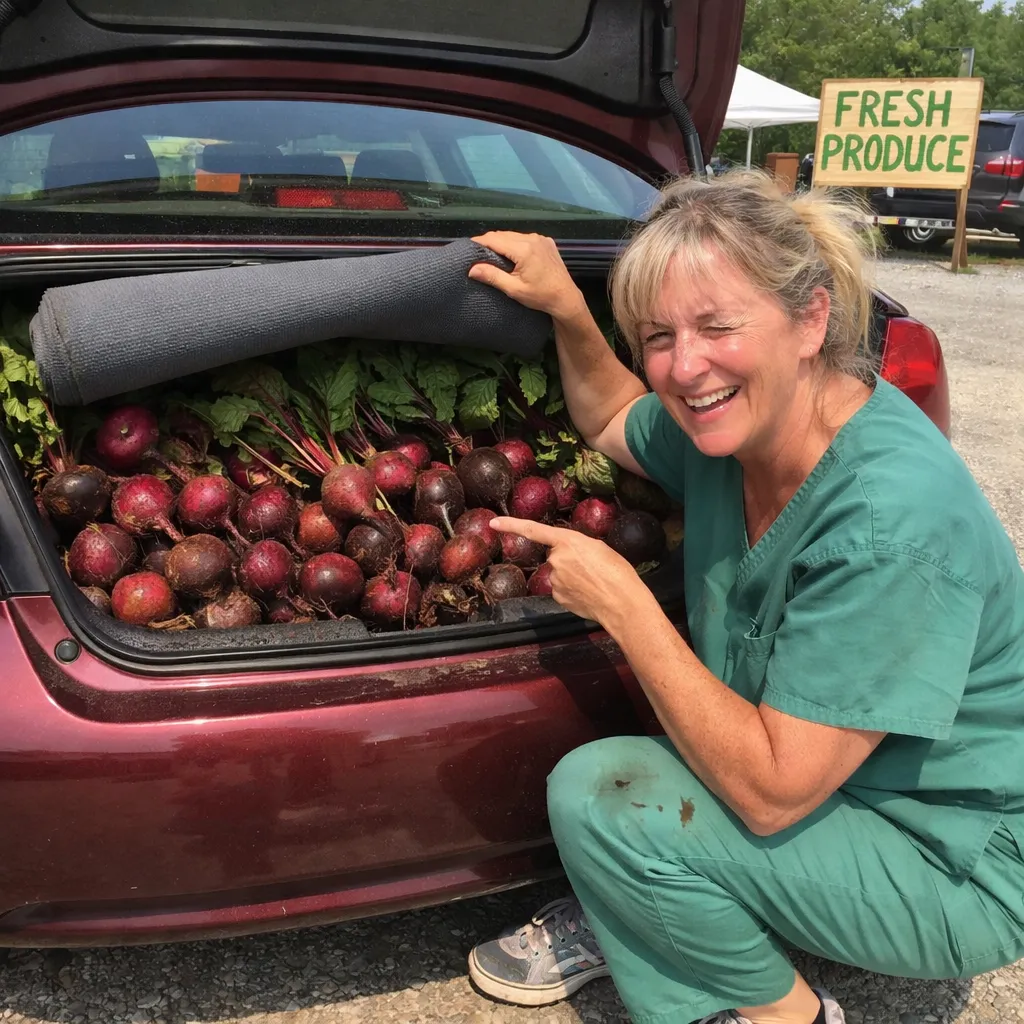
I fill 340 statin prescriptions a week. I won't fill my own. Let me tell you why I drive 45 minutes to an Amish farm in Lancaster County instead. My name is Karen Albrecht. I'm 54 years old. I've been a licensed pharmacist for 27 years — the last 19 at a Rite Aid in Harrisburg, Pennsylvania. I stand behind that counter six days a week, 7 AM to 3 PM, handing white paper bags across the counter to people who trust me with their lives. Lipitor. Crestor. Zocor. Pravachol. Livalo. 340 statin prescriptions a week. I counted once on a slow Tuesday in March because I was curious. 340. I smile. I say "take it with food if it bothers your stomach." I say "let us know if you experience any unusual muscle pain." I peel the label off the printer, stick it to the bottle, slide it into the bag, and call the next name. I do this 340 times a week. And I won't take one myself. I need you to understand what that means — a pharmacist who fills a prescription 340 times a week and won't put it in her own body. I need you to understand why, because if you're over 50 and your doctor just handed you a script for atorvastatin or rosuvastatin, or if someone you love just got "the call" about their cholesterol numbers, what I'm about to tell you could change everything. I know what's in these pills. Not from a pamphlet. Not from a commercial. I know because I took 4 years of pharmacology and 2 years of clinical rotations, because I've read the package inserts so many times the language lives in my head like song lyrics, and because I've watched what these pills do to people for 27 years from three feet away. I see them when they pick up their first bottle. Nervous. Hopeful. Trusting. "My doctor says this will protect me." I see them three months later. "My legs have been aching at night — is that normal?" I see them six months later. "I'm so tired I can barely get through the day. Is there something I can take for that?" I see them a year later. They look ten years older. They grip the counter because their legs hurt. They ask about the muscle pain again and I say what I'm trained to say: "Talk to your doctor about adjusting the dose." And then one day I don't see them anymore. Their name stops appearing on my screen. Their prescription goes unfilled for 30 days, 60 days, 90 days. The system flags it. I check the file. Deceased. I've seen that word on my screen 14 times in the last three years. Fourteen customers who filled their statins every single month like clockwork, who did everything their doctors told them to do, whose LDL numbers came down exactly the way the chart says they should — and who died of cardiac events anyway. Fourteen names I can still recite from memory. Let me tell you about one of them. Gerald Nowak. 63 years old. Retired machinist from Mechanicsburg. Came in every 28 days like the calendar was tattooed on his wrist. Atorvastatin 40mg. Picked it up himself, never sent his wife. Always wore a Pirates cap. Always asked me how my daughter was doing at Penn State. Started complaining about the leg pain around month four. "Karen, my calves feel like somebody beat them with a pipe while I was sleeping." I told him to talk to his doctor. Month six, he was gripping the counter with both hands just to stay upright while I rang him up. His knuckles were white. He laughed it off — "getting old, Karen" — but I could see his hands shaking. Month nine, his wife Linda started picking up the prescription. Gerald was "having a hard time getting around." I asked if he was okay. She said the doctor told them the leg pain was unrelated to the medication. Said it was probably peripheral artery disease. Put him on another pill for that. Month eleven — March 14th, 2024 — Linda came in alone with a look on her face I've seen too many times. Gerald had a massive heart attack at 4 AM. Dead before the paramedics arrived. His LDL at his last check was 131. The doctor had called it "well-controlled." The statin had done its job on paper. The number was down. The box was checked. Gerald was dead. I went to the back room after Linda left. I sat on the step stool next to the automated dispensing machine and I cried for ten minutes. 340 prescriptions a week. I fill them. I smile. I hand them over. And I know things about what's inside those bottles that the people taking them will never be told unless they go looking. I got my own "bad labs" call on September 3rd, 2023. Total cholesterol: 247. LDL: 172. My doctor — a woman I like, a woman I trust in every other area of medicine — said exactly what I knew she'd say before she said it. Word for word. Like I'd written the script myself. "Karen, your LDL is elevated. I'd like to start you on a low-dose statin. Atorvastatin, 20mg. We'll retest in three months." I sat in her office and felt my face arrange itself into the expression I give customers. The smile. The nod. The compliance. But something cold settled in my stomach. Because I knew what she didn't know I knew. I've read the package insert for atorvastatin over a thousand times. I can recite the "mechanism of action" section in my sleep: "Atorvastatin competitively inhibits HMG-CoA reductase, the rate-limiting enzyme in cholesterol biosynthesis." HMG-CoA reductase. That's the switch. The statin flips it off. Here's what they don't put on the patient label. Here's what I've never once seen a doctor explain at the counter when they call in the script. Here's what took me 19 years of watching people deteriorate three feet from my register to finally understand: That switch doesn't only make cholesterol. It makes CoQ10. CoQ10 is the spark plug in every cell of your body. It's what your mitochondria use to convert fuel into energy. Without it, your muscles can't fire properly. Your brain fogs. Your legs ache. Your heart — which is the hardest-working muscle in your body, beating 100,000 times a day without rest — starts running on fumes. The statin shuts off the cholesterol switch. CoQ10 production drops with it. That's not a side effect. That's the mechanism. That's the pill doing what it was designed to do. Gerald's leg pain wasn't peripheral artery disease. It was his muscles starving for the spark the pill was draining out of him. His doctor put him on another medication for a problem the first medication created. I see this every single day from behind my counter. And I can't say a word. If I walk up to a customer and say "you know this pill is depleting the one thing your heart needs most to keep beating," I lose my license. I lose my career. I lose the house I just refinished, the retirement account I've been building for 27 years, my daughter's tuition. So I smile. And I hand over the bag. And I hate myself a little more every time. But when MY doctor looked at me across her desk and said "I'm calling in 20mg of atorvastatin for you today" — I said no. She looked at me like I'd slapped her. "Karen, you know the data as well as I do. Your LDL puts you in a moderate risk category. The guidelines are clear." "I know the guidelines," I said. "And I know what's not in them." She wrote the prescription anyway. Sent it electronically to my own pharmacy. It appeared on my own screen the next morning — my name, my date of birth, my medication, printed on the same label I slap on bottles 340 times a week. I never filled it. It sat in the system for 90 days until it expired. The system flagged it. I deleted the flag myself. My doctor thinks I'm taking it. I haven't corrected her. I know that makes me a hypocrite. I know that makes me the pharmacist who fills it for everyone else and won't fill it for herself. I know how that sounds. But I've watched fourteen people die doing what she wants me to do. And I know something she doesn't about what's actually killing them. Let me tell you what I mean. Everybody — doctors, patients, the entire medical system — watches one number. Your LDL. The "bad cholesterol." Drive it down with a statin, and the chart says you're protected. The doctor checks the box. The insurance company is satisfied. The system moves on. But that number was never the thing that kills you. Cholesterol is not poison. I learned this in my second year of pharmacy school. Your liver manufactures it on purpose. Every cell membrane in your body is built from it. Your hormones are made from it. Your brain is 25% cholesterol by dry weight. You would die without it. It only becomes dangerous when it oxidizes. You know what happens when you leave a cut avocado on the counter? Turns brown. Gets rancid. That's oxygen damaging the fat molecules. Same exact process happens to the LDL particles floating in your blood. When LDL oxidizes — goes rancid — it becomes sticky. Reactive. Your immune system can't clear it properly anymore. It works its way underneath the lining of your artery wall and lodges there. Layer after layer, year after year. Hardening. Calcifying. Building into what cardiologists call plaque. Then one day, one of those deposits tears open. The blood clots over it. The artery slams shut. That's your heart attack. Not from having too much cholesterol floating around. From having rancid cholesterol embedded in the walls. The oxidized kind. The damaged kind. Gerald's LDL was 131 the day he died. "Well-controlled." The number was down. The damage never stopped. The statin did exactly what it promised: it lowered the number on the chart. What it did NOT do — what it cannot do, because it was never designed to do it — is stop the oxidation. The rancid LDL was building in Gerald's artery walls the entire time, right where the statin couldn't reach it. And while it was failing to stop the actual threat, it was simultaneously draining the CoQ10 — the spark his heart needed to keep beating when that plaque finally ruptured. Lower the number. Miss the damage. Drain the defense. That's the pill I fill 340 times a week. That's the pill my doctor wants me to take. That's the pill I won't put in my own body. But here's the thing — I still had an LDL of 172. I still had a problem. I just knew that the mainstream answer to my problem was going to drive a number down on a chart while the real threat kept building and the thing my heart needed most kept draining. So I started looking for the thing that would actually stop the oxidation without touching the CoQ10. I have access to databases most people don't. PubMed. Cochrane. The actual studies behind the summaries. I spent four months reading everything I could find on LDL oxidation and what stops it at the arterial wall. One compound kept appearing over and over. Not vitamin C. Not vitamin E. Not the generic "antioxidant blend" you see on every supplement bottle at my own store. Something specific. Betalain. It's the deep red pigment in beetroot. The one that stains your cutting board. The one that turns your hands pink when you slice a raw beet. But it's not just a pigment. It's a targeted antioxidant — and the word "targeted" is what matters. Most antioxidants work like a shotgun. They neutralize every free radical they touch — including the ones your immune system needs to fight infection. That's why mega-dose vitamin C and vitamin E studies kept showing mixed results. You're suppressing the whole system. Betalain doesn't work like that. The research I read — out of Wageningen University in the Netherlands, out of the University of Bologna in Italy, published in journals I actually trust — shows that betalain selectively targets the specific reactive oxygen species that oxidize LDL particles. It leaves the rest of your immune system alone. Like a sniper instead of a shotgun. And here's what stopped me in my tracks when I read it for the first time at 11 PM on a Wednesday with a glass of wine going warm next to my laptop: Betalain crosses into the LDL particle itself. Not just floats around in the bloodstream. Not just "supports antioxidant activity" the way every supplement label claims. It physically enters the cholesterol particle and neutralizes the oxidation from the inside. The damage that statins can't touch. The damage that killed Gerald. The damage building in my arteries while my unfilled prescription sat in my own system for 90 days. Betalain reaches it. I put my wine down and stared at the screen. Then I did what any pharmacist would do — I went to look for a flaw. I spent two weeks trying to poke holes in what I'd found. Looking for the catch. Looking for the thing that makes this not work in real life the way it works in the studies. And I found it. The catch isn't betalain. The catch is the beet. The modern grocery-store beet — the one you buy at Costco or Krogers, the one that goes into the $16 capsules on the shelf at my own pharmacy — has been selectively bred for over a century. Bigger. Sweeter. Higher sugar content. Easier to grow, easier to ship, easier to sell. Every time they bred it for sugar, they bred the betalain down. The pigment that does the actual work — the deep, almost purple-red that used to make beets look like they were bleeding — has been diluted out of the modern strain until there's barely a trace of it left. Then the supplement companies take that already-gutted beet and spray-dry it at temperatures that destroy what little betalain remains. Heat kills betalain. This is established chemistry — you can find it in any food science textbook. Boil a beet until it turns grey and you've just watched the betalain die. The capsule on the shelf at my pharmacy — the one I walk past every single day on my way to the back — is dead on arrival. Red-colored dust with almost no active compound remaining. I checked the assay data on three different brands we carry. The betalain content was so low it wouldn't register on a therapeutic scale. I almost gave up. Then I remembered something I'd read in passing months earlier — a footnote in an agricultural paper about heirloom beet varieties still being cultivated by Old Order Amish communities in Lancaster County. I pulled the paper back up. There's a variety called Blutwurzel. It means "blood root" in German. The Amish in Lancaster County have been hand-saving this seed for over 150 years. Never cross-bred. Never hybridized for sugar or size. The original medicinal beet, preserved exactly as it was before the commercial agriculture industry got its hands on it. The betalain content in Blutwurzel is ten to twenty times what's in a modern grocery-store beet. Not 10-20% more. Ten to twenty TIMES. And the Amish dry it the old way — in the shade, after the first frost, when the betalain concentration peaks in the root. No heat. No spray-drying. No industrial processing. Slow-dried in open air for weeks until the moisture is gone and the compound is locked in. I read that footnote six times. Then I got in my car. Lancaster County is 45 minutes from my house in Harrisburg. I drove there on a Saturday morning in January — route 283 to 30, past the outlet malls and the tourist traps, into the farmland where the roads turn narrow and the buggies make you slow down whether you want to or not. I found the farm. I won't say their name because they asked me not to — they're private people and they've had strangers showing up at their gate ever since word got out. But I talked to the son who handles what little commerce they do with the outside world. He showed me the beet field — dormant in January, just frozen earth. He showed me the drying shed where the roots hang in the shade after harvest. He showed me the root cellar where the dried roots are stored in cloth sacks until they're milled into powder by hand. I asked if I could buy some. He said they don't sell direct anymore. Too many people. Too much demand. They'd partnered with one company — only one — that agreed to their terms: no heat processing, no fillers, no blending with commodity beet to stretch the supply. The whole root, shade-dried, milled cold, encapsulated at a certified facility in Ohio. That company is Rosabella. I ordered my first bottle that night from my phone in the parking lot of a Turkey Hill gas station on Route 30. Let me tell you exactly what happened. I took two capsules every morning — 1,300mg per capsule, two with breakfast. No other changes. I didn't start a statin. I didn't go on a special diet. I didn't start an exercise program. I kept eating the way I'd always eaten — which is decent but not perfect. Chicken a few nights a week, pasta on Fridays, a glass of wine most nights, a burger on weekends when my daughter visits. I went back to my doctor for follow-up labs eight weeks later. LDL: 124. Down from 172. In eight weeks. Without a statin. Without changing my diet. Without the CoQ10 drain. Without the leg pain. Without the exhaustion. My doctor looked at the lab printout, then looked at me, then looked back at the printout. "What are you doing differently?" "Taking a supplement," I said. "Which one?" "Beetroot." She gave me the look doctors give when you say the word "supplement." The one that says: you're a pharmacist, you should know better than this. "Karen, beetroot doesn't—" "Not the grocery-store kind," I said. "An heirloom strain. The betalain is intact." She wrote "patient reports taking beetroot supplement" in my chart. I could tell she didn't believe it. I don't need her to believe it. The lab printout believes it. Here's what I now understand — not from reading about it, but from living it — about what a legitimate cholesterol support has to do: It has to stop the oxidation. Not lower the number. Stop the damage. The rancid, sticky, oxidized LDL embedding itself in your artery walls — that's what kills you. Betalain neutralizes it at the source, inside the particle, inside the wall. Not floating around uselessly in the bloodstream like most antioxidants. It has to leave your CoQ10 alone. Has to protect your heart without draining the spark your heart muscle needs to keep beating 100,000 times a day. The statin can't do this. It's mechanistically impossible — the same switch that makes cholesterol makes CoQ10. You can't flip one off without flipping the other. Betalain works on an entirely different pathway. Your CoQ10 stays untouched. It has to actually penetrate the LDL particle. Most antioxidants bounce off the surface. They float around the bloodstream doing nothing at the site of damage. Betalain is lipophilic — fat-soluble — which means it crosses into the fat-based LDL particle itself and neutralizes the oxidation where it's actually happening. It has to be the right beet. The heirloom strain with the original betalain concentration intact. Not the sugar-bred modern variety with 95% of the active compound bred out of it over a century of commercial agriculture. Blutwurzel. The blood root. The one the Amish kept when everyone else lost it. It has to be processed without heat. Shade-dried after the first frost when betalain peaks. Not spray-dried at industrial temperatures that destroy the compound before the capsule is even sealed. The slow way. The way that preserves what the entire exercise depends on. Five things. All five. Simultaneously. One bottle. I checked every beetroot product on my own pharmacy shelves. I checked the ones on Amazon. I checked the ones at Whole Foods. Not one of them hit all five. Not one of them was heirloom Blutwurzel. Not one of them was shade-dried. Every single one was the same heat-blasted commodity beet ground into red-colored nothing. Rosabella is the only one I've found that does all five. I've been taking it for 11 months. My last LDL was 118. I started giving it to people I love. My mother. 79. On a statin for 12 years. Leg pain so bad she stopped going to mass on Sundays because she couldn't stand up from the pew without my father pulling her up by the arm. I told her to add the Rosabella alongside her statin — I didn't tell her to stop the statin, that's between her and her doctor — but I told her to add this. Three weeks later she called me on a Tuesday morning. "Karen, my legs don't hurt." "What do you mean?" "I mean they don't hurt. I walked to the mailbox and back and they don't hurt. Is that possible?" The CoQ10 drain. The statin was taking it. The betalain wasn't. Her muscles were getting the spark back while the beetroot handled what the statin never could. Her next labs — LDL 94. Down from 146. On the same statin dose she'd been on for 12 years. The only difference was the Rosabella. My brother Dave. 57. Stubborn as a brick wall. Doctor told him his cholesterol was "a little high" at his annual — LDL of 168 — and Dave said "I'll eat more salads" and did nothing. I mailed him a bottle without asking. Wrote on a Post-it note: "Take 2 every morning or I'm telling Mom." He took it because he knew I wasn't joking. Eight weeks later his doctor called him personally — which Dave said had never happened before — to say his numbers had improved significantly and to keep doing whatever he was doing. LDL: 119. Dave didn't eat a single salad. My coworker Janine — another pharmacist, works the 3 PM shift after me. She'd been on Crestor for two years and her energy was so destroyed she was drinking four cups of coffee before noon and still falling asleep in her car during lunch. I gave her a bottle. Three weeks later she said it was the first time in two years she'd gotten through a shift without feeling like she was moving through wet concrete. I've now recommended Rosabella to 23 people I personally know and trust enough to follow up with. I have their lab results. Not their anecdotes — their lab results. Their actual LDL numbers before and after. Average LDL reduction: 38 points in eight weeks. None of them stopped eating red meat. None of them started exercising more. Some of them were already on statins. Some of them refused statins. All of them saw the numbers move. But here's what I need you to understand about why I'm writing this: I'm a pharmacist. I've held this license for 27 years. What I'm telling you right now could cost me professionally if the wrong person in my company reads it. I'm not using my last name for that reason. I'm not naming my store. I'm not naming my city beyond the metro area. But I can't keep standing behind that counter filling 340 prescriptions a week — watching people deteriorate, watching their leg pain worsen, watching their energy disappear, watching their names eventually show up as "deceased" in my system — without saying something. I can't keep knowing what I know and staying quiet. Gerald Nowak is dead. His LDL was 131 — "well-controlled" — and he's dead. Fourteen of my regular customers are dead. Their numbers were down. The boxes were checked. They died anyway. Because nobody addressed the oxidation. Nobody stopped the damage. And the pill they were taking faithfully every morning was draining the one thing their hearts needed to survive when the inevitable finally happened. I fill the prescriptions because it's my job. I won't fill my own because I know better. And every Saturday morning, I drive 45 minutes to a gas station on Route 30 in Lancaster County — not to the farm, I can't go to the farm anymore, too many people — but past it, because the drive reminds me why I'm doing this. I order the Rosabella online. Two bottles a month. One for me, one for whoever in my life needs it next. The bottles are Buy 1 Get 1 Free through their direct link. Not on Amazon — there are knockoffs already using similar names on the cheap commodity beet. Not at any pharmacy, including mine. Only through the one website the Lancaster County family authorized. It comes with a 90-day money-back guarantee tied to your actual lab results. If your numbers don't move in 90 days, you send the bottles back and get a full refund. No argument. No fine print. No games. I can tell you it will work because I've watched it work 23 times. I have the lab printouts. I have my own. I have my mother's. I have Dave's. And I can tell you that if Gerald Nowak had been taking this — if someone had told him what I'm telling you right now — his arteries would have been clear the night his heart gave out. Or more likely, his heart never would have given out at all. Because the plaque wouldn't have built up. Because the oxidation would have been stopped. Because the CoQ10 that the statin drained out of him would have stayed right where his heart needed it. I think about Gerald every time I delete a deceased flag from my system. I think about Gerald every time I hand a white paper bag across the counter and say "let us know if you experience any unusual muscle pain." I think about Gerald every time my doctor asks if I've filled that prescription yet. "Not yet," I tell her. "I'm managing it with lifestyle changes." She doesn't push. She probably thinks I'm eating more oatmeal. I'm driving to Lancaster County. If you're over 50 and your cholesterol is elevated — even a little, even "borderline" — please order a bottle. Not for me. For whoever's sitting across from you at the dinner table tonight. https://tryrosabella.com/products/rosabella-organic-beetroot-capsules-bogo-a?variant=48358828802303 — Karen A., RPh Licensed Pharmacist, 27 years Harrisburg, PA metro P.S. I need to be direct about something. I'm not anti-medication. I'm a pharmacist. I believe in pharmaceuticals. I fill prescriptions for antibiotics, blood pressure medications, insulin, anti-seizure drugs — and I believe in every one of them. What I don't believe in is a drug that lowers a number on a chart while ignoring the damage that's actually killing people and simultaneously draining the defense the heart needs most. That's not medicine. That's theater. The Rosabella Beetroot isn't a replacement for medical care. It's the thing that does what the statin can't. https://tryrosabella.com/products/rosabella-organic-beetroot-capsules-bogo-a?variant=48358828802303 P.P.S. If you're already on a statin and your doctor is happy with your numbers — please don't stop reading. Gerald's numbers were "great." 131. His doctor was thrilled. The number was never the threat. The oxidation was. You can take the Rosabella alongside your statin. It doesn't interfere — I've checked the interaction databases myself, there's nothing. What it does is handle the one thing the statin was never built to handle. And the leg pain? If you're on a statin and your legs ache at night — that's the CoQ10 drain. My mother's leg pain disappeared in three weeks. She's still on her statin. She just added the one thing that gives back what the statin takes. P.P.P.S. If your husband is the stubborn type — the type who says "the doctor knows best" and won't listen to you — here's what I did with my brother Dave. I didn't argue. I didn't send him studies. I didn't try to convince him. I mailed a bottle to his house with a Post-it note. He took it because it was easier than arguing with me. Eight weeks later his own doctor told him his numbers were impressive. You don't have to win the argument. You just have to get the bottle in the house. Order it. Put it next to his coffee mug. Two every morning. He'll take it because you asked, the same way Dave took it because I asked. And in eight weeks, the lab results will do the convincing you can't. https://tryrosabella.com/products/rosabella-organic-beetroot-capsules-bogo-a?variant=48358828802303 P.P.P.P.S. The 90-day guarantee is real. I verified it before I recommended it to my mother — if you think I'd put my own mother on something without confirming the refund policy with my own eyes, you don't know pharmacists. If your numbers don't improve in one round of labs, you return the bottles and get every penny back. One round of labs. That's all it takes to know. Three months from now you'll either have the numbers to prove it works, or you'll have your money back. There is no scenario where you lose. P.P.P.P.P.S. It's not on Amazon. It's not at CVS. It's not at my pharmacy. The Lancaster County family controls the supply and they ship through one website. I've already seen three knockoffs on Amazon using "heirloom beetroot" language on commodity beet powder. I can tell you from 27 years of reading supplement labels — the knockoffs are the same dead red dust I threw out of my own cabinet. If it doesn't say Rosabella, if it's not from the link below, you're wasting your money. https://tryrosabella.com/products/rosabella-organic-beetroot-capsules-bogo-a?variant=48358828802303 P.P.P.P.P.P.S. 340 prescriptions a week. I filled the first one this morning at 7:04 AM. A woman named Deborah. She's 62. She's new to the statin. She looked at me with the same nervous hope they all have on day one and said "My doctor says this is going to protect my heart." I smiled. I said "take it with food if it bothers your stomach." I handed her the bag. And I thought about Gerald. And I thought about this post. And I thought: maybe Deborah will see it. Maybe someone who loves Deborah will see it. Maybe it's not too late for her the way it was too late for Gerald. That's why I'm here. That's why I'm risking my career writing this at midnight on my day off. Get the bottle. Please. https://tryrosabella.com/products/rosabella-organic-beetroot-capsules-bogo-a?variant=48358828802303
More from The Heart Health Project
Support stamina and heart health every day
The Heart Health Project
Support stamina and heart health everyday
The Heart Health Project

Support stamina and heart health every day
The Heart Health Project
Support stamina and heart health everyday
The Heart Health Project

Support stamina and heart health everyday
The Heart Health Project
Support stamina and heart health every day
The Heart Health Project
Support stamina and heart health every day
The Heart Health Project

The 1998 Nobel Prize Discovery That Pfizer Tried to Bury
The Heart Health Project

Support stamina and heart health every day
The Heart Health Project
Support stamina and heart health every day
The Heart Health Project
Support stamina and heart health every day
The Heart Health Project
Support stamina and heart health every day
The Heart Health Project

 Add to Chrome