Support stamina and heart health everyday
Ad Copy
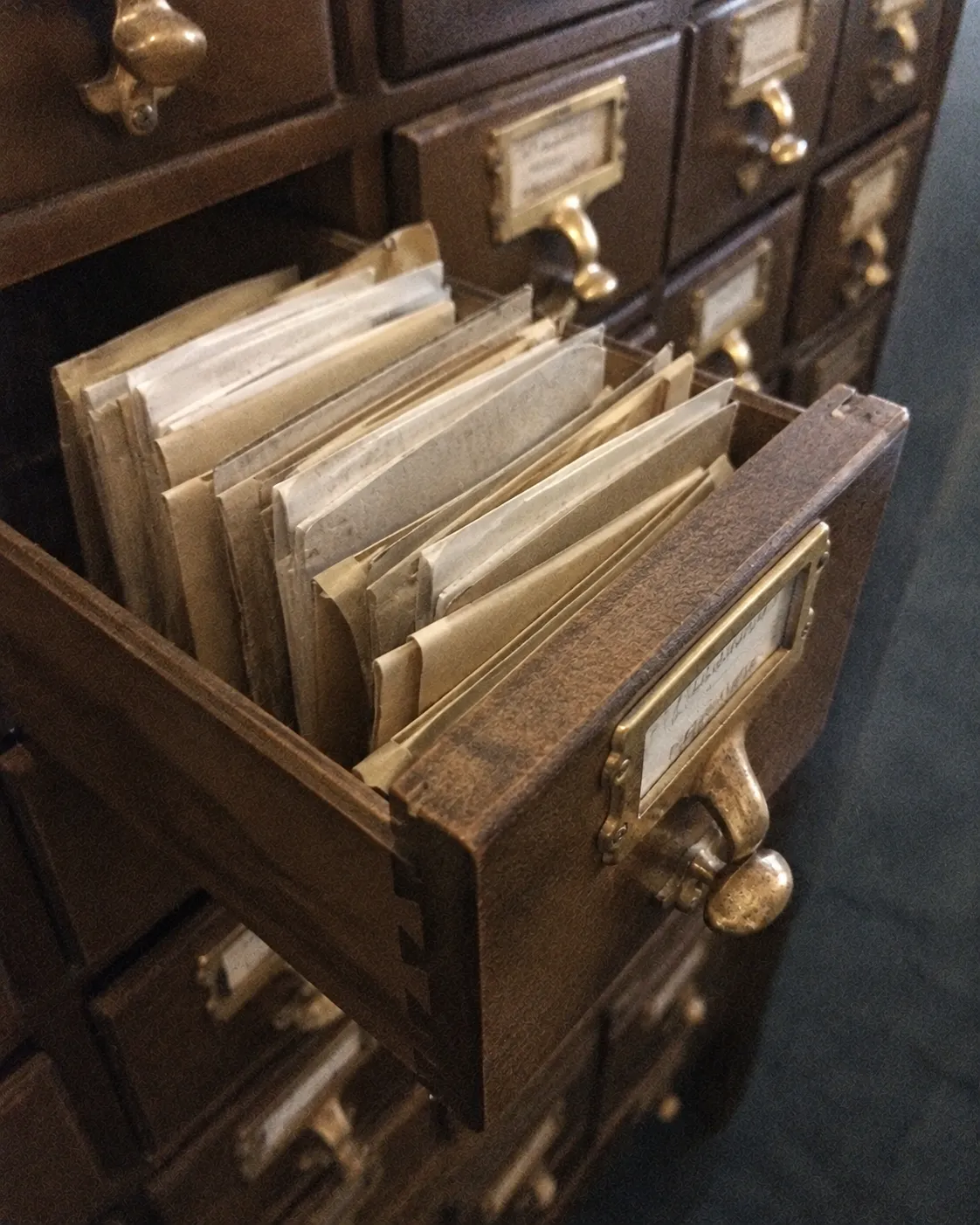
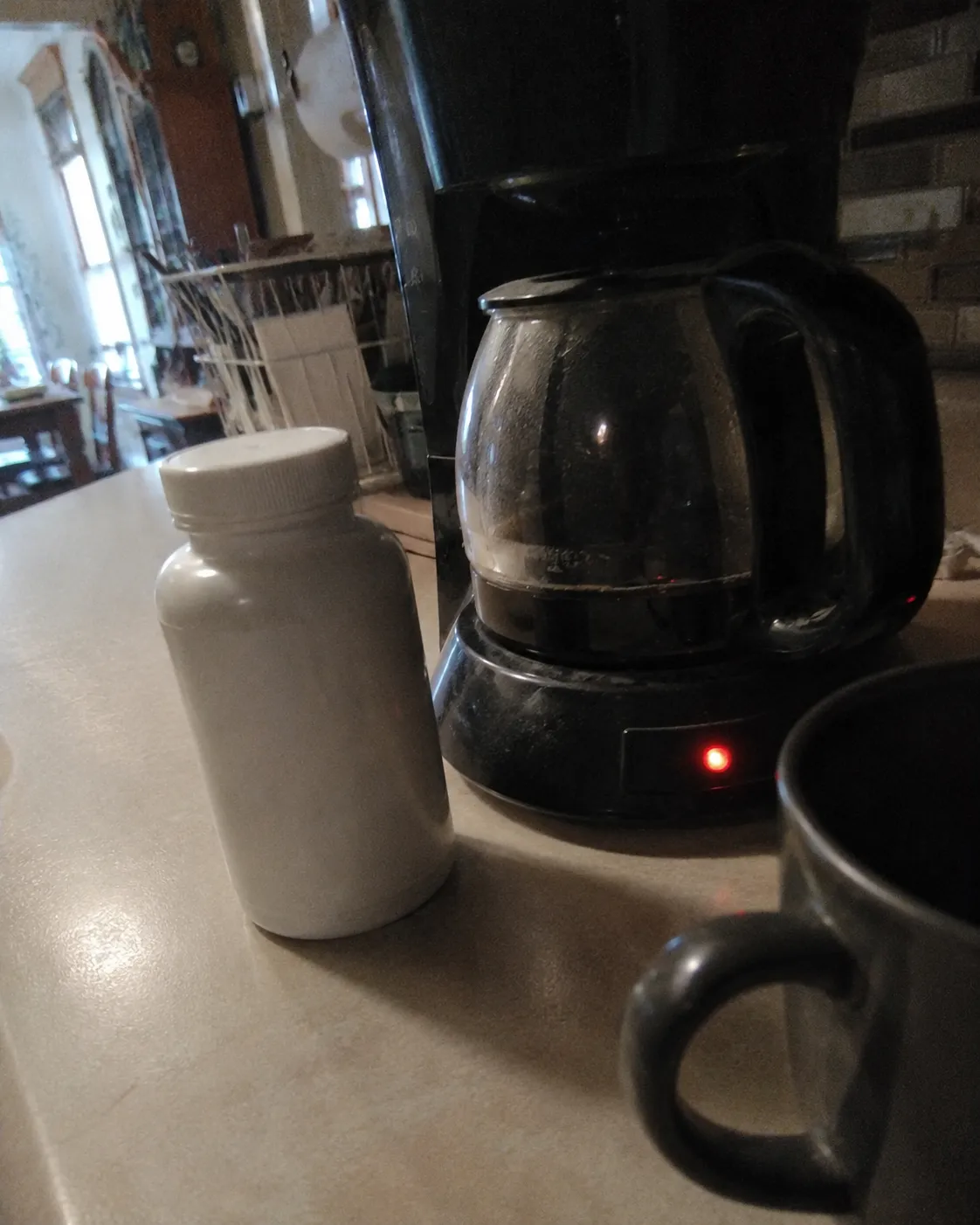
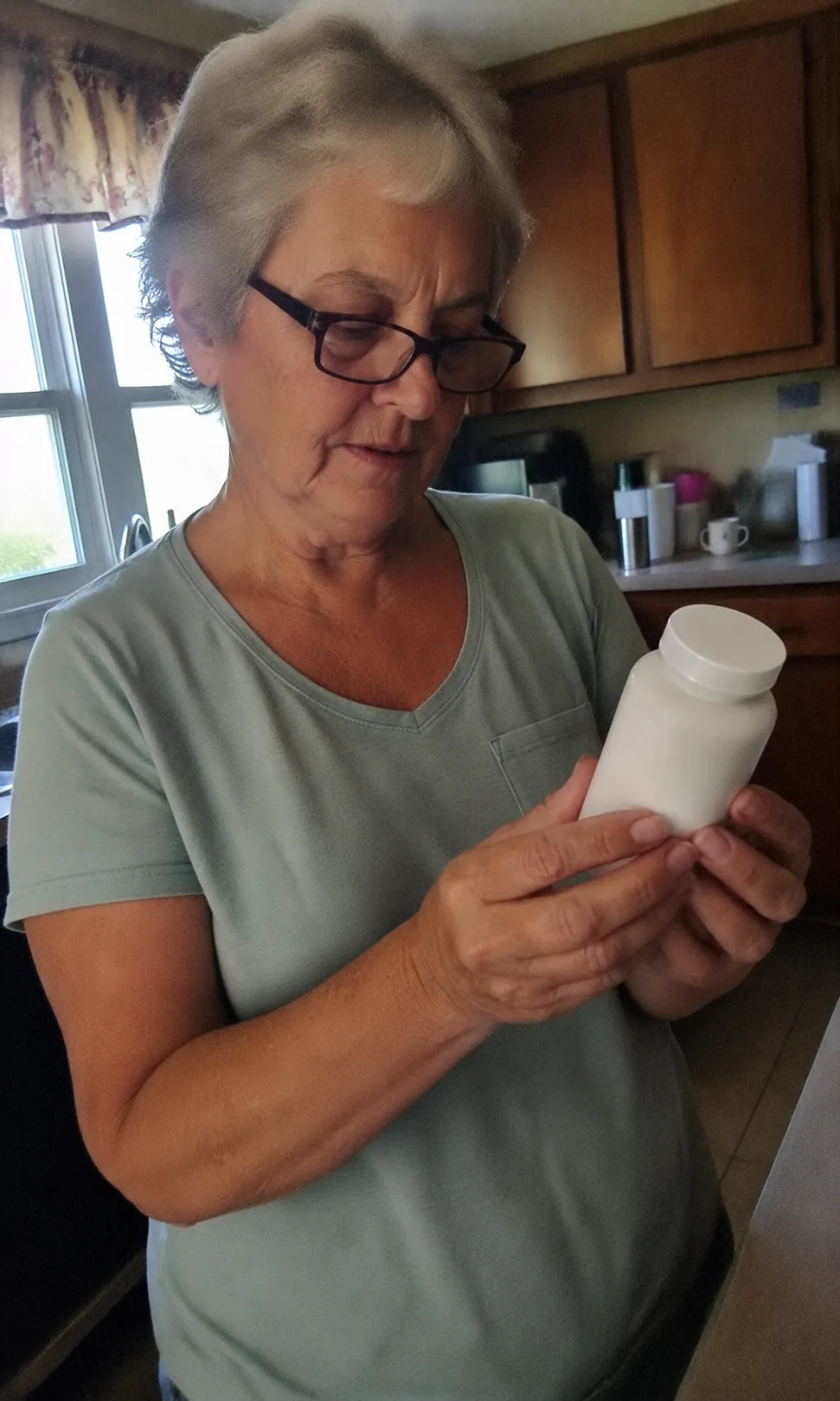
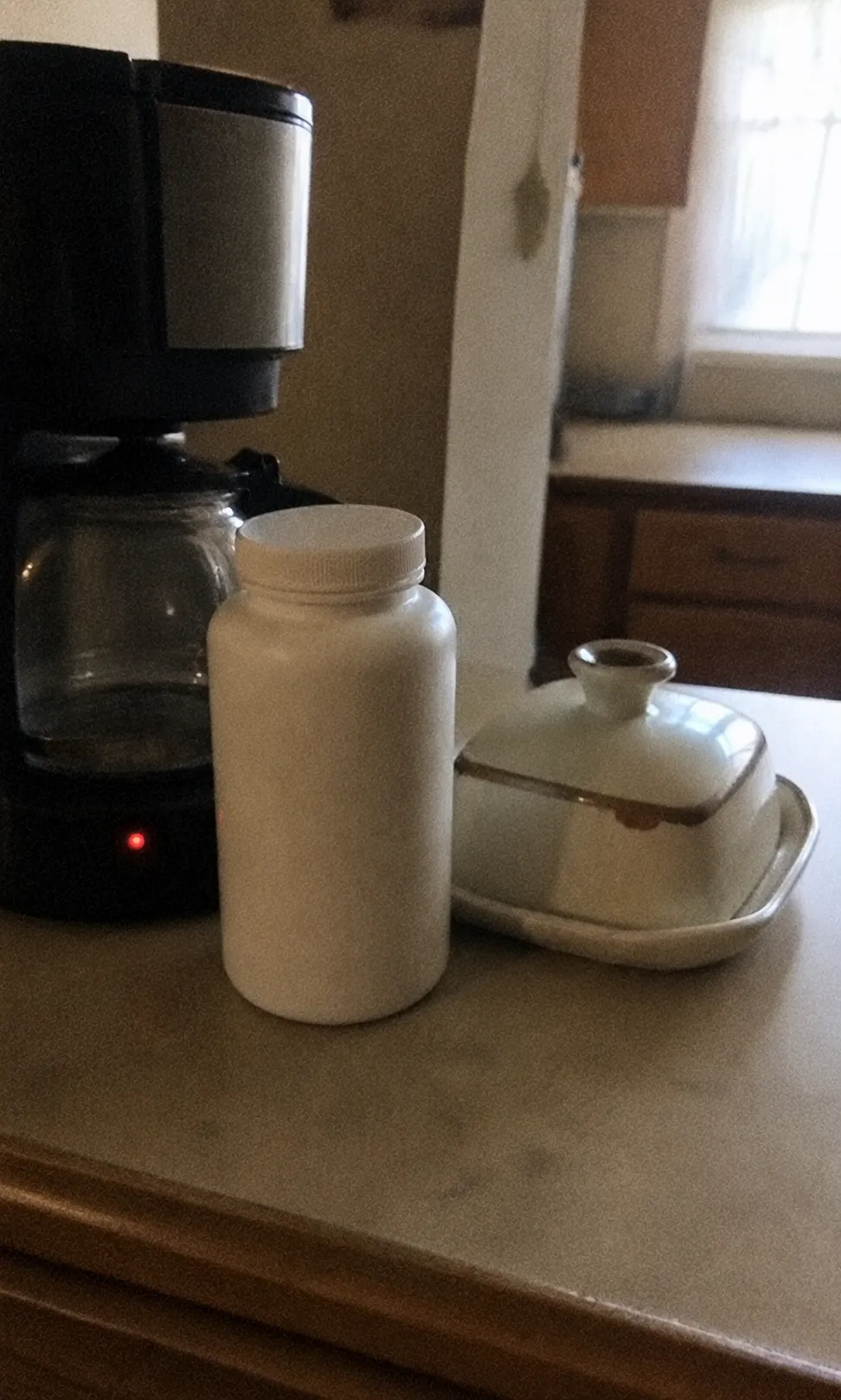
The Library Kept One Cabinet When They Went Digital. What's in Its Drawers Is Older Than the Building. Picture a public library on a Tuesday morning — the quiet kind of town library, two rooms and a community board, the kind that still stamps due dates in blue ink. Picture a woman coming in with an armload of overdue books that aren't hers. Call her Paula. And picture, in the back corner by the window, a piece of furniture that shouldn't exist anymore: a wooden card catalog, forty small drawers, brass pulls gone soft with handling. Behind it, at a folding table, sits a woman in reading glasses with a shoebox and a rubber-band system. Call her Lottie. What Paula came in for takes four minutes. What happens at that cabinet takes the rest of the year with her — and it starts because she reads one small card, out of nosiness, while waiting for a receipt. Let me back up. You need Paula first, and you've met her — there's a Paula holding half the schedules in your town together. Paula is fifty-eight. She's run the front office of the middle school for nineteen years, which means she is the person who actually operates the building. Bell schedules, bus lists, the substitute phone tree, the lost-and-found, four hundred families' worth of small emergencies. Paula's desk is where chaos goes to be alphabetized. She is, by universal agreement, the organized one. At school. At home. In her family, which is why the overdue books in her arms belong to her grandsons. And here is the private joke of Paula's life, the one nobody at that school would believe: Her own kitchen defeats her. Not the cooking. The deciding. Open Paula's pantry and you'll find the archaeology of a conscientious woman doing her best in a complicated aisle. The canister of greens powder with the eleven-step origin story on the tube. The tea that came with a pamphlet. The bottle of something her sister swears by, whose label Paula has read four times the way you'd read a lease — and still couldn't tell you, under oath, exactly what's in it. Every one of those purchases was research. Paula doesn't buy carelessly; she reads everything, because reading everything is her whole professional skill. That's the problem. The labels don't run out of words before Paula runs out of Tuesday. Serving matrices. Proprietary blends. Asterisks pointing at asterisks. A woman who can decode a district budget stands in her own kitchen at seven in the morning holding a canister like it's a tax form. So things get bought, tried twice, and retired to the shelf where complicated things go to be finished never. Paula doesn't call this a failure. It's just a hum — a standing, low-grade suspicion that taking care of herself has become a reading assignment, and the assignment keeps growing. Anyway. The books. The grandsons' books are stamped back in, the fine is waived because the librarian knows exactly whose grandsons those are, and Paula is waiting on a hold when she wanders to the back corner and meets the cabinet. A card catalog. She hasn't touched one since high school. The drawers still have their little brass frames, but the typed subject cards are gone. In their place, hand-lettered on index stock: Beans. Tomatoes. Squash. Lettuce. Herbs. Beets. She pulls a drawer — you would too; the pulls are worn to butter — and it's full of small paper envelopes. Seed packets. Plain ones, folded and hand-labeled. And at the folding table, Lottie looks up from her shoebox with the expression of a woman who has been waiting all morning for somebody to pull a drawer. "Seed library," she says. "Take what you'll grow. Grow it. Save a few seeds back, if it goes well, and return them in the fall. That's the whole system." Paula, professionally, cannot resist a system. She asks how it's administered. Lottie holds up the shoebox. There are index cards in it, rubber-banded by month. "You write your name and what you took. That's the administration." "What if people don't bring seeds back?" "Some don't. Enough do." Lottie shrugs, unbothered, a woman with four decades of garden math behind her. "It's run at a profit since before they paved the parking lot. Seeds are generous that way. One plant pays back a hundredfold, if anybody keeps it going." Paula picks up a packet from the beet drawer, because it's nearest. And this is the moment the whole year turns on, so slow down with her. The packet is a folded paper envelope. On it, in a volunteer's careful hand, is everything there is: The variety's name. Then: Plant when the soil can be worked. An inch deep, a few inches apart. Water. Thin the weak ones. Sixty days, more or less. That's it. That's the entire label. Paula stands there holding it, and starts to laugh, and can't fully explain to Lottie what's funny — because what's funny is her pantry. The greens tube with the origin story. The pamphlet tea. The lease she's read four times. And in her hand: a living thing older than the library, older than the town — with instructions that fit on a note card, in a volunteer's handwriting, with room to spare. Lottie watches her do the math, the way she's watched a hundred people do it at that table. And she says the thing Paula will carry out the door, in the flat tone of a woman stating shoebox facts: "Everything in those drawers got here the same way, hon. Hand to hand, garden to garden, longer than anyone's been counting. You know what that trip does to a thing?" She taps the packet in Paula's hand. "It wears off everything that isn't necessary. A seed can't carry a pamphlet with it for two hundred years. Whatever needs a manual doesn't make the trip. What's left is the part that works — and the part that works is always about three lines long." She snaps the rubber band back around the shoebox, closing the seminar. "Complicated things die with their expert. Simple things get handed on. That's why the drawer's still full." Paula signs the card. Name, date, one packet: beets. The administration is complete. And Paula drives home with a paper envelope on the passenger seat, doing the arithmetic — you knew it was coming, and so did she, somewhere around the second stoplight. Nineteen years of running a building on systems, and she has never once thought to ask of her own kitchen what she asks of every system that crosses her desk: Could a volunteer run this? Could it survive being handed to somebody new on a Tuesday? Because that's the actual test of whether a thing lasts. Not whether it's impressive. Whether it's transmissible — simple enough to hand across a folding table with three lines of instruction, and still work. Her pantry fails that test wholesale. Every retired canister failed it — not because the products were bad, but because each one arrived needing a briefing, and briefings don't survive ordinary Tuesdays, and the things that need them get retired to the shelf. The drawers at the library pass it. Two hundred years of hand-to-hand, and the instructions still fit on a note card. The stuff that lasts, it turns out, is the stuff that got simple enough to survive being handed on. Which brings this story — through that door, and no other — to what was in the packet. Beets. Of course it's beets. People have been eating them for thousands of years. They were in the root cellars and soup pots and pickle jars of half the world's grandmothers long before anyone could say why — kept, replanted, and put up every autumn on nothing more than the accumulated verdict of generations. Passed hand to hand, garden to garden — drawer to drawer — the whole time. Today, the story is simpler: the beet made the trip — from garden to garden, drawer to drawer, for longer than anyone's been counting. Beets also carry betalains — the deep crimson pigments that give them their color and stain a cutting board for a week. Nature did the formulating a long time ago. The drawers just kept it moving. But Paula's honest situation — and probably yours — is that a packet of seeds, however beautiful, is the garden form of the beet. It asks for a plot, a season, a rhythm of tending. The roasted beet asks for the open evening. The pickle crock asks for the grandmother's kitchen. Every traditional form of the beet asks for a shape of life that most weeks simply don't hold anymore — which is exactly how a food this old and familiar ends up missing from a pantry that expensive. Rosabella Beetroot is the beet that passes Paula's test: two capsules, once a day. A form simple enough to survive being handed across a folding table. No briefing. No pamphlet. Nothing to decode at seven in the morning. And the label reads like the packet, which is the whole point. 1,300mg of organic beetroot powder per serving — a serving being those two capsules. One active ingredient, with the dose printed plainly on the label, nothing to decode. Non-GMO, third-party lab tested, produced under GMP, made in the USA from globally sourced ingredients. It contains no caffeine. Sixty capsules in a bottle; thirty days. Three lines, more or less. Note-card goods. And now the part you don't usually read in something like this, so read it twice: Nobody here is going to promise you a transformation. We're not going to tell you what you'll feel or when. Bodies are different, and yours doesn't owe an advertisement anything. And let's be plain the way Lottie would be: a capsule is not a garden. It won't teach your grandsons where food comes from, and nothing in a bottle smells like a July tomato row. If a packet and a patch of dirt are available to you, take the packet too. The drawer needs the traffic. This is the weekday form — the one that fits the life that also contains the building, the bus lists, and the four hundred families. What can be promised is what's on the label — three lines, kept. One thing before anything goes in a cart: talk to your doctor or pharmacist before adding any supplement, especially if you take any medication. This goes alongside the rest of a routine — the meals, the walks, the sleep — not in place of any of it. On Amazon, Rosabella Beetroot sits at 4.4 out of 5 across more than 14,000 ratings as of August 2026. If you're not satisfied for any reason, return the product within 90 days of delivery for a full refund. The ending is small, and it's in two places, because the story went to two places. The first is Paula's kitchen counter. The pantry purge she'd been threatening for years finally happened on an ordinary Saturday — not dramatically, just a woman with a box, retiring the briefings. What's on the counter now, next to the coffee maker, is the short shelf: the coffee, the bottle, and a butter dish that has survived three kitchens. Things that don't need her to read them. Things that would survive being handed on. The second place is the strip of dirt along Paula's back fence, where the packet went in — one short row, an inch deep, a few inches apart, watered with the same watering can that does the porch flowers. Sixty days, more or less, the card said. The card didn't promise her anything either, she noticed. It just told her what to do and trusted the rest to the oldest system there is. And on a Tuesday in the fall, Paula will walk into the library with her name already in the shoebox, and hand a folded paper envelope across the folding table, and the administration will be complete. One packet in. One packet back. That's the whole ending. A short shelf, a short row, and a drawer that stays full. P.S. If your pantry has its own retired-briefings shelf — the tube, the pamphlet, the lease you've read four times — the finding of this story, plainly: nothing was wrong with your diligence. Some things arrive needing a manual, and manuals lose to ordinary Tuesdays, every time, everywhere. The old test is Lottie's test: if it couldn't be handed across a folding table with three lines of instruction, don't ask it to survive your week. Buy the things a volunteer could run. P.P.S. What it is, plainly: organic beetroot powder in capsules — 1,300mg per two-capsule serving, one active ingredient, dose on the label, no caffeine, non-GMO, third-party lab tested. Thirty days a bottle. That's the whole story. P.P.P.S. If you're not satisfied for any reason, return the product within 90 days of delivery for a full refund. Enough time to find out whether it earns a place on the short shelf — which is the only test that matters for deciding that. Individual experiences vary. These statements have not been evaluated by the Food and Drug Administration. This product is not intended to diagnose, treat, cure, or prevent any disease.
More from Blood Pressure Secrets
Support stamina and heart health every day
Blood Pressure Secrets
Support stamina and heart health every day
Blood Pressure Secrets
Support stamina and heart health everyday
Blood Pressure Secrets
Support stamina and heart health everyday
Blood Pressure Secrets
Support stamina and heart health every day
Blood Pressure Secrets
Support stamina and heart health every day
Blood Pressure Secrets
Support stamina and heart health every day
Blood Pressure Secrets
Support stamina and heart health every day
Blood Pressure Secrets
Support stamina and heart health every day
Blood Pressure Secrets
Support stamina and heart health every day
Blood Pressure Secrets
Support stamina and heart health every day
Blood Pressure Secrets
Support stamina and heart health every day
Blood Pressure Secrets

 Add to Chrome