Support stamina and heart health every day
Ad Copy
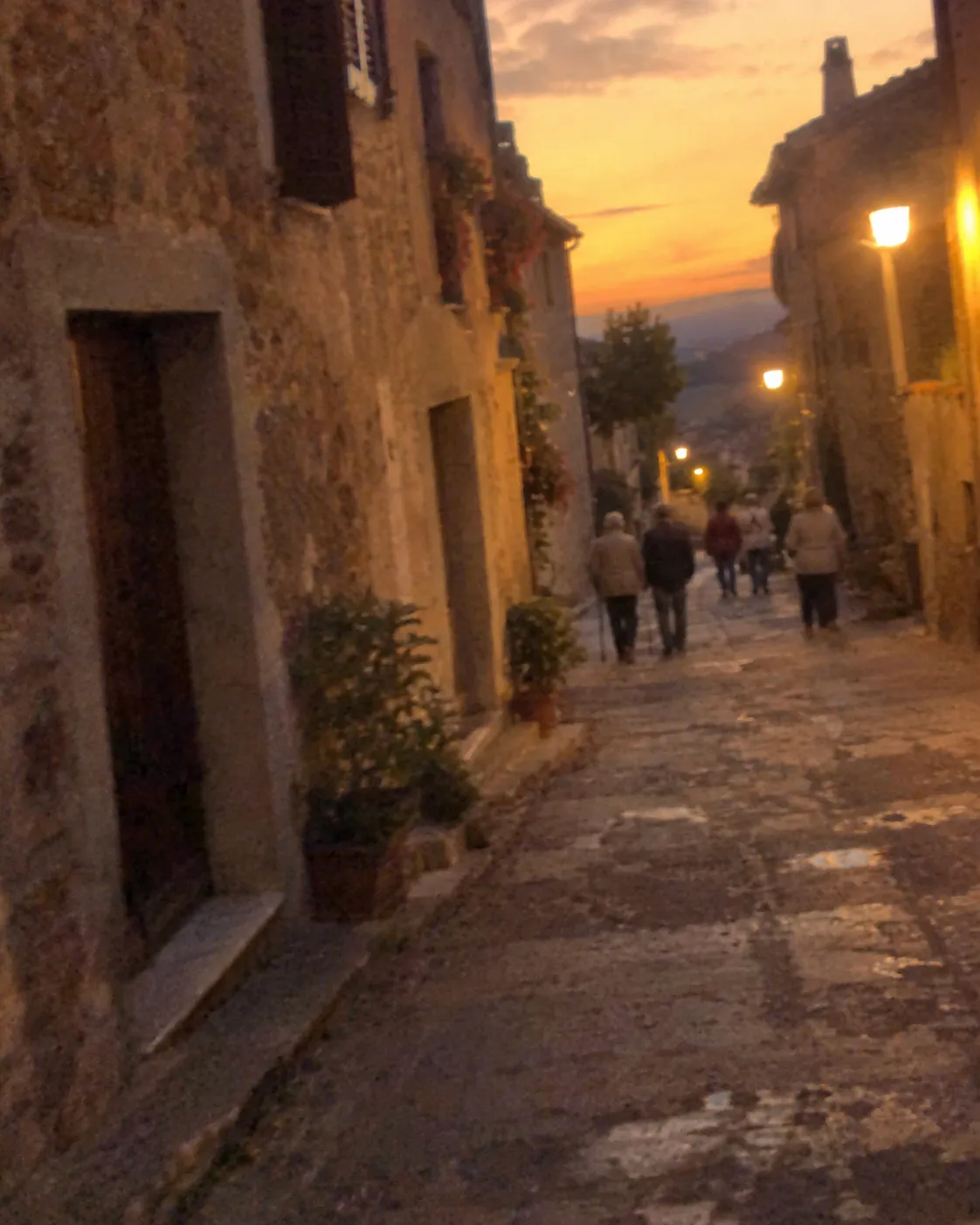
Picture a Town Where the Whole Population Comes Out at Dusk, Slowly, Dressed a Little — and Nobody Would Ever Call It Exercise. This is an illustrative story about a woman named Eileen, a walker named Dora, and the hour when a whole town ends its day on purpose. Picture the town — old, unnamed, the kind of place where the square has a fountain that hasn't worked in living memory and nobody would dream of fixing it. Picture the light going amber around seven. And picture what happens next, because it happens every evening, and it is the whole story. The town comes out. Not for anything. That's the part that takes a visitor a week to understand. Shops shut, dinner's early or late depending on the house, and the whole population — couples, widows, teenagers under protest, the oldest people in town with their canes and their good cardigans — walks the same slow loop. Down the lane, around the square, past the dead fountain, and back. Twenty minutes if you hurry, which nobody does. An hour if you meet people, which everybody does. Now picture Eileen, sixty-four, retired from thirty years of hospital administration, renting the little blue-shuttered house for six weeks because her daughter married into this country and somebody had to scout it properly. Eileen is capable, organized, and — let the record show — very good at days. Her mornings have shape: coffee, list, errands, done by noon like a professional. It's the evenings. Look at an Eileen evening back home, because it's a portrait of a modern one. Six o'clock: dinner, efficient. Six-forty: dishes. And then — the shapeless part. The television that's on without being watched. The phone, picked up to check one thing, put down forty minutes later with nothing checked. The fridge, visited twice out of punctuation rather than hunger. A catalog. The other channel. Ten-thirty: bed, arrived at rather than gone to. Seven different evening formats in any given week, and none of them repeats, and none of them was chosen. It isn't a crisis. It's a hum: a standing puzzlement about why the best-run days of her life all seem to trail off like sentences nobody finished. She has concluded that's just what evenings are. Keep that. The loop is about to overturn it. Because on her third evening, the landlady more or less shoos her out the door — "the walk, dear, everyone walks" — and Eileen falls in beside Dora. Dora is seventy-nine. She has done the loop, by her own accounting, nearly every evening of her adult life. She walks the way the whole town walks — unhurried, dressed a little, greeting everyone twice, once coming and once going. Eileen, professionally curious, asks the obvious: is it for the exercise? And Dora laughs so hard she has to stop by the fountain. "Exercise! Dear, look around you. Does anyone here look like they're exercising?" Fair. Nobody does. There are canes. There is a man carrying a small dog that could walk perfectly well. "Then what's it for?" And Dora gives her the seminar, at loop speed. "It's not for anything, dear. It's how the day ends. That's all, and that's everything. "Watch what the walk actually does. The shops close, and we walk — so work is over, and everyone saw it be over. "You meet the neighbors, so the day's news gets told while it's still today's. "You come around the square, you see your own lit windows from the outside — prettiest view in town, your own house at dusk — and by the time you're back at your door, the day is finished. "Not stopped, dear. Finished. There's a difference, and you know it at the door." She resumes the loop, nodding to a couple coming the other way. "You people end your days the way a radio ends — somebody just switches it off mid-song. "Here, the day gets a last page. Same page every evening, mind — that's the trick of it. "Nobody decides anything at seven o'clock. The loop decides. We just walk it." And then the line Eileen will carry home through two airports: "A day you stop is just over. A day you end, you got to keep all of." Somebody wants Dora's opinion of a grandchild's report card then, and the seminar's over. But Eileen walks the loop for five more weeks, and watches it prove itself. The teenagers under protest, out anyway. The man with the portable dog. The oldest woman in town, ninety-something, doing the short version — just to the fountain and back — greeted like a head of state the whole way. Every one of them ending the day in company, on purpose, at loop speed. And Eileen does the arithmetic. You knew she would. Her evenings back home don't lack time — they lack a last page. The television, the phone, the fridge out of punctuation: none of those are pleasures, exactly. They're what a day does when nobody ends it — it just keeps not-quite-stopping until sleep interrupts. The town isn't more disciplined than Eileen. Nobody in the history of that loop has exercised discipline at seven o'clock. They just own one closing format, all of them, together — and because it's standing, nobody has to invent an evening ever again. That's the discovery, and it's worth saying plainly — as hers, learned at loop speed: Days need endings, not just stops. A stop is where the day runs out; an ending is a last page you turn on purpose. The town's secret isn't the walking. It's owning one way to finish — the same way, every evening — so the day closes like a chapter instead of trailing off like a sentence nobody finished. Give the day a last page. Any page — the loop is just theirs. And Eileen's story ends small, the way a chapter should. She flew home in October with a plan she'd tell you is "still in progress" — a walk to the corner and back after dinner, some evenings; a chair on the porch with tea, others. Two candidate last pages, auditioning. She isn't dramatic, and the town would approve: the page matters less than the turning. The television still wins some evenings. Fewer, she says. What she does with the fountain-less square in her head is hers. Now step out of the story, because the rest of this is between us and you. Everything Eileen changes about her evenings, she changes because of a town and a loop. No supplement had anything to do with it, and nothing in this ad should be read that way — keep that straight, because the next part is about a supplement. Separately, then: here's where the beet fits — and note it has nothing to do with evenings. Beetroot naturally contains dietary nitrates, and the body converts those into nitric oxide, a molecule that helps support healthy blood flow.* That's the whole science we'll state, and it belongs to the vegetable. Rosabella Beetroot is organic beetroot powder in capsules — two capsules, once a day. What's in it reads in one breath: 1,300mg of organic beetroot powder per serving — a serving being those two capsules. One active ingredient, with the dose printed plainly on the label, nothing to decode. Non-GMO, third-party lab tested, produced under GMP, made in the USA from globally sourced ingredients. It contains no caffeine. Sixty capsules in a bottle; thirty days. And the formats note, since this fleet believes in stating formats plainly: some of the beet's traditional preparations — the roasting, the juicing, the canning — ask for more steps than some kitchens want to host. The capsule format means you don't have to wash, roast, juice, or scoop beet powder yourself. Follow the directions on the label. The serving is two capsules, taken once daily. One thing before anything goes in a cart: talk to your doctor or pharmacist before adding any supplement, especially if you take any medication. This goes alongside the rest of a routine — the meals, the walks, the sleep — not in place of any of it. On Amazon, Rosabella Beetroot is rated 4.4 out of 5 across 14,557 ratings as of September 1, 2026. And now the last part, plainly, because this story had a town full of walking eighty-year-olds in it, and we know exactly what an ad is supposed to do with that. We're not doing it. Nobody here is going to promise you a transformation. We're not going to tell you what you'll feel or when. Bodies are different, and yours doesn't owe an advertisement anything. We're not going to present the story as proof of what the product does — Eileen and Dora are illustrations, and we said so in the first line so the distinction stays clear. And let's unstitch the tempting one plainly: a capsule is not a loop. It doesn't end a day, walk a square, or earn anyone a nod by the dead fountain. The town's evenings are made of the town. That was never for sale, and we won't pretend to stock it. What we provide is a format, and here it is, stated as a fact: The format is two capsules, once a day. That's the format. The last page of your day was always going to be yours to turn. P.S. If your own evenings trail off like unfinished sentences — the television on without being watched, the phone with nothing checked — the finding of this story, plainly: it may not be a discipline problem at all. It may just be a missing last page. Try auditioning one: the corner and back, the porch chair, the teapot ceremony — and see which one fits your evening. The page matters less than the turning. P.P.S. What it is, plainly: organic beetroot powder in capsules — 1,300mg per two-capsule serving, one active ingredient, dose on the label, no caffeine, non-GMO, third-party lab tested. Thirty days a bottle. That's the whole story. P.P.P.S. If you're not satisfied for any reason, return the product within 90 days of delivery for a full refund. Individual experiences vary. These statements have not been evaluated by the Food and Drug Administration. This product is not intended to diagnose, treat, cure, or prevent any disease.
More from Blood Pressure Secrets
Support stamina and heart health every day
Blood Pressure Secrets
Support stamina and heart health every day
Blood Pressure Secrets
Support stamina and heart health everyday
Blood Pressure Secrets

Support stamina and heart health everyday
Blood Pressure Secrets
Support stamina and heart health everyday
Blood Pressure Secrets
Support stamina and heart health every day
Blood Pressure Secrets
Support stamina and heart health every day
Blood Pressure Secrets
Support stamina and heart health every day
Blood Pressure Secrets
Support stamina and heart health every day
Blood Pressure Secrets
Support stamina and heart health every day
Blood Pressure Secrets
Support stamina and heart health every day
Blood Pressure Secrets
Support stamina and heart health every day
Blood Pressure Secrets

 Add to Chrome