
For Those Who Have Hormonal Migraines
Ad Copy
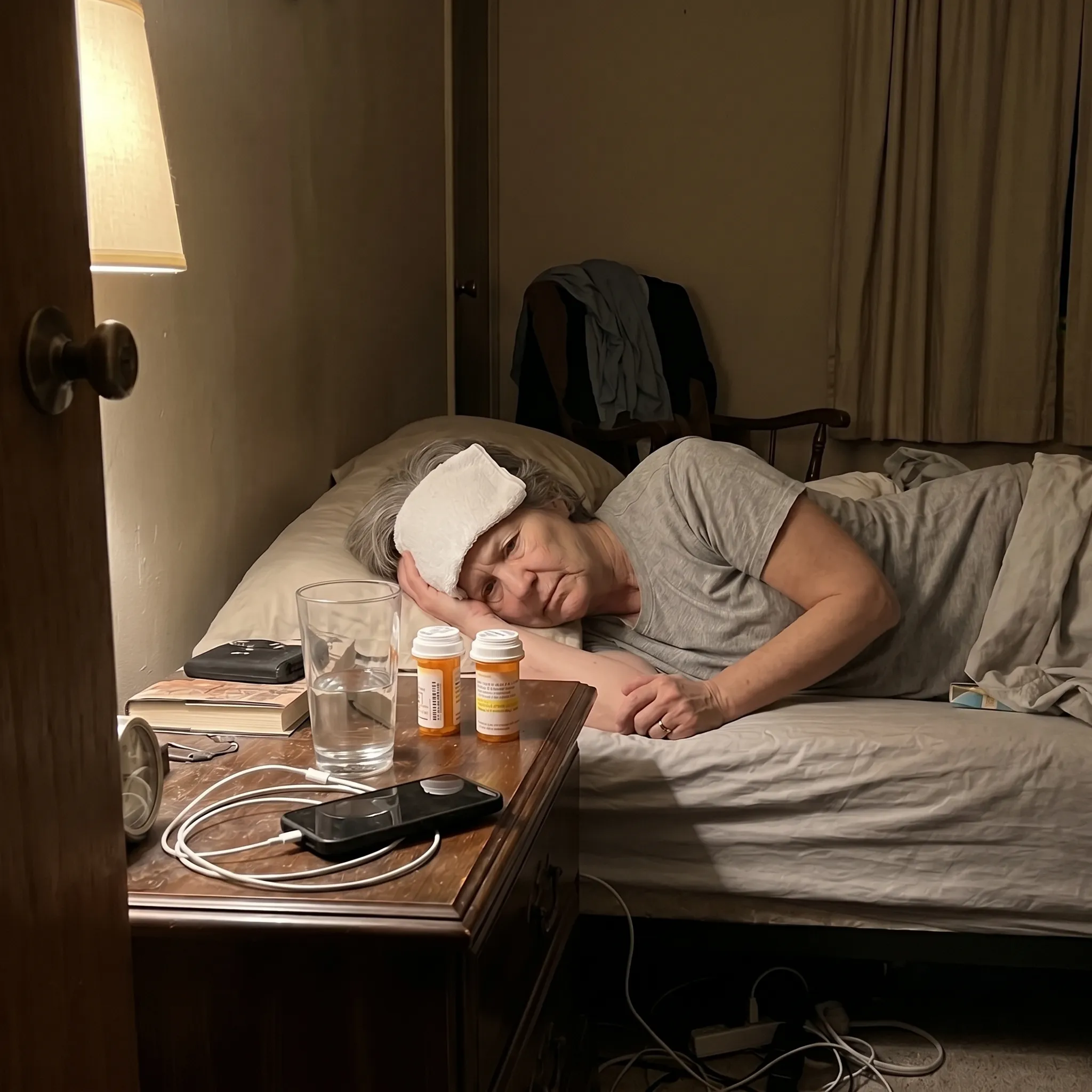
My mom has had hormonal migraines since before I was born. She never ignored them or tried to “push through.” She tried every preventative. Tried birth control. Tried HRT. Got Botox. Added Nurtec. Last October, an attack left her bedridden in the ER for 6 days. She was 52 years old. She took Sumatriptan the second she felt one coming. Got Botox every 12 weeks for years. Tried birth control. Tried HRT. Tracked her hormones and every attack. When Nurtec came out in 2020 she was one of the first few patients to be prescribed it. She did everything her neurologists told her. That ER stay lasted 6 days. She came home and spent another 5 in bed. Her bedroom door is still the first thing I look at when I walk into her house. I hate seeing it closed. If it’s closed, part of me is six years old again waiting for her to come out of that dark room. I need to tell you what happened to my mom. Because every week I see posts on Facebook from women like her, “Botox helps everything except my hormonal migraines,” or “my triptan works until my hormones shift,” and it makes me physically sick. If you're the daughter of a woman with hormonal migraines, or you suffer from them yourself, please read this whole thing. I know it's long. I know you're scrolling. I know you have things to do. A few months ago I would have given anything, everything, for someone to explain what I'm about to tell you. My mom was 21 when she had my older sister. Before that, she had never had a migraine in her life. Pregnancy came and went normally, but after she stopped breastfeeding and her period returned, something changed. A day or two before her cycle she would get a pounding pain drilling behind one eye, nausea so bad she had to lie perfectly still to keep from throwing up, and light was so unbearable to her that even the glow from the hallway made her pull the covers over her face. The first time, she blamed it on exhaustion and being a new mom. But when the same migraine came back with her next period, then again the month after that, she started to realize it wasn’t random. She eventually took the pattern to a neurologist. “Menstrual migraine,” he told her. “The hormone drop around your period is triggering the attack. We can see when it’s coming, so instead of waiting for the migraine, we’re going to try preventing it before it starts.” He prescribed Frova and had her begin taking it around the days her period was due, then continue through the part of her cycle when the migraines usually hit. Mom went home and marked those days on the calendar. If her period was supposed to start Friday, she knew exactly when the medication started. She kept the tablets in her purse and another pack beside the bed. She tracked the first day of every period, every migraine, how long it lasted, whether she threw up, whether the medication stopped it or only pushed it back a few hours. For a while, that gave her hope. Some months the migraine came later. Some months it was shorter. There were even cycles where she thought they might finally have it under control. Then there were months when she took every prescription exactly when she was supposed to and still ended up completely incapacitated. So the next step the neurologist tried was to control the hormone drop itself. First came estradiol patches around her period. When that still didn’t stop the attacks, they moved to continuous birth control so she could skip the hormone-free week altogether. One pill barely changed the migraines. Another made them worse. A different one helped smooth out her cycle, but brought depression, brain fog and enough weight gain that she eventually couldn’t justify staying on it. She kept trying because every new prescription came with the same possibility — maybe this was the one that would finally let her stop planning her life around her period. For years, she planned everything around her cycle. Trips got checked against the calendar before they were booked. She stopped agreeing to weekend plans if they landed too close to the days she usually got sick. At my sister’s first birthday, family came over for cake and pictures while Mom spent the whole afternoon upstairs with the curtains shut because another migraine had broken through anyway. Her entire life was revolving around preventing something she could never completely prevent. And she kept doing everything they told her to do. Because the neurologist said to. She took the Frova around her cycle. Wore the estradiol patches. Tried the birth control. Changed the birth control. Kept the calendar. Kept the rescue medication close. Went back every time something failed and tried whatever they gave her next. She did everything right. By 2020, her neurologist had another option. Nurtec had just come out. My mom had been reading about it for months. Women in migraine groups were calling it the “miracle cure.” After years of doing everything right, she finally thought this might be different. Her neurologist prescribed it and told her to keep tracking the attacks. So she did. August: 12 migraine days. September: 13. October 16th: 8 migraine days already. The worst month she had ever recorded. Mom came home from that appointment and sat at the kitchen table with the same black notebook she had been tracking everything in for years. She didn’t say anything for a long time. Then she said, “I’ve tried everything they’ve given me. How is this getting worse?” I told her to give the Nurtec just one more time. I told her the neurologist said it could take a few months. I told her to trust the process. She nodded. She kept taking the Nurtec. She kept filling in the black notebook. She kept checking the calendar every morning and carrying her rescue medication everywhere she went. And before October was over, she had the worst migraine of her life. Nine days later — nine days — I woke up at 2:17 AM to my phone ringing. It was Mom. By the time I got to her house, she was sitting on the bathroom floor with an ice pack pressed against the side of her head and a towel over her face. She couldn’t keep water down. She could barely open her eyes. I drove her to the ER. By the time they got her into a room, she couldn’t tolerate the fluorescent lights at all. Not “they were bothering her.” She physically couldn’t open her eyes. The nurse shut off every light she could and Mom still kept the towel pulled over her face. The ER doctor — a woman who looked younger than me — went through her chart, the Nurtec, the Frova, the hormone treatments, everything she had already taken that night, and her face did this thing. “We’re going to give you an IV migraine cocktail and try to break this. If we can’t get the pain under control, we’re admitting you.” “But I took the Nurtec,” Mom said. The doctor just looked at her. “I know. I’m sorry.” Mom spent 6 days in the hospital. I learned things about migraines I never wanted to know. I learned what a “migraine cocktail” was because I watched them hang one after another beside her bed. I learned that sometimes the pain would drop from a nine to a six and everyone would get excited, only for me to come back a few hours later and find the room dark again with Mom curled on her side holding her head. I learned that when a migraine refuses to break for days, they call it status migrainosus. It means the attack just keeps going, long after the point where everyone expects it to stop, and the medications that normally give you some kind of escape stop being enough. For Mom, nothing was breaking it. Day 3, they gave her another migraine cocktail. For a few hours she said the pain was finally easing, but that night I walked back into the room and found the towel over her face again. Day 4, she tried to eat and threw it back up. The nurse brought another ice pack and Mom whispered, “I just want this to stop.” Day 5, she stopped asking when she could go home. I sat beside her bed watching her lie perfectly still in that dark room and realized I was six years old again. Same ice pack. Same Mom. Same feeling that maybe if everyone stayed quiet enough and kept the lights off, eventually she would come back. Except now I was sitting in a hospital instead of outside her bedroom door. Day 6, the pain finally came down enough for them to discharge her. I drove her home that afternoon. The black notebook was still sitting on the kitchen table with the Nurtec beside it, and her calendar was still open to October with every migraine day marked in her handwriting. Her ice packs were stacked in the freezer, the blackout curtains upstairs were still closed, and after six nights in the hospital she walked through the front door and went straight back to the same dark bedroom she had spent years trying to stay out of. I sat downstairs for almost two hours looking at that notebook. Thirty-one years of prescriptions, appointments, hormone treatments, calendars, rescue medications and doing exactly what she was told, and we had just spent six nights in a hospital trying to stop one migraine. A few days later, I brought my daughter over to check on her. She stood at the bottom of the stairs, looked toward Mom’s bedroom and asked me, “Is Nana still in the dark room?” I told her Nana’s head still hurt and that we needed to keep our voices down. She nodded, waited a second, then whispered, “Can she come downstairs today?” I knew those rules before she even asked. Don’t turn the lights on. Keep your voice down. Don’t open the bedroom door. Maybe Mom will come downstairs later. They were the same rules I had learned when I was her age, and now I was standing there teaching them to my own daughter. After Mom came home, I tried to go back to normal. I couldn’t. Because every time I opened Facebook I saw women like my Mom posting things like, “Birth control made my migraines worse.” Or, “My meds help with my other migraines, but the hormonal ones still break through. What else am I supposed to do?” And I knew — I KNEW — some of them were doing exactly what Mom did. The prescriptions. The hormone treatments. The Botox. The tracking. And still ending up feeling as if their body were betraying them. I couldn’t just sit there and watch it happen. So I started researching. Not because I wanted to. Because I had to. Because if Mom could spend more than thirty years doing everything her doctors told her and still end up hospitalized for six days — if my daughter was already learning the same rules I learned as a kid — then I needed to know what everyone was missing. I read for weeks. Neurology papers I had to read three times to understand. Hormone research. Migraine forums where women described Mom’s exact treatment history. And one thing kept coming up, over and over, that no neurologist had ever explained to us. The reason Mom’s hormonal migraines kept breaking through is that the treatments were addressing the trigger and the attack. They weren’t addressing what the hormonal shift was draining underneath it. Specifically: magnesium. Magnesium is one of the minerals your brain relies on to regulate nerve signaling, blood vessels and how easily the migraine threshold gets crossed. When hormonal shifts pull magnesium down, the brain becomes more reactive and easier to push into an attack. And here’s what no one told us. The hormone treatments addressed the hormonal swings. Botox reduced how often the migraines hit. Nurtec was supposed to stop more attacks from breaking through. But none of them replaced the magnesium the hormonal shifts kept draining. Read that again. Mom wasn’t ending up in that dark room because she wasn’t treating the migraines aggressively enough. She had been treating them aggressively for thirty-one years. The hormonal shifts were lighting the match — but the magnesium drain was leaving her brain easier to ignite. And here’s why controlling the hormones alone never solved it: changing the hormonal swing addresses the trigger. It doesn’t replace what that swing keeps pulling out. That’s why the hormonal migraines kept breaking through. She spent thirty-one years trying to control the thing that was changing her hormones without anyone ever addressing what those changes were draining from her. I sat with that for three days before something clicked. Mom had already tried magnesium years ago. I have a memory as a child of her grabbing a bottle whenever she was at the pharmacy because somebody had mentioned it for migraines. She’d take it for a while, stop when nothing changed, then try again months later when somebody else swore by it. Eventually she quit altogether. It wasn’t helping, and every time she tried taking more, it tore up her stomach. That’s when I went looking through the bathroom cabinet and found a few half-empty bottles of magnesium pushed behind everything else. Magnesium oxide. Magnesium citrate. A generic “magnesium complex.” Different labels, different promises, same result. She’d been taking it on and off for years. Because one neurologist mentioned it. Because every migraine forum eventually brought it up. Because by that point, if somebody said something might help, Mom tried it. I pulled the first bottle out and started reading the label. Magnesium oxide. I called my sister-in-law. She’s a pharmacist, and she’s one of the few people I actually trusted to give me a straight answer. I told her about the bottles in Mom’s cabinet and read her the label. “Magnesium oxide,” she said. “That’s one of the cheapest forms you can buy. It barely gets absorbed, which is why so much of it stays in the gut and tears up your stomach. The bottle says magnesium, but that doesn’t mean your body is actually getting enough of it.” Then she said something I’ll never forget. “If your mom had been taking a form like glycinate that she could actually absorb, at a real migraine dose, her story might have been very different.” I stopped breathing for a second. “Why didn’t any of her doctors tell her that?” She was quiet for a long time. “Because most people are just told to take magnesium. Nobody explains that the form, the dose, and whether you can actually tolerate taking it every day changes everything.” I went to CVS the next day. I stood in that aisle for almost forty-five minutes. Magnesium oxide. Magnesium citrate. Gummies. Powders. “Calm” blends. Sleep formulas. Muscle support. Stress support. Generic magnesium oxide — $9.99 a bottle, 500 mg, the cheap stuff. I bought the oxide. Mom took it for three weeks. Nothing. I started digging again, and I kept thinking about something my sister-in-law had said on the phone. She’d mentioned the word “glycinate” almost in passing, so I started looking into why that form was different from the oxide Mom had been taking. What I found made me throw the magnesium I bought in the trash. Magnesium oxide barely dissolves in the gut. A lot of it stays there instead of getting absorbed, which is also why higher doses can leave you running to the bathroom or feeling sick. Glycinate works differently. The magnesium is bound to glycine, an amino acid, which makes it one of the most absorbable forms of magnesium and much easier on the stomach than oxide. Instead of most of it sitting in the gut, far more of the magnesium actually gets absorbed into the bloodstream where the body can use it. I had been doing the right thing in the wrong form. I was furious. I’m still furious. About two weeks later I was up late reading the same migraine forums I’d been buried in since Mom got out of the hospital, and a woman posted something that stopped me cold. She said she’d been dealing with hormonal migraines for years. She’d tried prescriptions. Birth control. Magnesium too — sound familiar? — and eventually realized the cheap magnesium she’d been taking wasn’t the same thing as glycinate. She switched to magnesium glycinate and started taking 400 mg consistently every day. Her migraines dropped from 20 a month to 2. I read that post four times. I started looking into the formula she mentioned. And what I learned is that there are three things a serious magnesium product for hormonal migraines has to get right, or you’re just buying another bottle for the cabinet. It has to use a form your body can actually absorb and tolerate every day. That’s glycinate or bisglycinate — magnesium bound to glycine instead of the cheap oxide Mom had spent years taking. It has to give you a real elemental magnesium dose. Not a giant number splashed across the front of the bottle that turns into a tiny amount of actual magnesium when you read the Supplement Facts. Around 400 mg a day kept showing up again and again in migraine protocols and in the women who said magnesium finally made a difference. And it has to be taken consistently. Hormonal shifts don’t wait until you remember the bottle is in the cabinet. The whole point is keeping magnesium available before the next shift happens. Right form. Real dose. Every day. I went back through everything I’d seen at CVS. Most of it was built for sleep. Stress. Muscle cramps. Relaxation. Generic magnesium for everybody and everything. None of it seemed built around the reason Mom was taking magnesium in the first place. That’s when I found Magnera. It was the only formula I could find that checked all three. Magnesium bisglycinate. 400 mg of elemental magnesium. Two capsules a day, made to be taken consistently. 90-day money-back guarantee if it didn’t work for her. I almost didn’t order it. After the CVS aisle. After the half-empty bottles in Mom’s cabinet. After thirty-one years of treatments. After six nights in the hospital. After everything. But Mom had just come home from the worst migraine of her life. My daughter was already learning the same dark-room rules I learned when I was her age. And for the first time, I felt like I finally understood the piece nobody had connected for us. I ordered it. When the bottle came, I brought it over and set it on the kitchen table beside the same black notebook she had been filling with migraine days for years. When she came downstairs, I explained the 400 mg dose, the bisglycinate, and why this was different from the magnesium she had bought at pharmacies all those years ago. She looked at the bottle for a few seconds and said, “I’ve already tried magnesium.” “I know,” I told her. “Just give me three months.” She did. She didn’t stop the Botox, throw away the Nurtec, change her hormones again, or suddenly start doing anything differently with her life. She kept the same medications, the same routines, and the same black notebook. The only thing she changed was taking two capsules every single day. The first month wasn’t some miracle. Her period came and she still had a hormonal migraine, but instead of disappearing upstairs for three days, she was back downstairs the next morning. The next cycle came and the same thing happened. She still felt the hormonal shift coming, but the migraine wasn’t swallowing the entire week the way it had for most of her life. By the third month, the difference was sitting there in her own handwriting. The stretches of migraine days around her cycle were getting shorter. The attacks weren’t flattening her for days at a time. For the first time in years, the black notebook wasn’t showing the same pattern repeating itself month after month. Then one morning she called me and casually mentioned that her period had started the day before. I waited for the rest, because for most of my life that sentence had meant the bedroom door would be closed, the curtains would stay shut, an ice pack would be somewhere near her head, and whatever plans she had made for the next few days no longer mattered. Instead she said, “Your daughter wants pancakes. Are you bringing her over or not?” I drove over. Her bedroom door was open, the blackout curtains weren’t covering the windows, and Mom wasn’t upstairs trying not to move because moving made her throw up. She was in the kitchen with my daughter arguing about how many chocolate chips belonged in a pancake. A few months earlier, that same little girl had stood at the bottom of the stairs and whispered, “Can Nana come downstairs today?” Now she didn’t have to ask. For thirty-one years, Mom’s hormones had dictated what happened next. Her period wasn’t just her period. It was a warning that the family might lose her for the next few days. Trips were checked against it. Weekends were checked against it. Plans were made with an invisible asterisk because everyone knew Mom’s body could change them at the last minute. Now her period had started, and nobody in the house was bracing for impact. I’m not a neurologist. I’m not a scientist. I’m not selling anything and I don’t get one penny from any of this. I’m a daughter who spent most of her life watching her mom disappear when her hormones changed, and a mother who realized her own daughter might grow up knowing Nana mostly as the woman behind a closed bedroom door. Here’s what I know because I lived it: Hormonal treatments can change the hormonal swing. They don’t replace the magnesium that swing keeps draining. Botox can reduce how often the migraines hit. Nurtec can help prevent more of them from breaking through. But neither one replenishes what hormonal shifts keep pulling out. Magnesium oxide says “magnesium” on the bottle. But if it barely gets absorbed and tears up your stomach before you can take it consistently, that label doesn’t mean much. Bisglycinate is different. It’s one of the most absorbable forms, easier on the stomach, and actually makes sense for something you need to take every single day. Mom spent thirty-one years trying to control her hormones, prevent the attacks, rescue the attacks, track the attacks and plan her life around the attacks because nobody ever explained what those hormonal changes were draining underneath it. I wish someone had told us before she was 21. Before the first migraine after my sister was born. Before the Frova. Before the estradiol patches. Before the birth control. Before the Botox. Before Nurtec. Before the black notebook filled up with migraine days. Before six nights in a hospital trying to break one attack. I can’t give Mom those years back. I can’t give myself back the childhood days I spent waiting for her bedroom door to open. But we can still go forward. Mom can. My daughter can. And if you’re reading this because your hormones keep changing your migraines, you can too. The page shows exactly what’s inside Magnera — 400 mg of magnesium bisglycinate, two capsules a day, made in the USA at an FDA-registered facility, and backed by a 90-day money-back guarantee so Mom could actually give it a fair shot. That was enough for me. After everything she had already tried, I wasn’t looking for another miracle. I just wanted something that finally made sense for the exact problem we had spent thirty-one years fighting. If your migraines change when your hormones do, and you’ve already tried magnesium before, this is the one I’d at least look at before writing the whole idea off. 👇 https://viveehealth.com/products/magnera Mom used to tell me, “You can’t get the time back. You just make the next day count.” For the first time in a long time, she actually gets to. — Jennifer Maries, age 26, Topeka, KS P.S. Mom’s black notebook is still on the kitchen table. I still can’t move it. Every time I walk past it, for one second I expect to open it and see another month covered in migraine days. For one second I’m six years old again waiting for that bedroom door to open. Thirty-one years of prescriptions. Hormone treatments. Botox. Nurtec. Rescue meds in every purse. Six nights in the hospital trying to break one migraine. And all those half-empty bottles of magnesium sitting in the bathroom cabinet because nobody ever explained that the form, the dose, and taking it consistently actually mattered. A few months ago my daughter stood at the bottom of the stairs and whispered, “Can Nana come downstairs today?” Now she runs through the front door expecting Nana to already be there. Please. Don’t spend another year planning your life around what your hormones might do to you. Don’t let your kids learn the same dark-room rules mine did. 👇 https://viveehealth.com/products/magnera P.P.S. I don’t work for Magnera. I don’t get a penny from this. I’m writing this late at night because Mom’s bedroom door is finally open and my daughter is asleep upstairs and women are still sitting on Facebook at 2 AM posting “my hormonal migraines still break through,” “I already tried magnesium,” and “what else am I supposed to do?” I know exactly what that question looks like after thirty-one years. Share this with any woman you love whose migraines change when her hormones do. Even if Botox helps the other ones. Even if Nurtec helps sometimes. Even if she already tried magnesium. Especially then. Please.
More from Quiet Head Stories

For Those Who Have Hormonal Migraines
Quiet Head Stories

Read if you're having 10+ migraines every month☝️
Quiet Head Stories

For Those Who Have Hormonal Migraines
Quiet Head Stories

For Those Who Have Hormonal Migraines
Quiet Head Stories

For Those Who Have Hormonal Migraines
Quiet Head Stories
For Those Who Have Hormonal Migraines
Quiet Head Stories
For Those Who Have Hormonal Migraines
Quiet Head Stories

For Those Who Have Hormonal Migraines
Quiet Head Stories

For Those Who Have Hormonal Migraines
Quiet Head Stories
For Those Who Have Hormonal Migraines
Quiet Head Stories

For Those Who Have Hormonal Migraines
Quiet Head Stories

Read if you're having 10+ migraines every month☝️
Quiet Head Stories

 Add to Chrome