Read if you're having 10+ migraines every month☝️
Ad Copy
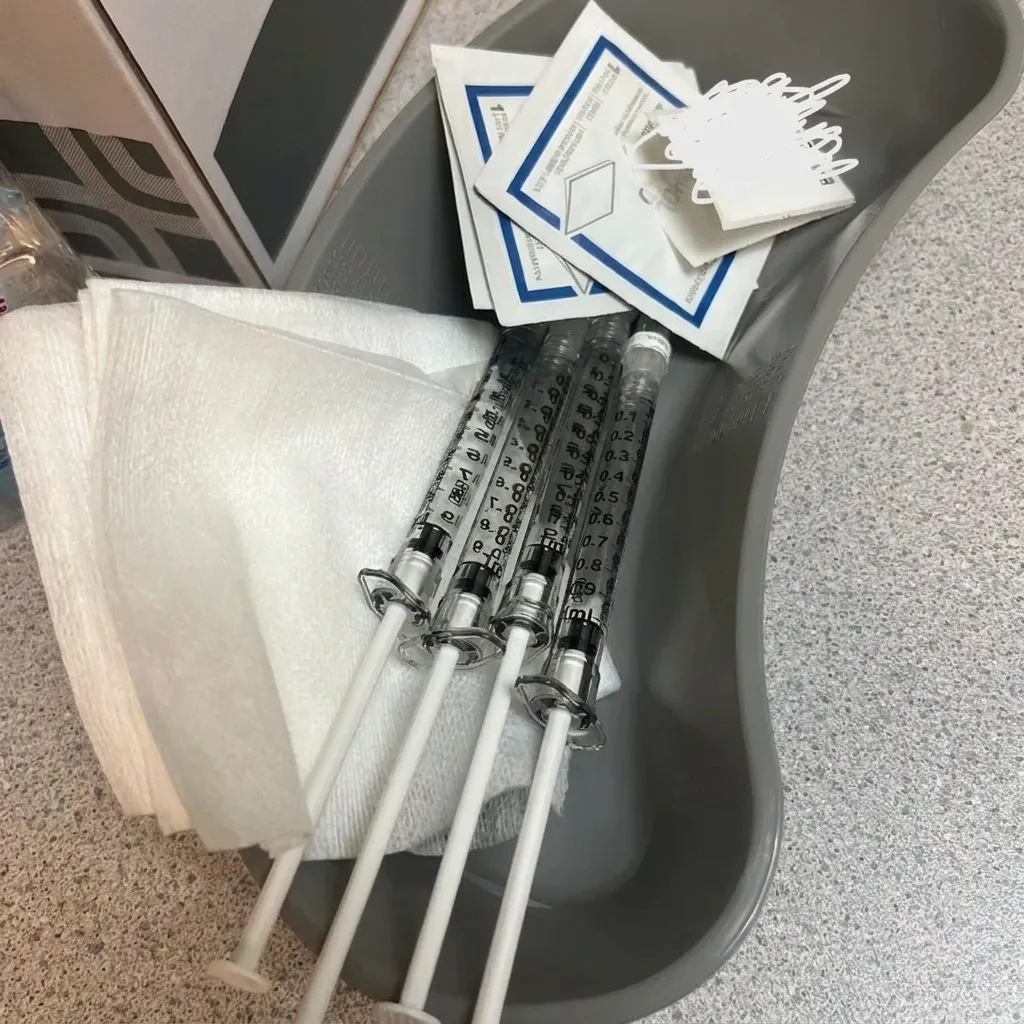
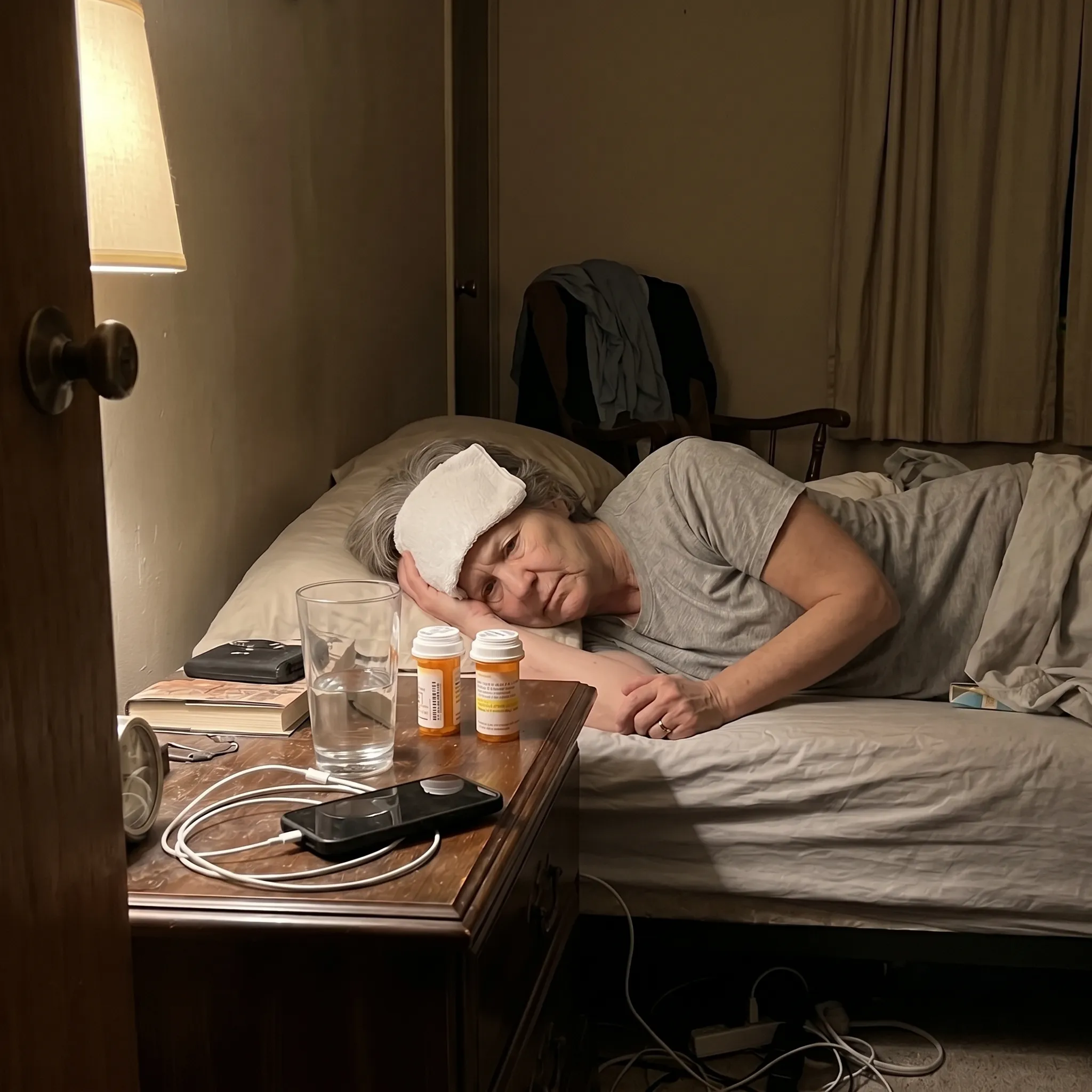
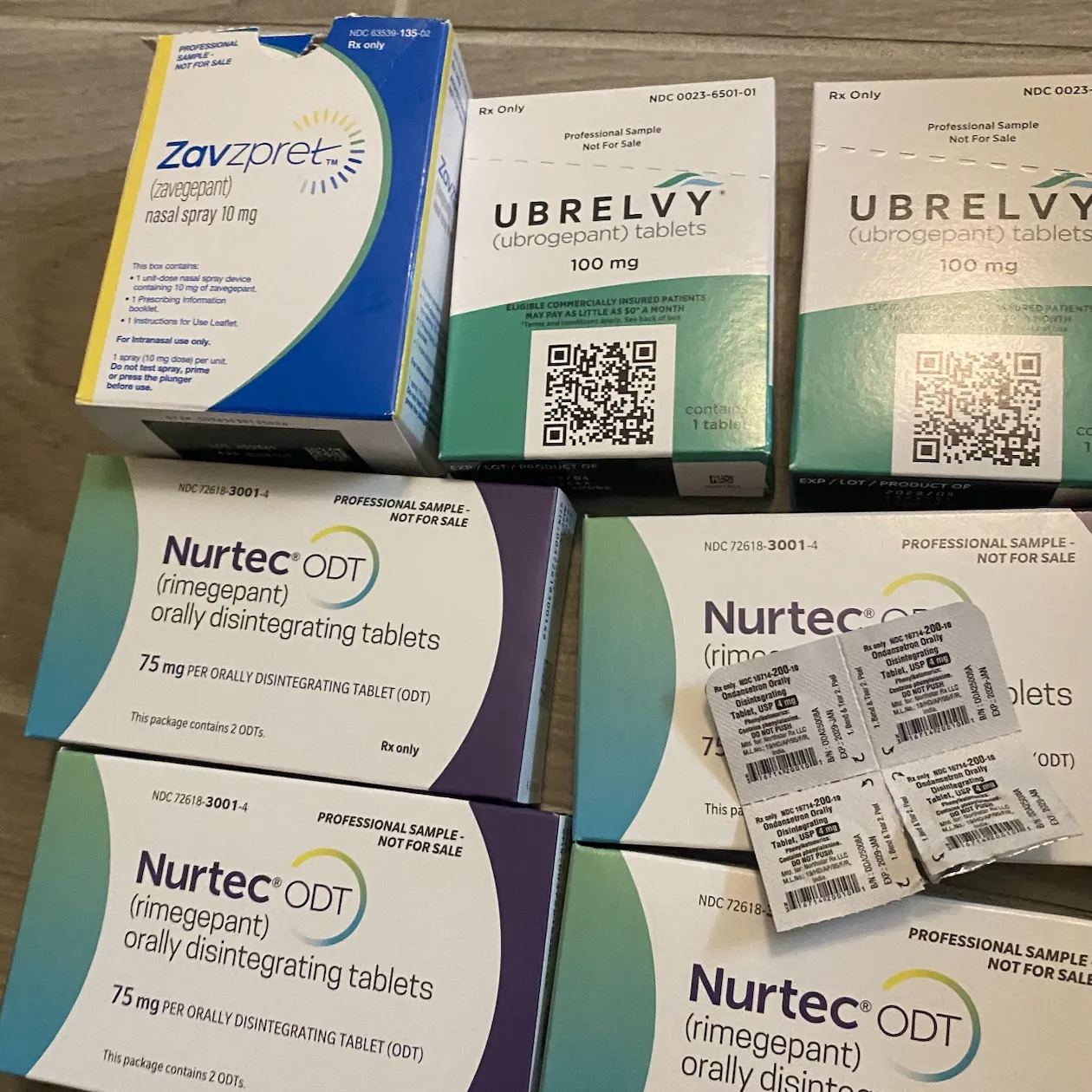
My neurologist said it was time to try Botox injections. I asked for 6 more weeks first. Here's what happened to my migraines. I'm fifty-five years old, and I've had migraines since I was ten. Not headaches — I need you to understand that distinction before anything else. For most of my life, people heard the word and pictured something an aspirin could touch. What I've had is an ice pick behind my eye that gets worse with every movement of my head. Then pure confusion sets in. I could be mid conversation with somebody and just go blank, or sometimes walking in a room and forgetting what the hell I was in there for. That's been my life for 45 years. My mother had migraines. My grandmother had them too. Growing up in my family, you didn't see a doctor for it, you closed the curtains, you got through it, and you put on a mask and pretend everything was fine. So for years, that's what I did. I assumed this was my curse to inherit, the same way I'd inherited my mother's eyes. At eighteen, something in me finally pushed back against that. I made an appointment in 1989, tired of losing days to something nobody in my family had ever bothered to name. I remember sitting in that waiting room certain that whatever this was, it would finally have an answer. It did have a name. What it didn't have, I'd learn over the next thirty-seven years, was anything close to a lasting fix. The first neurologist started me on Topiramate. It got my migraines down to a reasonable amount, but the brain fog was too much. I literally felt stupid, like a shell of a human, all day, every day. So I tapered off that. We moved to beta-blockers. Then tricyclics. Each one bought me a season, sometimes a year, before the migraines found their way back through. By my late twenties, I'd stopped letting myself hope a new prescription would be the last one. So I looked elsewhere. Magnesium. Riboflavin. An elimination diet so strict I lived on a handful of foods for two years, waiting for a pattern that never fully revealed itself. And in my early thirties, desperate in a way I'm not ashamed to admit, I got a daith piercing because a woman in a forum swore it had changed her life. It didn't do shit. That was the year I stopped trusting anything that sounded like it belonged on a wellness shelf instead of in a doctor's office — a skepticism I still carry into every conversation about anything that isn't a pill. That was simply my life. Tracked. Managed. Never actually fixed. I would lay down every night and pray for a better life. A life where I could make real plans and actually show up. A life where people were excited to see me. A life actually worth living. I stopped really expecting an answer. Then, a few years ago, the same neurologist I'd been seeing since 1989 told me about a "breakthrough in migraine medication." The name was Nurtec. Nurtec did something none of the others had. The first month, my migraine days dropped from twenty-four to nine, and I sat on my kitchen floor and cried — not from pain, from relief. I started making plans two weeks out again, the way I hadn't in years, and actually kept them. I let myself believe, quietly, that this was simply what my life looked like now. However, by month five, the days had started creeping back. Slowly at first. Then multiply every week. I sat across from my neurologist again, forty years almost to the year since I'd first sat across from a doctor about this exact thing, and he said the sentence I'd been dreading since I read what usually comes after Nurtec stops working. "I think it's time we talk about Botox." I'm terrified of needles. I always have been, and I've never pretended otherwise. The thought of dozens of injections into my own scalp and forehead, every twelve weeks, indefinitely, made something in my chest close up before he'd even finished the sentence. I asked him for six weeks first so I can just do some more research. He said Botox wasn't going anywhere, and wrote a follow-up. I spent those six weeks reading everything I could find — not to talk myself out of it, but to find a reason to be less afraid of it. Clinical trial data. Injection site diagrams. Forum threads from women who'd been on it for years, the good ones and the bad ones both. Somewhere in week four, I stopped searching "Botox for migraines" and started searching something closer to the actual question I had: Why does a medication like Nurtec work, and then just stop? Most of what came up was the kind of thing I'd learned to scroll past years ago. But one article written by a headache specialist opened differently. It didn't promise anything. It started with the trigeminal nerve. I knew that name already — I'd seen it before, on a diagram taped to the wall in my neurologist's office. But he had never really explained what it does. It was just a poster. Turns out, it's not just a random nerve in your head. It's where the migraine actually starts. Here's the part nobody had ever told me: that nerve doesn't reset after an attack. Each migraine leaves it a little more sensitive than it was before. It doesn't go back down. It only climbs. Think of it like water slowly filling a glass. Every attack adds a little more. A medication is like a hand holding a lid over the top — it can keep most of it in for a while, hold the line, keep you dry. But the water never stops rising underneath that lid. Eventually it rises past what the lid can hold, and it starts spilling over again. Not because the lid got weaker. Because the water never stopped climbing. That's Topiramate. It held the line when my nerve was still low enough for it to work. But every attack in between kept adding to the glass, until one day it was rising too fast for that lid to hold. That's Nurtec, too. It held for months, at a level none of the others ever reached. But it was never going to hold forever, because the water underneath it never stopped rising either. It was never that the medications stopped working. It was that my nerve kept getting more sensitive underneath every single one of them, and none of them were ever built to lower the water — only to hold the lid down a little longer. Forty-five years of attacks. Forty-five years of that glass filling. No wonder nothing had ever lasted. The part that came next in this article is the part where I almost stopped reading. And where you probably would too. Because the solution for this nerve was light… Not a lamp you sit in front of for an hour. Not some ambient glow you're supposed to relax under. A specific, narrow color of green light, delivered directly through the eyes. A researcher named Dr. Rami Burstein accidentally discovered this after testing every wavelength of light on migraine patients. Every color on the spectrum made the patients' attacks visibly worse. Except one. Green light, at exactly 520 nanometers. The only one in the entire trial that brought pain down instead of agitating it. But green light didn't get marked down as just pain relief. A group of researchers at the University of Arizona wanted to see if it could have a longer-term effect. So they took a group of migraine patients who'd failed every medication on the market and put them on a green light protocol for ten weeks. The results: 60% of them saw their migraines drop down to single digits a month. I know how that sounds. Too good to be true. The idea that light could be the answer instead of the enemy felt backward. But here's what the article got at next, and it's the part that actually kept me reading. That specific green light hits your eye and travels down the same visual pathway that's tangled up in all of this. But instead of setting off a strong reaction the way normal light does, it barely registers. Just a small, weak signal. Doing that over and over, apparently, is what eventually calms the nerve back down. There was something else in there too, about the light actually getting your brain to make its own natural painkillers. The same category as morphine, just something your own body was already capable of producing. I don't fully understand the science. But something about it made sense in a way none of my prescriptions ever had. The best way I could sum it up is that it's like physical therapy for one specific nerve. You retrain it until it stops overreacting, the same way you'd retrain an overreacting joint. Just through the eyes instead of a resistance band. After I finished the article, I went and verified every source it cited. It was real. Which meant I actually had something to try before they injected 32 needles into my forehead. But as a skeptic, I needed to find the single most efficient device that would at least guarantee an honest shot at this new mechanism. So at 5am, I searched through migraine forums. Reddit threads. Migraine Meanderings. I reviewed over fifteen different products in my thirty minute search, and all of them looked like cheap Amazon LED light bulbs, or didn't even mention a wavelength at all. But one name kept coming up every so often. Vivee. A medical grade narrow-band LED mask, made for the exact 520 nanometers. Designed to deliver the wavelength directly to the eyes and face, all in a 10 to 20 minute nightly routine. Every box checked. So I ordered it that morning. When it arrived three days later, I sat on the edge of my bed that night and just looked at the box for a minute before opening it. Forty-five years of migraines. Every drug, every diet, a hole in my ear that did nothing. And now I was about to try a mask. I put it on. Ten minutes. Eyes open, soft green light filling the room. It wasn't what I expected. Gentle. Nothing like the overhead lights at the grocery store or the sun through my windshield. I want to tell you that everything changed in a week. It didn't. The first week, nothing dramatic happened. Maybe one less migraine than usual. Hard to say if it was the mask or just a normal fluctuation. The second week, something small happened. I woke up without a migraine, not even a little headache. Just clear. I told myself it was luck. Forty-five years of this teaches you not to trust a good week. I'd had good weeks before that meant nothing. But I kept using it anyway. And when my Botox follow-up reminder popped up on my phone, I called and pushed it back a month instead of canceling it. Not because I believed yet. Because I wasn't ready to stop finding out. On the sixth week, I went nine days without a migraine. The longest stretch I could remember in years. That's when it really started to feel like migraines stopped dictating my life, and the thought of a normal life really started to appear. As of today, four months of using the mask, I've averaged 1 to 3 migraines a month. I'm not cured, I want to make that known, but the ones that do slip by every now and then are nothing compared to how they were a year ago. I say yes to things now without doing the math first. I make plans two, three weeks out and actually keep them. I used to pray every night for a life like this, where I could trust my own body to work with me and make plans and actually show up to a place where people were excited to see me. A life actually worth living. Just a few days ago, I had an appointment with my neurologist. The same one since 1989. I explained everything to him. The article. The trigeminal nerve. The mask. What happened over the last four months. At first, he was skeptical. Same way I was. But I'd done my research by now. I explained to him how the nerve had gone hypersensitive over forty-five years of attacks, and how green light was retraining it in a way no medication he'd ever given me was built to do. He listened. Then he asked to see my migraine log. I handed it to him. Four months of entries. Most of them blank. He didn't say anything for a while. He looked up from the log and said, "Whatever you're doing, keep doing it." Then he asked me to write down the name of the mask so he could look into it himself. This was the same doctor who told me Nurtec was a breakthrough. Who'd been prescribing me medications for thirty-five years. Who was ready to put 32 needles in my forehead two months ago. He didn't know this research existed. I'm not sharing this to bash my neurologist. He did what he was trained to do. He followed the standard treatment protocols. But those protocols were never built to reach the nerve that was actually causing my migraines. Here's what I need you to hear. Every month you spend cycling through medications that work for a few months and then stop, your trigeminal nerve is getting more reactive. Not staying the same. Getting worse. Every attack you push through is making the next one more likely and more severe. That's the part no neurologist told me. The nerve doesn't plateau. It compounds. And every month you wait for a medication to accidentally work is another month of sensitization you'll have to undo later. I think about the forty-five years I spent between that first Topiramate prescription and a Wednesday morning at 5am searching through migraine forums because I was too afraid of needles to accept what came next. Forty-five years of attacks winding that nerve tighter while I cycled through medications that were never built to reach it. You don't need to spend forty-five years and a daith piercing and an elimination diet and a drawer full of supplements to find this out. I already did all of that. Vivee has a 60-day money-back guarantee. Use it every day. Ten to twenty minutes. The first week or two the nerve starts responding. Around week three the frequency starts dropping. By week six you'll know whether this is the thing that finally breaks the pattern. If it doesn't work, full refund. No questions. The fact that a small company will offer that and the pharmaceutical industry won't tells you something. I hope this helps someone. I really do. Because nobody should spend forty-five years feeling responsible for a failure that was never theirs. 👉 https://viveehealth.com/products/vivee-migraine-relief-mask P.S. The trigeminal nerve is the thing every migraine medication on the market is bypassing. Topiramate, beta-blockers, Nurtec, Botox — none of them reach it directly. 520nm green light is the only thing the research shows actually retrains it. But it has to be narrow-band, precisely 520nm, or you're just buying a green lightbulb that makes things worse. P.P.S. The 60-day money-back guarantee covers the full timeline. One to two weeks for the nerve to start responding. Three weeks for frequency to drop. Four to six weeks to see what your body does when the nerve is actually being retrained instead of medicated around. Forty-five years and thousands of dollars on medications and appointments, and that guarantee was the first time the math actually worked in my favor. P.P.P.S. They're a small company and they sell out. If they're in stock when you click, grab one. Every week that nerve stays wound tight is another week of attacks compounding on top of each other. I waited forty-five years. Don't. 👉 https://viveehealth.com/products/vivee-migraine-relief-mask
More from Quiet Head Stories

For Those Who Have Hormonal Migraines
Quiet Head Stories

Read if you're having 10+ migraines every month☝️
Quiet Head Stories

For Those Who Have Hormonal Migraines
Quiet Head Stories
For Those Who Have Hormonal Migraines
Quiet Head Stories

For Those Who Have Hormonal Migraines
Quiet Head Stories

For Those Who Have Hormonal Migraines
Quiet Head Stories
For Those Who Have Hormonal Migraines
Quiet Head Stories
For Those Who Have Hormonal Migraines
Quiet Head Stories
For Those Who Have Hormonal Migraines
Quiet Head Stories

For Those Who Have Hormonal Migraines
Quiet Head Stories
For Those Who Have Hormonal Migraines
Quiet Head Stories

For Those Who Have Hormonal Migraines
Quiet Head Stories

 Add to Chrome