
For Those Who Have Hormonal Migraines
Ad Copy
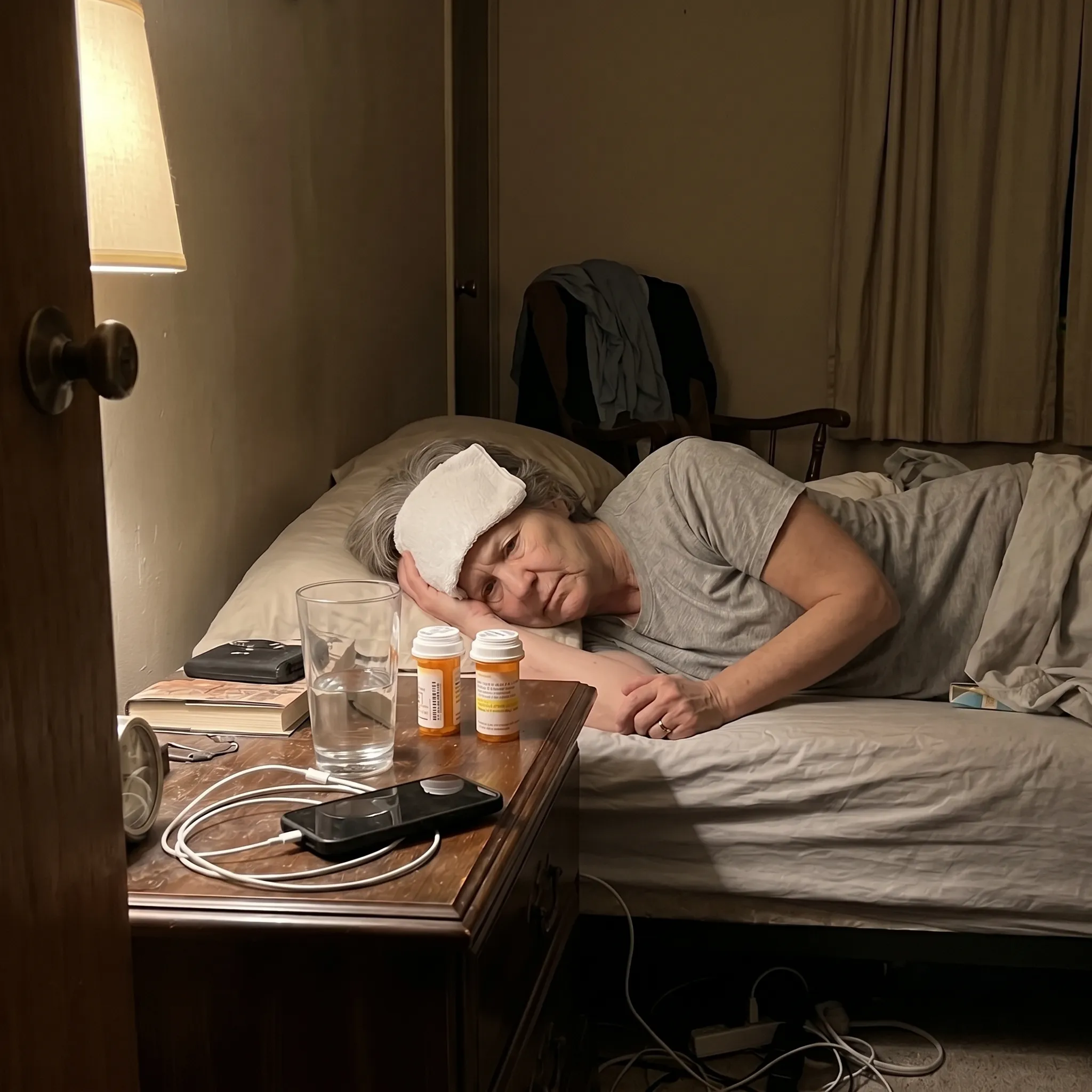
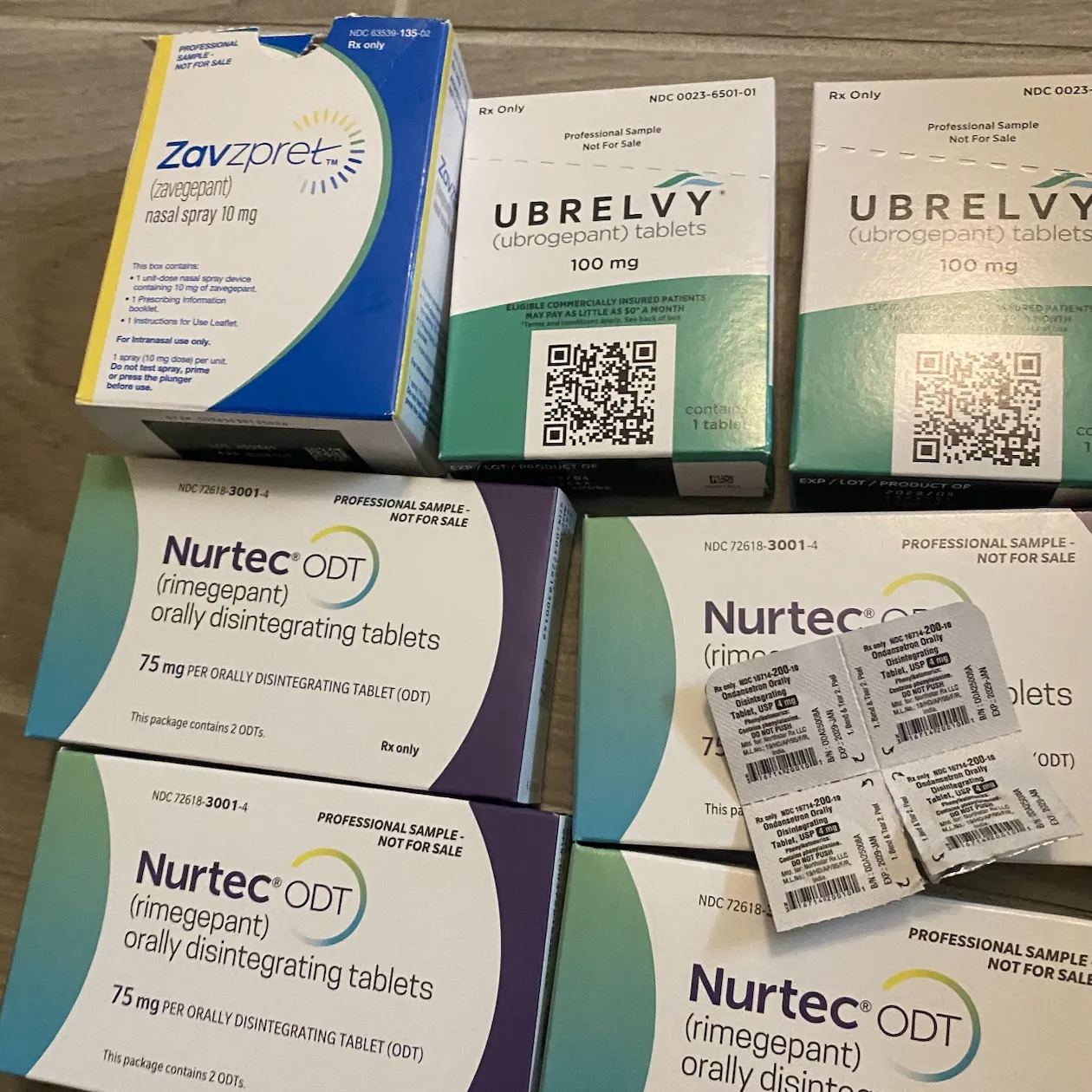
I’m 45. I had to quit teaching third grade halfway through the school year, and I never told anyone the real reason. I told everyone I was burned out. The truth is that by lunchtime, the pain behind my eye would be throbbing so badly it felt like knives going in and out of my head. I’d try to read a storybook to the class, and the words on the page would start shaking and blurring together. So I’d say, “I’m sorry, guys. We’ll finish this tomorrow,” and ask the teacher next door to watch my class while I sat in the dark until the pain came down. If you have chronic migraines, you already know the rest of it. 😣 You wake up, and before your feet hit the floor, you’re already checking your head. 😣 You’ve got emergency medication in your purse, your car, your desk drawer, and beside the bed. 😣 They work sometimes. Other times, you’re left in a dark room with a cold relief cap pressed against your head for hours. 😣 You’ve quietly stopped doing things. Field trips, dinners after work, weekend plans, anything you might have to cancel later. And you don’t announce it. You just stop. That was my day-to-day life for over twenty years. Then two years ago, my doctor prescribed Nurtec, and for the first time in as long as I could remember, something actually worked. Not halfway. Not just enough to take the edge off. I went almost six months without a migraine. At first I kept waiting for one to show up. I’d wake up in the morning and do that little mental check I’d done for years before I even got out of bed. How does my head feel? Is there pressure behind my eye? Is today going to be one of those days? Then over time I kind of just forgot I had migraines. Crazy, right? I could get out of bed, make coffee, and get ready for work without thinking about my head at all. That sounds like such a small thing, but after twenty years of migraines, it didn’t feel small. It felt like getting a piece of my life back that I had forgotten belonged to me. I honestly thought I had found the “miracle cure,” the one thing that was going to let me live normally again. Then last year my periods started changing. They got irregular. Sometimes they’d come earlier than I expected, sometimes later, and the pattern I’d known for years stopped making sense. And when my periods started changing, the migraines came back harder than anything I remembered. These weren’t the migraines I had learned how to live around for twenty years. I’d get hit out of nowhere and end up in bed unable to move without feeling like I was going to vomit. Sometimes I’d finally drag myself out of bed on day three or four and the pain was still bursting behind my eye. That’s what broke me. I had spent six months thinking I finally had my life back, and suddenly I was right back in the dark again, only this time even Nurtec wasn’t stopping it. When I finally brought it up to my doctor, I kept hearing the same explanation: “Oh, it’s perimenopause. Your hormones are changing.” And I knew that. I could see my periods changing, and I could feel that something in my body was different. But after hearing “it’s your hormones” over and over, it started to feel less like an explanation and more like I was being told this was just something I had to live with now. That was the part that made me want to scream. Because I wasn’t asking to be 25 again or for my body to somehow go backward. I just wanted to make it through one school day without wondering if I was going to bail out on 25 children who expect me to be a leader. My doctor did end up giving me something to try: hormone therapy. It made perfect sense to me at the time. If my hormones were causing the migraines, then fixing the hormones had to be the answer. So I tried it exactly how I was told, every day, for months. I kept waiting for that same feeling I’d had when Nurtec first started working, that sense that maybe I had finally found something I could trust again. But it never came. The migraines kept breaking through, and I was still missing school, still sitting in the dark, still trying to figure out whether I could make it through the next day without having to leave my classroom. Eventually I stopped thinking, “What else can I try?” and started thinking, “Maybe this is just my life now.” That was when I turned in my resignation halfway through the school year. By that point, I wasn’t looking for another miracle. I’d already thought I found one once. What I eventually found was an explanation. A woman named Lisa in a migraine group I’d been in for years mentioned that her migraines had changed during perimenopause too. She told me something her headache specialist had explained to her about hormonal migraines, and at first I honestly didn’t understand why it mattered. I had to read Lisa’s message a couple of times before it clicked, and when it finally did, I got angry. For years, every conversation had pointed me back to the same place: hormones. My hormones were changing, so naturally I assumed the only real solution was to somehow change or stabilize my hormones again. But what Lisa explained was that the hormones themselves weren’t the only part of the problem. Hormonal shifts can drain magnesium, and magnesium is one of the things your brain relies on to keep everything from becoming so sensitive and reactive. So when my hormones started swinging all over the place during perimenopause, I wasn’t just dealing with changing hormones. I was also dealing with a brain that had become much easier to push into a migraine. Lisa explained the main goal wasn’t to change my hormones again. It was to keep enough magnesium in my system every day so those hormonal shifts weren’t leaving my brain running low. That was the part nobody had ever explained to me. A hormonal problem didn’t necessarily mean the only answer was another hormonal solution. And for the first time in months, that actually gave me a little bit of hope. Then I remembered something. I had already tried magnesium. Years earlier, someone had recommended it for migraines, so I bought a bottle, took it for a while, didn’t notice much of anything, and eventually stopped. I messaged Lisa back: “Cool explanation, but I’ve tried magnesium before and it didn’t work for me.” She told me she had said almost the exact same thing to her specialist. But her specialist taught her that magnesium isn’t just magnesium. Different forms behave differently in the body, and a lot of the cheaper kinds are harder to absorb and more likely to just sit in your stomach instead of getting where you actually need them. The form she was taking was magnesium bisglycinate. Lisa explained it to me pretty simply. Bisglycinate attaches magnesium to an amino acid called glycine, so your body absorbs every gram of the magnesium you take and sends it directly to the brain. That was when I realized “I already tried magnesium” didn’t necessarily mean I had tried what she was talking about. Lisa sent me the one she had been using. It was called Magnera. She said she took two capsules a day, one in the morning and one before bed, and after sticking with it for a while her hormonal migraines had practically disappeared. I remember staring at that message because part of me still didn’t believe magnesium could make that much of a difference after my own experience with it. But at that point I figured I had already tried just about everything else, so I messaged her back and told her I’d give it a few weeks and see how it went. The first couple of weeks, I didn’t notice some huge overnight change. But I did notice I was starting to have more good days between the bad ones. The bigger change took a few more weeks of taking it every day. I still carry Nurtec in my purse. I’m not going to tell you I threw it away. But I wasn’t reaching for it nearly as often, and I stopped waking up every morning wondering what kind of day my head was going to let me have. And a couple months in, one of my old coworkers asked if I could cover her third-grade class for the day. Normally I would’ve made up an excuse before she even finished asking. This time I said yes. I made it from the first bell to dismissal. I read to the class, finished a whole story, and never once had to stop and think about disappearing on them again. That’s the entire reason I’m writing this. If your migraines got worse when your hormones started changing, if medication that used to work suddenly isn’t enough, or if you’ve been told this is just what perimenopause feels like, I’d seriously consider looking into magnesium bisglycinate. And if you’re thinking, “I already tried magnesium,” I get it. I thought the exact same thing. Just make sure you’re looking at the form you’re taking, because that ended up being the detail I had completely missed. The one Lisa and I use is called Magnera, and it’s the one I’ve been taking ever since. If you want to look at the exact one we use, I linked it below.
More from Quiet Head Stories

For Those Who Have Hormonal Migraines
Quiet Head Stories

Read if you're having 10+ migraines every month☝️
Quiet Head Stories

For Those Who Have Hormonal Migraines
Quiet Head Stories

For Those Who Have Hormonal Migraines
Quiet Head Stories

For Those Who Have Hormonal Migraines
Quiet Head Stories

For Those Who Have Hormonal Migraines
Quiet Head Stories
For Those Who Have Hormonal Migraines
Quiet Head Stories
For Those Who Have Hormonal Migraines
Quiet Head Stories
For Those Who Have Hormonal Migraines
Quiet Head Stories
For Those Who Have Hormonal Migraines
Quiet Head Stories

For Those Who Have Hormonal Migraines
Quiet Head Stories
Read if you're having 10+ migraines every month☝️
Quiet Head Stories

 Add to Chrome