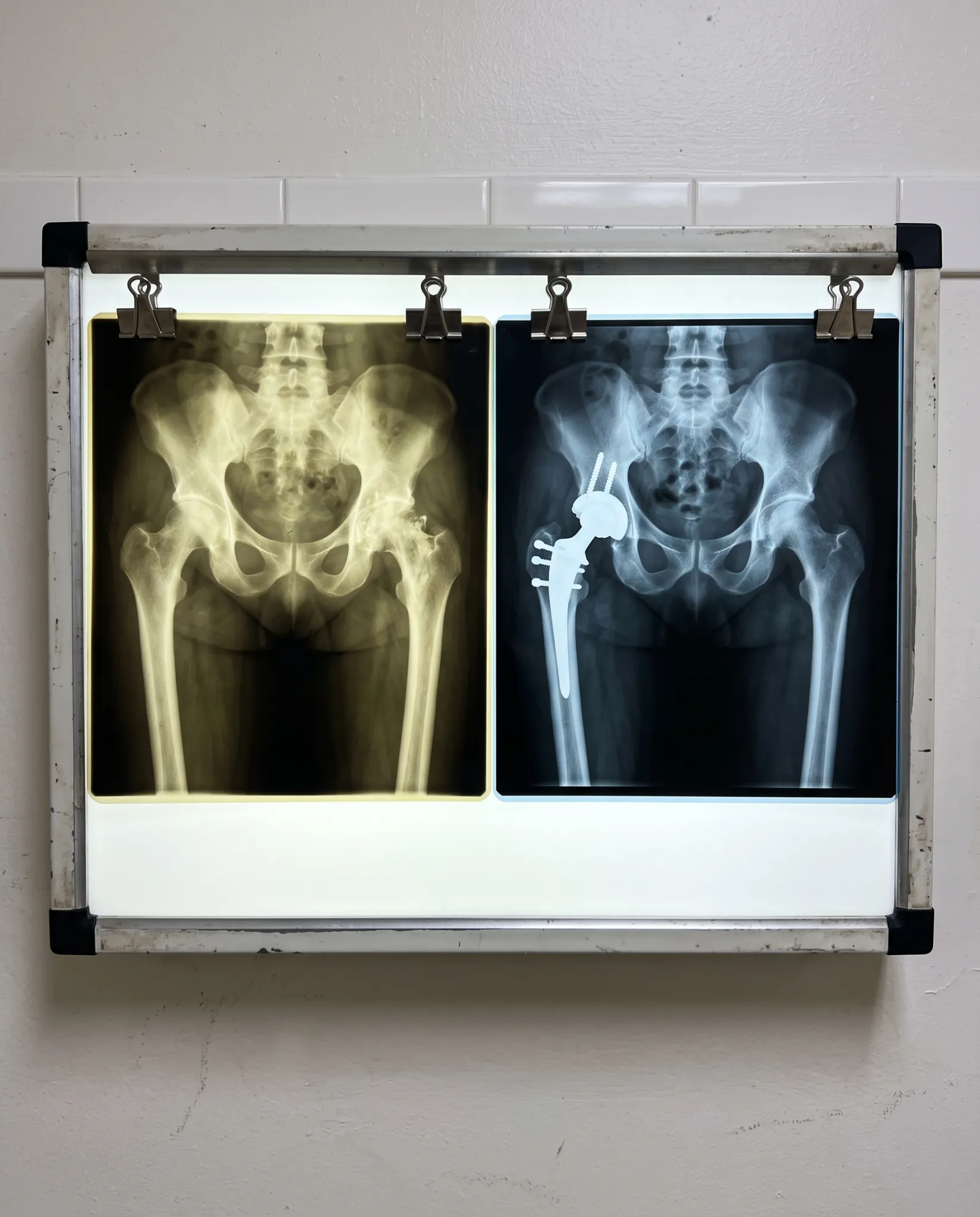
Same gravel, same second, eleven feet apart. He lost the leg. I got a bruise.
Ad Copy
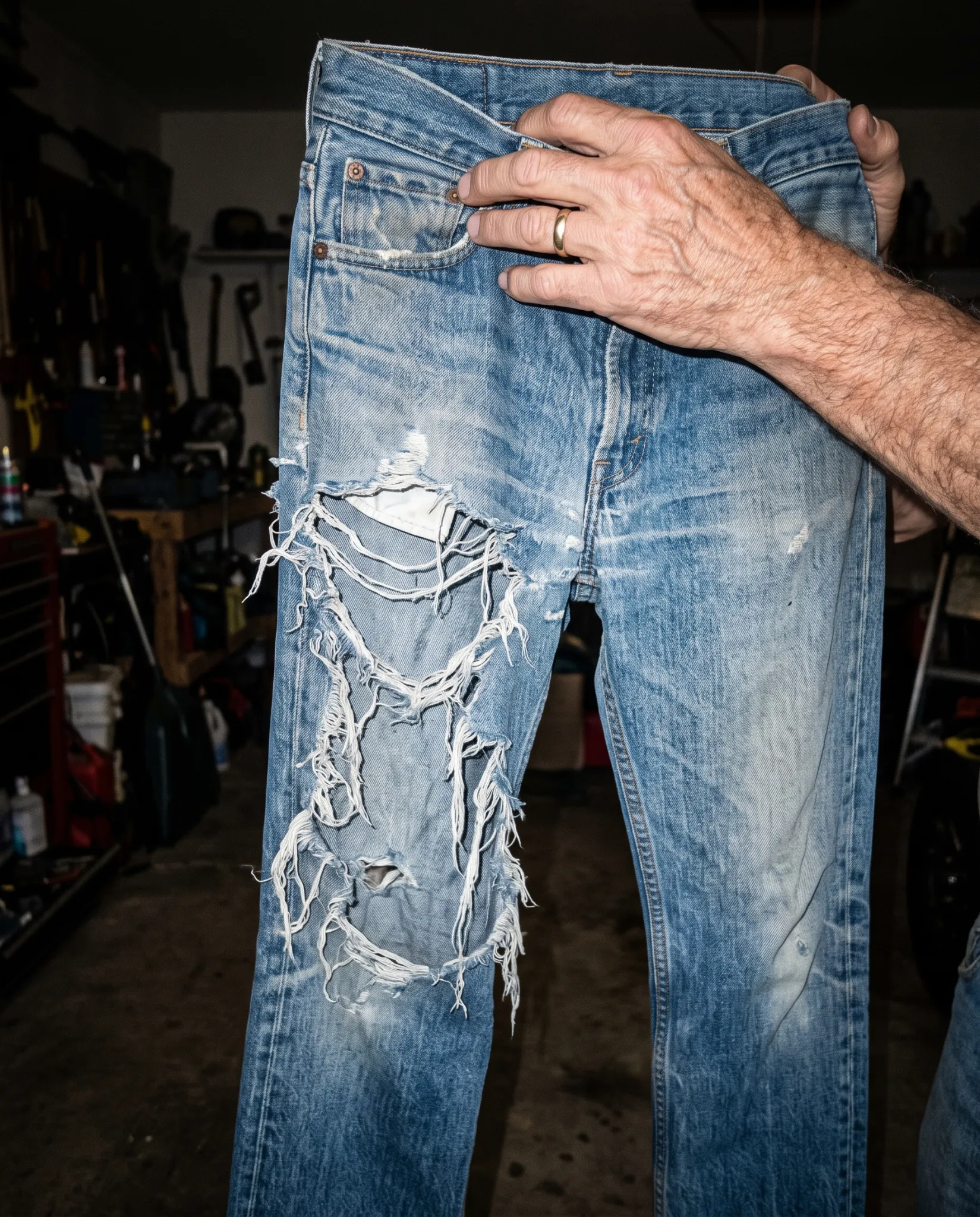
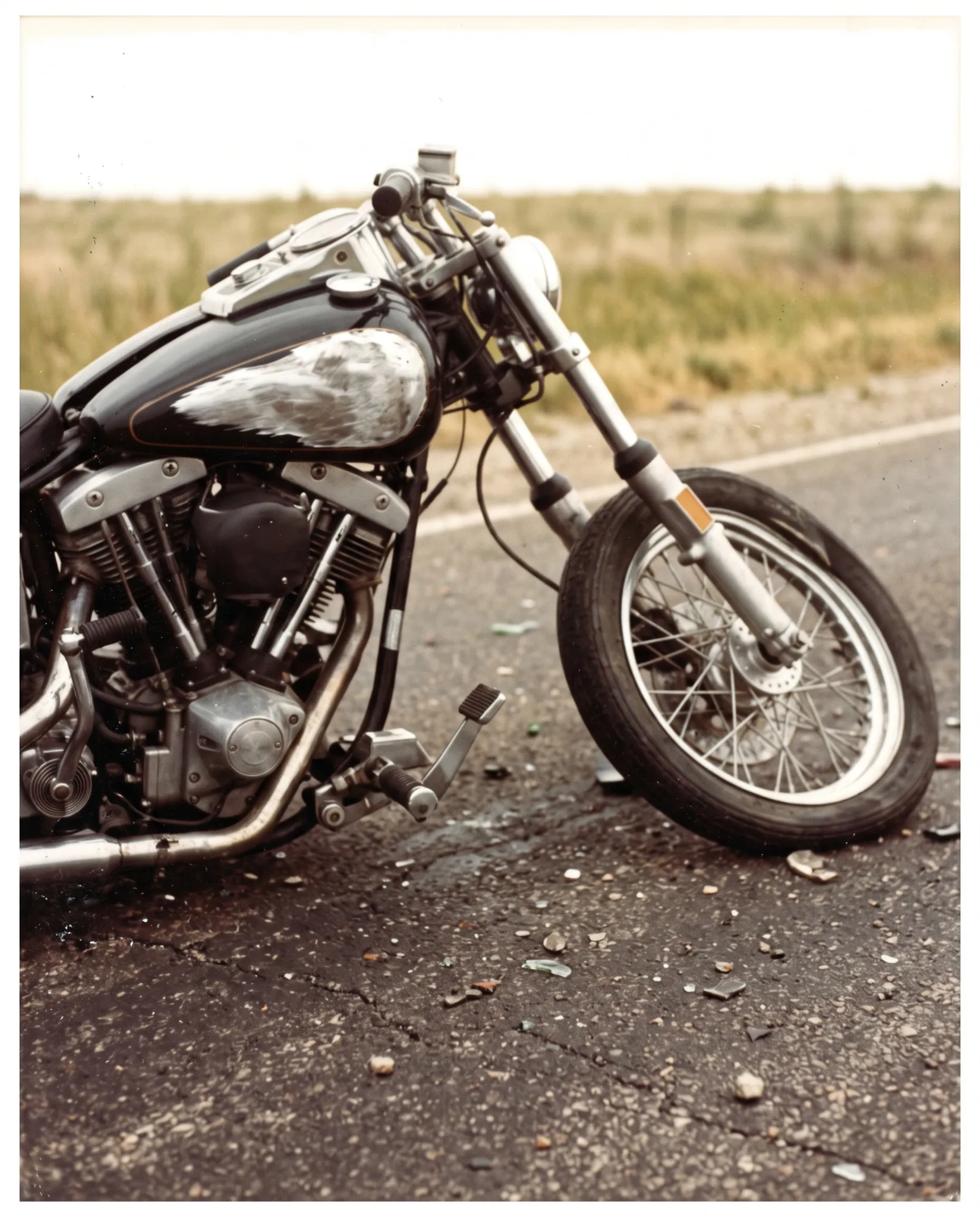
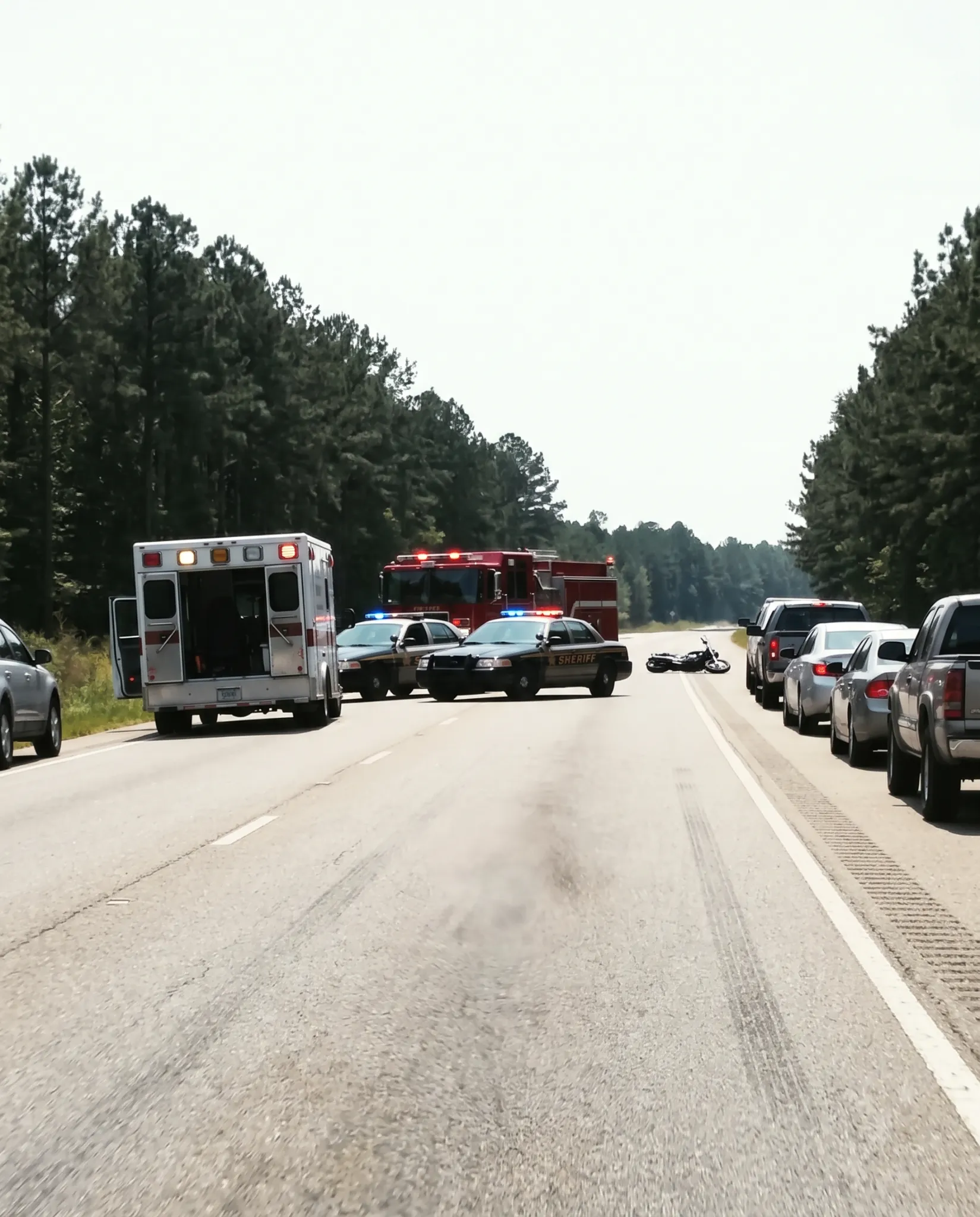
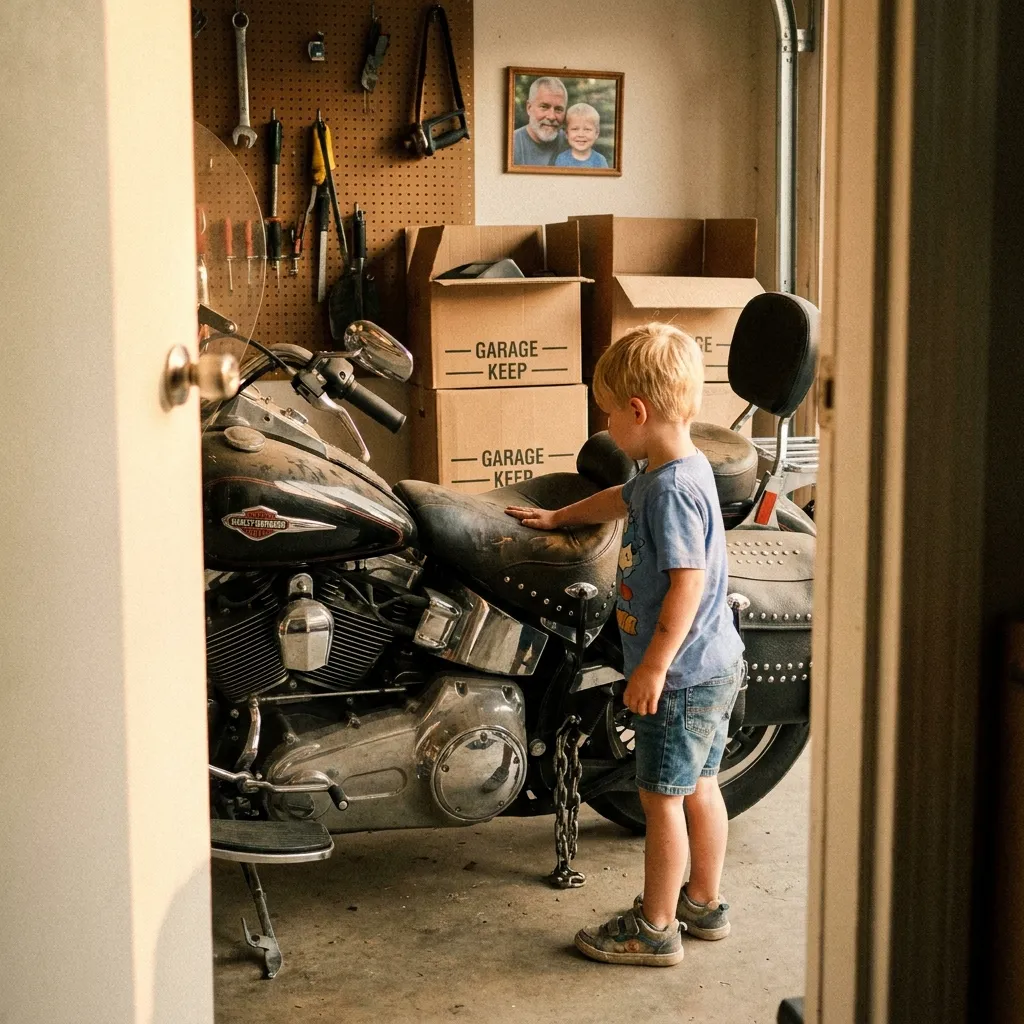
Carl Ray and I hit the same gravel at the same second, about eleven feet apart, on the same stretch of Highway 271 north of Poteau, Oklahoma. I got up with a bruise on my hip the size of a saucer. They took his leg off above the knee nine days later. Same road. Same second. Same speed. We'd been riding side by side for twenty minutes and neither one of us did anything the other didn't do. The only thing that was different was our pants. My name is Odis Landrum. I'm sixty-nine. I turned wrenches on school buses for the district here for thirty-six years, I've been riding since 1974, and Carl Ray Tisdale has been my closest friend since we were both hired on the same week in 1979. I have to tell you the rest of it, and I'd rather do it plain than pretty. It was a Saturday in September, coming back from a swap meet in Fort Smith. Nothing eventful. Two men our age riding home at about fifty on a road we'd both been up and down five hundred times. Somebody had spilled a load of pea gravel coming off a side road and it had been tracked out across the northbound lane in a fan, maybe forty feet of it, right where the road bends. You don't see gravel on gray asphalt at fifty. Nobody does. That's not a skill problem. We both went down. Left side, both of us, near enough at the same instant that I have never been able to say which of us went first. And this is the part I want you to sit with, because it's the whole reason I'm writing: Everything about that crash was identical except our trousers. Same road. Same gravel. Same lane. Same speed. Same age, near enough. Same kind of bike, both of us on baggers. Same boots, near enough. Both of us wearing half-helmets. Both of us went down on the left hip and slid. I had a pair of armored riding pants on. Carl Ray had on Wranglers. I slid maybe fifty feet and stopped in the grass. I want to describe what that was like from the inside, because I think men my age imagine it as something violent, and it isn't. It's loud, and it's long, and there's a hard flat pressure on your hip like somebody's leaning on you with their whole weight. Then it stops and you're lying in the weeds. I stood up. That's the truth of it — I stood up on my own and walked back toward the road, and my leg worked, and I was thinking that wasn't so bad, and then I saw Carl Ray. He was sitting up. He was talking. That's what fooled me at first, and I think it fooled him too. He was sitting up in the road talking to me about the bike. Asking if his bike was hurt. Below the belt he did not have any trousers left on the left side. I'm not going to describe what was there instead. I'll just say that the gravel had gone through the denim in the first eight or ten feet and then it had another forty feet to work with, and there is a difference between a road taking cloth and a road taking a man, and I found out that afternoon that it's a much shorter distance between the two than any of us think. He was seventy-one years old and he was worried about his motorcycle. Nine days He didn't die. I want to say that early because I know how these letters usually go, and I'm not here to bury anybody. He was in the hospital in Fort Smith and for the first four days they were hopeful. They cleaned it out twice. I sat in that room and we watched a ball game. On the fifth day it turned. On the seventh they told him what was probably coming, and on the ninth they took the leg above the knee. And here's the part nobody had ever explained to me in sixty-nine years of life, which I'm going to hand you now, because I think it's the single most useful thing in this whole letter. The surgeon was a woman about fifty, and she came out to the family room, and she sat down, which I've noticed they do when it's going to be long. I asked her — probably stupidly — how a scrape does this. She said, "Mr. Landrum, I want to correct something in the question. We call it road rash and that name has killed more people than the injury has. It isn't a scrape. A scrape is when something is removed. What happened to your friend is that something was put in." She held her hands about a foot apart. She said, "At fifty miles an hour, asphalt and gravel don't just take skin. They drive dirt, oil, rubber, road grit and everything that's ever been spilled on that highway down into the tissue, under the muscle, along the bone. We're not fighting a wound. We're fighting a contamination that's already inside him. On a thirty-year-old with good circulation we can usually win that. Your friend is seventy-one, and the blood supply down there is what it is at seventy-one." Then she said the thing I've thought about every single day since. She said, "Denim doesn't fail because it's weak. It fails because it's woven. It comes apart into the wound and carries the road in with it." Yes, there's a product in this I'll get it out of the way, because I'd be thinking it too. There's a link at the end. Somebody sells these. If you buy a pair the company has a better day. I'm not going to pretend I stumbled onto them and got so moved I had to tell the world. I'll tell you what I paid, I'll tell you what I don't love about them, and you can weigh it however you like. I'm a sixty-nine-year-old bus mechanic and my best friend has one leg. I've got nothing left to gain by dressing this up. Why I had them on and he didn't This is the part that costs me something. I told him about these pants in March. A fella at the parts counter in Poteau had a pair and I asked him about them and I ordered some that week. And the next Saturday, at the Braum's where we always got coffee, I told Carl Ray about them. Showed him the hip plate. Knocked on it for him. And Carl Ray said what every one of us says. He said: "I'm going to order some." He wasn't being stubborn. He wasn't one of those fellas who tell you gear is for cowards — I want to be very clear, because I've read those stories and that wasn't him and I suspect it isn't you either. He thought they were a good idea. He agreed with me. He intended to buy them. March to September. Six months of intending. That's it. That's the whole difference between the man who stood up in the weeds and the man who's learning to use a prosthesis at seventy-one. Not attitude. Not skill. Not luck, even. Six months of a good intention that never got two minutes of action attached to it. I have had to make my peace with the fact that I told him once, in March, over coffee, and then never brought it up again — because it would have been nagging, and men our age don't nag each other. I'd nag him now. What I was wearing, and what I'd worn before that Three things, and I'll price them, because the prices are the honest part. Blue jeans. Thirty-five dollars a pair, since 1974. Same as Carl Ray. Fifty years of them. Denim goes in about eight feet, and I have now watched that happen to another human being from eleven feet away. Leather chaps. Two hundred and ten dollars, 2001. Wore them maybe fifteen times total. In an Oklahoma August they're unwearable, and a thing you won't wear isn't protection, it's a closet ornament. "Armored" jeans. A hundred and sixty dollars, 2018. A floating foam pad near each knee and absolutely nothing at the hip. Which, as both Carl Ray and I found out in September, is precisely where a low-side puts you. Hot, heavy, and armored in the wrong place. Three hundred and seventy dollars in a closet, plus fifty years of jeans, and the only reason I'm standing on two legs is that six months before it happened a stranger at a parts counter showed me his hip plate. What they actually are Cargo pants. They look like work pants. Nobody at the Braum's looks at you twice — that's the whole reason they're on my legs and the chaps never were. CE Level 2 armor at the hip and the knee. Level 2 is the higher of the two ratings. Hard plate, not a floating pad. Comes out if you want it out. Mine stays in. I'm going to stay on the hip for a second, because it's the one nobody sells right and it's the one that mattered. Everybody pictures the knee, because you can see your knee. But a low-side doesn't put you on the knee. It puts you on the point of the hip and then it drags you, and the drag is where the damage is — not the impact. That's the forty feet after you stop falling and start traveling. That's where Carl Ray's denim came apart and mine didn't. And past sixty-five that hip is the joint that decides whether you dress yourself, drive yourself, and stay in your own house. They breathe — zip vents down the legs, which in an Oklahoma July is the entire difference between wearing them and leaving them home. Water-resistant too, and I'll say it the way I'd want it said: they'll get you home dry out of a surprise, they will not keep you dry through an all-day soaker. Six pockets. The ankles open up to come down over a boot. A webbing belt comes in the box, and I expected it to be junk and it isn't. Black, army green, or camo. Mine are the green. Our coffee bunch Dub Ratliff, 72, retired from the highway department, Spiro. Ordered a pair the Monday after. He didn't say a word about it, he just showed up in them. "Odis, I ain't waiting till March." Lonzo Hicks, 66, still drives a feed truck out of Panama, Oklahoma. Big fella — he'd given up on gear because nothing was cut past a 2XL. He's in the 4XL. "I figured I'd be sending them back." Carl Ray Tisdale, 71. He's on a trike now — got it in February, and he is not a man who ever wanted a trike. He has a pair of these too. He'll tell you himself it's the stupidest thing he owns and he won't leave the driveway without them, and if you want to hear what a man sounds like when he's angry at nobody but himself, ask him about March. The one line I know the worry — that you'll look like the fella dressed for a track day at the Sonic. Took me one afternoon on Highway 271 to get it this short: They're work pants with a hard plate over the hip and the knee. That's all they are. Nobody looks. You put them on over your boots, you ride, and if there's gravel on the road where there wasn't gravel yesterday — and there will be, and you will not see it — then the forty feet after you go down is somebody else's problem instead of yours. The simple part EKON RoadArmor cargo pants. $129. Black, army green, or camo. Sizes US 24–40. CE Level 2 armor at the hip and knee, removable. Zip vents, six pockets, opens over a boot, webbing belt in the box. Sold direct by EKON — no shop in the middle, which is why it's a hundred twenty-nine and also why the man behind a counter will never point you at them. 60 days. Ride in them, sweat in them, send them back for your money if they're not what I've described. 1-year warranty besides. 👉 https://ekontravel.com/products/roadarmor-pants Order one size up. There's armor in them and they're cut to be sat down in on a bike — you want your boot over the peg without the pants fighting you. Odis Landrum Poteau, Oklahoma P.S. — I still have the pants I had on that day. There's a scuff on the left hip about the size of my hand where the plate did its work and the fabric held, and I've never washed them. Verna asked me twice why I keep them in the garage instead of the closet. It's because the closet is where you put things you're done with. P.P.S. — Carl Ray got a bill from the ambulance service four months after they took the leg. He looked at it a long while and then he said, "One hundred and twenty-nine dollars." That's all he said. He wasn't reading it off the bill. He didn't have to look it up. P.P.P.S. — If you've read this far you have probably already thought some version of those look like a good idea, I'll get some. I want to tell you that I have heard that exact sentence, in that exact tone, from a man sitting across a table from me with two legs, and I have heard it from the same man with one. It was the same sentence both times. The only thing that changed was what it cost. Please.
More from Miles & Motorcycles
A stranger told the dispatcher to send a mortician. He was talking about me.
Miles & Motorcycles
At 28 he'd have been fixing a bone. At 73 he said he'd be trying to keep me out of a chair.
Miles & Motorcycles
My gear saved everything it covered. The surgeon asked about the part it didn't.
Miles & Motorcycles
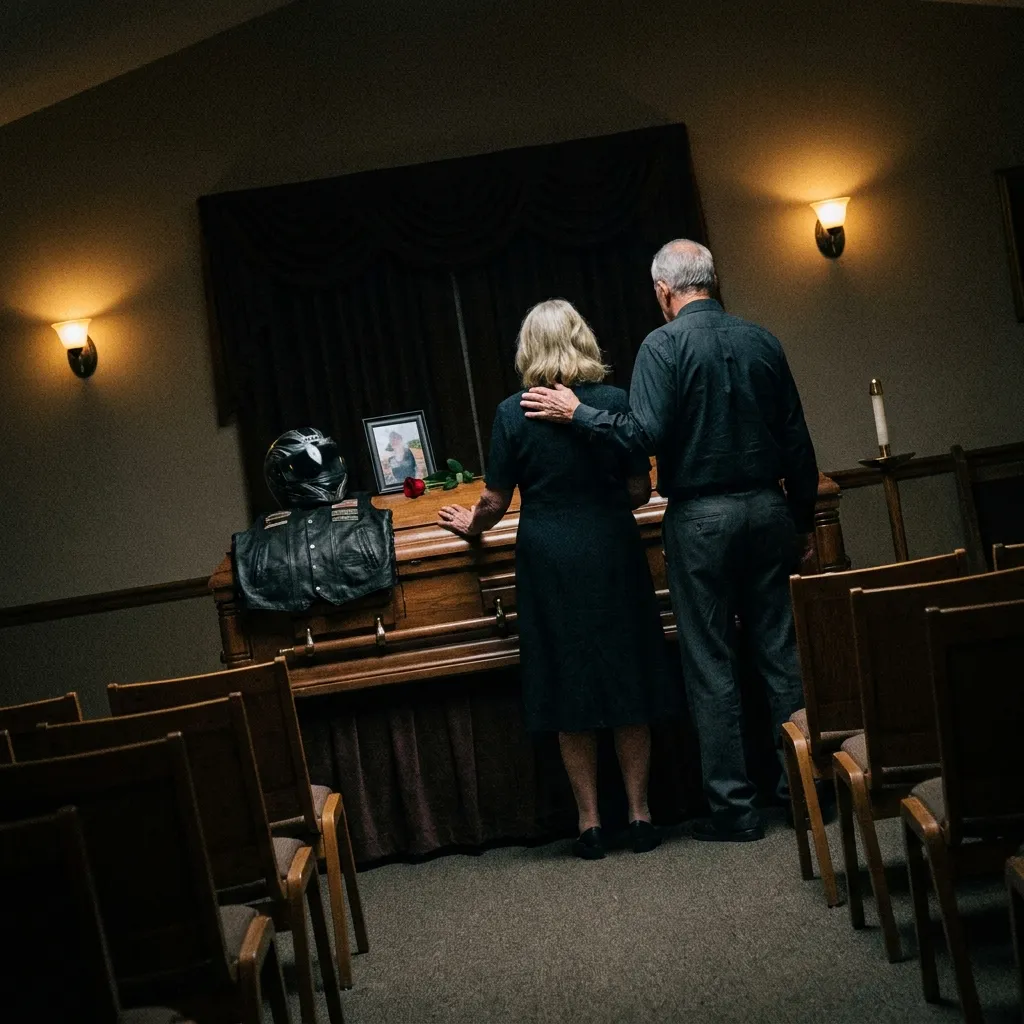
I rode in $26.99 Wranglers for eleven years.
Miles & Motorcycles

I rode in $26.99 Wranglers for eleven years.
Miles & Motorcycles
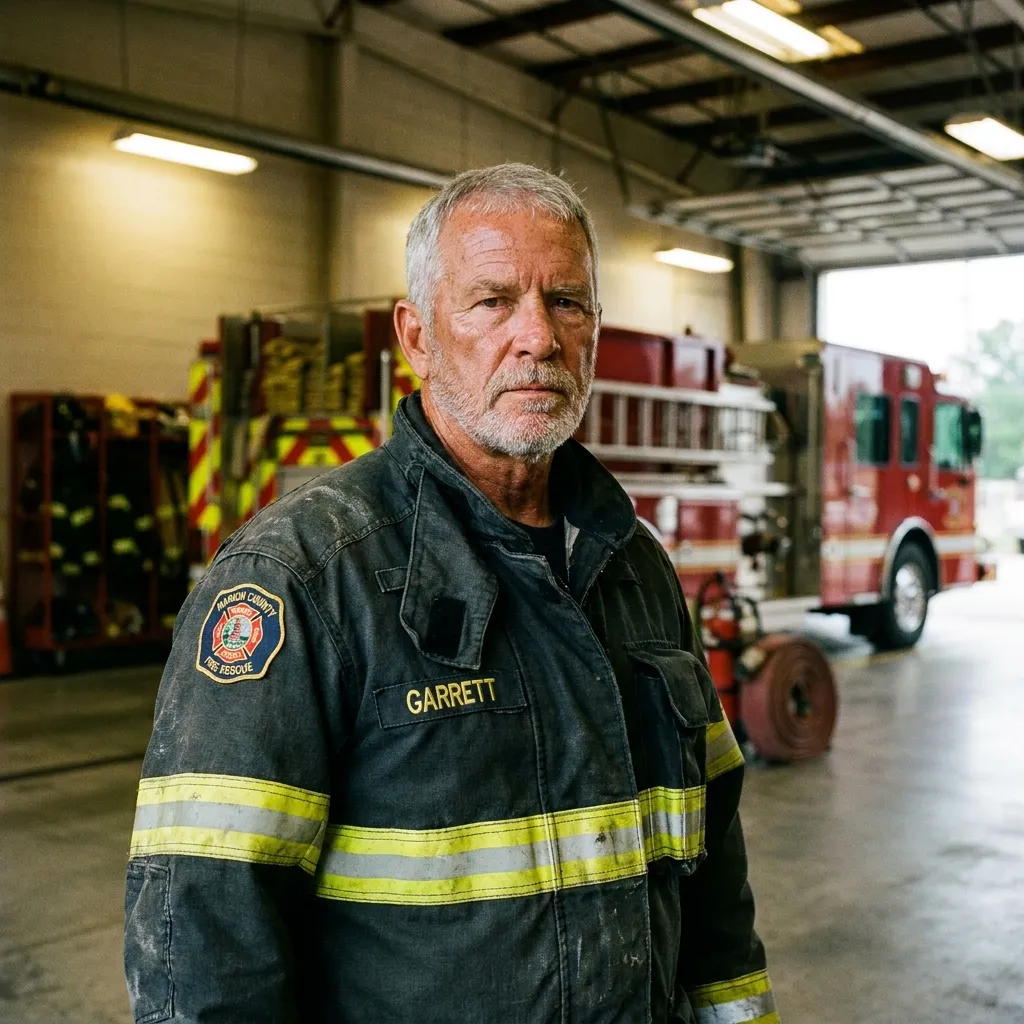
Forty feet of asphalt ended fifty years of riding in jeans.
Miles & Motorcycles
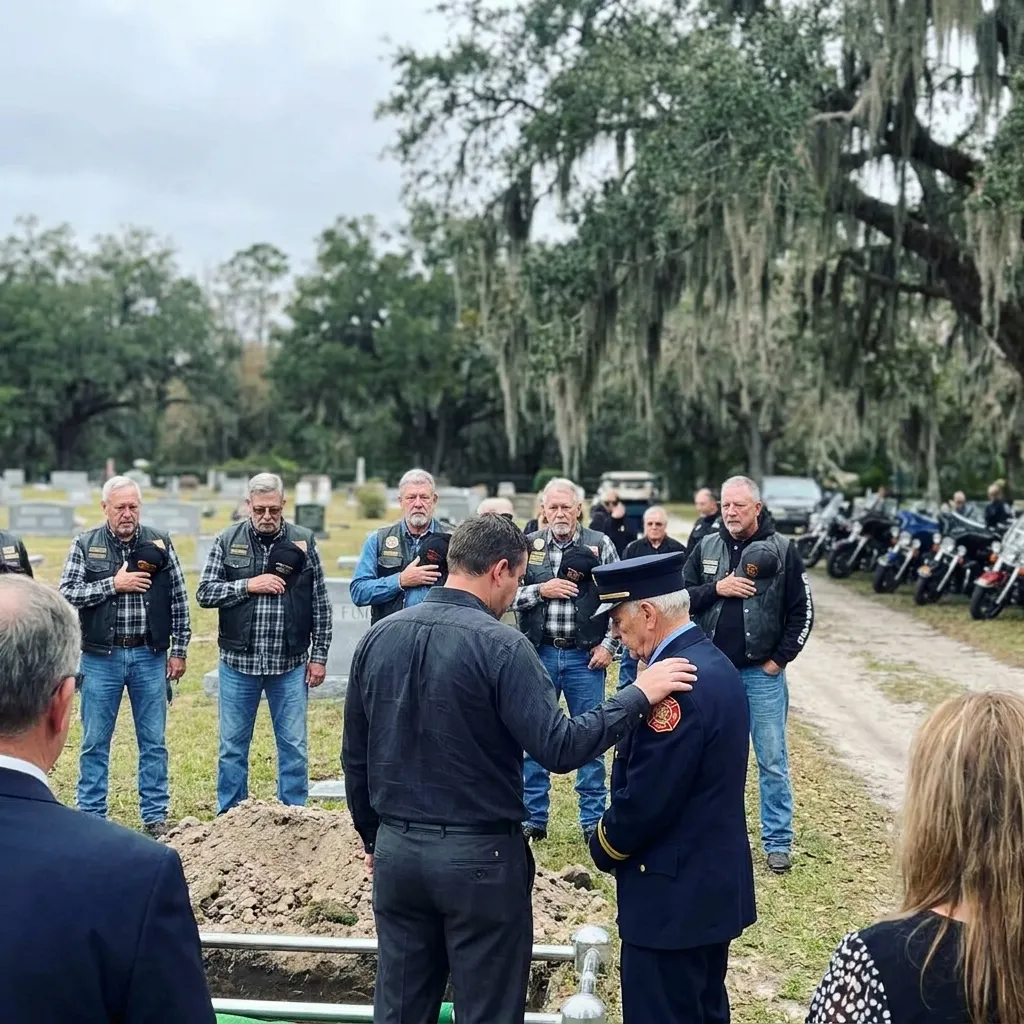
I rode in $26.99 Wranglers for eleven years.
Miles & Motorcycles
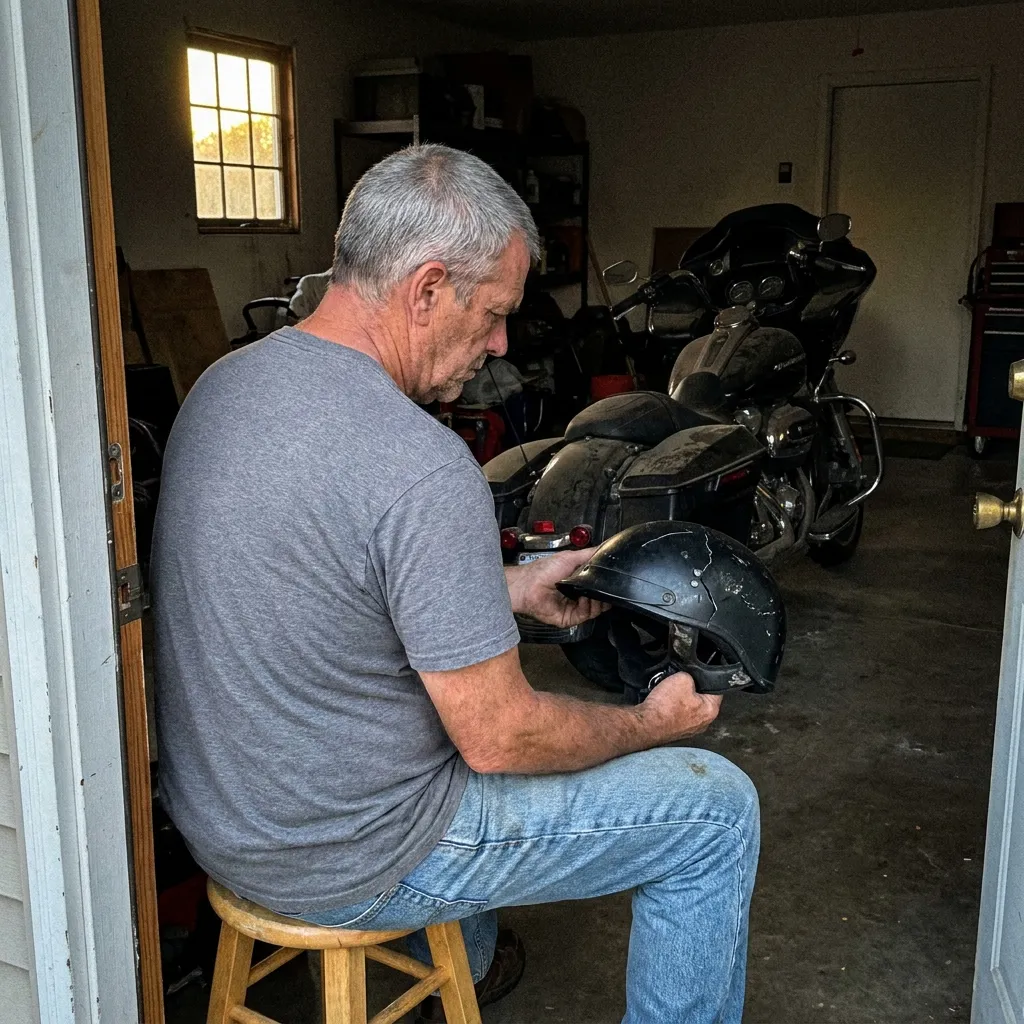
I rode in $26.99 Wranglers for eleven years.
Miles & Motorcycles
At 28 he'd have been fixing a bone. At 73 he said he'd be trying to keep me out of a chair.
Miles & Motorcycles
I rode in $26.99 Wranglers for eleven years.
Miles & Motorcycles
I rode in $26.99 Wranglers for eleven years.
Miles & Motorcycles
I rode in $26.99 Wranglers for eleven years.
Miles & Motorcycles

 Add to Chrome