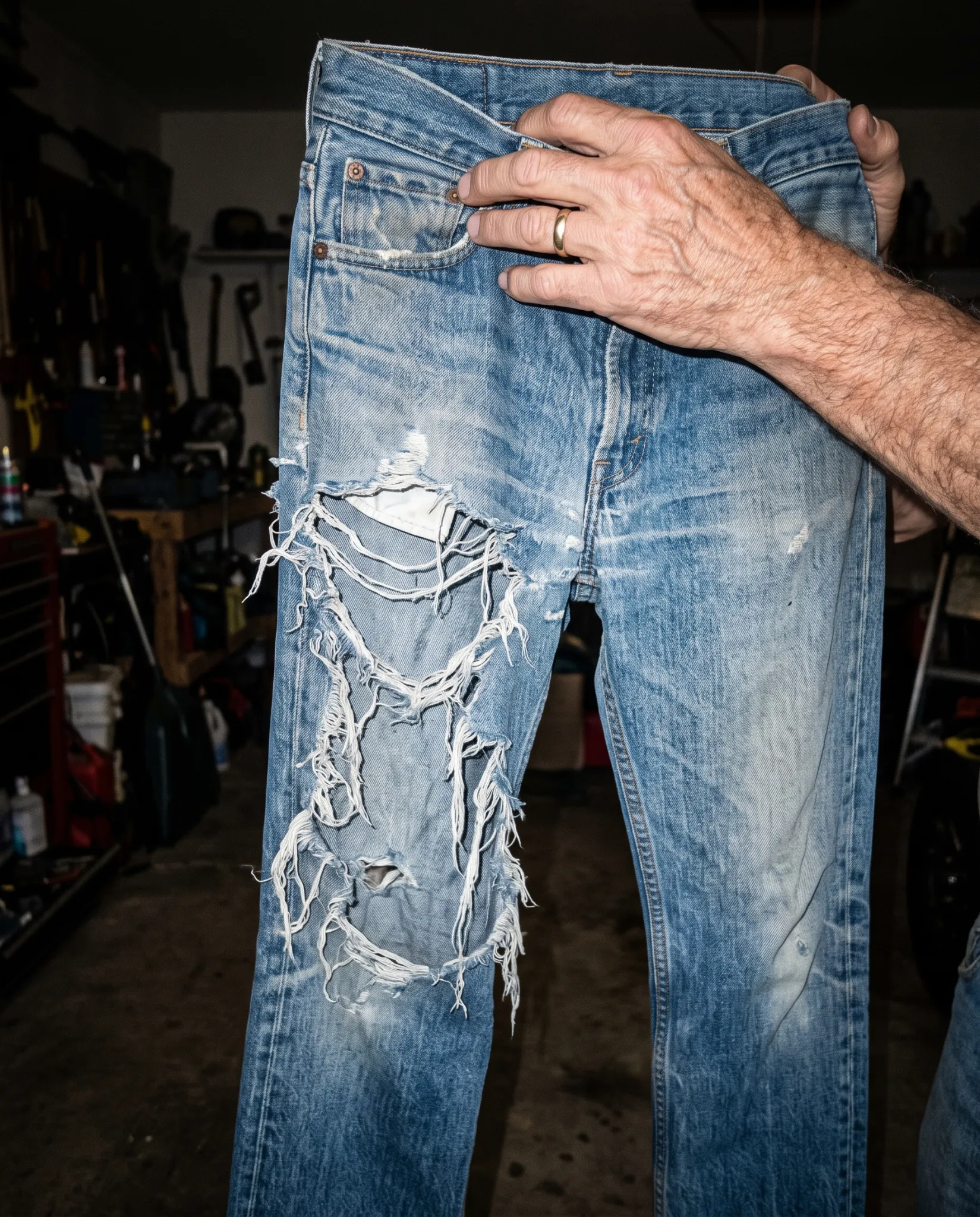
A stranger told the dispatcher to send a mortician. He was talking about me.
Ad Copy
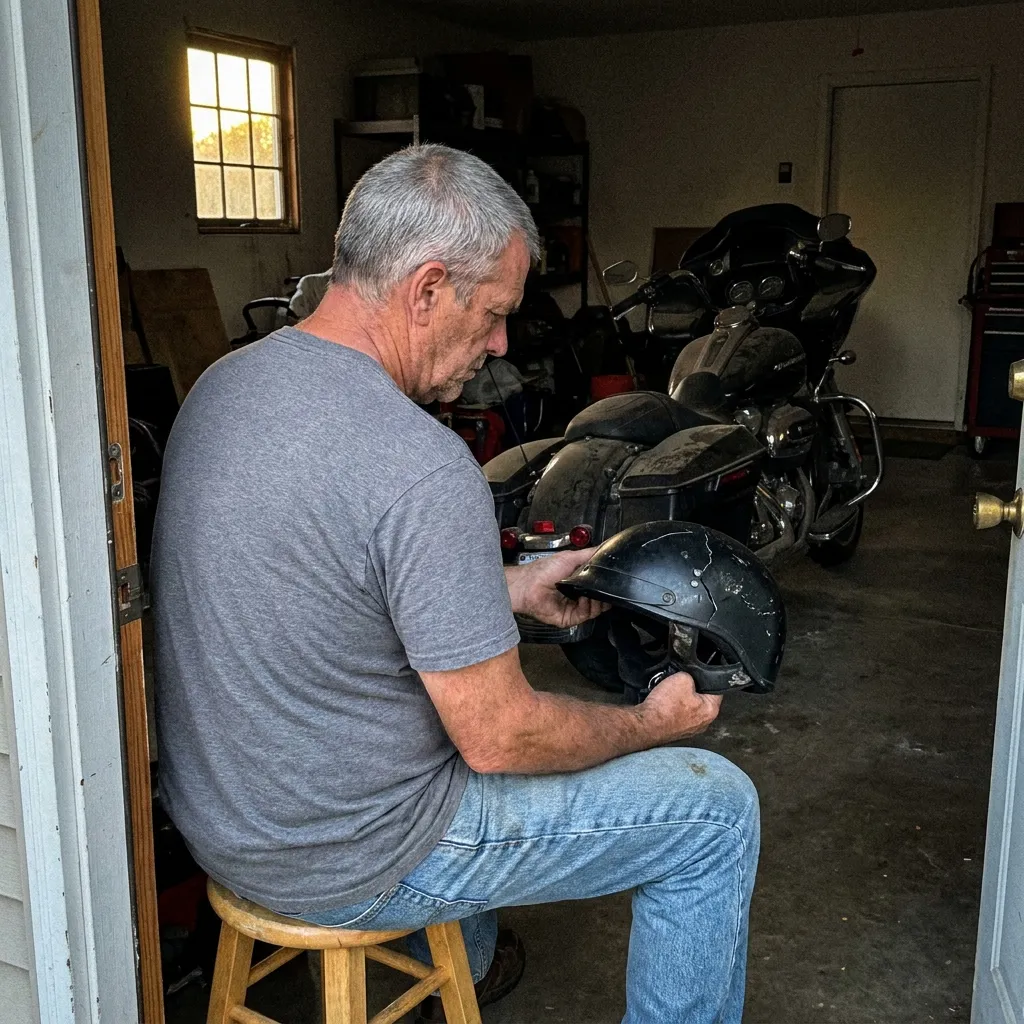
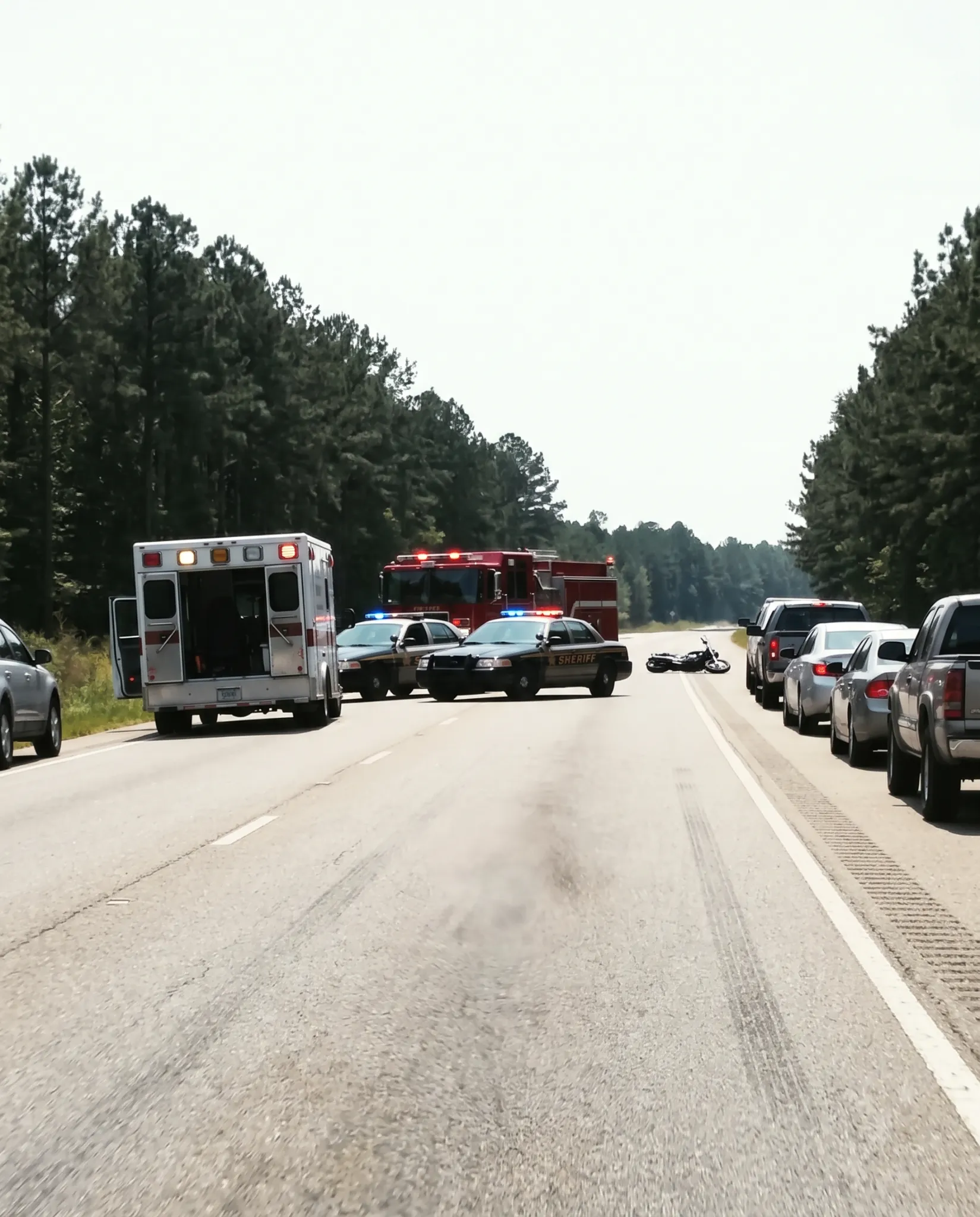
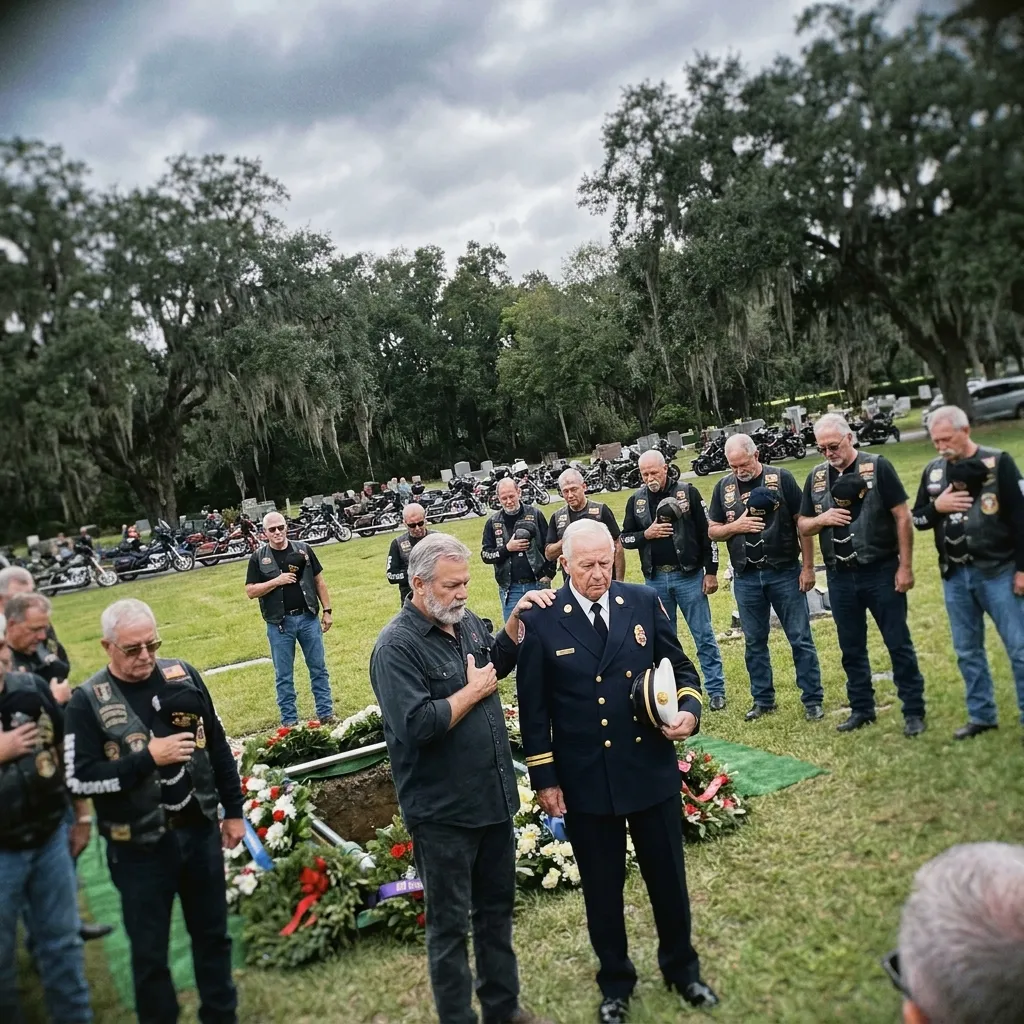
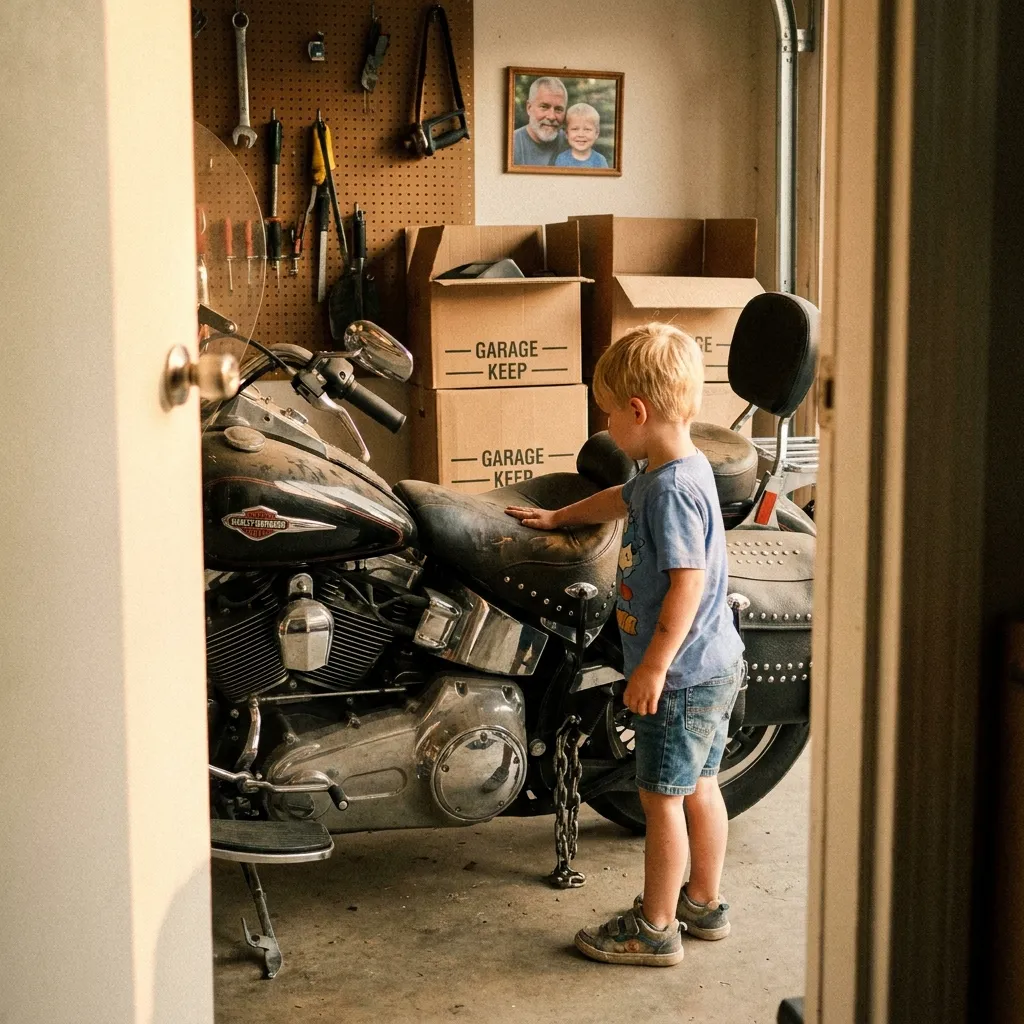
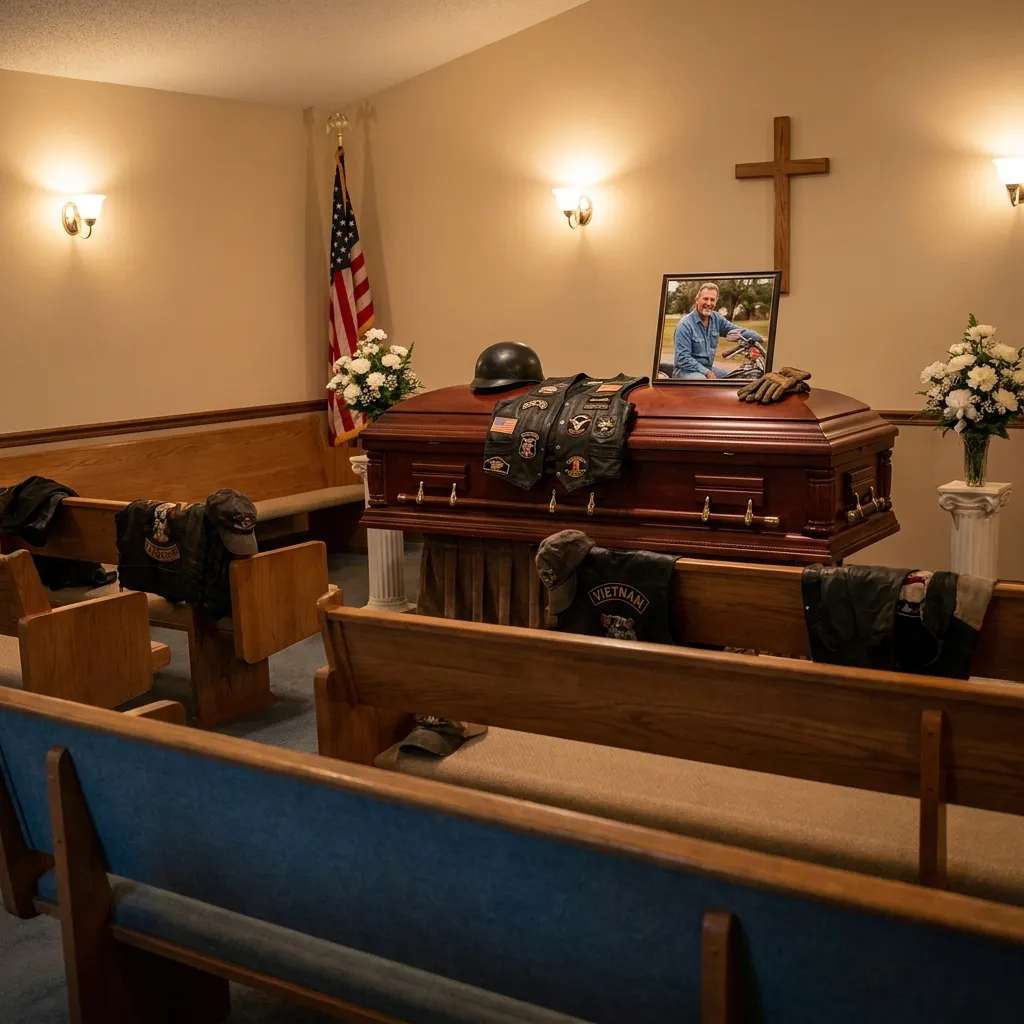
At 3:48 in the morning on the fourteenth of June last year, a man I have never met told a 911 dispatcher they had better send a mortician. He was talking about me. I don't remember any of it. Not the deer. Not the road. Not the helicopter. Everything I am about to tell you was told to me by other people or read off a piece of paper, and I'm going to say so every time, because a man ought to be clear about which parts of his own story he actually witnessed. My name is Dale Rickert. I'm sixty-six years old. I'm a maintenance mechanic at a feed mill outside Greenville, Kentucky — thirty-one years in, and still working, which I'll come back to — and I've been on a motorcycle since 1978. I'm writing this because of one word on a piece of paper, and because of a pair of trousers I owned four years ago and mailed back. What I remember Here is everything I have. It takes about fifteen seconds. I remember getting up at three, because I always do. First shift starts at four and it's twenty-two minutes from my kitchen to that gate, and I have made that ride in the dark five days a week for thirty-one years. I remember it was warm already. In June down here, at three in the morning, it's warm. And I remember the crossroad. There's a stop sign about nine miles out from the mill where a county road comes in from the left. Coming up on it I could see headlights, way up at the next road over, slowing down — and I thought, that's Ronnie. Ronnie Halcomb has worked at that mill nearly as long as I have, and for something like eleven years the two of us have raced to that parking lot without either of us ever once saying out loud that we were doing it. You have a man like that. Everybody does. So I rolled the stop sign. I didn't stop. Slowed up, looked both ways, went. And that is the last thing in my head. Not fuzzy. Not partial. It stops there like a tape running out. Now — I have spent thirteen months on that stop sign, and I want to say something about it, because I suspect one or two of you are carrying something similar. I rolled it. That's mine. That's a thing I actually did wrong and I'm not going to sit here and pretend otherwise. It also had nothing whatsoever to do with what happened. The deer came off the other side of the road entirely. If I had come to a full and complete stop, counted to three, and gone on, I'd have been in the same hundred feet of road four seconds later with the same animal in front of me. I know that. I've known it since about August. And I still hold that stop sign up in front of the rest of it, every single day, because holding onto the one thing you did wrong is a good deal easier than sitting with the fact that there was nothing there to hold. What I was told About sixty-five miles an hour. That's from the deputies. There is a cemetery on the left-hand side of that road. Small one — forty stones, maybe, an iron fence, the kind that sits on a county road out here and that you stop seeing after the first year. A doe came out of it. The impact put me down and I slid, and I came to a stop up against the yellow line in the middle of the road. The motorcycle and the animal both went off into the ditch on the far side. The deer was dead. She was carrying, which I didn't need to know and was told anyway. And those headlights up ahead were not Ronnie Halcomb. That's the part that took me the longest to get straight in my head. It was a stranger. He was slowing down because he was trying to work out what he was looking at — something in the ditch up ahead of him, in the dark, that didn't make sense. And then a motorcycle came apart in the road in front of him. He swerved around what was lying on the pavement. Then he stopped, and he backed up, because he wanted to see what he had just gone around. I want you to sit with that for a second, because I have. It was not yet four in the morning on an empty county road. He had already missed it. He was past. There is a version of that man who keeps driving and never knows, and I would not blame him for one minute, and I think most people are that version. He backed up. He got out, and he called it in at 3:48, and he asked them for an ambulance and the sheriff. And then he looked at what was on that road, and he told the dispatcher they had best send somebody for a body as well. I have the times because I asked for them four months later. Everything else, he gave to the deputies in a statement, and the deputies wrote it down, and eventually a copy of it came to me in an envelope. Fifty-one days They flew me to Owensboro. I was there fifty-one days that first stretch. Five trips to an operating room. And I'm going to give you the flat facts of it, because the flat facts are worse than anything I could dress up. I broke a collarbone and three ribs. Those healed. Six weeks on the collarbone, and the ribs did what ribs do, which is hurt for a month and then quietly stop. Nobody operated on either one. If that had been the whole of it I'd have been back at the mill by August and this letter wouldn't exist. All five of those operations were the outside of my left leg, from the point of the hip down the thigh, and they took skin off my own back to put a cover back over it. That's the part I'd want a man to hear. The broken bones were the easy part. The broken bones were nothing. I went back to work on light duty the first week of November. I still cannot stand a full shift on concrete and I don't know that I ever will. Thirteen months. The envelope Here's the part that turned me into a man who writes letters to strangers on the internet. In October I requested my own records. All of them — the run sheet, the flight report, the trauma admission, the operative notes. You can do that. Most people don't know you can do that, and I only knew because Sharla's sister does billing at a clinic. It came in a brown envelope, about an inch thick. I sat at my own kitchen table on a Saturday morning with a cup of coffee and I read what had happened to me the way you'd read about a stranger in the newspaper. I want to tell you how peculiar that is and I don't think I can. I have had this body sixty-six years. I know exactly which knuckle I broke in 1984 and which tooth I chipped and when. And I learned the single worst night of my life off a printout, in a kitchen, in silence, four months after it happened. The word in there was degloving. I had to go look it up, and I need you to stay with me through the next bit, because it is the entire reason a sixty-six-year-old mill mechanic bought a hundred-and-twenty-nine-dollar pair of trousers. Degloving is when the skin and everything under it gets torn away off the muscle and the bone in a sheet. Not cut. Not scraped. Pulled off, the way you'd pull a glove off a hand — which is where the name comes from, and once you've read that you don't unread it. It doesn't require a broken bone. It doesn't require a car. It happens when something takes hold of the outside of your leg and your leg keeps travelling. Denim will not stop it. Denim is what it takes hold of. That is where all the blood on that road came from. That's what a stranger was standing over just before four in the morning when he decided a mortician was going to be needed. Not a break. Not an amputation. The outside of my leg was taken off me, and I was in a pair of blue jeans that were gone in the first eight or ten feet. I read that at my kitchen table and I put the pages down and I sat there a while, and Sharla came in and asked me if I was all right, and I said I was. I took the pages with me I had a follow-up that month with a physician assistant named Colleen, who is somewhere in her forties and has never once told me a comfortable thing. I brought the printout with me. I don't know what I expected. I put it on the table between us with my finger on the word and I asked her to say it in plain English. She didn't look at the page. She'd have seen a hundred of them. She said, "Give me your hand." So I gave her my hand, and she took hold of the loose skin on the back of it between her thumb and her finger, and she pulled it up away from the bone — not hard, she wasn't hurting me — and she held it there. She said, "That's what's attached. That's all that's attached. Everything you've got is sitting on top of the muscle like that, and it's held there by the smallest thing you can imagine." Then she let go. She said, "The road took hold of the outside of your leg, and your leg kept going, and the whole of it came off the muscle in one piece. That's degloving. It isn't a scrape. A scrape takes something off the top. This took the top off." I asked her the question I'd been carrying for four months, which was whether the trousers would have made any difference — I wanted her to tell me no, I think, so I could put it down. She said, "Something hard over the hip and the knee changes what the road can get hold of." Then she picked her pen back up. "I'm not going to give you a number, Mr. Rickert. Nobody honest will. But it is not a close question." And that was the end of it. She wrote something and moved on to the donor site on my back, the way they do. I have thought about my own hand every day since. It's the most useful thing anybody has ever shown me and it took her about four seconds. Yes, somebody sells these I'll put it on the table before you have to think it. There is a link at the bottom of this. A company sells these trousers. If you buy a pair through it, they have a better day than they'd otherwise have had. I've read one of these letters myself and thought here it comes. So I'll tell you what I paid, and I'll tell you the part that makes me look worst, and you can weigh it however you like. I'm a mill mechanic in Muhlenberg County, Kentucky. I'm not clever and there's nothing in this for me. The only thing I get out of writing it is a chance that fewer men find out what that word means the way I did. Forty-eight years of the wrong trousers Three things. I'll price all three, because prices are the honest part of a story like this. Blue jeans. Six dollars a pair when I started, thirty-four now. Since 1978. Wrangler mostly, whatever Sharla found on the rack. Forty-eight years. Call it two hundred and fifty mornings a year that I threw a leg over something, which is twelve thousand mornings, and on every single one of those twelve thousand mornings I put on the same trousers I'd have worn to mow the yard, and I never questioned it one time. That's the part I'd want somebody to say to me. It was never a decision. It never rose to the level of a decision. It was just what a man puts on, and forty-eight years went by inside that, and there is no moment I can point to and say there, that's where I should have thought about it. That's what makes it dangerous. There's nothing to catch. Insulated work coveralls. Seventy dollars, 2014. I want to flag this one, because I'd bet money there's a pair hanging in some of your garages right now. Cold mornings — and I ride to work in January in this state — I'd pull coveralls on over my jeans. Heavy canvas, quilted lining, the same ones I'd wear to work outside on a bad day. And I felt like a careful man doing it. That's the honest bit. I'd zip those coveralls up in the dark and feel like somebody who was taking care of himself. Coveralls are a blanket. They are warm and they are thick and there is not one hard thing in them anywhere, and a blanket does not stand between a man and a county road. All I bought for seventy dollars was more cloth and the feeling of being sensible, and the second one is worse than useless because it stops you looking any further. Riding pants. Two hundred and ten dollars, 2022. And I sent them back. Here it is. Four years ago I bought a real pair of armoured riding trousers. Hard armour at the hip and the knee, the proper thing. They came in a box, I put them on in July, and I rode eleven miles. Eleven miles. I got off that motorcycle at the mill gate soaked through and hot and irritated, and I took them off in the locker room, and they went back in the box that week and I got my money returned. Too hot. That was the whole reason. Not the price. Not the look. Not the armour. I had the correct thing, in my hands, in my size, in my own house — and I mailed it away because of eleven uncomfortable miles in July. I have thought about that a great deal in thirteen months. So when I tell you further down that the ventilation on a pair of trousers is not a nice little extra — that it is the entire difference between a thing that protects a man and a thing he returns — I'd ask you to remember who's telling you. I'm the man who returned them. And three years later a stranger stood over me on a road in the dark and asked for a mortician. Three hundred and fourteen dollars, two hundred and ten of it refunded to me, and forty-eight years of denim. How I got these Ronnie Halcomb. He's sixty-three. Same mill, thirty years. The man whose headlights weren't his. He came up to Owensboro twice, an hour each way after a full shift, and he came out to the house all through the fall. And in September he turned up in a pair of green cargo trousers that I took for work pants, and he knocked twice on his own hip, and it made a sound. A hard one. Not padding. Then he did the thing I've thought about since. He didn't make any kind of speech. He reached down and pulled a zip open along the side of his leg — a vent, running down the thigh — and he held it open, and he looked at me. That was the whole sales pitch. Ronnie knows exactly why I sent the last pair back. He was there in the locker room in 2022. He told me they were a hundred and twenty-nine dollars. EKON RoadArmor. I let it sit And then I did nothing for six months. I want that in here, because I've spent my whole life quietly judging the man who says yeah, I ought to get some of those. Turns out I'm him. September to March, and I could hand you reasons — I wasn't riding yet, it was winter, the leg — but those are reasons, and they are not the reason. I ordered them in March. The box came on a Wednesday and sat inside my back door for nine days. Not the money. Because opening it meant sitting with the arithmetic. The arithmetic is that in July of 2022 I held the answer in my own hands, in the right size, in my own house, and I put it back in a box over eleven miles of being uncomfortable. And everything that has happened to my leg, and to Sharla, and to the fifty-one days in Owensboro, came through a door that I opened myself and then walked through four years later. There is no way to arrange those facts where I come out looking sensible. Sharla opened it in the end. She set them on the bed and went out on the porch, which is what she does. The first morning April the eighth. First time back on a motorcycle in ten months, and I did the twenty-two minutes to the mill because I wasn't going to make a project out of it. Two things. The first is that I went past that crossroad at ten past three in the morning. I'd told myself I'd take the long way and I didn't. And I want to be straight with you — it wasn't bravery. I'd just decided I wasn't going to spend the rest of my working life adding eleven miles to every shift on account of a piece of road. I came to a complete stop at that sign. I expect I always will now. The second thing is smaller and it's the one that means anything. By the time I got to the gate I hadn't thought about the trousers once. That's it. That's the whole review. I had them on, the vents were open, it was sixty degrees and climbing, and at no point in twenty-two minutes did they make themselves my business. Compare that with eleven miles in 2022, where the trousers were the only thing I could think about by mile four. I have had them through a Kentucky June and most of a July now, and I have not taken them off once. What they are Cargo trousers. They look like work pants — and I need you to understand that's not a small thing, it's the whole thing. Every protective item I have ever owned failed at the moment I decided whether to put it on. Not one of them ever failed on a road. They failed in a bedroom at three in the morning. CE Level 2 armour at the hip and at the knee. Level 2 is the higher of the two ratings. A hard plate — not a lining, not a floating pad, not a blanket. It comes out if you want it out. Mine doesn't come out. Let me stay on the hip a minute, because everybody worries about the wrong joint. We all picture the knee, because you can see your knee. But the road doesn't set you down on the knee. It lays you over onto the point of the hip and then it drags you, and the drag is where the damage lives — not the fall. The fall is nothing. It's the forty or fifty feet afterwards, when you've stopped falling and started travelling. From the point of the left hip, down the outside of the thigh. That's not a marketing phrase. That's the line on my discharge summary, and it is the exact shape of the plate that's in these. They breathe. There are zip vents down the legs and they open — and I've said my piece on why that matters more than any other feature on this garment, and I'll say it once more plainly: a pair of riding trousers you cannot stand to wear in July is not protection. It's a box in your hallway waiting to go back. Water-resistant as well, and I'll put it the way I'd want it put to me: they'll get you home dry out of a surprise; they will not keep you dry through an all-day rain. Six pockets. The ankles open up to come down over a boot. There's a webbing belt in the box that I expected to be junk and it isn't. Black, army green, or camo. Mine are the green, same as Ronnie's. Around the mill I'm not the only one now, and I'd rather you had it from them than from me. Ronnie Halcomb, 63. Thirty years at the mill. The man whose headlights weren't his. He bought his in September, before I did, and he has never once said out loud why. "They're a hundred and twenty-nine dollars, Dale." Buddy Lyle Trice, 69, retired out of the mines at Central City, rides a Heritage. Ordered a pair in October. He's the one who put it best: "Forty years and I'd never once thought about the outside of my leg." Owen Puckett, 61, drives a feed truck, still working. Big fella — he'd quit shopping for gear years ago because nothing was cut past a 2XL and he was tired of finding that out. He's in the 4XL. "I ordered them figuring I'd be shipping them straight back." Marcus Deel, 58, second shift, youngest of us. He bought a pair in April and told me he did it because he's got two girls at home and he did the sum. "You went to work, Dale. That's all you did that morning. You went to work." Nobody paid anybody a nickel. That's just what's gone around that mill since the fall. "You're turning into one of those fellas" I know. I'd have said it too, and for forty-eight years I did. There's a version of a man who turns up to a bike night dressed like he's about to be timed round a circuit, and every one of us has made a quiet joke about him, and I don't want to be him any more than you do. So here it is in one line. It took me thirteen months and an inch of paperwork to get it this short: They're work pants with a hard plate over the hip and the knee. That's it. Nobody at the Dollar General looks at you twice. You put them on in the morning and you stop deciding. And if a deer comes out of a cemetery at a quarter to four — and there is not one thing about that you can ride better, see coming, or prepare for — then the forty feet afterwards happen to a piece of cloth instead of to the outside of your leg. The simple part EKON RoadArmor cargo pants. $129. Black, army green, or camo. Sizes US 24–40. CE Level 2 armour at the hip and the knee, removable. Zip vents down the legs, six pockets, ankles open over a boot, webbing belt in the box. They're sold direct by EKON. No shop in the middle — that's why it's a hundred twenty-nine, and it's also why nobody standing behind a parts counter is ever going to point you at them. 60 days. Ride in them, sweat in them, and if they're not what I've described, send them back and get your money. That's their arrangement, not mine — and I'm the last man alive who'd hold a return against anybody. 1-year warranty besides. 👉 https://ekontravel.com/products/roadarmor-pants Order your usual size — they run true. If you land between two, take the bigger one; there's armour in them and you want a boot over the peg without the trousers arguing with you. Dale Rickert Greenville, Kentucky P.S. — I never found out who he was. He gave the deputies a statement and he was gone before the helicopter, and there's no name on the copy that came to me. A man out on that road at eight minutes before four in the morning on the fourteenth of June, who swerved around something in the dark and then backed up to look at what he'd missed — which is not what most people do, and I've thought a great deal about how easily he could have kept going. If that's you, or your husband, or your daddy, I would like to shake your hand. You have thought about that road. So have I, and I wasn't even there. P.P.S. — Ronnie clocked in at four. He sat down at his bench nine miles from where I was lying and worked a full shift, and nobody told him until eleven that morning. He says the thing he can't get past isn't the hospital or the fifty-one days. It's that for seven hours he was mildly annoyed with me for not turning up. P.P.P.S. — I have not gone back to that cemetery and I'm not going to. Sharla asked me once, early on, whether I wanted to, and I said no, and she has never raised it again. There's nothing there. It's forty stones and an iron fence and a piece of county road, and it was sitting there quiet before either of us was born and it'll be sitting there quiet after. It didn't do anything to me. Neither did the deer. The only thing on that road that anybody ever had a vote on was what I had on my legs — and four years ago I put the right answer in a box and mailed it away because it was warm out. Please.
More from Miles & Motorcycles
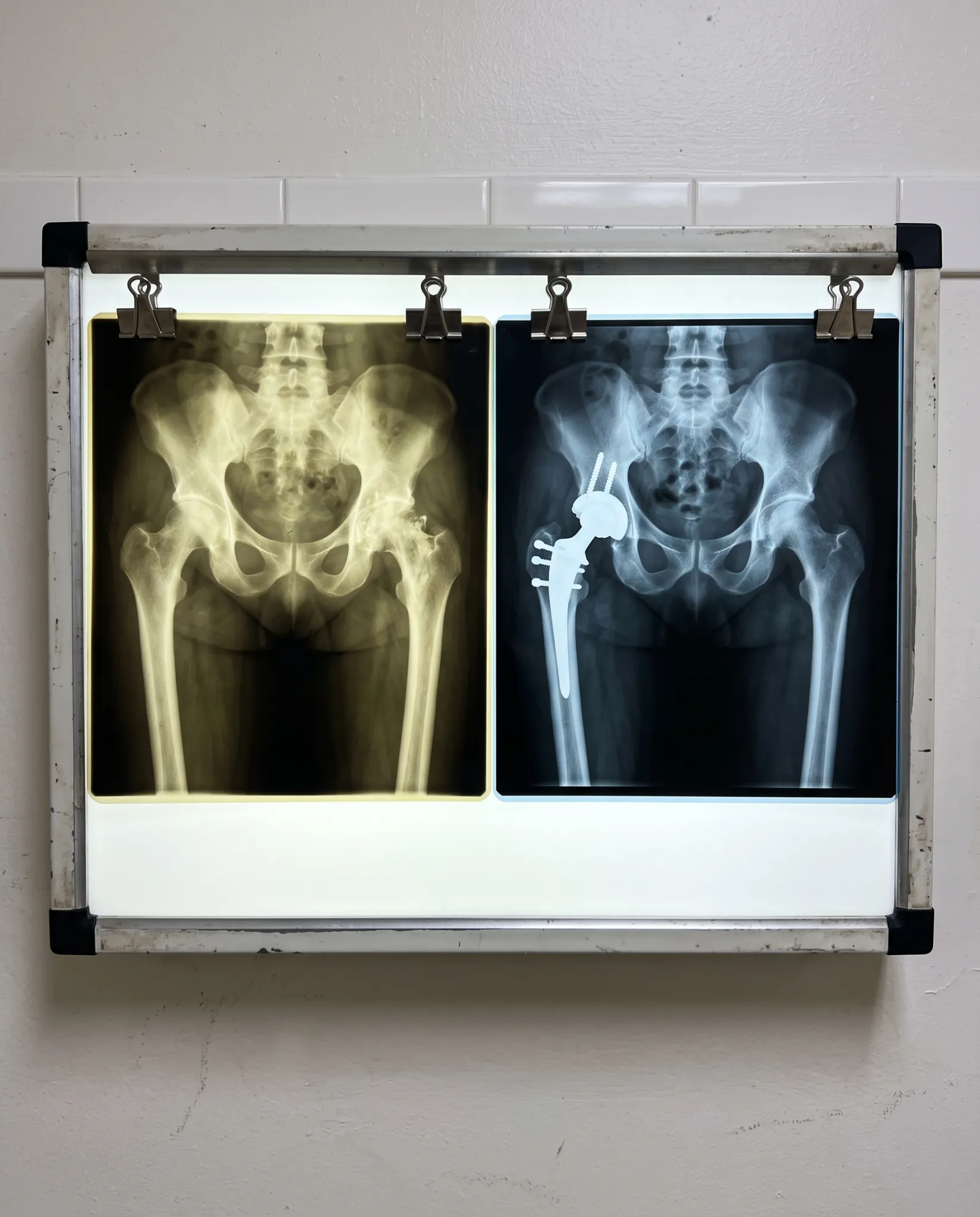
Same gravel, same second, eleven feet apart. He lost the leg. I got a bruise.
Miles & Motorcycles
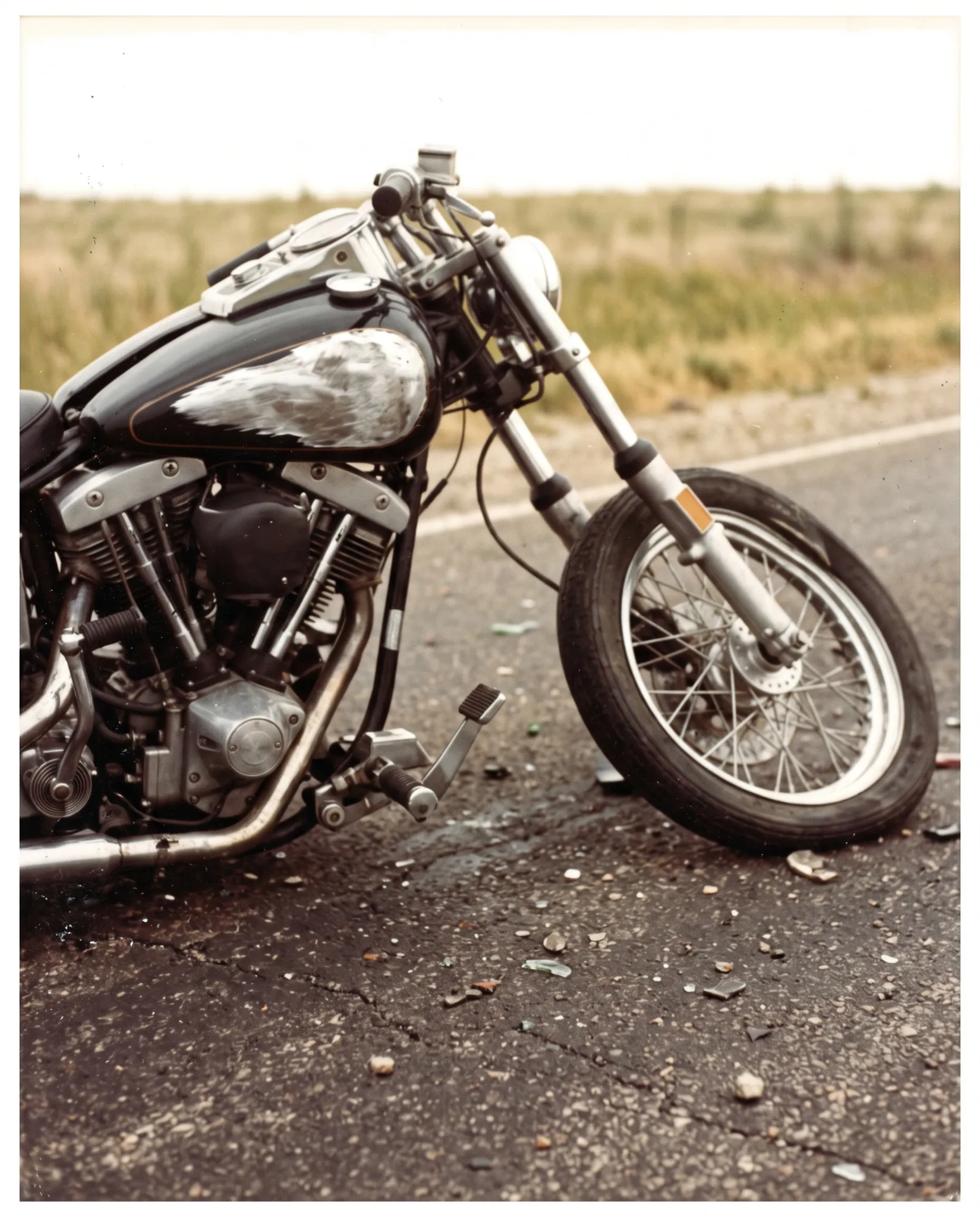
At 28 he'd have been fixing a bone. At 73 he said he'd be trying to keep me out of a chair.
Miles & Motorcycles
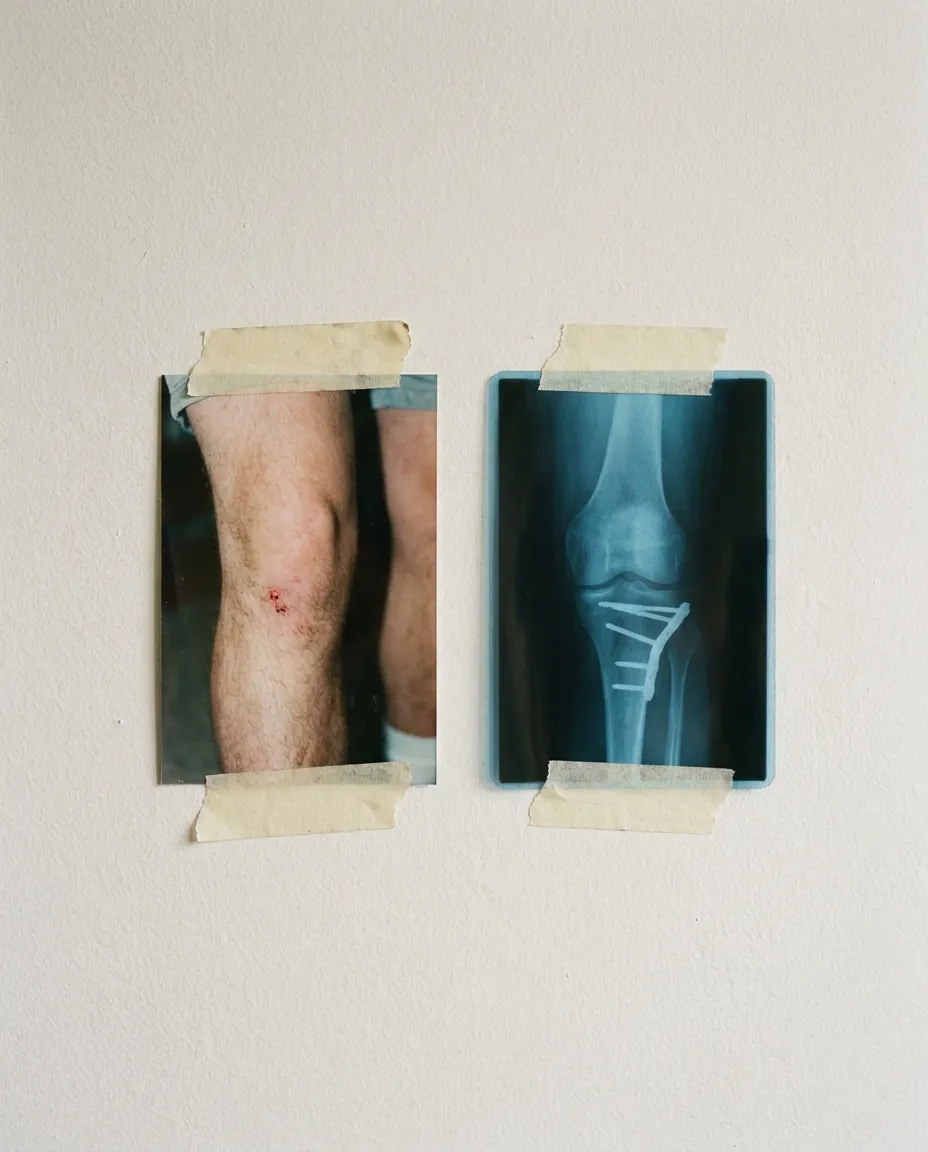
My gear saved everything it covered. The surgeon asked about the part it didn't.
Miles & Motorcycles
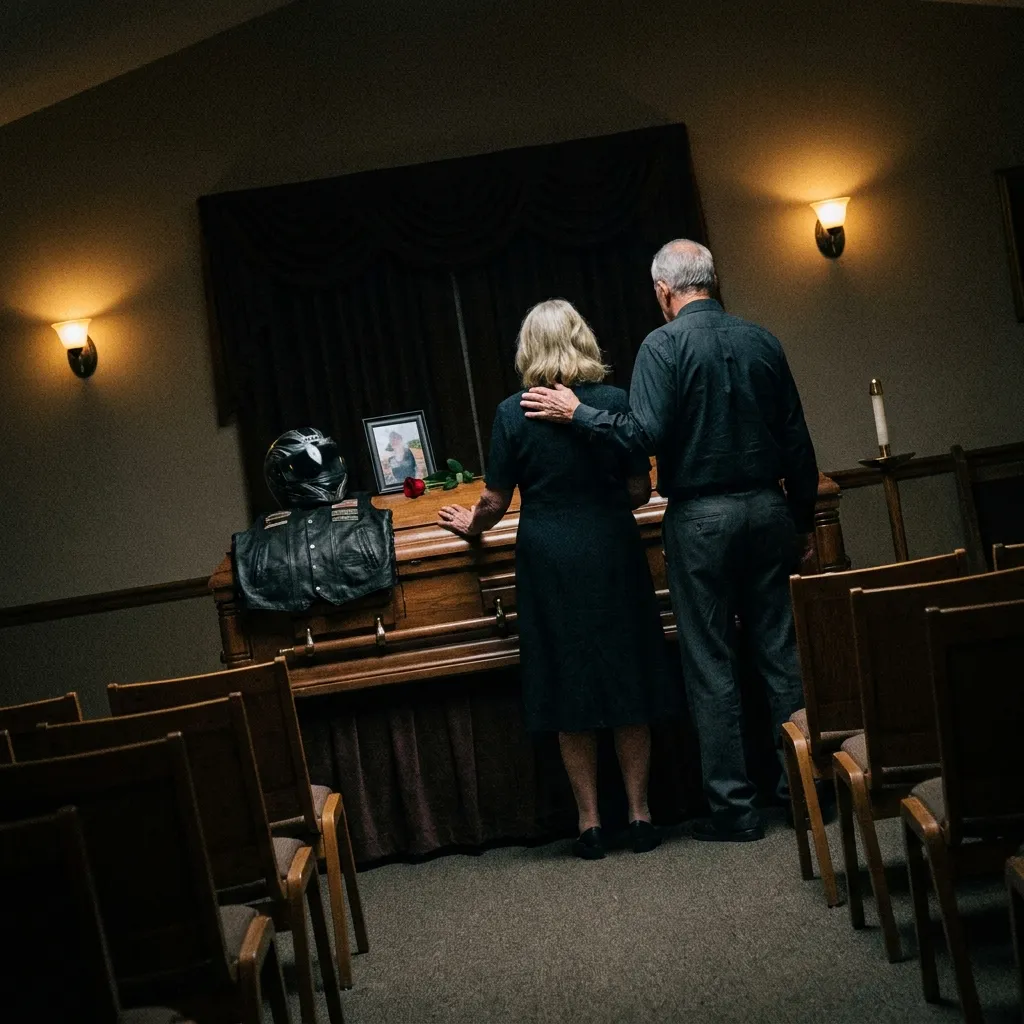
I rode in $26.99 Wranglers for eleven years.
Miles & Motorcycles
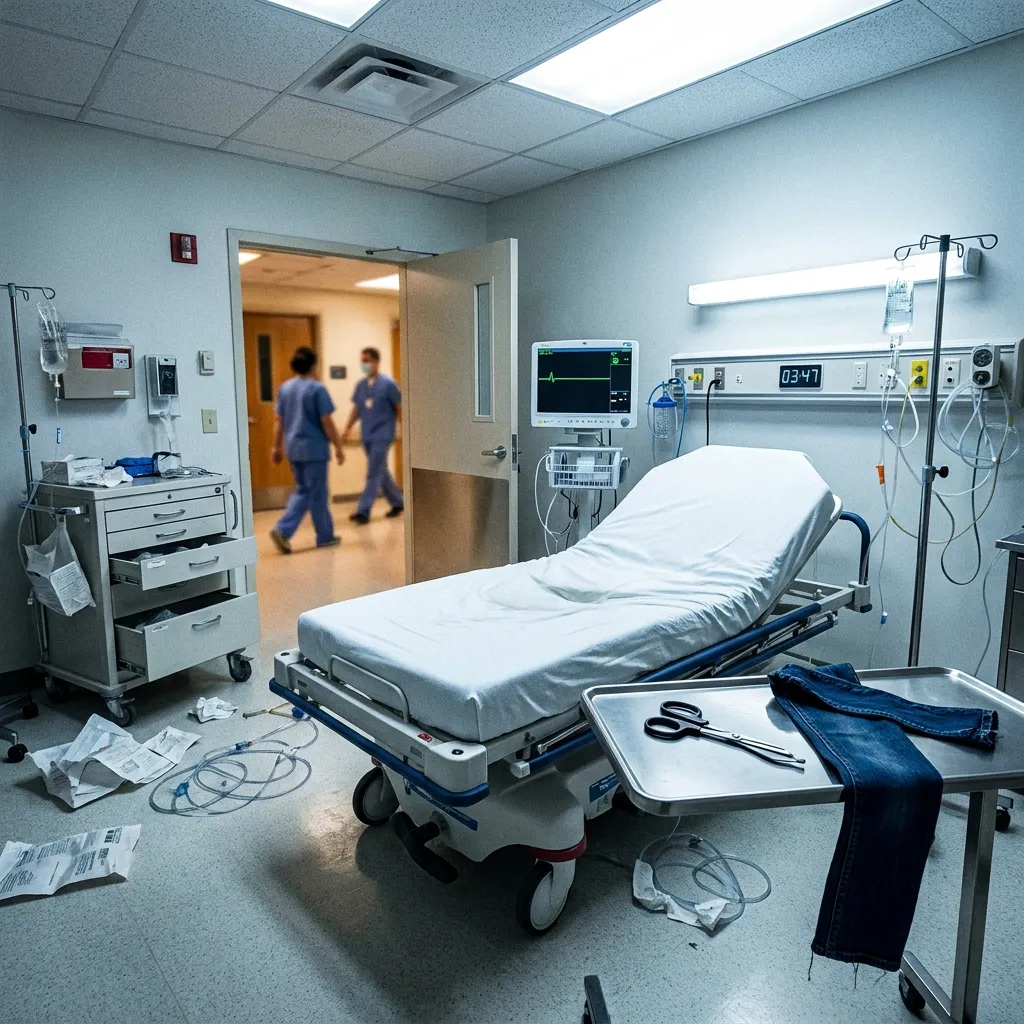
I rode in $26.99 Wranglers for eleven years.
Miles & Motorcycles
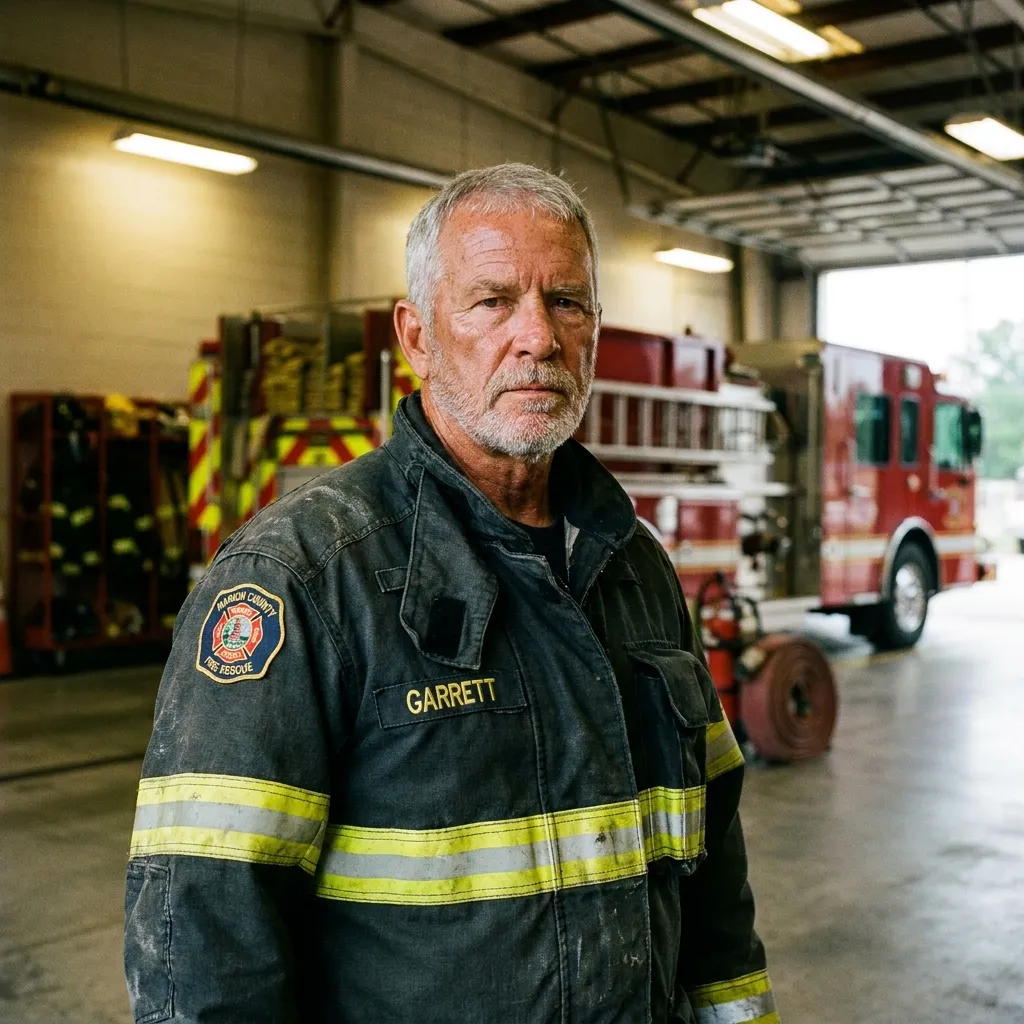
Forty feet of asphalt ended fifty years of riding in jeans.
Miles & Motorcycles
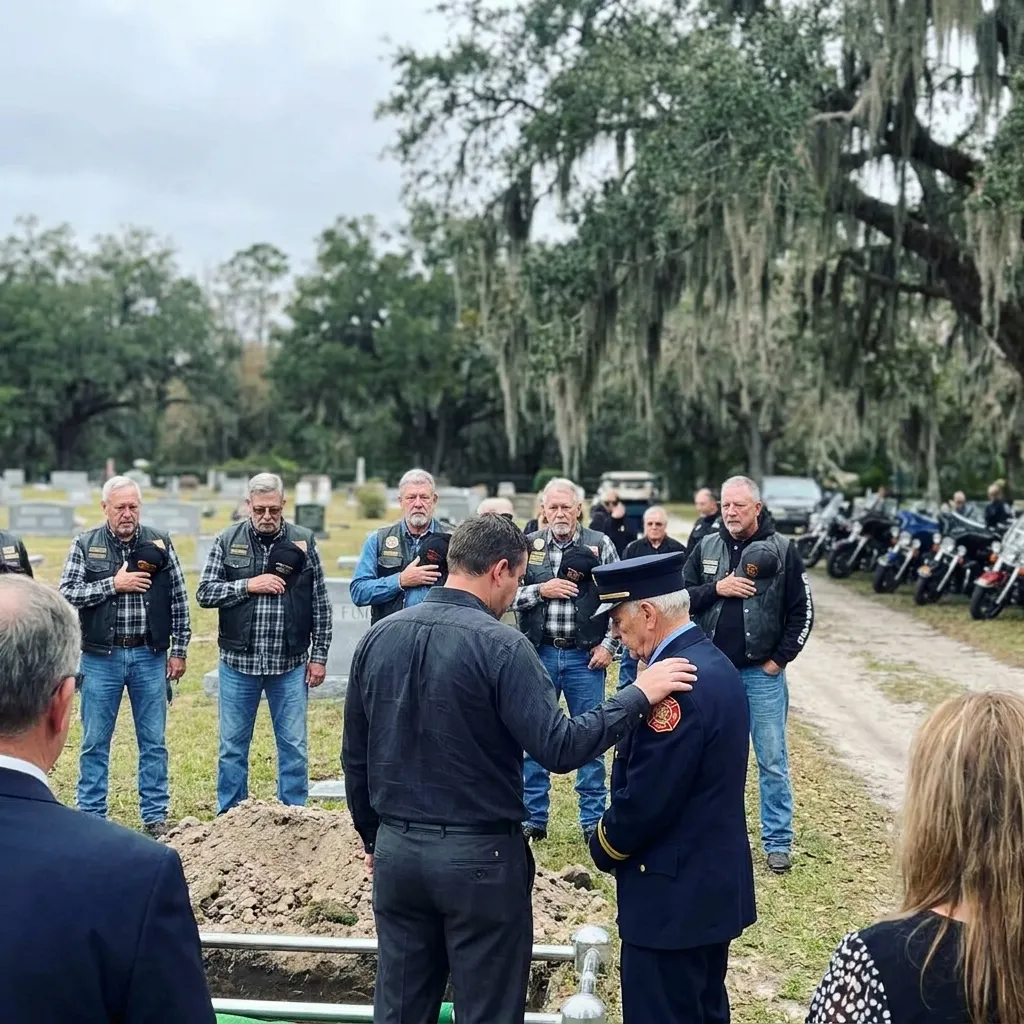
I rode in $26.99 Wranglers for eleven years.
Miles & Motorcycles
I rode in $26.99 Wranglers for eleven years.
Miles & Motorcycles
At 28 he'd have been fixing a bone. At 73 he said he'd be trying to keep me out of a chair.
Miles & Motorcycles
I rode in $26.99 Wranglers for eleven years.
Miles & Motorcycles
I rode in $26.99 Wranglers for eleven years.
Miles & Motorcycles
I rode in $26.99 Wranglers for eleven years.
Miles & Motorcycles

 Add to Chrome