Artery Clean-Up Enzyme. B1G1
Ad Copy
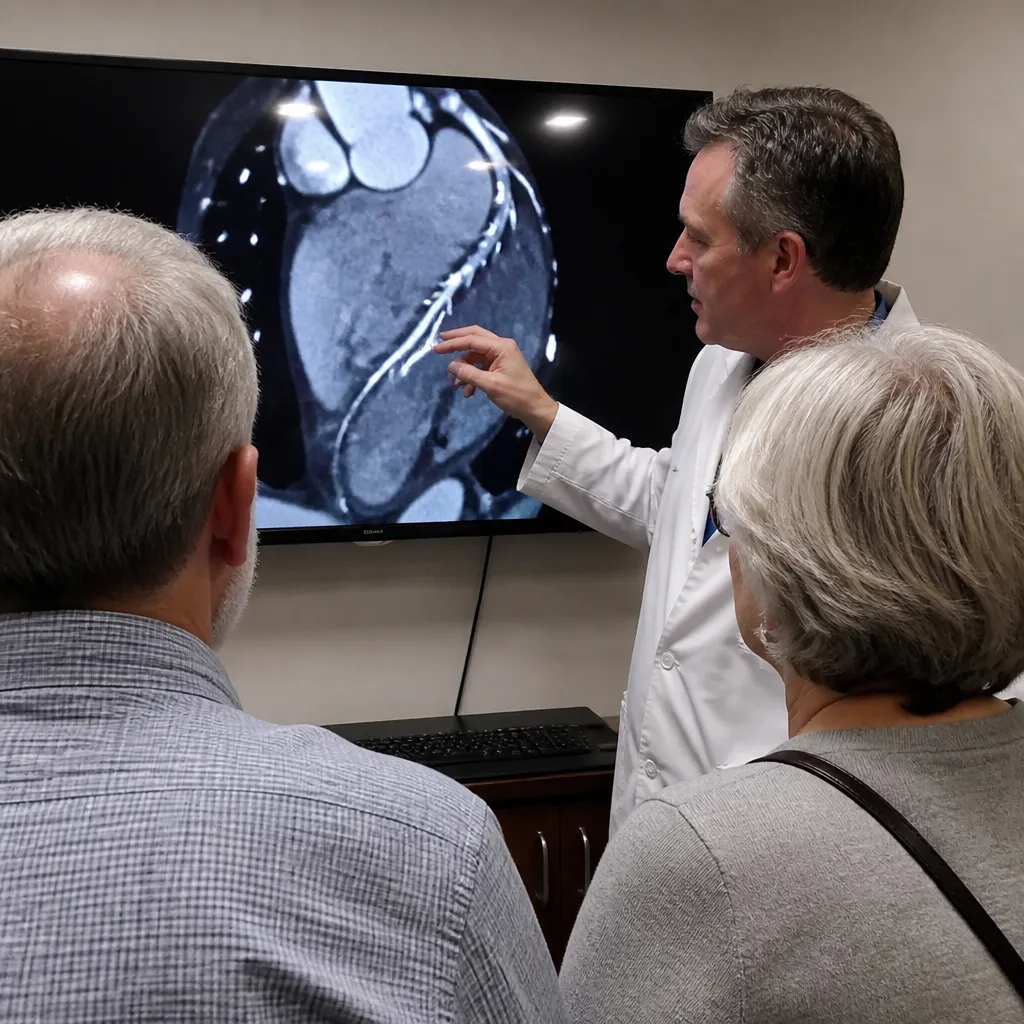
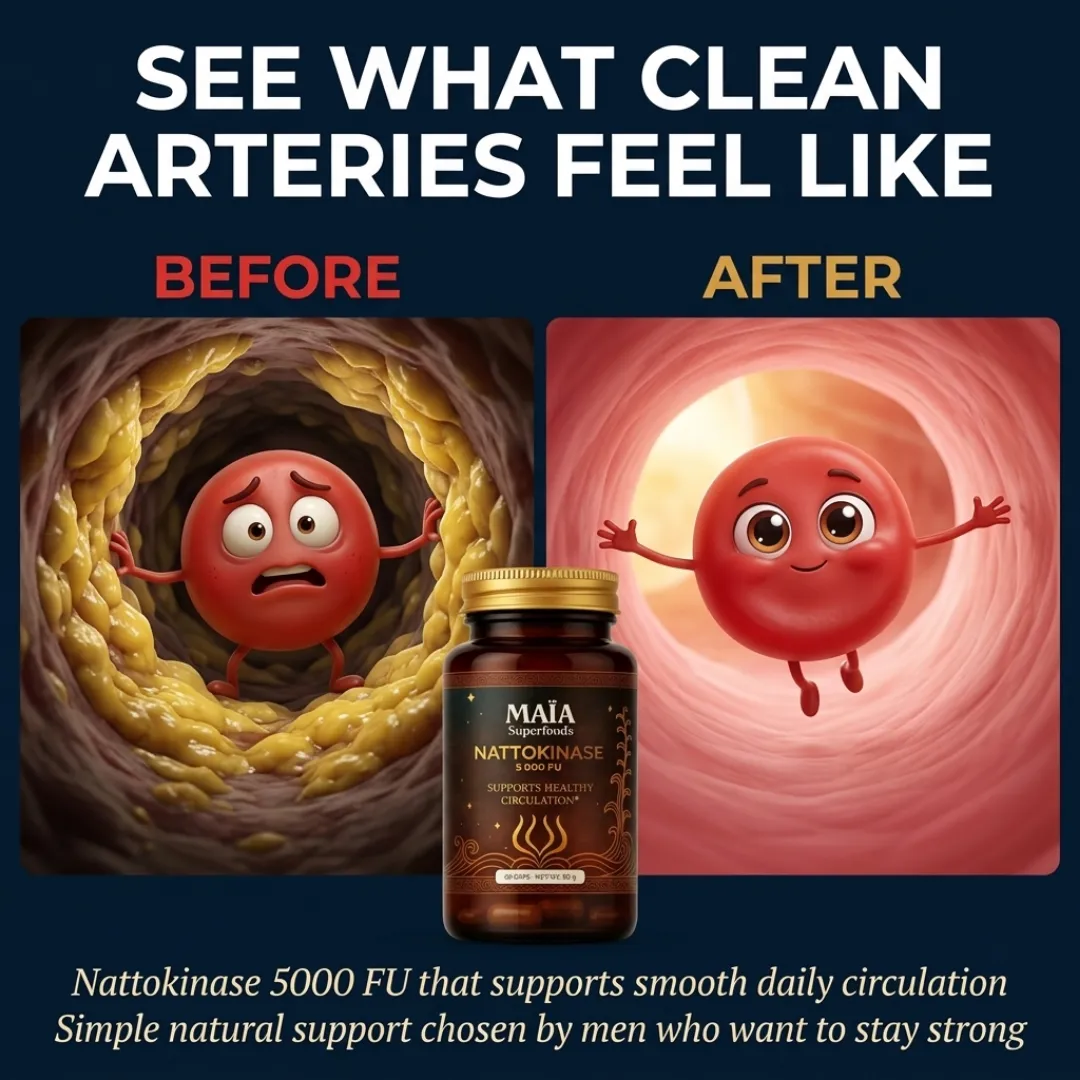
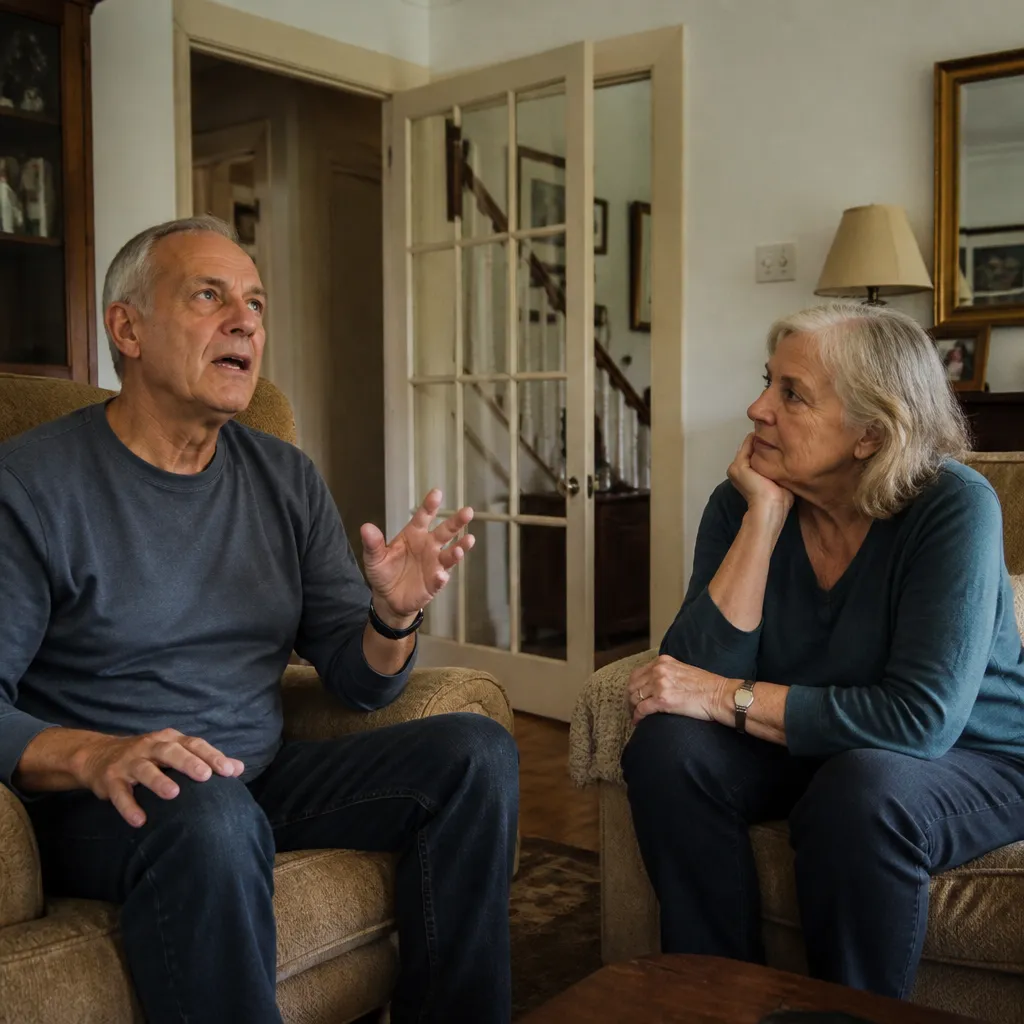
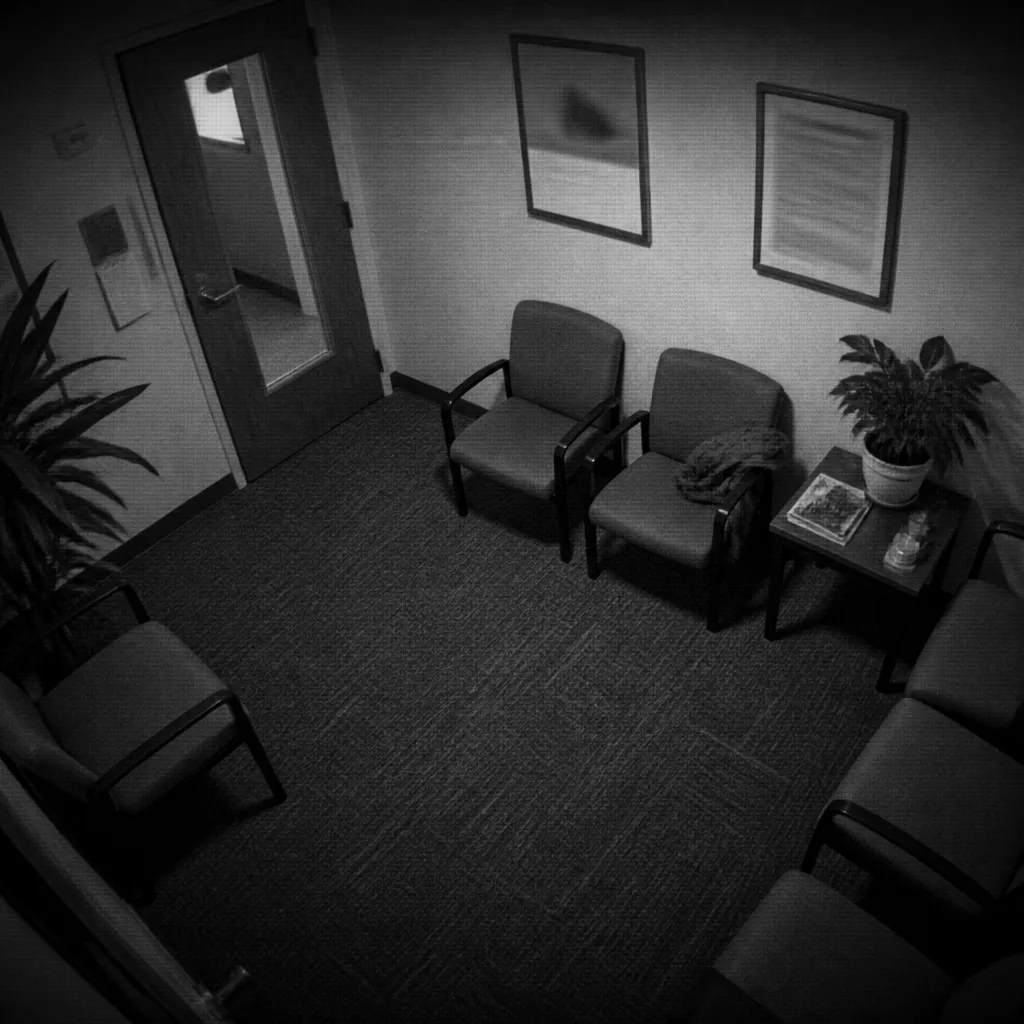
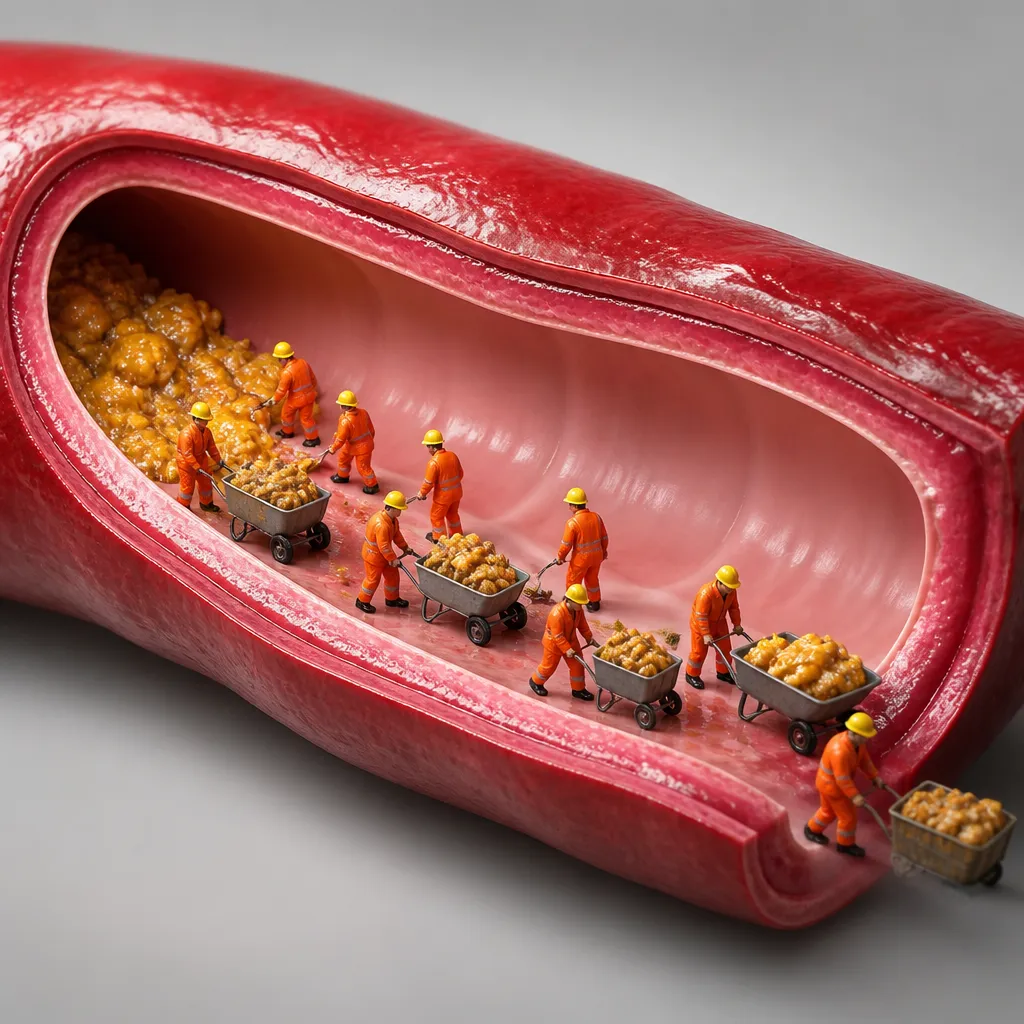
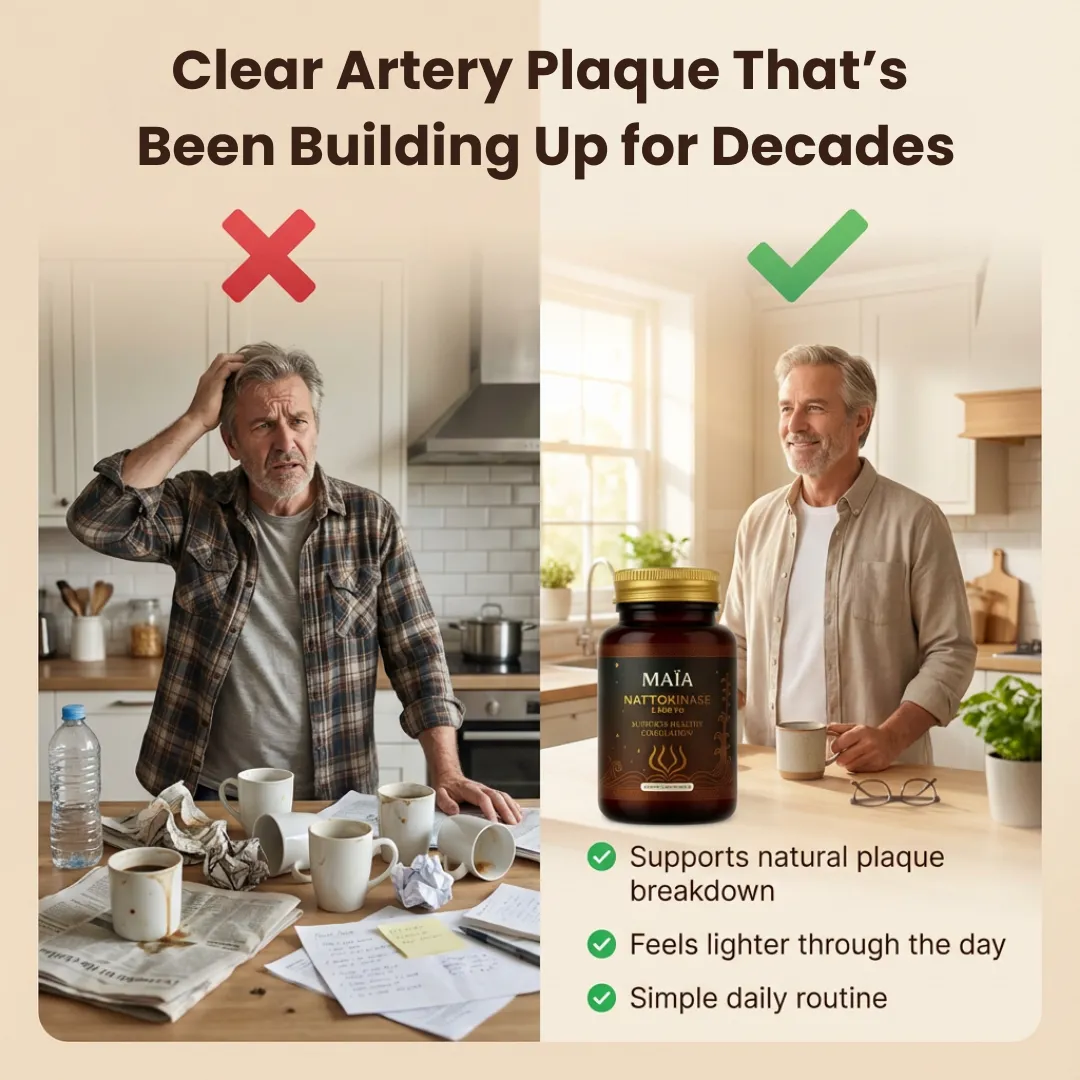
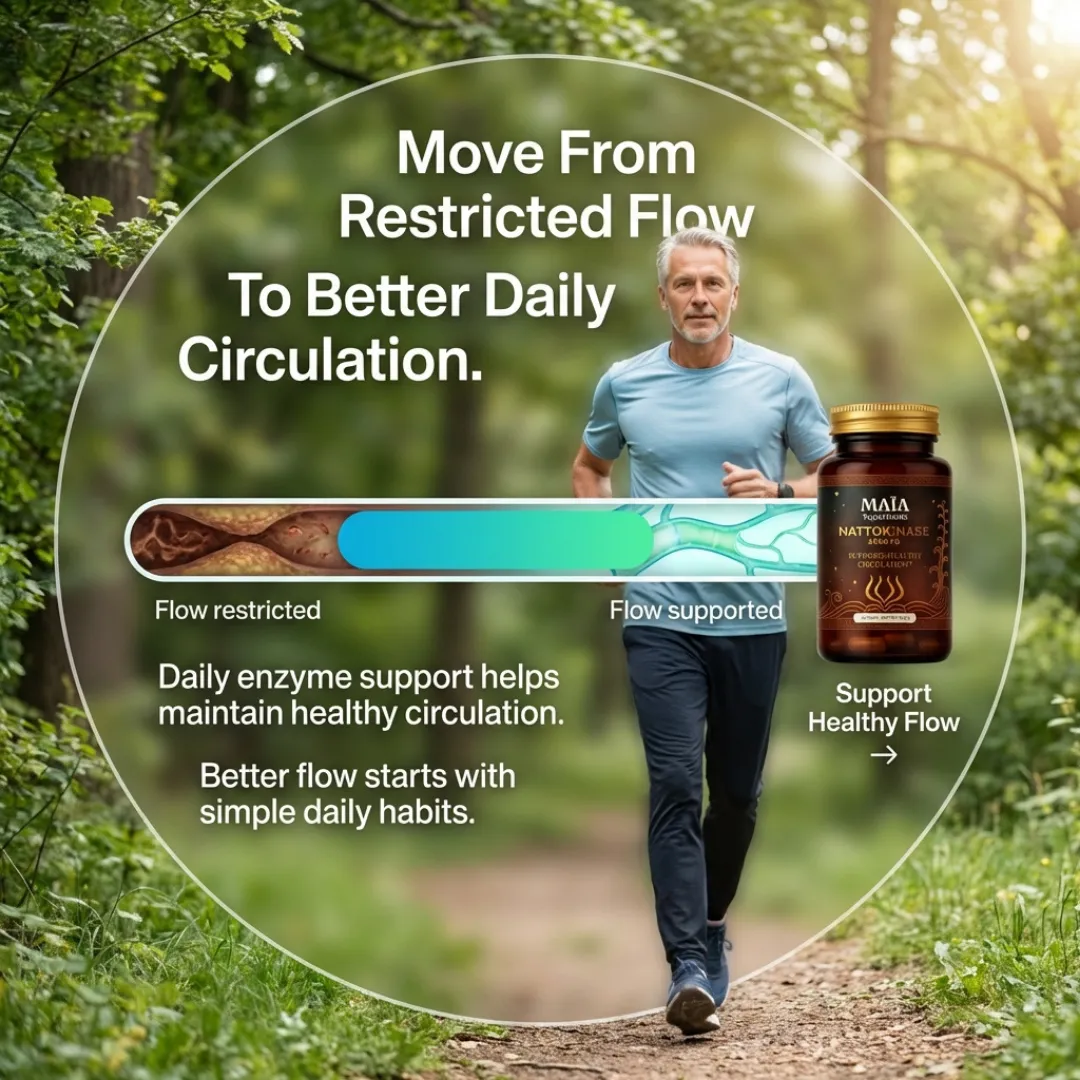
This is the waiting room nobody plans for. You do everything right your whole life. You eat well. You stay active. You show up to every appointment. And one day you're sitting in a chair you never expected to sit in, filling out forms you never expected to fill out. My parents were that couple last October. My dad went in for chest heaviness on a Sunday morning after coming in from the yard. My mother drove him. He didn't want her to. He said it was probably indigestion. He said he'd been feeling it for a few weeks and he'd been hoping it would go away. The waiting room was blue vinyl chairs and a coffee maker nobody was using. I got there 40 minutes after they did. My mother was signing forms with her reading glasses low on her nose. My father was in the back already, hooked up to monitors. I sat next to her. She handed me a stack of papers to hold. I looked down at them. Insurance forms. Emergency contact updates. Advance directive check boxes. My mother said, "Sarah. He's 71. When did that happen." I did not have an answer. The scan came back four hours later. Significant plaque buildup in three arteries. Coronary calcium score of 812. The cardiologist walked us through it with the images on his screen. Talked about cholesterol. Talked about diet. Talked about the possibility of a procedure. Talked about stress. He talked for 30 minutes. Nobody mentioned the fibrin clearance system that had been quietly failing in my father's body since he turned 50. I want to tell you what I found out after that morning. Because if you have a parent, a spouse, a sibling, or a body of your own that is quietly building plaque while somebody watches the wrong number, this is what nobody at that appointment had time to explain. My father is not a careless man. He's the opposite. He's a retired county extension agent. He knew every farmer in five counties. He got up at 5:15 every morning of his adult life. He ate the way my mother cooked, which was heavy on vegetables and light on everything else. He walked two miles most evenings. He hasn't smoked since 1978. His labs had been clean for decades. His cholesterol was 194 the week before his scan. And his arteries had been storing patched-over damage every single day for at least fifteen years. Here is the part that nobody at the appointment explained. Every artery in your body is lined with a layer that is one cell thick. It is called the endothelium. Every heartbeat pushes about five ounces of blood across every square inch of that surface. 100,000 heartbeats a day. That surface takes microscopic damage constantly. Tiny tears. Small injuries. This is normal. This is happening to every person reading this right now. Your body responds the way it responds to any wound. It patches the damage. The patch is made of a protein called fibrin. Fibrin is your body's biological duct tape. It weaves a mesh across the damaged spot. It seals the injury. Cholesterol, calcium, and inflammatory cells arrive to reinforce it while the wall heals underneath. These patches are microscopic. They are essential. Without them, your arteries would leak. The enzyme that runs the clearance side of this operation is called plasmin. Plasmin is produced naturally by your body. It finds fibrin patches that have finished their job. It breaks them down. It clears them away. It resets the wall to smooth. For the first four decades of your life, this system runs itself. Damage in. Damage out. Zero net storage. Clean arteries. Then the balance shifts. After 50, plasmin activity drops by as much as 50 percent. By 60, it can be down 60 percent or more. This is not a lifestyle failure. It is not something my father did wrong. This is the biological reality of a fibrinolytic system that has been running for five decades. Damage still happens every day. Same rate. Fibrin patches still get laid down every day. Same rate. But clearance drops. The fibrin patches stop being dissolved. They stay. They harden. Cholesterol and calcium arrive to reinforce them. And on a calcium scan, each hardened patch shows up as a small white spot. My father's calcium score of 812 was not a measurement of the plaque he formed in the year before his appointment. It was a measurement of every fibrin patch his body created over the last 15 years that it lost the ability to clear. 15 years. During which everyone watched his cholesterol. That is the part that made me sit in my car in the hospital parking garage and put my forehead on the steering wheel. Nothing my father was doing was wrong. Nothing anybody in his care team was doing was wrong exactly. Everyone was managing the raw material of plaque. Nobody was addressing his clearance rate. Nobody was even measuring it. And the clearance was where the actual failure was happening. I spent the next six weeks reading. Vascular biology textbooks from a used bookstore. Papers I found on medical journal databases through my public library card. Nights at my kitchen table after my kids were asleep. I found published research going back over 40 years on a natural enzyme called nattokinase. Nattokinase comes from a traditional Japanese fermented soy food called natto. Japanese fishermen and farmers have been eating it every morning for over 1,000 years. In the regions of Japan where natto consumption is highest, the rates of cardiovascular events are among the lowest in the developed world. Modern research took 40 years to figure out why. Nattokinase mimics and supports plasmin. It supports the body's natural fibrinolytic activity. It supports healthy blood viscosity already within the normal range. It supports healthy circulation. It supports healthy blood flow. It supports the body's natural ability to clear the kind of fibrin buildup that contributes to artery plaque. I read through the research late into the night for two straight weeks. Then I read something that made me sit up. Almost every nattokinase product on the market is essentially inert. The enzyme is measured in fibrinolytic units, or FUs. Clinical research uses 5,000 FUs per serving. Most nattokinase products on the shelf deliver 500 FUs. Sometimes 1,000. Sometimes 2,000. Well below the dose the research uses. The enzyme is heat-sensitive. Cheap manufacturing destroys most of its activity before it reaches the bottle. Almost no product third-party tests for actual FU content in the capsule. You get the name. You do not get the enzyme. The nattokinase that matches the research has to meet six criteria. Fermented from real natto soy. Low-temperature processed to preserve enzyme activity. Dosed at 5,000 FUs per serving. Vitamin K2 removed for safety. Third-party tested for active fibrinolytic units. Free of fillers. Six criteria. Almost no product on the market meets all six. I found one small company that hit every one. MAÏA Nattokinase. Real fermented natto. Low-temperature processed. 5,000 FUs per dose. Vitamin K2 removed for safety. Third-party tested every batch. No fillers. The only one I could find that discloses the actual FU content directly on the bottle. I drove to my parents' house that Sunday. Sat at their kitchen table. Explained everything I had read. My father listened with his reading glasses on and his hands folded on the placemat, the way he used to listen at extension office meetings. He said, "Sarah. Is your specialist going to think I'm being difficult if I add this to what he's got me on." I said, "Dad. You are not replacing anything. You are adding the piece the standard playbook does not address." He said, "Order me a bottle." That was ten months ago. My father takes two capsules every morning with a glass of water. He still takes what his cardiologist prescribed. He still walks his two miles. He still eats what my mother cooks. His follow-up scan at six months came back at 738. Down from 812. Not stabilized. Not slowed. Down. His cardiologist said, "What are you doing." My father told him. His cardiologist wrote it in the chart and said, "Keep doing it." My father called me from their driveway. He said, "Sarah. He said keep doing it." I stood in my kitchen and I cried into the phone. I want to say something to whoever is reading this. If you have a parent who is 65, 70, 75, and everyone has been managing their cholesterol for a decade while nobody has looked at their clearance system. If you are that person. If you have been doing everything right and you are still sitting in a chair you never expected to sit in. You are not out of options. You are not out of time. But the standard playbook is aimed at the raw material. The clearance system is what actually decides whether plaque accumulates or gets removed. And nothing in the standard playbook addresses it. There is one natural enzyme with over 40 years of published research on supporting the body's fibrinolytic activity. Nattokinase. But only if it is fermented from real natto, low-temperature processed, dosed at 5,000 FUs, vitamin K2 removed, third-party tested, and free of fillers. Almost nothing on the market meets all six criteria. One small company does. MAÏA Nattokinase. 90-day money-back guarantee. If it doesn't work, they refund every dollar. https://www.buymaia.com/shocking-discovery-nattokinase-plaque They are a small company. They make everything in small batches to preserve enzyme activity. They sell out. Last time we reordered for my father, our shipment was delayed by nine days. My mother split his morning dose in half to stretch what was left in the bottle. If you click below and they're out, try again the following week. But if they have it, get it. Take two capsules tomorrow morning with a glass of water. Get a baseline scan. Give it 8 to 12 weeks. Get another scan. Let the numbers show you what your body does when the fibrin clearance system finally works again. I cannot go back and change what my father's body was quietly storing for 15 years while everyone watched the wrong number. But I can change what happens from here. So can you. https://www.buymaia.com/shocking-discovery-nattokinase-plaque
More from Natural Wellness Magazine

Artery Clean-Up Enzyme. B1G1
Natural Wellness Magazine
Artery Clean-Up Enzyme. B1G1
Natural Wellness Magazine
Artery Clean-Up Enzyme. B1G1
Natural Wellness Magazine

Artery Clean-Up Enzyme. B1G1
Natural Wellness Magazine
Artery Clean-Up Enzyme. B1G1
Natural Wellness Magazine
Artery Clean-Up Enzyme. B1G1
Natural Wellness Magazine
Artery Clean-Up Enzyme. B1G1
Natural Wellness Magazine

Artery Clean-Up Enzyme. B1G1
Natural Wellness Magazine
Artery Clean-Up Enzyme. B1G1
Natural Wellness Magazine

Artery Clean-Up Enzyme. B1G1
Natural Wellness Magazine
Artery Clean-Up Enzyme. B1G1
Natural Wellness Magazine
Artery Clean-Up Enzyme. B1G1
Natural Wellness Magazine

 Add to Chrome