
Artery Clean-Up Enzyme. B1G1
Ad Copy
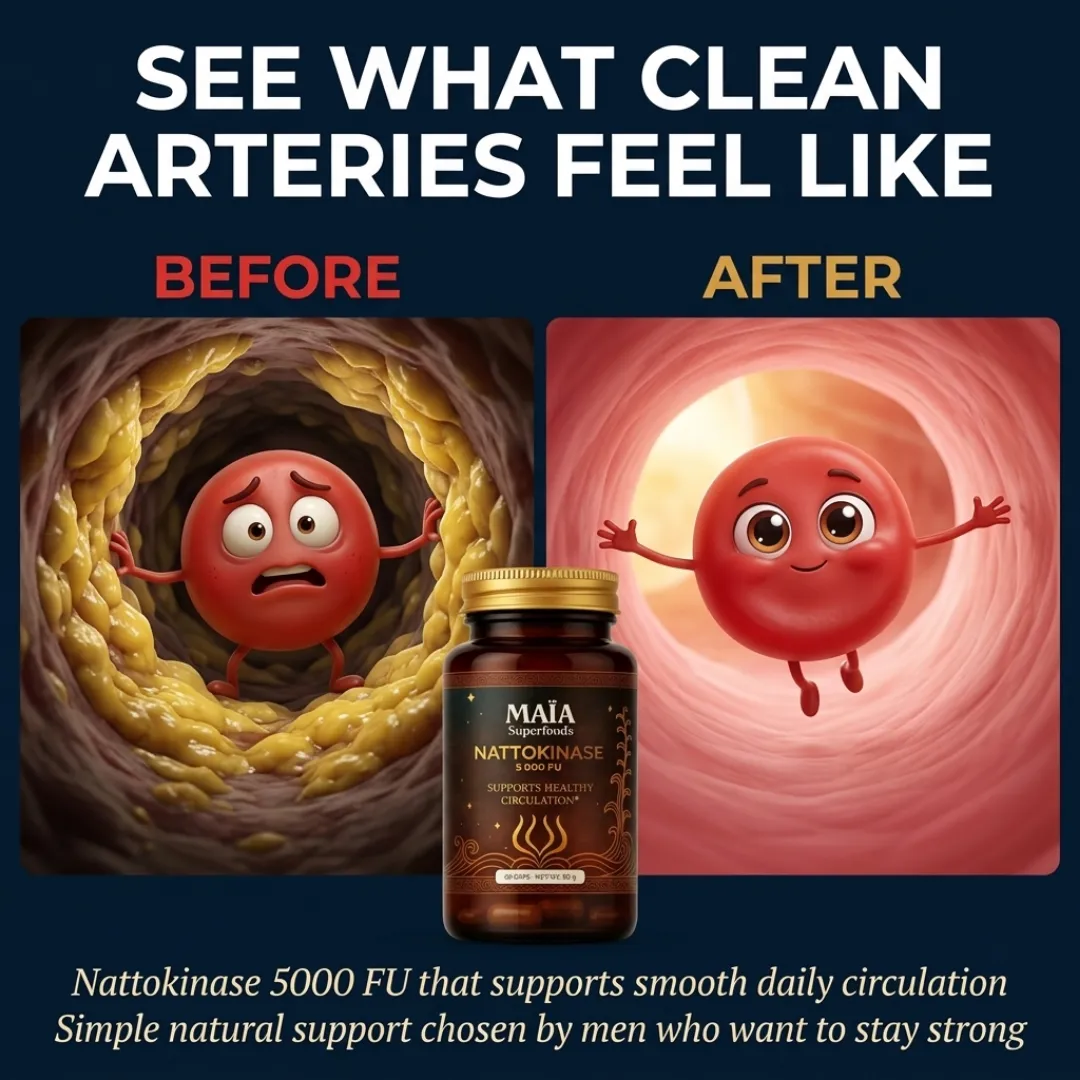
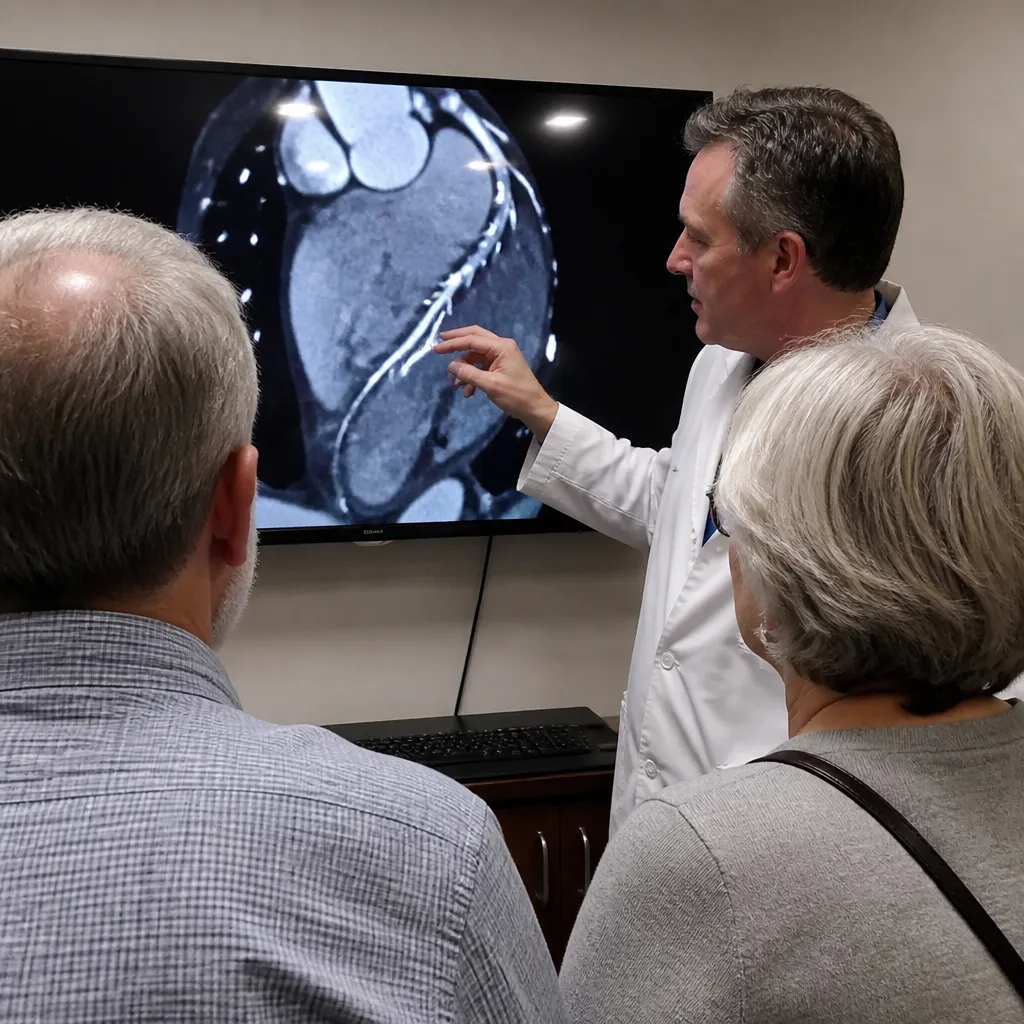
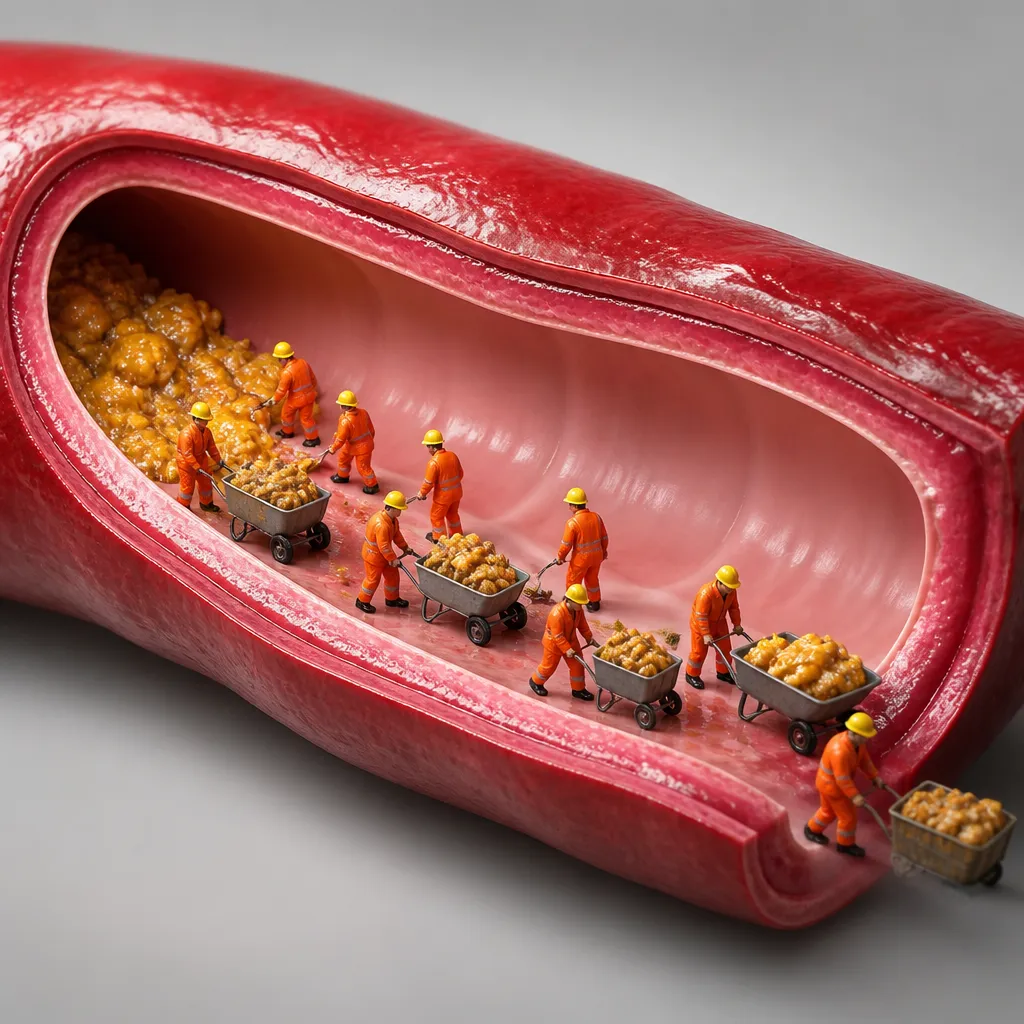
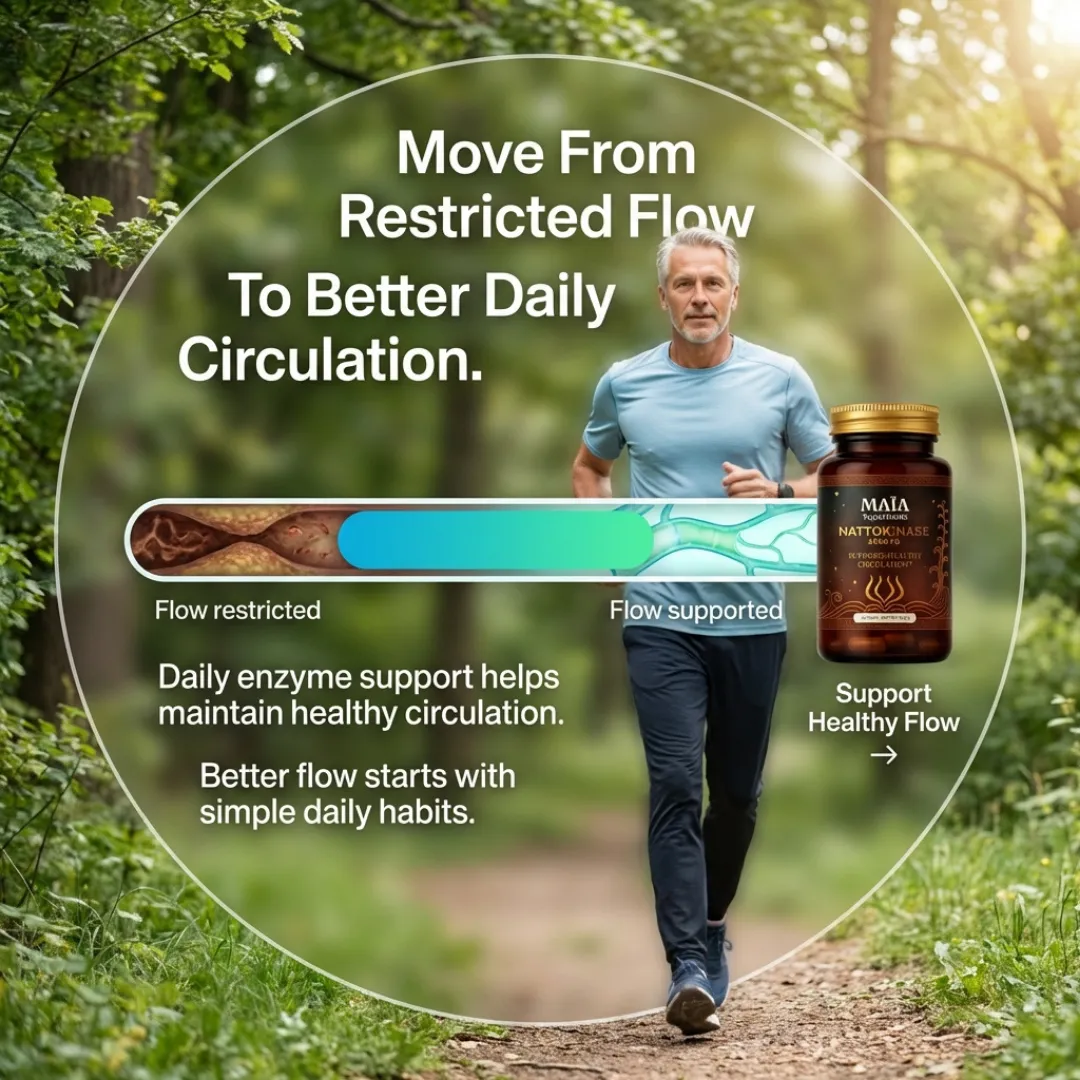
Every year that LDL sits elevated above 130, plaque is being deposited inside the arterial wall. When a regimen finally brings that number down, the new deposits slow. But the plaque from the previous 5, 10, 15 years stays exactly where it is. Your specialist celebrates the controlled number. Meanwhile, the fibrin patches that were laid down during those years, one on top of another, are still sitting inside your arterial walls, quietly hardening. The number improved. The clearance never restarted. I need to explain what almost no one at a regular appointment has time to walk you through. If your calcium score has climbed while your cholesterol looks fine, if you've been on a regimen for years and your imaging keeps getting worse anyway, this is what nobody has explained to you and it is not because they are hiding it. Most of them are watching the same number you are. I'm Dr. Marcus Whitaker. I'm a retired vascular imaging specialist. Twenty-two years reading cardiac scans in three hospital systems in the Midwest. I retired at the end of 2023 and I have spent the last year and a half doing what I did not have time to do while I was still on the schedule. Reading the fibrinolytic research that sits in journals nobody in a busy imaging suite ever gets to. I want to give you what I found. Because the pattern I saw in the suite for two decades finally makes sense to me, and I owe it to the patients I read scans on to say it out loud now that I have the time. Here is the pattern. A man in his late 50s comes in for a first calcium score. His regular specialist ordered it because his cholesterol has been trending up or because his father had an event. The score comes back at 180. His specialist manages his cholesterol. Puts him on a regimen. Sends him home. Two years later, back in the suite. Score of 380. His cholesterol has been well managed. His labs look excellent. His regimen is doing exactly what it was designed to do. But the calcium is climbing. His specialist says to keep doing what he's doing. Maybe increases the dose. Sends him home. Two more years. Score of 620. By that scan, I already knew what was coming. Because I saw this exact sequence more times than I could count. And I could not tell the patient what I saw. My job was to run the images and hand them to the reading specialist. Not to speak. Now that I am retired, I can speak. Here is what is actually happening inside your arteries. Every artery in your body is lined with a layer of cells that is one cell thick. It is called the endothelium. Every heartbeat pushes about five ounces of blood across every square inch of that surface. 100,000 heartbeats a day. That surface takes microscopic damage constantly. Small tears. Small oxidative injuries. Thousands of them every 24 hours. Your body responds to that damage the way it responds to any wound. It patches it. The patch is made of a protein called fibrin. Fibrin is your body's biological duct tape. It weaves a mesh across the damaged spot. It seals the injury. Cholesterol, calcium, and inflammatory cells arrive at the mesh to reinforce it while the wall heals underneath. These patches are microscopic. They are essential. Without them, your arteries would leak. The enzyme that runs the clearance side of this operation is called plasmin. Plasmin is produced naturally by your body. It finds fibrin patches that have finished their work. It breaks them down. It clears them away. It resets the wall to smooth. For four decades of your life, this system runs itself. Damage in. Damage out. Zero net storage. Clean arteries. Then the balance shifts. After 50, plasmin activity drops by as much as 50 percent. By 60, it can be down 60 percent or more. Damage still happens every day. Same rate. Patches still get laid down every day. Same rate. But clearance drops. The fibrin patches stop being dissolved. They stay. They harden. Cholesterol and calcium arrive to reinforce them. And on my calcium scan, each hardened patch shows up as a small white dot. I want to say this clearly, because it changed how I look at 22 years of imaging. A calcium score is not measuring the plaque you formed this year. It is measuring every fibrin patch your body created over the last 10 to 15 years that it lost the ability to clear. By the time a man walks into a suite with a score of 180, that number represents a decade of unfinished clearance work. And unless the clearance system starts working again, the number is going to keep climbing. Regardless of the regimen. Regardless of the diet. Regardless of the cholesterol. The regimen manages the raw material available for reinforcing new patches. That is real. That is what it does. Your specialist is not wrong to prescribe it. But the regimen does not restore plasmin. Does not reactivate the clearance system. Does not touch the fibrin that has been accumulating since you turned 50. Which is why I watched thousands of scans climb over the years in patients whose labs were beautiful. The wrong system was being managed. Nobody was feeding the clearance. I want to tell you what the research led me to after I retired. There is a natural enzyme called nattokinase that has been studied for over 40 years for its ability to support the body's fibrinolytic activity. Nattokinase comes from a traditional Japanese fermented soy food called natto. Japanese fishermen and farmers have been eating it every morning for over 1,000 years. In the regions of Japan where natto consumption is highest, the rates of cardiovascular events are among the lowest in the developed world. Modern research spent 40 years figuring out why. The reason is nattokinase. It mimics and supports plasmin. It supports the body's natural fibrinolytic activity. It supports healthy blood viscosity already within the normal range. It supports healthy circulation. It supports healthy blood flow. It supports the body's natural ability to clear the kind of fibrin buildup that contributes to artery plaque. I read that research for two months at my kitchen table before I did anything else. Then I found something I have to warn you about, because it is the reason most people who try nattokinase see no result. Almost every nattokinase product on the market is essentially inert. The enzyme is measured in fibrinolytic units, or FUs. Clinical research uses 5,000 FUs per serving. Most nattokinase products on the shelf deliver 500 FUs. Sometimes 1,000. Sometimes 2,000. Well below the dose the research uses. The enzyme is heat-sensitive. Cheap manufacturing destroys most of its activity before it reaches the bottle. Almost no product third-party tests for actual FU content in the capsule. You get the name on the label. You do not get the enzyme in the capsule. The nattokinase that matches the research has to meet six criteria. Fermented from real natto soy. Low-temperature processed to preserve enzyme activity. Dosed at 5,000 FUs per serving. Vitamin K2 removed for safety. Third-party tested for active fibrinolytic units. Free of fillers. Six criteria. Almost no product on the market meets all six. I spent a whole Sunday morning at my kitchen table looking for one that did. I found one small company. MAÏA Nattokinase. Real fermented natto. Low-temperature processed. 5,000 FUs per dose. Vitamin K2 removed for safety. Third-party tested every batch. No fillers. The only one I could find that discloses the actual FU content directly on the bottle. I ordered it that afternoon. I have been on it for seven months. Two capsules every morning with a glass of water. Week two, the tension I had been carrying in my shoulders since my second year of hospital work started to ease. Week four, my hands were warm at 6 AM. Warm. Not lukewarm. For the first time in years. Week eight, I walked the loop around my neighborhood without needing to stop halfway. First time in a long time. Week twelve, I went in for my own scan. I set up an appointment at my old imaging center. Ran it just like I ran thousands of others. Baseline from four years earlier: 156. Current: 138. Not stabilized. Not slowed. Down. I sat in the parking lot afterward. Twenty-two years of watching numbers climb. Reading mine going the other direction was not something I had allowed myself to imagine. I want to be very clear about what this is and what it is not. This is not a replacement for what your specialist has you on. Your regimen is doing its job. It manages the raw material of plaque. MAÏA Nattokinase supports the clearance system that removes fibrin. They address different halves of the same picture. Separately, only half is being handled. If your calcium score has been climbing for years while your cholesterol looks fine, this is why. Your body has been laying down fibrin every day. The way it always has. Your plasmin activity has been collapsing since you turned 50. And nothing you have been given has restored it. Until now. MAÏA Nattokinase offers a 30-day money-back guarantee. If it doesn't work, they refund every dollar. They are a small company. They make everything in small batches to preserve enzyme activity. They sell out. Last time I reordered, my shipment was delayed by nine days. I split my morning dose to stretch the bottle. If you click below and they are out of stock, try again the following week. But if they have it, order it. Take two capsules tomorrow morning with a glass of water. Get a baseline scan. Give it 8 to 12 weeks. Get another scan. Let the numbers show you what your body does when the fibrin clearance system finally works again. I spent 22 years reading numbers climbing on other people's scans. I finally read one going the other direction. It was mine. Yours can be too. https://www.buymaia.com/shocking-discovery-nattokinase-plaque
More from Natural Wellness Magazine

Artery Clean-Up Enzyme. B1G1
Natural Wellness Magazine
Artery Clean-Up Enzyme. B1G1
Natural Wellness Magazine

Artery Clean-Up Enzyme. B1G1
Natural Wellness Magazine

Artery Clean-Up Enzyme. B1G1
Natural Wellness Magazine
Artery Clean-Up Enzyme. B1G1
Natural Wellness Magazine
Artery Clean-Up Enzyme. B1G1
Natural Wellness Magazine

Artery Clean-Up Enzyme. B1G1
Natural Wellness Magazine

Artery Clean-Up Enzyme. B1G1
Natural Wellness Magazine
Artery Clean-Up Enzyme. B1G1
Natural Wellness Magazine

Artery Clean-Up Enzyme. B1G1
Natural Wellness Magazine

Artery Clean-Up Enzyme. B1G1
Natural Wellness Magazine
Artery Clean-Up Enzyme. B1G1
Natural Wellness Magazine

 Add to Chrome