Artery Clean-Up Enzyme. B1G1
Ad Copy
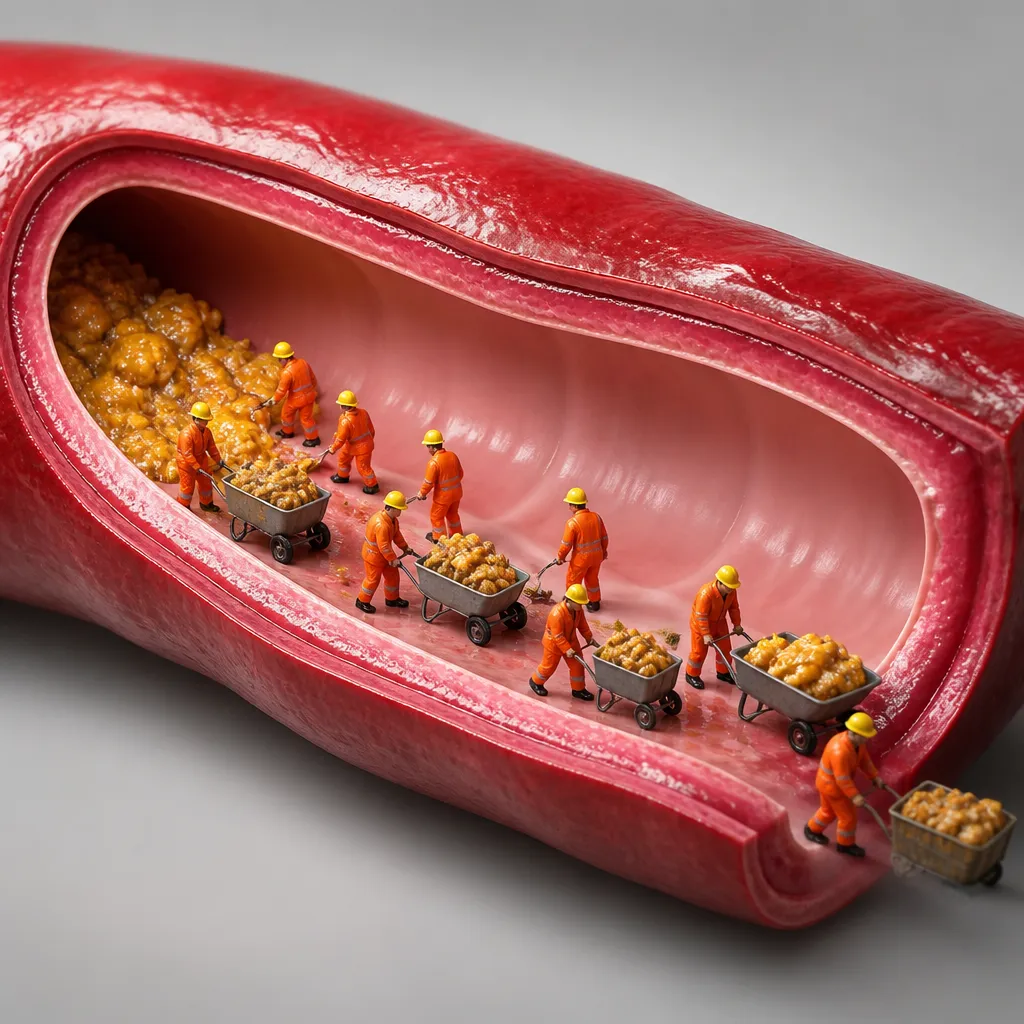
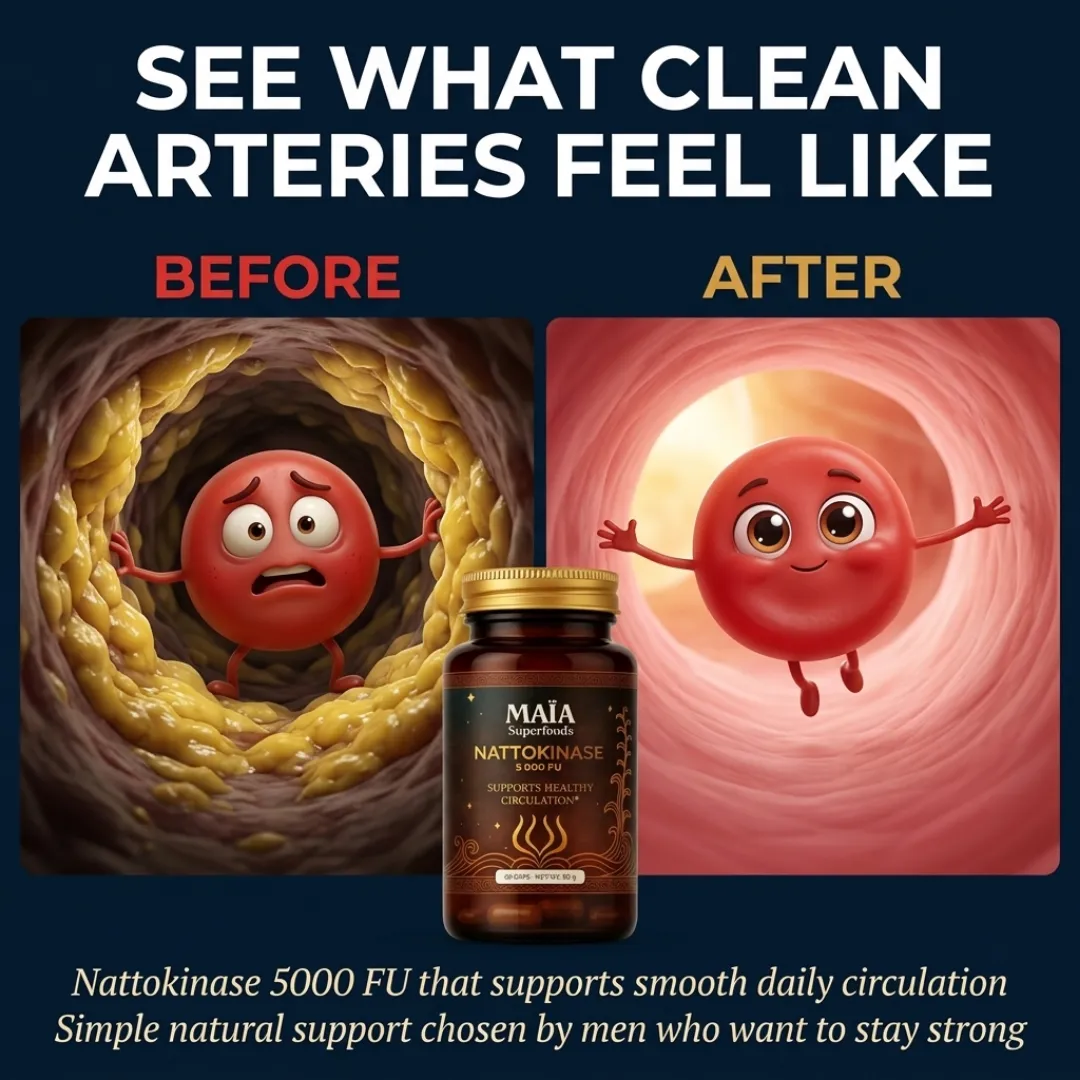
Your body deposits a specific amount of new arterial patching material every single day. The amount is determined by how much microscopic damage happens to your artery walls in a 24-hour period. That damage happens whether you eat well or badly. Whether you exercise or not. Whether you take a regimen or don't. The damage is not the problem. The failure to clear it is. I want to explain something to you that no regular doctor has time to sit down and teach in a 15-minute appointment. It will take me 20 minutes to walk you through it. If you have a rising calcium score, or if you have been on a regimen for years and you still cannot understand why the number keeps climbing, this is the mechanism that explains all of it. Once you understand what I am about to teach you, you will never look at your arteries the same way again. Let me start with what your body is actually doing every day. Your blood is not a gentle river. It is under pressure. It carries oxygen radicals from every breath. Inflammatory molecules from every stressed hour. Blood sugar fluctuations from every meal. Stress hormones from every worry. And the metabolic byproducts of being alive in a modern body. Every heartbeat pushes about five ounces of blood across every inch of your artery walls. 100,000 heartbeats a day. The equivalent of a small swimming pool of blood scraping across your inner arterial surfaces every 24 hours. That surface takes damage. Not the kind of damage you feel. Microscopic tears. Tiny inflammation sites. Small injuries. Thousands of them, every single day. Your body responds to those tears the way it responds to any wound. It patches them. The patching is done by a protein called fibrin. Fibrin is your body's biological duct tape. When there is a tear in an artery wall, fibrin threads weave a mesh across the injury. It is a bandage. A scaffold. Cholesterol and calcium and inflammatory cells arrive at the fibrin mesh to seal the damage. The patch is microscopic. And it is essential. Without fibrin, your arteries would leak. So far, everything I have described is normal. Now here is where it changes. For 40 years of your life, your body was clearing these fibrin patches as fast as it was making them. Every fibrin patch that formed today was broken down, dissolved, and cleared within days. Your net storage was zero. Your arteries stayed clean. Not because you weren't producing patches. You were. Every day. Same as now. Your arteries stayed clean because the clearance system was running. The clearance system is driven by one enzyme. Plasmin. Plasmin is your body's built-in fibrin dissolver. It is produced naturally by your bloodstream. Its entire job is to find fibrin patches that have finished their work and break them down into pieces small enough for your body to clear away. Fibrin in. Plasmin out. Damage sealed. Damage removed. Wall reset. For four decades, plasmin ran your clearance system. Damage in. Damage out. Perfect balance. Then you turned 50. After 50, plasmin activity drops by as much as 50 percent. By 60, it can be down 60 percent or more. This is not a lifestyle failure. It is not something you did wrong. This is the biological reality of a body that has been producing plasmin at a declining rate for decades. And it changes everything. Damage is still happening every day. Same rate. Same wear. Same daily patch orders. But clearance is dropping. Your body can no longer produce enough plasmin to break down the fibrin as fast as it forms. The patches stop being cleared. They stay. They harden. They accumulate. Let me show you what this looks like in numbers, so you can see it clearly. At age 40, your body laid down roughly 100 units of fibrin a day. Plasmin cleared roughly 100 units. Net storage: zero. At age 55, your body still lays down roughly 100 units of fibrin a day. Same as it always did. But plasmin activity has dropped to about 92 units cleared. Net storage: 8 units per day. About 3,000 units per year. At age 60, fibrin production remains at 100 units. Clearance is down to about 88 units. Net storage: 12 units per day. About 4,400 units per year. At age 65, fibrin is still deposited at 100 units per day. Plasmin activity is down to about 80 units cleared. Net storage: 20 units per day. About 7,300 units per year. Over a single decade between 55 and 65, your arteries have quietly stored somewhere between 40,000 and 50,000 units of hardened, un-cleared fibrin. Every unit anchored to the wall. Every unit calcifying. Every unit visible on a scan. That is what your calcium score is measuring. Not the plaque you formed this year. The fibrin patches your body could not clear over the last ten to fifteen years. I want you to sit with that. Because it explains what you have been living through. It explains why you went from a score of 187 to 428 in four years while doing every right thing. You were not accumulating fibrin faster. You were clearing it slower. And nothing you were doing was addressing your clearance rate. Now let me tell you why the standard playbook has not stopped this. Your regimen manages the raw material. By reducing the cholesterol available in your bloodstream, it reduces one of the components your body has to work with when it patches damage. That is a real effect. That is what regimens are designed to do. But regimens do not restore plasmin activity. They do not reactivate the clearance system. Which means the fibrin patches deposited during the decade before you started your regimen, back when your cholesterol was elevated and no one was watching, are still there. Silently hardening. Slowly calcifying. Every patch anchored to your artery wall. The regimen slowed new deposits. The old fibrin keeps advancing. And every day, more fibrin gets laid down at the reduced but still real production rate. Because clearance is broken. Because plasmin activity has collapsed. Because the enzyme system that used to break down fibrin has never been supported. Now let me address why every supplement you have tried has not worked either. Fish oil supports inflammation in the blood. It does not touch fibrin. CoQ10 supports mitochondrial function inside cells. It does not restore plasmin. Beetroot juice adds a small temporary boost of nitric oxide from the outside for about four to six hours. Then it wears off. It does not dissolve fibrin. Garlic capsules thin the blood slightly. They do not clear patches. Nattokinase is a natural enzyme derived from a traditional Japanese fermented soy food called natto. It has been studied for over 40 years for its ability to support the body's natural fibrin-clearing activity. It mimics plasmin. It supports what plasmin used to do on its own. But almost no one on the wellness aisle is talking about it correctly. And almost no product on the market delivers it in a form that actually works. Every product you have tried is aimed at something adjacent to the fibrin clearance system. Nothing supports the fibrin clearance system itself. This is the gap that explains everything. Your body deposits fibrin every day. The way it always has. Nothing in the standard playbook or on the wellness aisle addresses whether your body can clear it. Now let me tell you what does. There is a natural enzyme called nattokinase. It has been consumed traditionally in Japan for over 1,000 years as part of a fermented soy food called natto. The regions of Japan where natto consumption is highest have some of the lowest rates of vascular events in the developed world. Modern research spent 40 years figuring out why. The reason is nattokinase. Nattokinase does something that almost no other natural compound does. It supports the body's natural fibrinolytic activity. It mimics the action of plasmin. It supports the breakdown of fibrin. It supports healthy blood viscosity already within the normal range. It supports healthy circulation. It supports healthy blood flow. It may help maintain healthy arterial function. When fibrinolytic activity is supported, three things happen in sequence. The clearance system starts working again. Daily fibrin patches are broken down at a rate closer to what your body used to manage on its own. Old patches stop being reinforced with new deposits. They can begin to consolidate. Stabilize. In some cases, reduce. The blood itself becomes less viscous. Which improves circulation across the entire vascular system, especially in the smallest vessels of your extremities, which were the first to lose supply when clearance failed. This is not theoretical. This has been documented in imaging studies, blood viscosity measurements, and tracking of atherosclerotic progression across months and years. Nattokinase is one of the most studied fibrinolytic compounds in the natural world. There is a substantial body of published research on nattokinase for vascular health, blood viscosity, and fibrin clearance. Japanese fishermen have been eating natto every morning for a thousand years. They didn't understand the enzyme. They just observed what happened across generations. The people who ate it every morning kept their strength longer. Kept their circulation longer. Kept their arteries longer. Modern research took 40 years to catch up. Now for the catch. Because there is one, and this is the part that has made almost every man who has tried nattokinase fail to get any result. Nattokinase is fragile. The enzyme is heat-sensitive. Cheap processing destroys most of its activity before it reaches the bottle. The active dose is measured in fibrinolytic units, or FUs. Clinical studies use 5,000 FUs per serving. Most nattokinase products on the shelf deliver 500 FUs, or 1,000 FUs, or sometimes 2,000. Well below the dose that has been shown to support fibrinolytic activity. Almost no product on the market third-party tests for actual FU content in the capsule. You are trusting the label. You get the name. You do not get the enzyme. The nattokinase that matches the research has to meet six criteria. It has to be fermented from real natto soy. It has to be low-temperature processed to preserve enzyme activity. It has to be dosed at 5,000 FUs per serving. It has to have vitamin K2 removed for safety. It has to be third-party tested for active fibrinolytic units. It has to be free of fillers. Six criteria. Almost no product on the market meets all six. One small company hits every one. MAÏA Nattokinase. Real fermented natto. Low-temperature processed. 5,000 FUs per dose. Vitamin K2 removed for safety. Third-party tested every batch. No fillers. Just the enzyme, delivered in the form the research studied. The way it has supported vascular health for a thousand years in Japan. Here is what happens when the fibrin clearance system finally gets what it has been missing. Plasmin-like activity is restored through the enzyme. Daily fibrin breakdown resumes. The daily damage that had been accumulating as new patches starts getting cleared again. Older patches, the ones that hardened over years, stop being reinforced with new fibrin. In some cases, softer patches begin to consolidate into more stable forms. Blood viscosity begins to normalize. Which improves circulation everywhere. But especially in the smallest vessels of your body, the ones in your fingers, your toes, your calves, the ones that were the first to lose supply when clearance failed. Your hands get warm at 6 AM. Your stamina starts returning. The heaviness on the stairs eases. The walk to the mailbox stops feeling like a challenge. And on your next scan, the number that had been climbing every year for a decade stops climbing. In some cases, it begins to reduce. I want to be very clear about what this is and what it is not. This is not a replacement for what your regular doctor has you on. Your regimen manages the raw material of plaque. MAÏA Nattokinase supports the clearance system that removes fibrin. Together, they address the complete cycle. Separately, only half is being handled. And the arithmetic is against you. Because managing the material without supporting the clearance system means every day, more fibrin is being deposited and less is being removed. That is the math of a rising calcium score, no matter how good your labs look. If your calcium score has been climbing for years while your cholesterol number looks fine, this is why. Your body has been laying down fibrin every day. The way it always has. Your plasmin activity has been collapsing. And nothing you have been given has restored it. Until now. MAÏA Nattokinase offers a 90-day money-back guarantee. If it doesn't work, they refund every dollar. https://www.buymaia.com/shocking-discovery-nattokinase-plaque They are a small company. They make everything in small batches to preserve enzyme activity. They sell out. Last time I reordered, my shipment was delayed by nine days. I rationed the bottom of the bottle into smaller doses so I wouldn't miss a morning. If you click below and they are out of stock, try again the following week. But if they have it, order it. Take two capsules tomorrow morning with a glass of water. Get a baseline scan. Give it 8 to 12 weeks. Get another scan. Let the numbers show you what your body does when the fibrin clearance system finally works again. Your body deposits fibrin every day. The question is whether it can still clear it. For the first time in a decade, the answer can be yes. https://www.buymaia.com/shocking-discovery-nattokinase-plaque
More from Natural Wellness Magazine

Artery Clean-Up Enzyme. B1G1
Natural Wellness Magazine
Artery Clean-Up Enzyme. B1G1
Natural Wellness Magazine

Artery Clean-Up Enzyme. B1G1
Natural Wellness Magazine

Artery Clean-Up Enzyme. B1G1
Natural Wellness Magazine
Artery Clean-Up Enzyme. B1G1
Natural Wellness Magazine
Artery Clean-Up Enzyme. B1G1
Natural Wellness Magazine

Artery Clean-Up Enzyme. B1G1
Natural Wellness Magazine

Artery Clean-Up Enzyme. B1G1
Natural Wellness Magazine

Artery Clean-Up Enzyme. B1G1
Natural Wellness Magazine

Artery Clean-Up Enzyme. B1G1
Natural Wellness Magazine

Artery Clean-Up Enzyme. B1G1
Natural Wellness Magazine

Artery Clean-Up Enzyme. B1G1
Natural Wellness Magazine

 Add to Chrome