If you've lost weight lately, read this 👆
Ad Copy
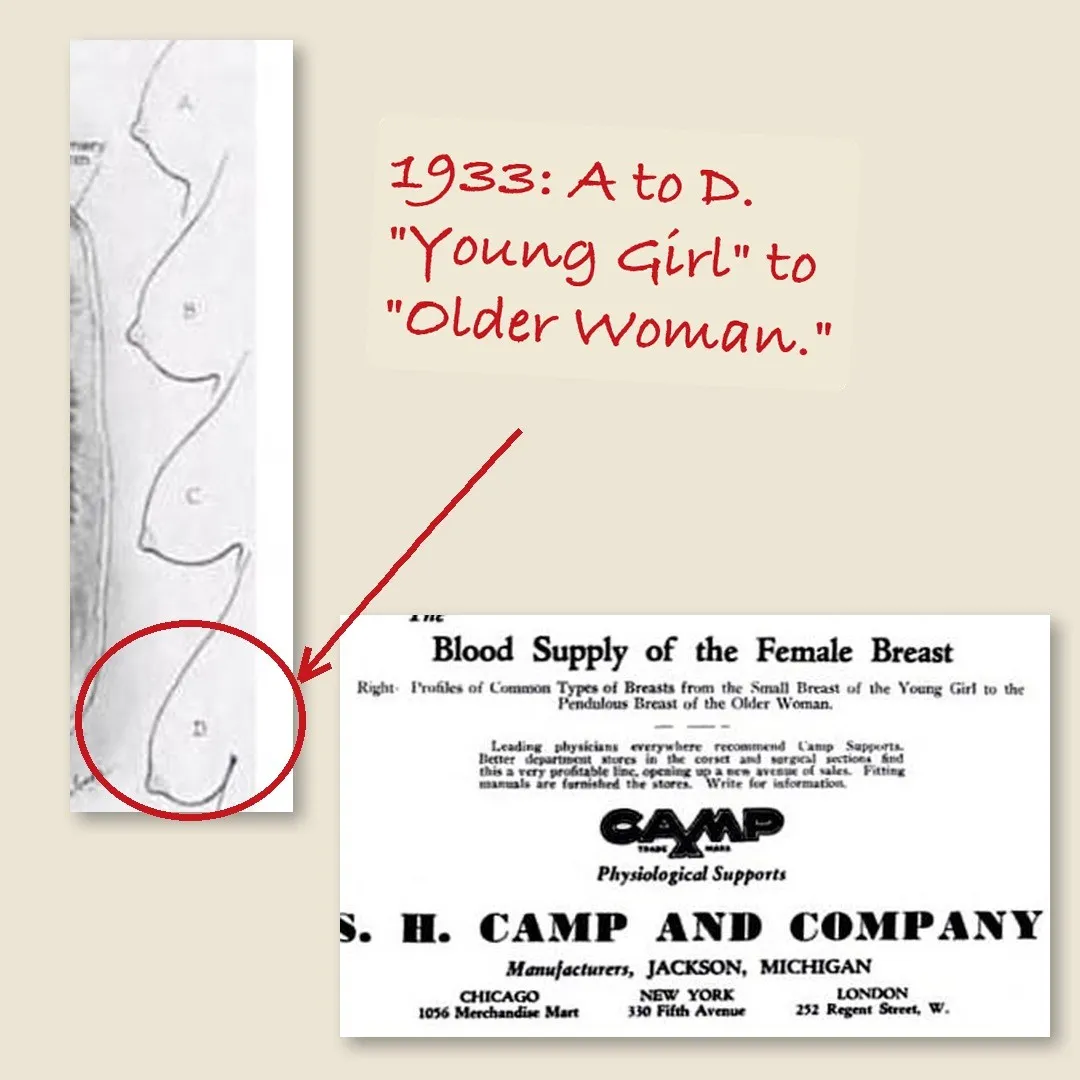
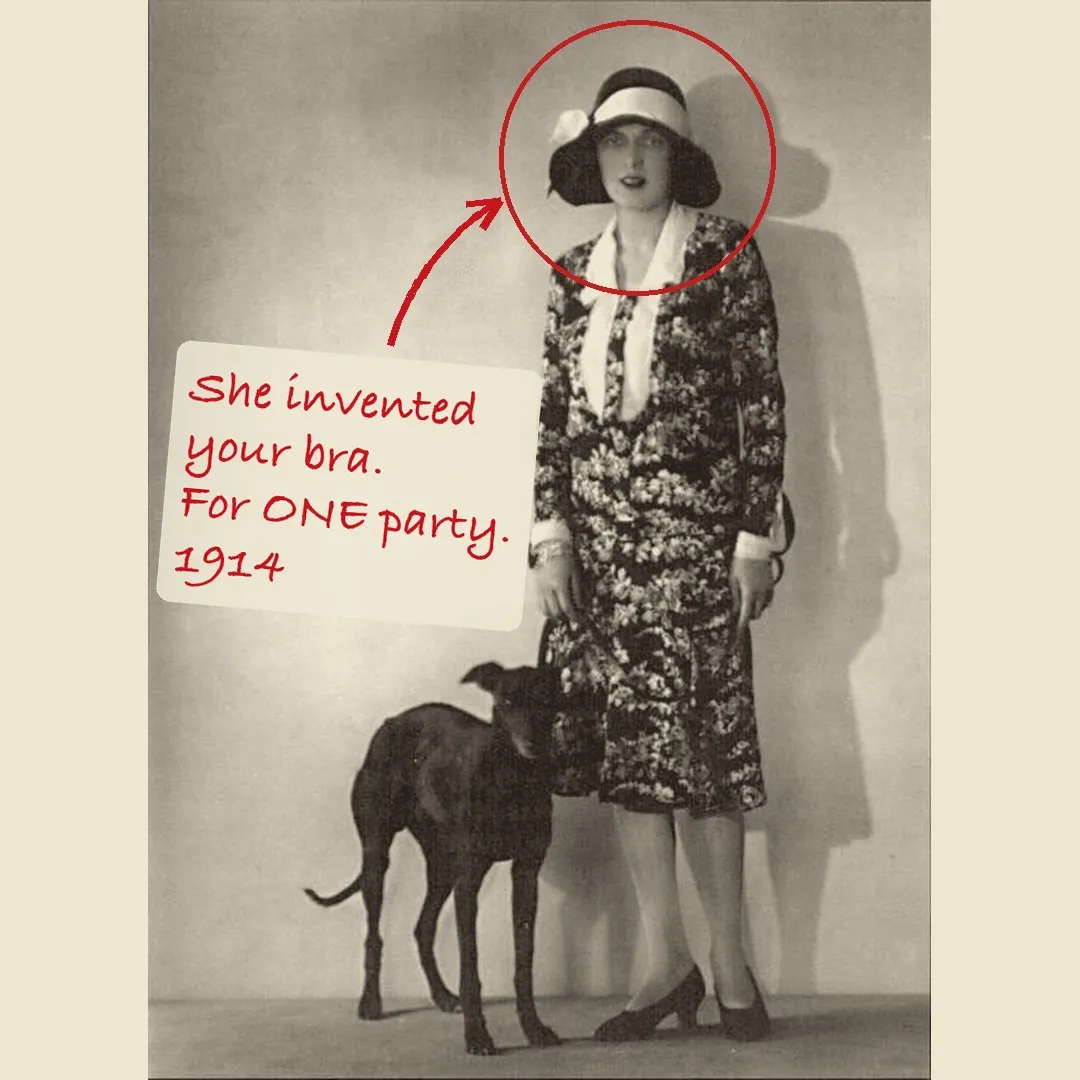
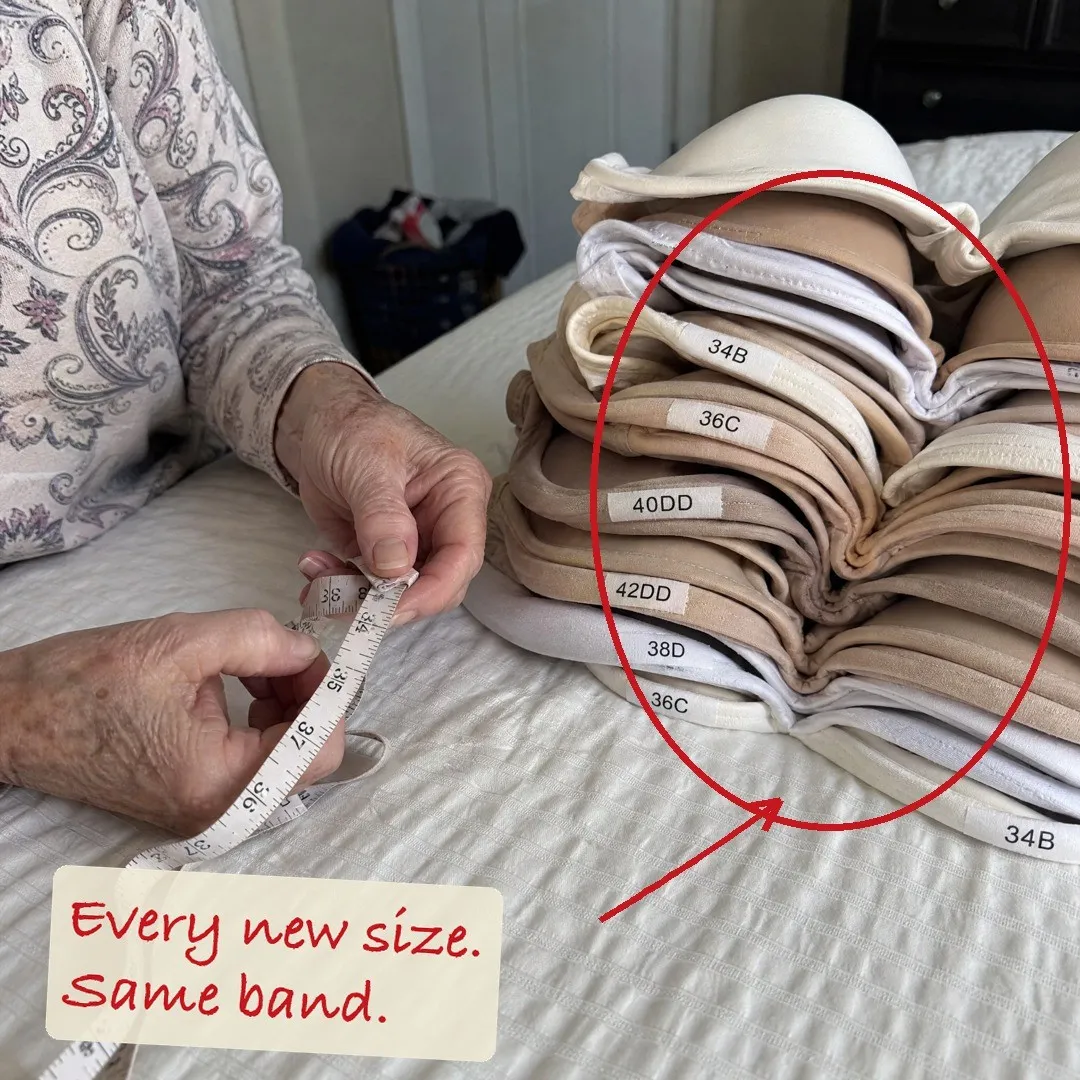
The letters on your bra were never measured on a body like yours. In 1941 the U.S. government admitted it in print. I know because I spent 31 years making women's sizes. Honestly, it stung. Because I of all people should have known. I thought I'd done everything right. Nine months into a GLP-1, I'd bought four bras. I measured myself for every one, the way I was trained to, tape level, no slack, read it twice. Four sizes. Every one correct on the day I wrote it down. Then at Sunday dinner my granddaughter, who's 16, watched me reach behind my back for the third time before the salad and said one sentence I haven't stopped thinking about. "Grandma, didn't you used to make the sizes?" I need to back up. My name is Peg. I'm 61. For 31 years I was a pattern grader for a women's clothing maker in New Jersey. I do not read about sizes. I made them. Every season, the designers handed me one sample pattern, cut to fit one sample body, and my job was to step it up and down into a size run. 6, 8, 10, 12, 14, 16. Same shape. Bigger lines, smaller lines. And I need to tell you what that job taught me, because nine months into a GLP-1, my own body just proved it. Most women think a size is a measurement of them. It isn't. It's a measurement of the sample. Your size is just how far you are from her. And the sample was never you. It goes back further than most women know. In 1932, a company in Jackson, Michigan called S.H. Camp and Company started sorting women's chests into four letters. A, B, C and D. In February 1933 they ran a trade ad with four little profiles down the side of the page, labeled A through D. The caption said they ran "from the Small Breast of the Young Girl to the Pendulous Breast of the Older Woman." That was the whole system. Four drawings. The letters described shape, not volume. Nobody had done a real study of women's bodies first. Nine years later, the United States government admitted it in writing. In December 1941, the Department of Agriculture published a report called "Women's Measurements for Garment and Pattern Construction." Two researchers, Ruth O'Brien and William Shelton. Between 1939 and 1940, workers from a New Deal program had measured 14,698 women in seven states, New Jersey among them, plus a test unit in Washington, D.C. Fifty-eight measurements each. Here are the sentences on the first page that I used to read out loud to new girls in the sample room: "No scientific study of body measurements used in the construction of women's clothing has ever been reported. The measurements used have grown up in the industry, apparently chiefly by trial and error, based on measurements taken on a few women by various inaccurate procedures." The very next sentence says that, as a result, there were "no standards for garment sizes," and that shoppers were "harassed by the difficulties involved in obtaining properly fitting clothing." Harassed. That was the government's own word, in 1941. A few lines down they figured alterations could add "as much as an additional 25 percent" to the cost of a dress. Trial and error. A few women. That is the foundation under every letter on every tag in your drawer. And the garment those letters went on was the bra from 1914. A band that squeezes your ribs. Straps from the shoulders to carry whatever the band can't. Hooks in the back. Fitted once, to one body, on one day. Most people think the problem is the wrong size. The size is the first thing that goes. It is not the real thing. The real thing is what the size is holding together. Your band is fitted to your ribs in March. By May the number around your ribs is different. The band rides up your back. Same design. Same failure. Your straps are set to one height. When the band slips, the straps take the weight. They slide, you tighten them, they dig. Same design. Same failure. Your hooks sit on one row. Your cups sit at one depth. A month later both are wrong. Same design. Same failure. Same month. On a body that stays put, you can get away with that for a few years. That's who it was built for. On a body that changes every month, it fails every month. I knew all of this for 31 years. I wrote it on grading sheets. Every grade rule I ever drew assumed one thing: the woman inside the garment holds still. What I was really writing down, every season, was a guess about a body that wasn't going to move. Four sizes in nine months. That's my number. I didn't read it in an article. It's in my own handwriting, on the back of an envelope in my sewing room. 40D in February. 38D in April. 38C in July. 36C in October. I told my daughter on a Sunday, after dinner, after my granddaughter's question. Not about grading. Not about grade rules. I sat across from her at the kitchen table and said, "Karen, I need to tell you something about your bras." She's 38. She started her own shot in the spring. "Everything in your drawer was fitted to one body on one day. Not your body. A sample. A letter from four drawings a company printed in 1933. And when your body changes, all it can do is squeeze harder or slide around. Not in a year. In weeks. You are going to stand in a fitting room every two months until this is over, buying a number that's already wrong." She looked at the bra strap sliding off her own shoulder. I've seen that look before. I saw it on new girls in the sample room the first time they understood that a size is not a fact. A size isn't something you are. It's something you rent. From one sample body. For about six weeks. "So the size is wrong before I even get it home?" "Pretty much." She sat with that for a long time. Then she said something that stayed with me for days. "So the thing that's supposed to fit me was never measured on anybody like me?" Yes. That is exactly what the 1941 report says. That is what my grading sheets say. The sample was set before you ever walked in. By the time your body changes, the thing holding it up is already fitted to someone else. Unless there's nothing to fit. Dolores still runs the sample room at my old company. Forty years. She's the one who taught me to grade. She's 72. She never took a shot in her life. Her body changed the old-fashioned way, a little every year, and somewhere around 65 she decided she was done refitting a bra every birthday. She brought something to lunch the week after that Sunday. Put it on the diner table between the coffee and the ketchup, and turned it inside out, the way we check every garment. A tank top with a real bra sewn right inside it. Two real cups, stitched into the seams, right where a bra would sit. "Look at it, Peg. Look where the support is. It's in the garment. There's no band to grade. No hooks to set. No strap height. The tank does the holding. Nothing in it assumes you'll hold still." I turned it over twice. Good, even stitching. The cups were set right. I'd have passed it in the sample room. No band around your back. No wire. No hooks. You pull it on like a T-shirt. And it comes with a 90-day Perfect Fit Guarantee, so if your size changes, you exchange it. Dolores tapped that part twice with her finger. "That's the grade rule," she said. "That's the only one that works on a body like yours." I took it home that night. I wore it the next day to clean out my sewing room. Six hours. I reached for the top shelf of bolts. I bent over the cutting table. I carried bins down to the basement. I never once reached behind my back. Karen came over that evening, watched me lift a box over my head, and said, "How long have these existed?" "Long enough. Nobody in my sample room ever thought to make one." It's called Avouria. https://avouria.com/products/avourias-built-in-comfort-bra-tanktop My sister in Toms River. 66. Lives alone. Started her shot in the spring. Three sizes since. Her plan was the same as mine: get measured, buy the size, get measured again. I drove down on a Saturday, and I didn't start with the tank. I started with the letters. "Joanie, where do you think your bra size comes from?" She said, "From me." I said, "It comes from four drawings in a 1933 trade ad, and a government report that called the whole thing trial and error." Then I handed her the tank. She put it on in the bedroom, came out, lifted her arms, and said, "Nobody told me the size was a guess." Nobody told her. Nobody told any of us. The government put it in writing in 1941. The company that drew the letters printed "the Young Girl" right on the page. And every fitting room in America still hands you a tape measure like it's going to tell you something that lasts. Karen. My sister. Dolores's daughter. Two women from my church who started their shots this year. My granddaughter, who says she's never wearing a band in the first place. Six women in three weeks. Not because I sold anybody anything. Because when the woman who drew the sizes for 31 years tells you the sizes were a guess, and a government report from 1941 says the same thing, you don't argue. You stop buying the guess. The bra in your drawer was graded off a sample body that never moved. The letters were four drawings, not measurements. The measurements were trial and error on a few women. And your body is changing every month. The gap between the design and the body you're living in is the gap between one drawing from 1933 and you. Before the next fitting room. Before the next size that's wrong by the time the tags are off. Before you spend another month reaching behind your back. https://avouria.com/products/avourias-built-in-comfort-bra-tanktop P.S. There's a number in that 1941 report most people never think about. 58. That's how many measurements the government took on each woman. Fifty-eight numbers, one day, one body. My body has been a different set of 58 numbers every month since February. Your bra was fitted to one of them. The tank doesn't need any of them to stay the same. https://avouria.com/products/avourias-built-in-comfort-bra-tanktop
More from Women of America
If you're a woman over 50, read this 👆
Women of America
If you're a woman in America, read this 👆
Women of America

Rip your bra off at home? Read this 👆
Women of America
Worn a bra since 13? Please read this 👆
Women of America
If you're a woman in America, read this 👆
Women of America
Worn a bra since 13? Please read this 👆
Women of America
Worn a bra since 13? Please read this 👆
Women of America
If you've lost weight lately, read this 👆
Women of America
Worn a bra since 13? Please read this 👆
Women of America
If you're a woman in America, read this 👆
Women of America
If you're a woman over 50, read this 👆
Women of America
If you're a woman over 50, read this 👆
Women of America

 Add to Chrome