
Here’s how to help your bladder
Ad Copy
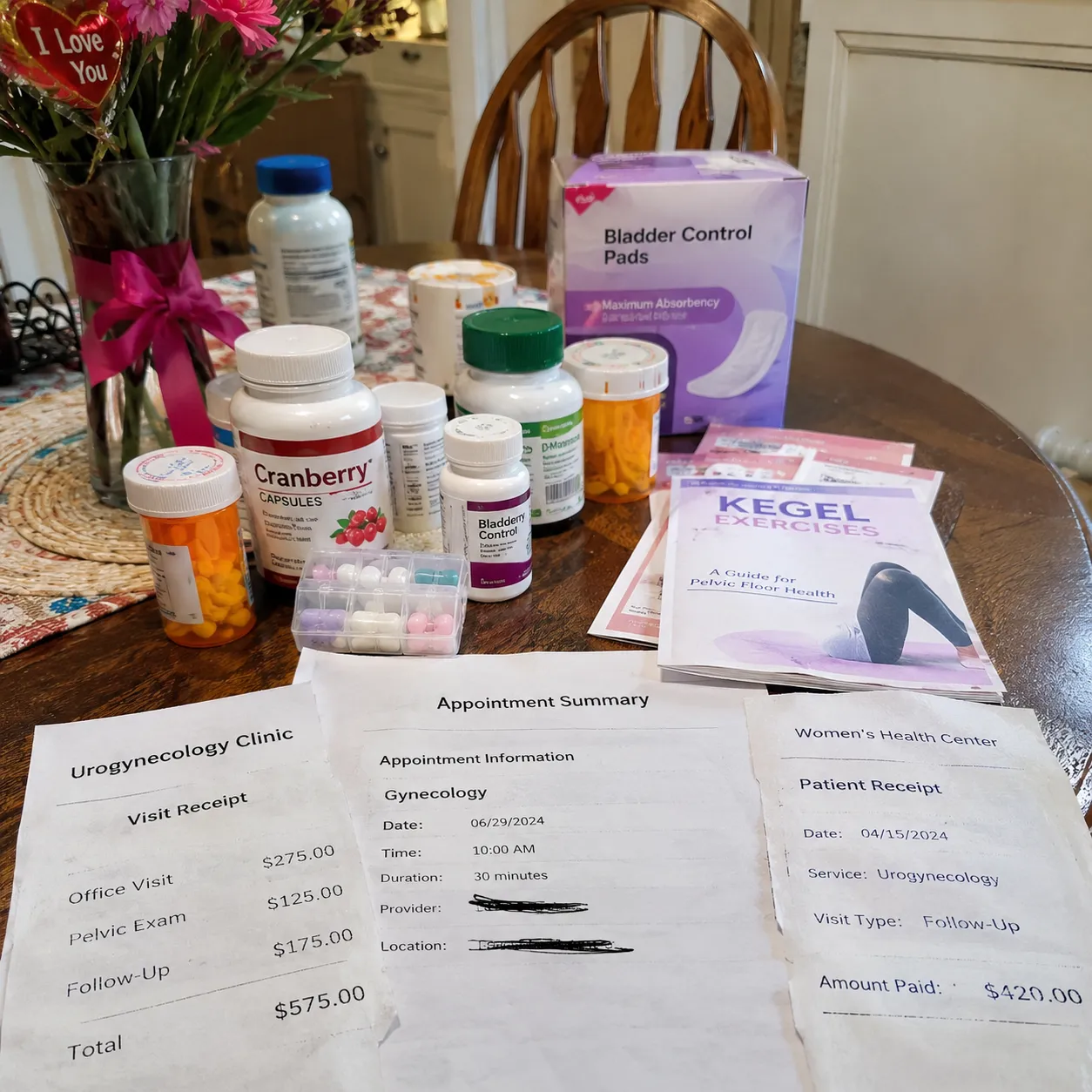
I am 63 years old and I have tried everything for my bladder. Not most things. Everything. Then I found out a woman in my online support group was managing better than I was at 68. Five years older than me. Doing less than I had done at any point in the last four years. Now I know why. Let me back up and tell it properly. Because if you have been trying to fix your bladder for years and each thing you try seems to buy you a little less than the one before it, ladies, you are headed for the same moment I was. The moment your options run out. I had been dealing with this since my mid-fifties. Urgency that arrived before my bladder was anywhere near full. Night trips that had me up two and three times. Leaking when I sneezed. Planning every car ride around bathroom stops. I tried every rung on that ladder. Kegels for eight months. Medication that dried my mouth out and did nothing for the leaking. Three different bladder supplements. Each one bought me a little less than the one before. Then someone in my support group changed how I understood all of it. What she told me is the reason I am writing this. My name is Emily Grace Anderson. I am 63 years old. I taught sixth grade for twenty-eight years at a public school in rural Tennessee. I retired at fifty-nine and expected to finally do the things I had put off. A vegetable garden. Long afternoons reading. Road trips with my sister Carol. What I had instead was a bladder that made all of it complicated. I want to tell you what I learned, because I spent four years managing something I did not have to manage the way I was managing it. And because nobody told me any of this. For most of my life I never gave my bladder a second thought. Then sometime around my mid-fifties things started shifting. Small at first. I was going more often. Then with more urgency. Then sometimes not quite making it. Then I had an accident during the last week of school, standing at the whiteboard in front of twenty-two eleven-year-olds, because someone made a joke and I laughed harder than I expected. I went home that afternoon and ordered a box of pads. I told myself it was temporary. That was seven years ago. My doctor said it happens to a lot of women after menopause. She offered me pelvic floor exercises. I did Kegels for eight months straight. I did them in the car. I did them waiting in line. I set a reminder on my phone. My muscles got stronger. The urgency did not change. Then she offered medication. I tried it for four months. My mouth was so dry I was waking up to drink water at 2 in the morning. And I was still leaking. Then I tried three different bladder supplements I found online. One smelled like pond water. The second one seemed to help for about two weeks, then stopped. The third did nothing I could measure. Here is the part I could not figure out. Each thing I tried bought me a little less than the one before. The first supplement gave me two weeks of something, then nothing. The second gave me maybe ten days. By the third, I could not detect any change at all. It felt like my body was getting harder to reach. Like whatever was driving this was running deeper than anything I was throwing at it. At my check-in that fall, my doctor looked at my chart and said the thing I had been dreading. "Emily, we have been managing this for four years. At this point, what you are experiencing is common for women your age. I think we have done what we can do." She was kind about it. She is a good doctor. But she had a sentence ready, and when she said it, the investigating stopped. That is where the sentence always leaves you. I went home and posted in an online group I had joined for women dealing with bladder issues. Four years in, tried everything, doctor says this is as good as it gets, what did everyone else do. I got forty-something answers. Most of them were kind. A few said they had accepted it too. One said she had tried a prescription medication that worked better. Three sent prayer hands. And then there was the one I still think about. "If you've tried all of that and nothing worked, that's not the treatments anymore. That's just your body." I read that at my kitchen table. Just sat there. Because here is the thing about being at the end of the list. When every rung of the ladder has a next one to climb to, there is always somewhere else to look. When the list is finished, the only thing left to look at is you. And at sixty-two, everyone has a word ready for that. It is called your age. Then I noticed a woman in the group I will call Bette. She was 68 years old. Five years older than me. She had mentioned, in a comment months earlier, that she had been managing her bladder issues for over a year and doing well. She had not mentioned medication. She had not mentioned anything I had tried. I had noticed her and filed it away and been quietly frustrated about it ever since, if I am honest. One evening I sent her a private message. "Bette, can I ask you something? What are you doing? I have tried everything and I cannot understand why nothing holds." She wrote back the next morning. "You are going to be a little annoyed when I tell you." "Why would I be annoyed?" "Because it is something I found out before I started. And I assumed everyone found it out before they started. After being in this group long enough I can see that almost nobody does." She told me that before she tried anything else, she had read about the actual physical reason leaking and urgency happen after menopause. Not the name of the condition. The physical reason. And once she understood that, everything she tried was aimed at the right thing. I wrote back: "What is the physical reason?" She said: "Your bladder has a protective lining. It thins after menopause. When it thins, urine reaches tissue it was never meant to reach. That tissue sends urgency signals even when the bladder is not full. That is the cycle you are in. And almost nothing that women try is aimed at the lining itself." I had been in this group for over a year. I had talked to my doctor multiple times. I had read more articles than I could count. Nobody had ever mentioned a lining. I did not know my bladder had one. Here is what she explained to me next. The inside of your bladder is coated with a thin protective layer. It is called the GAG layer. Its job is simple. It keeps urine from coming into direct contact with the tissue of the bladder wall. Urine is not just water. It contains acids, salts, and waste products that are hard on tissue. The GAG layer keeps that urine separated from the sensitive tissue underneath. Every time your bladder fills and empties, a small portion of this layer wears away naturally. When you are younger, your body rebuilds it continuously. You never notice it. After menopause, that rebuilding process slows down. Your body no longer maintains the GAG layer as efficiently as it once did. Little by little, the layer gets thinner. As it thins, urine begins reaching tissue it was never meant to touch. That tissue becomes irritated and reactive. When irritated tissue receives urine, the bladder sends urgency signals. Not because it is full. Because the tissue underneath the thinning lining is reacting to contact. That is why you rush to the bathroom and empty only a small amount. The bladder was not full. It was reacting. That is why the urgency comes back twenty minutes later. The bladder fills back to the point where the contact starts, and the signal fires again. This is not a muscle problem. This is a tissue problem. No amount of Kegels rebuilds a thinning protective lining. No pelvic floor exercise stops urgency signals generated by irritated tissue. The muscles get stronger. The underlying issue stays the same. That is why my physical therapy helped with nothing that actually mattered. I was strengthening muscle while the tissue underneath kept thinning. "Now look at your list," Bette wrote. "Every time you tried something new, you were addressing muscles or signals. None of it addressed the lining. That is why each thing bought you less than the one before. You were not getting harder to treat. The lining was just getting further from what you were treating." I sat with that for a while. Four years rearranged themselves. It was never the treatments running out. It was the gap between what I was treating and what needed treating, widening. The medication I had tried works by reducing urgency signals. It does not address the tissue generating those signals. So the tissue keeps thinning. The signal keeps misfiring. The dry mouth is a side effect of a drug that was never working on the right thing. Cutting back on fluids, which I had also tried, concentrates the urine. Concentrated urine is harder on already-irritated tissue. It makes the problem worse. I had been told the opposite by three different sources. Then I pushed back a little. "Bette, this feels like the kind of thing that gets sold to women our age. The real explanation they don't want you to know." She wrote back: "I am 68. I have been sold more nonsense than you have. What I am telling you is not a theory. It is anatomy. Your bladder has a lining. The lining thins. When it thins, the symptoms you are describing are exactly what follows. That is not a sales pitch. That is what your body is doing. The question is whether anything addresses the lining itself, and the answer is that yes, there are ingredients that do. You have just never tried any of them because nobody told you the lining existed." Then she told me what she used. She had found a formula with six ingredients, each one aimed at a different part of what happens to bladder tissue after menopause. She described them one by one. Pumpkin seed extract has been studied specifically for pelvic floor support. It supports the muscle tone and coordination that help the bladder hold properly under pressure and release fully when it needs to empty. For stress leaks, the kind triggered by laughing, sneezing, or lifting, the bladder muscle needs to respond correctly to sudden pressure. Pumpkin seed extract supports that response. Red clover extract contains isoflavones that support estrogen-sensitive tissue. After menopause, the bladder lining and the urethral tissue lose the estrogen support they depended on for decades. Red clover supports that tissue at the cellular level, without hormone therapy. Sodium hyaluronate is a form of hyaluronic acid. It is one of the key building blocks of the GAG layer itself. The same substance the protective lining is made of. Supporting the lining from the inside. That was the one that made me put the phone down for a moment. Magnesium citrate is involved in both muscle contraction and nerve signaling. It helps calm the misfiring urgency signals that fire when the bladder is only half full. Most women over fifty are low on magnesium and do not know it. I had not thought about magnesium once in four years of managing this. Sea buckthorn provides fatty acids that support the regeneration of mucosal membranes. The tissue that lines the urinary tract is mucosal tissue. Sea buckthorn supports the renewal of that tissue after it has thinned from estrogen loss. Cranberry extract is not just for urinary tract infections. It supports bladder lining tissue and reduces the chronic low-level inflammation that contributes to constant urgency. Not treating an infection. Supporting the environment that keeps the lining healthy in the first place. "I looked for one formula with all six," Bette wrote. "Not six separate products. One formula with all of them." She sent me the name. UroControl. Under thirty dollars for the first bottle. A 90-day guarantee. If nothing changes, full refund. Keep the bottle. I did not order it that night. I am 63 and I have watched miracle products come and go since before the internet was invented. So I did what I always do when I am not sure about something. I read about the GAG layer. I read about estrogen and bladder tissue after menopause. I read about sodium hyaluronate and what it does in the body. It held up. I ordered two days later. Sixty days to send it back if it did nothing. Trying something new at sixty-three was not my risk. Thirty dollars was not my risk. Another four years on the same ladder was. The first week, almost nothing. I told myself this was the same as the pond-water supplement. Then on day nine I realized I had not rushed. Not that I had rushed less. I had not had an urgent, cannot-wait-another-minute rush to the bathroom in nine days. I had not been tracking it. I noticed its absence. By the second week, something shifted. I forgot to pack an extra pad in my purse before leaving for my sister Carol's. I realized it halfway there. I sat with that for a moment. Then I drove the rest of the way. Made it through the whole afternoon. The drive home was fine too. By week four I decided to try something. I decided to try going without a pad. Just for one morning. I did not tell Carol. I did not want to explain it if it did not work. I got through the morning. Then the afternoon. Then I went to bed that night and realized I had not thought about my bladder once after breakfast. Around week six, my sister called on a Sunday. "I want to drive up to the falls. It is a forty-minute walk each way." I said yes without calculating anything. I did not calculate the walk. I did not calculate the drive. I just said yes. We walked the whole thing. On the way back she said, "You seem different." I did not say anything for a moment. "I feel different," I said. She did not ask more than that. She did not need to. By week eight, I stopped wearing anything. No pad, no liner. My neighbor Janet has been dealing with the same thing for six years. She started UroControl three weeks after I did. She called me on a Saturday morning. I could hear something in her voice before she said anything. "I went to the farmer's market. She had coffee at a little stand near the entrance. She walked around for two hours. I did not plan a single step of it." She stopped for a moment. "I did not plan a single step." I knew exactly what she meant. Not that the leaking was reduced. Not that she managed it better. That she did the things she had stopped doing, and her body let her. That is not a small thing. That is years of your life back. I am not going to tell you your body will respond the way mine did. Four years of thinning does not reverse on the same schedule for everyone. But I need you to hear this. If you have accepted that managing is the best you can do, you accepted the same thing I did. That the pads and the planning and the mental math before every errand is just your life now. That the urgency arriving before your bladder is half full is just getting older. That nothing can address what is actually happening to the tissue inside your bladder. The GAG layer is why the urgency feels uncontrollable. Not muscle weakness, and not a matter of willpower. The protective lining that has been thinning since menopause, and urine reaching tissue it was never meant to reach. Your Kegels were strengthening muscle while that tissue kept thinning. Your medication was quieting a signal while the tissue generating it stayed untouched. That is not a complete answer. It was never designed to be one. UroControl is not a prescription medication. It is designed to be taken alongside your current care, not as a replacement for it. If you are on medication or seeing a specialist, keep doing that. Add UroControl alongside, and talk to your doctor or pharmacist before you start, especially if you take prescription medication. The formula is called UroControl. secure.trylovy.com/adv4-gag-s Two capsules every morning with breakfast. Pumpkin seed extract, red clover extract, sodium hyaluronate, magnesium citrate, sea buckthorn, and cranberry extract. The six ingredients that address what actually changes in the bladder after menopause, in one formula. The first bottle is under thirty dollars. There is a 90-day money-back guarantee. If you do not feel the difference, if the urgency does not change, if the nights do not start getting quieter, full refund. Keep the bottle. If you have already tried Kegels and the urgency did not go away, the lining is what was missing. If you have tried a bladder supplement and felt nothing after two weeks, it was not aimed at the right thing. If you have been told this is just normal aging, you were told what your doctor had to offer. Not the whole story. I wish someone had told me this before my first Kegel. Before the pond-water supplement. Before four years of managing a lining problem like a muscle problem. So I am telling you now. secure.trylovy.com/adv4-gag-s These statements have not been evaluated by the Food and Drug Administration. This product is not intended to diagnose, treat, cure, or prevent any disease. Individual results may vary. Every body is different, and results come at different times for different women. Give it real time before you decide. Keep taking it on the days you feel no change. The first shift is usually quiet. You notice it missing. Go get it. P.S. The first thing Janet said after the farmer's market was that she had not looked for the restroom when she walked in. For six years that had been the first thing she did anywhere new. She said she did not even think about it until she was already drinking her coffee. Your timeline will be your own. But after years of treating a tissue problem like a muscle problem, the worst thing you can do is keep waiting. Go get it.
More from Emily Grace Anderson

The Bible verse that explained her leaking
Emily Grace Anderson
The Bible verse that explained her leaking
Emily Grace Anderson

The Bible verse that explained her leaking
Emily Grace Anderson
Here’s how to help your bladder
Emily Grace Anderson
Here’s how to help your bladder
Emily Grace Anderson
The Hysterectomy Lie She Hid for 12 Years
Emily Grace Anderson
The Hysterectomy Lie She Hid for 12 Years
Emily Grace Anderson

The Hysterectomy Lie She Hid for 12 Years
Emily Grace Anderson
Is Your Bladder Running Your Schedule After Menopause?
Emily Grace Anderson
Is Your Bladder Running Your Schedule After Menopause?
Emily Grace Anderson
Is Your Bladder Sending False Alarms?
Emily Grace Anderson
Is Your Bladder Sending False Alarms?
Emily Grace Anderson

 Add to Chrome