
The Relief Mineral For Fibromyalgia
Ad Copy
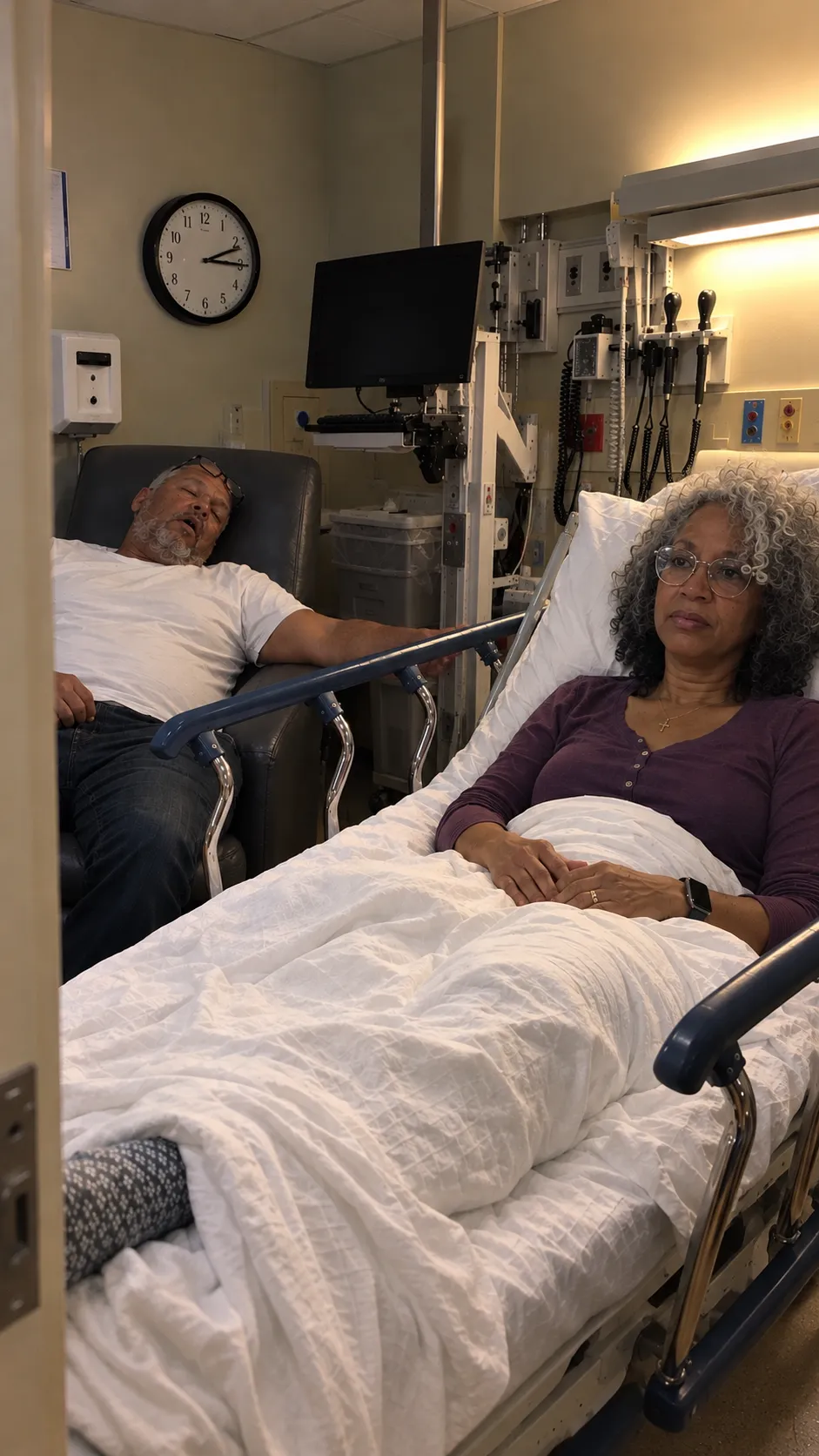
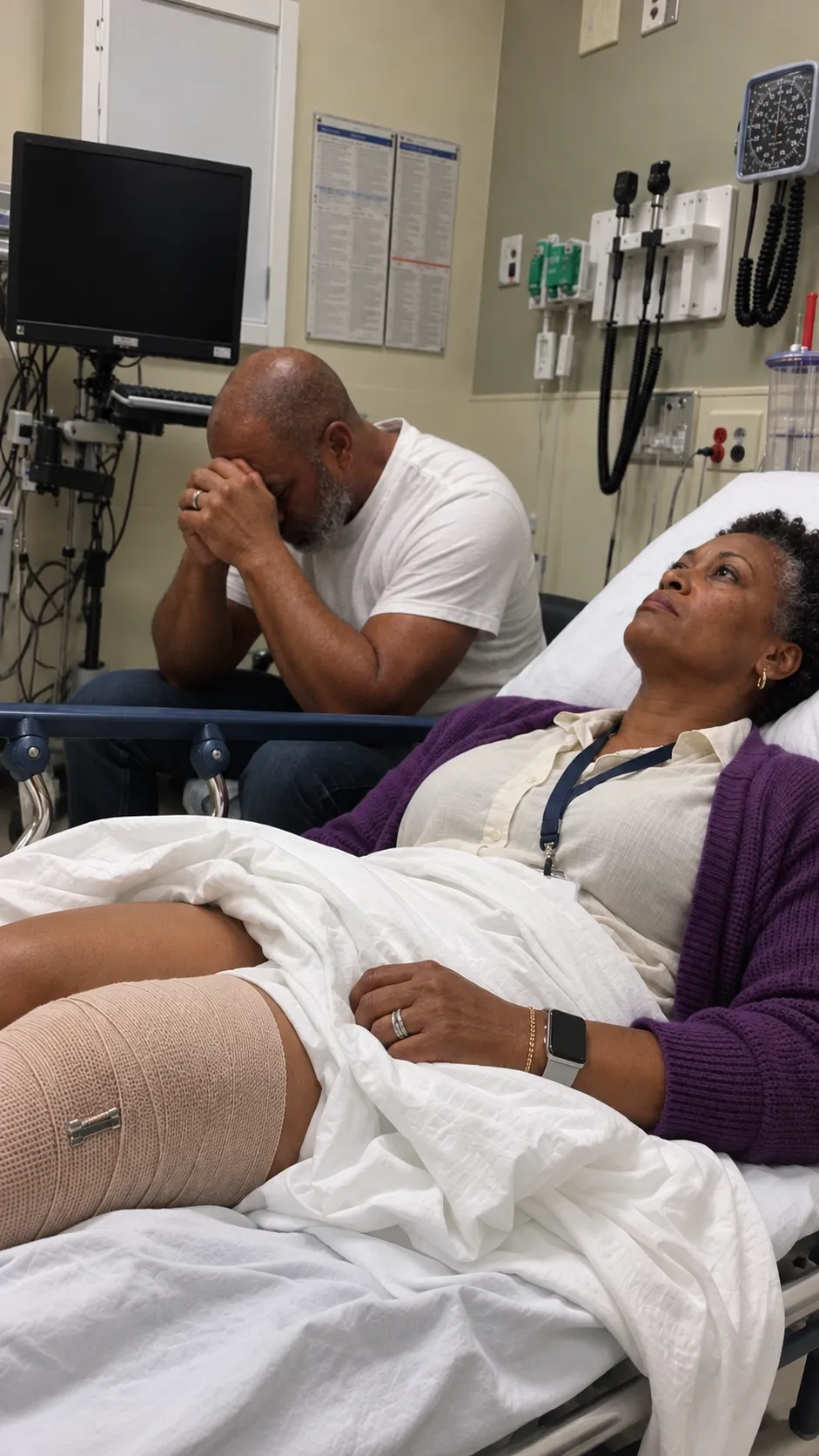
I received a fibromyalgia diagnosis at forty seven. I am fifty four. It turns out fibromyalgia was never what I had. Seven years spent "managing" something that did not exist. The first prescription was Cymbalta. An antidepressant. For pain my doctor had not investigated. He wrote it before he ordered a single test. It was supposed to "address the pain signaling." It did nothing of the sort. It flattened everything — not the pain, just me. When that quit working, he adjusted the dose. When the adjustment failed, he added gabapentin and told me to come back in three months. Next came the supplement rotation — turmeric, fish oil, CBD, and a magnesium from the pharmacy counter that changed absolutely nothing. I removed gluten from my diet. Then dairy. Then sugar. I tried stretching every morning and wound up flat for two days after every single session. I went to the heating pads, the compression garments, the scalding baths well past midnight, the Epsom salts my sister swore by. After everything had failed its audition, I tried to get a referral. The first time the wait was eleven months. The second time my insurance denied it. So I stayed with the one doctor I had — the same one I had seen for everything since I was thirty. He knew my chart better than he knew my face. "Your results look normal," he told me. "Fibromyalgia is the conclusion we reach when nothing else explains it. Structurally, there is nothing to find." He passed me a brochure about activity pacing. He did not look up from my chart when he handed it to me. I felt like I was unraveling. Normal tests. An unworried physician. And every morning my entire body hurt in a way I could neither pinpoint nor put into words. The pain was not in a single joint or a single muscle. It occupied everything simultaneously, spread everywhere with no origin and no boundary. The ache was already present the moment the alarm sounded. Ten hours horizontal and I surfaced feeling like rest had never occurred. By mid morning my muscles felt seized, like they were guarding against something that never materialized. By afternoon the exhaustion ran so deep I had to lie flat just to survive until dinner. And this was not ordinary fatigue. It was the kind that clouded thinking, stalled sentences, and left me standing in front of the refrigerator unable to recall what the appliance was called. My granddaughter Maya would clamber onto my lap and every muscle would brace — not because I did not want her there, but because thirty two pounds of a child who trusts you could genuinely cause pain. Each day became an equation. If I handled dinner, the rest of my evening was written off. If I walked to the mailbox, I would feel it before the night was through. So I began declining everything — family dinners, Sunday cookouts, even walking a plate next door when somebody in the neighborhood passed. I skipped Maya's birthday party because two hours standing in a kitchen would have wrecked me for the rest of the week. Where I come from, you do not stop for pain. My mama worked the cafeteria with two bad knees for twenty two years. Never called in sick. Never sat down during a shift. Never said a word about it. That was the standard. You carry it. You show up. You keep going. My mama used to say: "Some bodies just wear out faster, baby. That's all it is." I believed her. For most of my life I believed her. So I did not tell my family how bad it had gotten. Because that is not what the women in my family do. You handle it. You carry it quietly. You do not put it on someone else. My sister came over on Sundays. She would cook, clean up, drop to the floor with Maya as though none of it took a single thing out of her. I observed her from the same end of the same sofa, week after week. I resented her for it. Then I despised myself for the resentment. Then I went back to staring at my hands. To anyone looking at me, nothing appeared wrong. Inside, I was sinking. And my one consultation every three months concluded the same way. "Let's stay the course." "Stress is a factor." "Have you thought about your weight?" I tried taking off a little weight. It bought me two weeks of amplified pain. Eventually I convinced myself this was simply what remained — that whatever time I had left would be spent observing everyone else move through life while I hovered at the margin of it. The way my mama did. In the recliner at the end of the hallway. For twenty two years. She passed in 2019. In that recliner. I was holding her hand. Then my daughter Keisha told me something no doctor ever had. Keisha is a nurse. She has spent years working the floor at a hospital where she sees women who look like me every single shift. Women in unresolved pain. Women dismissed. Women handed prescriptions before anyone orders a proper workup. She came by one evening after her shift, and I admitted I could no longer get through making dinner without sitting down halfway through. She gave me a long look. "Mama, has anyone ever examined what your cortisol is doing after dark? Or measured what your magnesium levels actually look like inside the cell?" I almost laughed out loud. "Baby, I have tried magnesium. It did precisely nothing." "A standard blood draw does not reveal what is happening at the cellular level," she said. "And the magnesium you pulled off that shelf most likely never even reached the tissue that needed it." "Are you telling me magnesium is responsible for all of this?" "I am telling you that fibromyalgia might not be what you have, Mama." She folded her hands on the table. "Your body depends on a stress hormone called cortisol. It is designed to climb in the morning and get you going, then taper off at night so your body can recover and rebuild. But after years of sustained strain — and Mama, you have been under strain since you were seventeen — your nervous system gets jammed in the on position. Cortisol remains elevated when it should be falling. And persistently elevated cortisol does one thing without exception — it depletes your magnesium." "Every night, while you are lying there desperate for rest, that cortisol is extracting magnesium from your cells and washing it out of your body." "Why should that matter?" "Because magnesium is the mechanism your body relies on to power down. It is what permits a clenched muscle to finally soften, what brings a pain signal back to normal instead of letting it escalate, and what ushers you into the deep sleep stage where actual repair takes place. Deplete it, and every one of those functions grinds to a halt." "When cortisol is consuming magnesium faster than your food can restore it, your nervous system loses the ability to disengage. Your muscles remain partially contracted at all times, aching everywhere simultaneously — that diffuse, unlocatable pain is nothing more than a body that has lost the means to power down." "And the way even Maya climbing into your lap registers as pain? That is your nervous system magnifying inputs it is supposed to suppress. The sleep that leaves you more drained than before — you stay in the shallows all night long and surface more exhausted than when you lay down." "But my labs have been clean for years," I said. "Because the panel he runs measures the magnesium in your bloodstream — not the magnesium stored inside your cells, which is where virtually all of it resides and where the deficiency actually takes hold. Your blood values can look pristine while your cells are running dry. And cortisol? He samples it once, early morning, when it is physiologically elevated in every human being. He never captures what it is doing at two in the morning, when it ought to be at its floor and yours is rising." "I truly have tried magnesium before, though." She paused. Then she said something that stopped my breathing. "Mama, what form was it?" "What do you mean what form?" "Go get the bottle. Read the back." I walked to the bathroom cabinet. The bottle was still there. I turned it over. Magnesium (as magnesium oxide). "That is what I thought," Keisha said. "Oxide. Your body absorbs maybe four percent of it. The rest travels straight through. It never reaches the cells where the deficiency actually takes hold." I stared at that bottle. And then I thought about something that made my chest constrict. Three years ago, before Mama passed, I had gone to the pharmacy and bought her a bottle too. She had the same pain. All over. Every day. The bottle said magnesium on the front. She took it for four months. Nothing changed. I bought her the wrong one. And nobody told me there were two kinds. She took oxide for four months. Four months closer to the end. With a mineral her body never absorbed. In a recliner I watched her disappear into. Keisha saw it on my face. "It was not your fault, Mama. 8 out of 10 bottles on that shelf say magnesium on the front and oxide on the back. The industry does not tell you they are different. You read the label. You trusted the label. The label was incomplete." Then she said: "But I am not going to let the same thing happen to you." She phoned me during her lunch hour the following day. "You replenish what your cortisol has been stripping away every night. And you do it with a form your body can truly absorb — magnesium bisglycinate." "It is magnesium bonded to glycine, an amino acid that transports it directly through the intestinal wall and into the cells that have been deprived of it. Your body takes up virtually the entire dose. And it is mild enough that it will not upset your stomach the way the oxide did." "Take it each evening and the magnesium begins flowing back into those cells. Your nervous system finally gets the all clear to stand down. Your muscles release. The pain volume drops. And genuine restorative sleep starts to return." It sounded far too uncomplicated. But I had been hauling myself through every waking hour for seven years, and my daughter is a nurse who sees women like me every shift. Simplicity no longer frightened me. "Where do I actually get this?" "Do not just reach for the nearest option," she cautioned. "Most products use forms your body can barely process, or they conceal a modest dose inside a proprietary blend so you have no way of knowing what you are truly receiving. The one that consistently works for the women on my floor is Celuvida — pure magnesium bisglycinate in a gummy. Complete dose. Nothing concealed. No oxide." I looked it up that same evening. Third party tested. Full transparent dosing. No blend obscuring the contents. 90 day money back guarantee. After seven years of things that disappointed me, one additional attempt was not going to cost me anything I had not already lost. I ordered three bags that night. Ninety days. I was not going to make the same mistake my mama made with three weeks of the wrong form. I started that very week. Day one, nothing shifted. Day two, I woke and something had changed — subtly, but unmistakably. The dense, all over ache had dialed down a fraction. Not disappeared. Just quieter. That had not occurred a single time in seven years. By day four I got all the way through the afternoon without needing to collapse. I stood from the couch, crossed to the kitchen, and realized partway there that I had not steeled myself for the movement. The heating pad lay untouched on the cushion. It had not even crossed my mind. By the end of the second week the stretches of calm — where my body was not demanding attention — had close to tripled. And I had slept in a continuous block longer than any night I could recall in years. Then came week three. I woke ahead of the alarm and lay still, bracing. For the vice across my shoulders. For the deep throb running down my legs. For that full body heaviness that had greeted me every single morning for seven years. It did not come. Maya came over that afternoon. She climbed into my lap the way she always tried to, and I stiffened by instinct — then stopped. Nothing hurt. Thirty two pounds. My arms held. My hands held. She put her head on my shoulder and fell asleep. I sat there and I did not move. Because I did not want whatever was happening to stop. My sister was watching from the kitchen doorway. She did not say anything then. But she texted me that night. "I haven't seen you hold that baby like that since before mama passed." I sat in the dark reading that text over and over. That evening I made dinner for the first time in months. Not because I had to. Because my body permitted it. I made a plate and walked it next door to the woman whose husband had passed last month. I had not done that in two years. My sister stood in my kitchen doorway watching me wrap the foil. She did not say anything. She did not have to. Week four, my husband glanced at me from across the kitchen and said, "you are moving like yourself again." I do not have fibromyalgia. I never had it. What I had was seven years of a magnesium deficit that held my nervous system on permanent alert and my body in constant pain — and the one person in a white coat I had access to never considered looking for it. He looked at my chart. Every visit. For seven years. And not a single time did he look at me. My mama did not have a body that wore out faster. She had the same deficit. The same loop. The same pain. And nobody told her either. For twenty two years. I still have stress in my life. I still work. I still live the same full days I always have. But now I safeguard against the deficit. Every evening I chew two gummies. The magnesium returns. My nervous system steps down the way it is meant to. Thirty seconds. Something I chose for myself. Not something the system handed me. You were handed the fibromyalgia label after years of testing that never turned up a cause. The prescriptions came before the tests. And beneath all of it, nothing fundamentally changed. Ten hours of sleep and you still surface feeling like rest never reached you. The pain still appears everywhere and nowhere simultaneously. And somewhere in the middle of it all you stopped making plans, stopped making a plate, stopped holding the people who reach for you — because you cannot predict which version of yourself will show up tomorrow. And you have not told your family how bad it really is. Because that is not what we do. I am not saying you definitely have a magnesium deficit. But I spent seven years treating a condition that was never mine, while the real issue compounded with every night I overlooked it. And my mama spent twenty two. Celuvida is pure magnesium bisglycinate your body can genuinely take in. Not the cheap substitutes dressed up as magnesium at the pharmacy. Full dose. Third party tested. Two gummies before bed. There is a full 90 day money back guarantee. If nothing changes, every penny comes back. One email. But if it does — the way it did for me — you will feel the heavy ache begin to ease inside the first few days, last an entire afternoon on your feet before the first week is done, hold your granddaughter without shaking by the end of the month, and make a plate and walk it next door because your body finally permitted it. My mama would have loved this. She really would have. Start the 90-Day Protocol. You do not have to keep managing a condition you might not even have. And you do not have to carry it alone anymore.
More from Black Women’s Health Tips

The Relief Mineral For Fibromyalgia
Black Women’s Health Tips

The Relief Mineral For Fibromyalgia
Black Women’s Health Tips

The Relief Mineral For Fibromyalgia
Black Women’s Health Tips

The Relief Mineral For Fibromyalgia
Black Women’s Health Tips

The Relief Mineral For Fibromyalgia
Black Women’s Health Tips

The Relief Mineral For Fibromyalgia
Black Women’s Health Tips
The Relief Mineral For Fibromyalgia
Black Women’s Health Tips
The Relief Mineral For Fibromyalgia
Black Women’s Health Tips
The Relief Mineral For Fibromyalgia
Black Women’s Health Tips

“Mom won’t get up.”
Black Women’s Health Tips

“Mom won’t get up.”
Black Women’s Health Tips

“Mom won’t get up.”
Black Women’s Health Tips

 Add to Chrome