
“Mom won’t get up.”
Ad Copy
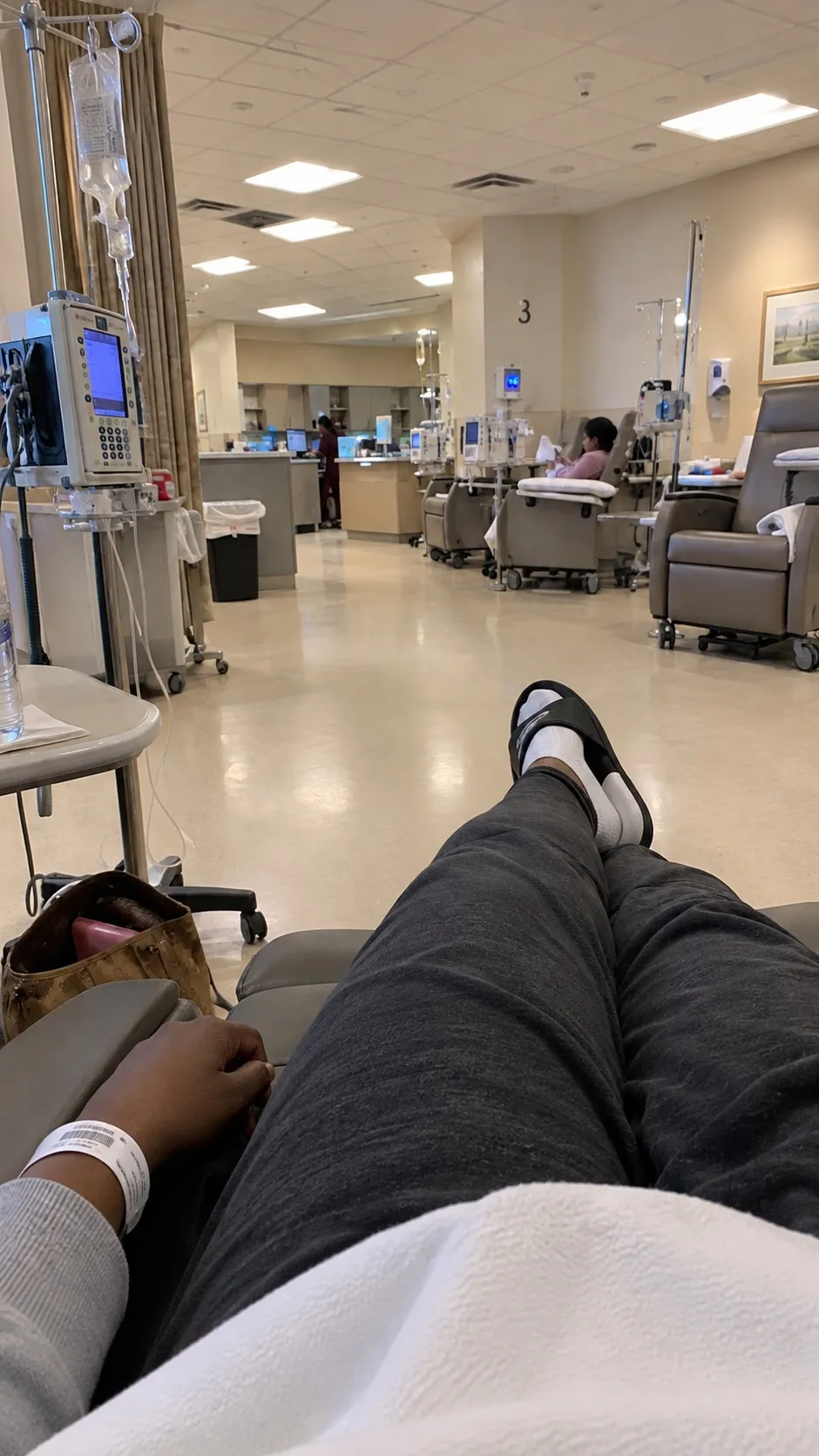
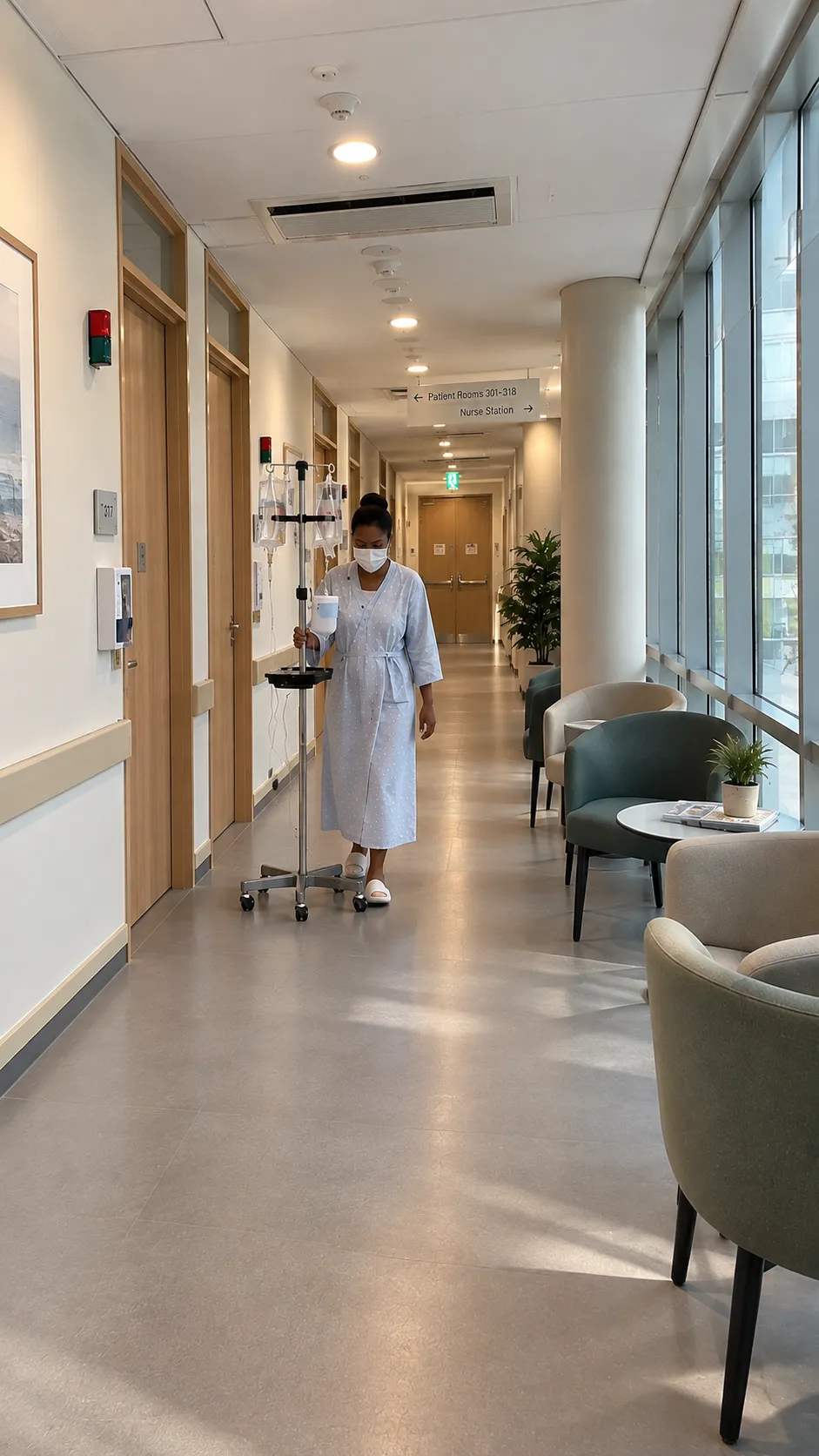
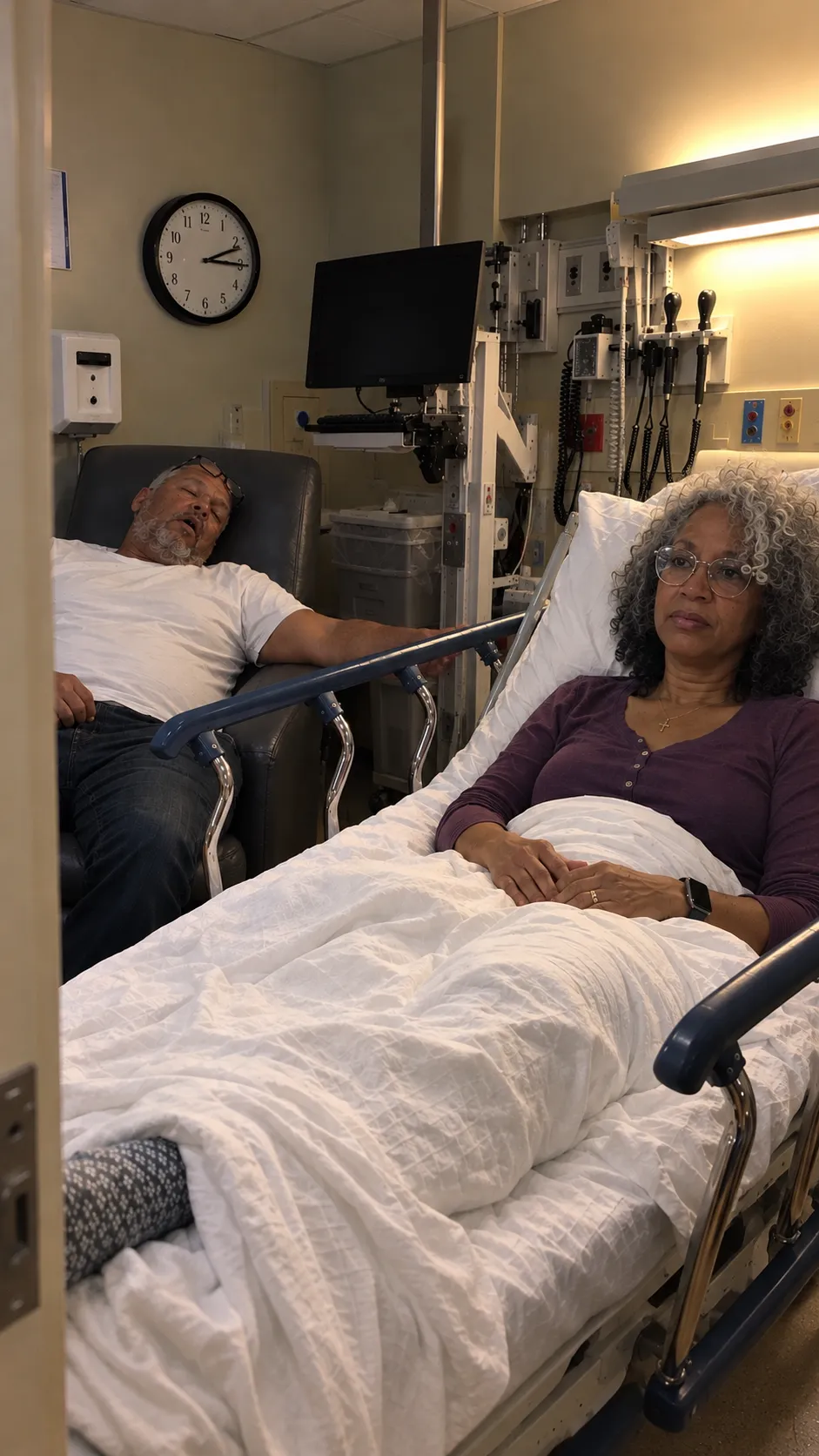
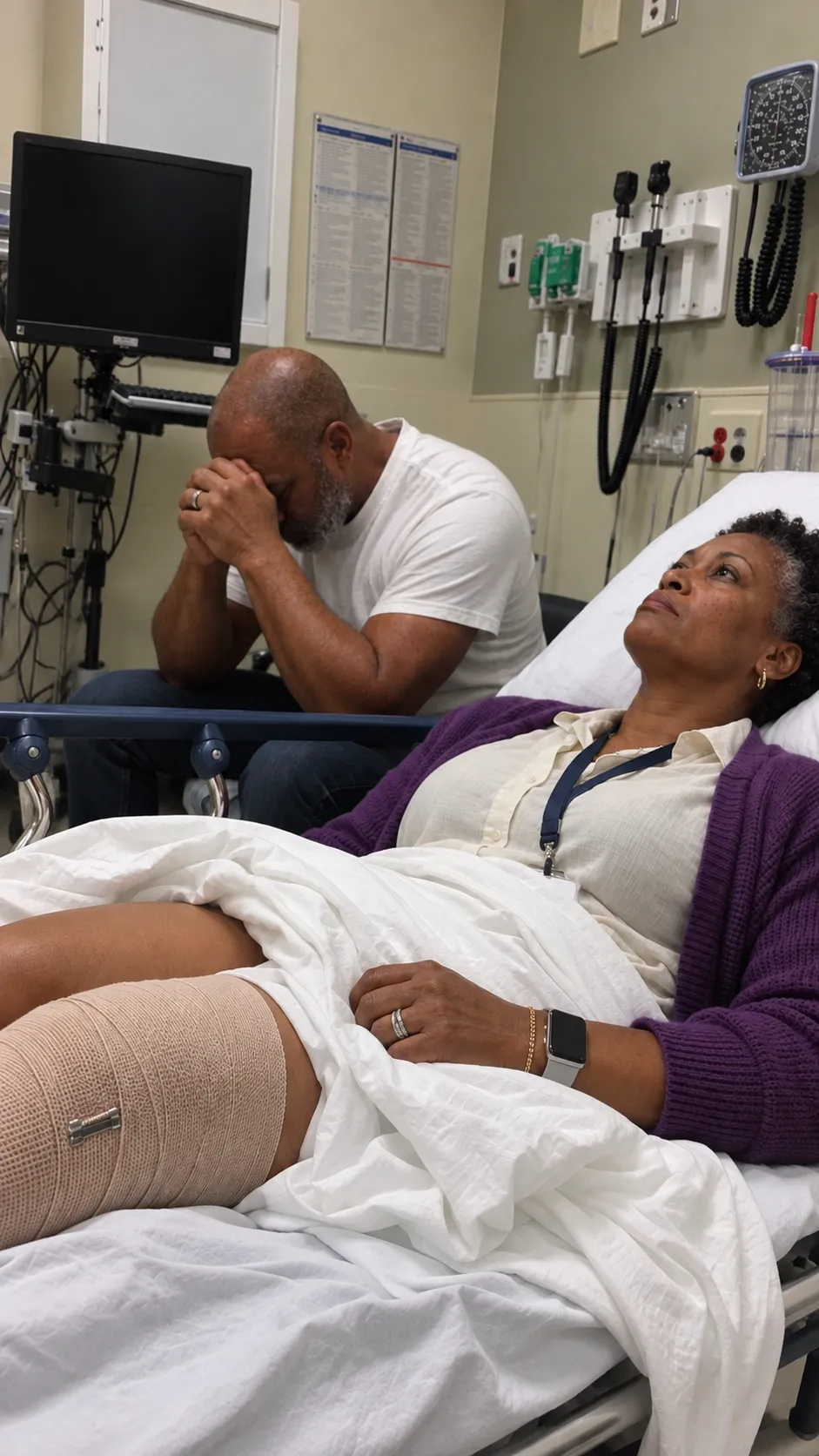
I walked into my best friend's kitchen and found her lying on the tile floor while Keisha stood three feet away whispering "She fell and she won't get back up." You need to read every word of this. Because the thing that nearly took my best friend from her family is almost certainly happening inside your body right now. And the one doctor she could get to see her said the same thing every visit: "It's fibromyalgia. Learn to live with it." By the time you finish reading, you won't be upset with me. You'll be furious at a medical system that let a hardworking, stubborn, fully capable 52 year old woman end up on her kitchen floor — while her doctor wrote prescriptions and called it "symptom management." Joyce and I go back to when we were fifteen. We've been through everything together. Bad apartments. Worse decisions. Good ones too. She held me up when I buried my daddy. I held her when she buried her mama in 2019. Joyce is the kind of woman who operates on purpose. She's worked the front desk at Ridgeview Nursing Home since she was 17. Thirty five years without missing a single shift. Coordinates schedules, covers gaps, brings a plate when somebody on staff is going through it. Stays late because "Miss Edna does not need to be by herself on a Friday night." She used to walk four miles before the morning shift. Cooked real food on weeknights. Had the stamina to outlast women twenty years younger. That was the Joyce I knew. Then she became someone I didn't recognise. The first sign showed up about three years back. She told me her body had started hurting in ways she couldn't push through. Not soreness from being on her feet all day. Not a pulled muscle. A deep, drifting ache that relocated itself without warning. Lower back on Monday. Wrists on Wednesday. Both shoulders by Friday. I told her what we tell each other: "Baby, you've been working since you were a child. You're not twenty anymore. Bodies do this." She nodded. I moved on. But it wasn't nothing. Over the next few months she started disappearing. Cancelling plans she'd made. Joyce — the woman who once drove across town in a downpour to bring me greens because "you are not eating nothing out of a can" — was backing out of Saturday dinners. "I can't do it today. My whole body is screaming." "I know I said Saturday but I barely made it through the week." "Can we push it? I haven't slept properly in nine days." If I'm honest? I was frustrated. I thought she was pulling away. Shutting me out. Dealing with something involving Keisha she wasn't sharing. Then I saw her face. We'd gone almost two months without seeing each other. She came over on a Sunday and stood in my doorway. I almost didn't know who I was looking at. The weight had dropped off her frame — not the kind anyone would celebrate. Her cheeks were hollow. Her skin had gone from warm to ash. The circles under her eyes were so deep they looked painted on. She was wearing gym clothes that hadn't seen movement in months. Joyce — the woman who does not leave the house without her edges right — looked like she'd stopped caring whether anyone saw her. She lowered herself onto my sofa and within ten minutes her eyelids were sinking. "Joyce. Tell me what's happening." "Everything hurts, all the time, everywhere. I'm so exhausted I have to sit down in the shower. My brain is broken — I forgot a resident's name last Tuesday. A woman I've been caring for four years. Looked right at her face and could not pull her name out of my head. I don't feel like a real person anymore." "What does your doctor say?" "He says it's fibromyalgia. He gave me Cymbalta before he ran a single test. Told me to pace myself." One doctor. That's what Joyce got. Not six specialists. Not a rheumatologist and a neurologist and a chronic pain clinic. One general practitioner who looked at her chart, not at her. Wrote a prescription before running tests. And sent her home. Where we come from, that's what you get. You don't get second opinions. You don't get referrals. You get one appointment, one label, and a bottle of pills. Pace yourself. The woman has been on her feet for thirty five years without a single complaint and her doctor said pace yourself. For the next twelve months I had a front row seat to Joyce falling apart. The pain consumed everything. It wasn't joints anymore. It was tissue. Skin. Nerve endings. She told me one morning that pulling a sweater over her head made her cry — not from frustration but from the physical sensation of fabric crossing her shoulders. The exhaustion went beyond anything I'd ever witnessed. She described it as trying to operate a body that someone had filled with sand. Ten hours in bed and she woke up feeling like she'd been working a double in her sleep. Her mind started failing her at work. She mixed up medication schedules. Forgot which residents had which dietary needs. Got confused mid sentence while updating a family member — just stopped, staring at the chart, unable to connect what she was reading to what she was saying. Her supervisor had a quiet conversation with her. Asked whether she'd "thought about stepping back for a while." She made it to the break room before she broke down. Sleep became a nightly battle she always lost. Unconscious by 8:30 from sheer depletion. Bolt awake at 2 AM. Jaw locked tight enough to crack a filling. Pulse hammering. Then six hours of staring into darkness before dragging herself vertical. Her emotions went haywire. Tears over cereal. Rage at a misplaced remote. Panic attacks in the nursing home parking lot before every shift. She described the feeling as "watching myself from very far away, like I'm not connected to my own life anymore." The sugar cravings blindsided her. Joyce ate balanced meals her whole life. Now she was hiding candy in her nightstand drawer. Said her body wasn't asking — it was commanding. Like the craving had its own agenda and she had no authority over it. And every single time she moved — standing, sitting, bending, reaching — her body announced it. A hiss through her teeth. A low groan she couldn't suppress. An exhale that carried pain in it like a frequency. Fifty two years old. Moving like her skeleton had turned against her. And she had one doctor. One. Who gave her Cymbalta before he looked at her blood work. Who sat behind a desk and looked at her chart while she sat across from him describing agony. Who told her it was fibromyalgia — used that word the way you use a period. End of conversation. End of curiosity. "It's a chronic condition. You manage it. You don't fix it." He never investigated what was causing it. Never asked why her body was shutting down. Never ordered anything beyond the standard panel. Never sent her to anyone else. He looked at the chart. Not at her. And when the Cymbalta made her dizzy and nauseous and more exhausted than before? "Give it six weeks. Some people take time to adjust." Six weeks of feeling worse. To adjust. Joyce didn't go back. Not because she gave up on herself. Because the system gave up on her the moment she walked through the door. She sat across from me at my kitchen table one evening and said something that cracked me open from the inside: "Where I come from, you do not stop for pain. Mama didn't stop. And she passed in 2019 in that recliner. Maybe some bodies just wear out faster. Maybe this is what wearing out looks like." I couldn't respond. Because I understood exactly what she was telling me. She was watching herself become her mama. The same chair. The same pain. The same slow vanishing. And she'd accepted it. The way her mama accepted it. The way our mothers and grandmothers accepted it. Because nobody in the system ever told any of them there was another way. I found her on the floor on a cold Tuesday afternoon in February. Two days without returning my messages. Completely unlike her. Even when she was barely functioning she'd send something — a thumbs up, a heart, a "still here." Nothing for 48 hours. I drove straight to her place after work. Her car was parked crooked in the driveway. Blinds pulled. Door ajar. I let myself in. Called her name into the quiet house. Silence. I turned the corner into her kitchen. She was lying on the floor. On her right side. Motionless. Keisha was standing against the counter. Arms at her sides. Face completely blank. "She was cutting something for lunch and she just crumpled. She said she couldn't make her legs work. I tried to lift her but I couldn't. That was a while ago." No panic in her voice. No urgency. Just a kind of emptied out resignation. Like this was something she'd been preparing herself for. Keisha is a nurse. She sees women who look like her mama come through her unit every shift. Women whose charts get read while they do not. And here she was standing in her own kitchen watching it happen to her own mother. Every nerve in my body went still. I got on the floor beside Joyce. Put my hand on her back. "Joyce. Baby. I'm here. Talk to me." She rolled her head toward me. Her eyes took a few seconds to focus. "I've been down here since noon. My legs just stopped. I couldn't push myself up. I tried." It was almost 2:30 in the afternoon. Two and a half hours. On ceramic tile. While her daughter — a registered nurse who lifts patients for a living — stood there watching because there was nothing she could do for her own mama. I don't break easily. I've survived hard things. But kneeling on Joyce's kitchen floor, looking at the strongest woman I know lying face down on tile because her own legs refused to carry her — I came apart completely. We managed to get her up. Into a chair. Then her bed. Then the car. Then urgent care. They went through the motions. Labs. Vitals. Reflex checks. Blood pressure cuff on, cuff off. Their conclusion? "Labs are within normal range. This is likely a fibromyalgia flare. Encourage rest and adequate fluid intake." WITHIN NORMAL RANGE. My best friend spent two and a half hours unable to stand in her own kitchen and everything falls within normal range. They handed her a photocopied sheet about pacing strategies for chronic fatigue. A photocopy. Sleep was not an option for me that night. I sat at my kitchen counter until the sky turned grey, vibrating with a fury that had no outlet. I'd just scraped my best friend off a floor where she'd been lying helpless in front of her own child. A child who is a nurse. A child who already knows how this story ends because she watches it end every week in her unit. And the entire medical system could not tell me why. All they had was a word. Fibromyalgia. And then they turned their palms up. A word is not an answer. Something was fundamentally broken inside Joyce's body. And since no doctor seemed interested in looking past the chart, I was going to find the answer myself. I opened my laptop and typed: "What causes fibromyalgia patients to have migrating pain, crushing fatigue, cognitive impairment, chronic sleep disruption, and progressive muscle rigidity that does not respond to any prescribed medication." Because three years of watching Joyce had taught me something her doctor never noticed. These symptoms weren't independent. They escalated in sync. Worsened together. And nothing — not Cymbalta, not ibuprofen, not heating pads, not Epsom salt — made any of them budge. What if these weren't separate symptoms? What if a single mechanism was producing all of them? The first few pages of results were the predictable garbage. "Move more. Sleep better. Reduce inflammatory foods. Consider counselling." I kept going. And buried in the results I found a paper from a pain neuroscience journal that described Joyce's situation with terrifying precision. Every symptom. Every timeline. Every treatment failure. The answer had nothing to do with "wearing out." Fibromyalgia wasn't the problem. It was a name pinned to a problem nobody had bothered to investigate. The actual problem was a malfunction in something called NMDA receptors. Here's what that means, because understanding this changed everything. Your nervous system has gates. Microscopic receptors along your spinal cord and brain called NMDA receptors that decide which pain signals reach your conscious awareness and which get filtered out. When these gates function normally, they open for real threats and close when the threat passes. You burn your hand on a stove, the gate swings open, pain registers, you pull away, the gate closes, pain fades. In Joyce — and in you, if you've been told it's fibromyalgia — those gates have jammed open. Permanently open. Day and night. Every signal floods through without filtration. Sensations that should barely register arrive in your brain amplified beyond recognition. A handshake feels like a vice grip. A mattress feels like concrete. Your own clothing feels like an attack on your skin. That's why Joyce's pain moved. That's why a blanket tortured her. That wasn't some mysterious "sensitivity." It was a nervous system whose filtering mechanism had broken down entirely. The gates were wide open. And nobody was asking why. Those NMDA gates require one specific mineral to close and reset: magnesium. Magnesium sits on the NMDA receptor like a plug. When magnesium levels are sufficient, the gate closes after each signal. Pain gets processed, regulated, and released. Your nervous system returns to baseline. When magnesium drops below a critical threshold — and this is the piece that connects everything — the plug falls out. The gate stays open. And your entire pain signalling system runs unchecked. Fatigue that obliterates you. Brain fog that erases your thoughts. Sleep that fractures at 2 AM. Moods that swing without provocation. Muscles that lock up and refuse to release. Pain that roams your body searching for new territory. All of it tracks back to a gate that cannot close because the mineral responsible for closing it has been depleted. And the depletion compounds. Chronic pain generates chronic stress. Chronic stress elevates cortisol. And elevated cortisol metabolises magnesium out of your cells every single night while you sleep. A loop. Self perpetuating. Invisible. Relentless. Pain forces the gates open. Open gates flood the brain with distress signals. The brain responds by pumping cortisol. Cortisol incinerates magnesium reserves. Depleted magnesium means the gates can't close. Open gates mean more pain. More pain means more cortisol. More cortisol means less magnesium. Round and round. Every night. For years. This is what was consuming Joyce from the inside for three years. And her doctor never investigated it. Not once. Because here's the part that should make you throw something: The standard blood test her doctor ordered measures serum magnesium. The magnesium circulating in her bloodstream. That accounts for 1% of her body's total magnesium supply. One percent. The remaining 99% — the magnesium stored inside her cells, the magnesium her NMDA receptors physically need to function, the magnesium that determines whether her pain gates open or close — is completely invisible to standard laboratory testing. And here's what makes it worse for women who look like us: 9 out of 10 are not getting adequate magnesium. Nine out of ten. The baseline is already in the ground. A test that only sees 1% is even more meaningless when the starting level is already critically low. Joyce's labs came back "normal" because the test evaluates a fraction so small it means nothing. She could have been in severe cellular depletion — and she was — and every single lab result would read clean. Her doctor looked at the chart. The chart said normal. So he said normal. He never looked at her. Joyce wasn't fragile. She wasn't oversensitive. She wasn't dramatic or weak. She wasn't wearing out. Her NMDA receptors were locked open because her cells were starved of magnesium, and a cortisol loop she couldn't see or feel was stripping what remained out of her body every night. Mama wasn't wearing out either. Wasn't weak. Wasn't built to hurt. The same gates. The same depletion. The same invisible loop. Nobody checked for her either. I read until 4 AM. Study after study. Journal after journal. And my emotional state went from panic to relief to a white hot rage I'd never experienced before. This wasn't hidden knowledge. These were established, peer reviewed, published findings demonstrating that magnesium depletion drives NMDA receptor dysfunction, NMDA receptor dysfunction drives central sensitisation, and central sensitisation is the physiological engine behind every symptom labelled fibromyalgia. The research existed. It always existed. And her doctor never opened a single study. By morning I was researching how to reverse this. And I walked straight into a wall. Because the overwhelming majority of magnesium supplements available to consumers are functionally worthless. The magnesium lining pharmacy shelves. The bottle at the grocery store. The one her doctor might mention on the way out if he mentions anything at all. Nearly all of them are built on a form called magnesium oxide. Magnesium oxide absorbs at approximately 4%. Four percent. Meaning a 400mg tablet delivers roughly 16mg to your cells. The remaining 384mg transits your digestive system untouched. Accomplishes nothing. This is the form inside most products on the market. The cheapest form to manufacture. The one that allows a company to print "Magnesium 400mg" across the front panel while knowing the formulation inside is biologically inert. I checked what Joyce had been taking. The bottle from the grocery store. Oxide. And then something hit me so hard I had to set the bottle down on the counter and just stand there. I bought that same bottle for her mama. Years ago. When Mama's joints were getting worse. When she was spending more time in that recliner. I went to the grocery store and picked up a bottle of magnesium because I'd read somewhere it might help with joint pain. I bought my own mama oxide and called it helping. She took it every morning. Faithfully. For months. Nothing changed. She got worse. She stopped getting up from the recliner. And she passed in 2019 sitting in it. I'd carried that weight silently for years — wondering if I should have searched harder, tried more, found something better. And now I was staring at the same bottle, the same form, the same 4% absorption — sitting in Joyce's cabinet. The same trick. The same product that failed Mama. Failing her best friend's daughter the exact same way. Joyce hadn't failed magnesium. Magnesium oxide had failed her. The same way it failed Mama. The form with actual clinical evidence behind it is magnesium bisglycinate. Absorption rate approximately 90%. Bisglycinate bonds magnesium to the amino acid glycine. Glycine functions as an inhibitory neurotransmitter with direct activity on the NMDA receptor. So bisglycinate delivers the mineral that closes the gate AND the compound that reinforces the closure simultaneously. Upstream. At the source. Cymbalta operates downstream. It attempts to dampen the signal after the gates have already let it through. Like stuffing cotton in your ears while someone screams in the room. The screaming continues. And the cotton — the dizziness, the nausea, the deeper fog, the weight — becomes its own kind of suffering. Bisglycinate closes the door. The signal gets regulated before it becomes a scream. That's not managing symptoms. That's addressing the mechanism producing them. But locating a product that delivered legitimate bisglycinate at a meaningful dose turned out to be an ordeal. I purchased three separate bisglycinate products for Joyce across two months. The first advertised "magnesium bisglycinate" prominently on its label. I turned the bottle around. Supplement facts panel. It was a composite — bisglycinate blended with oxide. Correct word on the outside. Cheap padding on the inside. The second contained actual bisglycinate — at 200mg per serving. Half the amount used in clinical research. She took it for eight weeks. Marginal change. Barely perceptible. The third had such an aggressive metallic flavour Joyce wouldn't touch it after three days. I burned through almost $200 on three products that either misrepresented their contents, underdosed the effective compound, or were so unpalatable they wound up in the trash. And I finally understood why women give up on magnesium. The mineral isn't the problem — the evidence is strong. The problem is an industry flooded with products that misuse the right words to sell the wrong formulation. Stamp "bisglycinate" on the front. Fill it with 60% oxide on the back. Price it at $35. Market it as clinical grade. Women like Joyce purchase it. Commit to it. Experience nothing. And walk away convinced the mineral itself doesn't work. The mineral works. The marketplace keeps selling versions that can't. I was out of ideas. Joyce was investigating cutting her hours. She told me she'd started timing how long she could remain upright at the front desk before needing to sit. Forty five minutes was a good day. Keisha had quietly taken over all the household responsibilities — cooking, laundry, groceries — without being asked. Because asking meant admitting it had gotten that bad. I watched Joyce attempt to lift a water glass across the table one morning. She slid it instead of lifting it. Because gripping was easier than raising. The resignation in her eyes was complete. The same look I'd seen in Mama's eyes. Sitting in that recliner. Year after year. Accepting a smaller and smaller life until there was nothing left to shrink. That was NOT going to happen. Not again. Not on my watch. Then late one evening — sleepless again, cycling through forums and research threads — I stumbled across a brand I'd never encountered. A small supplement company called Celuvida. No retail presence. No sponsorship deals. No influencer partnerships. But their formulation made me stop scrolling. 400mg magnesium bisglycinate per serving. No oxide blend. No composite. Pure bisglycinate. Zero oxide anywhere in the formula. Independently lab tested by a third party. Results available. No proprietary blend obscuring what's actually inside. And the delivery format was a gummy. Two gummies before bed. No oversized capsules. No powder to dissolve. No flavour that triggers a gag reflex. Fifteen brands I'd investigated by this point. Not one had delivered clean bisglycinate at full therapeutic dosing without concealing oxide somewhere in the formulation. I placed an order for two bags that night. Joyce's. Mine. One final attempt. If this didn't reach her, I was out of moves. Joyce began taking two gummies each evening before bed. First night: no fireworks. She said her stomach felt "calmer than usual" but couldn't articulate more than that. Second night: she made it to 4:45 AM without waking. She hadn't cleared 3 AM in over a year. She messaged me before dawn: "I woke up and the room was already getting light. Baby. I genuinely cannot remember the last time that happened." By night four: she slept through her alarm. First time in three years. She called me half laughing, half bewildered. "I think my body forgot it was allowed to rest." "My brain feels quieter. Not foggy. Not drugged. Just... quieter. Like someone turned down a frequency I didn't know was running." By the end of two weeks, the rigidity had begun loosening. Not vanished. But the morning ritual had changed. She wasn't lying in bed for fifteen minutes negotiating with her spine. She wasn't white knuckling the headboard to pull herself vertical. She texted me: "I got out of bed this morning the way normal people get out of bed. I just swung my legs over and stood. I didn't plan it. I didn't brace for it. It just happened." I read that message six times. Because for three years, standing up was something Joyce had to prepare for. Steel herself. Grip something. Count down from three. And always — always — make that sound. That involuntary exhale of pain she didn't even notice anymore. Mama made the exact same sound. Every time she pushed herself up from that recliner. To walk to the kitchen. To go to the bathroom. Every single time. That small groan of a body protesting its own weight. I'd stopped hearing it because it was always there. Keisha stopped hearing it. It was just what the women in our lives sounded like. Until Joyce's stopped. By week three the cognitive fog was dissolving. She rang me and spoke without pause for thirty five minutes. Fluid, precise, switching subjects with the sharpness I remembered from twenty years ago. I hadn't heard that version of Joyce in three years. "I can hear myself think again. It's like someone drained water out of my skull. I can actually finish a thought." Week four and the pain volume had lowered significantly. Her exact words: "The noise is still there. But it's not screaming anymore. It's murmuring. And I can function over a murmur. I couldn't function over a scream." The sugar compulsion evaporated. Proper meals returned. The nightstand candy went untouched for weeks before she quietly removed it. Sleep was intact. No 2 AM cortisol spikes. No grinding jaw. No hammering pulse. And the woman herself — the actual Joyce, the one who brings a plate and stays late and laughs so loud the whole nursing home can hear her — she was re emerging. Not performing fine. Actually present. The phone call that destroyed me — in the most sacred way possible — came about six weeks in. Keisha called. "I need to tell you what happened tonight." "Go ahead, baby." "Mama was on the couch after dinner. Watching something. She finished her show and she stood up. And she just — stood up. Like it was nothing. No groan. No hand on the armrest. No countdown. Just... up." "And?" "And I looked at her. And she looked at me. And neither of us said anything for a second. Because we both noticed. She didn't make the sound." "What sound?" "That sound. The one she makes every single time she stands. That little noise. She's been making it for years. It's just — it's part of her. Was part of her. And tonight it was gone." Silence on the line. "Grandma made the exact same sound. Every time she got out of the recliner. The exact same one. I hear it in my head every day at work when I help patients stand. And tonight it was gone. From Mama. It was just... gone." I didn't make it through that call. Because the image in my head wasn't Joyce standing up from a couch. It was Joyce on a kitchen floor. On ceramic tile. For two and a half hours. While Keisha stood frozen against a counter with nothing on her face at all. A nurse who watches women who look like her mama come through her unit every shift, standing in her own kitchen watching it happen to her own mother. And now that same daughter was calling to tell me her mama stood up like it was nothing. Eight months have passed. Joyce takes two Celuvida gummies every night before turning out the light. It's as automatic as locking the front door. Teeth. Gummies. Pillow. She's back at work full time. Hasn't missed a shift. Her supervisor stopped by the desk last week and told her the floor has never run smoother. Miss Edna got a birthday cake last month. Joyce baked it herself. Her morning walks are back. Four miles. Five days a week. No bracing. No counting steps. No internal negotiations about whether to turn around early. Keisha made a comment last month that stopped me cold: "I forgot what it was like before. I forgot she was sick. She's just Mama again." Joyce brought a plate to Saturday dinner two weeks ago. Arrived first. Had everything covered in foil and labelled. She picks things up with one hand without looking at them. She stands up from chairs like it's nothing. Because for her, it is nothing again. She's back. Not every day is effortless. Some days still push back. But she is present and real and laughing and planning and living in a way that I genuinely feared I'd never witness again. The Joyce I've known for almost forty years. And I carry something else now too. Something quieter. Grandma would have loved this. She would have loved knowing the thing that kept her in that recliner had a name. Had a mechanism. Had a fix that cost less than a single doctor visit she probably never got. She would have loved watching Joyce stand up without the sound. She would have loved it. Here's what I need you to hear. If you're dealing with pain that drifts through your body without explanation, exhaustion that no amount of rest repairs, brain fog that makes you question your own competence, stiffness that punishes every movement, cravings that override your willpower, sleep that shatters at 2 AM like clockwork — and your doctor looked at your chart instead of your face, gave you a prescription before he gave you a test, or told you "fibromyalgia" and sent you home... Consider that they might have the name right and the cause entirely wrong. Your NMDA gates may be jammed open. Your cells may be running on empty magnesium. And a cortisol cycle that no test your doctor orders can detect may be stripping away the one mineral your nervous system depends on — every single night, silently, while you lie awake wondering what's wrong with you. And every lab result will say you're healthy. Because those labs examine 1% of the picture. And for women who look like us, the baseline is already in the ground. That's why I'm writing this about Celuvida. I have no affiliation with them. No compensation. No arrangement. I'm writing this because my best friend lay on a kitchen floor for two and a half hours while her daughter — a nurse — watched. And two gummies before bed accomplished what her doctor and his Cymbalta prescription never came close to. Celuvida Magnesium Bisglycinate Gummies deliver: 400mg pure magnesium bisglycinate — complete clinical dose, absolute zero oxide Glycine co delivery — closes the NMDA gate AND reinforces the closure Third party laboratory tested for purity and dosing accuracy No oxide. No blends. No proprietary composites. No label tricks. Two gummies before bed. Nothing else required. 14 days is when Joyce's sleep shifted. 6 weeks and Keisha called me because her mama stood up without a sound. But before you purchase any magnesium product, hear me out: Most magnesium available to consumers is functionally inert. Oxide absorbs at 4%. Blended formulas conceal oxide behind the word bisglycinate on the packaging. Underdosed products use 200mg and bank on you never checking the research. I know what oxide does. I bought it for Mama. I watched it do nothing while she disappeared into a recliner. And it almost failed Joyce the same way. Celuvida is the only one that delivered results. Because they're the only company I found putting 400mg pure bisglycinate with zero oxide into a format she would actually take consistently. That's not a sales pitch. That's a chronology. Documented in her bedroom at 5 AM. On her kitchen floor at noon. On Keisha's voice cracking through my phone at 8 PM. Celuvida provides a 90 day money back guarantee. 90 days. Because restoring depleted magnesium is not an overnight process. This isn't a sedative that knocks you out by Tuesday. This is cellular restoration. The cortisol loop took years to entrench itself and it won't unravel in a week. But 90 days gives your body sufficient time to rebuild intracellular reserves, restore NMDA gate function, and let a nervous system that's been screaming for years finally lower its voice. If the changes aren't there — reduced pain, deeper sleep, sharper cognition, actual energy — every cent comes back to you. They extend that offer because they've witnessed these results thousands of times. But Celuvida is a small operation. They can't always keep up with demand. If you follow the link and discover they're out of stock, I apologise. But if it's available, don't wait. Because you might be a single product away from reclaiming the life that's been taken from you piece by piece. From rising out of a chair without the sound. From sleeping through the night without the jolt. From being recognised again by the people who love you. Please. Don't do what Joyce did for three years. Don't accept a label as an explanation. Don't let one prescription replace an investigation. Don't sit across from a doctor who reads your chart while your body falls apart in the chair. Don't let your daughter see you on a floor. Especially not when she already knows how that story ends. Don't become the recliner. 14 days reshaped Joyce's sleep. 6 weeks and she rose from a couch in silence. Grandma would have loved this. Start the 90 day protocol. And if you've been living the way Joyce was — labelled, medicated, invisible, vanishing — I hope this is where you finally get your answer. You deserve to stand up without making a sound.
More from Black Women’s Health Tips

The Relief Mineral For Fibromyalgia
Black Women’s Health Tips
The Relief Mineral For Fibromyalgia
Black Women’s Health Tips
The Relief Mineral For Fibromyalgia
Black Women’s Health Tips
The Relief Mineral For Fibromyalgia
Black Women’s Health Tips
The Relief Mineral For Fibromyalgia
Black Women’s Health Tips

The Relief Mineral For Fibromyalgia
Black Women’s Health Tips
The Relief Mineral For Fibromyalgia
Black Women’s Health Tips
The Relief Mineral For Fibromyalgia
Black Women’s Health Tips
The Relief Mineral For Fibromyalgia
Black Women’s Health Tips
The Relief Mineral For Fibromyalgia
Black Women’s Health Tips

“Mom won’t get up.”
Black Women’s Health Tips
“Mom won’t get up.”
Black Women’s Health Tips

 Add to Chrome