
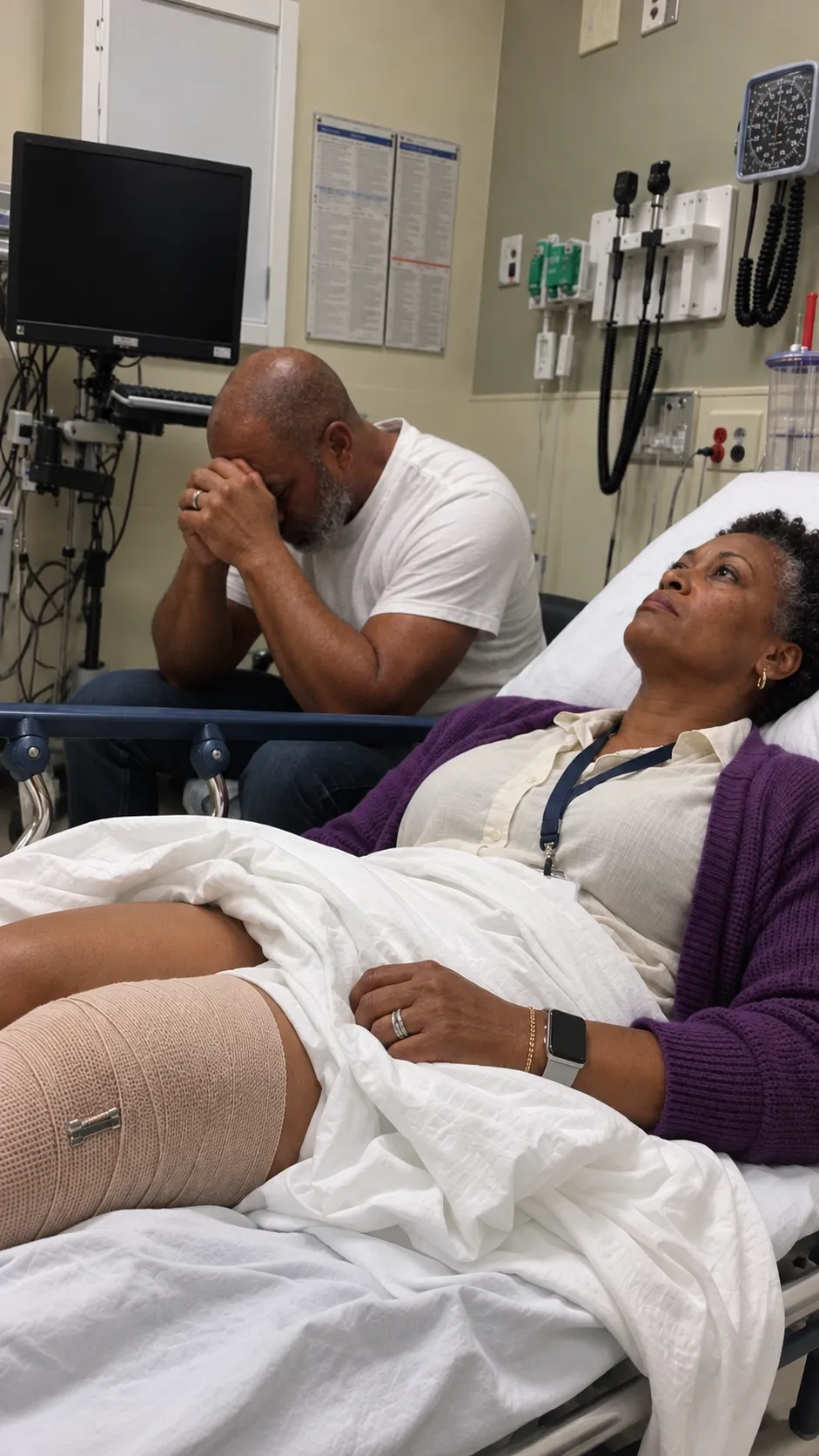
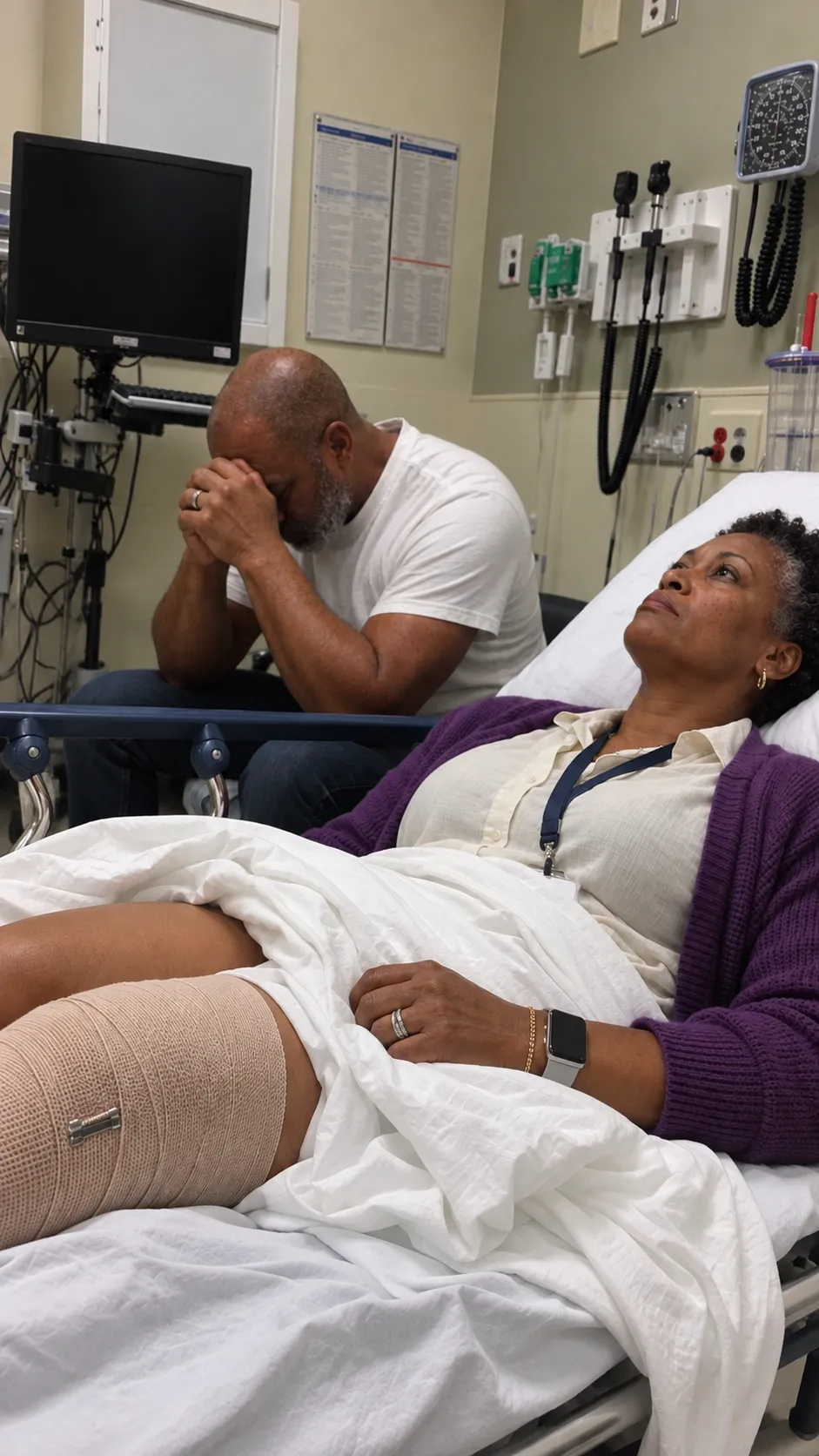
“Mom won’t get up.”
Ad Copy
I found my best friend on her kitchen floor at 2 in the afternoon with Keisha standing over her saying "Mama won't get up." I need you to read this. All of it. Because what almost destroyed my best friend is probably happening inside your body right now. And the one doctor she could get to see her told her it was "just fibromyalgia" — like that explained anything. By the end of this, you're going to be furious. Not at me. At a system that watched a strong, hardworking, 52 year old woman collapse in her own kitchen — while her doctor looked at her chart, wrote a prescription, and told her to "manage her symptoms." Joyce and I have been best friends since we were teenagers. We grew up three streets apart. Shared everything. First jobs. Bad decisions. Good ones too. She was there when I lost my daddy. I was there when she buried her mama in 2019. Joyce is one of those women who does not stop. She's worked the front desk at Ridgeview Nursing Home since she was 17. Thirty five years. Never missed a shift. The kind of woman who brings a plate to work when somebody's going through something. Who remembers every resident's birthday. Who stays late because "I'm not leaving Miss Edna by herself on a Friday night." Where we come from, you do not stop for pain. Your mama didn't. Her mama didn't. You get up, you go to work, and you deal with it. That's Joyce. Until she couldn't deal with it anymore. It started about three years ago. She told me her body had started hurting in a way she couldn't push through. Not the usual aches from being on her feet all day. Something deeper. Something that moved. Hips one week. Shoulders the next. Then both hands, both knees, her neck — all at once. Like her body was turning against her one joint at a time. I said what we all say: "Baby, you've been on your feet since you were a child. You're getting older. Of course things hurt." She laughed. I laughed. But it didn't stop. Within a few months, she'd cancelled on me three times in a row. Joyce never cancels. This is the woman who drove across town in a rainstorm to bring me greens when I was sick. Because "you are not eating nothing out of a can." Now she was bailing on Saturday dinners. "I'm sorry baby, I just can't today. Everything hurts." "Rain check? I barely slept." "Can we do next week? I don't have it in me." I was annoyed at first. If I'm honest. I thought she was pulling away. Going through something with her daughter. Something she wasn't telling me. Then I saw her. We hadn't seen each other in about six weeks. She came to my house on a Sunday afternoon. And I barely recognised her. She'd lost weight — but not in a way anybody would celebrate. Her face was drawn. The warmth had left her skin completely. Her eyes looked like they hadn't rested in months. She was wearing joggers and an old zip up. Joyce — who does not leave the house without her edges laid — looked like she'd stopped caring whether anyone saw her. She sat on my couch and within ten minutes she was fighting to keep her eyes open. "Joyce. What is going on." "I don't know. I hurt everywhere. All the time. I'm so tired I have to sit down in the shower. My brain feels like somebody packed it with wet cotton. I forgot a resident's name last week. A woman I've been taking care of for four years. Looked right at her and could not pull her name out of my head." "Have you been to the doctor?" "Once. He gave me Cymbalta before he even ran tests. Said it sounded like fibromyalgia. Told me to pace myself." One doctor. That's what she got. Not six. Not a rheumatologist and a neurologist and a pain specialist. One general practitioner who looked at her chart, not at her. Wrote a prescription. And sent her home. Where we come from, that's all you get. You don't get second opinions. You don't get referrals. You get one appointment, one label, and a bottle of pills. Pace yourself. This woman has worked on her feet for thirty five years without a single complaint and you're telling her to pace herself. Over the next year, I watched Joyce deteriorate. The pain spread everywhere. It wasn't just her joints anymore. Her skin burned. Her muscles screamed. She told me one morning that the weight of her own blanket felt like somebody had laid sandpaper across her arms. The fatigue was unlike anything I'd ever seen. Not tired. Not even exhausted. Emptied. She described it as trying to move inside a body that had been filled with concrete. She'd sleep nine hours and wake up feeling like she'd been working a double. The brain fog got worse and worse. She mixed up medication schedules at work. Forgot which residents had which dietary restrictions. She told me she was in a team meeting and completely blanked on a protocol she'd been following for years. Could not remember a single step. Her supervisor pulled her aside. Asked if she was "handling things." She sat in the break room afterwards staring at the wall for thirty minutes. The sleep fell apart completely. She'd collapse from pure exhaustion around 8, then jolt awake at 2 or 3 AM. Heart hammering. Jaw clenched tight enough to make her teeth ache. Lying in the dark. Staring at the ceiling. Then dragging herself into work like a ghost. Her mood crumbled. Snapping at Keisha over nothing. Crying in the nursing home bathroom between rounds. Anxiety that hit her in the parking lot before every shift. She told me she felt like she was "vanishing inside my own body." The sugar cravings hit from nowhere. Joyce was never a sweets person. Now she was eating chocolate at 10 PM, going through cookies like they were medicine. She said her body was demanding it. Like something was pulling her toward sugar and she had no say in it. And the stiffness. Every time she stood up from a chair, her body announced it. A groan. A wince. A sharp breath through her teeth. Her knees. Her hips. Her shoulders. Every single movement came with a sound. She was 52 and moving like she was 80. And she had one doctor. One. Who gave her Cymbalta before he ran a single test. Who looked at her chart and decided what was wrong before he looked at her. Who told her it was fibromyalgia — a word he used like a period at the end of a sentence. End of discussion. End of investigation. "It's a chronic condition. You need to learn to manage it." He never checked what was causing it. Never asked why. Never ran anything beyond the standard panel. Never referred her to anyone. He looked at the chart. Not at her. And when the Cymbalta made her dizzy and nauseous and more exhausted than before? "Give it six weeks. Some people adjust." Six weeks of feeling worse. To adjust. Joyce didn't go back. Not because she gave up on medicine. Because medicine gave up on her the moment she walked through the door. She sat across from me at my kitchen table one night and said something that cracked me open: "Where I come from, you do not stop for pain. Mama didn't. And she died in that recliner in 2019. Maybe some bodies just wear out faster. Maybe this is what wearing out looks like." I couldn't speak. Because I knew exactly what she was saying. She was watching herself become her mama. The same chair. The same pain. The same slow disappearing. And she'd accepted it. The way her mama accepted it. The way our mothers and grandmothers accepted it. Because nobody ever told any of them there was another option. The day I found her was a Tuesday in February. She hadn't answered my texts in two days. Not like her. Even at her worst she'd always send something back. I drove to her house after work. Her car was in the driveway. Blinds closed. Front door unlocked. I walked in calling her name. No answer. I walked into the kitchen. And there she was. On the floor. On her side. Not moving. And Keisha was standing over her. Just standing there. Arms at her sides. Face completely still. "She was making lunch and her legs gave out. She said she couldn't get up. I tried but I couldn't lift her. I didn't know who to call." Keisha's voice was flat. Not panicked. Not crying. Just empty. Like the fear had burned through everything and left nothing behind. Keisha is a nurse. She sees women like her mama come through her unit every shift. Women whose charts get read while they do not. And now she was standing in her own kitchen watching it happen to her own mother. My whole body went cold. I dropped down next to Joyce. "Joyce. Baby. Talk to me." She opened her eyes. Looked at me. And said: "I've been down here for forty minutes. My legs stopped working. I couldn't push myself up." Forty minutes. On her kitchen floor. While her daughter — a registered nurse — stood there helpless. Not because she didn't know what to do. Because there was nothing to do. I am not a woman who cries easily. But kneeling on that tile floor, looking at the strongest woman I know lying there like something inside her had switched off — I lost it. We got her to a chair. Then to the couch. Then to urgent care. They ran the standard workup. Blood. Vitals. Pressure. And they said: "Labs look normal. It's probably a fibromyalgia flare. Make sure she rests and stays hydrated." NORMAL. A woman spent forty minutes on her kitchen floor and everything is NORMAL. They sent her home with a pamphlet about fatigue management. A pamphlet. I did not sleep that night. I sat at my kitchen table until 1 AM shaking with a rage I have never felt in my life. Because I had watched my best friend collapse in front of her daughter. The same daughter who watches women come through her hospital every day and already knows how this story ends. And the entire medical system could not tell me why. All they had was a word. Fibromyalgia. And then a shrug. A word is not an answer. Something was very wrong with Joyce. And I was going to find out what, because clearly no doctor was going to do it for her. I opened my laptop and started searching. Not "fibromyalgia treatment." Not "best medication for chronic pain." I searched: "Why do fibromyalgia patients have pain that moves, extreme fatigue, brain fog, sleep disruption, and muscle stiffness that never improves no matter what medication they take." Because I'd been watching these symptoms for three years. They weren't random. They showed up together. Got worse together. And NOTHING — not Cymbalta, not ibuprofen, not heating pads, not Epsom salt baths — touched any of them. What if they weren't six different problems? What if they were all caused by one thing? The first pages gave me the usual noise. "Exercise more. Try yoga. Reduce stress." I kept scrolling. And then I found a study from a pain research journal that made everything click. It described exactly what was happening to Joyce. Every symptom. Every pattern. Every failure. The answer wasn't fibromyalgia. Fibromyalgia was just a label they gave her when they couldn't explain the real problem. The real problem was something called NMDA receptor dysfunction. Your brain and spinal cord have gates. Tiny receptors called NMDA receptors that control which pain signals get through and which get blocked. In a healthy nervous system, these gates open and close normally. You stub your toe, the gate opens, you feel pain, the gate closes, the pain stops. In Joyce — and in the women reading this who've been told it's fibromyalgia — those gates are stuck open. Wide open. All the time. Every signal gets through. Pain that should register as a 2 hits the brain as an 8. Pressure that shouldn't hurt at all — a blanket, a hug, someone touching your arm — gets amplified into agony. That's why Joyce's skin burned. That's why the pain moved. That's not a "sensitive nervous system." That's a nervous system whose volume control is broken. The gates are stuck open. And nobody tried to close them. Those NMDA gates need one specific mineral to close properly: magnesium. Magnesium acts as a natural gatekeeper on the NMDA receptor. When levels are adequate, the gates close when they're supposed to. Pain signals get regulated. Your nervous system calms down. When magnesium is depleted — and this is the critical part — the gates cannot close. They stay open. Every signal, every sensation, every stimulus floods through unfiltered. Fatigue. Brain fog. Sleep disruption. Mood changes. Muscle stiffness. Pain that won't stop. Pain that moves. All of it traces back to gates that cannot close because the mineral that closes them is missing. And it gets worse. Chronic pain triggers chronic stress. Chronic stress spikes cortisol. And cortisol burns through your magnesium reserves every single night. A loop. A vicious, self feeding loop. Pain keeps the gates open. Open gates signal the brain to release more cortisol. Cortisol destroys more magnesium. Less magnesium means the gates can never close. Which means more pain. Which means more cortisol. Which means less magnesium. Every night. While she's lying awake at 3 AM. The loop is running. This is what was happening to Joyce for three years. And her doctor never checked. Not once. Because here's the part that made me want to break something: Standard blood tests measure serum magnesium. That's the magnesium floating in your blood. That represents 1% of your body's total magnesium. One. Percent. The other 99% — the magnesium inside your cells, the magnesium your NMDA receptors need to function — is invisible to every standard lab test your doctor runs. And here's what nobody talks about: among women who look like us, magnesium deficiency runs even deeper. 9 out of 10 are not getting adequate magnesium. Nine out of ten. The baseline is already lower. The test that only sees 1% is even more useless when the starting level is already in the ground. Joyce's blood work was "normal" because the test only looks at 1% of the picture. She could be critically depleted at the cellular level — and she was — and every lab would come back clean. Her doctor looked at the chart. The chart said normal. So he said normal. He never looked at her. Joyce wasn't sensitive. She didn't have a "pain personality." She wasn't dramatic. She wasn't weak. She wasn't wearing out. Her NMDA gates were stuck open because she was magnesium depleted at the cellular level, and a cortisol loop was draining what was left every night while she lay awake. Her mama wasn't weak either. Wasn't wearing out. Wasn't "just getting old." The same gates. The same depletion. The same loop. And nobody checked for either of them. I sat at that table until 4 AM reading study after study. And I went from scared to relieved to absolutely livid. Because this wasn't obscure. These were published, peer reviewed studies showing that magnesium deficiency drives NMDA receptor dysfunction, that NMDA receptor dysfunction drives central sensitisation, and that central sensitisation is the mechanism behind fibromyalgia. The science was there. It was always there. And her doctor never opened a single one of those studies. The next morning I started researching how to actually fix this. And I hit a wall immediately. Because most magnesium supplements are useless. The magnesium at the drugstore. The bottle at the grocery store. The one her doctor might mention on the way out if he mentions anything at all. Most of them use a form called magnesium oxide. Magnesium oxide absorbs at roughly 4%. Four percent. For every 400mg on the label, your body gets about 16mg. The other 384mg passes straight through. Does nothing. This is the form in most products. The cheap one. The one that lets a company put "Magnesium — 400mg" in big letters on the front while knowing the form inside is basically useless. I checked what Joyce had been taking. The bottle she'd bought at the grocery store. Oxide. And then something hit me so hard I had to put the bottle down. I bought that same bottle for her mama. Years ago. When Mama's joints were getting bad. When she was spending more and more time in that recliner. I went to the store and bought her a bottle of magnesium because I'd read somewhere it might help with pain. I bought my own mama oxide and called it helping. She took it faithfully. Every morning. For months. And nothing changed. She got worse. She stopped getting out of the recliner. And she passed in 2019 sitting in it. I'd been carrying that guilt silently for years — wondering if I should have done more, searched harder, found something better. And now I was staring at the same bottle, the same form, the same 4% absorption — in Joyce's cabinet. The same trick. The same product that failed Mama. Failing her best friend's daughter the exact same way. Joyce hadn't failed magnesium. Magnesium oxide had failed her. The same way it failed Mama. The form that actually works is magnesium bisglycinate. Bioavailability around 90%. Bisglycinate is magnesium bonded to glycine. Glycine is an inhibitory neurotransmitter that acts directly on the NMDA receptor. So you deliver the magnesium that closes the gate and the glycine that helps keep it closed. Upstream. Not downstream. Cymbalta works downstream. It tries to muffle the signal after the gates are already open. Like turning the volume from 10 to 7. The noise is still there. The side effects — the dizziness, the nausea, the deeper fatigue — often feel worse than what it's supposed to treat. Bisglycinate works upstream. It closes the gate. The signal doesn't flood through in the first place. But finding a real bisglycinate product was nearly impossible. I bought three different ones for Joyce over two months. The first said "bisglycinate" on the front. I flipped the bottle. It was a blend — bisglycinate plus oxide. Good word on the front. Cheap filler on the back. The second was genuine bisglycinate — 200mg per serving. Half the clinical dose. Two months. Almost no change. The third tasted so bad she wouldn't touch it after three days. I spent almost $200 on products that lied, underdosed, or were so unpleasant she couldn't take them. And I understood why women give up on magnesium. The mineral works. The products fail the people who need them. Joyce was talking about cutting her hours. She said she couldn't stand at the front desk for more than forty five minutes. Keisha had taken over cooking. Grocery shopping. Laundry. All of it. Without being asked. I watched Joyce try to pick up her coffee mug one morning. Both hands. And she still winced. She was fading. Right in front of me. The same way Mama faded. The same chair. The same pain. The same slow disappearing. And I was NOT going to watch that happen twice. Then one night — scrolling, reading, refusing to sleep until I found something — I came across a small supplement company called Celuvida. Never heard of them. Not in any store. No celebrity faces. No flashy labels. But their product stopped me. 400mg magnesium bisglycinate per serving. Not a blend. Pure bisglycinate. Zero oxide. Third party lab tested. No fillers. No proprietary blends. And it was a gummy. Two gummies before bed. No horse pills. No chalky powder. I'd looked at maybe fifteen brands. None of them had clean bisglycinate at a full clinical dose without oxide hiding somewhere in the formula. I ordered two bags that night. One for Joyce. One for me. One last try. If this didn't help her, I didn't know what else I could do. Joyce started taking two gummies every night before bed. Night one: nothing dramatic. She said she felt "a little different" but couldn't say how. Night two: she slept until 5 AM. She hadn't slept past 3 in over a year. She texted me at 5:47: "I just woke up and it's LIGHT OUTSIDE. Baby. When did that stop being normal?" Night four: she slept through until her alarm. Called me sounding like someone I hadn't heard in years. Lighter. Clearer. "Something shifted. I feel like my body actually rested. Not collapsed. Rested." By the end of the first two weeks, the stiffness started easing. Not gone. But getting out of bed didn't feel like a punishment anymore. She wasn't bracing. Wasn't gripping the nightstand. She texted me: "I stood up this morning and just... stood up. No sound. No countdown. Just stood." I read that four times. Because for three years, every time Joyce stood up from a chair, she made a sound. A small groan. A sharp breath. A wince. So constant everybody stopped noticing it. Keisha stopped noticing. I stopped noticing. It was just what Joyce sounded like. Mama made the exact same sound. For years. In that recliner. Getting up to go to the kitchen. Getting up to go to the bathroom. Every time. That same small sound of a body protesting its own weight. Until Joyce's stopped. By week three, the brain fog started lifting. She called me and talked for forty minutes straight — sharp, coherent, switching topics the way she used to. I hadn't heard her talk like that in years. "I feel like someone cleaned the inside of my head. Like I can see my thoughts again." By week four, the pain was still there but the volume had dropped. She said it perfectly: "It feels like someone finally turned down the volume. Not off. But down. I can hear myself again over the noise." The sugar cravings faded. Proper meals came back. The midnight chocolate stopped. Sleep was consistent. No more 3 AM jolts. No more grinding jaw. And her laugh. Her real laugh. The full, room filling laugh that I hadn't heard in three years. Not the polite half smile she'd been giving me while pretending she was fine. Her actual laugh. Joyce was coming back. The moment that wrecked me — in the most beautiful way — was about six weeks in. Keisha called me. "Can I tell you something?" "Of course, baby." "Mama got up from the couch tonight. And she didn't make the sound." "What sound?" "The sound she makes every time she stands up. That little — you know. That noise. She's been making it for years. Tonight she just... got up. Like it was nothing. And I looked at her. And she looked at me. And she didn't even know she'd done it." Silence. "Grandma made the exact same sound. Every time she got out of the recliner. The exact same one. I hear it in my head every day at work when I help patients stand. And tonight it was gone. From Mama. It was just... gone." I could not hold the phone. Because I remembered the last time I saw Joyce on a floor. On her kitchen tile. Keisha standing over her with nothing on her face at all. A nurse who watches women like her mama come through her unit every shift, standing in her own kitchen watching it happen to her own mother. And now she was calling me because that same mother stood up from a couch without making a sound. It's been eight months now. Joyce takes two Celuvida gummies every night before bed. Non negotiable. Part of the routine. Brush teeth. Gummies. Lights out. She's back at work full time. Hasn't missed a shift. Her supervisor told her she seems like a completely different person. Miss Edna got a birthday cake last month. Joyce baked it herself. She's walking again. Three miles, three mornings a week. Not running. But moving. Forward. Without bracing. Keisha told me last month: "I got my mama back." Joyce brought a plate to Saturday dinner last weekend. First time in three years. Showed up early. Had everything covered in foil and labelled. She picks up her coffee mug with one hand now. Doesn't even think about it. She's back. Not perfect. She still has days. But she's HERE. Present. Functional. Laughing. Making plans instead of cancelling them. The Joyce I've known since we were teenagers. And I carry something else now too. Something quieter. Grandma would have loved this. She would have loved knowing that the thing that kept her in that recliner had a name. Had a mechanism. Had a fix that cost less than a single doctor's visit. She would have loved watching Joyce stand up without the sound. She would have loved it. Now here's what I need you to understand. If you're living with pain that moves around your body, fatigue that sleep can't touch, brain fog that makes you feel like you're losing your mind, stiffness that punishes every movement, cravings you can't control, sleep that breaks every night at 2 or 3 AM — and your doctor handed you a prescription before he ran a test, or looked at your chart instead of your face, or told you it's "just fibromyalgia" and sent you home... It might not be what they told you. Your NMDA gates might be stuck open. Your cellular magnesium might be critically depleted. And a cortisol loop might be draining the one mineral your nervous system needs to calm down — every night, while you lie there wondering what's wrong with you. And every blood test will say you're fine. Because the test only measures 1% of the picture. And for women who look like us, the starting level is already in the ground. That's why I'm telling you about Celuvida. Nobody pays me to say this. I don't work for them. I'm telling you because my best friend collapsed on her kitchen floor in front of her daughter. And two gummies before bed did what her doctor and his prescription never came close to. Celuvida Magnesium Bisglycinate Gummies contain: 400mg pure magnesium bisglycinate — full clinical dose, zero oxide Glycine delivery system — closes NMDA gates AND keeps them closed Third party lab tested for purity and potency No oxide. No blends. No fillers. No label tricks. Two gummies before bed. That's it. 14 days is when Joyce's sleep changed. 6 weeks and Keisha called me crying because her mama stood up without making a sound. But before you buy any magnesium, please listen: Most magnesium is useless. Oxide absorbs at 4%. Blends hide oxide behind the word bisglycinate on the front. Underdosed formulas use 200mg and hope you won't notice. I know what oxide does. I bought it for Mama. I watched it do nothing. And it almost failed Joyce the same way. Celuvida is the only one that worked. Because they're the only brand I found with 400mg pure bisglycinate, zero oxide, at a full clinical dose in a form she'd actually take every night. That's not marketing. That's what happened. In her bedroom. On her kitchen floor. On Keisha's phone call to me. Celuvida offers a 90 day money back guarantee. 90 days. Because magnesium works differently than medication. It doesn't drug your system into silence overnight. It rebuilds what's been depleted. The cortisol loop didn't form in a week and it won't break in a week. But 90 days gives your body time to restore cellular levels, close the gates, and let your nervous system actually calm down. If you don't feel a difference — less pain, better sleep, clearer thinking, more energy — you get a full refund. They only offer that because they've watched this work thousands of times. But Celuvida is a small company. They can't always keep up with demand. If you click the link and they're sold out, I'm sorry. But if it's in stock, grab it. Because you might be one bottle away from getting your life back. From standing up without making the sound. From sleeping past 3 AM. From being the woman your family remembers. Please. Don't spend three years like Joyce did. Being labelled. Being medicated before being tested. Being looked at on a chart instead of looked at in a chair. Don't let your daughter see you on a kitchen floor. Especially not when she already knows how that story ends. Don't become the recliner. 14 days started changing Joyce's sleep. 6 weeks and she got up from the couch without a sound. Grandma would have loved this. Start the 90 day protocol. And if you've been hurting like she was — dismissed, invisible, exhausted, disappearing — I hope you finally find your answer. You deserve to feel like yourself again.
More from Black Women’s Health Tips

The Relief Mineral For Fibromyalgia
Black Women’s Health Tips

The Relief Mineral For Fibromyalgia
Black Women’s Health Tips
The Relief Mineral For Fibromyalgia
Black Women’s Health Tips
The Relief Mineral For Fibromyalgia
Black Women’s Health Tips
The Relief Mineral For Fibromyalgia
Black Women’s Health Tips

The Relief Mineral For Fibromyalgia
Black Women’s Health Tips

The Relief Mineral For Fibromyalgia
Black Women’s Health Tips
The Relief Mineral For Fibromyalgia
Black Women’s Health Tips
The Relief Mineral For Fibromyalgia
Black Women’s Health Tips
The Relief Mineral For Fibromyalgia
Black Women’s Health Tips

“Mom won’t get up.”
Black Women’s Health Tips

“Mom won’t get up.”
Black Women’s Health Tips

 Add to Chrome