
Make Conversations Clear Again
Ad Copy
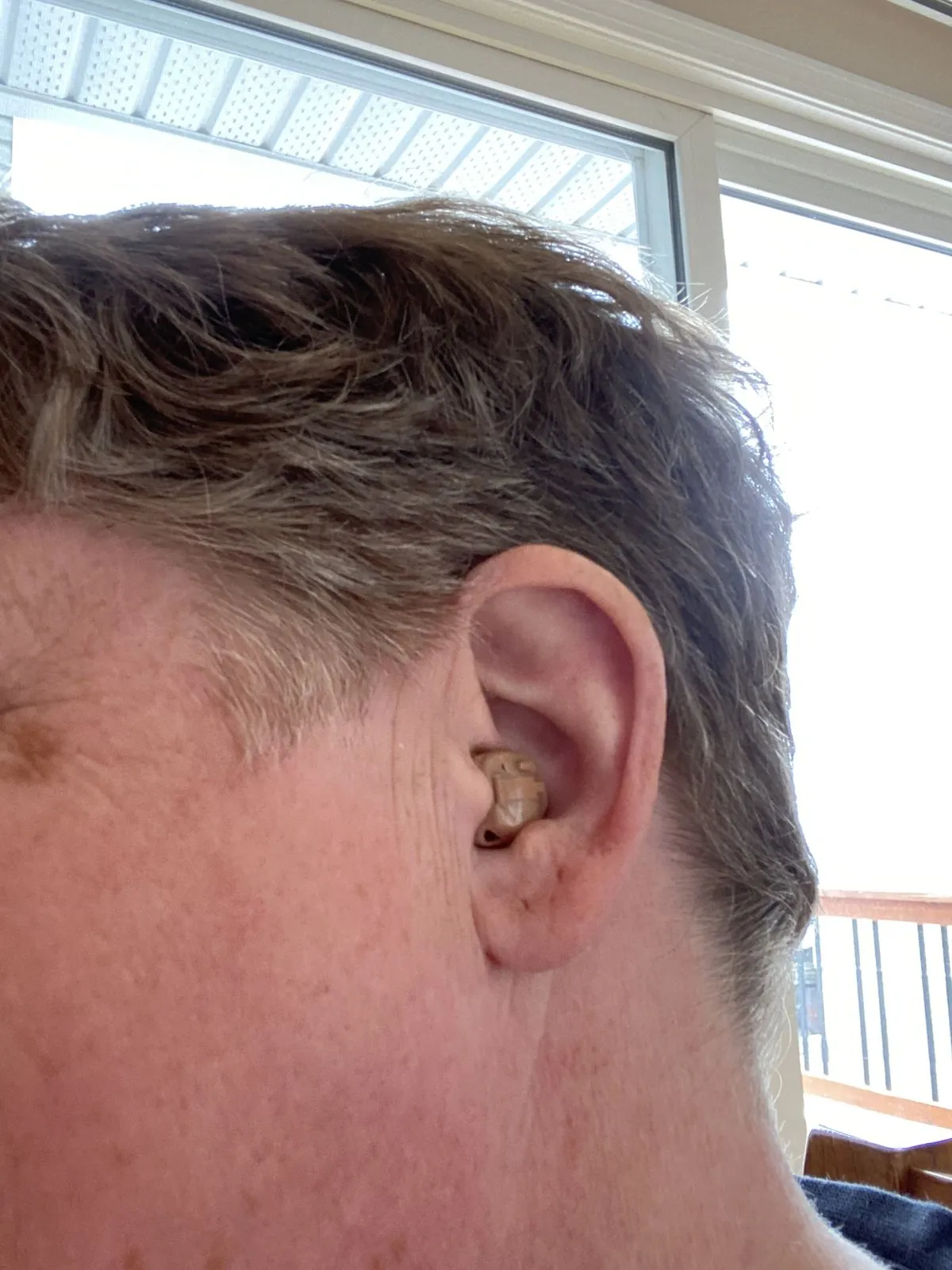
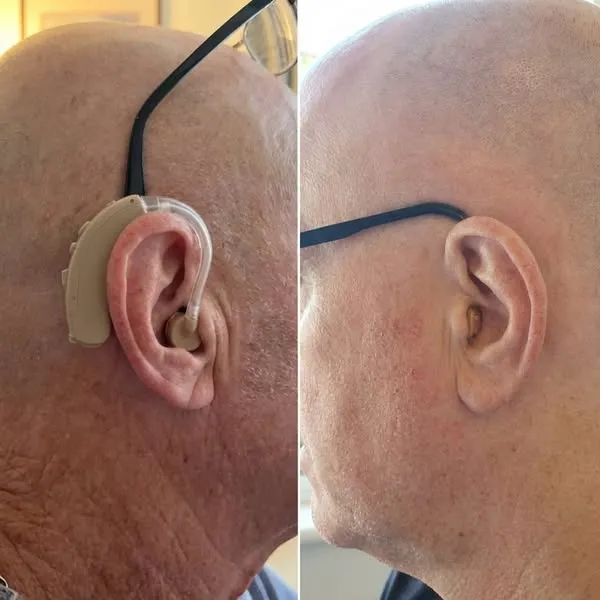
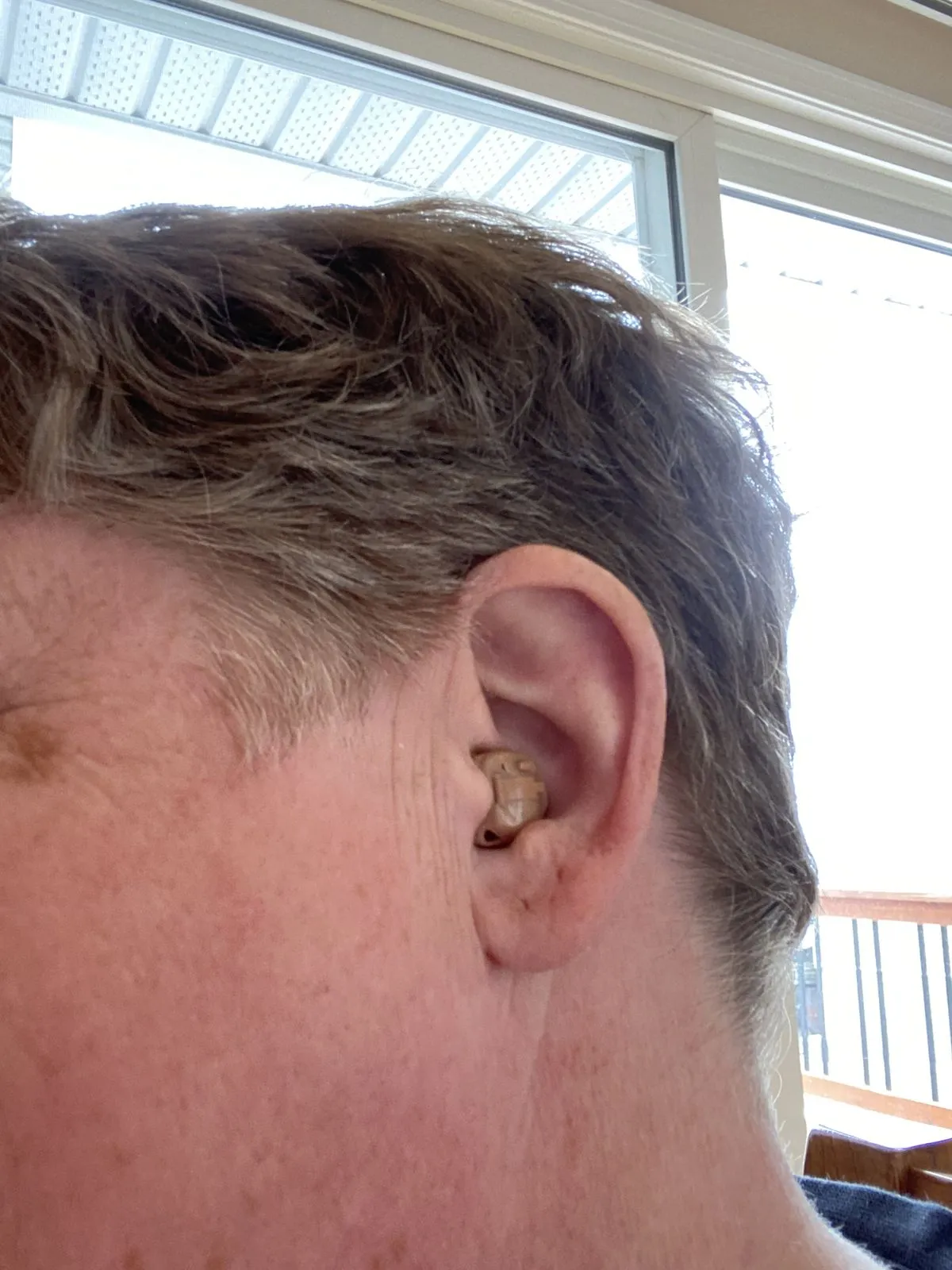
Six months ago I could sit through dinner without thinking about where everyone was sitting. Today I can again. Six months ago I thought hearing better meant making everything louder. Today I don’t. My old hearing devices gave me one and took the other. I’d give the volume back. November 4th Haven’t told anyone how bad it’s gotten. My wife knows I’m struggling, obviously. She’s the one repeating herself all day. But I don’t think she understands what it feels like from my side. Yesterday she said something to me while she was making coffee. I heard her voice perfectly well. I knew she said a full sentence. I caught maybe four words. So I nodded like I understood. She looked at me and said, “What did I just say?” I had no idea. I laughed it off. Been thinking about it ever since. The television is another thing. I keep turning it up. My wife keeps turning it down. “Tom, it’s at 32.” I know. The frustrating part is I can hear the TV. I can hear the music. I can hear doors slam. I can hear somebody put a glass down in the scene. Then an actor says one quiet sentence and I look at my wife and ask, “What did he say?” I hate that. November 9th Called about my hearing. Got the usual advice. Sit closer. Face the person speaking. Reduce background noise. Turn captions on. Give yourself time. All reasonable. None of it makes you feel better when your granddaughter tells you something funny and everybody laughs before you’ve even figured out what she said. That happened Sunday. I laughed too. She looked at me and said, “Grandpa, you didn’t hear me.” I said, “Of course I did.” I didn’t. November 14th Started researching. Searched: “why can I hear people talking but not understand them” That sentence is basically my entire life right now. I can hear my wife calling me from the kitchen. I just don’t know whether she said, “Can you come here?” or “Did you put that there?” I can hear somebody talking to me in a restaurant. I just lose pieces. And one missing word can wreck the whole sentence. Searched: “hearing aids make everything louder but speech still unclear” More amplification. More programs. Different settings. Directional microphones. Noise reduction. Premium technology. I changed settings. Increased the volume. Tried different tips. Sat there clicking through programs while my wife repeated the same sentence three times. Felt stupid. But I didn’t know what else to do. November 21st My friend Mark has hearing aids. I didn’t know that until last week. We’ve known each other almost twenty years. We’ve eaten together, watched games together, sat in loud restaurants together. I had never noticed anything in his ears and never thought of him as somebody with hearing trouble. We were having coffee and I made a joke about becoming “the guy who says what all the time.” He didn’t laugh. He just looked at me and said, “You know I went through exactly that, right?” I honestly didn’t. Then he told me his first amplifier had made everything louder. His own chewing. Silverware. Air conditioning. Chairs scraping across the floor. Then he said, “I could hear every fork in the restaurant. Still couldn’t understand my wife.” That sentence hit me. Because that was exactly what I had been trying to explain. Not silence. Not “I can’t hear anything.” I can hear everything. I just can’t always pull the person I care about out of it. Mark said his first device ended up in a drawer. “Louder isn’t always the same thing as clearer,” he said. I wrote that down afterward. December 3rd Bought a cheap amplifier anyway. Apparently I need to learn things personally. Put it in. First reaction: wow. I could hear everything. Second reaction: oh God. I could hear everything. The refrigerator. My own footsteps. The faucet. Silverware touching a plate. The turn signal in the car sounded like someone knocking on my skull. Then my wife started talking while the television was on. And I still said: “What?” That was the moment. Nothing dramatic. Just depressing. Because I realized I had made the entire room louder and somehow still hadn’t solved the one thing I actually cared about. One week wearing it. Then two. I started leaving it on the dresser. December 11th Six weeks of turning the television higher. Nothing. Different programs. Nothing. Two weeks with the cheap amplifier. Nothing that mattered. And I started noticing that every single solution I had tried worked at the same level. Volume. Make the sound stronger. None of it touched whatever was making the words disappear inside the noise. December 19th My wife found me sitting at the kitchen table after midnight. Laptop open. Hearing amplifier beside me. “What are you doing?” “Reading.” “About what?” I didn’t answer. She sat down across from me. After a minute she said, “You know this doesn’t bother me, right?” That almost made me angry. Not at her. At myself. “It bothers me.” She didn’t say anything. “It bothers me that you have to repeat yourself. It bothers me that I’m watching your mouth when you talk. It bothers me when the kids laugh and I have to wait to see if I’m supposed to laugh too.” She reached across the table. I kept talking. “And I really hate when somebody says ‘never mind.’” That one got me. Because nobody means anything by it. They’re not trying to hurt you. They’re just tired of repeating the sentence. But after a while “never mind” starts feeling like a door closing. She squeezed my hand. “We’ll figure it out.” “You don’t know that.” “No.” Then she said, “But I know you’re not done trying.” She went back to bed. I stayed at the laptop. Typed: “why does making things louder not make speech clearer” December 22nd Found something that stopped me. Not some miracle article. Just an explanation that finally sounded like my actual life. Hearing sound and understanding speech are not the same thing. That sounds obvious when I write it now. It wasn’t obvious to me. Speech is made up of tiny details. Consonants. Little changes between sounds. The pieces that tell you whether somebody said fifteen or fifty. Whether they said “can” or “can’t.” Whether they were asking a question or making a statement. Then you add a restaurant. Music. Plates. Another conversation behind you. A waiter talking. Somebody laughing. A chair scraping. Now the voice you care about is competing with all of it. And here was the part that finally clicked. If I amplify everything, I amplify everything. My wife goes up. The table behind her goes up. The silverware goes up. The music goes up. The waiter goes up. I’m not necessarily creating separation. I’m creating a louder room. I sat there staring at the screen. My world wasn’t too quiet. That was the mistake. My world was plenty loud. The person I cared about was getting lost inside it. Every single thing I had tried suddenly made sense. The TV volume. The amplifier. Sitting closer. Watching lips. Choosing the quiet corner. I had been trying to hear more. What I actually wanted was to understand more. December 26th So I changed the question. Stopped searching “strong hearing amplifier.” Started searching “speech clarity hearing aid background noise.” Two things kept coming up. Speech-focused processing. Background-noise reduction. That made more sense than anything I’d read so far. I didn’t need every sound treated equally. They weren’t equally important to me. My wife’s voice matters more to me than the refrigerator. My grandson matters more than the plate somebody dropped behind us. Then I realized something else. The room changes. Breakfast with my wife isn’t Sunday dinner. Sunday dinner isn’t a restaurant. A restaurant isn’t watching television. So whatever I bought also had to be easy to adjust. That became my list. Speech. Background noise. Simple adjustment. That’s it. January 2nd Saw Mark again. I told him what I’d been reading about speech versus noise. He smiled. “That’s what I was trying to tell you.” Then he reached up and pulled something tiny out of his ear. I honestly stared at it. “That’s your hearing aid?” “Yep.” I had been sitting across from him for almost an hour and hadn’t noticed it. “What is it?” He pulled out his phone. “Here.” A second later my phone buzzed. Nebroo. Never heard of them. Then another message came through underneath the link. “Don’t look at the price and assume it’s another cheap amplifier. Read what they say about speech versus noise. That’s why I tried it.” I opened the page right there. Vox Humana Chip. Background Noise Reduction 3.0. Speech clarity. Not simply “maximum amplification.” I looked at him. “This actually helps you in restaurants?” “For me, yeah. That’s where I knew. My wife stopped repeating half of dinner.” That got my attention. But I still didn’t order. I had already wasted money once. And I had a hearing appointment coming up anyway. January 5th Took the Nebroo page with me to the appointment. I basically asked: “Is this just another cheap internet hearing aid?” The hearing professional looked through it. He didn’t tell me Nebroo was magic. He didn’t tell me every OTC hearing aid was right for everybody. He told me that for adults with perceived mild-to-moderate hearing loss, OTC hearing aids can be a reasonable option depending on the person and the kind of difficulty they’re having. Then he asked where I struggled most. “Restaurants. TV dialogue. Family dinner.” He nodded. Then he said something I still remember: “Whatever you try, don’t judge it sitting alone in a quiet living room. Take it where you actually have trouble.” That was it. No big endorsement. No miracle promise. Just common sense. Mark had the same problem I had. The product explanation matched what I had finally understood. And the hearing professional gave me no reason to think trying an OTC option for my situation was unreasonable. So I went home and looked at Nebroo again. January 8th Read the page from top to bottom. Vox Humana Chip. Nebroo’s speech-focused processing mechanism, positioned around making human speech clearer instead of simply treating every sound as equally important. Background Noise Reduction 3.0. Designed to reduce some of the competing sound around conversations. Six adjustable volume levels. So I could change the level depending on whether I was in my kitchen, watching television, or sitting in a restaurant. Small in-canal design. Rechargeable. Multiple dome sizes. No prescription required. 120-day money-back guarantee. I had spent months turning the television louder, buying an amplifier, changing settings, choosing quiet restaurants, and asking people to face me. None of it had been built around the problem the way this was. And it was under $100. $99, 70% off. I asked Mark how. He said hearing aids cost thousands because the chip inside used to take huge research teams and millions of dollars to develop, and then the chip maker, the manufacturer, the clinic and the salespeople all got paid. Nebroo trained its Vox Humana chip (Latin for “human voice”) with new data technology and sells it direct. No middlemen. Ordered the PRO 3.0. Noted the date. Didn’t believe it would work. January 15th One week. Nothing dramatic. Honestly, that made me trust the experience more. Tried a couple dome sizes. Played with the volume. Got used to having something in my ears. Then Tuesday morning my wife was standing at the sink with the faucet running. She said something without turning around. I answered. She turned around. “What?” “What?” She smiled. “You heard me.” I hadn’t even realized. That was the weird part. I didn’t hear some magical new sound. I just answered my wife. January 22nd Two weeks. Watching TV. Halfway through a show, one of the actors said something quietly while music was playing underneath. I kept watching. A few seconds later my wife paused it. “You didn’t ask.” “Ask what?” “What he said.” Hadn’t even crossed my mind. She smiled. I pretended that wasn’t a big deal. It was. January 29th Three weeks. Sunday dinner. This is the place that had gotten hardest for me. Three grandkids. Everybody talking. Plates moving. Somebody always halfway into another conversation. Normally I spent dinner trying to look like I was keeping up. This time my grandson Ben started telling me something about baseball. I disagreed with him. He argued back. I interrupted him. He told me I was wrong. I told him why he was wrong. Then I noticed my wife looking at me. “What?” She shook her head. “Nothing.” Later in the kitchen she said: “You haven’t talked that much at dinner in months.” That hurt a little. Because I hadn’t realized I’d gotten quiet. February 5th Four weeks. Went to dinner. My idea. That alone was weird. Hard floor. Music. People behind us. Exactly the type of place I’d started avoiding. Halfway through dinner my wife said: “You haven’t asked me to repeat myself.” I told her not to jinx it. She laughed. I heard that too. February 19th Six weeks. Grandkids came over. Ben yelled something from the other room. I yelled back. Then he walked in and said: “You heard me from there?” Kids notice everything. “Yep.” He shrugged and kept walking. That was it. He didn’t know that six months earlier I would have pretended I hadn’t heard him calling because admitting I heard the voice but not the words somehow felt worse. He just kept walking. Normal. That’s what I wanted. March 3rd Eight weeks. Stopped keeping score. That might be the biggest thing. I don’t think about every sentence now. I don’t analyze whether I heard the television correctly. I don’t automatically choose the seat against the wall. I don’t brace myself every time somebody starts talking from another room. Sometimes I still miss things. Of course I do. But hearing isn’t occupying the front of my brain all day anymore. My wife told me last night: “You’re annoying again.” I laughed. “What does that mean?” “You interrupt me now.” Six months ago that probably would’ve started an argument. Instead I wanted to hug her. Because I used to interrupt her constantly. I had opinions. Bad jokes. Stories she had heard ten times. Then somewhere along the way, listening became enough work that I stopped jumping in. I didn’t lose my personality. I just started rationing conversation. I didn’t understand that until it started coming back. What I Know Now My problem wasn’t silence. That’s the easiest mistake to make when you think about hearing loss. I could hear the room. I could hear the television. I could hear my wife talking. I could hear my grandson’s voice. What I kept losing were pieces of the words. And every solution I tried at first treated that like a volume problem. Turn it up. Sit closer. Buy stronger amplification. But if the voice and the background noise both come up together, you may end up hearing more without understanding enough more. That was the distinction I’d been missing. The voice matters. What’s competing with the voice matters. And the amount of amplification you want can change depending on the room. That’s why Nebroo made sense to me. Vox Humana is the speech-focused part. Nebroo positions it around helping human speech come through more clearly rather than simply indiscriminately amplifying everything. Background Noise Reduction 3.0 is designed to reduce some of the competing sound around the conversation. Six volume levels let me change the setting myself depending on where I am. And the small rechargeable in-ear design means I actually wear them instead of leaving them beside the bed. That last part matters more than people think. The most expensive hearing aid in the world does nothing from a drawer. If you’re reading this If your wife says something from the kitchen and you hear her voice but have no idea what she said. If the TV is loud enough to annoy everybody else and you’re still using captions. If you’re fine talking to one person in a quiet room but restaurants make you feel completely lost. If you’ve tried turning everything up and discovered that the refrigerator is suddenly crystal clear while your spouse somehow still isn’t. If you’ve started watching mouths. If you choose seats based on where you can see everyone. If you laugh half a second after everybody else. If you’ve ever answered the wrong question and pretended you simply misunderstood. If you’ve stopped saying “what?” because asking for the third time feels worse than pretending. If somebody you love has ever said “never mind” and you acted like it didn’t bother you. If you’re sitting with the people you love and somehow still feel outside the conversation. You know what I’m talking about. You may not need the entire world louder. You may need a better shot at separating the person you care about from the world around them. That’s the difference I wish I had understood earlier. The brand is Nebroo. The model I tried is the PRO 3.0. Vox Humana speech-focused processing. Background Noise Reduction 3.0. Six adjustable volume levels. Rechargeable. Small in-canal design. Multiple dome sizes. No prescription required. The biggest change wasn’t that life suddenly sounded spectacular. It was smaller than that. My wife stopped repeating as much. Dinner stopped feeling like work. I caught more of the TV. I argued with my grandson again. I started interrupting people. Normal things. Things I didn’t realize I was losing until they started coming back. Right now it’s $99, 70% off. There’s currently a 120-day money-back guarantee. So don’t sit alone in a silent room deciding whether they “work.” Wear them where your hearing bothers you. Watch TV. Go to dinner. Sit with your family. Listen to your grandkids. Notice whether you’re asking “what?” less. Notice whether you’re guessing less. Notice whether you start talking more. If they aren’t right for you, use the guarantee. I wasn’t looking for superhuman hearing. I just wanted to stop pretending I understood. And sit at the table like myself again. https://shop.nebroo.com/advert-v1-n
More from Tom Wrenfield

Tom Wrenfield
Tom Wrenfield
Make Conversations Clear Again
Tom Wrenfield
Make Conversations Clear Again
Tom Wrenfield

Make Conversations Clear Again
Tom Wrenfield
Make Conversations Clear Again
Tom Wrenfield
Make Conversations Clear Again
Tom Wrenfield

Make Conversations Clear Again
Tom Wrenfield
Make Conversations Clear Again
Tom Wrenfield
Make Conversations Clear Again
Tom Wrenfield

Make Conversations Clear Again
Tom Wrenfield

Make Conversations Clear Again
Tom Wrenfield

Make Conversations Clear Again
Tom Wrenfield

 Add to Chrome