Make Conversations Clear Again
Ad Copy
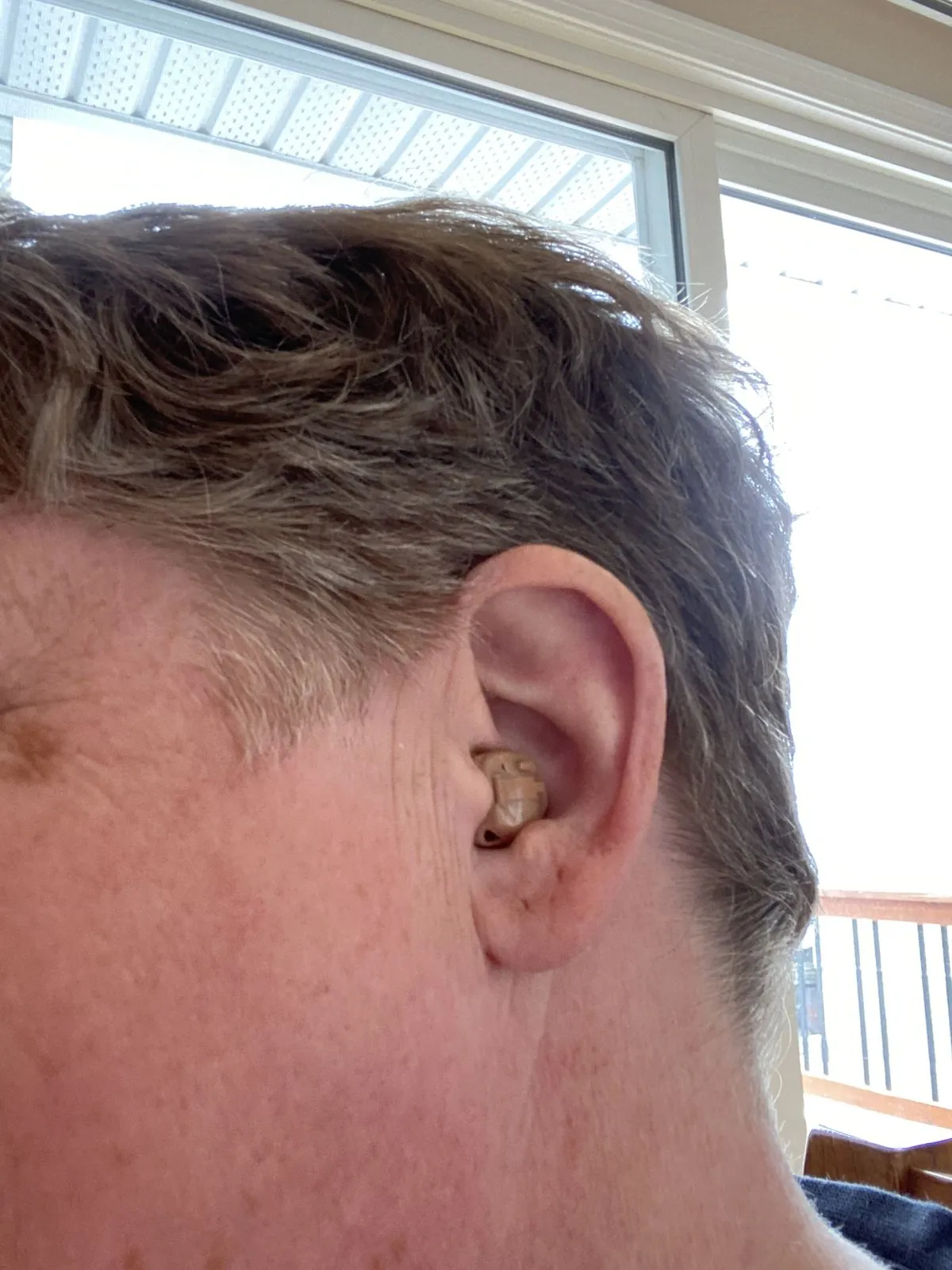
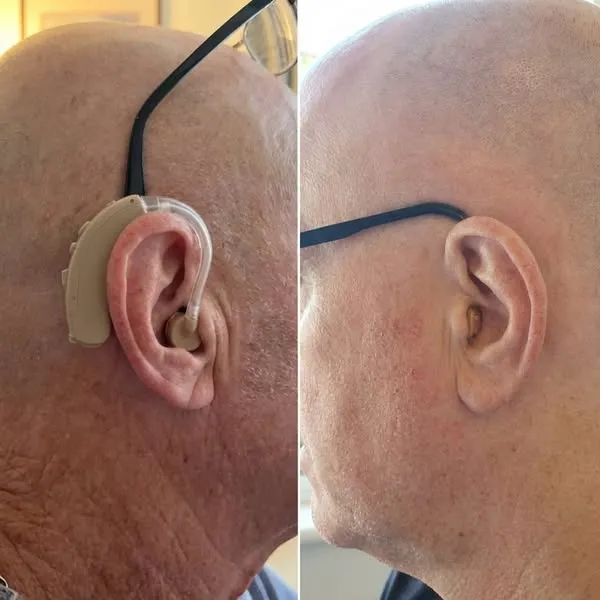
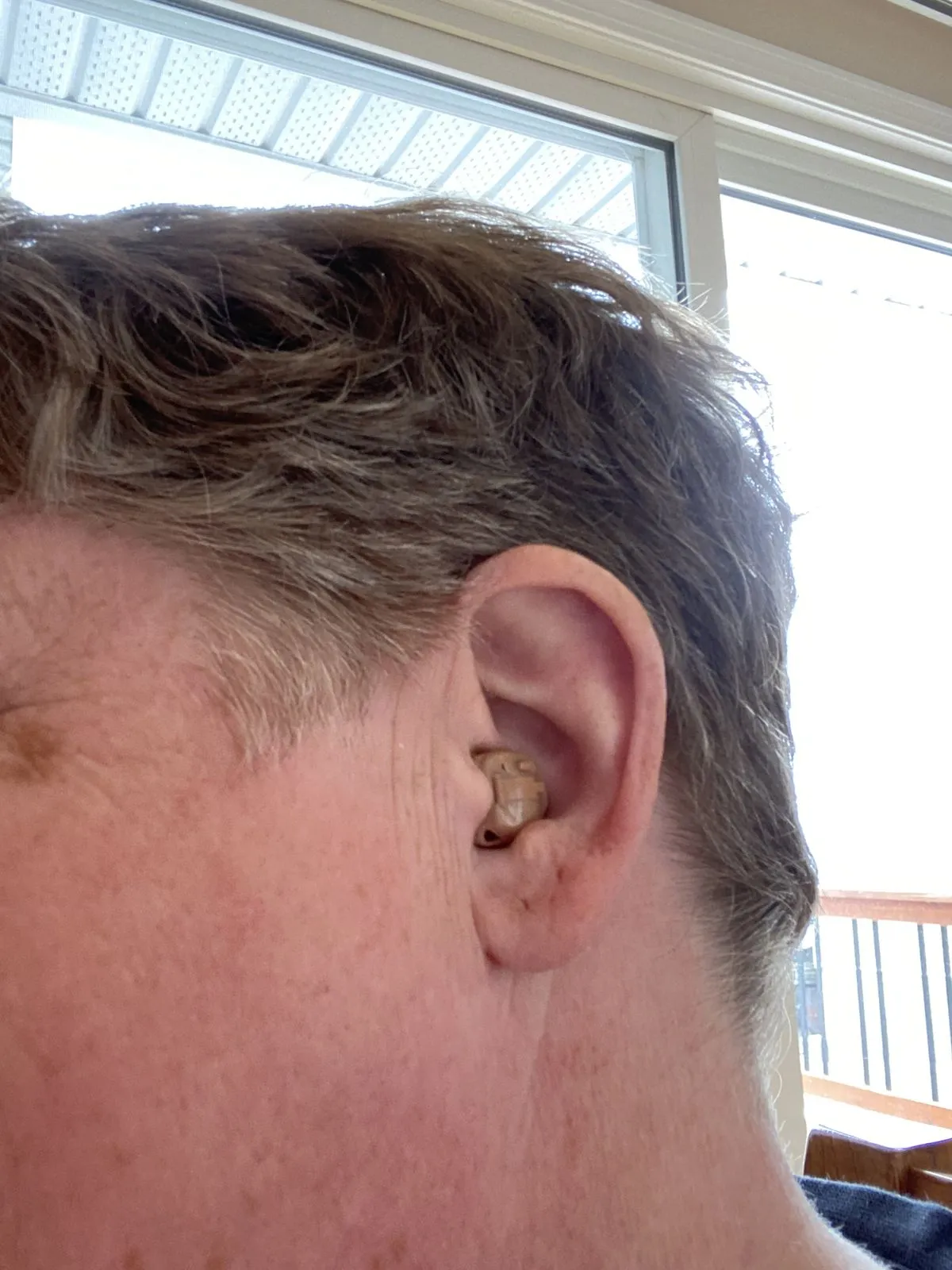
If you’re on your second or third pair of hearing aids and somehow every “upgrade” gives you more features, more settings, and more sound — but you’re STILL reading lips at dinner and asking your spouse what people said on TV… I’m about to tell you why you keep switching devices and still ending up with the same problem. And by the end of this, you’re gonna be pissed. Because there are three things happening right now: One — Every new device is being sold to you like the answer is better technology. Two — every adjustment is still being judged by how much sound you can hear. And three — almost nobody stops to ask whether the thing you’re actually missing is volume… or the ability to pull speech out of noise. So let me tell you what happened with my husband, because his story is gonna open your eyes to how frustrating this really is. For YEARS — and I mean like five straight years — David kept switching hearing devices. His first pair was supposed to solve everything. Then came the adjustments. Then another pair. Then a cheaper amplifier he bought online because he was tired of spending thousands. Then different tips, different programs, different volume settings… the whole thing. And somehow the exact same problem kept following him. The TV was plenty loud. Restaurants were miserable. Family dinners exhausted him. He could hear that somebody was speaking, but he’d miss one word, lose the meaning of the sentence, and spend the next ten seconds trying to figure out what everyone was talking about. He’s 62 years old and he started behaving like somebody twenty years older. Not because he couldn’t hear anything. Because conversation had become work. And the fatigue? Nobody talks about that part. He could sit through a two-hour family dinner and come home completely drained. Not from socializing. From concentrating. Watching mouths. Filling in missing words. Trying to work out whether somebody said “Tuesday” or “Thursday.” Laughing half a second after everybody else because he was waiting to see whether what he missed was supposed to be funny. So obviously, we keep trying hearing devices, right? Multiple devices. Different programs. Different domes. Adjustments. More volume. Newer technology. We’re talking thousands of dollars over the years trying different things… the whole nine yards. And you know what we kept hearing? “Try this program.” “Turn it up one level.” “Give your brain time to adjust.” “Sit closer to whoever is speaking.” “Reduce the background noise.” MORE VOLUME. This man could hear the refrigerator humming from the kitchen, his jacket rubbing against the microphone, his own footsteps, and every fork hitting every plate in a restaurant — and we were still treating the problem like he simply needed more sound. But here’s the part that made me furious — because they weren’t totally wrong… they just weren’t explaining what that actually means. See, hearing sound and understanding speech are not exactly the same thing. If David and I were sitting alone in a quiet room, turning the sound up absolutely helped. But add a television in the background, dishes being put away, grandkids talking, music in a restaurant, another couple behind us, a waiter walking past… And suddenly the problem changed. Now my voice had to compete with everything else. And if the hearing device simply pushed more of that entire soundscape into his ears, he got stuck in a loop I started calling the Louder-But-Not-Clearer Cycle. Here’s what happens: The voice gets louder. The background gets louder too. The sounds start competing. Words still disappear. So you turn the volume higher. And now the entire room is louder. It’s a closed loop. You’re basically pouring more sound into an already crowded room. I call it the Volume Trap — your hearing device’s way of convincing you the answer must be another adjustment, another program, another upgrade, another level of amplification. That’s why your TV can be loud enough for everybody else and you still need captions. That’s why your wife can be sitting three feet in front of you and you hear her voice perfectly well but still miss what she said. It’s not always that the device isn’t powerful enough. It’s that the speech you care about is still fighting with everything around it. So when we kept going back for adjustments, changing programs, raising the volume, or trying stronger amplifiers — we were treating the wrong thing. We were trying to make the room louder when what David really wanted was for the person inside the room to become easier to follow. David found that out the hard way. At one point he bought one of those “high-power” amplifiers online — and it drove him insane. His own chewing sounded ridiculous. His shirt rubbing against itself was loud. Silverware sounded sharp. The refrigerator suddenly demanded attention. The turn signal in the car sounded like somebody tapping directly inside his head. And because his biggest problem was already noisy environments, making MORE of the noisy environment audible just made him more exhausted. So yeah. At that point, I was livid. Because I realized — David wasn’t failing at hearing aids. We were asking amplification to solve a clarity problem. And almost every time we shopped for another device, we were being shown the exact same things. More power. More channels. More programs. More technology. Higher price. But nobody started with the question David had been asking for years: “Why can I hear you talking but still not understand what you said?” So I started digging — like deep diving through hearing-loss forums, audiology explanations, speech-in-noise discussions, people talking about devices they’d abandoned, and people who had spent thousands only to leave their hearing aids sitting in a drawer. And what I found made everything click. Your ear doesn’t only have to detect that sound exists. Your brain also has to make sense of the speech inside that sound. And when there’s enough competing noise, the pieces that make speech understandable can become much harder to follow. Your “clarity switch” doesn’t literally flip off. But that’s exactly what it feels like. You hear somebody. You know they spoke. You caught the beginning. Maybe the end. But the middle is gone. And now your brain is trying to rebuild the sentence from scraps. That’s why the same person can seem perfectly easy to understand in the kitchen at 8 AM and almost impossible to understand at a busy restaurant that night. That’s why TV dialogue gets buried under music. That’s why group conversations are worse than one-on-one conversations. That’s why somebody calling from another room sounds like words with pieces missing. That’s why you can hear plenty of SOUND and still feel like everybody suddenly started mumbling. Sound familiar? That’s not always bad amplification. That’s the Volume Trap showing up in real life. So I kept researching. I wanted to know how you get out of that trap — how you help the person you care about stand out without simply cranking the whole world higher. And that’s when I stumbled across something I almost scrolled past. It was late. I was reading this long hearing-loss discussion where people were complaining about devices they’d stopped wearing. One guy wrote: “My first amplifier let me hear every fork in the restaurant. Still couldn’t understand my wife.” I actually laughed. Not because it was funny. Because I had heard David say almost the exact same thing. So I replied. “What are you using now?” He messaged me privately a few minutes later. His name was Mark. He said, “I went through three devices before I stopped shopping for ‘stronger’ and started looking at what they were doing with speech.” Then he sent me a link. Nebroo. I’d never heard of them. I almost dismissed it immediately because the price looked too low. I had spent years thinking good hearing help had to cost thousands. Mark must have guessed what I was thinking because he sent another message. “Don’t look at the price yet. Read about the speech processing and the background noise.” So I did. And that’s where I saw the thing that finally matched what I had spent weeks trying to understand. Nebroo’s PRO 3.0 wasn’t positioned around one giant promise of MORE amplification. It was built around speech clarity. Their Vox Humana Chip is the speech-focused part — designed around helping human speech come through more clearly instead of treating every sound in the room like it deserves equal attention. Then there’s Background Noise Reduction 3.0 — designed to reduce some of the competing sound around the conversation. Then six adjustable volume levels — because sitting in your kitchen with one person is completely different from sitting in a restaurant with forty. And the small in-canal design with multiple dome sizes means it’s discreet and practical enough that somebody might actually keep wearing it instead of putting it back in the case the second the room gets annoying. It’s basically a way of attacking the exact reason David kept switching devices: Not “How do we make everything louder?” “How do we help the voice matter more than everything around it?” When I saw that, I swear I just sat there staring at the screen. Because that was exactly what David needed. Not another device promising to shake the walls. Something built around the problem he’d actually been complaining about. He started wearing them — and the first changes were almost stupidly small. One morning I was standing at the kitchen sink with the water running. I said something without turning around. He answered me. I turned around and looked at him. “What?” He looked confused. “What?” “You heard me.” He hadn’t even realized. A couple weeks later, we were watching TV. Normally every quiet line of dialogue ended with him looking at me: “What did he say?” This time he just kept watching. Then came Sunday dinner. Our grandson Ben was sitting down the table talking about baseball. David disagreed with him. Ben argued back. David interrupted him. They went back and forth for five minutes. And I remember standing there watching them thinking: There he is. Because that’s what I hadn’t understood. Hearing problems hadn’t just made David say “what?” They had made him quieter. He stopped interrupting. Stopped jumping into stories. Stopped arguing about sports. Stopped making jokes when three people were talking at once. Stopped volunteering to make phone calls. Stopped wanting to go to loud restaurants. He hadn’t become antisocial. He was tired of working this hard to participate. Within three weeks, I noticed him asking me to repeat myself less. A month later, TV didn’t constantly turn into “what did he say?” By two months, dinners felt different. Not perfect. Different. He was IN them again. And here’s the best part — it wasn’t another multi-thousand-dollar hearing package. Nebroo put the speech-focused processing, background-noise reduction, adjustable levels, rechargeable design, and discreet in-ear fit into one OTC device. We had already spent thousands trying to solve this. This was a fraction of that. I wanted to know how. Hearing aids cost thousands because the chip inside used to take huge research teams and millions of dollars to develop, and then the chip maker, the manufacturer, the clinic and the salespeople all got paid. Nebroo trained its Vox Humana chip (Latin for “human voice”) with new data technology and sells it directly. No middlemen. When we found it, it was $99, 70% off, instead of the multi-thousand-dollar numbers we’d gotten used to seeing. I’m not kidding. $99. He’s been using them for months now. He still misses things sometimes. Of course he does. No device gives somebody perfect hearing. But restaurants don’t automatically mean sitting there silently. The television doesn’t constantly require me to translate. He doesn’t come home from every family gathering looking like he just worked an eight-hour shift. And he’s not reaching for the case because taking the devices OUT feels better than leaving them in. He finally got out of the Volume Trap. And that’s what pisses me off most: Because if someone had simply explained years ago that hearing more sound and understanding more speech are not always the same thing, we would’ve shopped completely differently. We wouldn’t have kept asking: “How powerful is it?” We would’ve asked: “What happens to speech when the room gets noisy?” But most people never get that distinction explained clearly. The hearing market talks constantly about amplification. Power. Programs. Premium technology. Newer models. But the person wearing the device is sitting there asking something much simpler: “Can I understand my wife at dinner?” So listen — if you’ve already spent money on hearing aids, switched devices, gone back for adjustments, tried stronger amplification, or have a perfectly expensive pair sitting in a drawer because wearing them somehow makes noisy places MORE exhausting… this is it. Your problem may not be that you haven’t found enough volume. It may be that you’ve been trying to solve a speech-versus-noise problem with amplification alone. Stop chasing louder. Start paying attention to what the device is doing with speech and what it’s doing with everything competing against that speech. Get your conversations, your confidence, and your damn place at the table back. Because nobody else can decide whether your hearing device works in the moments that actually matter. You have to test it there yourself. Nebroo gives you a 120-day money-back guarantee to do exactly that. https://shop.nebroo.com/advert-v1-n
More from Tom Wrenfield

Tom Wrenfield
Tom Wrenfield
Make Conversations Clear Again
Tom Wrenfield
Make Conversations Clear Again
Tom Wrenfield

Make Conversations Clear Again
Tom Wrenfield

Make Conversations Clear Again
Tom Wrenfield
Make Conversations Clear Again
Tom Wrenfield

Make Conversations Clear Again
Tom Wrenfield
Make Conversations Clear Again
Tom Wrenfield
Make Conversations Clear Again
Tom Wrenfield

Make Conversations Clear Again
Tom Wrenfield

Make Conversations Clear Again
Tom Wrenfield

Make Conversations Clear Again
Tom Wrenfield

 Add to Chrome