If you have fibromyalgia and can't sleep read this ☝️
Ad Copy
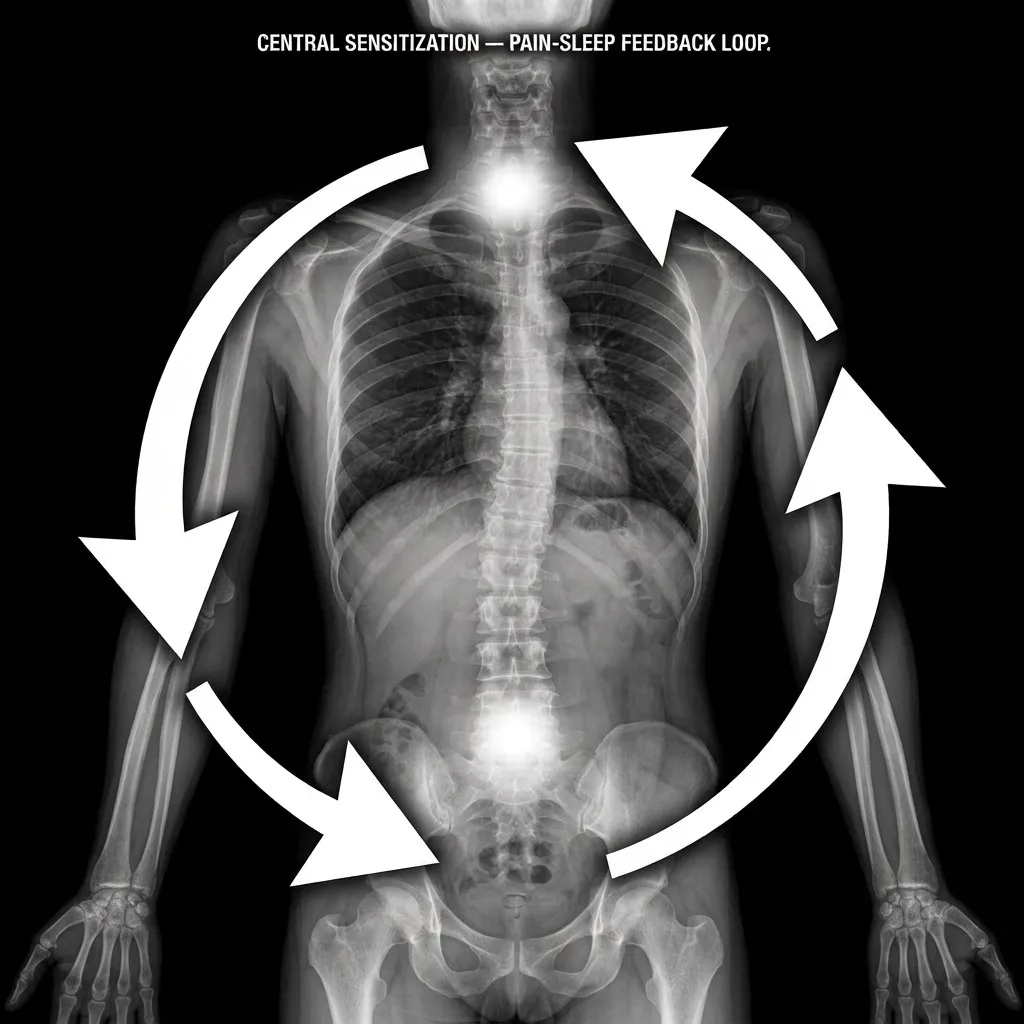
The pill that was supposed to calm my fibromyalgia pain is the reason I cannot sleep. And the sleep I am losing is the reason the pain keeps getting worse. Nobody told me that. Not my rheumatologist. Not the pamphlet. Not the pharmacist who handed me the bag and said "take it before bed, it will help you rest." My name is Ruth Ann Fielding. I am 52 years old. I live in Knoxville, Tennessee. I worked as a school librarian for 22 years at a middle school on the west side of town. I was diagnosed with fibromyalgia at 46. I have been on pregabalin for six years. My doctor told me the same thing at every visit. Pregabalin calms the nerve signals. Give it eight weeks. The pain will ease and the sleep will follow. But in every fibromyalgia forum I joined, the same complaint kept showing up. "I sleep eight hours and I wake up feeling like I did not sleep at all." "The fog is worse than the pain now." "I cannot remember my own daughter's phone number." Pregabalin causes weight gain in 14 percent of patients according to the prescribing information. Those are the published numbers. The real numbers from the support groups were closer to half. The fog was higher than that. Most of us did not even connect the fog to the pregabalin. We thought the fibromyalgia was progressing. I thought so too. For years. The standard response from every doctor was to increase the dose. If the pain is not lifting, the dose is not high enough. My pregabalin went from 75 to 150 to 225 to 300. The pain dimmed a little each time. The fog got heavier. The weight kept climbing. The 3AM waking never stopped. I watched women in my support group lose pieces of their lives one by one. Women in their 50s who stopped carrying their own groceries. Women in their 60s who wrote, "I used to garden for three hours. Now I cannot kneel for ten minutes." Women who said the medication took the edge off the pain but replaced it with nothing. No energy. No sharpness. No life. A woman in my online group posted that she used to bake bread every Sunday with her granddaughter. She wrote, "I cannot hold the bowl anymore. My hands lock up by the second knead. She asks me every week and I keep saying next time." Her doctor raised her pregabalin to 300mg. She posted eight weeks later: "I still cannot sleep. I still cannot hold the bowl. What do I try next?" Nobody had an answer. At 46 my own body started turning on me. Not from overwork. Not from age. From fibromyalgia. It happened slow. That is the part nobody warns you about. It does not happen all at once where you can point to a Tuesday and say "that is when it started." It just creeps. First it was the book cart at the library. I used to wheel it through the stacks without thinking. Then my shoulders started burning by the second aisle and I had to stop and lean against the shelves. Then it was the returns bin. I started leaving the heavy hardcovers for the aide to shelve because my hands locked up after the third one. Then it was my morning coffee in the staff room. I switched from my favorite ceramic mug to a lightweight paper cup because I dropped the ceramic one twice in one week. Each time I just adjusted. I told myself it was normal. I told myself every woman my age slows down eventually. Twenty-two years on your feet will do that. My rheumatologist started me on pregabalin. 75mg. Then 150. Then 225. The pain dulled. A little. But the fog rolled in like somebody pulled a curtain across my brain. I gained 19 pounds in three months. I could not remember the titles I had just catalogued by the end of the day. I was writing everything on sticky notes because I could not trust my own memory. The stiffness in my hands got no better. The 3AM waking got worse. I would lie in the dark feeling the burning in my shoulders and hips and counting the hours until my alarm. Nothing got better in the ways that mattered. The pain dimmed but the rest of my life dimmed with it. I just got better at hiding it. My husband Tom started putting the heavy pots on the lower shelves without telling me. My daughter Sarah stopped asking me to hold her son Marcus. She would set him down next to me on the couch instead of handing him to me. I appreciated all of it. And I hated all of it. Both things at once. Because the truth is I did not feel like I should be this person. I am 52 years old. I spent 22 years on my feet in a middle school library. I ran a 10K at 40. I used to carry stacks of textbooks up two flights of stairs without thinking about it. But my body kept telling a different story than my brain. One morning my grandson Marcus stood in my kitchen and said, "Grammy, tie my shoes?" He is five. He was wearing his new sneakers for the first day of kindergarten. And I could not do it. My fingers were so stiff and swollen from fibro that I could not pull the laces tight enough to make the loops hold. Sarah did the shoes. Marcus ran to the car. I went to the bathroom and sat on the edge of the tub and cried. I did not understand what was happening until a Tuesday in March. I was in the checkout line at the Kroger on Kingston Pike. My hands were so stiff I fumbled a bag of apples and they rolled across the belt. The woman behind me caught two of them before they hit the floor. She handed them back and looked at my hands. She said, "Fibro?" Just like that. One word. Like she already knew. Her name was Linda. She said she was a sleep researcher. She had spent four years running sleep studies on fibromyalgia patients taking pregabalin. She said every single one of them showed the same pattern. They were unconscious for seven to eight hours. They were getting almost zero deep sleep. We stood in the parking lot for twenty minutes. I asked her what the difference was. She said she focused on restoring deep sleep architecture. Not with more sedation. Not with gabapentin. Not with melatonin gummies. She said those knock you unconscious but they do not give you deep sleep. She said there is a difference between being sedated and actually sleeping. Deep sleep is when your body clears inflammatory markers. It is when pain signaling thresholds reset. It is when tissue repair happens. It is when the central nervous system recalibrates so it stops amplifying every signal into a five-alarm fire. Without deep sleep the inflammation ramps back up every single night. The pain thresholds drop lower. The nervous system stays sensitized. The pain gets worse. And worse pain destroys more sleep. It is a loop. And it feeds itself. The fog. The stiffness. The morning burning. The weight gain. That is not fibromyalgia progressing. That is a body that has not entered deep sleep in months or years while a medication sedates it through the night. Linda told me about research on Montmorency tart cherry. The tryptophan pathway supports the body's own natural melatonin production. The anthocyanins support the core body temperature drop that triggers deep sleep entry. Not sedation. Actual deep sleep. She pointed me to Losso 2018, published in the European Journal of Nutrition. Montmorency tart cherry. Eighty-four more minutes of sleep. Sixty-two fewer minutes lying awake, on average. Some people way more. Peer-reviewed. She said she had seen people try synthetic melatonin first. Wrong dose curve. It spikes for two hours and crashes. That is why you wake at 1AM worse than before. She said cherry juice from the grocery store does not work either. Pasteurized. Too diluted. The heat processing destroys the anthocyanins before you drink it. She said a colleague in integrative medicine pointed her to concentrated extract. Montmorency-specific. Capsule form. Cold-extracted. 3,600mg per serving. Fat-soluble carrier so the compounds actually absorb. The company was Elivora. Third-party tested. Made in the USA. I went home that evening and ordered it. Two capsules before bed. With my pregabalin. The first week I felt the same. I took the capsules, went about my day, forgot I was taking them half the time. Week two, same story. I almost told Sarah I got swindled. Week three, something happened. I woke up at 5:45AM and realized I had not woken at 3AM. I had slept through. Not sedated-through. I did not feel heavy and foggy like pregabalin sleep. I felt like I had actually slept. I lay there for a minute trying to remember the last time that had happened. I could not. That same week, the morning stiffness shifted. It was not gone. But it loosened faster. By 8AM I could make a fist without wincing. That used to take until 10. Week four. I folded three loads of laundry without resting my hands. Sarah looked at me across the kitchen table and said, "Mom, you look different." I said, "I slept." Week five. I carried all the grocery bags from the car in one trip. Tom was standing in the kitchen. He said, "You carried all of those in." I had not noticed. Week seven. The burning in my shoulders dropped. Not gone. But quiet. Like someone turned the volume from an 8 to a 3. I stopped reaching for the heating pad every morning. The pregabalin did not change. The dose did not change. My sleep changed. And when my sleep changed, the loop started breaking. My body could finally clear the inflammation because it was getting the deep sleep it needed. I told my friend Gloria. We met in an online fibromyalgia group three years ago. She is 58 years old. On pregabalin 300mg for four years. She said she had not had a morning without burning hands since her second dose increase. She described herself as "walking through wet cement every day." She gained 25 pounds. She stopped going to her quilting group. She told me her sister said she looked ten years older than her age. Gloria tried it with her pregabalin. Eight weeks later she called me. She was crying. Not sad crying. She said she woke up on a Saturday and her hands opened flat for the first time in two years. She made coffee with her old ceramic mug. The heavy one. She said, "I thought I lost that." She did not lose it. Her body had not been allowed to enter deep sleep in four years. That was nine months ago. Gloria is not the only one whose body came back. I sleep six and a half to seven hours most nights now. The burning is down to a 2 most mornings. The fog lifted. I lost 11 of those 19 pounds without changing anything except my sleep. Your body needs deep sleep to clear the inflammation your nervous system keeps producing. Sedation is not sleep. Raising a dose that only calms nerve signals will not fix a pain that is being fed by a broken sleep cycle. It will make it worse. Both things can be true. Cold-extracted Montmorency tart cherry. 3,600mg per serving. Capsules in a red bag. Fat-soluble carrier. Third-party tested. Made in the USA. Two capsules before bed. I order directly from their website because that is the only place I trust to get the real formulation. The grocery store juice is pasteurized. The capsules on other sites are dry powder with no carrier. Those do not work. Thirty-day money-back guarantee. No prescription needed. You have spent years on a pill that dulled the pain but never touched the sleep. Your body has not been allowed to rest. Not really. Not the kind of deep restorative sleep it needs to stop amplifying every signal. It is time to let it. https://elivorahealth.com/pages/fibro-advertorial-v1 Ruth Ann, 52. Knoxville, Tennessee. Six years with fibromyalgia. Six years on pregabalin. Nine months on Elivora. Sleeps through the night now. Tied her grandson's shoes last Tuesday without thinking about it. P.S. Gloria called me last week. She is still on her pregabalin. Same dose. She said she slept seven hours three nights in a row and her sister told her she looked like herself again. She said she did not know what that meant exactly but she cried when she heard it. She went back to her quilting group last month. She finished a full quilt square with her own hands. She had not done that in three years.
More from Ximena Crowley

If you have fibromyalgia read this ☝️
Ximena Crowley
If you have fibromyalgia read this ☝️
Ximena Crowley
If you have fibromyalgia read this ☝️
Ximena Crowley
If you have fibromyalgia read this ☝️
Ximena Crowley
If you have fibromyalgia read this ☝️
Ximena Crowley
If you have fibromyalgia read this ☝️
Ximena Crowley
If you have fibromyalgia read this ☝️
Ximena Crowley
If you have fibromyalgia read this ☝️
Ximena Crowley
If you have fibromyalgia read this ☝️
Ximena Crowley

If you have fibromyalgia read this ☝️
Ximena Crowley

If you have fibromyalgia read this ☝️
Ximena Crowley
If you have fibromyalgia read this ☝️
Ximena Crowley

 Add to Chrome