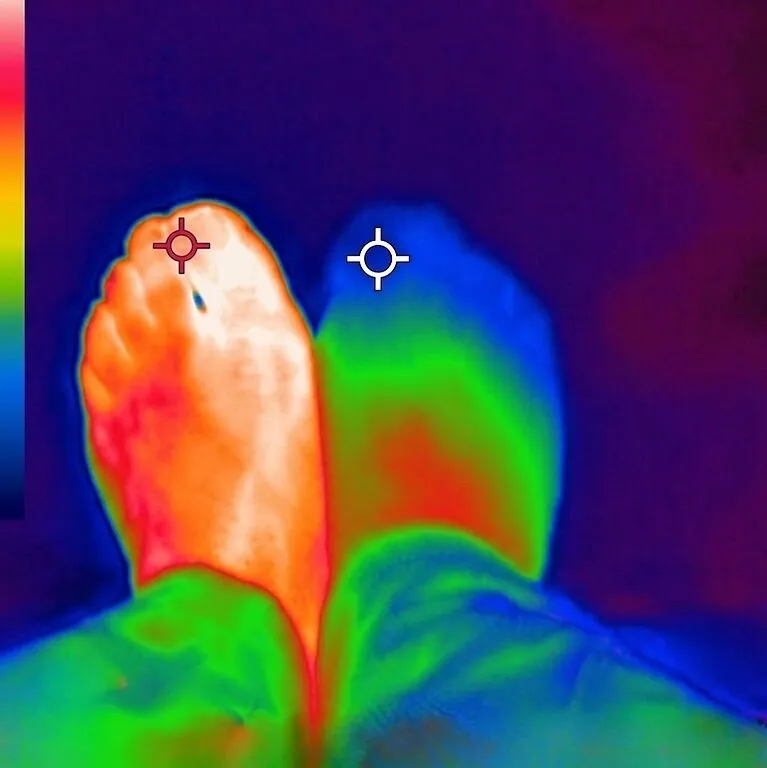
If you have gout, read this 👆
Ad Copy
My brother has gout. He almost died of a heart attack fifteen months ago. He was 61. Same daily naproxen you might be taking right now. Same uric acid number your doctor keeps calling "controlled." Same diet changes you've probably already made. After his heart attack... I went looking for what almost killed him. What I found is the reason he's still here. And the reason I'm writing this. My brother Walt cut every trigger food out of his life on July 8th, 2025. Threw out the steaks in the freezer, the shrimp, every can of beer in the garage fridge. Went full low-purine. Walked two miles a day. Started drinking tart cherry juice from the grocery store because a forum told him to. He did everything the doctor told him. He had a massive heart attack on October 19th at 2 AM. He was 61 years old. The paramedics got him back. The cardiologist put in two stents. But we almost lost him. Three minutes later to the hospital and he was gone. His heart stopped on the table for thirty seconds before they brought him back. Thank God he survived. The hospital bill was $63,000. The cardiac rehab was another $8,400. His coffee mug is still on his workbench in the garage. His hand was around it the morning before it happened. Fifteen months ago I thought I was going to lose that garage, that mug, all of it. I need to tell you what happened to Walt. Because I have been a physical therapist for 22 years, and most of my caseload is men recovering mobility after a bad flare: the limp that lingers for a week, the ankle that won't bear weight, the knee that never fully calms down between attacks. I am seeing the same posts online that my own brother was making just months before his heart attack. My uric acid is fine, just dealing with the flares. And it makes me physically ill. If you are a man over 50 and you have gout, or someone you love does, please read this entire thing. I know it is long. I know you are scrolling. I know you have things to do. Fifteen months ago I would have given anything for someone to tell me what I am about to tell you. I have spent over two decades getting men walking again after a flare. I thought I understood this disease. I still could not save my own brother from what was coming. Walt went in for a routine physical on June 28th, 2025. He felt fine. His big toe ached, it had ached on and off for two years, but he'd made his peace with that and the bottle of naproxen in his glove box. He'd just turned 61. He still grilled every Sunday. He still coached his grandson's Little League team. He thought he had it handled and honestly so did I. Two days later his doctor called. Serum uric acid 8.9. Mild tophus forming on his right elbow he hadn't even noticed. Blood pressure 144 over 90. Uric acid is the number that measures how much crystal-forming acid is building up in your blood. Under 6 is the target once you've been diagnosed. "That's high, Walt. Your X-rays look about the same as last year, nothing new there. But we need to talk about your diet before we go anywhere near medication." Walt was quiet on the call. I was in his kitchen pretending not to listen. "What does a normal week look like for you?" "Steak Sundays with the guys. Shrimp boil once a month. Couple beers most nights, more on the weekend." "And in between?" "Whatever's around. Peanuts. Leftover ribs." "That's enough to keep this going. Cut the red meat. The shellfish. The beer, all alcohol really. The organ meats. We'll start naproxen for the flares. Recheck in three months." Walt hung up the phone and sat at his kitchen table for forty minutes without saying a word. Then he stood up, walked to the garage fridge, and started pulling everything out. I watched him dump six beers down the drain. Throw out a pound of ground beef. The bag of shrimp in the freezer he'd bought for Friday. He drove to the store that afternoon and came back with grocery-store tart cherry juice, because a thread he'd read said cherries help. He'd read that some other men swore by it. For 103 days, he didn't touch a bite of it. No red meat. No shellfish. No beer. Not at his own grandson's championship game in August, where the whole cooler was beer and hot dogs and Walt drank water and ate a plain turkey sandwich he'd packed himself. Not at Labor Day, where our brother-in-law smoked a brisket and Walt had a salad. He stopped going to Sunday steak night with the guys because he couldn't sit there while they ate what he used to eat. He lost that standing Sunday for the first time in nineteen years. He was miserable the whole time. I want to be honest about that. He'd stand in the garage at 9 PM looking at the empty beer fridge like it had personally wronged him. But he kept going. He drank the grocery-store cherry juice every morning. He walked his two miles even when his toe was screaming. He took the naproxen when a flare hit. His doctor was encouraged. Every pound of purine cut is a pound of pressure off the joint, he told him. The follow-up came back on October 7th. Uric acid: 8.3. Down from 8.9. X-rays: unchanged. Flares: still hitting every six weeks, like clockwork. He had cut every trigger food out of his life for 90 days and his number had barely moved. The doctor said give it more time. Diet takes months to show up fully. We'll recheck in six. Walt came home that night and sat at the kitchen table again. "Carol. I gave up everything. Everything. And it barely moved." I told him to give it time. I told him to trust the process. Because that is what a physical therapist says. Trust the process. Stay consistent. Give it time. Every word out of my mouth was the same script I had used on a thousand patients across two decades. He nodded. He kept walking. He kept drinking the juice. Five days later, five days, I woke up at 2 AM to a sound I had never heard him make in the 58 years we had been siblings. He was on the kitchen floor. Both hands on his chest. His face was gray. I called 911 and sat on that floor holding his hand until they came through the door. By the time they admitted him at 2:47 AM, the color had drained out of him completely. The ER doctor looked at his EKG. "Mr. Manning, you're having a massive heart attack. Your LAD is 95 percent blocked. We're taking you to the cath lab now." She just looked at me. "I'm sorry." I sat in that plastic chair for three hours and forty minutes. At 6:42 AM the cardiologist walked in. "He's stable. Two stents in the LAD. He coded once on the table, we got him back within thirty seconds. You can see him in about an hour." Thirty seconds. Thirty seconds is what stood between me and losing my only brother. Walt spent four days in the ICU. He came home on October 28th with two stents, a walker, and a bag of new prescriptions. That's when the second nightmare started. Because the cardiologist didn't just want a cardiac follow-up. She wanted a full workup, because in her words: "when a man has been carrying this much uric acid this long and then has an event this severe, it is almost never confined to the heart. We need to know what else it's been doing." Over the next three weeks, Walt had a kidney panel with a nephrologist, a joint scan with a rheumatologist, a DECT scan (a specialized imaging test that can actually see urate crystals sitting inside a joint), and a carotid ultrasound. Every one of them came back with a problem. The nephrologist showed us Walt's creatinine had been climbing quietly for two years. Early stage 3 kidney disease. Nobody had told us. The rheumatologist found tophi, actual crystal deposits, in both hands and his left knee, not just the elbow he already knew about. Walt had been telling me his fingers ached in the mornings. I told him it was the cold garage. The DECT scan showed a real, measurable crystal load still sitting in three joints, despite a uric acid number that was, by then, technically "controlled." His doctor called this normal for someone recently diagnosed. It is not normal. It is common, and almost nobody explains it to the patient. The carotid ultrasound showed early plaque buildup in both arteries in his neck. Men with a history of gout carry a documented 38 percent higher risk of dying from heart disease than men without it. Nobody had put that number in front of Walt before any of this happened. Same disease. Same acid. Damage in his hands. Damage in his kidneys. Damage in his arteries. And finally, his heart. Walt sat on the edge of his bed thirty-nine days after his heart attack, holding the folders of specialist reports, and said the words I will never forget. "Carol. My body was falling apart for two years and every one of them was looking at the wrong thing. My labs looked fine." That is when I stopped being a physical therapist and started being a scared sister who was not going to sit and wait for the next one. I started researching. Not because I wanted to. Because I had to. Because in 22 years of treating men after their flares, I had never once addressed what actually happens underneath a uric acid number that finally comes down. I read everything I could find at 2 AM when I couldn't sleep. Rheumatology journals. One study kept coming up. Six hundred thirty-three people with gout, tracked over years: the ones who ate more tart cherries had 35 percent fewer attacks than the ones who didn't. Real, published, peer-reviewed. But even that didn't explain why Walt's own numbers had barely moved. A percentage on a screen doesn't tell you what's happening inside a joint. The reason Walt's number came down but his crystals didn't is that allopurinol and diet only slow down how much new acid the body makes. Neither one touches the crystals that are already sitting in the joint from years before diagnosis. But I couldn't fully understand the mechanism from the papers alone. Then I found a thread on a gout forum with over 3,000 comments. The title: Why has nobody in my dad's family ever had gout, and we've grown cherries for four generations? The post was from a woman whose family had farmed tart cherries outside Traverse City, Michigan for four generations. Her father was 84, still worked the orchard six days a week, had never had a gout attack in his life, despite two brothers who both had it badly. Comment after comment. People asking why. Someone posted a name: Ruth. A woman in her 80s who still ran the family processing shed. I looked at the clock. 2:39 AM. By 5:30 I was in my car. By that evening I was in Traverse City. I didn't have an address, just a road name near the orchard. I drove until I saw a farmhouse with cherry trees running in rows behind it as far as I could see, and a small processing shed with the doors open. There was a woman inside, had to be pushing 80, sorting cherries into crates, her hands moving fast and steady. No swollen knuckles. No brace. "Excuse me. I don't want to bother you. How old are you?" She looked up. "Eighty-two." I stood there staring at her. Eighty-two, working a full day on her feet, and my brother was 61 with two stents in his heart. "My name is Carol. My brother Walt had a heart attack six weeks ago. He almost died. He has gout, uric acid crystals in three joints even with his numbers 'controlled.' I'm a physical therapist and I couldn't save him. I drove four hours because I read your name in a thread." She set down the crate. "Come inside." Her kitchen smelled like cherries and coffee. She poured me a cup without asking. "Tell me about your brother." I told her everything. The heart attack, the stents, the 103 days of no red meat and no beer that barely moved his number, the kidney, the hands, the DECT scan showing crystals that were still there. She listened, nodding through every complication like she already knew the list. "His medication and his diet are fighting the wrong battle," she said. I blinked. "The pill and the diet both do the same job. They turn down how much acid his body makes going forward. That's it. That's the tap. What's already sitting in his joints, what's already been sitting in his kidneys and his arteries for years, neither one touches. Nobody drains the tub." "I know it's the crystals. He cut the beer. He cut the shellfish. He drank cherry juice from the store every day for months." She smiled. "Then you know more than most doctors do. But the juice you're talking about, it's boiled. Heat destroys the compound that actually matters. And most of what's in that bottle by the time it ships is sugar and water, and sugar feeds the very acid you're trying to bring down." She stood and pulled a jar off a shelf. Deep red, almost black. "Montmorency tart cherry. Not from a bottle. We've grown it here four generations. My father never touched it as medicine, it was just what we grew. But none of the men in this family who worked this orchard their whole lives ever had what your brother has." She held it up. "One compound does two jobs. The first is the tap. It helps the body make less new acid in the first place, the same pathway the medication targets. The second is the tub. It helps the body clear what's already crystallized and sitting there. Two jobs, one compound. Nobody explained that to your brother. Nobody explains it to anyone." I asked if the form mattered. "It has to be cold-extracted, never heat-processed, and it has to be a real dose. A splash of juice or a cheap capsule from the drugstore isn't the same thing. The published research used a real amount, standardized. My niece takes something now that's pressed cold and dosed to that research amount. No added sugar. Third-party tested." She wrote a name on a piece of paper. Elivora. I ordered it from her kitchen table before I left Michigan. I drove home. Got in at midnight. Walt was asleep in his recliner. The bag arrived six days later. Two capsules, a red pouch, nothing else in it. Just Montmorency tart cherry extract. Walt took his first two capsules with breakfast the next morning. "You believe her, don't you." "I do." He swallowed them. Week one: his afternoon energy came back. He'd been wiped out by 2 PM for two years. That week he mowed the whole lawn without stopping. Week three: no flare. First six-week stretch without one since his diagnosis. Week five: he got down on one knee in the garden to plant tomatoes and stood back up without wincing. He hadn't been able to kneel on that knee in over a year. Week eight: his color was back. His daughter said, "Dad looks like Dad again." Week twelve: full panel. Uric acid: 5.6. Down from 8.9. Flares: zero in the last eight weeks. Blood pressure: 122 over 78. Down from 144 over 90. Kidney function: back toward normal range. His cardiologist called him in special to look at the numbers. "Walt. What did you do?" He told her. The Michigan orchard. Ruth. The tap and the tub. All of it. She listened for twenty minutes without interrupting. "I haven't been trained on this specifically. But your inflammatory and kidney markers have moved more than I typically see at this stage. Whatever you're doing, keep doing it." She cut his naproxen use down to almost nothing at that visit. He's still on his stents. Still on his blood pressure medication. He grilled shrimp for the first time in over a year last weekend. He had two beers at the game last month and nothing happened. We came within thirty seconds of me writing you a very different letter. If you, your father, your brother, your husband, or any man you love has gout and has been told his numbers look controlled while his body is quietly falling apart, please hear what I'm telling you. The crystals are what's killing him. Not the flare in his toe. Medication lowers the number. It does not drain what's already there. Diet alone did not save my brother. He gave up everything for 103 days and it barely moved him. There is one thing I know of that does both jobs. The anthocyanins in real, cold-extracted Montmorency tart cherry. They help turn down the tap, and they help drain the tub. Two jobs, one compound, at a real dose. This is what I found. https://elivorahealth.com/products/tart-cherry-gout Cold-extracted Montmorency tart cherry, never heat-processed. 3,600mg per serving, two capsules a day with breakfast. No added sugar, no filler. Third-party tested. In a bag, not a bottle of juice. 30-day money-back guarantee. If his numbers don't move, he pays nothing. Walt almost died on October 19th at 2 AM on his own kitchen floor. Our father died at 68. Walt is 62 today, and he coached his grandson's team again this spring. I still have my brother because a woman in a cherry orchard in Michigan sat me down at her kitchen table and told me what 22 years of physical therapy school never did. Please don't wait for the ambulance to figure this out. ~ Carol Manning, age 56, physical therapist, Dayton, OH P.S. Walt's cardiologist told us at his last appointment that if he'd come in even fifteen minutes later, he would not have survived. Fifteen minutes. That is the margin two years of "controlled" numbers left us with. Please don't let his margin, or yours, be shorter than that. P.P.S. I don't work for Elivora. I don't get a dime from this. I'm writing this at 2 AM because I woke up and had to check that Walt was still breathing down the hall. That doesn't go away. Fifteen months later and I still check. Share this with any man you love who has gout. Even if it's just his toe. Even if he's already cut everything out. Please.
More from Ximena Crowley
If you have fibromyalgia read this ☝️
Ximena Crowley
If you have fibromyalgia read this ☝️
Ximena Crowley
If you have fibromyalgia read this ☝️
Ximena Crowley
If you have fibromyalgia read this ☝️
Ximena Crowley
If you have fibromyalgia read this ☝️
Ximena Crowley
If you have fibromyalgia read this ☝️
Ximena Crowley
If you have fibromyalgia read this ☝️
Ximena Crowley
If you have fibromyalgia read this ☝️
Ximena Crowley
If you have fibromyalgia read this ☝️
Ximena Crowley
If you have fibromyalgia read this ☝️
Ximena Crowley
If you have fibromyalgia read this ☝️
Ximena Crowley
If you have fibromyalgia read this ☝️
Ximena Crowley

 Add to Chrome