Support stamina and heart health every day
Ad Copy
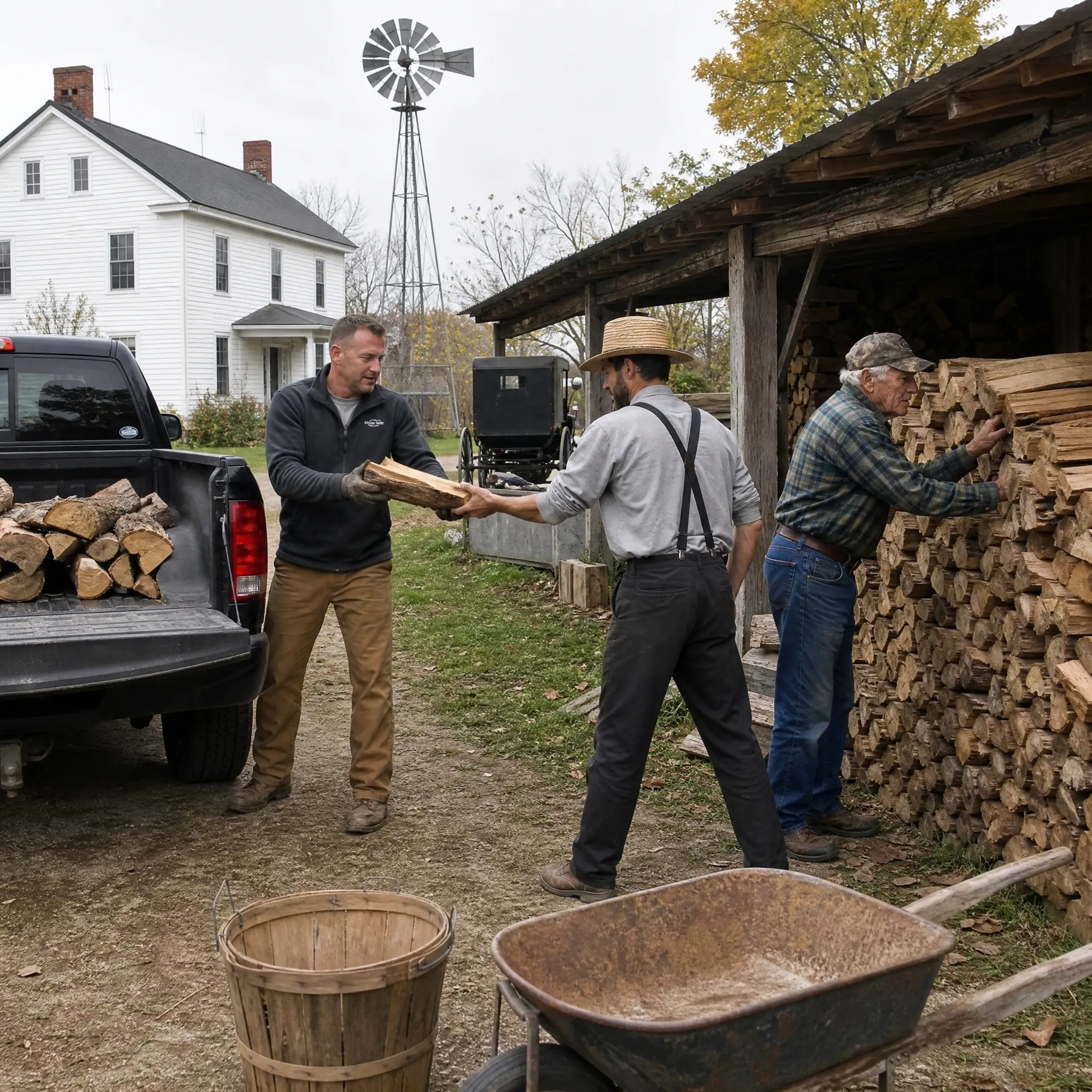
My grandfather is 91 and has never taken a pill. He splits his own firewood. Every doctor who's ever examined him asks the same question, and he gives every one of them the same four-word answer. I've heard him give it maybe a dozen times. In exam rooms, at the kitchen table, once at my father's funeral to a cardiologist who'd come to pay his respects and couldn't help himself. The question is always some version of "What's your secret, Walter?" And my grandfather says his four words, and the doctor laughs, and writes something down, and the four words go in the chart as a joke. They aren't a joke. I found that out in April, standing in the bed of his truck with a splitting maul, and it took me forty-seven years and my father's death to get there. I'll tell you the four words. Not yet. I want you to hear them the way I finally did, which is after you've seen where the truck goes. It'll keep. It kept fifty-five years. Let me back up. My name is Dan. I'm forty-seven. I teach eleventh-grade history at a public high school in Berks County, Pennsylvania, about forty minutes from where my grandfather has lived since 1958, in a stone house on a road that still has more buggies on it than cars on a Sunday. I'm married to Kate. We've got a daughter in college and a son who's a sophomore at the school where I teach, which he'd rather I didn't mention. I drive a Subaru with a cracked windshield. I coach JV baseball badly. I've been on a cholesterol pill for two years. Atorvastatin, twenty. My number was 188 when they put me on it, and it's 71 now, and my doctor is pleased with me, and I'll come back to why they put me on it, because the reason is my father, and the reason is the whole story. First, my grandfather. Walter Reinholt. Ninety-one in February. Forty-one years a machinist for the Reading Railroad, in the shops, which is the kind of job where you learn what metal does when you leave it alone. He's five foot nine and about a hundred and sixty pounds and has been both of those since Eisenhower. He splits his own wood. Not "putters at it." Two cords a fall, with a maul, in an afternoon, and stacks it himself, and I know because in April I tried to help him and was sitting on the tailgate with a water bottle before he'd broken a sweat. He has never taken a pill. Not a statin, not a blood pressure pill, not an aspirin that I've ever seen. He has a doctor, because my grandmother made him get one in 1988 and he kept the habit after she died, and he goes once a year, and every year the doctor, whoever it is that year, looks at his chart, and looks at him, and asks. And he says his four words. I want to tell you about my father now, because he's the reason I couldn't hear them. My father, Gary, was my grandfather's only son. He was a good man and a careful one; he ran the parts department at a Chevy dealer for thirty years and could tell you the price of a water pump for a 1994 Silverado without looking. When he turned fifty-one, his doctor drew his blood and found his cholesterol was 240 and said the thing they say, which is "this runs in your family, doesn't it," and my father, who'd watched his own grandfather die at fifty-eight of what everyone then called "his heart," said yes, and took the pill. Fifteen years. Never missed one. His number went down to the sixties and stayed there. His doctor, a good man named Dr. Aldrich, called him "a textbook case." He said it at every visit. My father would come home and tell my mother, "Textbook," and she'd say "good," and that was the check-in. He died last October, on a Saturday, in the front yard, raking leaves. Sixty-eight. My mother was inside making lunch and looked out the window and he was on the ground with the rake still in his hand. Massive heart attack. The kind they call a widowmaker. His last LDL, from August, was 64. My mother showed me the printout. It was in his desk in the folder where he kept the car titles. I want to tell you what the funeral lunch was like, because it's where this started. My grandfather was there, ninety, in the same gray suit he's worn to every funeral since 1971, and he stood at the back of the church hall and didn't sit down for three hours because, he said, if he sat down people would come over and be sorry at him. And Dr. Aldrich came, which was kind of him, and at some point he ended up next to my grandfather, and I was close enough to hear. Dr. Aldrich said, "Walter, I've got to ask. Ninety years old, and I've never had you in my office. What's your secret?" And my grandfather looked at him, and looked at the closed casket at the front of the room, which had his son in it, his son who'd taken the pill for fifteen years and had a number you could frame, and he said the four words. And Dr. Aldrich laughed, gently, the way you do at a funeral, and said, "Well, we should all be so lucky," and patted him on the arm and went to get a plate. My grandfather didn't laugh. I saw his face. He wasn't making a joke, and he wasn't being modest, and he'd just been told his answer was luck by the man who'd written "textbook" in his dead son's chart for fifteen years. I didn't understand what I'd seen. I'm telling you that plainly. I'd heard the four words my whole life and I heard them that day the way Dr. Aldrich did. It took me six more months. Here's what happened in those six months. Two weeks after the funeral, my own doctor called me in. Not for anything. Just, my father had died at sixty-eight of a heart attack, and I was forty-seven, and I'd been on the pill for a year and a half, and he wanted to "make sure we're on top of it." He drew my blood. My number was 71. He said I was doing everything right. He said, and I want you to notice this sentence, because I've now heard it about three generations of my family: "Your dad's situation was unfortunate, Dan, but his numbers were where they should be. Sometimes it just happens." Sometimes it just happens. I drove home and sat in my chair. Which I'd been doing by 7:30 for about a year, and telling myself it was the job. Let me give you the year, because if you're on the pill, or you're watching someone who is, I think you'll recognize it, and I think you've been told what I'd been telling myself. The stairs at school. Three flights to my classroom. I'd started stopping at the second landing to "check my phone." I never had anything on my phone. The jar. Kate opens them. She did it once without being asked and neither of us has mentioned it since. The chair by 7:30. Asleep in it by 8:15 with the game on. Awake at 3:10, every night, lying there with my hand flat on my chest. Not pain. Just checking. And the names. I've had some of these kids since they were freshmen. I know them. And in March, calling roll, I got to a girl in the third row I've known for three years, and the name went. Not the face. The name. I stood there with the clipboard and said "and, uh," and she said "Maddie, Mr. R," and everyone laughed, and I laughed, and I taught the rest of the period with my hand on the desk. I'd told myself all of it. Forty-seven. Grief. The job. Coaching. And I knew exactly what my doctor would say, because he'd just said it: your numbers are where they should be. My father's numbers were where they should be. So in April, on a Saturday, I drove out to my grandfather's to help him with the wood, which I'd been meaning to do since the funeral, and I got there at 8 and he'd been at it since 6, and I picked up the second maul and lasted about forty minutes. I sat on the tailgate. He kept going. He's ninety-one. I'm forty-seven. He split, and stacked, and split, and I watched a man who'd never taken a pill do the thing I couldn't do on the pill, and I finally asked him. I said, "Pop. The thing you tell the doctors. What does it mean." He set the maul down. He looked at me for a while, the way he looks at a part that's come in wrong. And he said, "Get in the truck." We loaded the wood. I want to be clear about that: he loaded most of it. Two cords, split, into the bed of a 1996 F-150, and we drove about four miles, to a farm on a road I'd been down a hundred times as a kid, and pulled into a lane with a windmill and a line of black clothes on the wash line, and a man about my age came out of the barn in a straw hat and shook my grandfather's hand and said, "Walter." They unloaded the wood together. I helped. It went into a shed by the house, stacked, and then the man's wife came out with a crock, a big stoneware one with a lid, and set it on the tailgate, and my grandfather took it, and said "Denki," and that was the whole transaction, and we drove home. I said, "Pop. What's in the crock." And he told me, and I'm going to tell you, but I want to tell you in the order he told it, because a ninety-one-year-old machinist explained my own family's deaths to me in about twenty minutes in a truck, and I need you to hear it in his words before I give you the science, which I went and got afterward. He said, "Your father had the count. I've got the rust." I said I didn't follow. He said: "Nineteen seventy-one, I had a spell at the shop. Chest. The railroad doctor drew my blood and said my cholesterol was through the roof and he had a new pill for it and I ought to start. And I said, what's the pill do. And he said it brings the count down. And I said, is the count what killed my father. And he didn't have an answer, so I didn't take the pill." He said: "You work forty years around steel, you know something about it. A rail doesn't fail because there's too much iron in it. It fails because it rusted. You can ship half as much steel to a yard and it'll rust just the same, if it's sitting in the weather. Nobody ever fixed a rusted rail by ordering less steel." And I sat there in the truck with a crock on my lap and thought about my father's number. Here's the science, in my words now, because I've spent every night since at the kitchen table with the library's journals and a dictionary. Cholesterol isn't poison. Your body makes it on purpose, most of it, in the liver, because it needs it. It's a building material. Your brain is mostly made of it. Every cell wall in you needs it. Having it in your blood is like a shop having steel in it. It's what the thing is made of. The trouble is what happens to it. Cholesterol in the blood can oxidize, and oxidize is just the chemist's word for rust. Same reaction. Cut an apple and leave it on the counter, it goes brown. Leave butter on the sill. Leave a rail in the rain. Nothing got added. The material turned. When cholesterol rusts, it changes. It stops being a building material and becomes something the body treats like an injury. It gets sticky. The body sends cells to clean it up and they get stuck to it, and it packs into the wall of the artery, year after year, and hardens. That hardened, rusted mess is the plaque. When a piece of it cracks off, that's the heart attack. That's the front yard with the rake. The pill lowers the number. It's very good at that. It ships less steel to the yard. It does not touch the rust. It doesn't touch the weather. "Your father had less steel," my grandfather said. "It rusted anyway. Fifteen years. Nobody did a thing about the weather." And then he said the thing that turned it from my father's story into mine, because he'd watched me on the tailgate. "And a tired man rusts faster." I've checked this. It's in the paper folded up inside the pill bottle, in print you need a glass for, and I've thrown that paper away twenty-four times. The pill works by shutting off a switch in the liver. One enzyme. It's a clean target and it works. But that same switch, that same production line the pill shuts down to lower the number, is also the line your body uses to make a thing called coenzyme Q10. CoQ10 is the spark. It's what every muscle cell in you uses to turn fuel into work. Your legs. Your hands. Your heart, which is a muscle, and doesn't get to stop. You cannot turn down one without turning down the other. One switch, two flows. And so a man takes the pill for fifteen years and stops at the second landing a little more every year, and loses a student's name, and his doctor says his numbers are where they should be, and they are. That part was never age. Nobody checks. And the last piece, which my grandfather had figured out in 1971 in a railroad doctor's office. Why the dose goes up. Why the number keeps trying to climb and they keep turning the dial. When the body's under attack, and rust is an attack, the liver makes more building material to patch the walls. More gets made. More rusts. More gets sent. It's a wheel. The pill grabs the wheel and slows it and never gets off, because it isn't built to. His version: "You're bailing the boat, Danny. Nobody's found the hole." So the pill fails twice. It lowers a number that was never the disease. And it drains the spark you needed to fight the disease that was. And the man taking it feels worse every year, and his chart looks better every year, and one Saturday he goes out to rake the leaves. I want to say something about Dr. Aldrich, and my own doctor, because it would be easy to make them the villains, and my grandfather won't let me. "Good men," he said. "They asked the right question and wrote down the wrong answer." They're kind, and they're tired, and they've got eleven minutes and one number that's easy to measure and one pill that moves it, and a whole system built around that number that would come down on them if they didn't move it. They know about the rust. It's in their own journals; that's where I found it. But knowing a thing and being built to act on it are two different things. There's a five-dollar test for the number. There's no five-dollar test for the rust. So they measure what they can, and they treat what they measure, and they call a man "textbook" for fifteen years and come to his funeral. I'm not angry at the cage. My father walked into it on purpose, for me, because he'd been told it ran in the family. So. The crock. We got back to the stone house and he set it on the kitchen table and took the lid off, and it was full of something dark and dried and crumbling, and he took a pinch and put it in my hand. "Fifty-five years," he said. "Every morning. A pinch in water." It was a beet. Now, I want to stop here and tell you what I thought, because I know what you're thinking, and I thought it too. I thought: beets. Blood pressure. I'd read that. I'd done that; I'd run a half-marathon in 2019 and drunk beet juice for two weeks before it because a running magazine said to. And I thought, my father died and my grandfather's alive because of a beet? And then he told me the rest, which is the part I hadn't expected, and which is the reason for the truck. The Plain family down the road, the Stoltzfuses, have grown that beet from the same hand-saved seed since before the Civil War. It came from Germany with the first of them. It's an old heirloom root, the Deitsch call it Blutwurzel, blood root, and it has never once been crossed with the sugar beet, because that family is, as my grandfather put it, "not in the habit of being talked into things." In 1971, when he walked out of the railroad doctor's office, he'd walked down the road to the man he'd been splitting wood for since he was a boy, and asked him what he ate, and the man had shown him the root cellar and the loft where they dry it in the shade, and my grandfather had said, "What do you want for a crock," and the man had said, "Wood." Two cords a fall. Fifty-five years. That's the four words. He said, "Get the juice." I'd told him about the half-marathon. I said I didn't have any. He said his neighbor's grandson had left a bottle in his fridge at Easter, and he got it, the store kind, the organic aisle, and set it next to the crock. And then he did a thing I have since done on my own counter, and in front of my son, and in front of eleven history teachers in the faculty lounge, and that I want you to do tonight before you decide a schoolteacher's grief has gotten the better of him. He took a saucer, poured a little of the juice into it. It sat there brown. Not red. Brown, the color of a puddle in a gravel lot. Then he took a pinch from the crock and put it on a second saucer and poured a little water over it from the kettle. It bloomed. There's no other word. The water went crimson from the middle out, dark and alive, like something had been let go in it. "That's the color," he said. "The color's the medicine. Heat kills it. Sun kills it. The sugar beet never had it. That bottle's for cattle." Here's the science of the color, because it has a name, and I've now read it in nine journals. The red in a true beet is a family of pigments called betalains. They're not the nitrates. Nitrates are the part everybody's heard of, the blood-pressure part, the running-magazine part, the part that opens the vessels twenty minutes after a glass. That's real. It's what I'd felt before the half-marathon and it's why I'd thought the juice was doing something. Betalains are the part that stops the rust. They're some of the strongest antioxidants ever measured in a food, and they work inside the cholesterol particle itself, where the rust starts, which is the one place a statin never goes and the fish oil my father took for a decade floats right past. Nitrates move the blood. Betalains stop the rust. Two different things doing two different jobs, and the bottle in the fridge had only the first one. And betalains are fragile. Heat wrecks them. Light fades them. And the big, sweet, red beet at the grocery store, and the juice made from it, was bred over a century for sugar and size and shelf life, and the betalains were bred right out. When you cook that beet and pasteurize it and bottle it, what's left is the nitrates and a color like a strawberry milkshake and none of the part that had kept a machinist out of a cardiologist's office for fifty-five years. I drove home with the crock and started that night, a pinch in water, the way he does it, and I felt the nitrates in about half an hour, the same easy, opened-up thing I'd felt in 2019, and I want to be careful here, because that feeling is exactly what fools people. The feeling is the nitrates. It's real, and it's nice, and it isn't the proof. The rust is slow. The rust is judged on paper, weeks out, and on whether you stop at the second landing. But I had a problem, and it's a history teacher's problem: I can't measure a pinch, and I can't split two cords of wood a fall at forty-seven, and I didn't want to be the grandson who shows up at a Plain farm asking for a handout. So I asked my grandfather how a person in a subdivision gets it. He said, "Ask Amos." Which is the man in the straw hat. So the next Saturday I drove back out there alone, with a pie Kate made, and asked. And Amos told me the thing I hadn't known, which is that the crock my grandfather gets is about the only crock that leaves that farm anymore. The rest of the crop, from his rows and from about a dozen Plain farms in the county that trace their seed to the same old German lines, gets bought, every autumn, by one buyer. An English company. They'd come years ago and asked for it done exactly the old way, and they'd been, he said, "particular about four things," and he told me the four, and I wrote them on the back of a lesson plan, and they're the whole test, and you can run them on any bottle in your house tonight. One: what beet. Not "beetroot." Which strain, and has it ever been crossed with a sugar beet. If the label doesn't say, it's the cattle beet. Two: how was it dried. Heat kills the color. If it doesn't say cold, or shade, or raw, it was cooked, because cooking's cheaper. Three: how much, and is it alone. The studies that matter used real doses of the real root, around thirteen hundred milligrams. A "proprietary blend" of beet plus eleven other things is a way of putting a pinch of the expensive part in a capsule of the cheap part. A blend is where the truth goes to hide. Four: where's the paper. Not the reviews. An outside lab's report on that batch. Anyone can buy stars. Nobody can buy the lab paper. "They send us a case back every year," Amos said, "so we can see what becomes of it." And he went into the house and came back with a bottle and put it in my hand. Rosabella. I turned it over. The strain was on the label, the same word my grandfather had used at the table. First-frost harvest, shade-dried, never heated. Thirteen hundred milligrams and nothing else in the capsule. A batch number, and a website where the lab report for that batch was posted, which I pulled up on my phone standing in a lane with a windmill and no electricity, and read, with Amos looking politely at the sky. I ordered seven others that week anyway, because I teach kids to check sources. I lined them up on the counter and did the saucer, one at a time, with my son watching. Six of the seven went brown. One bloomed. It was the one from the case. I took that bottle out to the stone house the next Sunday, because I wanted to see what he'd say. He's suspicious of anything with a label. He read the whole thing, front and back, with his glasses on the end of his nose, the way he reads a parts invoice. Then he pulled a capsule apart over a saucer, and took a pinch from his crock and did the same on another, and set them side by side and watched them go crimson at the same speed. "Same beet," he said. And then, after a while: "Amos's." He's taken the capsules in the winter for a few years now, it turns out, when the crock runs low in February. He never mentioned it. He didn't think it was interesting. Here's what's happened since, with dates, because I keep a grade book and I've started keeping one on myself. I started the capsules on May 3rd. Two in the morning with water. I did not stop my pill. I want that understood: I'm a history teacher, not a doctor, and nobody should stop a medication because a history teacher wrote something on the internet. What I did is the thing my father never got the chance to do: I added the half the pill doesn't do, and I let my doctor watch. The nitrate feeling came in half an hour, as it had with the crock. I noted it and ignored it. The first real thing was the landing. On May 22nd I got to my classroom door and realized I hadn't stopped at the second floor. I stood there with my keys and checked. I'd been doing it for about a week without deciding to. The names came back. I called roll on June 2nd, the last week of school, and got through all twenty-six without a pause, and Maddie, in the third row, said "nice, Mr. R," because she knew. The chair moved. I'm in it now, at 10:50, writing this, and the game's in extra innings, and I'm going to see the end of it. The 3:10 thing stopped in the fourth week. I can't give you the night. I was asleep. And the hand. I caught it in the rearview on June 10th, both hands on the wheel, and thought about my father with the rake. Then the paper. I asked my doctor to run something he'd never run on me and I'd never heard of until my grandfather's kitchen sent me to the library: oxidized LDL. The rust itself, measured. My number in April, before the crock, was 80. On the pill, with a 71. On June 6th: 63. On June 27th: 68, up, which is what real biology does and what a fake result never does. On July 18th: 49. My LDL, for the record, is 71. It hasn't moved. The pill did its job. The pill was never the story. Dr. Lowry scrolled through the sheet twice. He looked at the bottle. And he said the thing he'd said to me about my father in October, except that this time he said it looking at a number that had never moved before: "Whatever you're doing, keep doing it." And he wrote the name on his pad. His own pad, not my chart. I watched him do it, and I've watched a lot of people take notes. Kate started on May 10th, at forty-six, because, she said, "I'd like to stop being the one who opens the jars," and on June 14th she carried both the cooler and the chairs down to the field for my son's game in one trip and stood there looking at her own hands. I did the saucer in the faculty lounge on the last teacher workday in June, at the long table where we eat lunch, with the store juice and a capsule from the bottle, in front of eleven people who teach children to check their sources for a living. Brown puddle. Crimson bloom. Nobody said anything for a second, which in a faculty lounge is a long time. Then Bob Hartzell, who teaches chemistry and has for thirty-one years, and who I've watched come up the back stairs behind me with his hand on the rail for as long as I've been putting mine there, leaned over the two saucers and said, "Well, that's oxidation." Like he was grading it. He's sixty-one. He's been on the pill since his forties. I asked him what time he was in his chair and he said, "How do you know about the chair," and I said everybody says that. He started the next week. In August, at the in-service, he carried a case of copy paper up the back stairs without stopping, and set it down outside my room, and said, "Huh," and went back for another one, and that was the whole conversation, and it was enough. And my assistant coach, Rick, whose wife had started opening his jars. And a father at the fence at a July tournament who I'd watched go from standing to sitting on the cooler to sitting in the car over two summers, and who I asked, at the fence, what time he was in his chair, and who looked at me like I'd read his mail. And my mother. My mother is sixty-seven. She's on the same pill my father was, because after he died Dr. Aldrich put her on it "as a precaution," and she'd been in her chair by 7:30 since the funeral and had decided that was widowhood. In June I sat at her kitchen table, at the same table where she'd shown me my father's printout, and I asked her the list. Are your legs heavy on the stairs. Does somebody open the jars. Do you touch the rail. What time are you in the chair. Do the words go. Is your hand on your chest. Are you awake at three. She looked at me for a long time and said, "Danny, who told you about three o'clock?" And then she said the thing that's why I'm writing this. She said, "Your father was in his chair by 7:30 for five years. I opened his jars for three. He'd stop in the middle of a sentence and I'd finish it for him. I never said a word, because Dr. Aldrich said he was textbook." She said, "I watched it. I watched the whole thing and I thought it was sixty-eight." Nobody had asked her. Nobody had asked him. His doctor looked at his number, and his number was beautiful, and he went home and sat down at 7:30 and his wife decided that's what sixty-eight was. She started June 20th. On July 12th she called me to say she'd cleaned out the garage. His side. Everything. Down to the shelves. By herself, in one afternoon, and had to sit on the step when she was done, "but not because of my legs. Because I couldn't remember the last time." I ask everybody now. The lounge. My assistant coach. The parents at the fence. I ask about the chair. I ask about the jars. And I watch their faces, because nobody has ever asked them, and every one of them had decided it was age. The doctor watches the chart. My mother watched my father, for five years, and handed what she saw to a chart that said textbook. You're the one watching. You're closer to the truth than the chart is. You always were. If you'd like to run the four questions yourself, or just start where my grandfather's two cords of wood end up, it's here: https://track.tryrosabella.com/e73e2b82-57e8-45b3-b98f-f257632c842b I'll tell you what's there so there are no surprises. It's the same bottle from Amos's case. Thirteen hundred milligrams of the heirloom root per capsule, nothing else in the capsule. The strain named. First-frost harvest, shade-dried, never heated, on Plain farms that have kept that seed since before the Civil War. The lab report for the batch, posted. And a saucer test you can do on your own counter, in thirty seconds, against whatever's in your refrigerator door. They sell it three bottles at a time, and when you buy three they send three more, which I assumed was a gimmick until Amos explained it. The rust is slow. The proof is in the blood draw, and nobody learns anything in thirty days. Six bottles is a season. It's also the harvest math, and I'll come to that. And they do something I have never seen from anyone in two years of copays and fifteen of my father's. If you take it for ninety days and your landing doesn't come back and your paper doesn't move, you send them the empty bottles, empty, and they send you every dollar. I called. The woman said the empties are the point; it means you took it. I thought about that for a while. Nobody refunded my father. Fifteen years of copays, a decade of fish oil, and "textbook." Nobody has ever offered you that at the pharmacy, and they never will, because the pharmacy isn't in the business of being wrong. Now. The four words. My grandfather turned ninety-one in February and had his checkup in March, and I drove him, and I was in the room. A new doctor this year; the practice keeps changing. She looked at his chart, which is one page, and looked at him, and she said, "Mr. Reinholt, I have to ask. Ninety-one. No medications. What's your secret?" And he said what he's said to every doctor since 1971: "I split their wood." She laughed, kindly, and said, "Well, that'll do it," and I watched her write "active, exercises regularly" in the chart, and I understood, for the first time, that every doctor for fifty-five years had heard exercise. Dr. Aldrich, at the funeral, had heard exercise. I'd heard exercise my whole life. He wasn't telling them about the wood. He was telling them about the trade. He was telling them, as plainly as a man can, that there's a farm four miles down the road where a family has kept a root alive for a hundred and fifty years, and that he's paid for it in split oak every fall since Nixon, and that it's the only thing that ever stood between his family's heart and the rust. And every one of them wrote it down as a joke about fitness and went to get a plate. I said, from my chair, "Doctor, can I show you something?" And I handed her the lab paper from the bottle, and my sheet with the four numbers on it, and she read them, and looked at my grandfather, and looked at me, and said, "Where do I get this?" I said, "You split their wood." Dan Reinholt Berks County, Pennsylvania P.S. If you're on the pill, don't stop it because of anything a history teacher wrote. I didn't. My mother didn't. Add, don't subtract, and let your own doctor watch. Bring them the lab paper. Ask them to run oxidized LDL. Watch their face; I'd bet you'll be the first patient who ever has. P.P.S. You'll feel the nitrates in about twenty minutes. That's real, and it isn't the proof; that's the running-magazine feeling that fooled me in 2019. Give it three or four weeks for the stairs and the chair and the 3 AM, and a blood draw at ninety days for the rust. Judge it by the draw and the stairs. Nothing else. P.P.P.S. Ninety days. Empty bottles. Every dollar. I've never seen anyone offer it and I'd take it before they think better of it. P.P.P.P.S. For the wives, and the mothers, and anybody who's been finishing a man's sentences for him and calling it age. He will not do this for himself. My father didn't. Put two capsules by his coffee and say, "Take them. For me." My mother says she'd have said it in 2019 if anyone had asked her one question. P.P.P.P.P.S. On supply. About a dozen farms. One harvest a year, after first frost, and it dries in the lofts over a winter, and when the year's crop has been capsuled, that's the year. It is not on Amazon, and Amos wouldn't sell to them if they came up the lane. If the page is up, there's crop. If it isn't, it's spring. https://track.tryrosabella.com/e73e2b82-57e8-45b3-b98f-f257632c842b P.P.P.P.P.P.S. I'm going out to the stone house in October with my son. Two cords. He's fifteen and he thinks he can outwork a ninety-one-year-old, and I'm going to let him find out, and then the three of us are going to drive four miles down the road with a truck full of oak, and I'm going to let him carry the crock. https://track.tryrosabella.com/e73e2b82-57e8-45b3-b98f-f257632c842b
More from The Health Haven
Support stamina and heart health every day
The Health Haven
Support stamina and heart health every day
The Health Haven
Support stamina and heart health every day
The Health Haven
Support stamina and heart health every day
The Health Haven
Support stamina and heart health every day
The Health Haven
Support stamina and heart health every day
The Health Haven
Support stamina and heart health every day
The Health Haven
Support stamina and heart health every day
The Health Haven
Support stamina and heart health every day
The Health Haven
Support stamina and heart health every day
The Health Haven
Support stamina and heart health every day
The Health Haven
Support stamina and heart health every day
The Health Haven

 Add to Chrome