Support stamina and heart health every day
Ad Copy
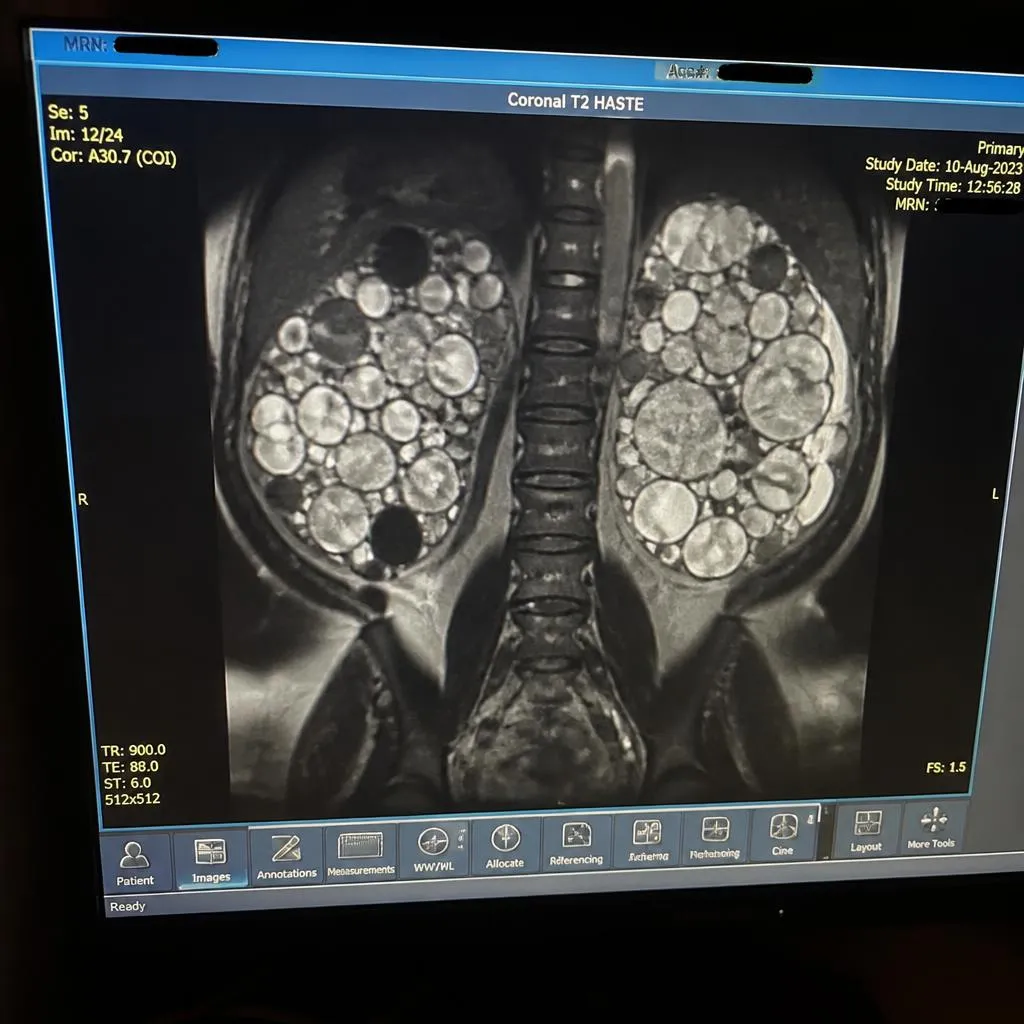
There is something destroying your kidneys right now that your doctor has never tested for. It does not appear on your blood panel. It is not measured by your creatinine. It is not captured by your kidney number. And it has been accumulating inside your kidney filters for years while every lab report said your numbers were being managed. My name is Sandra Engel. I am a dialysis nurse. I have been one for 14 years. Every patient in my unit had their kidney number tracked. Every one of them had their creatinine monitored. Every one of them followed the protocol. Cut the sodium. Watch the protein. Come back in six months. Every one of them ended up in my chair anyway. Because the thing that actually destroyed their filters was never on the lab order. I am going to tell you what it is. I am going to tell you why your doctor does not test for it. And I am going to tell you what I found when my own mother's kidney number dropped to 51 and I stopped accepting the standard of care and went looking for the actual answer. My mother is 71 years old. Her name is June. She raised four kids. Taught second grade for 30 years. Retired five years ago with plans to garden and spoil her grandchildren and finally read all the books she had been stacking on the nightstand since I was in high school. Two years ago her kidney number was 64. Her doctor said keep an eye on it. Eighteen months ago it was 58. He said watch the sodium. A year ago it was 54. He said cut the protein and come back in six months. Six months ago it was 51. He used the word trajectory. I have heard that word in my unit. I have heard it through the walls of exam rooms. I know what trajectory means when a nephrologist says it about a kidney number that is moving in one direction. It means they are starting to prepare you for the conversation about dialysis. My mother sat in the parking lot after that appointment and cried. She called me from her car. She did not say the word. She did not have to. I have been a dialysis nurse for 14 years. I know what a GFR of 51 with a consistent downward trend means. I know where it leads. It leads to the chair next to me. I was not going to let my mother end up in one of my chairs. But here is the thing that I could not admit to her that day on the phone. The thing that terrified me more than the number. I did not know how to stop it. Fourteen years in a dialysis unit. I have watched hundreds of patients arrive at the endpoint of this disease. I have sat with them through four-hour sessions three days a week. I know the dietary restrictions. I know the medications. I know the protocols. I can tell you everything the standard of care offers. And none of it has ever stopped the decline. Not once. Not in 14 years. Not in a single patient. I have watched compliant patients — patients who followed every restriction, took every medication, showed up to every appointment — end up in my chairs anyway. The protocol manages the measurements. It does not stop what is destroying the filters. I had been telling patients that for years. But it was different when it was my mother's number on the printout. It was different when the woman crying in the parking lot was the woman who taught me to tie my shoes and packed my lunch every day until I graduated high school and sat in the front row when I got my nursing degree. That night I did something I had never done in 14 years of clinical work. I stopped accepting the standard of care as the answer and went looking for the actual one. Let me show you what I found. Starting with the thing your doctor has never tested for — the thing that has been accumulating inside your kidney filters while every lab report said managed. Your kidneys filter your entire blood supply every thirty minutes. They do this through tiny structures called glomeruli — clusters of capillaries so small that red blood cells pass through them single file. These are the most delicate filters in your body. And they work harder than any other tissue. No other organ processes as much blood per ounce of tissue as your kidneys. Not your heart. Not your liver. Not your brain. Your kidneys handle more blood flow per gram than anything else in your body. And that volume comes at a cost. Every time the kidneys filter blood, the metabolic effort of that work produces a byproduct. A chemical waste product generated inside the filter walls themselves. The medical term is free radicals — but what they do is what fire does. They burn. They destroy. They eat through living tissue on contact. This is not a disease. This is not a malfunction. This is a built-in cost of doing the job. The kidneys produce this fire as a normal byproduct of filtering blood. Every hour. Every day. From the moment you were born. When you are young and healthy, the body puts the fire out as fast as it starts. The filters stay clean. The damage never accumulates. The kidney number holds steady for decades. But as you age, two things happen. The body's ability to put the fire out slows down. And the fire burns hotter — because blood pressure rises, metabolic stress increases, medications add their own chemical load, and the kidneys work harder to compensate for everything else that is declining. More fire burning. Less fire extinguished. The balance tips. And once it tips, the damage begins to accumulate inside the filter walls. Here is what that fire does to a glomerulus. It tears through the cell membranes lining the filter walls. Every time it burns through, it damages the structure. The walls thicken. The cells that regulate blood flow through the capillaries begin to die. The filters stiffen. They lose their ability to hold protein inside the blood where it belongs. Protein starts leaking into the urine. The kidney number starts dropping. The creatinine starts climbing. That is the upstream mechanism. Fire burning through the kidney filters from the inside. Everything your doctor measures — creatinine, GFR, protein — is downstream of that. The downstream numbers show what the fire has already done. They do not show the fire doing it. Now here is where it gets worse. And this is specifically about my mother. And about you if you have been told your blood sugar is elevated or you are on Metformin or your doctor has used the words pre-diabetic or insulin resistant. My mother has been on Metformin for nine years. Her A1C hovers in the pre-diabetic range. Her endocrinologist says it is well-managed. What nobody connected is that her blood sugar problem and her kidney problem are not two separate conditions. They are the same fire. Every cell in the body has doors on its surface. When sugar enters the blood from a meal, those doors are supposed to open, pull the sugar inside the cell, and convert it to energy. When the cells become resistant to insulin — which is what has been happening to my mother for years — those doors stop responding. The sugar arrives. The doors do not open. The sugar has nowhere to go. So it stays in the blood. And it circulates. Through the kidney filters. Over and over. And every time that excess glucose forces through the glomeruli, the chemical stress of processing it generates a flood of fire inside the filter walls. If the fire the kidneys produce normally is a candle — the fire generated by excess glucose is gasoline thrown on that candle. My mother's kidneys were already burning. Her age had already tipped the balance. And for nine years, the glucose from her insulin resistance has been pouring fuel on a fire that was already lit. The Metformin manages the blood sugar number on the chart. It does not put out the fire the glucose lights inside the filters. Nine years of Metformin. Two years of dietary restrictions. Five specialists. Five co-pays. A nephrologist watching the kidney number drop. An endocrinologist watching the A1C. A cardiologist watching the blood pressure. Nobody connecting the fire running between all their charts. And the number kept dropping. 64 to 58 to 54 to 51. Because every intervention managed a downstream measurement. And the fire kept burning inside the filter walls between every appointment. Now I want to tell you about the foods. Because my mother was eating every single one of them while her number dropped. The first category is high-potassium foods. When the kidney number drops significantly, the kidneys lose the ability to regulate potassium levels in the blood. Potassium accumulates. Elevated potassium disrupts the electrical signals that control heart rhythm. In severe cases it can stop the heart. The foods highest in potassium are the ones nobody warns you about because they are considered healthy for everyone else. Bananas. Avocados. Oranges. Potatoes. Tomatoes. Spinach. Every one of them a potassium load that fire-weakened filters cannot reliably clear. My mother was eating a banana every morning with her oatmeal because her cardiologist told her potassium was good for her heart. He was right — for someone with healthy kidneys. He did not check whether her kidneys could still safely clear the potassium he was telling her to eat. The second category is high-phosphorus foods. Healthy kidneys filter phosphorus continuously. Fire-weakened kidneys cannot keep up. Phosphorus accumulates. The body pulls calcium from the bones to compensate. The bones weaken. The blood vessels calcify. Dairy. Processed meats. Dark colas. Packaged foods with phosphate additives — which is almost every item in the center aisles of a grocery store. My mother was eating the yogurt her nutritionist recommended without knowing her kidneys could no longer handle the phosphorus load inside it. Five specialists. Five co-pays. A nephrologist for the kidney number. A cardiologist for the blood pressure. A hepatologist when the liver enzymes start flagging. A neurologist when the brain fog becomes difficult to explain. A podiatrist when the tingling starts in the feet. Five sets of notes that never quite talk to each other. And through all of it the patient keeps being told their numbers are managed. Managed. That is the word they use. And you believe it because the appointments keep coming and the doctor keeps saying come back in six months. Managed is what they call it when the decline is slow enough to schedule around. The third category is high-sodium foods. Sodium causes fluid retention. Fluid retention raises blood pressure. Elevated blood pressure forces more blood through the damaged filters harder — more metabolic effort, more fire generated inside the walls on every pass. More pressure on an already weakened filter means faster deterioration. Canned soups, deli meats, frozen meals, restaurant food, bread, condiments — anything processed and packaged before it reached her plate. The fourth category is the one that connects directly back to the upstream mechanism. And when I understood it, I understood why my mother's number kept dropping despite everything. High-sugar foods and refined carbohydrates. Every spike in blood sugar floods the bloodstream with glucose that insulin-resistant cells cannot absorb. That glucose circulates. Passes through the kidney filters. And generates a flood of fire inside the filter walls on every pass. The candle becomes a bonfire. The dietary restrictions reduce the fuel. They do not put out the fire. The Metformin manages the blood sugar number. It does not put out the fire. The blood pressure medication reduces the pressure. It does not put out the fire. Nothing in the standard protocol puts out the fire. That is what I understood the night my mother called me from the parking lot. And that is what sent me looking for the answer that the standard of care did not have. I read research papers for three weeks. Not supplement marketing. Not health blogs. Not influencer testimonials. I am a clinical professional. I read medical journals. Published studies. Peer-reviewed data. And I found it in research that has been sitting in the literature for over fifteen years. A pigment. A deep red pigment found in certain old strains of beet. I almost dismissed it. Beetroot — I had seen the cheap capsules on pharmacy shelves. Sixty-count bottles with four and a half stars and nothing inside them that would change a lab result. It sounded like the kind of thing my patients would waste money on before ending up in my unit anyway. But the research was not from the pharmacy shelf. It was from medical journals. From European universities. From clinical studies in Germany, Italy, the Netherlands. Published. Peer-reviewed. And then I read something that stopped me. One study — not a supplement company's website, a peer-reviewed clinical paper — showing this specific pigment neutralizing the exact class of free radical that accumulates in kidney tissue. Not general antioxidant activity. Not "supports cellular health." The exact oxidative reaction I had been reading about for three weeks as the upstream mechanism destroying my patients' filters. That specificity is what changed it from beets are good for you — which I already knew and did not find serious enough for what was happening to my mother — to this specific compound targets the specific fire I now understood was burning inside her kidneys. That is what I brought to the one person I trusted to tell me if I was grasping at straws. Dr. Anke Brandt. A nephrologist I have worked with for years. Trained in Germany. Practiced in the United States for over twelve years. The kind of doctor who reads research papers the way other people read the news. I brought her the studies. Told her about my mother. Asked her directly: Is this real? Or am I a desperate daughter finding patterns in data that are not there? She set the papers down. Looked at me. "Sandra. This is not wishful thinking. The research on this compound has been building in European universities for over a decade. I have been following it since Heidelberg." "Why did you never mention it?" "Because there is no protocol for prescribing a food. No dosing guideline. No billing code. I cannot write a prescription for a beet. The research has been in my reading for years. The pathway to my prescription pad does not exist." She picked up one of the studies. Then she set it down and looked at me. "Before I explain the compound, I need you to think about something. Tell me what GFR actually measures." "Glomerular filtration rate. How well the kidneys are filtering." "More specifically." "The volume of blood the kidneys filter per minute." "A flow rate. It is a blood flow measurement. When your mother's GFR drops from 64 to 51, it does not mean her kidneys have lost some abstract health points. It means blood is flowing through her filters less efficiently. Less volume per minute. The number she is watching drop every six months — the number that made her cry in the parking lot — is a measurement of flow." She let that sit. "Two things have to happen for that number to change direction. The fire has to stop. And the flow has to come back. Stopping one without the other is not enough." She picked up the study again. "The first front is the fire. The pigment in the research is called betalain. The deep red color that stains everything when you cut a beet open. That stain is not cosmetic. It is a highly selective antioxidant." "How is it different from what my patients already take? Vitamin C? Turmeric?" She shook her head. "Those are non-selective. They neutralize all free radicals — including the ones the immune system needs for defense and signaling. It is like setting off a fire extinguisher in every room because one room has a candle burning. They can actually disrupt healthy processes. That is why your patients take them and nothing changes." "And betalains?" "Selective. They target only the specific oxidative reaction that is doing the damage — the fire — and leave the rest alone. A smart missile, not a carpet bomb." "But how does a pigment from a beet reach the kidney filters?" She looked at me the way she looks at residents who ask a question they already know the answer to. "Sandra. What do kidneys do?" "They filter blood." "Every drop. Every thirty minutes. The betalains are in the blood. Every time her blood cycles through those filters, the pigment arrives at the exact place the fire has been burning. Not because it is small enough to penetrate a wall. Because her kidneys pull it there themselves. That is what kidneys do. They filter. And for the first time, what they are filtering includes something that puts the fire out instead of feeding it." She pulled up a diagram on her tablet. "The research on betalains and oxidative damage is consistent across every tissue type that has been studied. The kidney is the most oxidatively stressed organ in the body — you know this. If the compound neutralizes the fire in every other tissue studied, what do you think it does in the organ that produces more fire per gram than any other?" I had not thought about it that way. "That is the first front. Stop the fire. But stopping the fire does not restore what the fire has already taken. Your mother's vessels are narrowed. Her flow is reduced. Her GFR is a flow measurement and the flow is down. The fire has to stop AND the flow has to come back." She set the tablet down. "There is one food more studied for blood flow than any other compound in the published literature. One. And it is the same food that carries the betalains." I stared at her. "The same beet carries concentrated dietary nitrates. The body converts them to nitric oxide — the molecule that opens blood vessels and restores flow. This is not alternative medicine, Sandra. This is published cardiovascular research. Dozens of clinical trials. Measurable, repeatable improvement in blood flow in human subjects." "Then why is nobody in nephrology talking about it?" "Because the blood flow research sits in cardiology journals. The kidney research sits in nephrology journals. Your mother sees a nephrologist who tracks her GFR and a cardiologist who tracks her blood pressure and five specialists whose notes never talk to each other. You said it yourself — five co-pays, five sets of notes. Five sets of journals that never reference each other. The most obvious connection in medicine — the food most proven to improve blood flow, applied to the organ whose primary measurement IS blood flow — falls through the crack between specialties." She paused. "Stop the fire. Restore the flow. The fire is what damaged the filters. The flow is what GFR measures. One capsule addresses both. That is not a weak argument, Sandra. That is a stronger argument than anything currently in the protocol — because nothing in the protocol addresses either one." "Why have I never heard of this?" She smiled. Not a happy smile. "Because no company can own a beet. And because the pathway to your mother was built for patented compounds prescribed by a single specialist. A beet will never be patented. And the argument for it requires a nephrologist who reads cardiology journals. The system is not built for that. So the research sits in two different stacks of paper while patients sit in dialysis chairs." I sat there processing it. "Give it to your mother, Sandra. The research supports it. I would give it to mine." That conversation changed how I think about every patient who walks through my unit. A beet. I have spent fourteen years watching people's kidneys fail and the answer is a beet. But Brandt did not call it a beet. She called it a selective antioxidant that arrives at the kidney filters on every pass — and the most studied blood-flow compound in the published literature, applied to the organ whose primary measurement IS blood flow. Metformin comes from a plant. Aspirin comes from willow bark. Digoxin — the heart drug — comes from foxglove. Half of modern medicine started in the ground. The fact that this one still grows there does not make it less serious than what comes from a lab. It makes it unpatentable. And it makes the argument for it require a nephrologist who reads cardiology journals. That is not the same thing as it not working. For twelve years I told patients to cut the foods and follow the restrictions and hope the number holds. I was managing the downstream burden on filters that were being burned from the inside by a fire that nothing in the protocol was designed to put out. Now I want to be direct about what to look for. Because I have seen patients waste months on products that could not have helped them. There are four things that separate a beetroot product that can reach the fire from one that is red dust in a capsule. And most products fail on all four. The first is the strain. The modern grocery beet has been bred for a hundred years to be bigger, sweeter, easier to ship. And every time you breed a beet for sugar, you breed the betalains down. The pigment — the compound that does the actual work in your blood — has been bred almost out of it. The beet that used to be medicine became candy. There is one heirloom variety that was never touched. Blutwurzel — blood root, in the old German. A handful of Amish families in Lancaster County, Pennsylvania have been saving the seed by hand for over a hundred and fifty years. Never crossed it with the sugar beet. It carries close to ten times the betalains of anything in a grocery store. And ten times the nitrates. That is the beet in the studies that worked. Not the one on the shelf. The second is the processing. Betalains are fragile. Heat kills them. Most powders are spray-dried at high temperature because it is fast and cheap. What is left looks like medicine and does nothing. You can see it — real betalains are deep crimson, almost violet. Cook them and they go a dull, lifeless brown. Shade-dried. Weeks, not hours. That is what preserves the pigment alive. The third is the dose. 1,300 milligrams per capsule. That is the amount in the studies that showed results. Most brands sell a fraction of that inside a proprietary blend. A blend is where the truth goes to hide. The fourth is the lab report. A Certificate of Analysis. An outside lab testing the actual batch and publishing the betalain content, the purity, the heavy metals. If they will not show you what is inside, they are hiding what is not. Dr. Brandt told me this the same way she told me the mechanism — plainly, without selling anything, the way you tell someone the thing they need to hear. She added one thing at the end. "Most cheap beetroot products deliver just enough to move the blood a little. That lift fools people into thinking it is working. They feel a slight something and believe the fire is being addressed. Meanwhile the fire inside the filters never got touched. The feeling is not the proof, Sandra. The lab result is the proof." I went home that night and did what she told me not to skip. I pulled every beetroot product I could find online and ran each one against those four criteria. Grocery-strain powders — the common beet bred for sugar. Failed on the strain. Anything spray-dried or heat-processed — dead before the bottle was sealed. Failed on the processing. Cheap capsules — most sold 500 milligrams, sometimes less, hidden inside a blend. Failed on the dose. Brands that would not publish a lab result — no way to verify what was actually inside. Failed on the proof. I was crossing off everything. Then I found one that passed all four. Rosabella. Heirloom Blutwurzel beetroot — the old strain, the one nobody ever bred the medicine out of. Grown by Amish families in Lancaster County, hand-harvested after the first frost, when the plant pulls everything into the root. Shade-dried at low temperature — weeks, not hours — so the betalains reach the capsule deep crimson and alive instead of cooked to dust. 1,300 milligrams per capsule. The dose in the studies that worked. A Certificate of Analysis published on their website — betalain content, purity, heavy metal screening, all third-party tested and posted for anyone to read. Every criterion. Passed. I ordered it before I closed my laptop. The next morning I drove to my mother's house. I did not tell her I was coming. I walked into her kitchen. She was making oatmeal with a banana sliced on top. I looked at the banana. I looked at her. She said what. I said sit down, Mom. We need to talk about the banana. I told her everything. The fire. The free radicals. The glomeruli. The glucose accelerant. The foods. The potassium she had been eating every morning on her cardiologist's recommendation that her nephrologist did not know about. The betalains. The nitrates. The research. She listened the way she listens. Quietly. Completely. The way she listened to thirty years of second graders and four kids and a husband and a daughter who became a nurse. Then she said: How do I take it. I took the bottle out of my bag. The capsules themselves were deep — you could see the crimson through the shell before you even opened one. I twisted a capsule open over a white saucer on her kitchen table. The same table where I had just told her everything. A deep crimson powder — almost violet — spilled out. A drop of water spread the color across the dish like a fresh cut. She stared at it. "That is the betalain," I said. "That is the pigment. If it were the cheap brand from Amazon, it would be brown. Dead before the cap was sealed. This is alive." She looked at the saucer. Looked at me. "Two capsules. Every morning. One glass of water. That is the whole protocol." I shook two capsules into her palm. She took them with a full glass of water. Set the glass down. Twenty minutes later she said something that made my eyes burn. "My hands are warm. They have not been warm like this in a long time." That is nitric oxide opening the small vessels in her fingers. Blood flow arriving where it had been quietly closing for years. But I was not thinking about her hands. I was thinking about what Brandt had said. GFR is a flow rate. A blood flow measurement. And the same blood that was warming my mother's hands was cycling through her kidneys at that moment — because kidneys filter every drop every thirty minutes. The mechanism that was warming her fingers was the mechanism that GFR measures. She was not just feeling something nice. She was feeling her blood flow improve. And blood flow is the number. The number she had been watching drop for two years. The number that made her cry in a parking lot. Not the kidney repair — that takes weeks. The fire still had to be put out. The filters still had to heal. But the flow — the thing the number actually tracks — was responding in her hands twenty minutes after the first dose. And the betalains were alive in the same blood, arriving at the same filters on every pass, carrying the other half of the argument. Stop the fire. Restore the flow. Both happening. In one glass of water. I changed her diet that week. Cut the banana. Cut the spinach her other doctor had recommended. Cut the high-phosphorus foods. Cut the sodium. Cut the sugar that was pouring fuel on the fire in her filters every day. And I put a glass of water and two capsules on her kitchen counter every morning. Week one. The fatigue she had been blaming on age began to lift. She cleaned out her garden shed. She had not been in her garden shed in six months. Week two. The ankle swelling that had been making her shoes tight began to ease. She wore her favorite flats to church for the first time since spring. Week three. Blood pressure down 11 points on the top number. No medication change. Less pressure means less strain. Less strain means less fire on each pass through the filters. I wanted to believe it was working. But I have spent fourteen years watching patients believe things were working. Belief is not a lab result. I would not let myself trust the improvements I could see until I saw the number I could not argue with. I did not retest her GFR early. I could have taken her to a walk-in lab at week four or five. I did not. Because if the number came back flat — if the improvement I was watching in her energy and her ankles and her blood pressure was the same kind of false lift that cheap beetroot gives — I needed to not know that yet. I needed to keep handing her the glass every morning without doubt in my hands. So I waited. Eight weeks. The full protocol. And I went to that appointment more nervous than I have been for anything in my professional life. Week eight. Her labs. I went to the appointment with her. She let me. She does not always let me — she is independent and she does not like being treated like a patient by her own daughter. But this time she said come. I think she knew I needed to be there more than she did. The nephrologist pulled up her chart. Looked at the screen. Looked at it again. GFR: 58. Up from 51. He did not ask what changed. He did not ask what she was taking. He said the numbers looked better. He said come back in six months. My mother looked at me. I looked at her. We did not say anything in the exam room. We waited until we got to the car. Then she put her hand on my arm and squeezed it and said thank you. I drove home and I thought about every patient I have sat with in my unit for 14 years. Every patient who followed every instruction and ended up in my chair anyway. Every patient whose mother or daughter or wife sat in the waiting room while a machine did what the kidneys no longer could. I cannot go back for them. But I can go forward for you. If your kidney number is dropping — or your mother's is, or your husband's is, or your father's is — and the doctor is saying watch the sodium and come back in six months, the number is going to drop again. It is going to drop because the dietary restrictions manage what the kidneys have to process and they do not put out the fire that is destroying the kidneys. The fire was burning before the glucose. Before the sodium. Before the phosphorus. The fire is the upstream mechanism. And nothing in the standard protocol puts it out. You are at a crossroads right now. One path leads to the chair next to me. The same trajectory. The same six-month appointments. The same restrictions getting tighter. The same number dropping. Until one day a nephrologist uses the word trajectory and someone you love cries in a parking lot. The other path starts with addressing the fire inside the filter walls. The fire that has been accumulating for years. The fire that glucose pours fuel on every time blood sugar spikes and the doors do not open. The damage happening right now, between this appointment and the next one, while the numbers on the chart say managed. Stop the fire. Restore the flow. Two capsules. One glass of water. Every morning. Track the numbers. Watch them stabilize. Watch them climb. My mother continued every medication her doctors had prescribed. The only thing that changed was the glass of water every morning. Her improving numbers were the conversation — her doctors made the decisions from there. There is a 90-day money-back guarantee. If the kidney number does not improve, every penny back. No questions. No conditions. My mother's nephrologist visits cost her hundreds of dollars over two years while the number dropped from 64 to 51. Nobody offered a refund when the protocol did not work. Rosabella guarantees the result or your money back. The system does not do refunds. Rosabella does. Go to the official Rosabella website directly. Do not search Amazon. Do not search supplement aisles. Wrong strain. Heat-killed. Underdosed. No lab report. What you will find on those shelves is the grocery beet — bred for sugar, spray-dried into brown dust, with a fraction of the dose and no accountability for what is inside the bottle. Buy 3 Get 3 Free is the best deal — six bottles at $11.99 each. That is enough for the full three-month protocol at the dose that moved my mother's number from 51 to 58. One bottle is $19.97 to start. Buy 2 Get 2 is $14.73 each. But three months is what the research supports and what I watched work in my mother's kitchen. I have spent 14 years watching people arrive at the conversation I do not want you to have. The one about three sessions a week and four hours each. The one about the food list that keeps shrinking. The one about the transplant waiting list that moves slower than the decline. My mother is not going to have that conversation. Her number is moving in the right direction for the first time in two years. She is back in her garden. She is reading the books she stacked on the nightstand. She is spoiling her grandchildren the way she planned to when she retired. You still have time to not have that conversation either. Address the fire. Address what the dietary changes alone cannot reach. Please do not wait for a lab result to tell you the window has closed. I see where closed windows end up. They end up in the chair next to me. — Sandra Engel, RN Dialysis Nurse, 14 years 👉 https://track.tryrosabella.com/cdc16426-3e48-40a7-9fad-21098084f6cf P.S. — My mother called me last Thursday to tell me she planted tomatoes. I said Mom, you cannot eat the tomatoes, the potassium. She said I know that, Sandra, I planted them for my neighbor. I am just happy to be in the dirt again. That is what moving in the right direction sounds like. Not a number on a chart. A 71-year-old woman on her knees in a garden planting something for someone else because she has the energy to care about someone else again. I want that for your mother. For your husband. For you. P.P.S. — You will know it is real within 20 minutes. My mother felt it at twenty minutes exactly. A warmth spreading through her hands, down into her fingers, as if someone had turned the heat on inside her blood. That is not a side benefit. GFR is a blood flow measurement — and the warmth in her hands is the same blood flow improvement that GFR tracks, happening in real time, in vessels you can feel. The kidney repair takes weeks. But the flow — the thing the number actually measures — responds in minutes. If you or someone you love has taken cheap beetroot capsules before and felt absolutely nothing, that is because the betalains were already dead — heat-killed, brown dust, the wrong beet. This is different. You will feel the difference. And so will whoever you hand the glass to. P.P.P.S. — Do not stop any medication your doctor has prescribed. My mother took Rosabella alongside everything her doctors had her on — the Metformin, the blood pressure medication, everything. She did not quit anything. She added two capsules and a glass of water. Her improving numbers were what her nephrologist saw at the next appointment. He made the calls from there. That is how it should work. The numbers lead. The doctor decides. P.P.P.P.S. — Rosabella comes from one seed line, grown by a handful of Amish families in Lancaster County. One harvest per year. Shade-dried slow — weeks, not the hours it takes to spray-dry the cheap stuff. They cannot scale a 150-year-old seed line, and they will not cut the dose to stretch the harvest. That means they sell out. I learned this when I tried to reorder my mother's second bottle and had to wait nine days. If your next kidney panel is in 30 to 60 days and you want to walk into that appointment with numbers that make your nephrologist look at the screen twice, check if they have stock now. Not next week. Now. Every day without addressing the fire inside the filters is another day the damage builds while the dietary sheet says you are doing everything right. P.P.P.P.P.S. — If you are reading this for someone you love — a husband, a father, a mother — do what I did. Put the capsules in their hand. Put the glass of water next to them. You do not need to explain the mechanism. You do not need to show them the research. You just need to do what I did for my mother. Hand it to her and say take this. For me. The numbers will do the talking in eight weeks. 👉 https://track.tryrosabella.com/cdc16426-3e48-40a7-9fad-21098084f6cf
More from The Health Haven
Support stamina and heart health every day
The Health Haven
Support stamina and heart health every day
The Health Haven
Support stamina and heart health every day
The Health Haven
Support stamina and heart health every day
The Health Haven
Support stamina and heart health every day
The Health Haven
Support stamina and heart health every day
The Health Haven

Support stamina and heart health every day
The Health Haven
Support stamina and heart health every day
The Health Haven

Support stamina and heart health every day
The Health Haven
Support stamina and heart health every day
The Health Haven

Support stamina and heart health every day
The Health Haven
Support stamina and heart health everyday
The Health Haven

 Add to Chrome