Support Your Body Naturally
Ad Copy
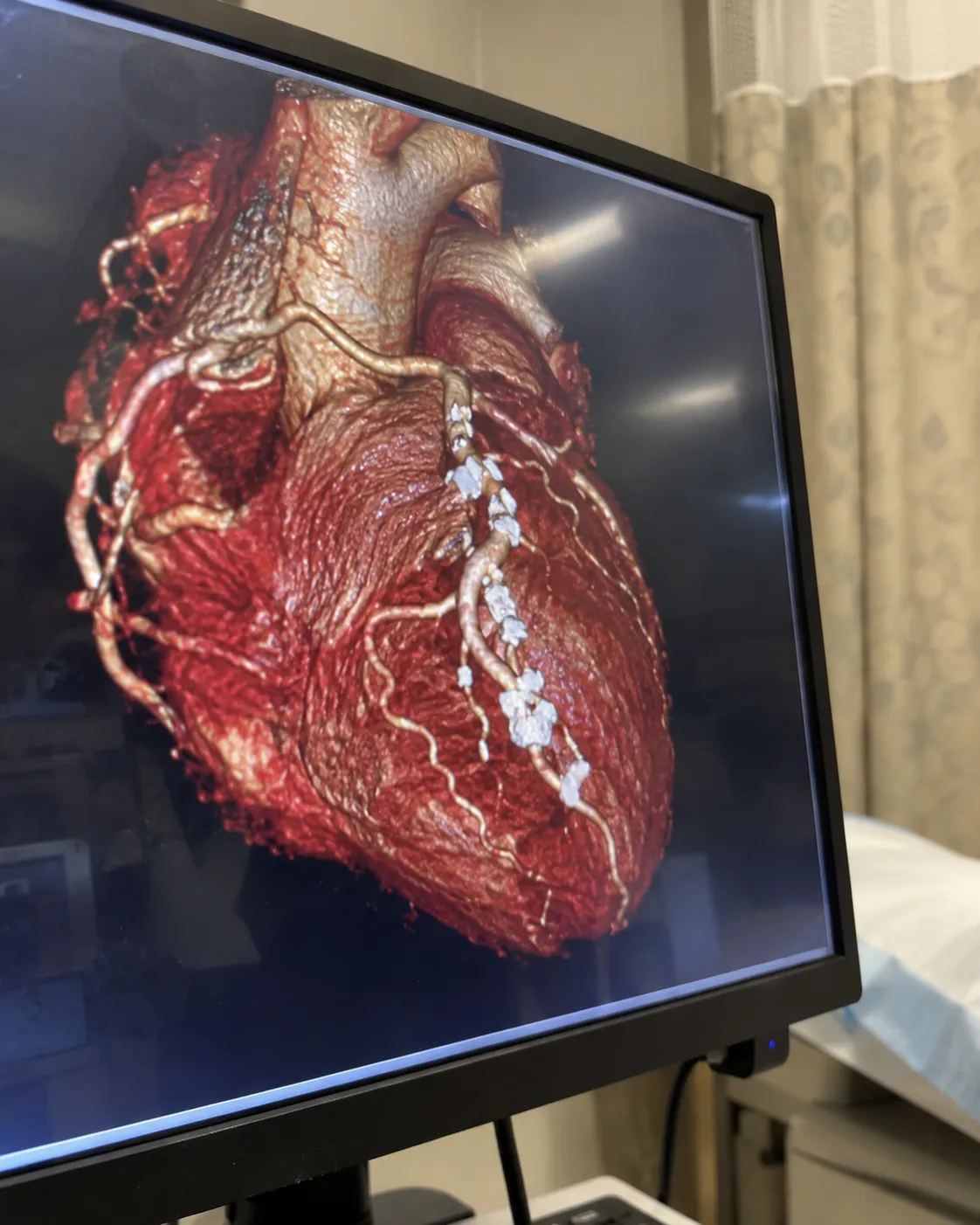
There's $2,333 worth of cholesterol medicine in my refrigerator door. It's been sitting next to the ketchup since January. Six Repatha pens in three little cartons, kept cold, exactly the way the instructions say to keep them. I have never opened a single one. My husband Clyde asks me about it every couple of weeks. The pharmacy called about it every week until April, and then they quit calling. My doctor typed a word into my chart over it that I still haven't gotten over. And in March, I sat down in the same folding chair my mother died in. I'm 70 years old. I have followed every rule anybody ever handed me. And I am not taking that medicine. I'm not throwing it away, either. I'll tell you why I won't take it. And I'll tell you the exact day it goes in the trash, because I've already circled it on next year's calendar. If you have a statin next to your coffee maker, or a box of Repatha like mine in your refrigerator door, or someone you love does, I want you to hear this all the way through. My name is Wanda Hollis. I live in Paducah, Kentucky, three blocks up from the river, in the same brick house Clyde and I bought in 1979. I was the secretary at Lone Oak Elementary for thirty years. I have one daughter, Tammy, and one grandson. And I quilt. This is Paducah. Half the town quilts and the other half is married to somebody who does. I have a frame set up in the back bedroom that takes up the whole room, and I have pieced a quilt for every baby born in this family since 1981. Clyde and I used to walk the floodwall every morning. If you've been to Paducah you've seen it, the concrete wall they built after the '37 flood, painted with murals of the town's history all down the riverfront. We'd walk from Broadway to the far end and back, and I'd stop at the 1937 flood panel and tell him the same story about my granddaddy's johnboat every single time, and he'd let me. And I have to tell you about Mama, because none of the rest of this makes sense without her. Two months before she died, Mama's doctor told her her cholesterol was fine. She told me so on the phone, pleased with herself. The week she died, the only thing wrong was that she was worn out and a little uneasy, and she said on the phone Tuesday night that she felt "off," and blamed it on the weather turning. That Wednesday night she was setting out coffee cups in the fellowship hall at church before prayer meeting, and she sat down in a folding chair and didn't get back up. It was her heart. She was 71. I was 45. I'm the one they called, and I drove over and stood in that church kitchen holding one of the cups she'd set out. Her cholesterol was fine. I have thought about that sentence for twenty-five years. I was 64 when Dr. Aneja turned his computer screen around to show me my cholesterol. LDL, 196. Total, 268. "Wanda, I want you on a statin," he said. "Lipitor, twenty milligrams. Just about everybody your age is on one." So I got on one. I'm a rule follower. Four months in, my legs started to ache, deep in the thighs, like I'd climbed stairs all day when I hadn't. He switched me to Crestor. I did worse. By the end of the next year I couldn't get up off the floor of the back bedroom without pulling myself up by the quilt frame, and at my next visit I saw two new words printed on my paperwork. Statin intolerant. I thought that meant I was done. It turned out it meant I'd been promoted. "There's a newer option for patients like you," he said. "It's not a pill. It's a shot you give yourself every two weeks. Repatha. It works a completely different way than a statin, so you shouldn't have any of those muscle problems." The insurance made his office prove I'd failed the statins. Then the boxes started coming from a mail-order specialty pharmacy, packed in ice packs, with pens inside that look like fat markers. For almost three years they lived in the door of my Frigidaire between the ketchup and the pickle relish, and every other Sunday night I'd let one warm up on the counter and push it into my stomach. And it worked, if you go by the number. Three months in, my LDL was 58. Dr. Aneja actually said, "Wow." I had never had a doctor say wow to me in my life. Remember that number. 58. Because I was about to spend the next two and a half years feeling worse than I have ever felt, with the best cholesterol number I'd ever had. It started in my back, low on both sides, like somebody had laid a board across my hips and was standing on it. I couldn't sit at the quilt frame twenty minutes. Then it was my breath. There are seven steps up to our front porch, and I'd get to the top and have to hold the post like I'd run there. I quit the floodwall walk so Clyde wouldn't watch me stop at every bench. And I caught every cold that came through town. Two years of what felt like one long cold, and underneath it, air that wouldn't go all the way down. I told Dr. Aneja. He sent me for a chest X-ray. Clear. He listened to my heart. Fine. And he said, gently, I remember exactly how he said it, "Wanda, some of this is just being 68." I asked him if it could be the Repatha. He said no, Repatha doesn't cause muscle problems the way the statins did. I figured my life had gone ahead and gotten old without asking me. Then January came, and an insurance company did me the biggest favor anybody has ever done me, completely by accident. Every January the plan starts over, and Repatha has to be approved all over again. The insurance kicked the forms back. The office sent them again. They got kicked back again. One afternoon I sat on hold with the specialty pharmacy for forty-one minutes listening to the same piano song, furious, thinking I'd have a heart attack because somebody in an office in another state forgot to check a box. I went twenty-three days without Repatha. Nothing happened the first week. I want to be honest about that, because if something had happened right away, I'd have told myself it was a coincidence. The second week, I came in from the mailbox and I was halfway across the living room before I realized I hadn't stopped at the top of the porch steps. I went back outside and looked at those steps like somebody had replaced them. The third week, I sat down at the quilt frame after lunch, and the next time I looked at the clock it was twenty past four. Three hours. My back was stiff the way a back is stiff at 69. It was not that board across my hips. On day twenty-one, I put on my coat and walked the floodwall. The whole thing, Broadway to the far end and back. I stopped at the flood panel and told Clyde about my granddaddy and the johnboat, and I didn't have to catch my breath to do it. Clyde didn't say a word. He just took my hand. He hadn't done that on a walk in years, because I'd always been holding onto something else. That night I dug the paper out of the last Repatha box, the folded-up one with print so small you need a magnifying glass, and I read the whole thing at the kitchen table. There it was, in the list of what people on it reported. Back pain. Joint pain. Cold symptoms. Upper respiratory infections. Flu-like symptoms. Repatha isn't a chemical like Lipitor. It's a protein, grown from living cells in a lab, and you're pushing it into your body every two weeks. My body treated it like a cold that never left. Every single thing I'd been blaming on 68 was printed right there in the box it came in. On day twenty-three the appeal went through, and the box came, packed in its ice packs. Three months' worth this time. Six pens. The packing slip said the retail value was $2,333.58. I'm a school secretary. I read packing slips. I put the cartons in the refrigerator door between the ketchup and the relish, same as always. And I never opened one. The pharmacy texted to set up my injection reminders. I didn't answer. They called every week until April, and then they quit. I let it ring every time. I know how that sounds. I have never missed a dentist appointment in my life. But I had just gotten three weeks of my own body back, and I was not handing it over again until somebody explained to me why I should. Nobody did. What I got instead was the patient portal. The first message from Dr. Aneja's office was polite. We noticed you haven't refilled. The second one said it was important not to interrupt therapy. The third one said Dr. Aneja needed to see me. In March he ran my blood. LDL, 187. Total, 262. Right back up where I'd started before any of it. He turned the screen around again. He was not saying wow this time. "Wanda, I understand you feel better. But this is exactly what happens. You're 69 years old with a number like this, and your mother died of a heart attack at 71." He didn't have to remind me. I'd been counting toward seventy-one since I was forty-five years old. "If Repatha's the problem," he said, "there's another one. Leqvio. It's only twice a year, and we give it right here in the office. You'd hardly know you were on it." He printed out the information and handed it to me. That night I read that one too. The things on its list were joint pain and bronchitis. My joints and my breathing. The two things I had just gotten back. I told him no. And when my visit summary came through the portal, there was a new word on it. Noncompliant. Thirty years in a school office and I had never once been sent to the principal. I sat at my kitchen table and cried over that word like a little girl. But I didn't throw that box away. I'm not a fool. If I was wrong, I wanted it right there in the door where I could reach it. So I kept it cold, in its cartons, the way the instructions say, and I kept not opening it. And here is what I didn't say out loud to anybody, not even Clyde. I felt wonderful, and I was scared to death. Because feeling good is not the same thing as being safe, and I knew it. Mama's cholesterol was fine that Wednesday. My number was 187 and climbing. I was about to turn seventy, and Mama only made it to seventy-one. I had my body back, and I had no idea if I was spending it. Then came the last Wednesday in March. I'd gone back to Wednesday nights. For two years I hadn't had the breath for the church steps. Now I was feeling better than I had in three years, and I'd signed up to set out the coffee before prayer meeting, the way Mama always did. I had the cups halfway down the long table in the fellowship hall when it came over me. Not pain. That's what I want you to hear. It wasn't a pain. It was tired, all at once, like somebody pulled a plug out of the bottom of me. And uneasy. A sick, heavy kind of uneasy I couldn't name. Off. I stood there holding a coffee cup, and I knew exactly where I'd heard that word. I sat down in the chair at the end by the coffee urn. The same room. The same chair. That's the one Mama sat down in. I have never once set out cups in that hall without looking at it. I sat there and could not make myself get up, and I thought, this is how it goes. This is exactly how it went for her. Clyde drove me to the emergency room with his flashers on. They ran everything. The EKG was all right. The blood test that shows a heart attack came back clean. They kept me overnight anyway, and in the morning a cardiologist I'd never met, a young woman named Dr. Pryor, sent me for a CT scan of the arteries around my heart. She pulled a chair up next to my bed with the report in her lap. There was plaque in the big artery down the front of my heart. Hardened, with calcium in it, narrowing it by half. Not enough for a stent yet, she said. But enough. "This didn't happen this winter," she said. "Calcium like that takes years to lay down. This has been building a long time." A long time. I did the arithmetic lying there. For almost three years I'd been taking Repatha every other Sunday. For almost three years my number had been 58. The best number of my life. The number that got me a "wow." And the whole time, that was building in the front of my heart. When I got home, Dr. Aneja had already seen the report. His message in the portal was two lines long. This is exactly what I was worried about. Please restart your Repatha or schedule your Leqvio. That night I couldn't sleep. Around two in the morning I got up, went to the kitchen, opened the refrigerator door, and took one of those cartons out. I stood there in my nightgown in the light from the refrigerator, holding it. Maybe he was right. Maybe I'd done this to myself by stopping. But that plaque had been laying down calcium for years. It built while I was taking every single Repatha shot on time. It built at 58. I put the carton back. I didn't know what was right. I only knew Repatha hadn't stopped it, and I didn't know what would. That's where I was when Merle and his wife Dot drove down for Easter, eleven days later. Merle is Clyde's older brother. He moved up to Orrville, Ohio, in 1985 to take a job at Smucker's, the jam company, which is headquartered right there, and he stayed thirty-eight years. He worked in the quality lab. The first half of that was jams and jellies. Then Smucker's took over Jif peanut butter and Crisco, and Merle spent most of the rest of his career on fat. Specifically, on fat going bad. "Rancid," he'll tell you. "Peanut oil, shortening, anything with fat in it, sitting in a warehouse in Phoenix in August. My whole job for eighteen years was figuring out how long before it turned, and what keeps it from turning." After Easter dinner, Clyde, who has never kept anything to himself in fifty years, told him about the Repatha and the portal and that word and the night in the fellowship hall. Merle set his fork down, got up, and opened my refrigerator door. He stood there looking at those cartons next to the ketchup for a long time. "Wanda, do you still have your lab papers? And that scan?" I have every one. I was a school secretary. I brought him the folder. He read them at my kitchen table with his reading glasses down on his nose, the way I imagine he read things in that lab for thirty-eight years. The 196. The 58. The 187. Then the CT report, twice. He turned the pages back and forth. "Can I tell you what I see?" "Nobody else has told me anything," I said. "Go ahead." "Everybody's been counting your cholesterol," he said. "How much of it is in there. That's all this sheet is. A count." "Isn't that what cholesterol is?" "That's how much of it there is. It doesn't tell you what shape it's in." He tapped the paper. "Your body makes cholesterol on purpose, Wanda. Every cell you've got is built out of it. It isn't the enemy. What hurts you is when it turns. Oxidizes. Rusts, the same way a nail rusts left out in the rain. Goes rancid in your blood the same way a jar of peanut butter goes rancid on a hot shelf. And the rancid kind gets sticky. It gets caught in the wall of the artery and builds up there, layer on layer, year after year." He put his finger on the CT report. "That's what this is. That's rust, Wanda. They took a picture of it." I thought about Mama and the coffee cups. "And they can't test for that?" "Not on this sheet. This counts the jars on the shelf. It can't tell you how many of them have turned." He let that sit a minute. "Here's what I'd have gotten fired for at Smucker's," he said. "Say a line of peanut butter is going rancid, and my fix is to put fewer jars on the shelf. Fewer jars turning is still turning. I haven't stopped a thing. I've just got less of it to look at while it goes bad." "Lipitor and Crestor lowered the count." "They lowered it by shutting down a line in your liver that makes cholesterol. Problem is, that same line makes CoQ10, and CoQ10 is the fuel your muscles run on. It's one line with two products coming off the end of it. Shut it down and you get less of both. That was your legs, the whole time you were on Lipitor and Crestor. Your legs weren't getting old. They were running on empty." "And the Repatha?" "Repatha works a different way. It makes your liver pull more cholesterol out of your blood. That's how it got you down to 58, lower than Lipitor or Crestor ever got you. And not one person ever checked whether what was left was turning. Your count sat at 58 for three years." He held up the scan. "And this built anyway. Lower count. Same rust." I only had one question. "Then what keeps it from turning?" Merle looked across the table at Dot. Dot smiled like she'd been waiting all day for somebody to ask. "Eight years ago," Merle said, "Dot's doctor put her on Lipitor. Inside a year she couldn't get out of the bathtub without me. So I did what a lab man does. I went looking. I bought her the CoQ10 at Walgreens. Fish oil. Red yeast rice, because a fella at church swore by it. None of it did a thing we could see, and I found out later why. Most of the CoQ10 you swallow in a capsule never gets where it's going. And fish oil just floats around in your blood. It never gets to the artery wall, where the trouble actually is." "So what did?" "One night I was reading our own trade journal. The Journal of Agricultural and Food Chemistry. It sat on the shelf in our lab my whole career. I read it for thirty years looking for anything that keeps fat from going rancid. And there was a paper on the red pigment in beets. Betalains, they're called. The paper called them a new class of antioxidant." "Beets," I said. "I know. Then a university lab in Palermo, Italy, took it further. They fed people cactus pear, a fruit that carries the same betalains as a beet, drew their blood three hours later, and pulled out the LDL. The cholesterol. The betalains were inside it. Inside the cholesterol particle itself. And when they tried to make that cholesterol go rancid, it held out longer. The more betalains that had gotten inside, the longer it held." He took his glasses off. "Wanda, I spent thirty-eight years trying to keep fat from turning, and that's the best thing I ever read. It goes in with the cholesterol it's protecting and stops the turning at the source." "So I should eat beets." "Not any beet. Let me get you the name of what Dot takes. The bottle's in our cabinet at home. I'll text it to you." He and Dot drove back to Ohio Monday morning. I didn't wait for the text. I'm going to tell you exactly what I did next, because I'd bet good money some of you would have done the same thing. I'm a Kentucky woman. I put up my own tomatoes. I did not see why I needed to order anything from anywhere when Kroger sells beets in a can for a dollar and nine cents. Clyde brought home two flats of them. I ate beets with lunch and beets with supper. Tammy saw one of those beet chew commercials on TV and ordered me a jar of those too, and I ate two every morning like the label said. And I felt fine, which scared me more than anything. Mama's doctor had told her she was fine. I'd felt fine setting out those cups right up until I didn't. I skipped prayer meeting every Wednesday that spring. I couldn't make myself walk back into that fellowship hall. I ate my beets and I waited, with that picture of my own heart in a folder on the kitchen table. In June, Dr. Aneja's office called me in for the recheck he'd wanted. I went in praying. LDL, 184. Nine weeks of beets. Three points. He didn't turn the screen around this time. He said, "Wanda, I'm going to be honest with you. You have plaque in your heart and you won't take anything. There's only so much I can do for you." He printed out the Leqvio information again and set it on top of my purse. I sat in my car in his parking lot and called Merle. "You went and bought beets, didn't you," he said. "Canned ones. And the chews off the TV." He was quiet a second. "Let me tell you about the worst week I ever had at Smucker's." Back in the early nineties, he said, somebody upstairs wanted to take the artificial red dye out of one of the strawberry spreads and use beet red instead. It's a real food coloring. It's what turns a lot of strawberry yogurt pink. Merle's lab ran the test batches. "We put it in the kettle and cooked it the way you cook preserves, and by the time it came out, that beautiful red was going brown on us. We ran it hotter and faster. Worse. We ran it longer. Worse. That red is fragile, Wanda. Heat kills it and air works on it. We finally gave up and went back to the old dye." "And canned beets..." "Every can of beets on that shelf went through a pressure cooker to seal it. Cooked hot, then sat in a can for a year. Whatever betalains are left in there aren't doing what that study did. And those chews are made from the same beet you buy at the store, which has been bred for generations to be big and sweet. They bred the betalains right out of it because people want sugar. Then it gets dried fast with hot air, because doing it slow eats into somebody's profit. You've been eating beet-flavored candy." "So what does Dot take?" "I wrote it up the way I'd write a spec sheet for a supplier," he said. "Four things. If it misses any one of them, I'd send the whole shipment back." First, the strain. It has to be one of the old heritage beets that was never crossed with the modern sugar beet. Small and dark, so red it stains your cutting board and your hands. Those old lines carry many times more betalains than a grocery beet does. Second, when it's pulled. It has to come out of the ground after the first frost, once the cold has pushed everything down into the root. Third, how it's dried. Slow and cool, in the shade. Never hot air. "Same lesson as my kettle," he said. Fourth, the dose. It has to be the full amount the research was built on, 1,300 milligrams, not a pinch of beet blended into something else. "I've found one that does all four," he said. "Dot's been on it six years. Her legs came back that first summer, and her doctor took her off the Lipitor the year after, because her numbers held without it." Then he spelled it for me, letter by letter, because he knows me. R-O-S-A-B-E-L-L-A. Rosabella. It's a heritage beet called Blutwurzel. Four Amish families in Lancaster County, Pennsylvania grow it from seed lines their great-grandparents brought over from Bavaria in the 1890s. They harvest it after the first frost. They shade-dry it slow. It's 1,300 milligrams per serving, which is two capsules with breakfast. "It's not in stores," Merle said. "It's not on Amazon. You order it direct from them. And get more than one bottle, because they run out between harvests. Dot's had to wait on a restock twice." I ordered it right there, sitting in Dr. Aneja's parking lot. It came on a Thursday. Friday morning I took two with my coffee and toast, and I made myself a promise. I was not going to tell myself how I felt. I was going to wait for the paper. Merle said to give it eight to twelve weeks, so I marked the calendar on the kitchen wall. I'd be lying, though, if I said I didn't notice things. Week three: For years I'd sat down in the recliner around two every afternoon and called it resting my eyes. One Wednesday the TV stayed off all afternoon, and Clyde came in and asked me if it was broken. Week five: Tammy stopped by after work, stood in the kitchen doorway, and said, "Mama, you've got color in your face." Nobody had said anything like that to me in three years. But I had felt good since January, and my number had climbed the whole time. So I waited for the paper. Week eight, the first Tuesday in August, I was back in Dr. Aneja's office. LDL, 112. Down from 184. Seventy-two points in eight weeks. Total, 201, down from 258. My good cholesterol, the HDL, came up from 44 to 53. Triglycerides went from 171 to 118. Dr. Aneja read it. Then he pulled up Dr. Pryor's CT report on the screen next to it, and he read my numbers again. This was the woman he'd been sure was going to be his next heart attack. "What are you taking?" I told him all of it. Merle. The lab. The paper from Italy. The four things. Rosabella. He wrote the name on the corner of his notepad. Then he gave me the talking-to I had coming about stopping Repatha on my own, and he was right to. I'll tell you what he said at the bottom of this letter. And then he said, "Whatever you're doing, keep doing it. I'll see you in six months." He took Repatha off my medication list while I sat there. That night my visit summary came through the portal. The word was gone. Five days later I turned seventy. No fuss. Tammy brought a cake, and Clyde went to the refrigerator for the ice cream and stood there holding the door open a long time. "Wanda. Now can I throw this box out?" "No," I said. He looked at me like I'd lost my mind. So I went to the kitchen drawer, got out next year's calendar, which I had bought at Walgreens that same afternoon, and turned it to August. I'd already circled the tenth. The day after my seventy-first birthday. Mama never got past seventy-one. The morning after I do, that box goes in the trash, and Clyde can have his whole refrigerator door back. I didn't write all this down because I think I'm special. I wrote it because I sat down in my mother's folding chair with the best cholesterol number of my life, and I know how many of you are carrying a number like that right now and calling it safe. If you're on a statin like Lipitor or Crestor, or on Repatha, Praluent or Leqvio, the shots they give you when a statin doesn't work out, or someone you love is, listen to me. The legs that ache like you climbed stairs you never climbed. The back and hips that won't let you sit through a church service. The breath that won't go all the way down. The cold that never quite leaves. The walk you quit so nobody would see you stop. And the number on the paper that everybody is so pleased with. That number is a count. It tells you how much cholesterol is in your blood. It has never once told you how much of it has turned. The turned part is what builds up in the wall of the artery. It's what took my mother in a fellowship hall on a Wednesday night. My number was 58 the whole time that plaque was building in me. And nothing I was ever prescribed was built to touch it. Lipitor, Crestor, Repatha, Leqvio. Every one of them works on the count. Lower isn't stopped. It's just less to look at while it keeps turning. What stops the turning is betalains, the deep red in the right beet, getting inside the cholesterol particle itself and keeping it from going rancid at the source, without taking your legs or your back or your breath as the price. Not a beet out of a can. Not a chew off a TV commercial. Not a grocery beet bred for sugar and dried with hot air until the red is gone. The old Blutwurzel strain, grown by four Amish families in Lancaster County from seed their great-grandparents carried over from Bavaria. Pulled after the first frost. Shade-dried slow. 1,300 milligrams per serving, two capsules with breakfast. That's Rosabella. Dot has been on it six years. I've been on it since June. Clyde started it the week my bloodwork came back, because he said he'd watched me hold onto that porch post long enough. It comes with a 90-day money-back guarantee. If your numbers don't move in 90 days, send the bottles back, empty or full, and you get every penny back. Nobody ever offered me my money back on Repatha. It's a small company, and the supply is whatever those families can grow in one season. When a harvest sells through, it's gone until the next frost. If the link says they're between harvests, put your name on the restock list. It's worth the wait. But don't wait on the rest of it. Feeling fine or feeling awful, it doesn't matter which. The turning doesn't stop on its own. Go get your breath back. And get the right paper in your hands before anybody tells you your cholesterol is fine. https://track.tryrosabella.com/e73e2b82-57e8-45b3-b98f-f257632c842b — Wanda Hollis, Paducah, Kentucky P.S. Here's the talking-to Dr. Aneja gave me, because he was right. I didn't choose to stop Repatha. An insurance company stopped it for me. But I chose not to start it again, on my own, with no plan, and that was a gamble. My number went right back up to 187, and it could have gone somewhere much worse before I found what worked. Please don't do it the way I did. Take your lab papers and this letter to your own doctor. Start Rosabella, get your blood rechecked in eight to twelve weeks, and let your doctor look at the paper and make the call on your prescription. Dr. Aneja is the one who decided I don't need Repatha anymore, after he saw my numbers. That's the only way I'd tell anybody to do it. P.P.S. Here's what nine weeks of canned beets taught me. Feeling good and being protected are two different things. I felt wonderful from January on, and my number climbed the whole time. Feeling good tells you your body is glad. The paper tells you whether you're safe. Get the paper. P.P.P.S. Give it the whole time. Merle told me eight to twelve weeks, and most of what it's doing in those first weeks, you'll never feel. It's happening inside the cholesterol in your blood, not in your knees. Mark your calendar the way I did and let the lab tell you. P.P.P.P.S. If you're reading this for somebody else, your mother, your husband, the one who quit walking and says it's just age, you're not nagging. You're the one who's noticing. Tammy's the one who bought me my first jar of beet chews, the wrong ones, and I love her for trying. Get the right ones into their hands. Order for the house. Right now they're running buy three, get three free. That's what I did. Three for me and three for Clyde. P.P.P.P.P.S. It's not on Amazon, and it's not at the pharmacy. If you see something calling itself Rosabella anywhere else, it isn't the real thing. The heritage beet is the whole point, and this link is the only place I'd trust to get it. https://track.tryrosabella.com/e73e2b82-57e8-45b3-b98f-f257632c842b
More from The Health Haven
Support stamina and heart health every day
The Health Haven
Support stamina and heart health every day
The Health Haven
Support stamina and heart health every day
The Health Haven
Support stamina and heart health every day
The Health Haven
Support stamina and heart health every day
The Health Haven
Support stamina and heart health every day
The Health Haven
Support stamina and heart health every day
The Health Haven
Support stamina and heart health every day
The Health Haven
Support stamina and heart health every day
The Health Haven
Support stamina and heart health every day
The Health Haven
Support stamina and heart health every day
The Health Haven
Support stamina and heart health every day
The Health Haven

 Add to Chrome