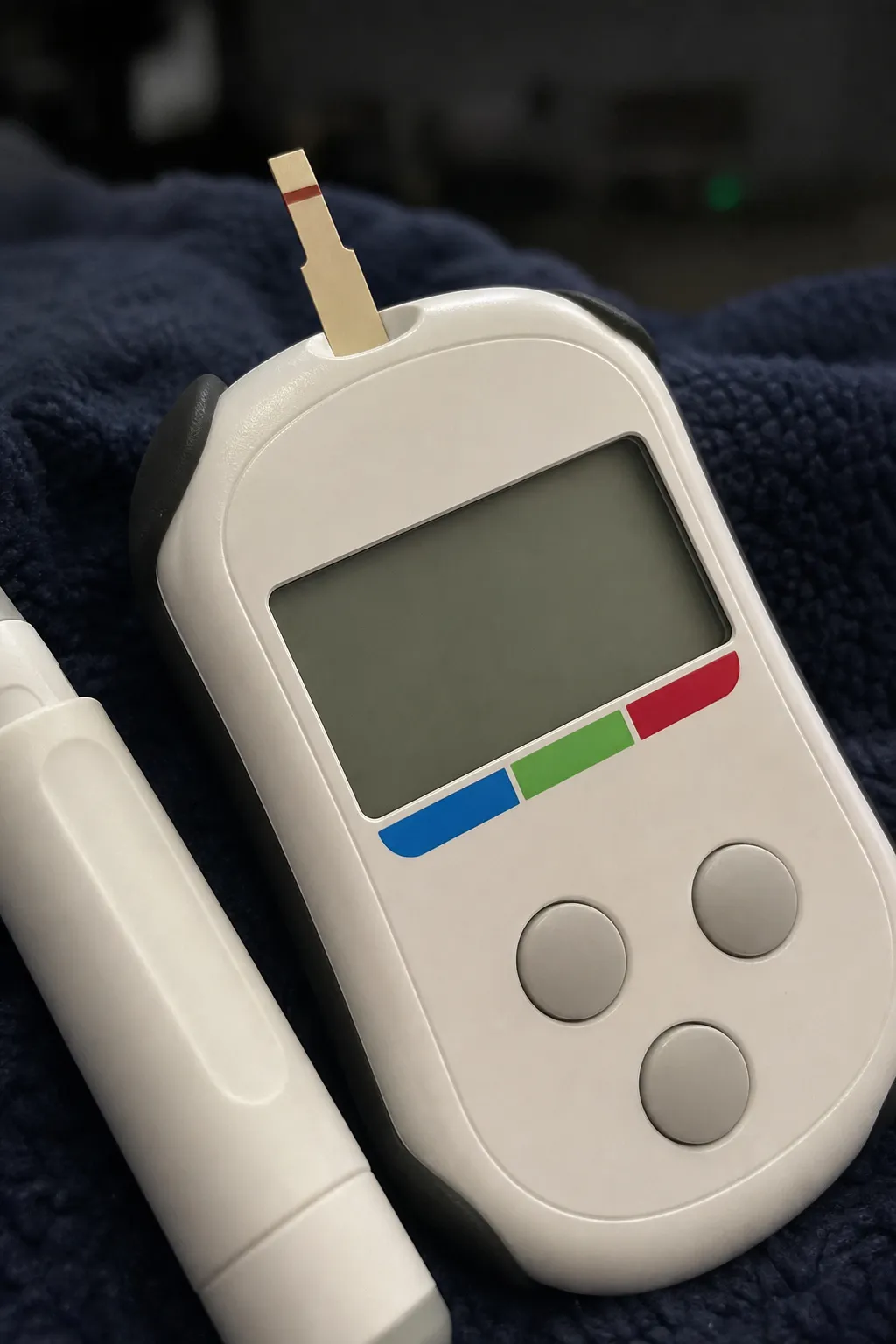
It was never the berberine. It was what wasn't in the capsule with it.
Ad Copy
I am SO sick of people posting here saying one more single-ingredient capsule is going to fix your blood sugar. It won't. Not on its own. I've tried it. So has everyone in my Facebook group. So has my sister. So has the woman at the supplement counter who, by the way, is still on her prescription. Let me tell you what two years of "natural blood sugar protocols" actually got me. A plain single-ingredient capsule every morning. Six containers of it. Six months. My mornings got slightly better for about three weeks, then went straight back to where they'd been. And the stomach trouble. Nobody warns you about the stomach trouble. Half the days I was afraid to be more than a few minutes from a bathroom. Cassia cinnamon stirred into my coffee, spooned out of the spice rack, because a wellness account told me to. Tasted like dirt. Stained every mug I own. Nothing changed. The fitness girls swore by it. Maybe it works if you're 32 and run marathons. I'm 57, and my afternoons were exactly the same in March as they were in January. Then the "blood sugar support" gummies. Everyone online called them the ones that actually work. Nothing. Just a sugar hit at nine in the morning and most of a pack of coloured lumps I eventually threw away. CoQ10. Then fish oil when the CoQ10 didn't do anything. Then a high-dose vitamin E because a guy on Reddit had a whole essay about it. Same result. My doctor said "well, it's good to stay active," like that was supposed to be a consolation. Detox tea. A fat-burning powder that made my heart race. A very expensive imported "metabolic blend" from a forum thread. A continuous monitor patch that told me, in beautiful colour graphs, exactly how bad my afternoons were, and did absolutely nothing to change them. Add it all up. I sat down one night and actually did the arithmetic. Two years of natural protocols. More money than I have ever admitted out loud to my husband. And I was, on a good day, marginally better than where I started. You know what they all have in common. They all kind of work. A little. For a few weeks. And then your body settles right back where it was, and you're sitting at the kitchen table at 6am with the meter and the test strip watching the same thing happen again, and you're wondering whether you're going to spend the rest of your life on this hamster wheel before you finally give in and let your doctor write the thing she's been waving at you for three years. That was me in February. I'd lost 22 pounds. I was walking 40 minutes a day. I'd cut carbs to the point that my husband stopped eating dinner with me, because he said the chicken tasted like a hospital tray. And at two o'clock that afternoon a wall came down on me in the middle of a phone call, the same wall that had come down every single working day for four years. After everything. I sat at the table and I almost cried. Not from sadness. From rage. The kind of rage where you start to wonder whether the whole "natural supplement" world is just a slightly cleaner version of the pharmaceutical one. Different packaging. Same trick. I'm writing this from the other side of that morning. I have not had that afternoon wall in eleven weeks. No new medication. No prescription pad. No low-grade dread every time I walk past the counter. What changed wasn't another supplement off the shelf. It wasn't a stronger version of the same capsule or a fancier gummy. It was an entirely different understanding of what was actually wrong with me. Something none of those containers had ever touched, and something my own doctor had never mentioned in three years of ten-minute appointments. I'm going to tell you exactly how I found it. Because if you're somewhere on the same wheel I was on, you need to hear this before you spend another six months on the next thing that promises to be the one. Back to that afternoon at the kitchen table. That night I couldn't sleep. I was scrolling our local community page on my phone in the dark. The one where neighbours post about lost dogs and which plumbers not to call. A woman a few streets over had posted a long question. She'd been on two medications. The last one had given her stomach trouble so bad she couldn't leave the house. She was asking whether anyone in the area knew a doctor who would actually listen instead of writing another prescription. Forty-two comments. Most of them useless. But one comment near the top had thirty-eight replies under it. A man I didn't know recommended a holistic doctor on the other side of the city. Said he'd walked in there frustrated and out of options, on two medications, and the doctor had spent ninety minutes with him on the first visit and walked him out with a completely different understanding of what was wrong. Reply after reply under that comment. People I didn't know, but people from my own zip code, saying the same thing. He takes his time. He explained things nobody had ever explained. He didn't rush. I screenshotted the doctor's name and put my phone down. Forty-five minutes across the city in traffic. Out of network. Three figures for the first visit, no insurance. I almost didn't go. Another out-of-pocket appointment on top of everything I'd already burned felt like one more donation to the natural health industrial complex. But I kept thinking about that comment thread. Thirty-eight replies. From my own town. People who weren't trying to sell me anything. So two weeks later I drove across the city on a Tuesday morning and sat in a quiet office with bookshelves and no fluorescent lights, and a doctor with grey hair and reading glasses pulled my chart up on his laptop while I listed every single thing I'd tried. He let me finish. Then he closed the laptop. "You're treating the wrong end of it," he said. I waited. "The food you eat isn't your problem. Whether your cells can take it in is. Your body has a system for pulling fuel out of your blood and burning it, and that system has gone quiet. None of the things on your list restored it. And until it's restored, your afternoons are going to keep doing exactly what they're doing." He pulled out a notepad and drew a simple diagram. Food going in. An arrow. Sugar in the blood. A second arrow. A little circle he labelled "cell." And he tapped that second arrow with the end of his pen. "This one. Whether it crosses here. This is where it actually gets decided." He kept going. "When this is working properly, your muscle cells open up, take the fuel out of your blood and burn it. You eat a meal, your energy comes up gently, then settles gently. No spike. No crash. No two o'clock fog. That's how it worked when you were younger. That's why you could eat almost anything and your body simply handled it." "But that system wears. Every stretch of chronic stress. Every year of sleeping badly. Every decade of age. The cell becomes less responsive to the signal telling it to open up." "A little at a time. Year after year. Quietly. Without you noticing." "And then one day the fuel stops getting in. It sits in your bloodstream instead. You are not out of energy - you are full of energy you cannot reach. Your pancreas pushes harder, sends more signal, and the cell still doesn't answer. An hour after lunch you crash, and that's the fog, the exhaustion, the cravings screaming at you to eat again. So you eat. And the whole thing starts over." "That's what's happening to you. Not a mystery. Not bad genes. A switch that's gone quiet, stuck in a cycle that gets a little worse every year." I sat there for a long second. He let me sit with it. Then he counted on his fingers. "Now look at what you've been doing. Cutting carbs doesn't restore the switch. It just gives a quiet system less to deal with. The little bit you do eat still can't get where it's supposed to go. You're eating less at a table with a hole in it." "Walking flips the switch, genuinely - that's why a walk after dinner does more than the calories could ever explain. But it flips it for an hour and then it goes quiet again. You can't walk forty minutes a day for the rest of your life and call that a mechanism." "The gummies are sugar with a health claim on the label. Skip those." "CoQ10, fish oil, vitamin E - those are downstream. They're cleaning up after the problem. They're not the problem." "And the cinnamon in your coffee was the wrong plant. There are two completely different species sold as cinnamon in this country. The one in your spice rack is cassia. The one in the research is Ceylon - Cinnamomum verum. Different plant, different chemistry. You've been stirring the wrong one into your coffee for a year." He set the pen down. "Even the medication your doctor keeps offering doesn't do this. It works on your liver, telling it to stop releasing stored sugar at four in the morning. That's useful. It doesn't make a single cell open its doors. So you'd take it, deal with whatever it does to your stomach, and still hit that wall every afternoon, because the switch is still quiet." "Everything you've tried has been aimed at the flood. Nothing has restored the thing that's supposed to stop the flood happening. That's why nothing has worked. You've been managing the flood. Nobody flipped the switch." Two years. Managing the flood. I want to be honest about how that landed. It was not relief. It was humiliation. I had been so careful. I had read so much. I had genuinely believed that if I just stayed disciplined about it for long enough, eventually one of them would take. And a man I had met forty minutes earlier had explained, in about four sentences, why not one of them could ever have worked. I asked him what actually flips the switch. He nodded like he'd been waiting for the question. He told me about a shrub whose bark has been used across Asia for centuries. Barberry. Bright yellow inside, bitter as anything, and reached for so consistently, for so long, in so many separate traditions, that modern researchers eventually went and asked why. The compound in it is called berberine. Now - I had heard of berberine. Obviously. It's all over the internet. I had a container of it in my kitchen drawer at that exact moment, six months of it, which had done absolutely nothing. I told him that. Almost triumphantly, honestly. Like I'd caught him out. He smiled and said, "I know. Tell me what else was in it." I said nothing else. That was the point. It was pure. Single ingredient. No fillers. It said so on the front. And he said, "Then you were never absorbing it." That was the moment two years of frustration finally made sense. "Berberine," he said, "is one of the few plant compounds we know of that activates AMPK - the switch we've been talking about. The switch that tells a muscle cell to open up, pull fuel out of your blood and burn it. Not in your liver, like the medication. In the cell itself, where the problem actually is." "But it has one serious flaw. Swallowed on its own, barely any of it crosses your gut wall. Most of what you take passes straight through you. That is also, incidentally, exactly why it upset your stomach - your intestine spent six months processing a compound your bloodstream never once met." "There is a well-established fix for this, and it costs almost nothing. Piperine. Black pepper extract. In the same capsule, not in a second product you remember to take sometimes. It's what carries the berberine across. A formula that has it and a formula that doesn't are not the same product, no matter what the front of the label says." "And there's a second half to it. Berberine on its own is one lever. It works the energy switch, which is the big one. It doesn't quieten the low-grade inflammation that's part of why your cells stopped listening in the first place, and it doesn't do much for how well the receptor hears the signal. Cover one pathway out of three and you'll feel about a third better, which in practice feels like nothing." He looked at me over his glasses. "You didn't need a different compound. You had the right compound sitting in your kitchen drawer. You needed it built properly, with the things that carry it in and the things that cover the rest." "When the switch comes back on, fuel goes where it's supposed to go. Your energy stops spiking and crashing. The two o'clock wall stops arriving. The cravings quieten down, because your body stops screaming for fast fuel it can't use anyway. And when that cycle stops grinding on you three times a day, the system finally gets a chance to recover instead of being worn down a little further every year." "And there's one more thing that same switch does, which almost nobody explains to women your age. It supports your own GLP-1. The satiety signal. The one that tells your brain the meal is finished. That signal gets quieter as we get older, and that is why the dinner that used to be plenty leaves you standing in your own kitchen an hour later looking for something you can't even name. You are not greedy and you have not lost your discipline. Your off switch got quiet, and it went quiet for the same reason everything else did." "Why didn't my own doctor tell me any of this?" I asked. He shrugged. "Most of it sits in nutrition and metabolism journals she isn't going to read, and there's nobody walking into her office to detail her on a plant. You can't patent bark. So there's no representative, no budget, no lunch. For now, you just have to know about it." Then he leaned back and said the part I want you to read twice. "Before you go and buy the first berberine product you see, you need to hear this. Most of what you'll find is the wrong thing entirely. Single ingredient, no carrier, which is what you already own and what already failed you. Or it's a blend where the label says cinnamon and means cassia. Or it's padded out with fillers so the capsule feels full. The front of the container says the right word. What's inside isn't the right thing." He told me what to look for. Berberine with a black pepper extract in the same capsule. Ceylon cinnamon named by species on the panel, not just "cinnamon." Other pathways genuinely covered, not one active and six pinches of something. A sensible dose form you'll actually take every day. No fillers worth mentioning. Made in the USA. He said he takes something along these lines himself every morning. Said he doesn't recommend a specific brand to patients because he isn't in the supplement business. But if I matched everything he'd just listed, I'd find one. I asked him the thing I'd been chewing on the entire drive over - whether I could even take it, given what I was already on. He said that was the right question. He said this isn't a drug and it isn't a replacement for one. It's a daily plant extract. He has plenty of patients take it alongside what they're already on, not instead of it. He told me to keep taking what my own doctor had prescribed, bring the pack to my next appointment, and let her watch it with me. That was it. "It's not a prescription," he said. "It's bark and spice and root. It works with what your body already does instead of overriding it. That's the whole point." He also told me what to expect from the timeline, because most people quit far too early. He said the first two weeks, the compounds are simply getting into you properly, probably for the first time. You won't see much. But a lot of people notice they're sleeping deeper before anything else happens. Weeks three and four, the switch starts responding again. Fuel starts going where it's meant to go. That's when the cravings ease and the crash after lunch starts letting up. Weeks five through eight, with steady daily use, it holds. Your body handles ordinary meals the way it used to. That's the window where the afternoons genuinely change, and where most people first notice their waistband has stopped arguing with them. Weeks nine through twelve and beyond, with ongoing use, it keeps holding, and the cycle that had been wearing the system down every year stops wearing it down. He said the people who fail are the ones who quit at week two because nothing has happened yet. The biology takes time. Twelve weeks minimum to see what it can really do. I drove home with two pages of his handwritten notes in my jacket pocket. That night I sat at my kitchen table with my laptop and started looking. Most of what came up failed the criteria immediately. Single ingredient, no carrier. Or "cinnamon" with no species named. Or a long list of fillers. Or made somewhere I couldn't verify. I looked at probably forty products over two nights. The one that hit every single thing on his list was GLOV Berberine Complex. Berberine HCl from barberry bark - Berberis aristata, named on the panel. BioPerine black pepper extract in the same capsule, which was the whole problem I'd been having. Ceylon cinnamon named by species, Cinnamomum verum, not cassia. Turmeric root and ginger root for the inflammation underneath. Apple cider vinegar as a powder. Goldenseal root, which carries berberine of its own, alongside the barberry. Seven actives. Two capsules a day. Gluten free, vegan, sugar free, formulated and manufactured in the USA. Every box checked. I ordered a pack that night. Two capsules every morning with water. Week one and two, exactly like he said. Nothing dramatic. But by day ten I was sleeping deeper than I had in years, and waking at half past six without the alarm dragging me out of something. Week three the cravings started easing and the nine-thirty trip to the pantry stopped happening. Week four I got to quarter to five on a Tuesday and realised the wall hadn't come down. I want you to understand what that meant. Four years. Every working day. And then it just didn't. Weeks five through eight it held. By the end of week eight I'd had one bad afternoon in a month, and my jeans zipped in the morning and still zipped at six in the evening, which I stood in the bedroom thinking about for longer than I want to admit. My husband noticed before I said anything. He kept quiet for about a fortnight - he had watched me get excited about six other things by then, and I don't blame him - and then one evening he said, carefully, like he was afraid of jinxing it: "You've been staying up past nine." I hadn't even registered that I had. I went back to my own doctor at the three-month mark. She read the panel, read it again, and asked what I was doing differently. I told her. She wrote it down. No new prescription that visit. None. That was eleven weeks ago. My husband and I had pasta last night. Real pasta. A normal portion. At the same table. Here's what I want to say to you, because I'm guessing you're somewhere on the same wheel I was on. Maybe you've also added up what you've spent on things that changed nothing. Maybe you're afraid to do that arithmetic. If you've been cycling through capsule after capsule, gummy after gummy, powder after powder, you are not crazy and you are not failing at this. You were given the wrong tools, or the right tool built wrong. Almost all of it works somewhere downstream of the actual problem. And the one thing that does work on the actual problem - berberine - is sold to you in a form your body can barely absorb, on its own, with nothing to carry it in and nothing covering the pathways it doesn't reach. Built properly, it works. That's the difference. It was never the compound. It was the execution. And it works with what you're already doing, not against it. If you're on a medication, you stay on it. You bring the pack to your doctor and you let her watch it with you. This was never about replacing anything. But only the properly built version. Black pepper extract in the same capsule. Ceylon named by species. The other pathways actually covered. If a product fails any one of those, you'll conclude that berberine doesn't work, and you'll be right back where you started, telling people on the internet that none of it does anything. GLOV Berberine Complex is the one I found that hit every requirement. Two capsules with water every morning. I've taken it ever since. You don't need to scroll a community page at midnight, or drive across a city, or pay out of pocket for ninety minutes, or spend two nights comparing forty products to find this out. I already did all of that for you. It comes with a 60-day money-back guarantee, and right now it's Buy 2 Get 1 FREE - three months for the price of two, which works out to $21 each. Three months is the timeline that matters. The first two weeks the compounds are finally getting into you. Weeks three and four the switch starts answering. Weeks five through eight the afternoons change. Weeks nine through twelve and beyond, it holds. If nothing has changed inside that window, you get your money back. The fact that they'll offer that, and the shelf of things that failed me never did, tells you something. I hope this helps someone. I really do. Because nobody should spend two years and a number they can't say out loud feeling proud of a solution that was never built to work where the problem actually starts. Marla H. P.S. The switch is the thing almost every blood sugar product on the shelf is bypassing. Cutting carbs bypasses it. Gummies bypass it. Fish oil and CoQ10 are downstream of it. Berberine is the one compound I've found that goes straight at it - but on its own, with nothing carrying it across your gut wall, it may as well be sawdust. That is the entire reason six months of it did nothing for me. P.P.S. The 60-day guarantee covers the window where it actually starts moving. Two weeks for the compounds to get properly into you. Four weeks for the switch to start answering. Around eight weeks for the afternoons to change. After everything I spent on things that didn't work, that guarantee is the first time the arithmetic has ever been in my favour. P.P.P.S. If you take one thing from all of this, take this. I already owned the right compound. It sat in my kitchen drawer for six months doing nothing, and I concluded that berberine was a scam and told half my Facebook group so. I was wrong, and I was wrong in a way that cost me a year. It was never the berberine. It was what wasn't in the capsule with it.
More from Metabolism After 40
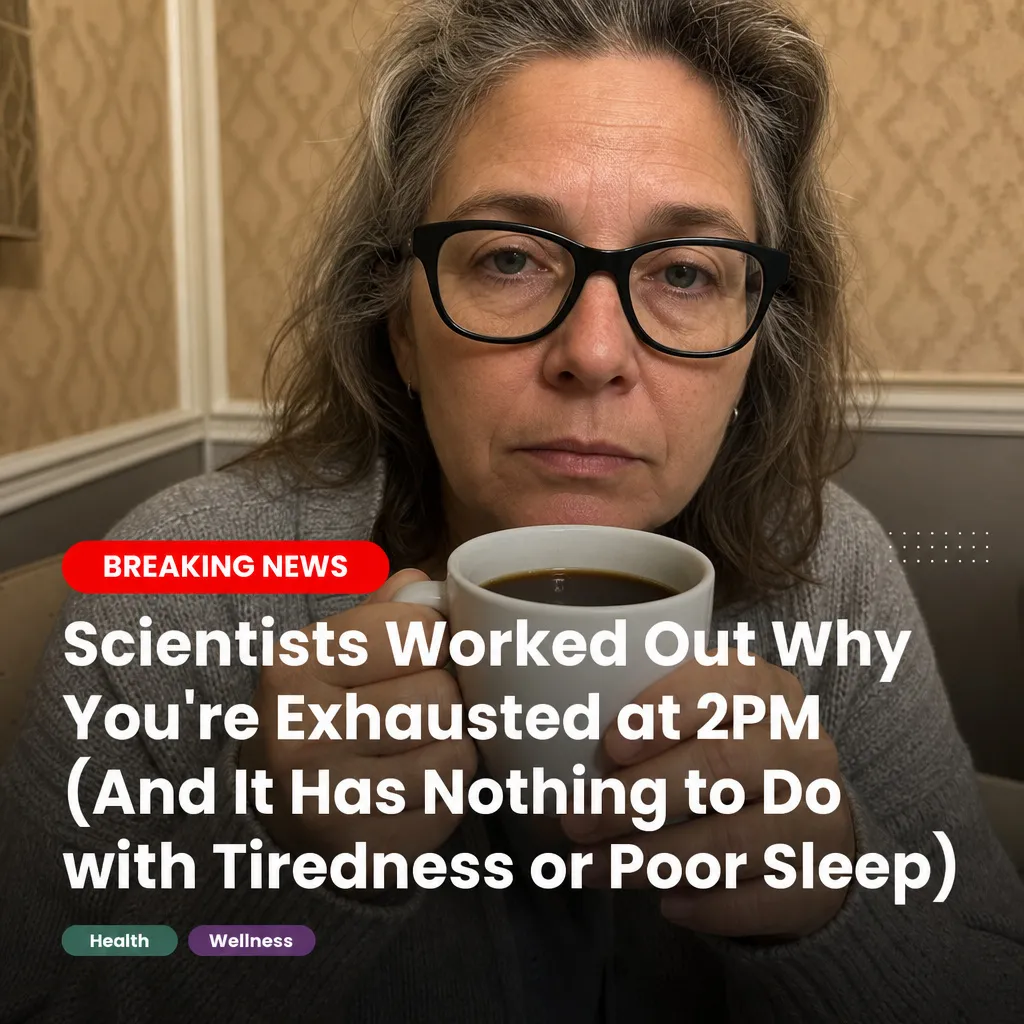
Berberine Complex - Cellular Energy & Metabolism Support
Metabolism After 40
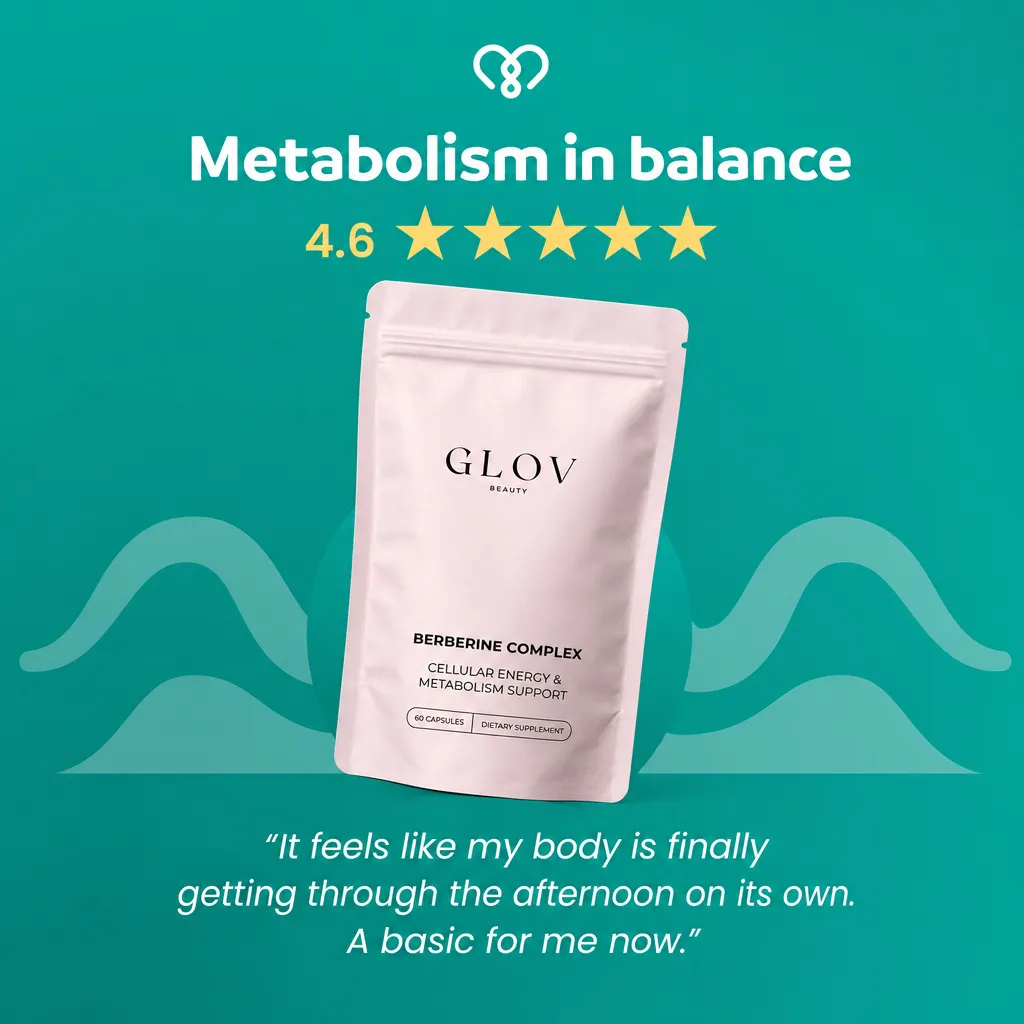
Metabolism In Balance
Metabolism After 40
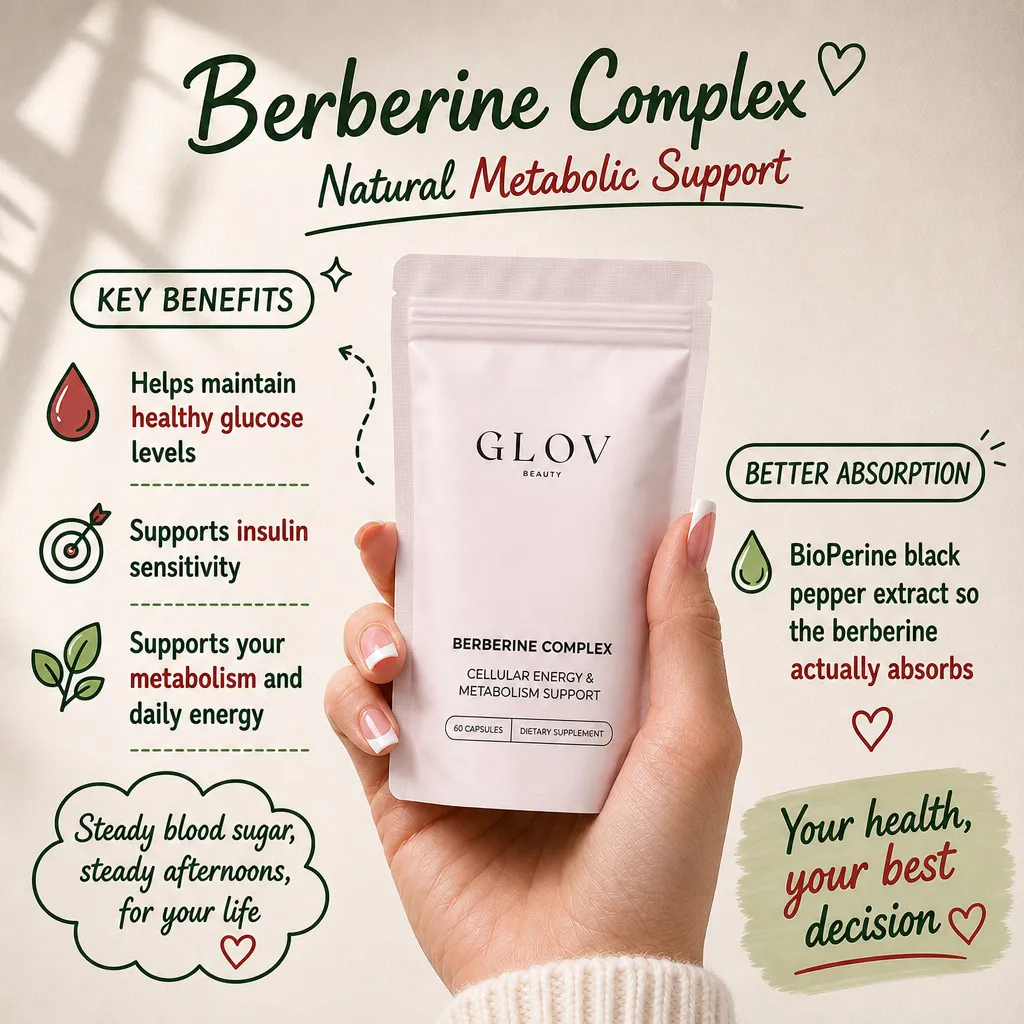
Berberine Complex — Natural Metabolic Support
Metabolism After 40
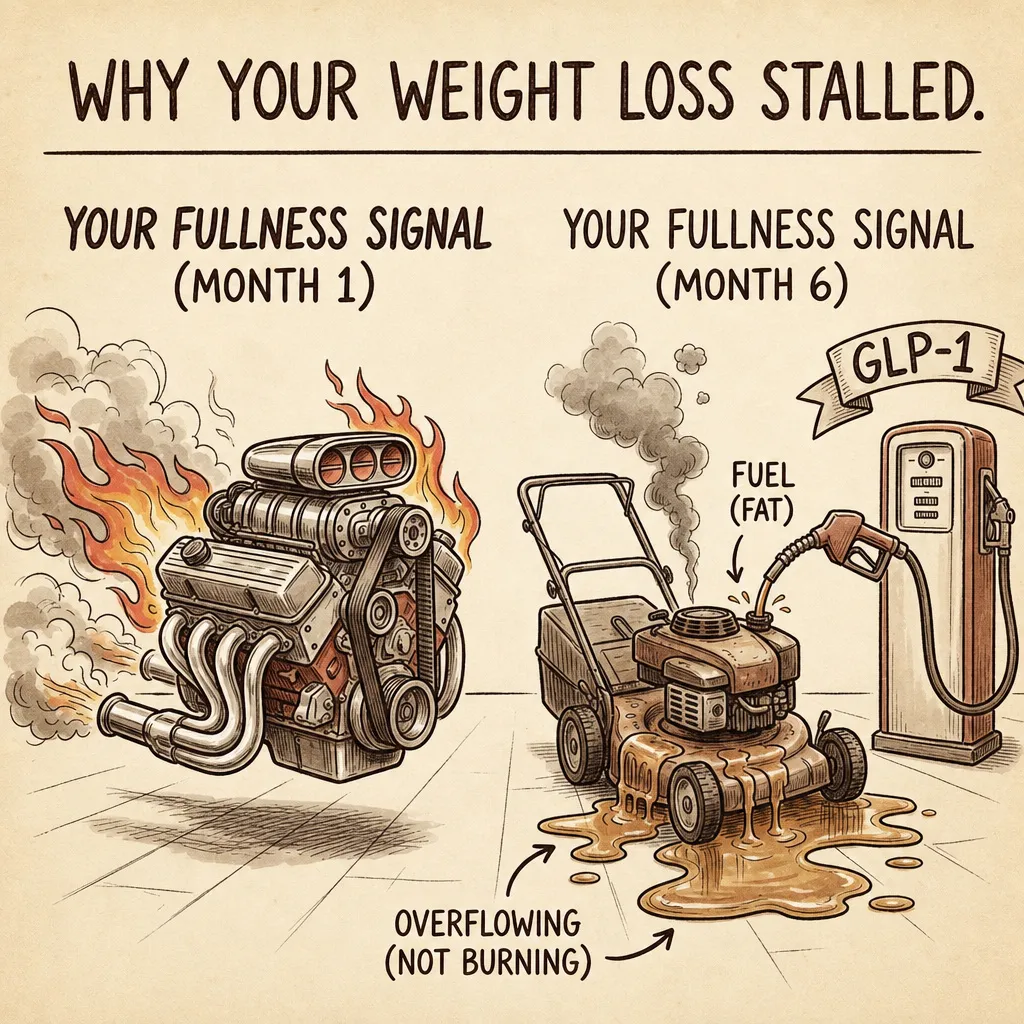
Why Your Weight Loss Stalled At Month Three
Metabolism After 40
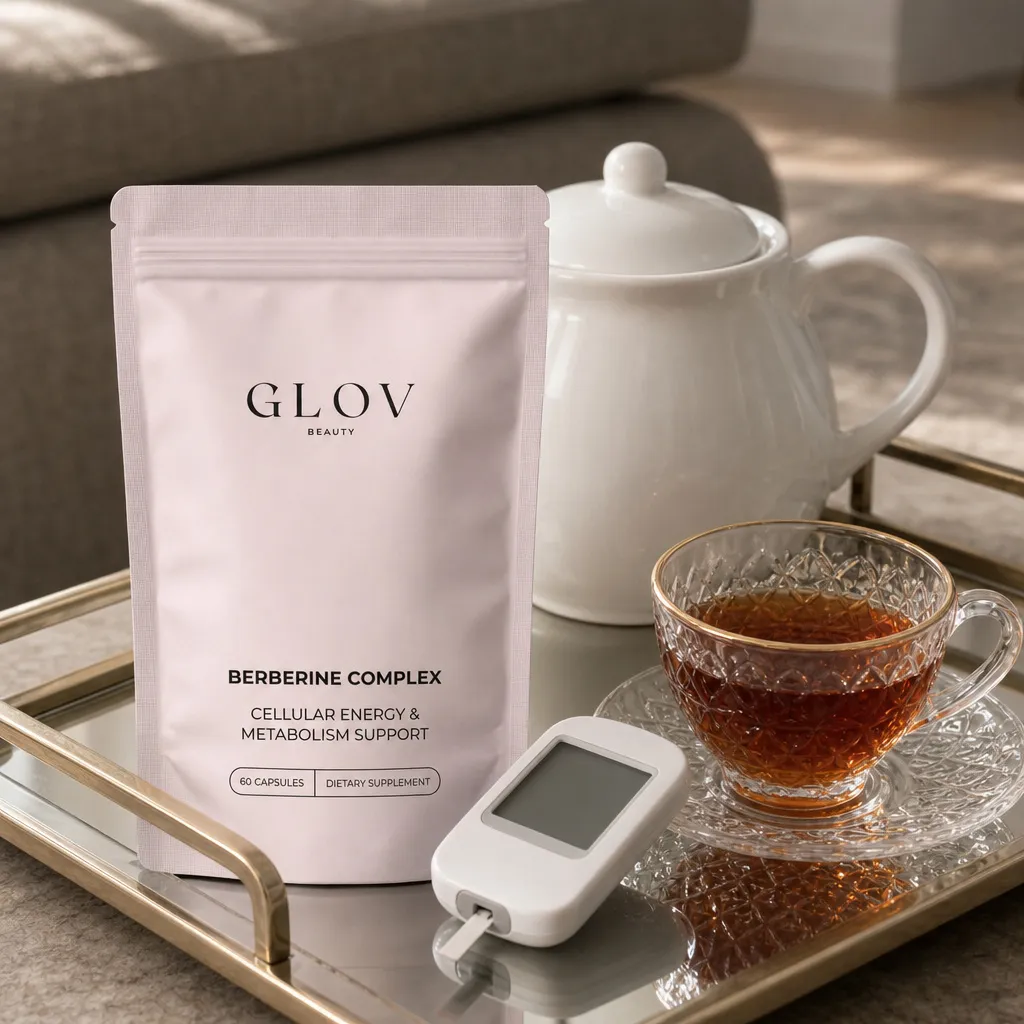
I bought seven single-ingredient capsules before I worked out what all seven were doing wrong
Metabolism After 40

A Hundred Answers And You Still Start Monday
Metabolism After 40
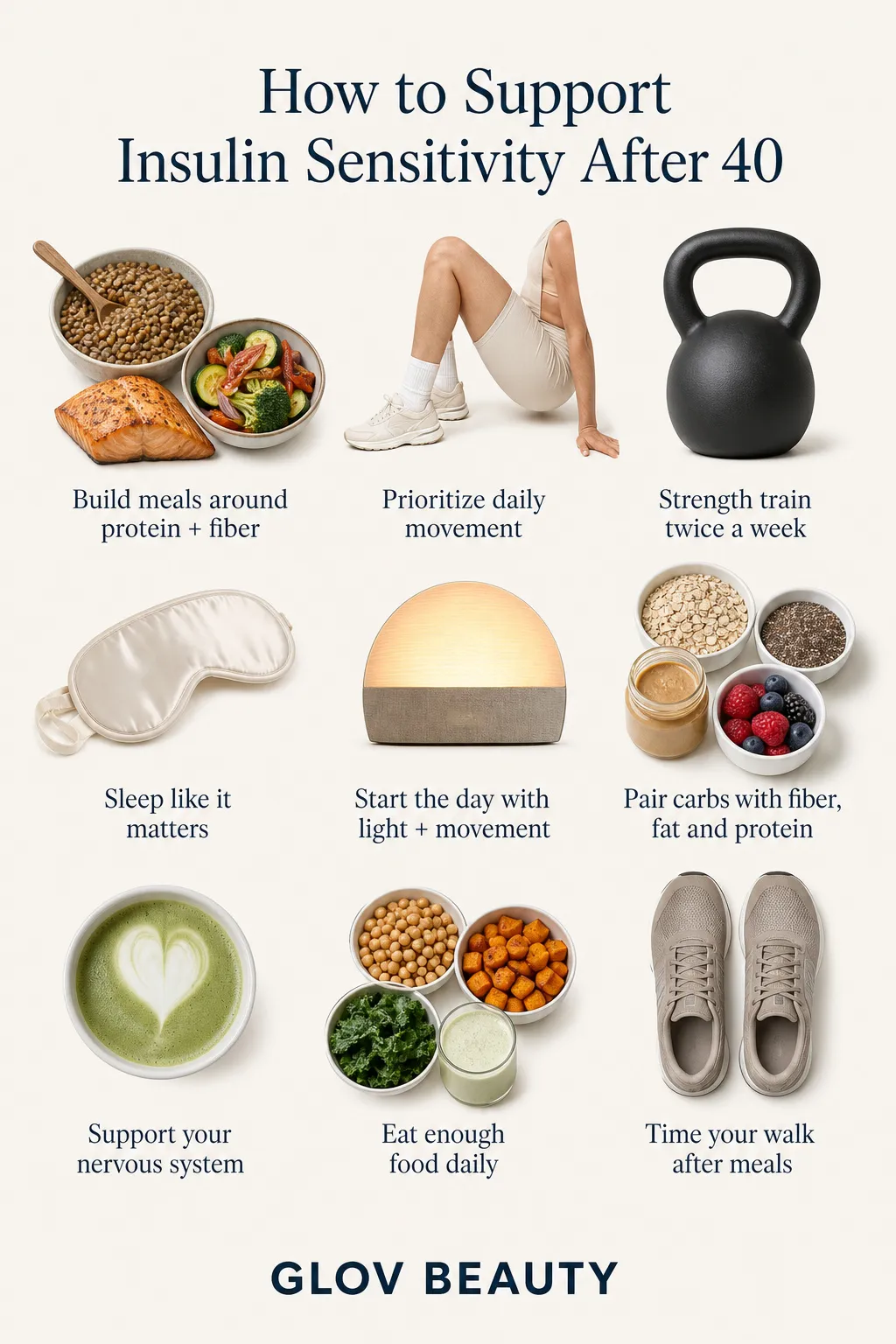
How to support insulin sensitivity after 40
Metabolism After 40

Four symptoms. One mechanism. Nobody checked it.
Metabolism After 40
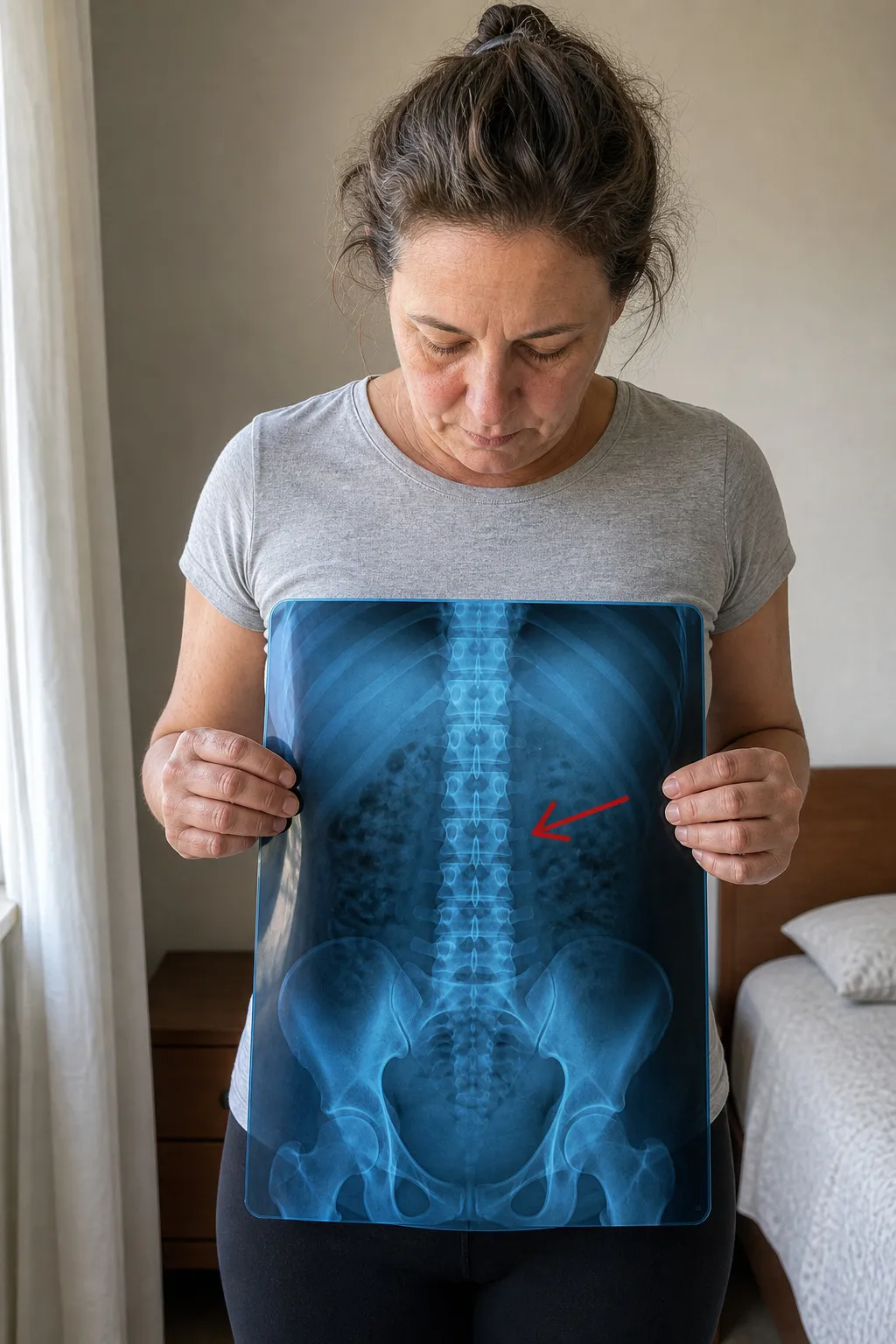
The Real Shock Came At 9:13 PM On A Tuesday
Metabolism After 40

Is Your Berberine Built Like This?
Metabolism After 40

Is Your Berberine Built Like This?
Metabolism After 40

Is Your Berberine Built Like This?
Metabolism After 40

 Add to Chrome