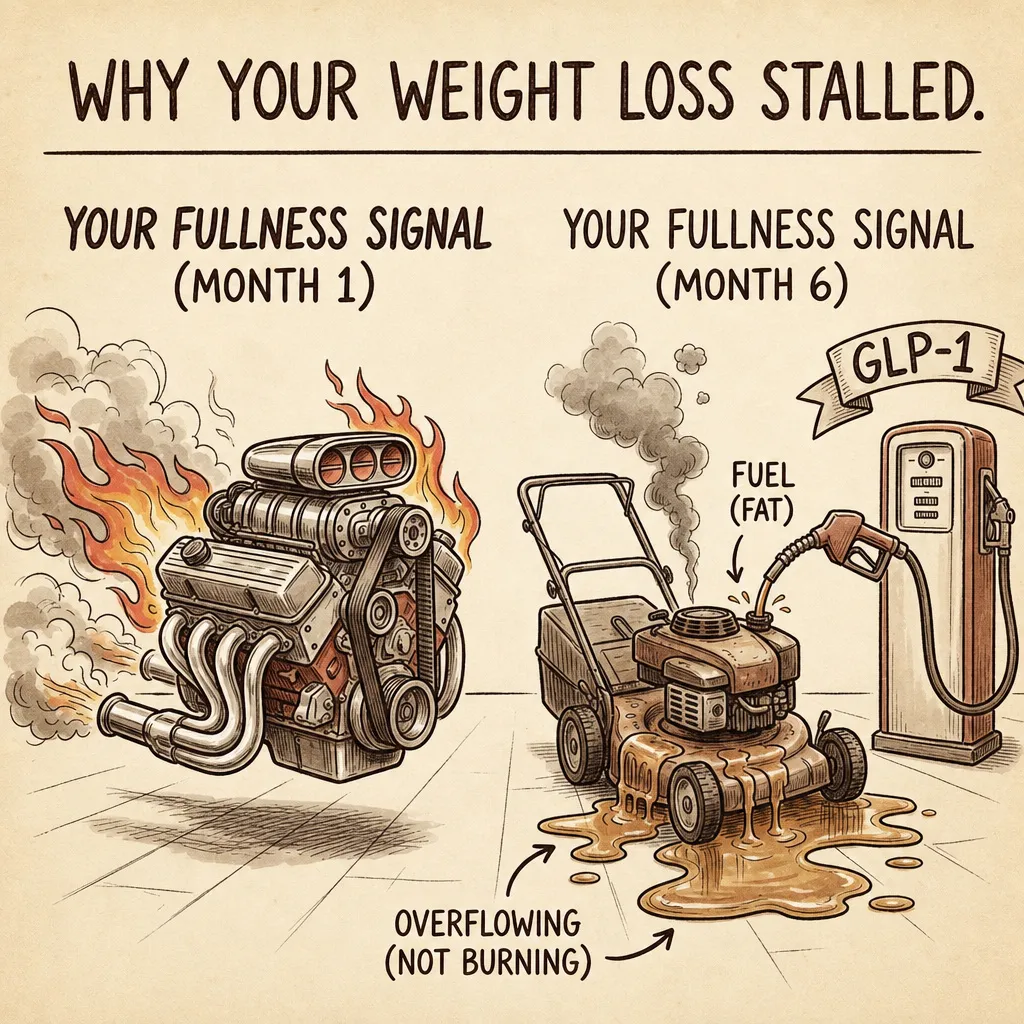
Why Your Weight Loss Stalled At Month Three
Ad Copy
I am not a doctor. I am the woman who stalled at month three, and then spent a year working out why. And I need to warn you about something that happens inside the first year, because it is what makes most women quit and decide they are simply one of the ones it does not work for. I have talked to a lot of women about this now. In forums, in the school car park, in my sister's kitchen. And it is the same pattern every time. It starts beautifully. Six weeks in, your rings are looser. You catch yourself in a shop window and you do not immediately look away. You are hopeful in a way you had honestly forgotten. Month two, month three, still moving. Slower, maybe, but moving. Then, somewhere around month three or four, it happens. Everything stops. Not for a few days. Not for a week. For weeks. Often months. A friend of mine hit that wall in the spring. Same food, same walks, same everything, and nothing moved at all. At week four she was confused. She kept saying she must be doing something wrong and could not find what. At week six she was angry. She told me she had done everything asked of her and her body had simply decided not to hold up its end. At week eight she wanted to stop entirely. What is the point, she said, if this is where I live now. And here is the part that gets me: Hers was not unusual. It is the norm. Almost every woman I have spoken to has hit a long flat stretch somewhere in the first year. Most of them describe it identically: the same effort, the same plate, and a scale that will not move an ounce. And the ones with the hardest stretch are almost always the ones who cut the deepest at the start. Most of them quit in the middle of it. They walk away believing it failed them, when their body was doing exactly what it is built to do. Here is what nobody ever told me. When I first stalled, I told myself what everyone says. Be patient. Trust the process. Drink more water. Maybe cut another two hundred calories. I did not have a real answer because I did not understand what was actually happening. Then I kept reading, past the first page of results, into the parts written by people who study this rather than sell it. And I came across an idea that changed how I think about all of it. It is called set point. The short version is that your body defends a weight range it has decided is safe, and it defends it hard, because for most of human history a rapid loss meant something had gone badly wrong. The line I could not stop thinking about was this one: the stall is not a failure of your effort. It is your body's emergency brake. And if you do not know how to release it, you can sit there for months. Months. That word stayed with me for weeks, because I thought about every woman I know who quit inside one. Here is what I can actually tell you. The brake is not pulled by the scale. It is pulled by the signals your body is reading all day, and the loudest of those is what your blood sugar is doing. Spike, crash, spike, crash. Every crash sends up a demand for more, and a body being shouted at like that does not conclude that things are calm and it is safe to let go of anything. So you eat less, and you get shouted at more, and you hold on tighter. That is the loop, and every extra thing you cut pulls it a notch tighter still. It is the one situation where trying harder is genuinely the wrong move, which is unbearable to hear when trying harder is the only tool you have ever been handed. Working with the brake rather than against it means making the day boring. Fewer swings, fewer crashes, fewer demands. Not another two hundred calories cut. That is the whole reason I drink one sachet every morning now instead of cutting something else. One stick, torn open into a tall glass of iced water, strawberry acai, ten seconds. Four things in it, printed on the stick: 500mg GLO-1 Cutting Blend, 200mg Berberine, 200mg Green Tea Extract, 100mg Chromium. Berberine and chromium are the two most studied things you can put behind steady blood sugar. Green tea extract sits underneath them, supporting how you use what you eat. There is no stimulant in it and nothing to time around coffee. What it changed for me was not the scale first. It was the afternoon. The three o'clock wall stopped arriving. Then the nine o'clock kitchen visit stopped. And a few weeks after that the scale started moving again, quietly, without me cutting one more thing. If you are in a stall right now, or you are afraid of the one coming, this is the part to understand: The stall is information, not a verdict. Cutting harder is the one response that makes it last longer. The thing to change is how loud your day is, not how small your plate is. And the women who get through it are almost never the ones with the most willpower. They are the ones who stopped fighting their own biology and started feeding it something steady. I wish somebody had told me that at month three instead of telling me to be patient. — Marianne T.
More from Metabolism After 40

Berberine Complex - Cellular Energy & Metabolism Support
Metabolism After 40

Metabolism In Balance
Metabolism After 40

Berberine Complex — Natural Metabolic Support
Metabolism After 40

It was never the berberine. It was what wasn't in the capsule with it.
Metabolism After 40

I bought seven single-ingredient capsules before I worked out what all seven were doing wrong
Metabolism After 40

A Hundred Answers And You Still Start Monday
Metabolism After 40

How to support insulin sensitivity after 40
Metabolism After 40

Four symptoms. One mechanism. Nobody checked it.
Metabolism After 40
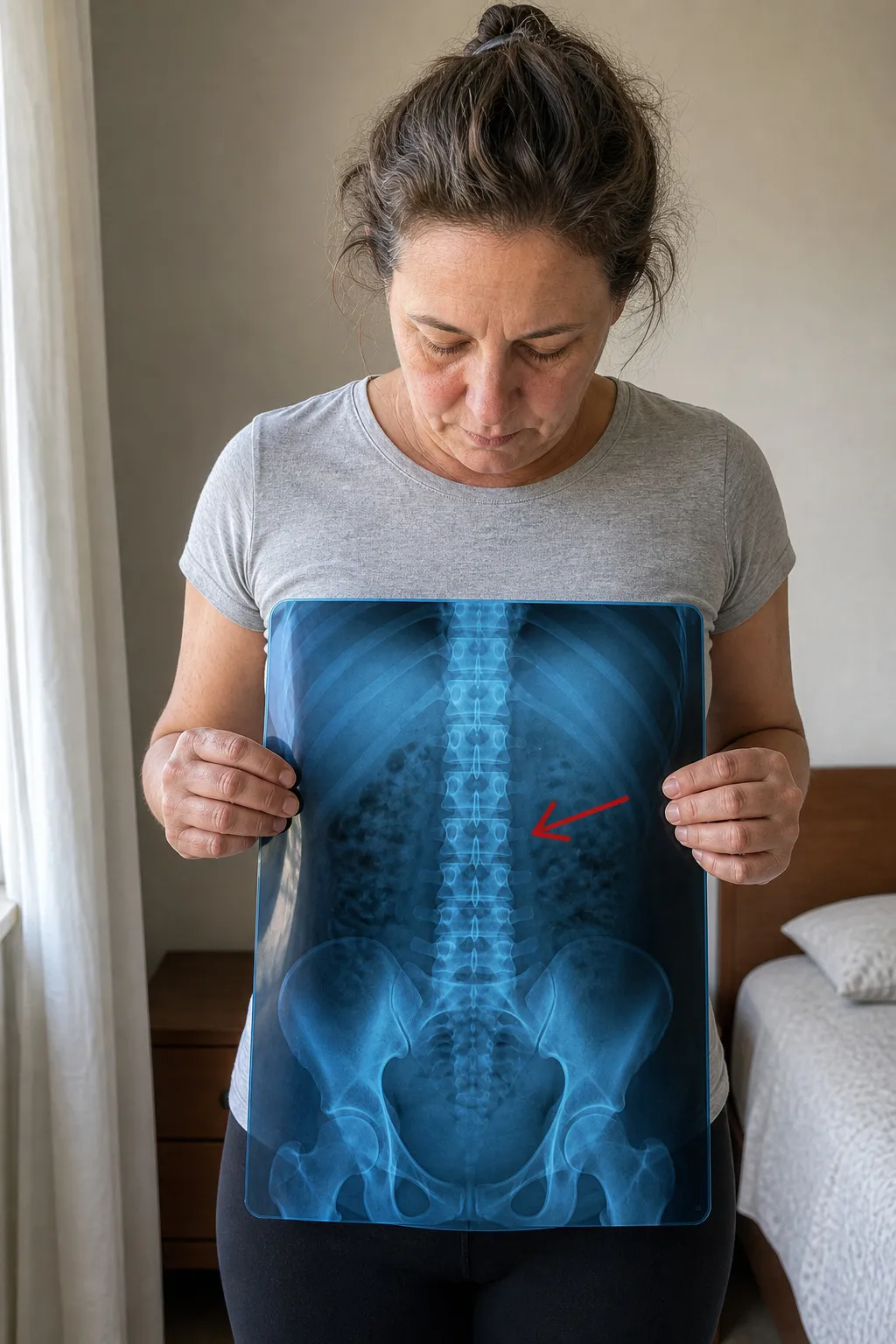
The Real Shock Came At 9:13 PM On A Tuesday
Metabolism After 40

Is Your Berberine Built Like This?
Metabolism After 40

Is Your Berberine Built Like This?
Metabolism After 40

Is Your Berberine Built Like This?
Metabolism After 40

 Add to Chrome