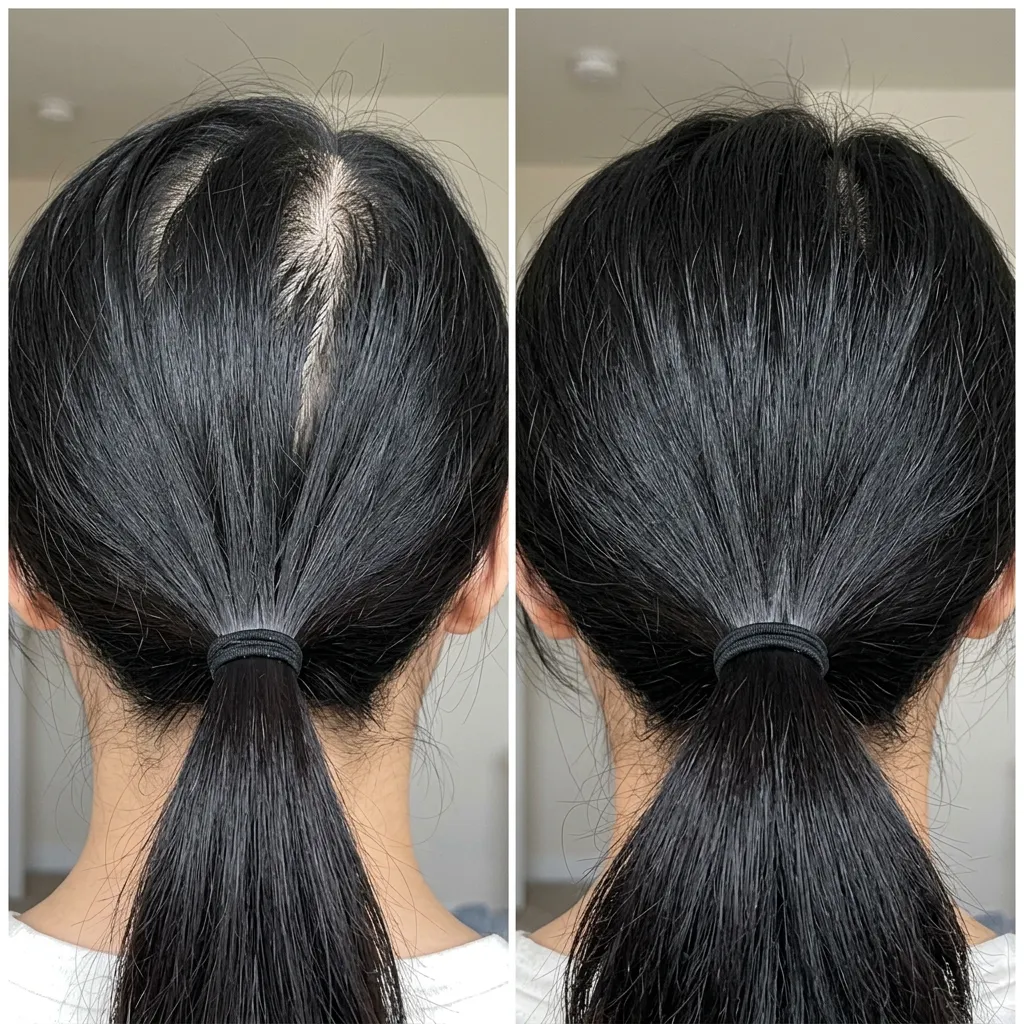
Help Hair Loss Naturally
Ad Copy
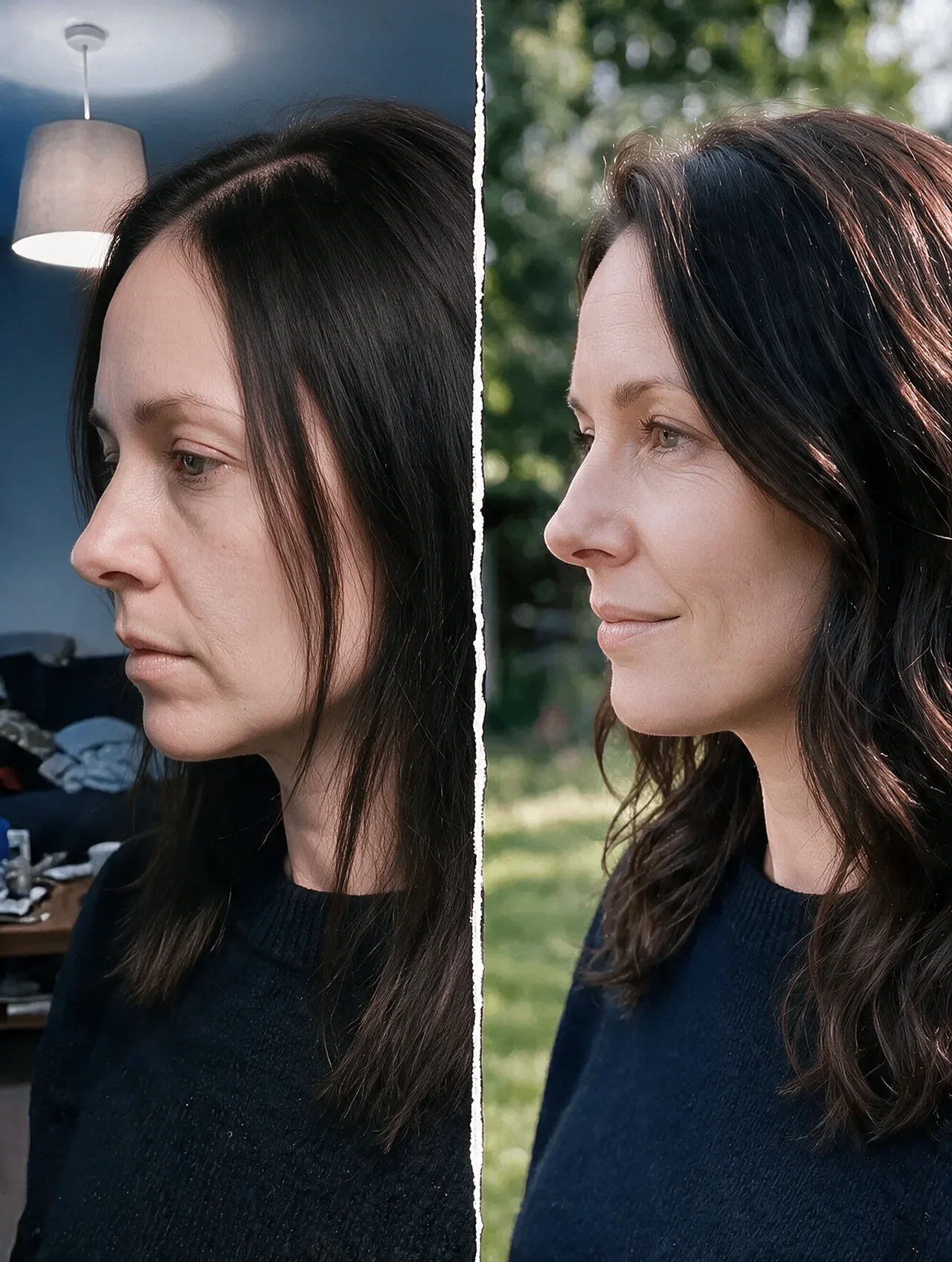
I spent $30 a month for four months on finasteride, plus a $150 telehealth consult to get the prescription. I spent $35 a month for six months on minoxidil foam that burned my scalp raw. And I spent $549 on a laser cap device I used three times a week for four months, because the ad promised clinical-grade red light therapy for regrowth. Total: just over $1,000. My part was still getting wider. Then a hair specialist told me something that made my blood run cold — even the prescription options might only be solving half the problem, and none of them were addressing the actual hormone doing the damage. My name is Sarah Mitchell. I'm 46, I have two kids, and eighteen months ago I could see my scalp in every family photo we took. I used to be just like you, googling "hair loss treatments that actually work" at midnight, trying to figure out which option was worth the money and the risk. I went the prescription route first. A telehealth provider prescribed finasteride off-label, and for a few months it actually seemed to be working — my shed count came down. But around month three, I noticed a real drop in libido and some mood changes I couldn't explain by anything else going on in my life. My prescriber confirmed this is a known, documented risk, more common in women than the marketing tends to suggest. I stopped, and my hair started sliding backward again within about six weeks. I applied minoxidil foam twice a day for six months, dealing with an itchy, irritated scalp because that's what I was told you had to do. My shed count came down some, but never fully. And when I finally stopped using it, my hair fell back out within about three weeks — the rebound shed almost nobody warns you about. Somewhere in there, I also bought a $549 laser cap, sold with promises of "clinical-grade" red light therapy. I wore it three times a week, twenty minutes at a time, for four months straight, sitting there feeling ridiculous while I scrolled my phone. I noticed no measurable difference at all. Month after month, my hair kept thinning. More fell out in the shower drain. My part got a little wider. It was a slow, creeping panic. I felt like I was losing my mind. Was I doing something wrong? Was my hair loss just too severe for anything to help? I went to my doctor. Bloodwork came back normal — ferritin fine, thyroid fine, vitamin D fine. Everything came back normal. But my hair kept thinning anyway. The breaking point came at my daughter's eighth-grade graduation. I spent an hour trying to style my hair to hide the widening part, using every trick I'd learned from YouTube tutorials. When I saw the photos later, all I could focus on was how much scalp was visible in the flash. My stomach just dropped. A wave of shame washed over me. In that moment, I felt old and invisible. That's when I stumbled across something that changed everything. Dr. Patricia Sullivan, a hair-loss specialist, was giving a talk at a local wellness center a coworker dragged me to. She said something that made my blood run cold: "Ladies, if you're losing hair during menopause and you're relying on finasteride, minoxidil, or devices like laser caps alone, you need to understand something critical. None of these fully address the actual hormone doing the damage — and one of them comes with a trade-off nobody explains clearly enough up front." The room went quiet. "Here's what's really happening," she continued. "As estrogen drops during perimenopause and menopause, a hormone called DHT stops being kept in check. DHT attaches directly to your hair follicles and shrinks them, sometimes by half, cutting off their ability to produce full, healthy strands." "Minoxidil widens blood vessels to the scalp — helpful, but it doesn't block DHT at all. Most women stop within a year because of the maintenance and the side effects, and when they do, the hair they grew sheds right back out. That's the rebound shed almost nobody warns you about." "Laser caps and red light devices are marketed heavily right now, but the evidence behind them for DHT-driven hair loss specifically is thin at best. They're not addressing the hormone either." "And finasteride does address DHT, aggressively — but it works by suppressing androgen production more broadly, not just at the follicle. That's exactly where the libido and mood side effects a lot of women report come from. It can be a real, valid option for some women under a doctor's care, but it's a bigger swing than most need to take first." She paused, letting that sink in. "The solution isn't cycling through a vasodilator, a device with weak evidence, and a prescription with real trade-offs. It's stopping DHT from two directions at once — reducing how much your body produces, and blocking what's already there from attaching — without suppressing androgens system-wide." My heart was racing. This explained everything. Why nothing had fully worked, or why what did work came at a cost I hadn't signed up for. After the talk, I found a peer-reviewed study she referenced — 76 men with pattern hair loss, split between a DHT-related botanical extract and a placebo over 24 weeks. The active group showed meaningfully higher hair counts and self-rated improvement than placebo. A separate trial in 60 women found comparable results to topical minoxidil, with none of minoxidil's side effects. Then she broke down exactly what each option was and wasn't doing. Minoxidil: a vasodilator, not a DHT blocker — hair often returns to baseline within weeks of stopping. Laser caps: marketed on borrowed credibility from clinical light therapy, but with limited direct evidence for DHT-driven hair loss specifically. Finasteride: genuinely effective for many women under medical supervision, but works by suppressing androgen production broadly, which is where the reported libido and mood side effects come from. I'd tried all three. I felt like I'd spent two years and over a thousand dollars choosing between incomplete answers. If any of this sounds familiar, here's what Dr. Sullivan told the room to watch for: → A part line that photographs wider than it looks in the mirror → A ponytail that fits around your wrist in a way it didn't two years ago → Shedding that doesn't track with what actually happened that day → Elevated shedding met with "let's keep an eye on it" and nothing else → Scalp visible under bathroom lighting from across the room → Tangling that's increased even though your routine hasn't changed → New oiliness at the roots you've been blaming on your shampoo → A "normal" annual physical that still leaves an uneasy feeling underneath it This isn't simply aging. It's a follicle signaling a hormonal gap that a vasodilator, a light-therapy device, or a broad androgen suppressant alone often can't close without a trade-off. After the talk, I found her at the coffee table and told her everything — the $1,000-plus, the itchy scalp, the mood changes, the twenty minutes a night under a laser cap that did nothing, the graduation photos. She nodded like she'd heard it a hundred times. "You're not alone. Most of the women I talk to come to me after spending real money on things that were never built to touch DHT, or accepting a side effect they never fully signed up for." That's when she told me about Bloom & Bond. "It's the only formula I've found with both mechanisms at doses that actually match the clinical research," she said. "Cold-pressed pumpkin seed oil at 2,000mg, which inhibits the enzyme that converts testosterone into DHT in the first place. Paired with a 200mg saw palmetto extract dosed for women, which blocks the DHT that's already circulating from attaching to your follicles. Two mechanisms, disclosed doses, one capsule, no systemic androgen suppression, nothing applied to the scalp, no device to sit under." I was skeptical. After finasteride, minoxidil, and a laser cap had all let me down in different ways, how could this be different? But she was specific about why: no proprietary blend hiding the milligrams, no daily topical application, no equipment, and a formula built around the exact combination the studies actually tested. I ordered it that night. Week 1: still shedding, still counting strands in the drain, no different from any of the earlier products at the same stage. I almost gave up right there — I'd been burned before. Week 3: the hair in my shower drain had noticeably decreased. I remember standing there just staring at the empty drain like it was a magic trick. Week 6: I could see tiny new hairs along my hairline. Those little "baby hairs" I hadn't seen in years. Week 10: my hairdresser stopped mid-brush, pulled back, and squinted at my scalp. "Okay, what have you been doing? Your hair hasn't felt this thick in years." By month 4: I had to buy new hair ties because my ponytail was too thick for my old ones. My part looked like a line again, not a highway. A friend of mine, Renata, 44, had been told by two different providers to "just wait it out" after starting a GLP-1 medication. Her shedding dropped by more than half within six weeks of starting the same formula. Another woman I met through Dr. Sullivan's office, Deborah, 51 and postmenopausal, had already spent a year trying minoxidil off and on with no lasting change. She had visible new growth at her hairline by her third month on Bloom & Bond. These aren't miracles. This is simply what happens when you give your follicles what they actually need, in a form and dose they can actually use, without a hormonal trade-off or a device attached. You don't need a prescription to start. You don't need to wait six more months to find out if something is finally working — ten weeks was enough for me to see it in the mirror, and my hairdresser saw it before I said a word. If your results don't show up, Bloom & Bond offers a 90-day money-back guarantee, no complicated forms or photo submissions required. Every month spent applying minoxidil twice a day, sitting under a laser cap, or weighing whether to accept finasteride's side effects, is another month a follicle already shrinking has to keep shrinking. I'm not a doctor, and I don't get anything from Bloom & Bond for telling you this. I'm just a mom of two who spent over $1,000 and two years finding out the hard way that the problem was never effort or money — it was that nothing I'd tried actually addressed the hormone driving it. If you're reading this and you recognize yourself in my story: you don't need another device, another prescription with side effects you didn't sign up for, or another foam that only works while you use it. You just need the piece all three of them were missing. 👉 https://trybloomandbond.com/products/pumpkin-seed-oil-softgels-home P.S. Every week spent waiting on shedding to slow down on its own is another week DHT gets to keep working on a follicle that's already under pressure — and a smaller follicle is harder to bring back than one caught early. P.P.S. I do not get paid by Bloom & Bond to say any of this. Finasteride and minoxidil are real, sometimes effective options for some women under a doctor's care — if you're currently on either or considering them, that's a conversation for your prescriber, not an ad. After more than $1,000 and two years of trial and error, this is the only product that ever showed me a different number in the drain by week three, without asking me to accept a trade-off I hadn't chosen.
More from Dr. Patricia Sullivan
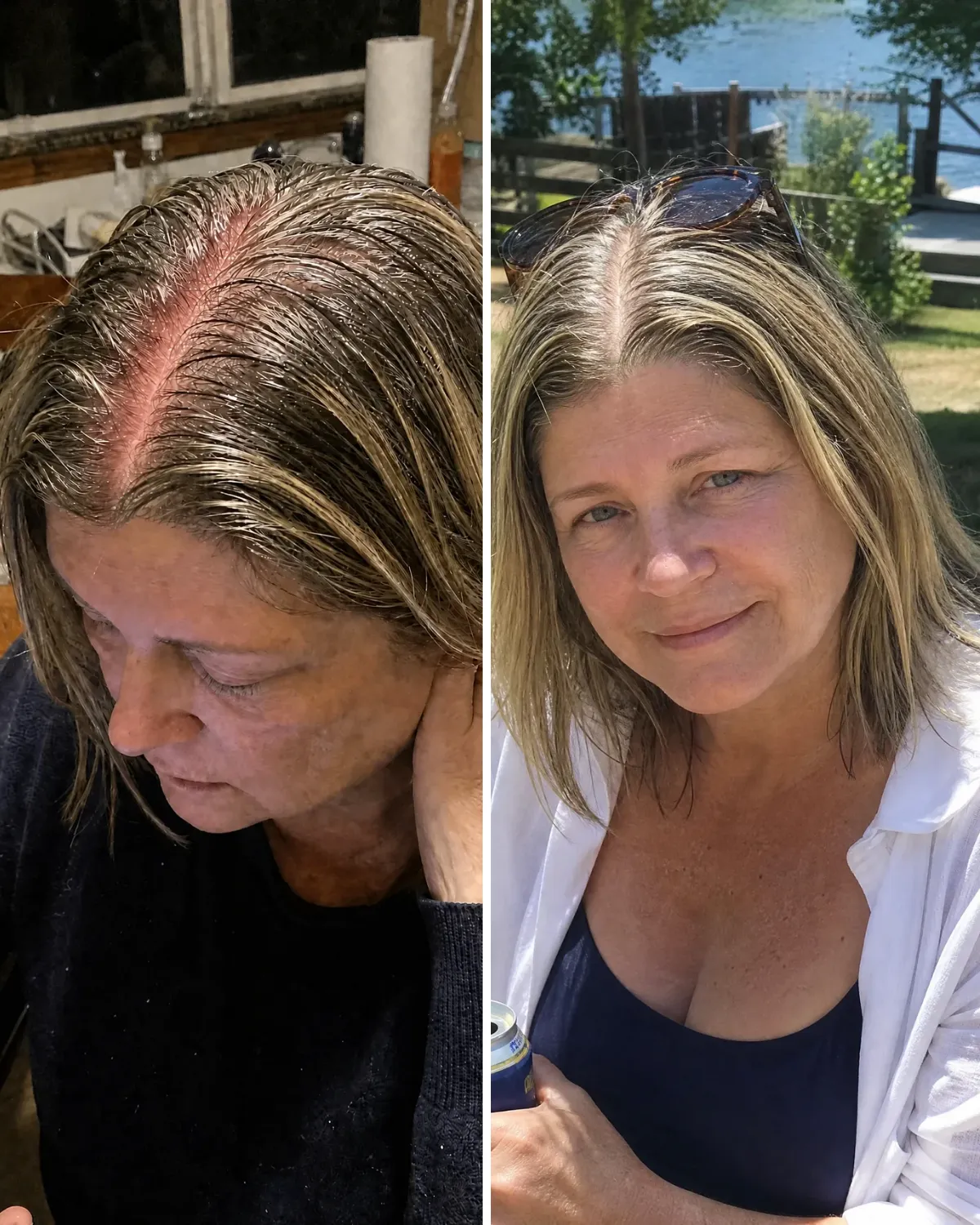
My scalp changed completely
Dr. Patricia Sullivan
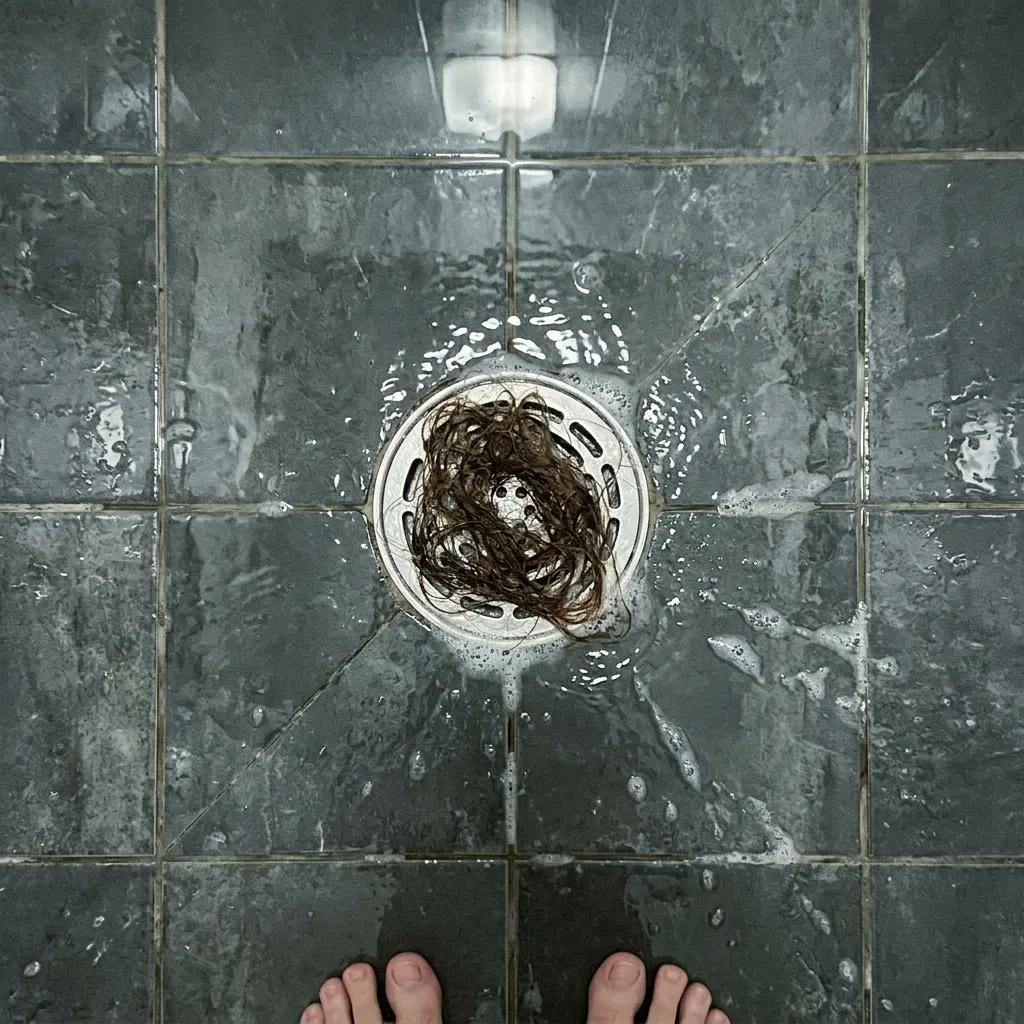
Help Hair Loss Naturally
Dr. Patricia Sullivan
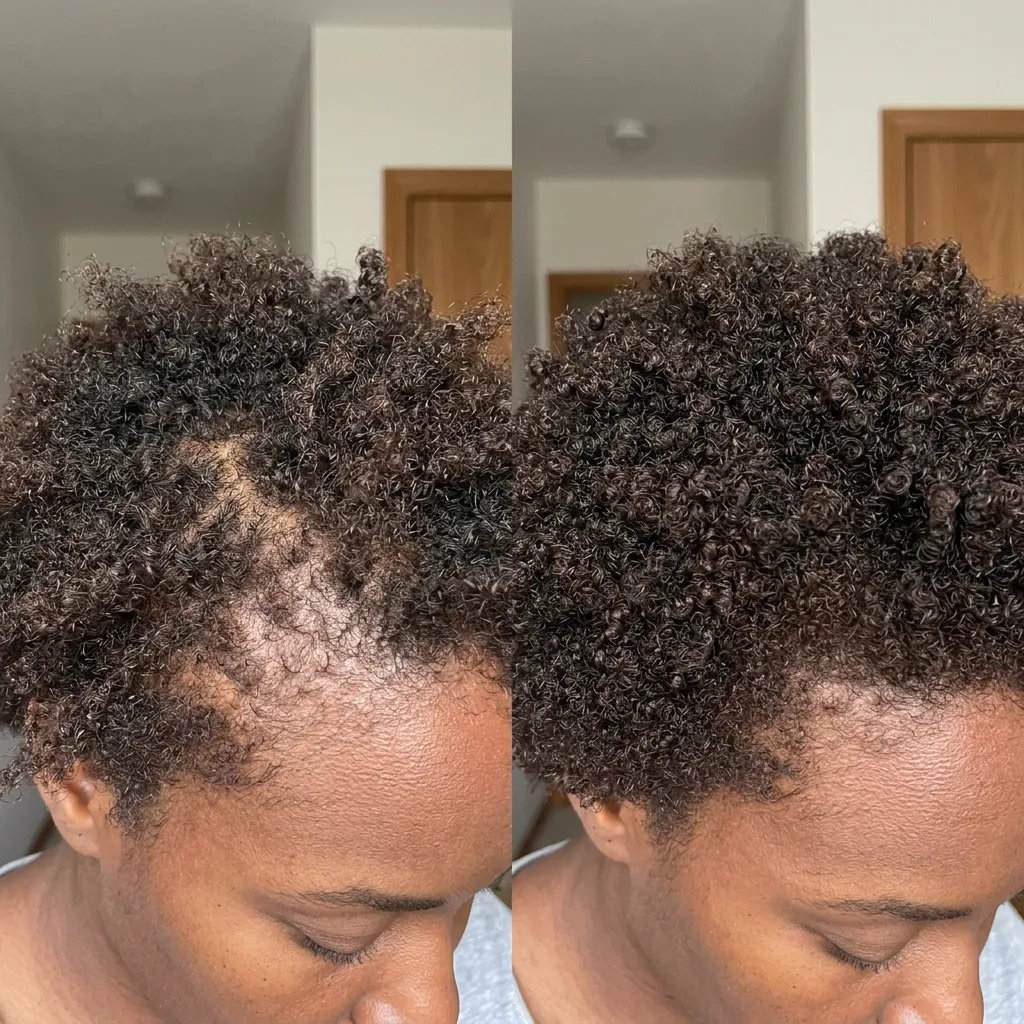
Help Hair Loss Naturally
Dr. Patricia Sullivan
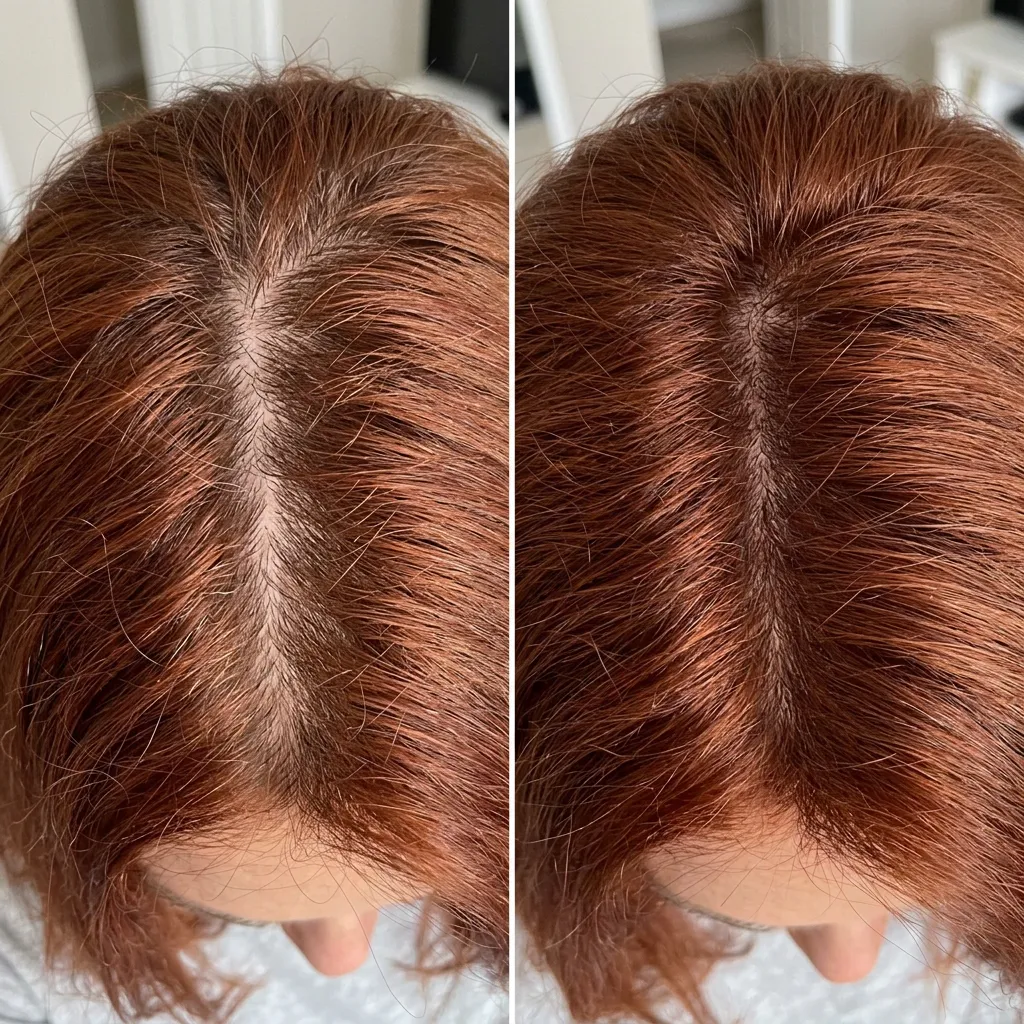
Help Hair Loss Naturally
Dr. Patricia Sullivan
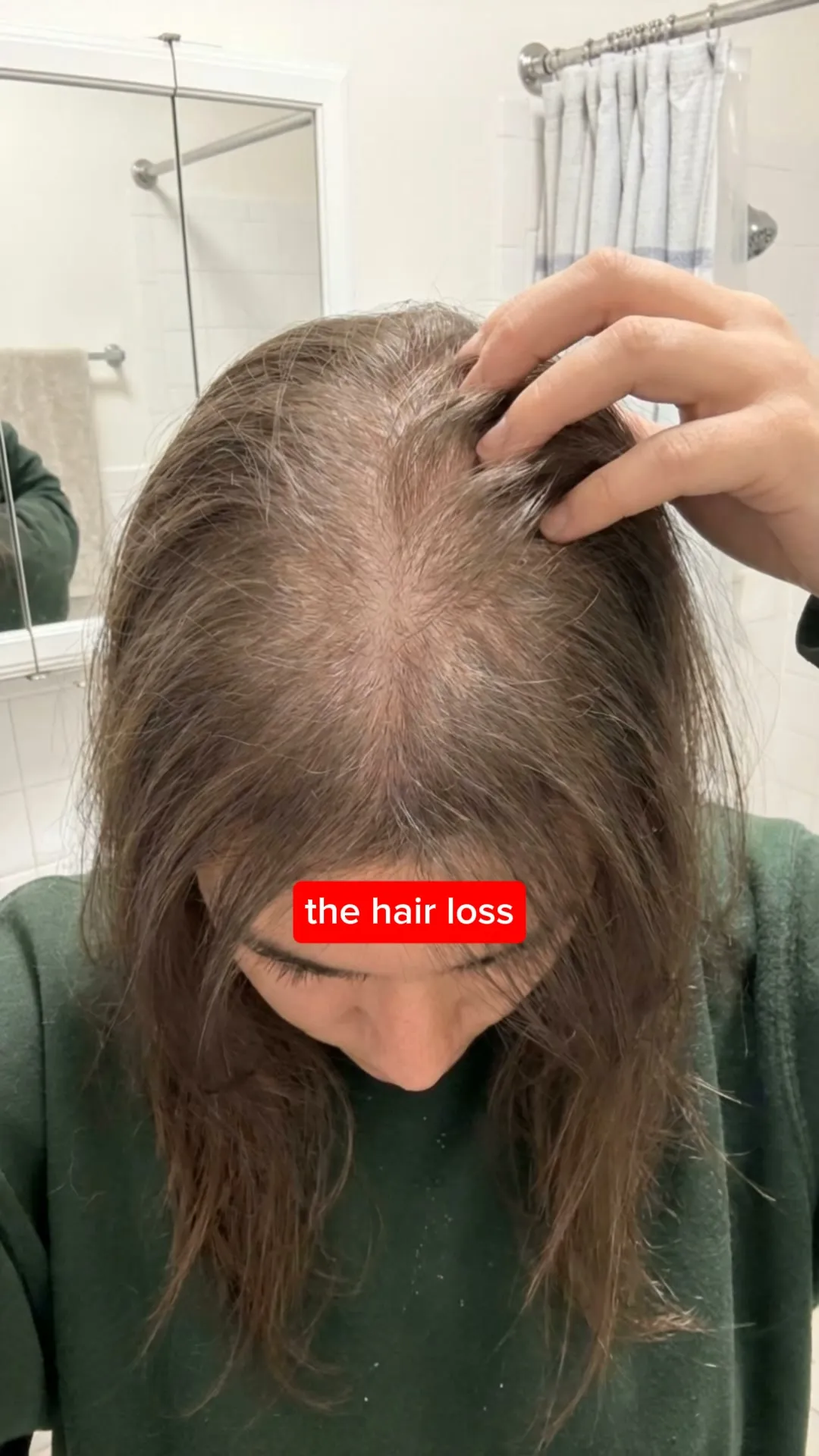
GLP-1 hair loss doesn't stop on its own.
Dr. Patricia Sullivan
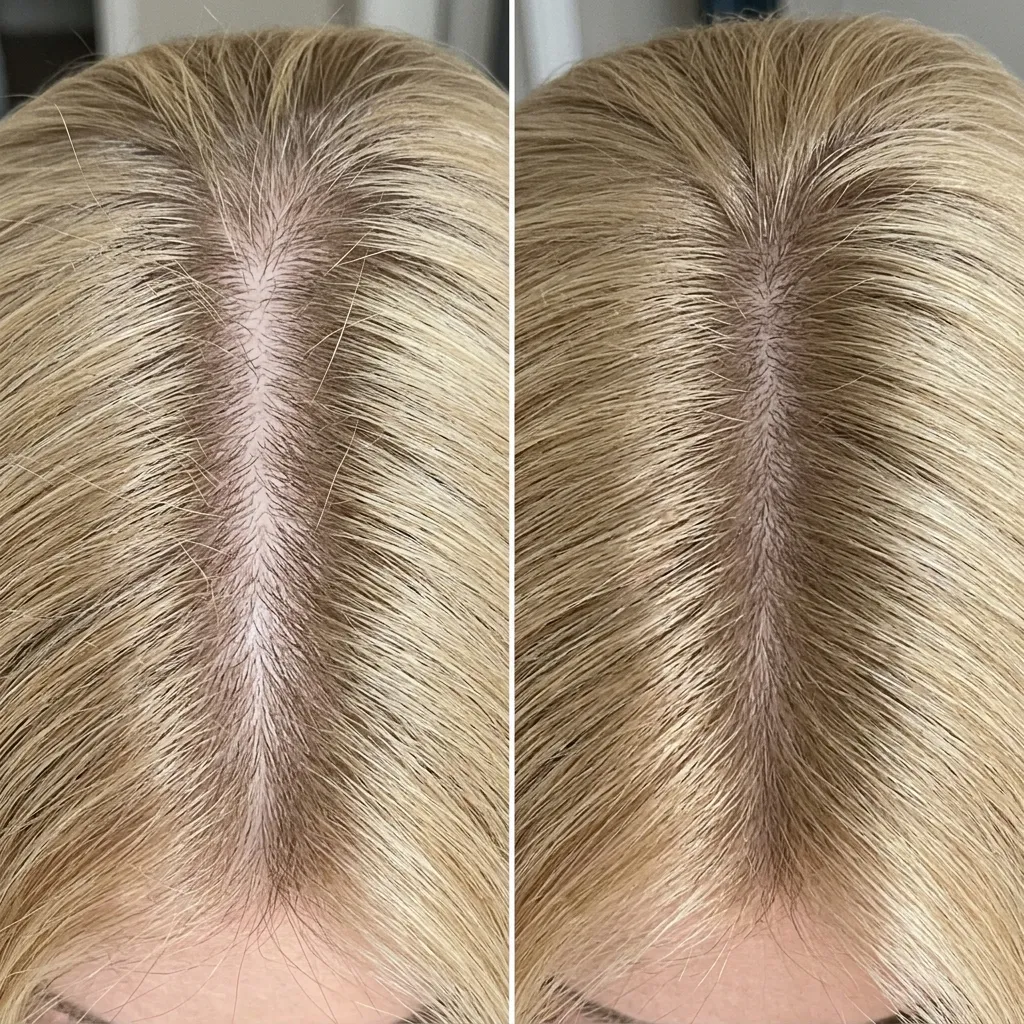
Help Hair Loss Naturally
Dr. Patricia Sullivan
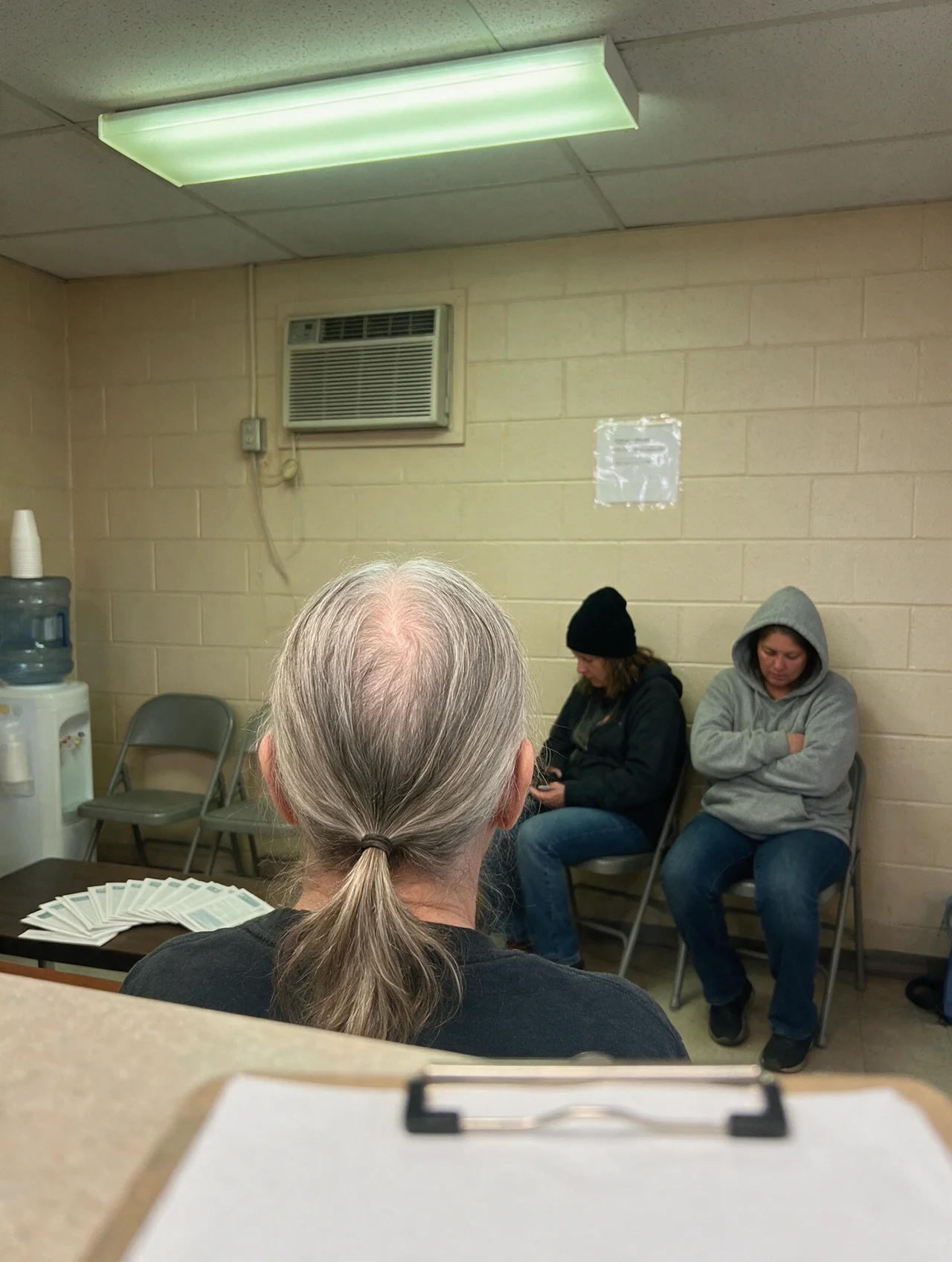
The Unadvertised Hair Loss Solution For Women
Dr. Patricia Sullivan
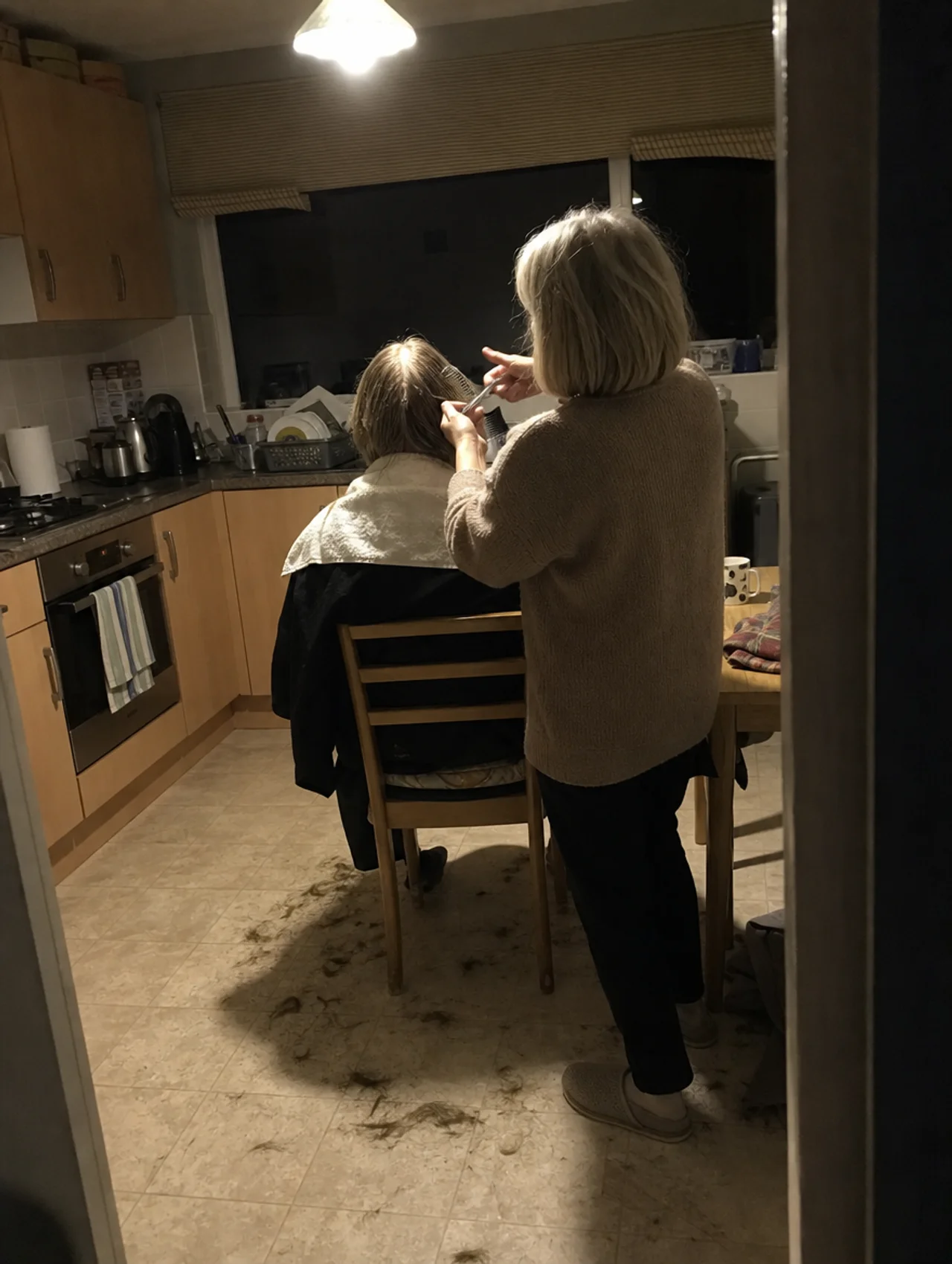
My husband’s ex-wife cut my hair
Dr. Patricia Sullivan
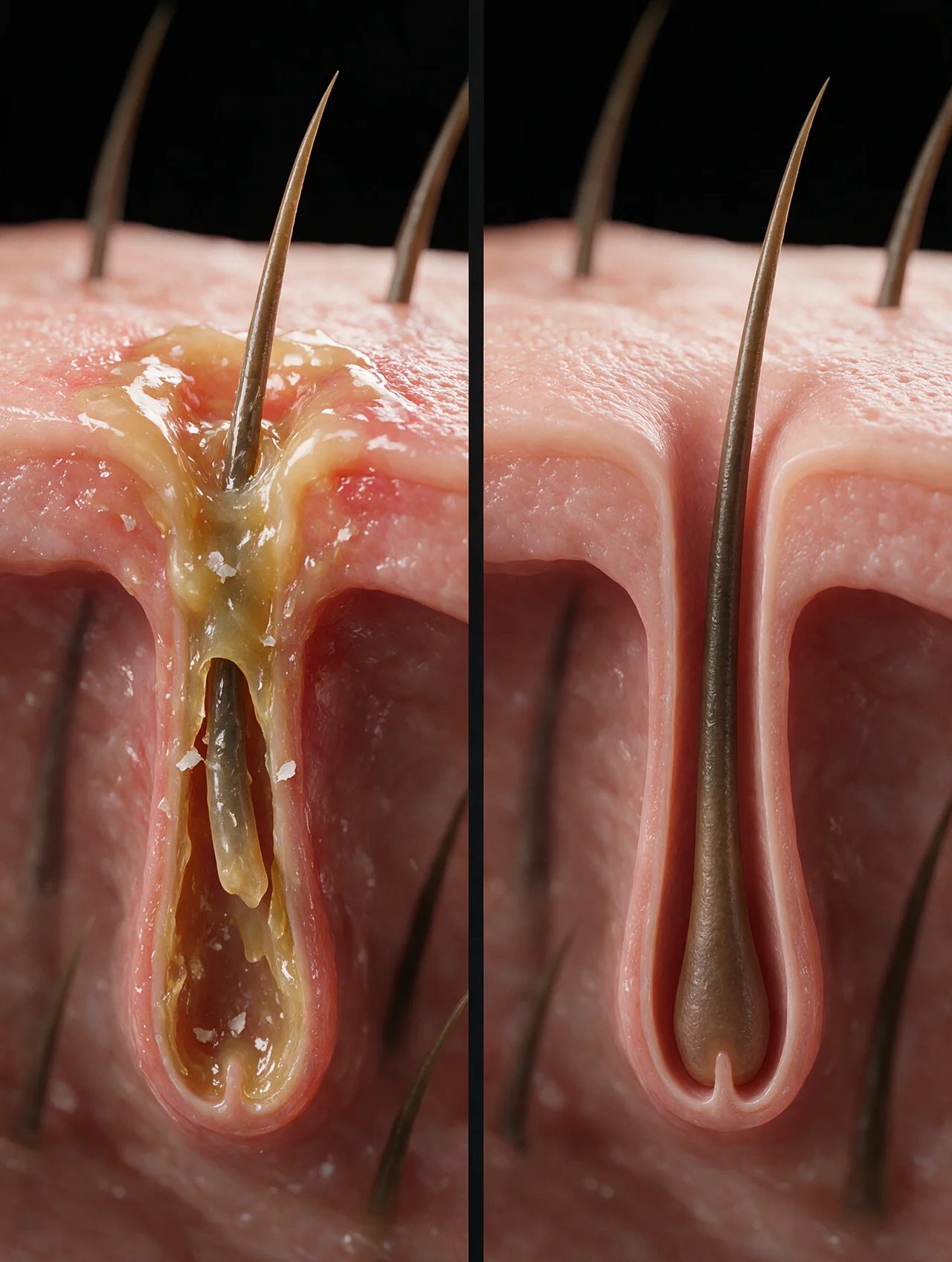
My scalp changed completely
Dr. Patricia Sullivan
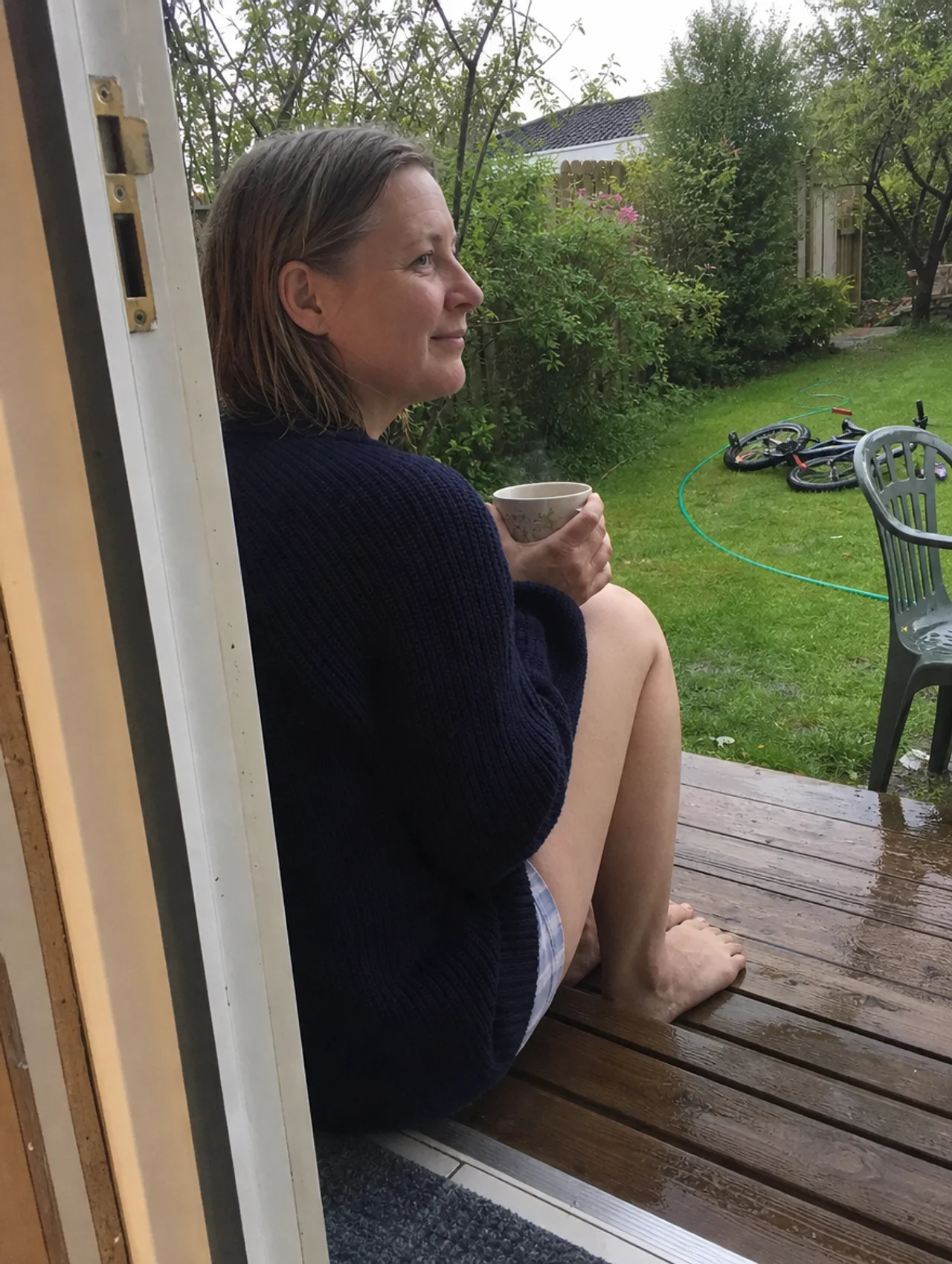
My husband’s ex-wife cut my hair
Dr. Patricia Sullivan
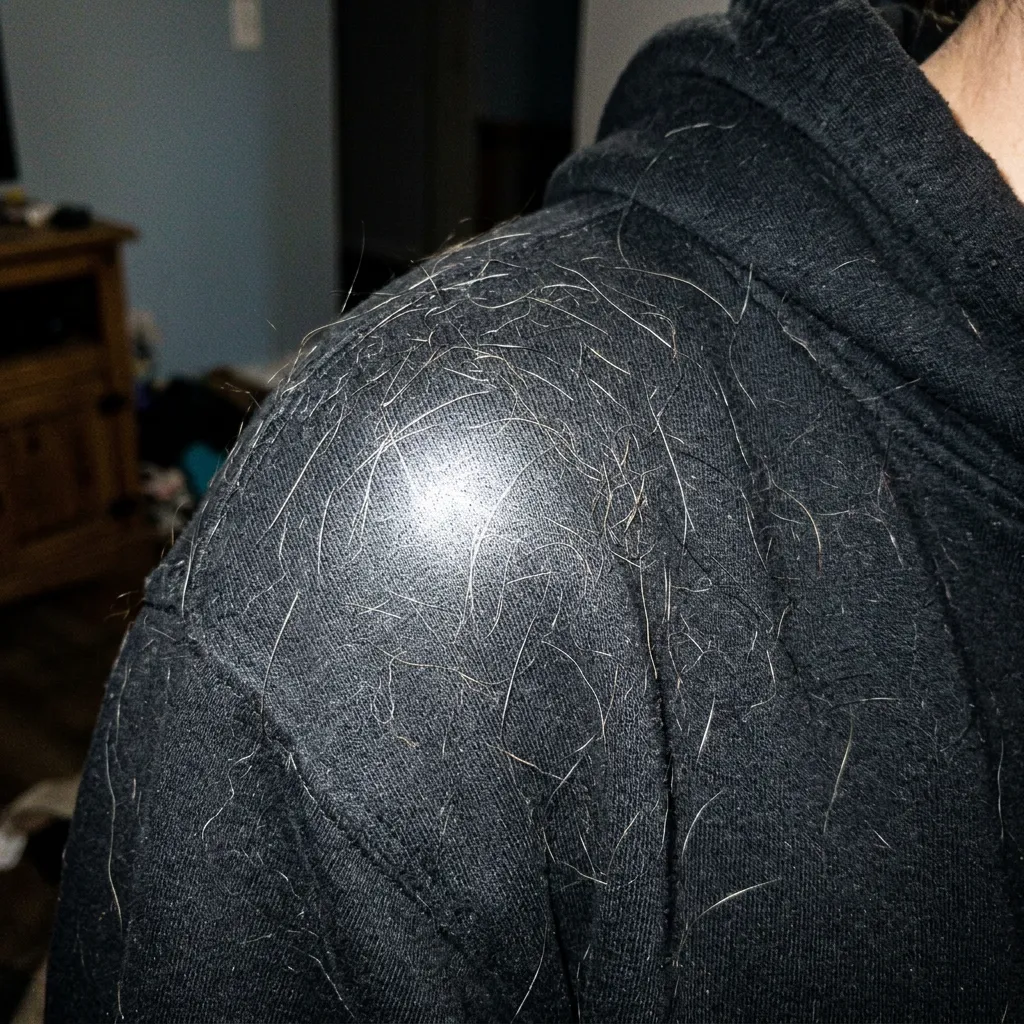
Help Hair Loss Naturally
Dr. Patricia Sullivan
The Unadvertised Hair Loss Solution For Women
Dr. Patricia Sullivan

 Add to Chrome