GLP-1 hair loss doesn't stop on its own.
Ad Copy
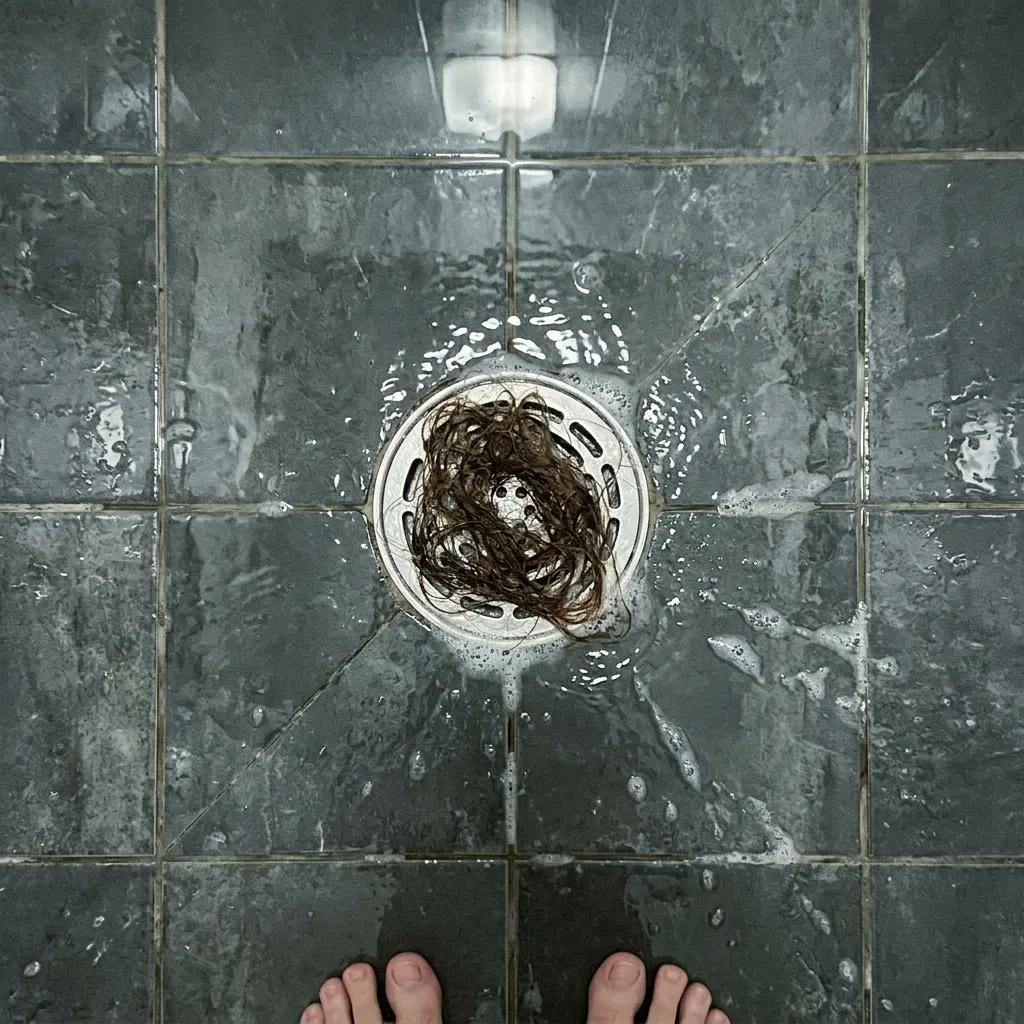
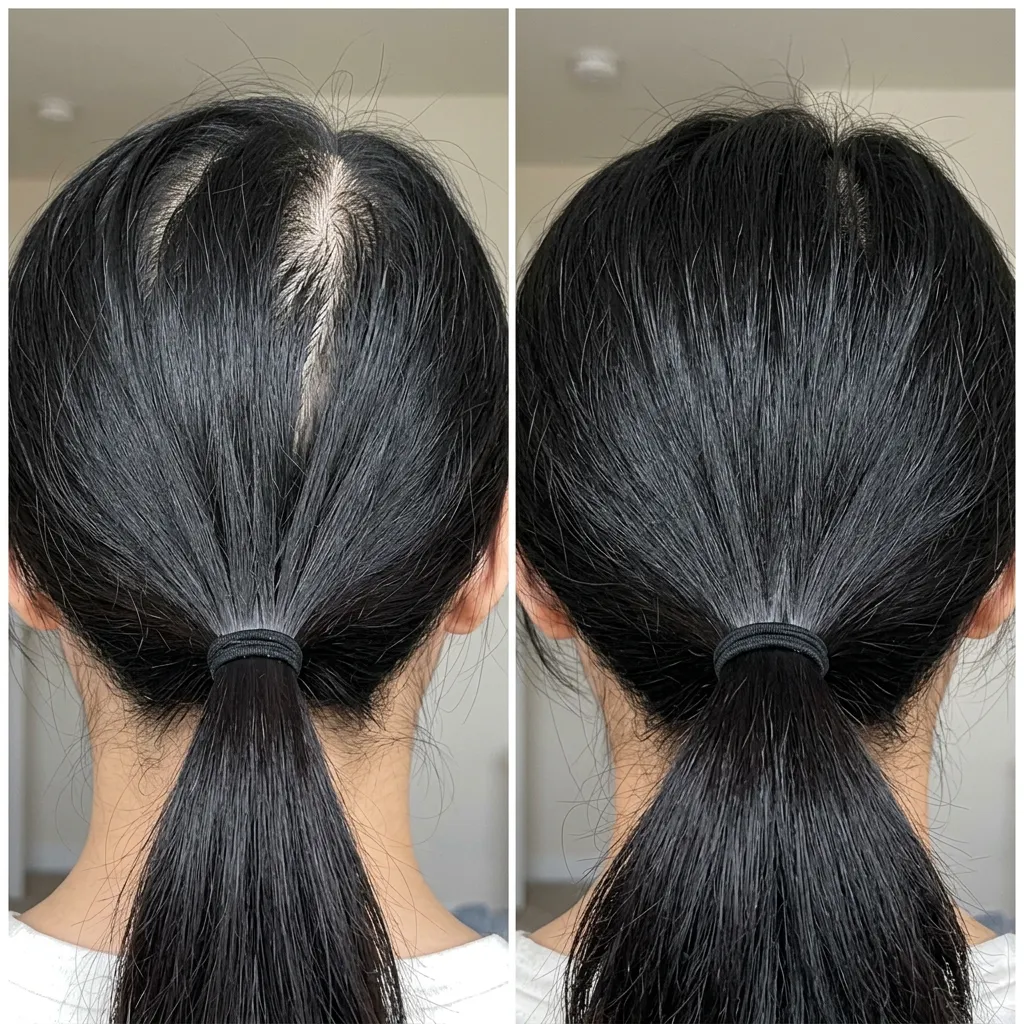
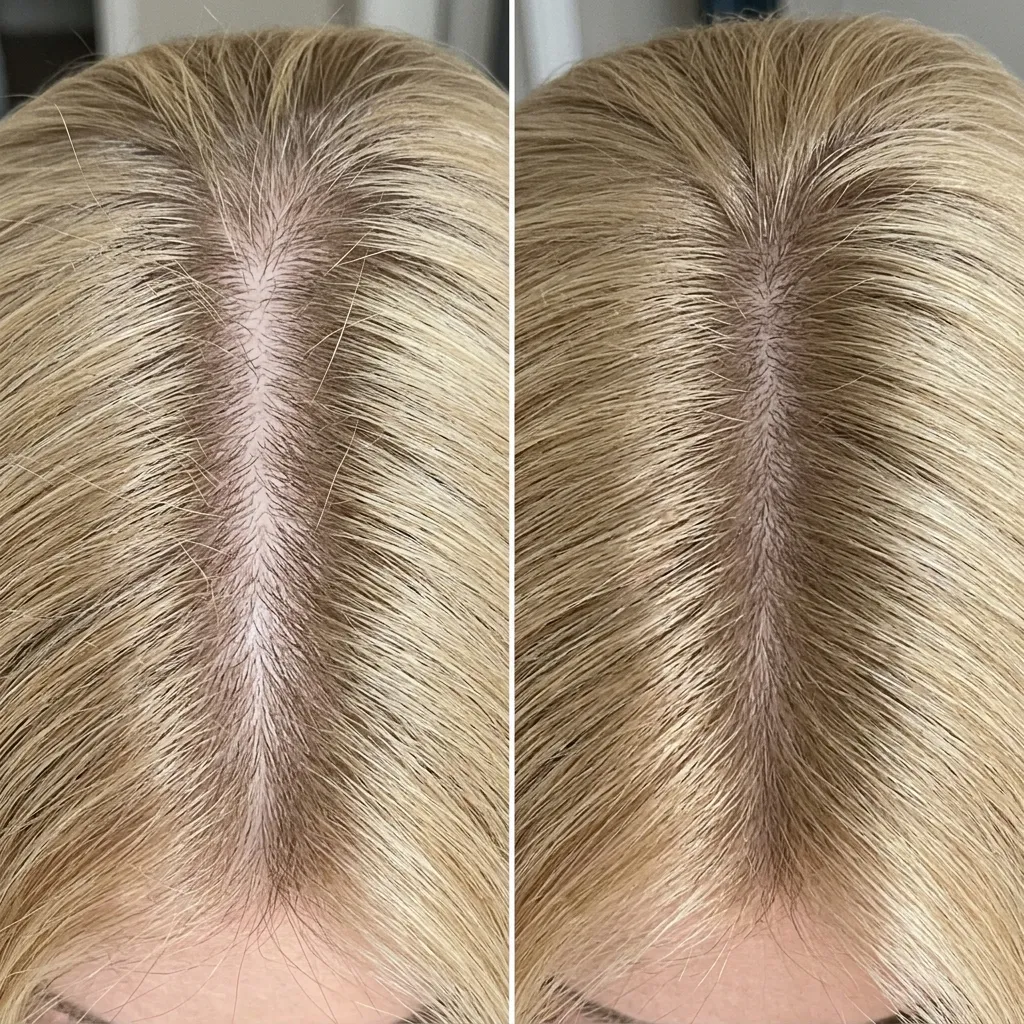
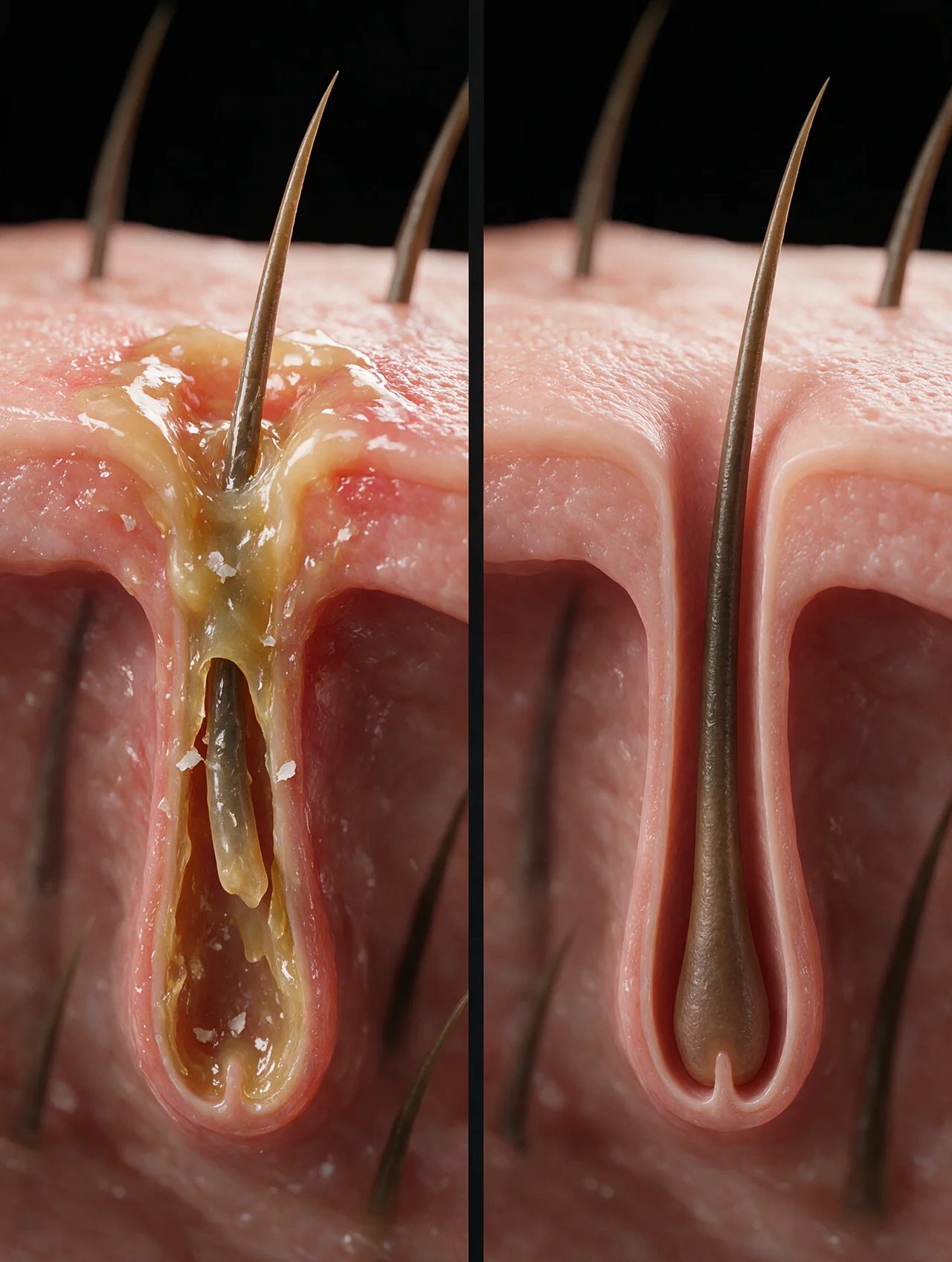
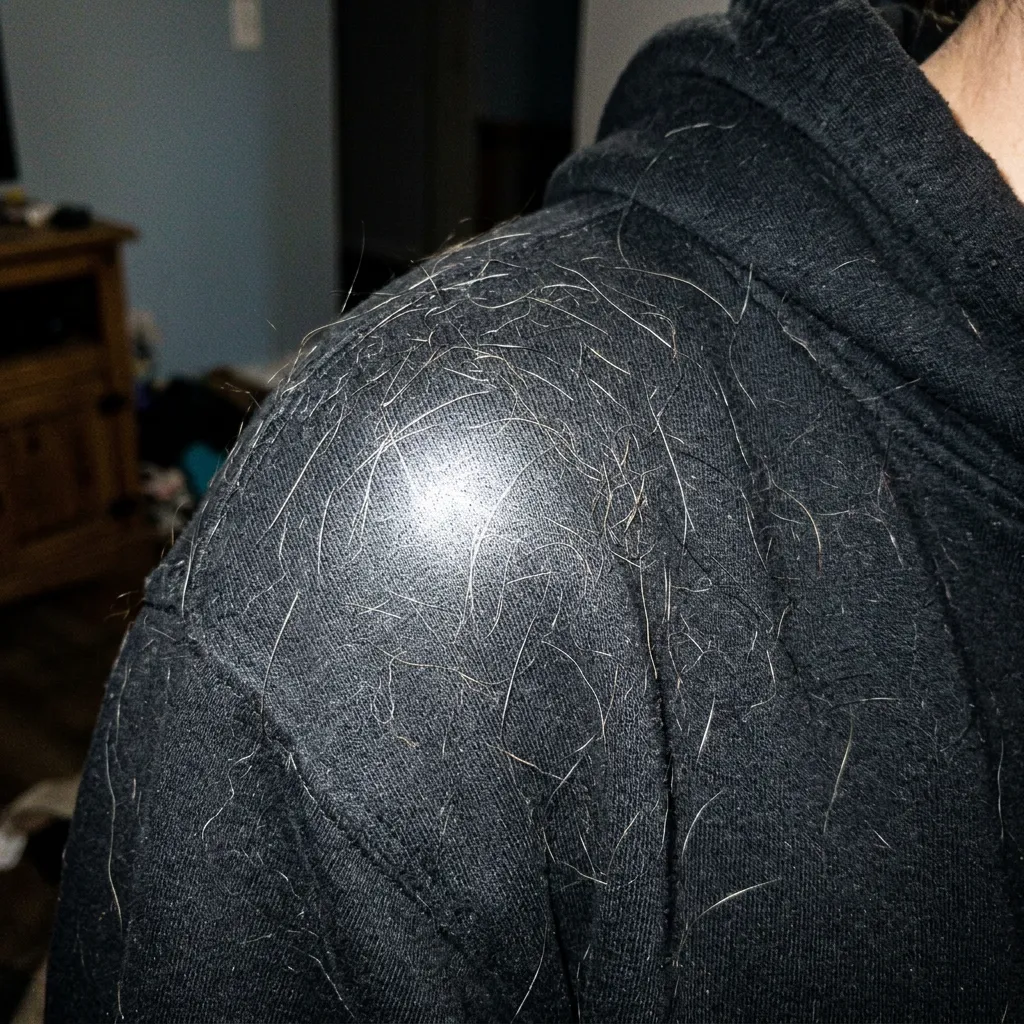
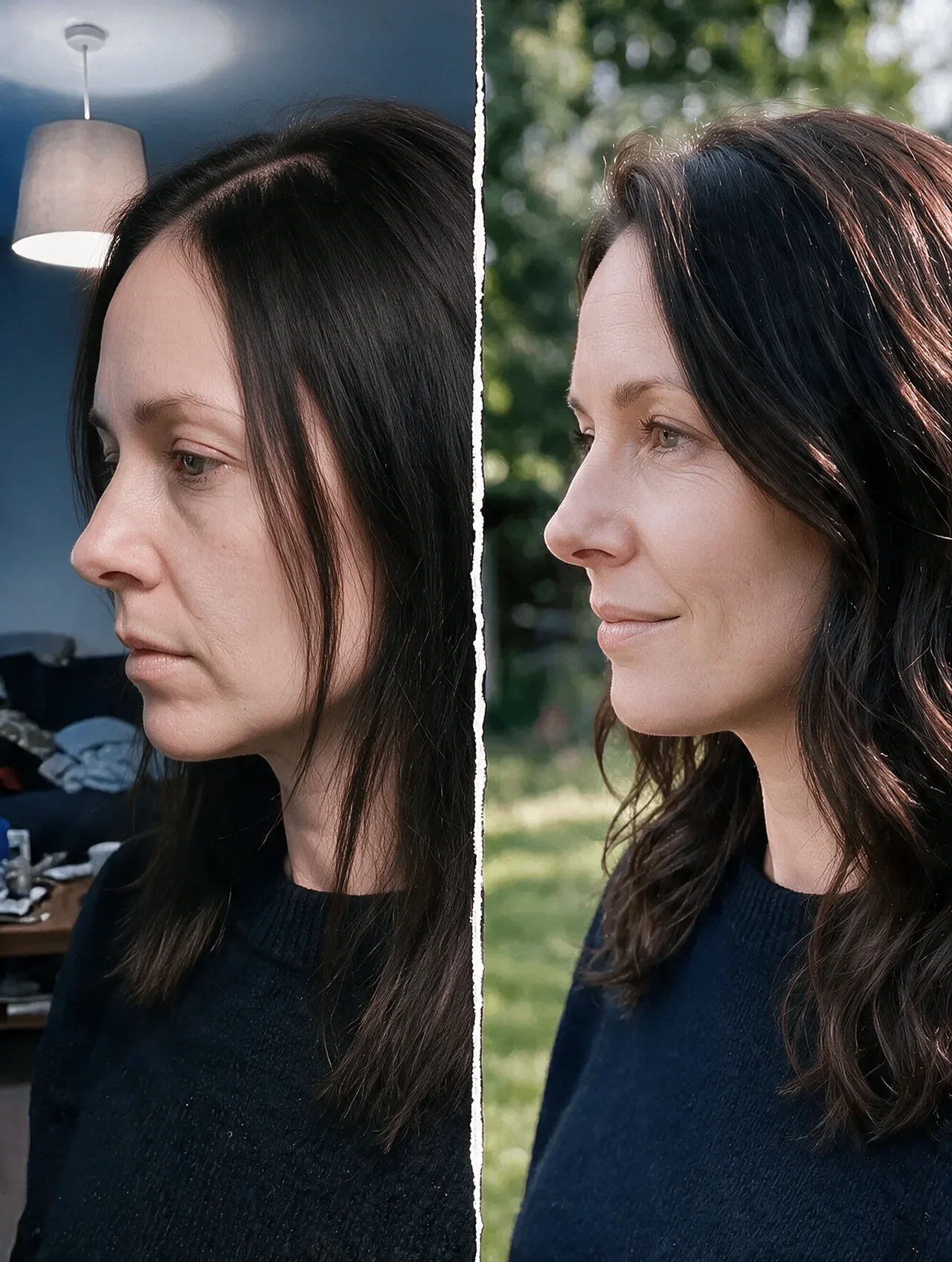
The better your GLP-1 worked, the more likely you are to be losing your hair. That's not a theory. That's the trial data. Participants who lost more than 20% of their body weight reported hair loss at more than double the rate of those who lost less. Do the math on your own number. I want to tell you what that actually means, because I don't think anyone has explained it to you properly. Three women told me the same thing in my office this month. They said they would take the weight back if they could have their hair back. They said it quietly. Looking at the floor. And then they apologized for saying it, because they know how it sounds after everything they went through to lose it. I have never once thought it sounded ungrateful. My name is Dr. Patricia Sullivan. I've been a dermatologist for 17 years and I specialize in hormonal hair loss in women. I want to be honest about something before I go further. For most of my career, hair loss was the appointment I could handle. A woman comes in frightened, I run the panel, I find the deficiency or the thyroid problem, I fix it, she comes back in six months with her hair. That was the job. That is not the job anymore. Over the last two years my practice has changed completely, and it changed because of GLP-1s. When these medications went from a diabetes drug to the most talked-about weight loss treatment in the country, the volume of women coming to me changed almost overnight. Not gradually It was like a door opened. And they were not the patients I was used to. The women I see now are not sick. Their bloodwork is beautiful. Their blood pressure is better than it has been in a decade. Their doctors are thrilled with them. And they are sitting in my chair with their hair in a bun because it's the only way to keep it from coming out all over their clothes. Here is what the research actually says, and I want you to have the real numbers instead of what you've been told in a hallway. Researchers gathered every study they could find on GLP-1s and hair loss and put the results together. Thousands of people. People on a GLP-1 were more than 3 times as likely to lose hair as people who weren't. Three times. That's not a rumor from a Facebook group. That's the clinical data. But there's a second number, and almost nobody has seen it. Another group of researchers looked at hair loss in GLP-1 users, and instead of lumping everyone together, they looked at the men and the women separately. In men, no real increase at all. In women, about double the risk. Same medication. Same weight loss. Two completely different outcomes. And every headline number you have ever read about GLP-1 hair loss averages those two groups together, which is exactly why the number always sounds so small and so manageable. It isn't small. It just isn't happening to the men. Now let me tell you why. A patient came to see me a few months ago. I'll call her Andrea. Andrea is 42. She has PCOS and she'd been fighting her weight since her twenties. She started on a GLP-1 and it worked, and for the first time in twenty years she was losing weight at a slow, steady, textbook pace. One to two pounds a week. Never faster. She did everything right. And I mean everything. She hit 120 to 150 grams of protein a day, which is not easy when the medication has erased your appetite. She drank ninety ounces of water. She took a multivitamin, a biotin supplement, and collagen. When her hair started coming out at month four, she didn't panic. She researched. She asked her doctor for a full panel. He ran the standard one. Everything came back normal. She read online that most doctors forget to check zinc and copper, so she went back and asked for those specifically. He wouldn't order them, so she ordered them herself through a lab website and paid out of pocket. Normal. Ferritin. Normal. Thyroid. Normal. B12, folate, iron, vitamin D. All normal. She brought me four photographs of the hair she had collected from a single shower. Not a metaphor. Four separate photographs, taken on four separate days, because she wanted proof that she was not exaggerating. She sat down and the first thing she said to me was that she needed me to know she wasn't making it up. Then she said the sentence I hear more than any other. "I did everything right and it happened anyway. So what's wrong with me?" Nothing was wrong with her. Her tests came back normal because the problem is not in her blood. It never was. And no panel she orders will ever find it, because the damage is happening at the follicle, not in her bloodstream. Let me explain what's actually going on, because there are two separate things happening to your hair at the same time and almost every doctor is only telling you about one of them. The first one you have already heard of. It's called telogen effluvium. When your body loses fat quickly, it reads that as physical stress. It pushes a large number of hair follicles into their resting phase all at once. Two to four months later, they all shed together. That's the terrifying phase. The clogged drain. The clumps in your hand. The hair on the pillow and the couch and the bathroom floor. And here is the part I want to be very clear about, because it's the part that makes the advice you were given sound so reasonable. Telogen effluvium is real. It is temporary. It does resolve on its own. The people who told you to be patient were not lying to you. They were just describing one of two problems, and they didn't know there was a second. The second one is the one that actually decides what your hair looks like a year from now. To explain it, I have to tell you what fat tissue actually does, because almost nobody knows this and it changes everything. Your body fat is not just storage. It is a hormone-producing organ. Inside your fat tissue there is an enzyme called aromatase. Its job is to take testosterone and convert it into estrogen. The more fat tissue you have, the more aromatase activity you have. This is basic, uncontroversial endocrinology. And aromatase is not only in your fat. It's inside the hair follicle itself. Women's frontal hair follicles carry up to five times more aromatase than men's do. At the same time, women carry roughly three times less of the enzyme that converts testosterone into DHT. That combination is why women don't go bald the way men do. It is your built-in protection. Every molecule of testosterone that aromatase converts into estrogen is one that never becomes DHT and never reaches your follicle. Now think about what happens when you lose a large amount of fat quickly. You lose aromatase. Less aromatase means less testosterone getting converted into estrogen. Which means two things at once, both of them bad for your hair. Your estrogen goes down. And more testosterone stays available to be converted into DHT instead. Your protection comes down and the thing it was protecting you from goes up. At the same time. Over a period of months. I'm not asking you to take my word for this. There's a group of women who prove it. Women being treated for certain breast ca**ers are given drugs called aromatase inhibitors. Their entire purpose is to block that enzyme. And those women predictably develop female pattern hair loss. It is so well established that it's discussed as an expected effect of the treatment. Block aromatase, get pattern hair loss. In women. Documented. Rapid fat loss does a gentler version of the same thing, from the other direction. So while telogen effluvium is shedding hair at the surface, DHT is doing something quieter underneath. It attaches to receptors on your follicles and begins shrinking them. The growth phase of a healthy follicle lasts three to six years. On a follicle under this kind of pressure, that can collapse to a matter of weeks or months. The follicle doesn't die. It shrinks. And a shrunken follicle produces a thinner, shorter, weaker hair every cycle, until eventually it's producing something closer to fuzz than hair. This is why the review literature on GLP-1 hair loss keeps naming two conditions together, not one. Telogen effluvium and androgenetic alopecia. Both. The medical journals are describing the same two problems I'm describing to you. And here's what nobody tells you about the timing. There is a three to four month delay between anything you do and anything you can see. That's how the hair cycle works. Which means for the entire time you were being patient, taking your protein and your biotin and waiting for it to stop, you had no way of knowing whether any of it was working. You were making decisions completely blind. And underneath all of it, the second problem was compounding. I read something a woman wrote online that explains the outcome better than anything I've written in a chart. She said the follicles that had miniaturized never came back, but the rest of her hair did. That is exactly right. That is the whole thing in one sentence. The shedding stops. Some of your hair returns. And the follicles that got shrunk while you were waiting stay shrunk. That's why women come to me at month eleven with a normal-looking drain, a part that's twice as wide as it used to be, and everyone in their life telling them it looks fine. So what actually stops the second problem? Not time. Time is what allows it to continue. The only thing that stops DHT from shrinking a follicle is something that interferes with DHT itself. Either by reducing how much of it your body makes, or by preventing it from attaching to the follicle in the first place. Nothing else touches it. And I want to walk you through the five things my patients have almost always already tried, because you have probably tried some of them too, and I don't want you to think you failed at them. 1️⃣ Biotin and hair vitamins. These support the hair you're growing. They do not interfere with DHT in any way. You can take 10,000 mcg a day for a year and it will not slow follicle shrinkage by a single day. If you had a genuine biotin deficiency, they would help, and almost nobody does. 2️⃣ Protein. Necessary. Force-feeding yourself 150 grams a day on a medication that killed your appetite is genuinely hard, and I respect every woman who does it. But protein is a building material. It does not block a hormone. Andrea was hitting her numbers perfectly and shedding the entire time. 3️⃣ Minoxidil. This is a vasodilator. It widens blood vessels. That is its mechanism. It does not reduce DHT and it does not block DHT from reaching the follicle, which means the shrinking continues underneath it the whole time you're using it. My patients also tell me things you won't read on the box. Oral minoxidil often makes the initial shedding noticeably worse before anything improves. One of my patients had to stop because it raised her blood pressure. Another couldn't use the topical version because it's dangerous to cats and dogs. And I have women in my practice who have used it faithfully for ten years and are still shedding on a GLP-1 today. 4️⃣ Nutrafol and the premium supplement shelf. Around eighty dollars a month. I have patients who spent six months on it. The formulas are mostly vitamins and botanicals in a nicer bottle, and women online have noticed, which is why you'll see the exact same ingredient lists linked from the drugstore at half the price. None of it is designed to interfere with DHT. 5️⃣ The lab rabbit hole. This is the one that breaks my heart, because it's the one done by the most conscientious women. She orders her own panels because her doctor won't. Zinc, copper, ferritin, full B panel. Three weeks of waiting. She pays out of pocket. And the results come back inside the range, because the problem was never in her blood. Every single one of those is treating the surface while the follicle is being shrunk underneath. It's like watering a plant while someone is pouring herbicide on the roots. You can water as much as you like. The roots are still under attack. So you need something that goes after the root cause. And for most of my patients, that needs to be something natural, because they are already on a medication that is doing significant work in their body and they are not looking to add a prescription with its own hormonal effects on top of it. There are two natural compounds with real research behind them for this specific problem. I want to give you the studies, including their limitations, because you deserve to see them properly rather than as a headline. 👉 The first is pumpkin seed oil. Researchers tested it in women with female pattern hair loss and put it up against minoxidil, and the results were published in the Journal of Cosmetic Dermatology. I want you to notice what they measured, because it matters. They counted the fine, wispy hairs. The ones a shrunken follicle produces And they measured how much the thickness varied from hair to hair. Those two things are how a dermatologist measures follicle shrinkage. That's the actual signature of it. In the pumpkin seed oil group, both went down. And new, upright hairs went up. What pumpkin seed oil does is reduce the production of DHT. Its plant sterols interfere with the enzyme that converts testosterone into DHT. Less enzyme activity, less new DHT. But that only handles what your body makes from this point forward. It does nothing about the DHT already circulating in your scalp and already attached to your follicles. Which is why the second compound matters. 👉 Saw palmetto works differently. Studies in women have shown it supports hair density and thickness, and the way it does that is by getting in the way of DHT at the follicle itself. Your follicles have receptors on them. Think of them as doors. DHT has to attach to one of those doors before it can do any damage. Saw palmetto sits in the doorway. The DHT is still there. It just can't get in. So here is the simple version. Pumpkin seed oil reduces how much new DHT gets made. Saw palmetto blocks the DHT that's already there from attaching to your follicle. One turns down the supply. The other locks the door. You need both, because you have both problems. Now, before you go and buy them separately from Amazon, let me save you four months. I have watched patients do exactly this. She buys a fourteen dollar bottle of pumpkin seed oil capsules and a saw palmetto from the vitamin aisle. She takes them faithfully. She comes back four months later with nothing to show for it and concludes that natural options don't work. Here's why that happens. Most cheap pumpkin seed oil supplements are made from ground seed powder, not concentrated extract. And a great deal of it is heat processed, because heat is fast and cheap, and heat degrades the compounds that do the actual work. What you're swallowing has the right word on the label and very little of the active material inside. Most standalone saw palmetto supplements are prostate formulas. That is genuinely what they were made for. Many have been relabeled and marketed to women without the formulation changing at all. The dose is calibrated for a different purpose, and cheap berry powder delivers very little of the fatty acids that appear in the actual studies. So she ends up with two bottles, neither delivering a meaningful amount of either compound, and a conclusion that isn't true. ➡️ This is why I recommend Bloom & Bond to my patients dealing with GLP-1 related hair loss. It's the only formula I've found that combines both compounds, at doses that make sense, in a single product built for this specific situation. The pumpkin seed oil is cold pressed rather than heat processed, so the active compounds survive to reach you. It's concentrated extract, not ground seed powder. And it uses the lipidosterolic saw palmetto extract, which is the form that appears in the research, rather than the cheap berry powder that fills most of the shelf. No biotin filler. No collagen. No proprietary blend hiding how little of anything is actually in there. Two compounds, in the right form, doing the two jobs your follicles need done. I want to tell you about one more patient. I'll call her Colleen. She's 46, she'd been on a GLP-1 for a little over a year, and she came to me at the point where the shedding had already slowed down and she was supposed to feel relieved. She didn't feel relieved. She told me her ponytail was about a third of what it used to be. She'd stopped wearing her hair down entirely. She told me she cried every time she showered. And then she said something I have thought about ever since. "I don't think anyone is really prepared for how traumatic losing your hair like this is. I know I wasn't." She's right. Nobody warns you about that part either. Here is roughly what I tell my patients to expect, and I want to be careful here, because everyone's timeline is different and I'm not going to promise you a date. ✅ Weeks 2 to 4. Usually the first thing women notice is that the shower is less frightening. Fewer strands on the hands. The brush isn't as full. ✅ Weeks 4 to 8. Shedding continues to settle. Around here I start hearing that washing their hair no longer ruins their morning. ✅ Weeks 8 to 12. New growth starts becoming visible. Short, upright hairs along the hairline and the part. Women describe them as spiky. One of my patients said she had so many baby hairs it looked comical. ✅ Month 3 to 4. Density. The part narrowing. A ponytail that feels like something in your hand again. Colleen came back at about the four month mark. She didn't bring photographs this time. She'd worn her hair down. She said her stylist had asked her whether she was still wearing her extensions, because it didn't look like it. She wasn't. She hadn't been for months. I want you to picture something for a moment, because I think you've stopped letting yourself. Picture washing your hair and not counting what comes out. Not looking at your hands. Not looking at the drain. Picture standing under the bathroom light and looking at your part without adjusting the angle first. Picture pulling your hair up and feeling it be thick at the base. Picture being in a photograph with your kids and not spending the next ten minutes zoomed in on the top of your head. Picture keeping the body you worked for and keeping your hair too, instead of quietly wondering whether you'd trade one back for the other. You should not have to choose. That was never a fair choice and you should never have been asked to make it. Here is the last thing I'll say. The shedding is going to slow down whether you do anything or not. That part is probably already happening. But the second problem, the one that's shrinking your follicles, does not have an end date. It does not stop because you were patient. It does not stop because your labs came back normal. It does not stop because you hit your protein. It stops when something interferes with it. And every month it goes on unopposed is another month of follicles getting smaller, which means more of the wispy regrowth and less of the hair you actually want back. You did everything right. Nobody told you there was a second problem. That is not your failure and it never was. But you know about it now. 👉 https://trybloomandbond.com/products/pumpkin-seed-oil-softgels-hair-loss-solution-for-women
More from Dr. Patricia Sullivan
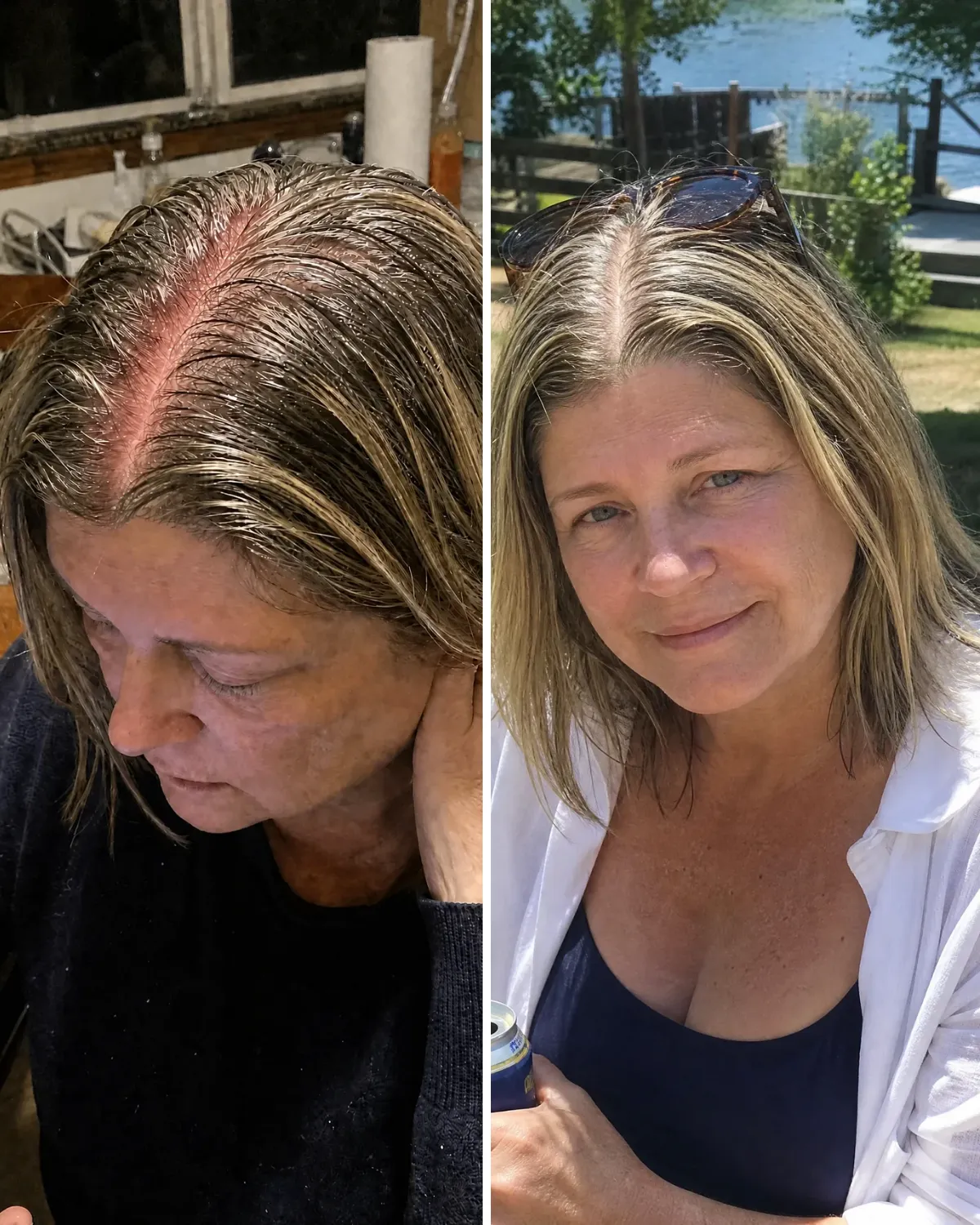
My scalp changed completely
Dr. Patricia Sullivan
Help Hair Loss Naturally
Dr. Patricia Sullivan
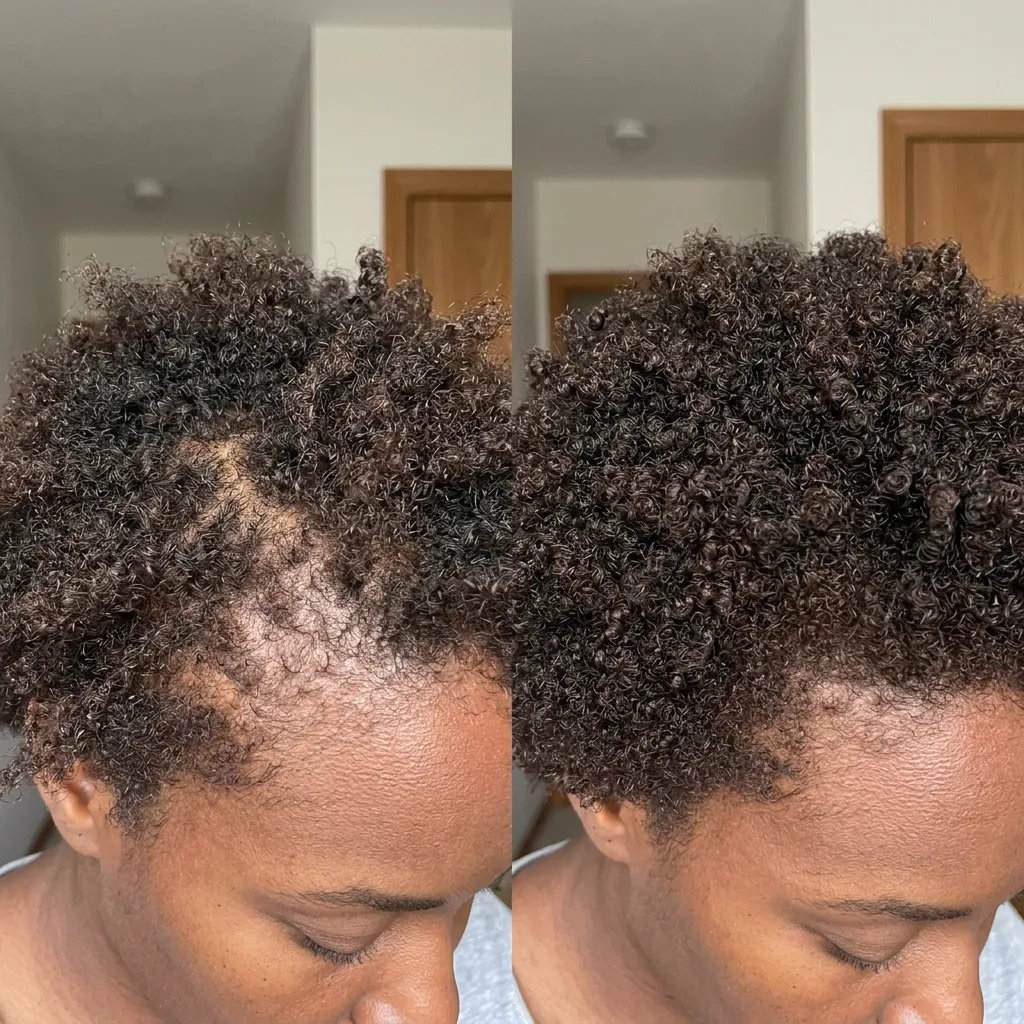
Help Hair Loss Naturally
Dr. Patricia Sullivan
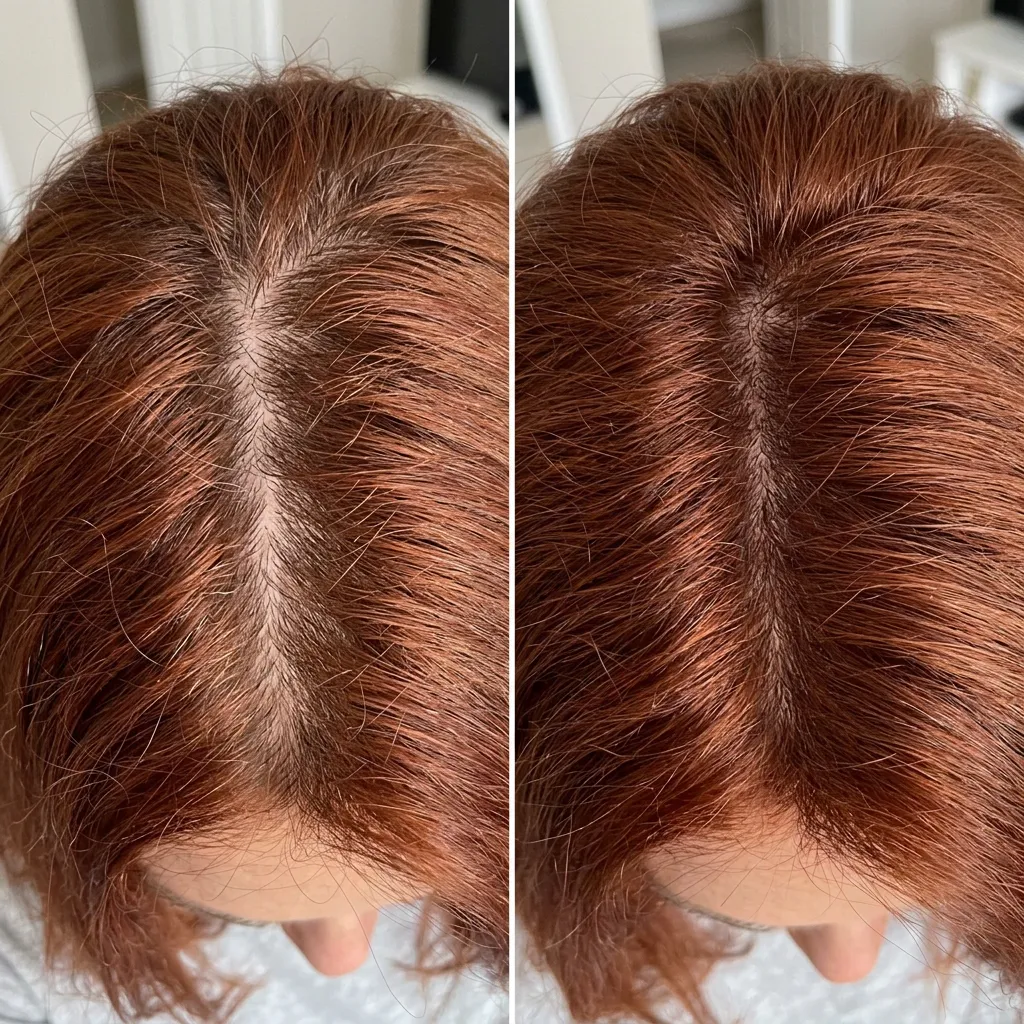
Help Hair Loss Naturally
Dr. Patricia Sullivan
Help Hair Loss Naturally
Dr. Patricia Sullivan
Help Hair Loss Naturally
Dr. Patricia Sullivan
The Unadvertised Hair Loss Solution For Women
Dr. Patricia Sullivan
My husband’s ex-wife cut my hair
Dr. Patricia Sullivan
My scalp changed completely
Dr. Patricia Sullivan

My husband’s ex-wife cut my hair
Dr. Patricia Sullivan
Help Hair Loss Naturally
Dr. Patricia Sullivan
The Unadvertised Hair Loss Solution For Women
Dr. Patricia Sullivan

 Add to Chrome