Natural Support For Perimenopause Itch
Ad Copy
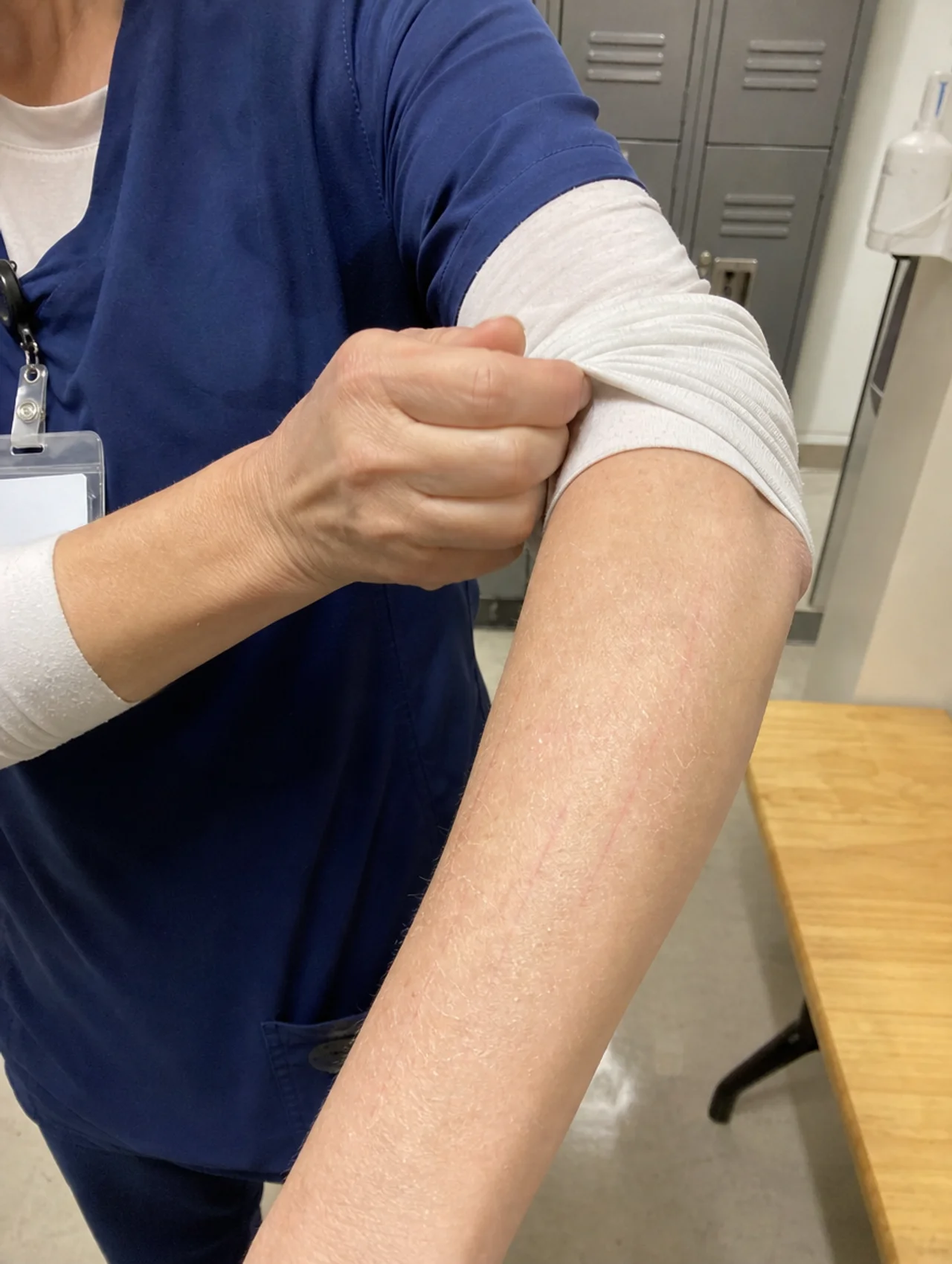
I've been a surgical nurse for 24 years, and perimenopause itch is one of those things nobody talks about in healthcare. Not in the break room. Not with the women you've scrubbed beside for a decade. You just scratch it in the car park and get on with your shift. And I had a reason for every single place it showed up. The inside of my ears. Mask loops, I said. Twelve hours a day behind my ears. My scalp was the cap. My hands were the sanitiser. Sixty times a shift. My shins and the tops of my feet were compression socks, on my feet for ten hours. Down there was scrub pants, sweat, and six hours without a bathroom. Five places. Five excuses. Every one of them sounded exactly like something a nurse would say. What all five had in common, I did not want to look at. The skin was dry. Flaky inside the ear canal. Tight on my shins after a shower. Papery on the backs of my hands in a way it had never been in my life. A tub of cream helped for about an hour. Then it didn't. So I managed it the way you manage anything in a hospital. Quietly, with equipment. A pen cap in my breast pocket for the ears. The edge of the locker door for the spot between my shoulder blades. Long sleeves under my scrubs in summer, for the marks on my forearms. I spend my days making other people comfortable. I could not sit still on a bench for four minutes. Here is the thing about being scrubbed in that nobody outside an operating room understands. You cannot touch anything. Gloved. Gowned. Hands above your waist. If you touch anything that is not the sterile field, you step back and you start again. At hour two of a five-hour case, the inside of my left ear started. Not a tickle. The kind of itch where you can feel the exact spot, deep in the canal, where a fingernail would go. Three hours from the end. I stood there and handed instruments and felt it the entire time. I had done that before. Every nurse my age has done that. Then one day I didn't. In 24 years I had never broken scrub for anything that wasn't blood. I stepped back from the table. Peeled off a glove. Put my finger in my ear like a child. Then I re-scrubbed, re-gowned and re-gloved. Seven minutes while the surgeon waited. The circulating nurse looked at me the way you look at someone who has just done something you will both have to pretend didn't happen. I finished the case. Then I sat on the bench in the locker room and cried, which I had not done at work in 24 years. Not for a patient, and there have been some. For my ear. This was something else. That was the OR. The locker room was worse. The first thing I did after every case, before the mask came off, was scratch down my vjay. Like a dude at a bus stop. In a room full of women I had worked beside for years. I told myself it was the scrub pants until I couldn't anymore. Because I'd had the swabs done. At my own hospital. Three of them. And a full panel, the one you order at 49 when your brain has started filling in the blanks by itself. The woman who ran them eats lunch two tables from me. All negative. Nothing to find. So if you are also scratching your shins. Your scalp. Your lady garden. Between your breasts. The inside of your ears. Your feet the second the lights go off. Then keep reading. Because I was you, and I had every qualification in the building to work this out, and I didn't. Hospital policy keeps my nails short. No polish. Nothing past the fingertip. I thought that made me safe from what I'd read on the forums. I still woke at three in the morning already scratching, with blood under nails that barely exist. I kept a bristle hairbrush on the nightstand for my feet. I told my husband I'd changed detergent. I had changed detergent four times. I have seen where this goes. I have taken the socks off women in their seventies with shins like parchment, purple marks up and down them, skin that opens if you look at it wrong. I used to think that was age. It is scratching. Year after year, on skin that got thinner every year. I could see exactly where mine was headed. Here is what I was given. I want to be exact, because I am a nurse and I know what each of these is for. ❌ Antifungal cream. Twice. Twenty-two dollars a tube, for a fungus three swabs had already said I did not have. It burned. ❌ A steroid cream. Forty dollars a tube. I have taken dressings off patients who have used steroid cream for years. The skin on their forearms is like tissue paper. It tears when the tape comes off. I put it on down there anyway, because I was desperate. The itch was back the week I stopped. ❌ Antihistamines. Zyrtec twice a day, then four times. Benadryl at night. The next morning the surgeon asked for a Kelly and I handed him a Kocher. He didn't say anything. He didn't need to. ❌ New detergent. New soap. New toilet paper. All-cotton underwear, still in the bag with the tags on. ❌ And vaginal estrogen, which I had already been on for a year. It works. I want to be completely fair to it. The inside was fine. I was still scratching the outside raw, on the exact hormone that was supposed to fix this, and nobody could tell me why. So I did the thing I had promised myself I would never do. I asked the charge nurse to take me off the scrub rota. I said it was my knees. She said she could hold my place on the rota until the end of the quarter. After that it went to someone else. Scrubbing in is the job. It is the whole reason I stayed a surgical nurse for 24 years instead of taking a desk. And I gave it up because I could not trust myself to stand at a table for five hours without breaking sterile to scratch. About four months later I was prepping a patient for a routine procedure. Sixties. Chatty, the way people get when they are nervous. I had a pen cap in my ear. I did not know I was doing it. She said, "You're doing the ear." I took it out. "I used to do that," she said. "Perimenopause. Before anyone told me what it was." I said something about mask loops. She looked at me for a second and said, "And your shins, I bet. And down there." I stopped. "Nobody could tell me either," she said. "Three negative tests. Everyone said yeast. It wasn't yeast. It wasn't the inside at all. It was the skin on the outside, same as my legs. Nobody said that to me until I read it somewhere at three in the morning." Then she told me what she takes for it. And I did what you are doing right now. I nodded and didn't believe her. That night I sat down and read. Properly. The way I would read for a patient. And it is not complicated once somebody actually says it. Down there is not one thing. It is two different tissues. Go a little way in and it stops being skin. It becomes something closer to the inside of your mouth. Wet, thin, no hair. That is where atrophy happens, and vaginal estrogen treats it, and treats it well. If you can get it, take it. I still take mine. That is Problem One. It is real, and it is being handled. The outer part. The part with hair on it. The part you can see and scratch. That is skin. Ordinary skin. The same skin as your shins. That is Problem Two. And nothing I had been given had gone anywhere near it. Here is what happens to that skin. It has a thin outer layer whose only job is to hold water in. That layer is held together by a fat your body makes itself. Estrogen is what tells your body to make it. When estrogen drops, your body makes less of it. The layer gets thinner and starts leaking. The nerves underneath used to sit under something thick. Now they sit under something thin, and they can feel everything. A seam. Sweat. Sitting down. A waistband. Your brain reads all of it as one thing. Itch. And the skin down there has more places for estrogen to plug in than almost anywhere on your body. Stronger signal. So when the signal drops, that skin notices first, and it notices most. I have heard the proof of this from patients for years without knowing what I was hearing. Ask any woman on an estrogen patch what happens the day before she changes it. She will tell you the itch comes back. Every cycle. On schedule. One thing goes down. One thing comes back. It was never only down there. Was it. The ears. The shins. The scalp. The breasts. Same shortage. Same body. My mother kept matches on her nightstand for her ears. She put powder under her breasts every morning and never said why. I am a nurse. I watched her do it for twenty years and thought it was a habit. Nobody named it for her. Nobody was naming it for me. Which is why the creams kept letting me down. A cream sits on top. The shortage started underneath. You are laying something over skin that has stopped making its own supply. I had oily skin for fifty years. I never moisturised once. Then suddenly I was bathing in it four times a day and still itching. Eighteen dollars a tub. Four tubs a month. I was taking fish oil too. Omega-3 is a good fat. It is not this fat. That thin outer layer is built from linoleic acid, which is a different fat doing a different job. Now I will be as clear with you as I would be with a patient. What I take is not hormone therapy. It is not a substitute for it and it does not replace it. Keep your vaginal estrogen. It does one job. It gives that outer skin the raw material it has stopped getting enough of. That is all I am claiming for it. I had five weeks left before the rota closed. If nothing changed I was taking the desk, and I was going to finish my career as a surgical nurse who does not scrub in. Then I ordered what one of the doctors at the hospital suggested. Bloom & Bond. Cold pressed pumpkin seed oil. 2,000mg. Pumpkin seed oil is roughly half linoleic acid, the exact fat that outer layer is made from. There is almost nothing else you can take that is this concentrated in it, and cold pressing is what keeps it intact. There is saw palmetto in it too, which supports skin comfort during hormonal change. But the linoleic acid is what you are there for. No collagen. No biotin. Nothing "beauty from within." 👉 https://trybloomandbond.com/products/pumpkin-seed-oil-softgels-skin Here is what happened, and I will be honest about the pace, because skin is slow. ✅ Weeks 2 to 4. Nothing. This is where most women quit. I nearly did. ✅ Weeks 4 to 8. The first thing I noticed was not down there. It was that my shins stopped feeling tight after a shower. ✅ Weeks 8 to 12. Skin that held moisture for longer. The papery feeling on my hands went the way it had come, slowly. I stopped reaching for the tub between cases. ✅ Month 3 and beyond. Skin that is more comfortable being skin. Not everybody is the same. Anyone who promises you a date is guessing. Five weeks in, the day before the rota closed, I told her I was coming back. She didn't ask about my knees. Last month I did a five-hour case. I did not do the maths beforehand. You know the maths. How bad will it be, where will it start, what will I do at hour three. I just scrubbed in. The pen cap is not in my pocket. The hairbrush is in the bathroom drawer where it belongs. And I sat on that locker room bench after the case. The same bench. And it took me a minute to work out what was different. I was just sitting. Nothing about it was urgent. A friend's fiftieth, last month. Short sleeves. Bare legs. I did not think about my skin once. I want you to imagine something. Getting into bed and going to sleep. Not lying there waiting for it to start. Scrubbing in at seven and not thinking about your skin again until you are in the car on the way home. Sitting through a shift, or a meeting, or a dinner, without that specific quiet panic of needing to move and knowing you absolutely cannot. That is not a fantasy. That is what skin does when it is not starving. If you have been through the swabs and the creams and the antifungals and come out the other side with clean results and raw skin, hear this from someone who reads those results for a living. There was nothing to find. You do not have an infection. Nobody missed one. Your skin lost its supply, and it lost it first in the place that was getting the most. Every week that goes by, that outer layer gets a little thinner, and you scratch a little harder, and the skin gets a little more damaged. You are not crazy. You are not dirty. You never had anything. I am not following my mother's path. 👉 https://trybloomandbond.com/products/pumpkin-seed-oil-softgels-skin P.S. Bloom & Bond has a 90-day money-back guarantee. I wish I had known that before I spent six weeks on the one from Amazon. P.P.S. If you are reading this in a car park between shifts, you know exactly who you are. The swabs, the creams, the scratching in your sleep, the thing you gave up because you could not trust your own hands. It is the skin on the outside. It was always the skin on the outside.
More from Dr. Patricia Sullivan
My hair stopped falling
Dr. Patricia Sullivan
Perimenopause Itchy Breasts
Dr. Patricia Sullivan
Natural Support For Perimenopause Itch
Dr. Patricia Sullivan
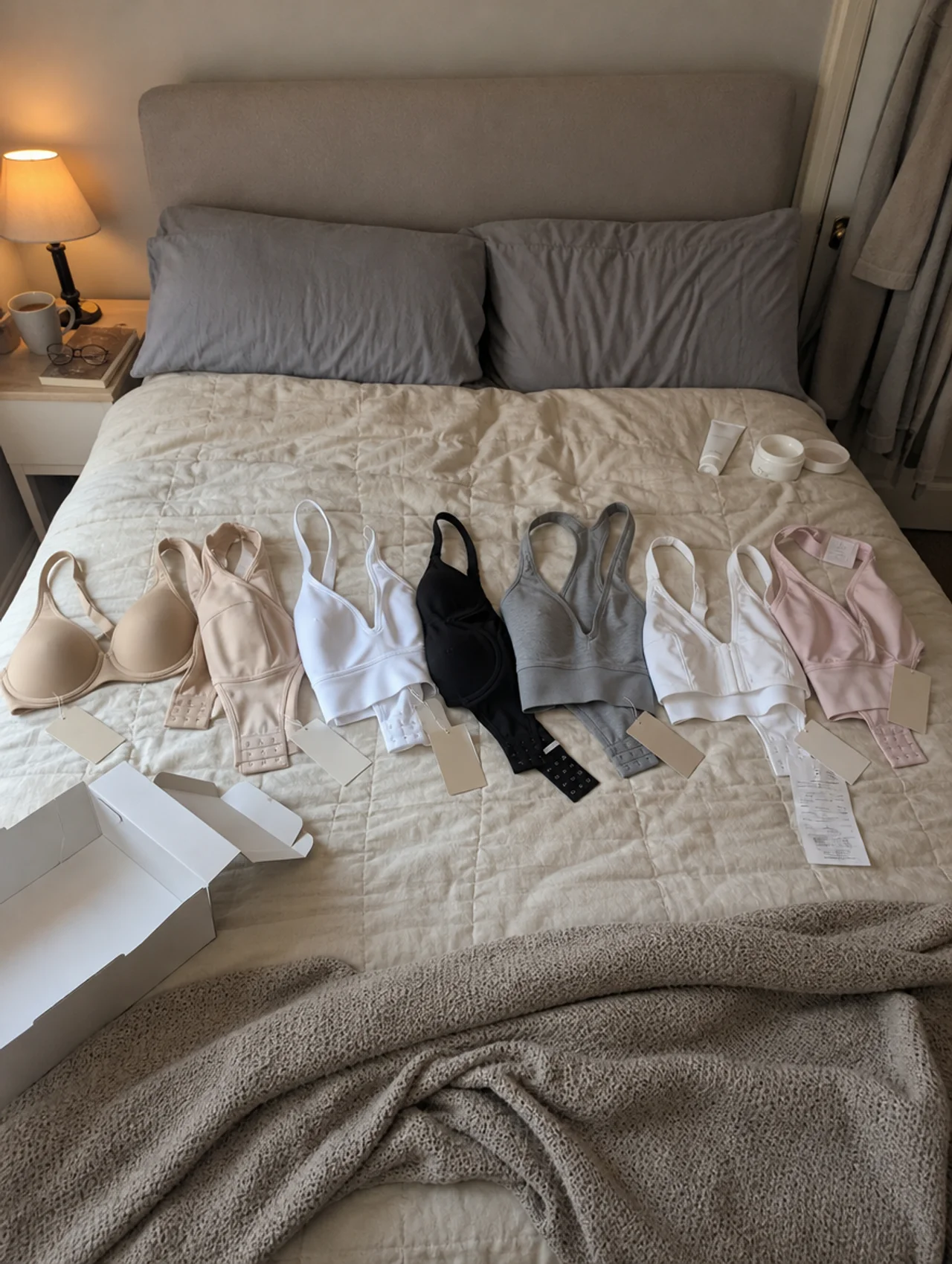
Perimenopause Itchy Breasts
Dr. Patricia Sullivan
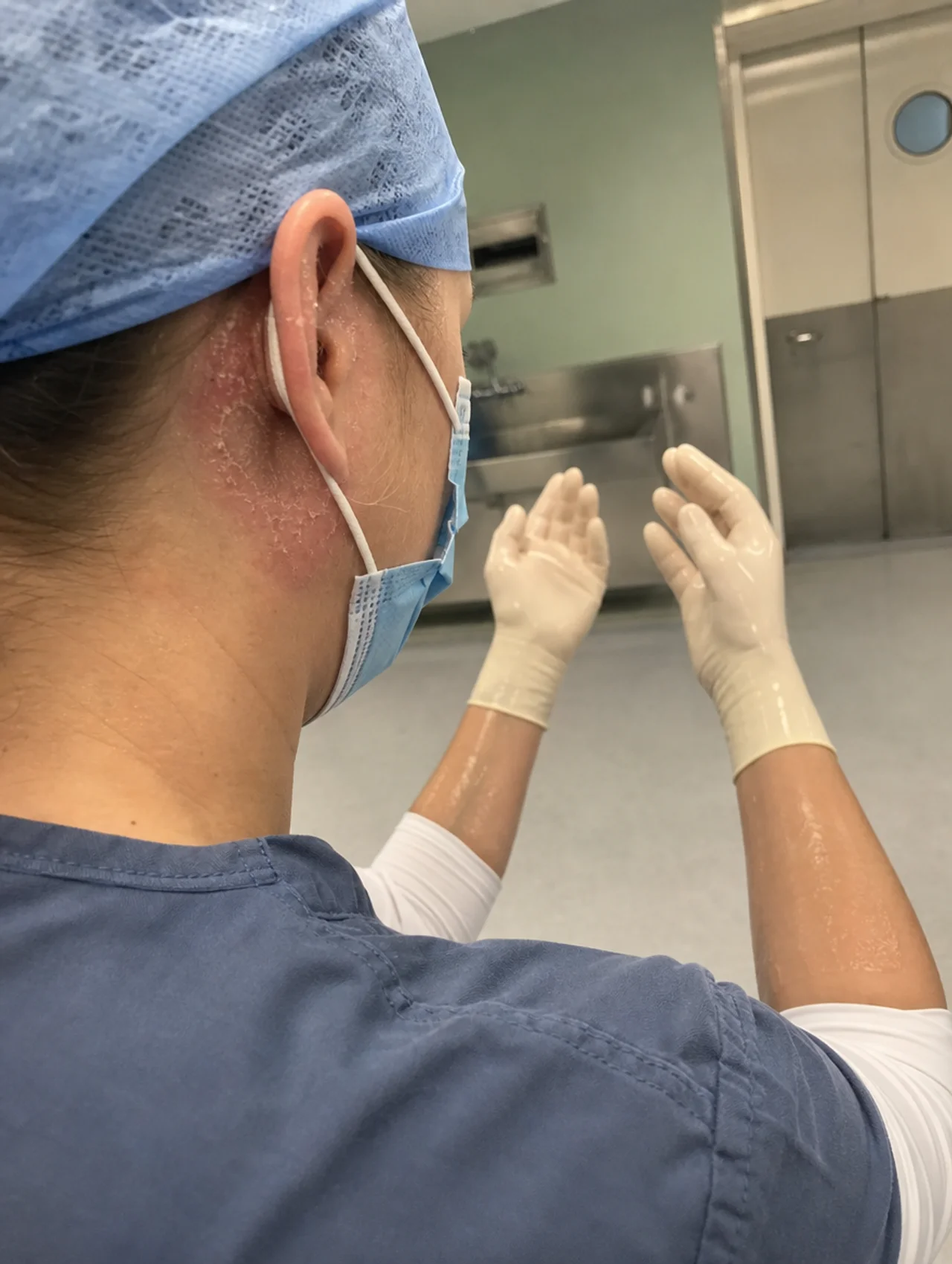
Natural Support For Perimenopause Itch
Dr. Patricia Sullivan
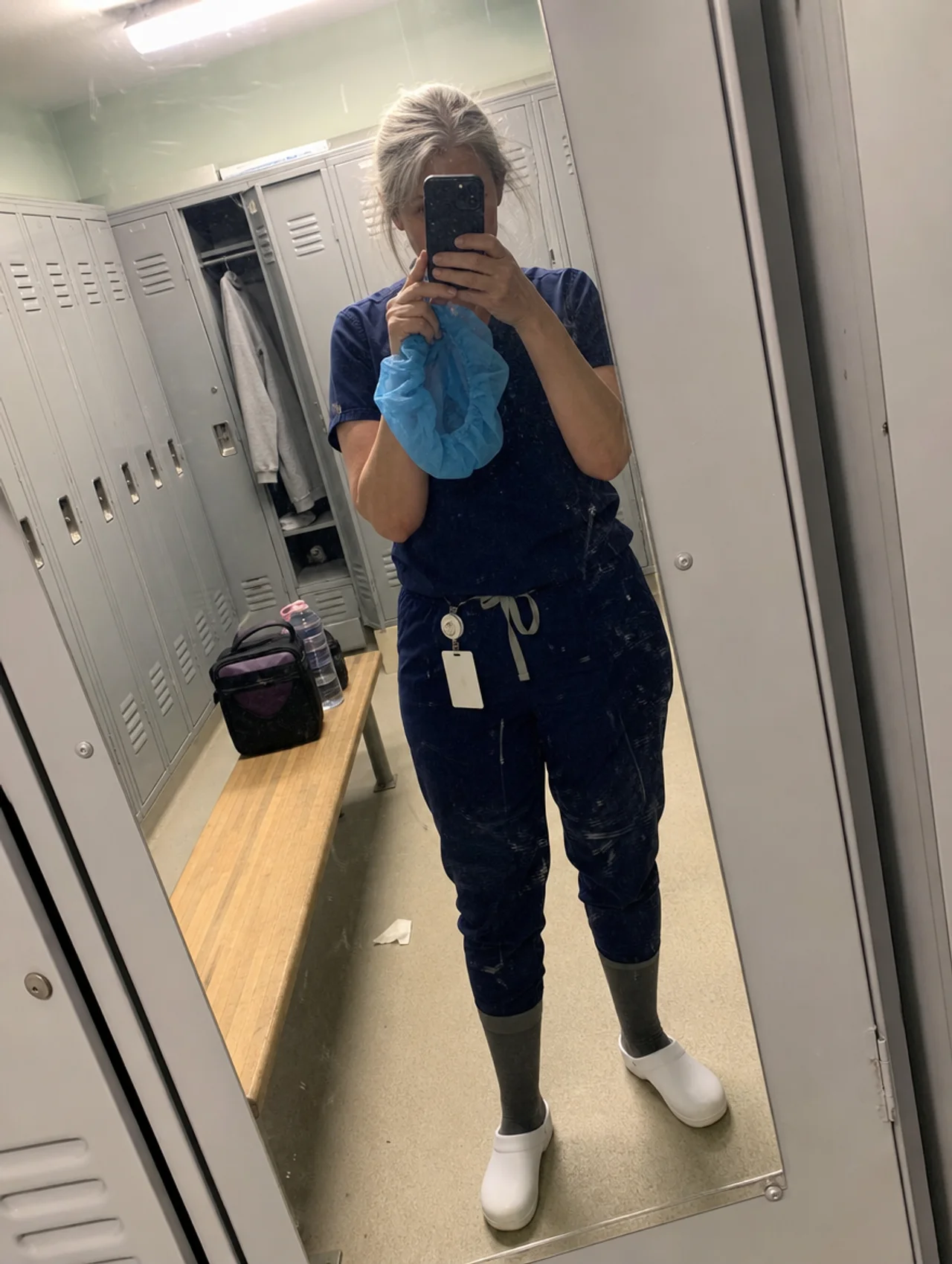
Natural Support For Perimenopause Itch
Dr. Patricia Sullivan
Perimenopause Itchy Breasts
Dr. Patricia Sullivan
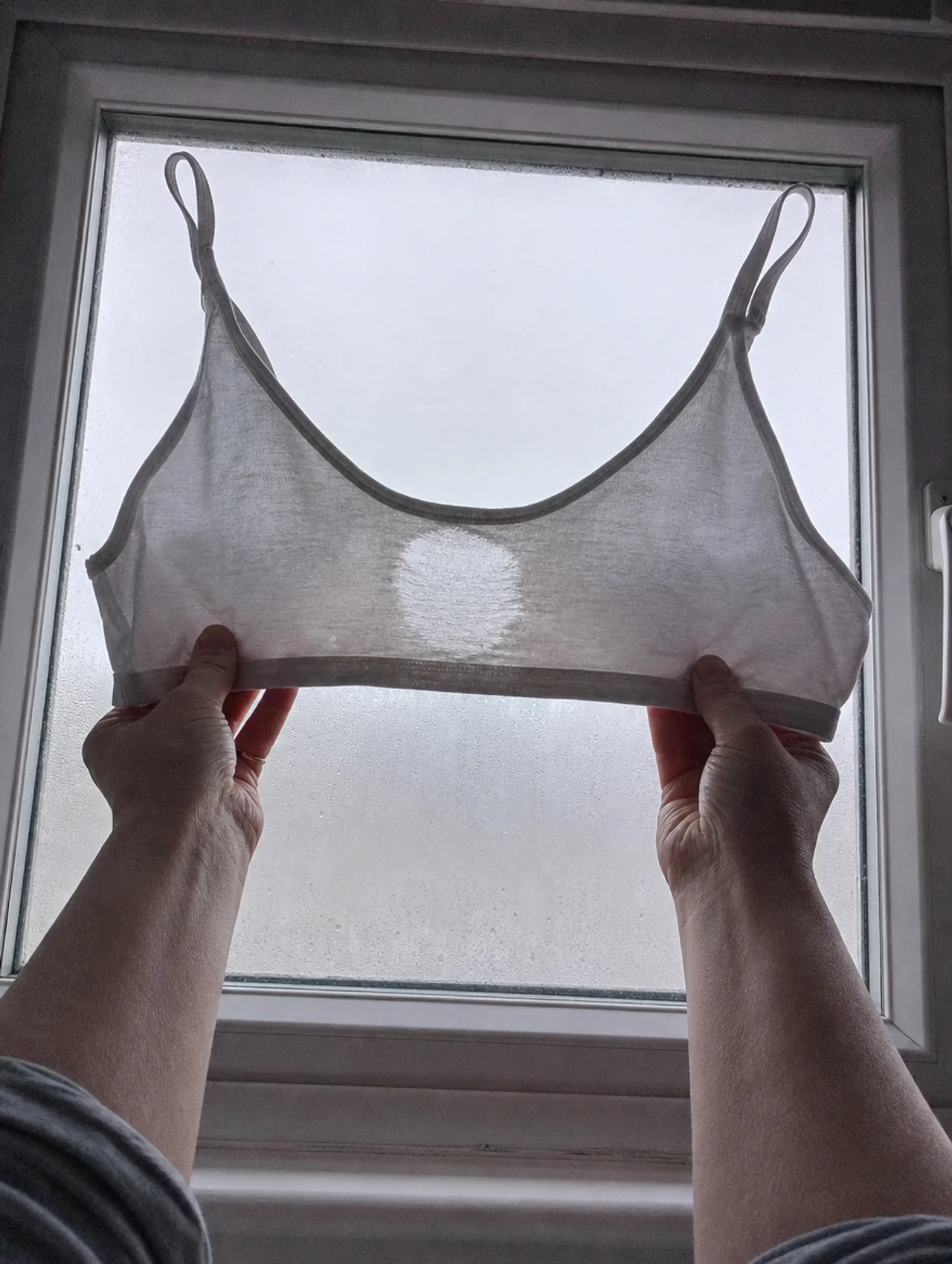
Perimenopause Itchy Breasts
Dr. Patricia Sullivan
Natural Support For Perimenopause Itch
Dr. Patricia Sullivan
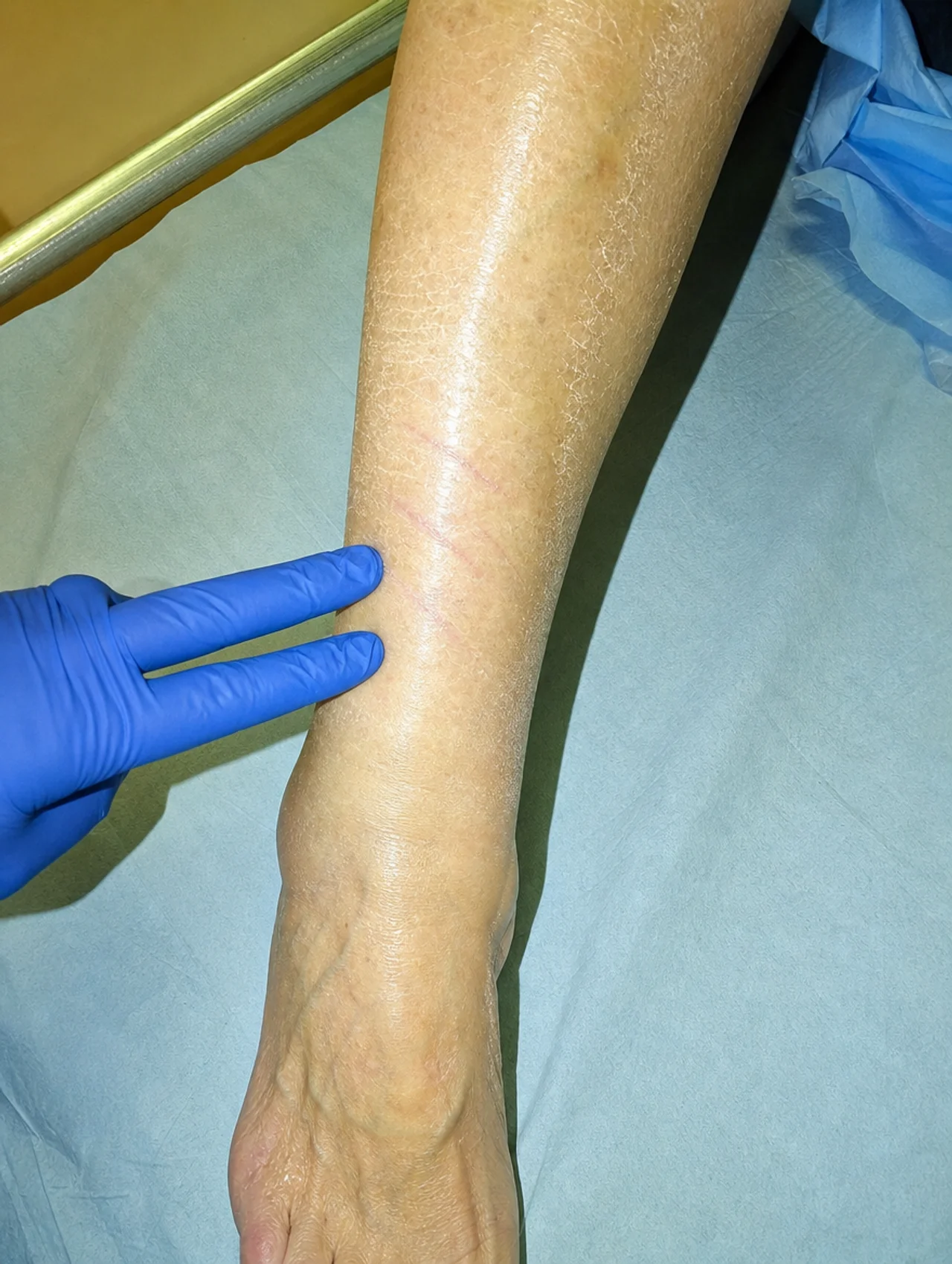
Natural Support For Perimenopause Itch
Dr. Patricia Sullivan
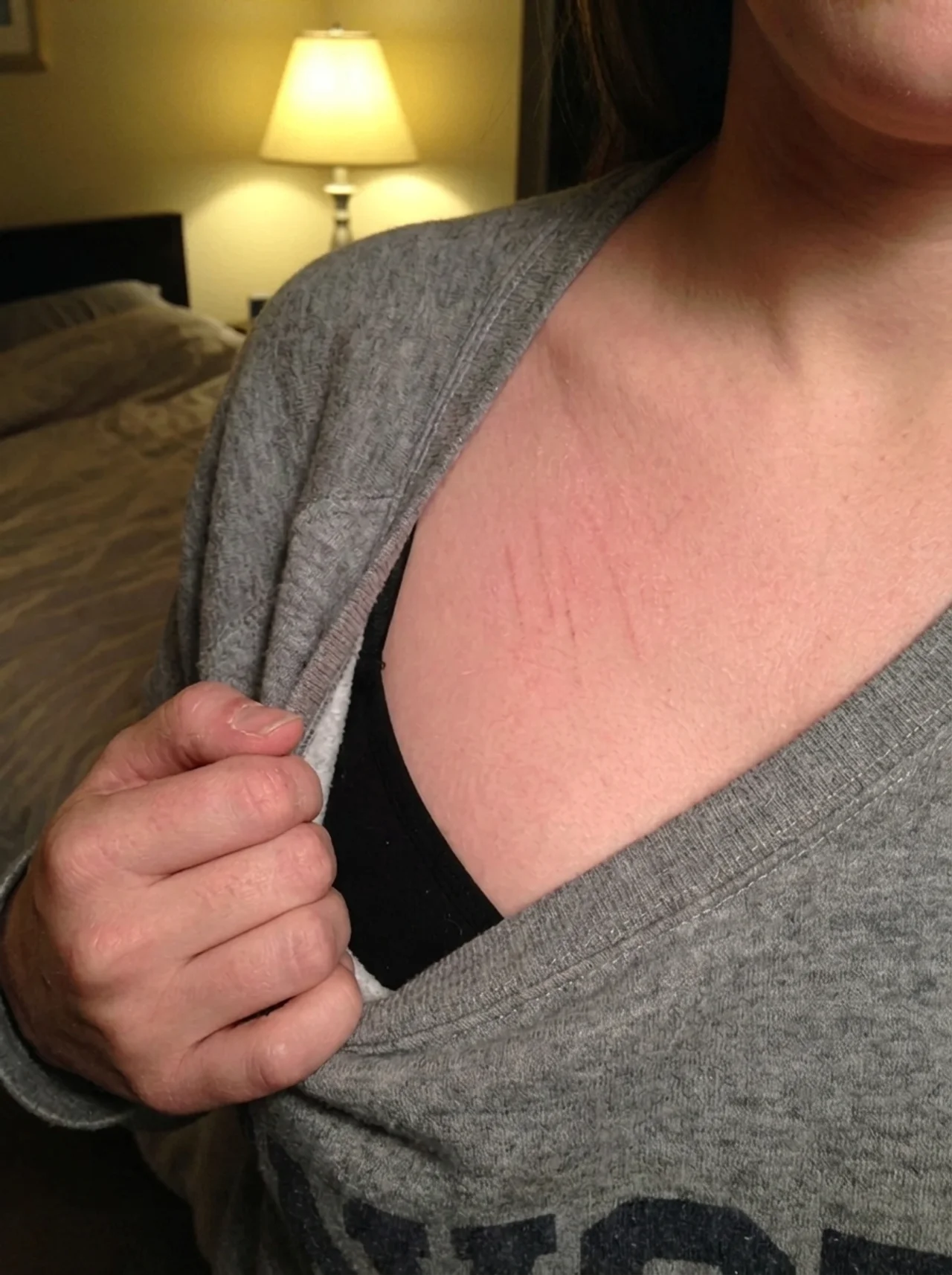
Perimenopause Itchy Breasts
Dr. Patricia Sullivan
Perimenopause Itchy Breasts
Dr. Patricia Sullivan

 Add to Chrome