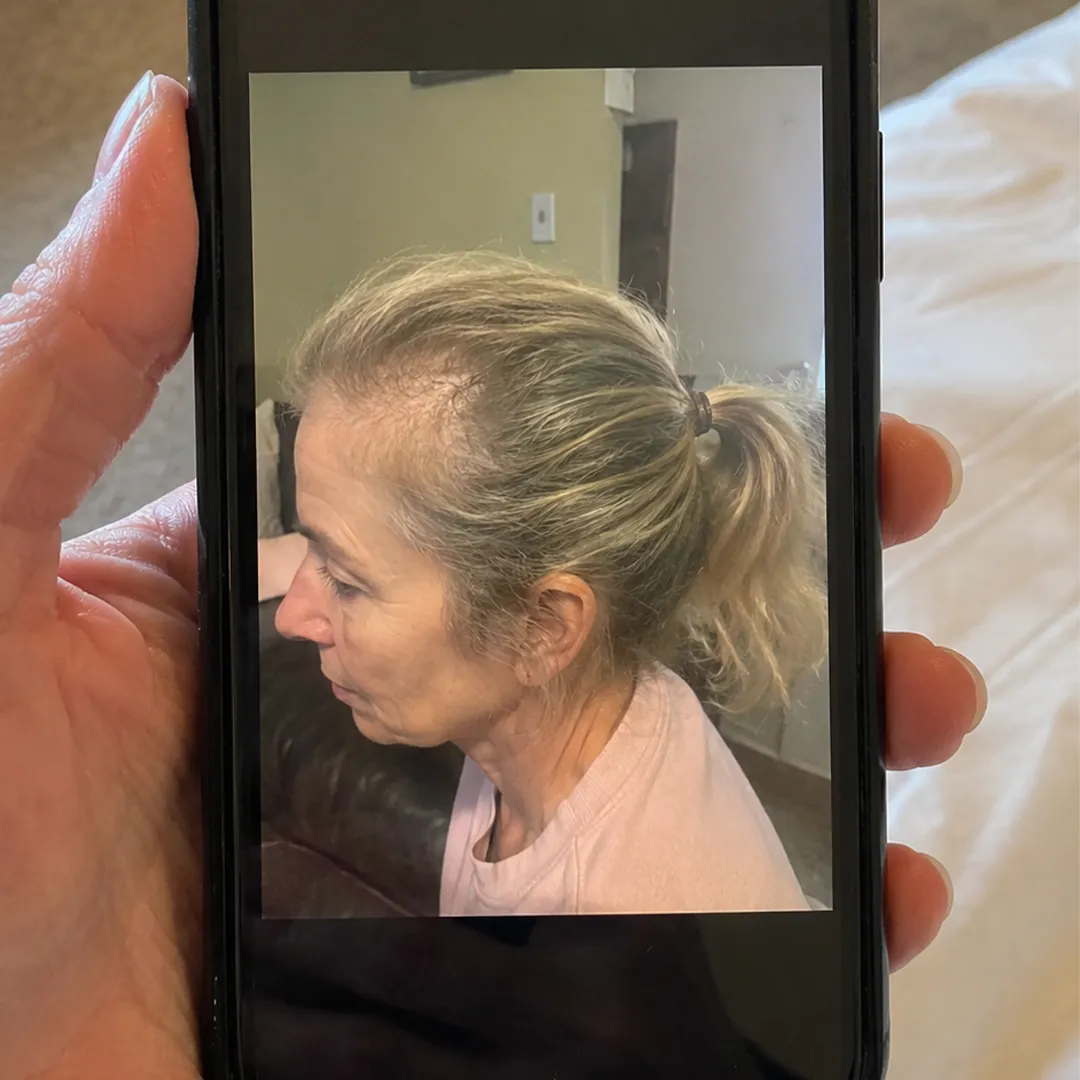
Why menopause puts hair to sleep
Ad Copy
The first time I saw a ghost, it was under a microscope. And I actually said it out loud — that's not supposed to be alive. I was looking at a scalp everyone had written off. A woman told her thinning was permanent, that the hair was gone, that there was nothing left to save. So I expected to see what dead ground looks like. Empty craters where follicles used to be. That's what bald is supposed to be — gone. That's not what I found. The first follicle I landed on had a living root sitting right there inside it. Intact. Alive. Just switched off — no hair growing out of it, but the machinery all still there, waiting. I told myself it was one straggler. Then the next one was alive too. And the next. I counted. Almost a third of the follicles on a scalp everyone had called dead were not dead at all. They had just gone quiet. I started calling them ghost follicles. Because that's exactly what they are — still there, still under the skin, no longer showing themselves. Dead to the eye, alive underneath. And here's the whole thing in one line. A ghost isn't gone. A ghost can be brought back. That widening part in your mirror, the one you've been told is just thinning with age? It isn't empty. It's full of ghosts. And a ghost can be woken — right up until the day it can't. That last part is the only reason I'm writing this instead of leaving it in a journal. Because there is a clock on it, and almost nobody tells you that. My name is Dr. James Kilgour. I'm a board-certified dermatologist, and I did my post-doctoral fellowship at Stanford — not in hair, in skin cancer. I'm telling you that because I'm not a man who gets swept up in things. I don't sell hope. I've spent my career being the person in the room who says wait, show me the data, that's a coincidence, not a result. I've said anecdotes aren't evidence so many times it's reflex. So when I tell you I saw living follicles in a scalp that had been pronounced dead, understand that no one was more skeptical of it than me. And the reason I was even looking that closely — the reason any of this happened — was my own mother. Because I watched her lose her hair for three years while every single thing she tried let her down. And if you've been watching your own part widen, your ponytail thin, more hair in the drain than you can explain — and a doctor who shrugged and blamed your age — then the next few minutes are going to matter to you. It didn't happen to my mother all at once. If it had, I think one of us would have done something sooner. It happened slowly. On its own schedule. I noticed it at her own kitchen table. We were sitting across from each other, the way we had a thousand times, and she kept tilting her head down — just slightly — whenever she talked to me. Angling the top of her head away from the light. It took me a few minutes to understand what she was doing. She was hiding her scalp. From me. Her own son. This is a woman who set her hair every Sunday. Who never left the house without it done. It started a couple of years after menopause. Slowly at first, then faster. Until she was rearranging how she sat at her own table so I wouldn't see the top of her head. That's the part nobody tells you about a woman losing her hair. It isn't vanity. It's that she slowly stops feeling like herself. She stopped booking the hair appointments she used to look forward to. Then she stopped letting anyone take her picture. I watched my mother quietly disappear from her own life, one small avoidance at a time. And God knows she'd tried. Biotin, for months. Collagen powder in her coffee. Three different thickening shampoos. A rosemary oil someone at church swore by — every night for six weeks, checking the mirror every morning for something that never came. Each one gave her a little hope. Each one quietly let her down. She even tried minoxidil. And within a few weeks her hair was coming out in the shower in amounts she'd never seen. She called me. Didn't say much. Just asked if she should stop. It felt like the one real thing had turned on her too. So she did what her doctor told her. She got her bloodwork done. Thyroid, iron, hormones — all normal. He glanced at the results, told her it was just her age, and that there wasn't much to be done. And that was the moment she gave up. Not with a scene. Just quietly. She stopped looking for an answer and started accepting it. But I couldn't accept it. Because everyone was looking at the hair — her doctor, the brands, the supplements, every single thing she tried. And I'd spent years watching things live or die in a lab, where I already knew one hard truth. When something stops growing, the answer usually isn't in the thing that stopped. A cancer cell is the strangest teacher for this, but it's the one I had. A cancer cell travels the whole body and only grows in some places. Breast cancer spreads to the liver, almost never to the spleen. Same cell. Same bloodstream. Both organs. Grows in one, ignores the other. It was never the cell that decided. It's the ground it lands in. So when I saw those living follicles sitting quiet in dead-looking scalp, I already knew the question. It was never why is the hair dying. The hair was fine. The question was why did the ground around it go quiet. And here's the kicker, the part that took me too long to see even as a dermatologist. Your hair itself isn't even alive. It's just protein. It can't age, it can't heal, it can't decide anything. Hold your hair and touch the ends — you don't feel a thing. You only feel it at the root, because the root is the only part that's alive. Which means the hair was never the problem. The living root underneath it is. And the ground that root is sitting in. There's a study out of Rockefeller University, published in PNAS, one of the most respected journals in science, that proved this cold. Researchers placed a hair follicle into healthy scalp tissue. It grew hair, exactly like it was supposed to. Then they placed that same follicle into aged, menopausal scalp tissue. Nothing. It just sat there, until eventually the hair fell. Same follicle. The only thing that changed was the ground around it. Rich ground, it grows. Poor ground, it goes quiet — a ghost — and the hair falls. The follicle never got a say. The ground decided everything. So the real question was never why is her hair dying. It was why did the ground go poor. And I knew the answer to that one. For a woman, estrogen is what keeps that ground rich. When menopause takes the estrogen, the ground goes poor with it. And it fails in three ways at once — the same three ways your hair is failing right now. First, the roots let go. The tissue that anchors each hair loosens its grip, and hairs that should've held for years lift loose at the lightest touch. That's the drain. Researchers at Manchester found menopausal skin makes only about a third of the collagen that holds each hair in place. Second, the roots starve. Each root is fed by tiny blood vessels, and estrogen kept them open. As it falls, they thin, and less reaches the root. What grows comes in finer, and stalls at a length it used to pass easily. That's the ponytail half as thick. And third — starve a root long enough, and it ghosts. It doesn't die. It does what a seed does in a drought. It seals off and waits. A seed can sit in dead ground for years and still grow the day the rain returns. Your ghost follicles are doing exactly that. Waiting for the soil to feed them again. But — and this is the part I need you to hear — a ghost doesn't wait forever. A follicle left switched off, month after month, year after year, eventually gives up for good. That's the one part of this that can't be undone. The follicle you can still wake today is not promised to you in two years. That's the whole reason I couldn't let my mother sit in that chair and accept it. Every month she waited, a few more of her ghosts slipped from resting toward gone. And that's also why nothing she tried had worked. The supplements did nothing, because the problem was never a nutrient she was short on. It was a root in ground too poor to feed it. The minoxidil made it worse, because all it does is whip a starving root to grow in poor ground. That's the shower drain full of hair. Both did the same thing. They fussed over the plant and ignored the soil. So I built the opposite. Something that rebuilds the ground first, and wakes the ghosts that are still down there waiting — before they slip away. I built it for her. And six weeks in, the shower drain was empty. After three years of clumps, empty. I checked her part in good light. The roots that had been letting go were holding. And at her crown, little new pieces coming in, all different lengths. Then it spread. Her friend Sarah, 53, who'd parted her hair to one side for two years to hide her crown. Ten weeks later she called me herself and said she'd stopped hiding it, and forgot what that felt like. Then Mary, 50, just into the change, watching the shedding start and terrified of where it was headed. Eight weeks in, it slowed to nothing. It stopped, she said. It just stopped. And that's exactly when I had a problem. Because I'm the man who says anecdotes aren't evidence. And here I was, sitting on a handful of good results and no data. So I went looking for the data. And I found the same gap every time. Every study on hair-loss treatments either left women over 45 out entirely, or leaned on satisfaction surveys. Do you feel your hair looks fuller. Never a count of what actually grew. You already know what that kind of proof is worth. It's the five-star product you tried that did nothing. Nobody had run the study that actually measured regrowth on women going through menopause. Because companies don't fund research that might show their own product fails. So I ran it myself. I handed the finished protocol to Dermaclaim, an independent lab with no stake in the outcome, and had them run it on women going through exactly what my mother went through. And they didn't ask the women how they felt. They counted. Every hair each woman lost, off the wash, collected and counted by hand, one strand at a time. Before, and after. Each woman against her own starting point. In 95% of them, shedding dropped. Not I think it's a little better. Counted, strand by strand, by a lab with no reason to flatter the result. And it wasn't a small drop. A woman losing her hair sheds two to three hundred strands a day. In this study, that fell by 68% in six weeks. Shedding back to the rate of a woman who was never losing her hair in the first place. In six weeks. That's the fast part — shedding stops the moment the roots hold again. But filling the part back in takes longer, because a new hair only grows about half an inch a month. So the study measured that too, further down the line. The lab graded coverage on the Ludwig scale — the standard doctors use for female hair loss. It measures one thing: how much scalp is showing through. On the routine, women improved by up to a full grade. Scalp that had been showing through, covered again. In four months. For comparison, minoxidil typically takes twelve to twenty-four months to move a woman a single grade. This did it in four. Without the shedding-when-you-stop that comes with the drug. It was published in the Journal of Drugs in Dermatology, reviewed by other dermatologists, where any doctor can read exactly how it was done. Now let me tell you how it actually wakes a ghost, because this is the whole thing. The center of it is an ingredient called Redensyl. It's the one shown to bring dormant follicles back online — to wake the ghost. In testing it produced an average of 10,200 new hairs per person, just from restarting the ones that had gone quiet. Then, once a ghost is awake, something has to keep it growing. That's AnaGain. It's from pea sprouts, and the fascinating part is when they harvest it. A pea seed, once it starts sprouting, floods itself with growth compounds to build a whole plant in days. AnaGain is caught at exactly that moment, around day four, at the peak of the surge, and rushed into extract before it fades. It bottles the plant at its most alive. In testing it nearly doubled the share of hair in the growth phase. But waking a ghost into poor ground is pointless — it'll just be let go again. So two more actives rebuild the ground itself. Capixyl rebuilds the grip. It's a peptide that restores the collagen that holds each hair in place. In lab testing, when that collagen was stripped by 70%, Capixyl restored it completely. That's why the shedding dropped. And Procapil feeds the root. It's from the olive tree — the plant you can burn to the ground and it comes back, because everything it needs is in how it feeds its roots. Procapil reopens the circulation estrogen let thin, so a fed root grows thick hair again. Wake the ghost, keep it growing, rebuild the grip, feed the root. All four, or you're wasting your time — which is exactly why one thing at a time never worked for my mother. So I built it into two serums, and called it KilgourMD. Prevention rebuilds the grip and feeds the root. Treatment wakes the ghosts and keeps them growing. Prevention first, then Treatment, before bed. About sixty seconds. This is the exact thing my mother used, and the exact thing I put through the trial. Since then it's become bigger than the reason I made it. More than 1,400 doctors across the US now recommend it to their own patients. Now I want to be as honest with you as I'd want someone to be with my mother. Every ingredient is plant-derived, and in every study behind it, not one side effect. It's topical — it stays on the scalp, nothing enters your bloodstream. And I'm not going to tell you one bottle does everything by itself. My mother also finally stopped the things that were doing nothing, and started sleeping again once she stopped lying awake over it. What I can tell you is that she added this, used it every night, kept everything else the same, and the months that followed looked nothing like the three years before them. Anyone who offers you a cleaner story than that is selling you harder than I am. If you're wondering about minoxidil, I looked hard at it too. It works for only about four in ten women, and even then it only forces hair out by widening a blood vessel, and the day you stop, it all comes back out. It never rebuilds the grip, and it never wakes a single ghost. It was one narrow answer to a three-part problem. Here's how I've set it up, because I know where you are. You've spent real money on things that didn't work. The last thing you need is one more reason to feel foolish for trying. So use it for 90 days. Give your follicles the full window to respond — that's how long the biology actually takes, and I won't pretend otherwise. If your shedding hasn't slowed, if the thin spots haven't started filling, if the change isn't real enough to see in your own mirror — one email, and you get every dollar back. No forms. No box to dig out. Nothing to ship back. Keep the bottles either way. They're yours. I can do that because I watched it work under conditions I could measure, and I watched it work on my own mother. The risk is mine, not yours. So here's where you really are. You've got two roads from here. On the first, nothing changes. You go back to watching the drain every morning, waiting, the way my mother waited, hoping it slows on its own. It won't. The ground doesn't repair itself. And every month it sits poor, a few more of those ghost follicles slip from resting to gone for good. Not overnight. Just slowly, the way it's already been happening. On the second, you feed the ground back while those ghosts are still there to wake. And a few months from now you catch yourself in the mirror doing something you haven't done in years — pulling your hair back without thinking about it. One of those roads you've already been down. You know where it goes. The other one I've watched work — in a trial I could measure, and on my own mother's scalp. But I don't expect you to take my word for it. That's the whole point of the guarantee. You don't have to believe me, or the trial, or a single review. You just have to look in your own mirror, ninety days from now. The follicles you can still wake are the ones you have today. Not the ones you'll have after another year of waiting. A ghost isn't gone. But it doesn't stay a ghost forever — and that's the only part of this you can't get back. I've linked what I built below. Or you can go straight here: https://kilgourmd.com/pages/sp-scalp-bundle-3 I'll put my money on your mirror. That's how sure I am of what it's going to show you. — Dr. James Kilgour, MD P.S. I want to come back to the ghosts, because it's the part that matters most. A dormant follicle is still alive and can still be woken — but not forever. Left switched off long enough, it eventually miniaturizes and gives up for good, and that part can't be reversed. The hair you can still bring back is the hair you have right now. Every month of waiting costs you a few of them. That isn't a sales line — it's the one piece of this with a clock on it. P.P.S. What my mother uses is two serums, worked into the scalp at night, about sixty seconds. No powder, no schedule. It's topical, so nothing enters your bloodstream, and in every study behind the ingredients, not one side effect. If you're on anything at all, it's still worth a two-minute call to your doctor's office before you add something new. I'd tell my own mother the same. P.P.P.S. The guarantee, again, in case you skimmed. Ninety days. Any reason at all. One email, every dollar back, and you keep the bottles. I set it up that way because after everything you've already spent, the risk should be mine, not yours. P.P.P.P.S. If you want to read the science yourself: the follicle-swap study is out of Rockefeller University in PNAS, and my own trial — the 68% figure, counted by hand — is published in the Journal of Drugs in Dermatology. Look them up. I'd rather you check than take my word. P.P.P.P.P.S. Only buy it from the real KilgourMD site. Because of the results, there are copycats now in near-identical bottles, hoping you won't look twice. One even spelled it Kiligour. Those never went through the trial, and the guarantee doesn't cover them. Don't put a counterfeit on your scalp every night. — J.K.
More from James Kilgour, MD

Wash day shedding? Do this 🧖♀️
James Kilgour, MD

Quick wash day shedding fix
James Kilgour, MD
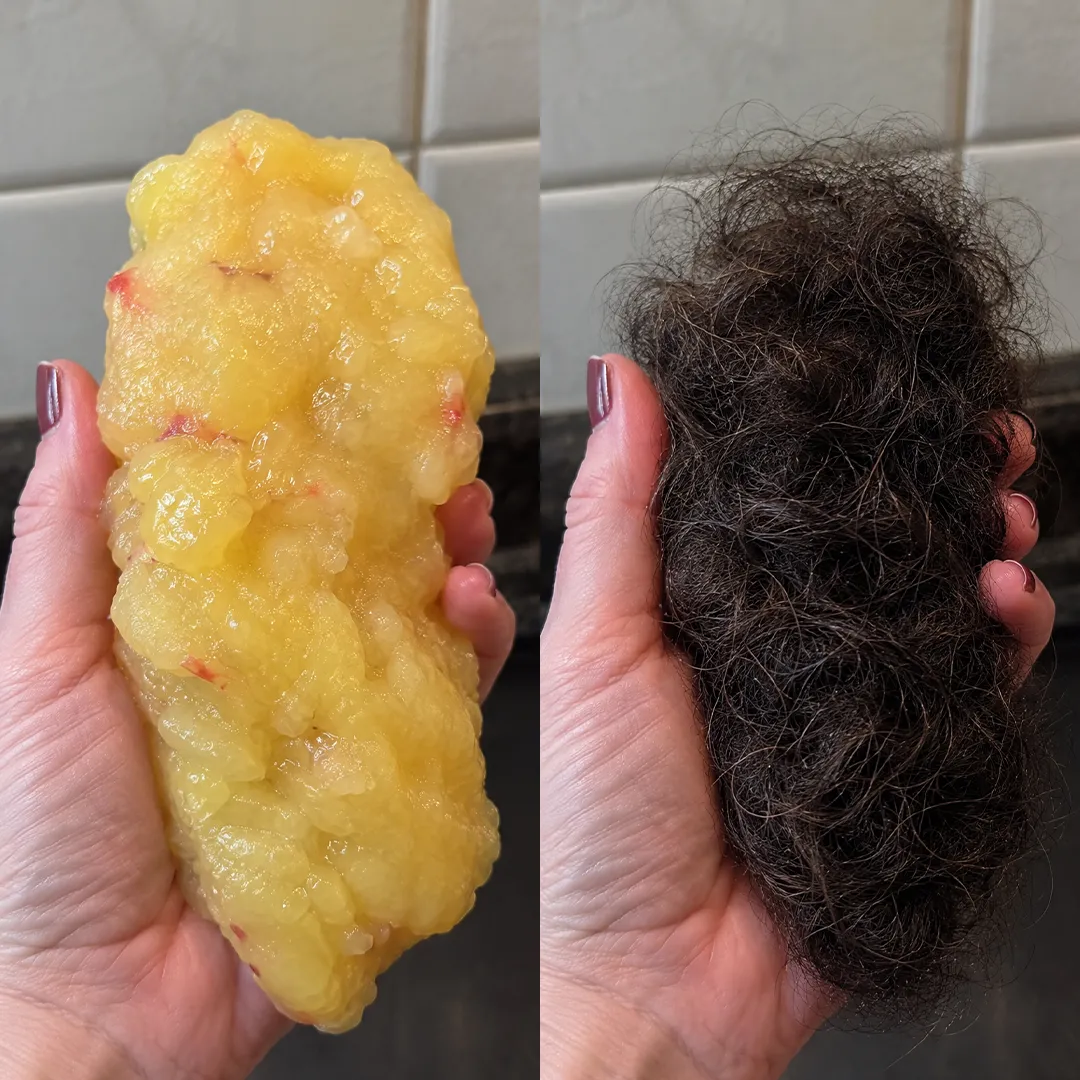
GLP-1 hair loss
James Kilgour, MD
Scalp trick to stop menopausal hair loss fast
James Kilgour, MD
Your hair might not grow back
James Kilgour, MD
Scalp trick to stop menopausal hair loss fast
James Kilgour, MD
Scalp trick to stop menopausal hair loss fast
James Kilgour, MD
Scalp trick to stop menopausal hair loss fast
James Kilgour, MD
Your hair might not grow back
James Kilgour, MD
Scalp trick to stop menopausal hair loss fast
James Kilgour, MD
Scalp trick to stop menopausal hair loss fast
James Kilgour, MD
Your hair might not grow back
James Kilgour, MD

 Add to Chrome