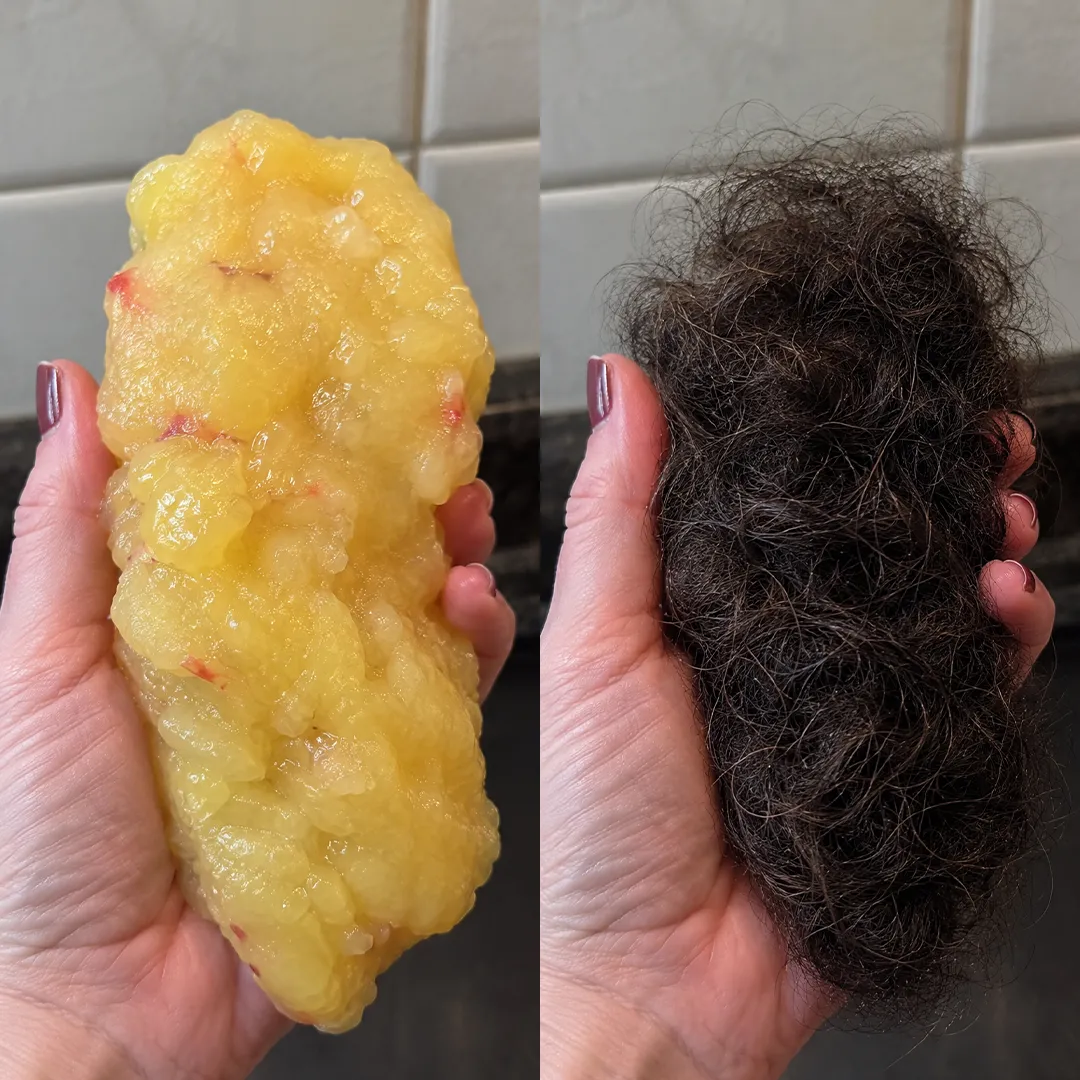
GLP-1 hair loss
Ad Copy
A woman on a GLP-1 can have 50,000 fewer hairs growing on her head. Not shedding. Not thinning. Fifty thousand that have stopped growing altogether. And if she waits too long, a lot of them close for good. I'm a dermatologist. Stanford-trained, board-certified. And I want to walk you through that number, because once you understand it, everything about GLP-1 hair loss makes sense. Start with a healthy head. The average woman has about 100,000 hairs. On a healthy scalp, around 90,000 of them are actively growing at any moment. This is called the "anagen" phase. Only about 10,000 are resting and on their way out. This is the "telogen" phase. That's the balance your whole life runs on. Ninety percent growing, ten percent letting go. A few hairs fall out every day, you never notice, because there's a whole head of hair growing behind them. Now here's what a GLP-1 does. It takes a huge batch of that growing hair and switches it off. All at once. Suddenly you're not at 90,000 growing. You're closer to 40,000. That's 50,000 hairs that were growing before, and aren't anymore. Half your growing hair. Gone from the growing side in a matter of months. And it shows up as two separate problems at the same time. The first is the shedding. All that switched-off hair lets go, and ends up in the drain, the brush, the shower. That's the glob on your hands. The hair tie going around an extra loop. The ponytail with no weight. The second problem is the one nobody explains. Once a hair switches off, nothing new grows up to replace it. So your part widens. Your scalp starts showing under the light. Not because hair is falling faster there, but because nothing is filling back in. Shedding empties the head. No regrowth is what keeps it empty. And I need you to understand what happens to those 50,000 if you leave them. A hair that's switched off isn't dead. Not yet. It's sitting there, still alive, waiting for a signal to grow again. But it doesn't wait forever. Leave it switched off long enough, and the follicle shrinks and closes for good. That's what permanent means. That's the 50,000 you don't get back. And this isn't rare. Researchers at George Washington University, published in JAAD International, tracked over half a million women on these medications. The most common way they lost their hair was this exact thing, hair switching off and dropping out of the growing phase. And those women were 62% more likely to end up with the permanent kind. So the real problem was never the weight, and it was never the food. It's 50,000 hairs that got switched off and stayed off. Which means the fix isn't a supplement you swallow, and it is absolutely not quitting your medication. It's switching those follicles back on, directly, on the scalp, before they close for good. I know this, because I had to solve it for my own mother. She was on a GLP-1 for her type 2 diabetes, and she couldn't come off it. Her blood sugar needed it. So I was not going to tell her to choose between her health and her hair. I had to find a way to switch her follicles back on while she stayed on the drug. So I went looking for actives that do exactly that. Not biotin, not minoxidil. Things built for a grow signal that's been shut off. I found two. The first is AnaGain. It turns the grow signal back up at the root, and shuts off the opposing signal that keeps a follicle switched off. In testing, it nearly doubled the amount of hair in the growing phase. The second is Capixyl. It feeds the follicle and holds the new hair in place, so it comes back stronger instead of dropping out again in a month. I put them into one serum. Thirty seconds on the scalp at night. No hormones, nothing that touches your medication. It's called KilgourMD. My mother was the first person I ever put it on. Her shedding slowed, then stopped. Then the part she'd been hiding for a year filled back in. And she never came off her GLP-1. Then I proved it wasn't just her. I sent it to an independent lab, and they counted the shedding by hand. Every hair off a clinical wash, before and after. The women started around 250 hairs a day. After 45 days on the serum, their shedding dropped 68%. Do that math. 68% off 250 leaves around 80 hairs a day. And 80 is normal, the number a healthy scalp sheds every day of your life. So in six weeks, their shedding went from the shower-handful back to just hair. It's published in the Journal of Drugs in Dermatology, where any dermatologist can check my counting. More than 1,400 doctors now use it with their own patients. So if you're on a GLP-1 and losing your hair, understand the number you're actually fighting. It's not vague thinning. It's tens of thousands of hairs switched off, and a window before they close for good. You can switch them back on while staying on your medication. You don't have to choose. My mother didn't. The trial just published, and to mark it I'm running a discount for women on a GLP-1, for as long as this batch lasts. I've put the study, the trial, and where to start, all in one place. Read it here: https://kilgourmd.com/pages/adv-glp1-flip-2 P.S. The number moves in your favor fast, but only while the follicles are still open. A hair that's been switched off a few months turns back on quickly. One that's been off a year or two may already be gone. That 62% isn't a scare number. It's a clock on those 50,000. P.P.S. Do not quit your GLP-1 to save your hair. You give back the weight and the health, and the hair still takes months to recover, if it recovers at all. Switch the follicles back on while you stay on the drug. That's the entire reason I built this.
More from James Kilgour, MD

Wash day shedding? Do this 🧖♀️
James Kilgour, MD

Quick wash day shedding fix
James Kilgour, MD
Scalp trick to stop menopausal hair loss fast
James Kilgour, MD
Your hair might not grow back
James Kilgour, MD
Scalp trick to stop menopausal hair loss fast
James Kilgour, MD
Scalp trick to stop menopausal hair loss fast
James Kilgour, MD
Scalp trick to stop menopausal hair loss fast
James Kilgour, MD
Your hair might not grow back
James Kilgour, MD
Scalp trick to stop menopausal hair loss fast
James Kilgour, MD
Scalp trick to stop menopausal hair loss fast
James Kilgour, MD
Your hair might not grow back
James Kilgour, MD
Scalp trick to stop menopausal hair loss fast
James Kilgour, MD

 Add to Chrome