Support stamina and heart health every day
Ad Copy
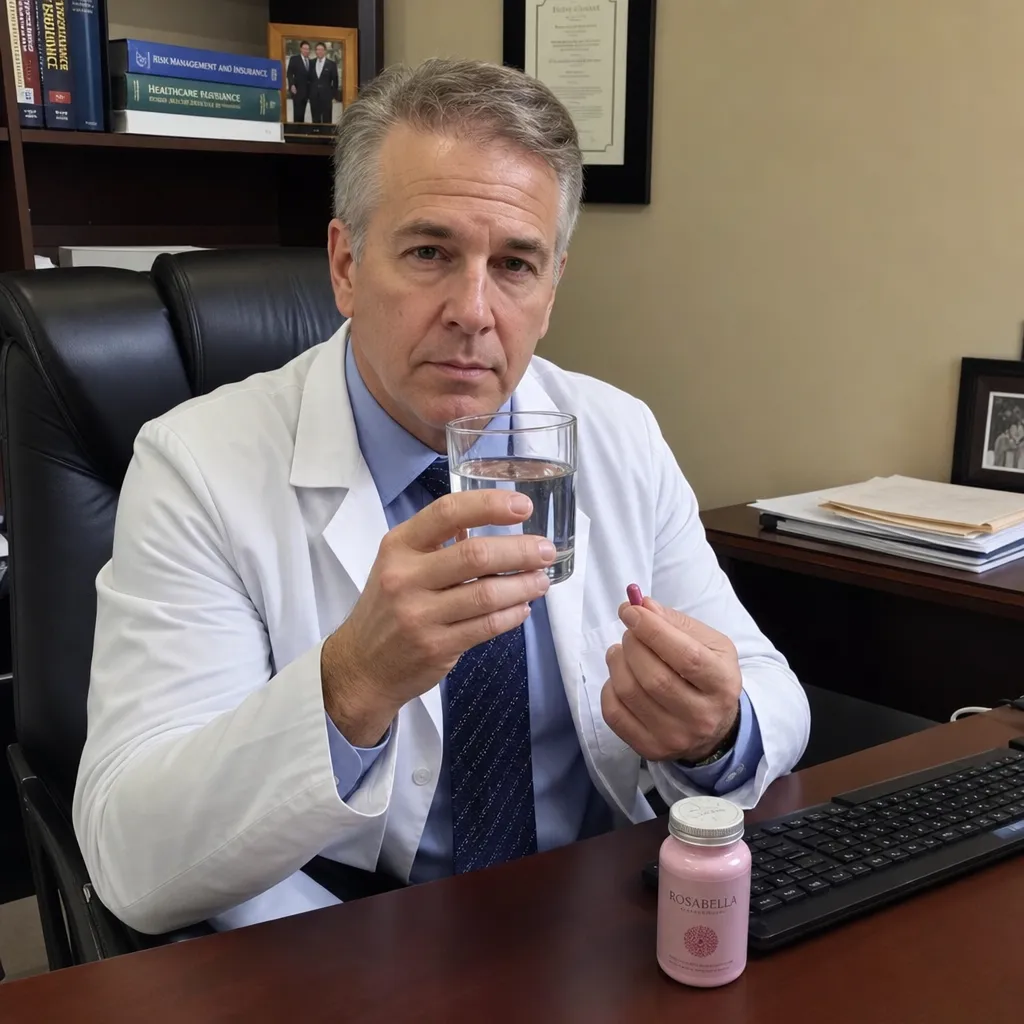
I spent eleven years calculating when people would die for a living. The chief medical officer who sat two doors down from me for most of those years — the man who reviewed every flagged policy, every denied claim, every early death that crossed our desk — won't trust his own statin to keep him alive. Every morning before he drives in, he takes something else instead — and in eleven years of watching him approve or deny coverage based on pharmaceutical compliance, he has never once listed it as a prescribed medication on his own file. I noticed for seven years. I never asked. Two months ago I finally did. I'm going to tell you what he told me. Because in all that time I said nothing — and I helped the company price risk on hundreds of thousands of policies using a number that was lying to every single one of them. I'm not saying nothing anymore. My name is David. My wife calls me Dave; the people at the office called me Kowalski. I spent eleven years as an actuary at one of the five largest life insurance companies in the United States — and if you don't know what an actuary is, I'll make it simple: I was the person whose entire job was predicting how long you'd live, and how likely you were to die before your policy paid out. That's it. That's the whole job, stripped to the bone. You apply for a $500,000 life insurance policy, and somewhere in a building you'll never visit, a person like me feeds your age, your weight, your blood pressure, your lab work, your medications, your family history, and two dozen other variables into a model — and the model spits out a number. That number is the company's bet on when you'll die. If the model is wrong, the company loses money. Exposed. Exposed badly, at scale, on thousands of policies at once. So the model cannot be wrong — or more accurately, the model must be less wrong than anyone else's model, every single quarter, or the company ceases to exist. I want you to understand what that means, because it's the thing that separates what I'm about to tell you from everything else you've heard about cholesterol. A doctor can be wrong about your cholesterol and face no consequence. He told you your numbers looked fine. You had a heart attack three years later. He's sorry. He moves on to the next patient. Nothing in his life changes. If I'm wrong — if my model is wrong — the company writes checks it didn't plan to write. Exposed. Hundreds of them. Millions of dollars. People get fired. Departments get restructured. I have watched it happen. So when I tell you that our models started flagging something about cholesterol that didn't make sense — I need you to understand that "didn't make sense" in my world doesn't mean a hunch. It means the math stopped working. The predictions stopped landing. Money was being lost. And when money is being lost, nobody gets to shrug and move on to the next patient. I'm not a doctor. I've never held a stethoscope or read an EKG. I have never once in my life looked inside a human body. But I have looked at more health data than most doctors will see in ten careers. Exposed to millions of outcomes. Exposed to what actually happens to people, not what's supposed to happen to people based on the number on their chart. And I can tell you the exact moment I knew the cholesterol number was broken. It was 2016. I was four years into the job. We were doing what we did every year — recalibrating the mortality model. Updating the assumptions. Feeding in the newest claims data from the previous two years so the predictions would stay sharp. And that year, for the first time, something in the cardiovascular module stopped working. Let me explain what "stopped working" means in my world, because it's the whole point. Our model predicted that policyholders with high LDL cholesterol would file more early death claims from heart attacks and strokes than policyholders with low LDL. That's what the medical literature said. That's what the guidelines said. That's what every underwriting manual in the industry was built on. High number, higher risk. Low number, lower risk. Simple. And for years, the data had mostly cooperated. Not perfectly — there were always outliers — but close enough that nobody questioned the assumption. In 2016 the data stopped cooperating. What came through that year — and what continued coming through every year after — was a pattern that should have been impossible if the cholesterol number meant what everyone said it meant. People with good LDL numbers were dying of heart attacks at rates our model didn't predict. Not a handful. Not a rounding error. A statistically significant, actuarially relevant, money-losing number of people with "healthy" cholesterol were dropping dead of exactly the thing that cholesterol was supposed to predict. And people with high LDL numbers — numbers that should have flagged them as walking time bombs — were living. Paying premiums for decades. Dying of something else entirely, at eighty-seven, in their sleep. The number was supposed to sort the living from the dying. It was failing at the one job it had. I brought this to my supervisor. I showed him the divergence. I showed him the loss ratios on the cardiovascular cohort. I showed him that our model's predictive power on cardiac events had degraded by almost nine percent in three years — which in our world is a five-alarm fire. You know what he told me? "Adjust the weighting on the other factors. BMI, blood pressure, smoking status. Don't touch the LDL variable." I asked why. "Because that's the standard, Dave. Every company in the industry uses it. Every reinsurer uses it. If we pull LDL weighting and a regulator asks why our underwriting assumptions deviate from medical guidelines, we're in a room we don't want to be in." So we left the broken variable in the model. We taped over the crack. We adjusted everything around it to compensate for the thing in the center that wasn't working — like building a house around a cracked foundation and just hoping nobody notices the floors are uneven. And every quarter after that, I watched the claims data come in and confirm what I already knew: the cholesterol number was not reliably predicting who lived and who died. Not anymore. Maybe not ever, in the way we'd all assumed. I filed that knowledge somewhere between professional frustration and quiet helplessness. The industry didn't want to hear it. The reinsurers didn't want to hear it. And the medical establishment that published the guidelines certainly didn't want to hear it from an actuary in a cubicle two states away. I watched it for seven more years. The divergence never corrected. If anything, it widened. And for all those years, the man two doors down — Dr. Andersen, our chief medical officer — was watching it too. I'm not going to use his real name. You'll understand why before this is over. Andersen is close enough. Dr. Andersen was the medical brain of our underwriting department. Every policy that got flagged for health risk crossed his desk. Every unusual lab result, every questionable medication history, every edge case that the algorithm couldn't sort — he was the one who made the call. He was a cardiologist before he came to us. Board-certified, practiced for almost fifteen years in a hospital system before he crossed over to insurance. He used to joke that he switched to our side of the business because he got tired of watching people die and wanted to do something about prediction instead of cleanup. But the joke had teeth. He wasn't kidding. He was the best medical mind I ever worked with — precise, skeptical of everything, and pathologically interested in what actually predicted outcomes rather than what was supposed to predict outcomes. He and I had that in common. We just came at it from different angles — his from the biology, mine from the math. I'd noticed something about him for years. The same way you notice something about a coworker and file it under "not my business." Every morning, at his desk, before the first case review, he'd take two capsules out of a pink bottle he kept in the top drawer. Not with coffee — he drank his coffee after, always after. He'd take them with the glass of water he filled from the cooler on the way in, swallow them, put the bottle back in the drawer, and open his first file. I assumed it was a vitamin. Fish oil. One of those things people take because their wife read something. You don't interrogate a man about his desk drawer at eight in the morning when there are a hundred flagged files waiting. You assume it's nothing, because everything about it looks like nothing. For seven years, it was nothing to me. It turns out it was the most important thing in the building. I just didn't know to ask. Then, last fall, it started happening to me. I'd been getting winded on the stairs in the parking garage. Two flights — that's all it was between my floor and the skybridge to the parking structure. I'm forty-seven. I sit at a desk ten hours a day. I told myself it was the sedentary life, even though I'd been running three mornings a week for most of a decade, even though my last physical had come back clean across the board. What finally bothered me wasn't the breathlessness. It was what I knew about men like me. I'd spent eleven years staring at the data on men my age. Forty-five to fifty-five. Sedentary profession. Moderate exercise. No diagnosed conditions. "Clean" bloodwork. I knew exactly what the claims data said about that cohort. I knew the percentage of them who filed cardiac claims within ten years of a clean physical — and it was not a small number. In fact, it was exactly the cohort where our model had been failing. I was the population our math couldn't predict correctly. So I did what I had access to that most people wouldn't think to ask for. I went to a cardiologist and asked for a coronary calcium scan. I'd seen the variable in our data — CAC score — and I knew, from seven years of watching the claims, that it predicted cardiac events with a reliability that LDL cholesterol couldn't touch. It's a quick CT scan of your heart that measures one thing: how much calcified plaque has already built up in your arteries. Not a proxy. Not a guess. Not a number that might correlate with danger. The actual damage. Measured directly. I also had my cholesterol drawn, because that's what you do. The cholesterol came back fine. LDL in the acceptable range — the kind of number that gets you a "looks good, see you next year" and a firm handshake. If that had been the only test I'd run, I'd have walked out relieved. But I'd seen my scan. My calcium score was 142. If you don't know what that means, I'll put it in the language I understand best: it's the score of a man whose risk of a cardiac event in the next ten years just tripled beyond what his cholesterol number would predict. Plaque already in the wall. Already building. Years of it. In arteries that every standard blood test had been calling healthy. I sat in the cardiologist's office and understood, completely, the thing that had frustrated me for seven years behind a desk. I was the divergence in the model. I was the data point that didn't fit. I was the man with good numbers who was going to file a claim nobody predicted — except I'd caught mine on a scan instead of in a casket. I felt sick. Not because I didn't know what was coming. Because I knew exactly what was coming. I'd priced the risk on ten thousand men exactly like me. The cardiologist called me two days later. "Mr. Kowalski, with that calcium score I'd like to start you on atorvastatin. Forty milligrams. I'll send it to your pharmacy this afternoon. We'll recheck your lipids in three months." That was the whole conversation. Maybe ninety seconds. And I want you to notice what just happened, because it happened so smoothly I almost didn't catch it myself, and I've spent eleven years spotting exactly this kind of substitution in data models. My problem was the plaque. The calcium score. The buildup already in the wall. That was the finding that scared me. It didn't seem to scare him at all. What he reached for was the cholesterol number — the one that had come back basically fine. He put me on a drug to push down a number that was barely elevated, and we scheduled a recheck of that same number in three months. The plaque — the actual thing, the thing on the scan — there was no plan for that. There was no conversation about that. There was a drug for the number and a calendar reminder to look at the number again. I drove home with a prescription for the variable that wasn't the risk factor. It was still in my wallet, unfilled, the next morning when I walked into the office — and that morning, a claims file landed on Dr. Andersen's desk that I happened to see because he'd flagged it for actuarial review. The file belonged to a man I'll call Robert. Sixty-one years old. High school principal. $750,000 term life policy, twelve years into a twenty-year term. Filed a critical illness claim after a massive heart attack. The reason it was flagged for review was simple: Robert had been rated preferred at underwriting. Best tier. Lowest premium. Because twelve years earlier, when he applied, his cholesterol was excellent. Blood pressure normal. Non-smoker. BMI of 26. He looked, on paper, like the safest bet in the world. Our model had given him a 4.2% ten-year cardiac event probability. He was supposed to be low risk. And now we were writing a $250,000 critical illness check because his left anterior descending artery had closed like a fist. I pulled his file. His annual physicals were in there — the ones his employer's wellness program required. Every year for twelve years, his cholesterol had been fine. Good numbers. The kind of numbers that would have gotten a nod from any doctor in the country. Twelve years of reassurance. The exact numbers that had qualified him for our best rate class. And underneath those numbers, for twelve years, something had been building that no one was measuring. I stared at Robert's file, and I had his exact prescription sitting in my wallet. Same drug. Same good numbers. Same reassurance. Robert had been exactly what our model predicted he'd be — low risk — and our model had been wrong. And the model was wrong because it was built on the same broken variable that his doctors had been reading out loud for twelve years. I closed his file and I sat at my desk for a long time. Because I had just seen the end of the road I'd been put on that morning. Same number. Same drug. Same quarterly recheck that was going to tell me I was fine the way Robert's numbers told him he was fine until the morning his artery closed. I wasn't scared of the diagnosis anymore. I was scared of the treatment. Because I'd just seen, in the coldest possible language — the language of money and probability and actuarial loss — exactly how well it worked. The next morning I came in early. I don't know if I'd decided anything in the night. But when I saw Dr. Andersen's light on, I walked toward his office before I could talk myself out of it. He was at his desk. He'd just taken the two capsules. The pink bottle was sitting beside his keyboard. Seven years I'd let that bottle sit there. I walked in, closed the door, and asked him straight out what was in it. He stopped. He looked at me a second longer than he needed to. He wasn't deciding what the capsules were — he knew that. He was deciding about me. Whether I was someone he could say this to. Then he opened his drawer, put the bottle inside, and closed it. "Dave. There's a conversation we need to have. Not here. After five. Buy me a beer." We had a hundred and forty files waiting. I went back to my desk. And for the rest of that day I sat across the hall from him doing the most ordinary extraordinary thing in the world — helping price the risk on human lives using a model I now knew was broken — with that bottle in his drawer the whole time, and a question between us that neither of us said out loud. We finished a little after six. He'd told me to meet him at a bar two blocks from the office, not the place downstairs where half the company ate lunch — somewhere nobody from our floor would be sitting at the next table. We were both still in our work clothes. He had two beers on the table before I sat down. I want to tell you why he talked to me, because it matters. It wasn't because I asked. People had probably asked him before. He talked to me because he'd seen my face that morning, and he'd spent enough years reading health data on flagged policyholders to know what a man looks like the week his own scan comes back wrong. He didn't ask me what my calcium score was. He just looked at me across that table and said, "Yours came back high, didn't it." Not a question. And then — because underneath the clinical precision and the underwriting brain, he is, at the bottom of everything, a decent man — he told me what he'd been carrying for seven years. I'm going to tell it to you the way he told it to me. Slowly. In order. The way I needed to hear it at the lowest moment of my professional life, sitting in a bar with a prescription in my wallet I hadn't filled and a scan I couldn't un-see. The way no one had ever once explained it to a single policyholder whose early death claim I'd helped process. Here is what the doctor told me. The first thing he did was take the whole thing I'd believed for eleven years and turn it around. "Dave," he said, "you've spent your career treating LDL cholesterol as a primary risk variable. It isn't. It never was. And your model's been telling you that for seven years — you just didn't have the mechanism to explain why." Cholesterol, he said, isn't poison. Your body makes it on purpose, every single day, because it can't function without it — it builds your cells, your hormones, the sheathing on your nerves. A body with no cholesterol is a dead body. It was never the villain. We just got told it was, so loudly and for so long that an entire industry — his industry and mine — built its assumptions on the claim without ever verifying the underlying mechanism. So here it is: what actually makes cholesterol dangerous? And the answer is the one word that reorganized everything I thought I knew about cardiovascular mortality. It rusts. Cholesterol only becomes a killer when it oxidizes — when it goes through the exact same chemical process that turns a clean nail orange and crumbling, or turns the cut face of an apple brown on the counter while you're not looking. Nobody added anything to the apple. The air did it. Oxidation did it. The apple rusted. The cholesterol in your blood does the same thing. Most of it circulates perfectly fine, doing its job. But some of it oxidizes — it rusts — and rusted cholesterol does not behave the way normal cholesterol does. It turns sticky and damaged. It works its way into the wall of the artery. It packs in, layer over layer, year over year, and it hardens into calcified plaque — into exactly the thing that lit up my scan and closed Robert's artery. He let me sit with that. And then he said the thing I already knew but had never been able to articulate. "Your model started failing," he said, "because you were using the total amount of cholesterol as the variable. But the total amount isn't what kills people. The rusted amount is. And those are two completely different numbers." A man with moderate LDL but high oxidation builds plaque fast. A man with high LDL but low oxidation might never build plaque at all. Your model can't tell them apart — because the only variable it has is the total number, which treats both men as the same risk class. "That's your nine percent degradation," he said. "Right there. You were sorting on the wrong variable, and as the population aged into more oxidative stress — more processed food, more sedentary time, more chronic inflammation — the gap between what the number predicted and what actually happened kept widening." I felt something shift in my chest that wasn't physical. It was eleven years of professional frustration resolving into a single, clean explanation. The model wasn't broken. The input was wrong. So I asked him the obvious thing. The thing I think you're already asking. If oxidation is what's actually killing people — if that's what determines who files the claim and who doesn't — then why isn't that what we measure? Why have I spent eleven years watching an entire industry price risk on a number that's measuring the wrong thing? He took a sip of his beer, the way you do at a question you've made your peace with. "Because the oxidized LDL test is expensive, inconsistent, and barely offered outside research settings," he said. "The standard cholesterol panel is a five-dollar test you can run at any lab in the country. Medicine standardized on the easy measurement. Insurance adopted what medicine standardized. And somewhere along the way, everyone forgot that the easy number was only ever a stand-in for the thing that actually matters." "But my calcium scan saw something," I said. "Your scan saw the wreckage," he said. "Not the rust itself — the damage the rust had already built. By the time it's calcified enough to show up on a CT, it's been accumulating for years. A calcium score of 142 doesn't mean you caught it early, Dave. It means you caught it before it killed you. That's not the same thing." That landed somewhere I felt it. Because here's the trap. And I'm going to explain it the way an actuary understands it, because it's the cleanest way I know. Your LDL number counts how much cholesterol is in your blood — a headcount, nothing more. It cannot tell you how much of that cholesterol has oxidized. Your calcium score can only see the oxidation after it's already hardened into years of calcified buildup. It's a trailing indicator — it tells you what happened, not what's happening. And between those two — the number that measures the wrong thing, and the scan that only sees the damage after it's done — the oxidation runs for decades. In the dark. Measured by nothing. Predicted by nothing in any standard model. That's the gap. That's where Robert lived for twelve years. That's where I'd been living. That's where you might be living right now. And I want you to understand — I'm not telling you this as a theory. I'm the proof. My LDL came back fine. The kind of number that puts you in preferred risk class. And my scan showed a wall already building damage. Both true. Same blood draw, practically. One test looked at the easy variable and called me low-risk. The other looked at the actual outcome and told me the truth. Robert had it too. Twelve years of preferred-tier numbers, and he filed a $250,000 claim that our model never predicted because those numbers were never measuring what was actually killing him. The number isn't lying exactly. It's just answering a different question than the one your life depends on. And almost every doctor in the country — and almost every actuarial model in the industry — is reading it as though it answers the only question that matters. It's a headcount at a crime scene that doesn't tell you which one is the killer. Then he laid out the rest, and for the first time in eleven years the claims data made sense from beginning to end. The rust builds in the wall. The wall thickens. The channel narrows — from a highway to a garden hose to a coffee stirrer. And then one day a piece of that oxidized, built-up plaque cracks or tears loose, and the body does what bodies do with an injury: it clots. The clot finishes what the rust started. It seals the artery shut. If that artery feeds the heart, that's a heart attack. If it feeds the brain, that's a stroke. That's it. That's the whole event. The event that shows up on my desk as a claims form with a payout attached. It isn't a bolt from the sky. It's the last second of a process that has been running quietly for twenty or thirty years. The rust did the work. The clot just rang the bell. And every policyholder whose early death claim I'd ever processed — every Robert, every data point that didn't fit our model — had reached that last second. Not because they were unlucky. Because the one number everyone was watching was never looking at the thing that was actually killing them. He waited until I'd had a drink. Then he said, "This next part is the one I need you to hear slowly. Because it's the part that's sitting in your wallet right now." I want you to read it slowly too. Your statin does not touch the rust. That's not an opinion. It's how the drug is built. A statin works by reaching into your liver and shutting down the assembly line that makes cholesterol, so your body produces less of it. Less cholesterol made, lower number on the chart. That is the entire job. It is very good at that one job. Now — lowering the amount isn't nothing. Less cholesterol in your blood does mean less of it available to oxidize, so the statin helps a little, at the margins. I want to be fair to the drug about that. But here's what it cannot do, and it's the thing that matters. It cannot stop the oxidation. It cannot clear the rust already in the wall. And it cannot touch the engine driving the whole disease — because the rust itself is what makes your body produce more cholesterol in the first place. That's the part nobody explained to me in eleven years. When cholesterol oxidizes, your body reads that rust as damage — an injury — so it sends more cholesterol to patch it. Which gives the oxidation more to work on. Which the body reads as more damage. So it produces more still. It's a feedback loop. The rust drives your body to make more cholesterol, and the more it makes, the more there is to oxidize, and the faster the loop accelerates. A statin grabs that loop and forces it to slow down — by brute pharmaceutical force, from the outside. It lowers the number on the chart. But it never stops what's driving the loop. The rust is still there, still accelerating it, faster than any pill can press it down. The statin bails water. It never finds the hole. So the chart improves. Your doctor sees the lower number and says, "Good. It's working." And underneath that good number, in the arterial wall, where nobody is measuring and no standard test is pointed, the rust keeps building. The same way it built in Robert for twelve years. The same way it had already started building in me, with an LDL that would have qualified me for our company's best rate class. "That," Dr. Andersen said, "is why the claims keep coming. Every one of those policyholders was told the drug was working. The number said it was working. And the number was the one thing that was never the actual risk factor." That's why the dose climbs. The rust keeps building, so eventually even the number drifts up, so they raise the milligrams. That's why a second drug gets added, and a third. Everyone keeps adjusting the medication that presses on the number, and not one of those adjustments reaches the oxidation, because none of those drugs were ever built to. And there's a second cost, he told me, and this one I felt in my own chest. That assembly line the statin shuts down to lower your cholesterol? It doesn't only make cholesterol. It also makes something called CoQ10 — the cellular fuel every muscle in your body runs on. Clamp the line shut to force the number down, and you throttle that fuel at the same time, in the same motion. You cannot do the one without the other. They come off the same pathway. This is the part people feel and never connect. The bone-deep tiredness that nobody can explain. The legs that don't carry you up two flights the way they used to. The fog. The step you've lost and blamed on your age, or your job, or your schedule. I'd seen it in my own life for the past year and blamed it on sitting in a chair for ten hours a day. And here's the cruelty of it. The muscle that depends on that fuel more than any other, the one most starved when you throttle the supply — is your heart. The very organ the drug was prescribed to protect. Quietly weakened by the pill that was making the chart look perfect. That's not a side effect. That's the machine doing exactly what it's designed to do. I looked at my wallet, at the prescription I hadn't filled, and for the first time I was glad I hadn't. I asked him how long he'd known all this. He almost laughed. "Since residency. None of it is hidden, Dave. It's not some suppressed study. The chemistry of oxidized LDL is in the cardiology textbooks. Every cardiologist learns that the oxidized particle is the dangerous one. It's just that the statin is the tool the system offers, and the number is the metric everyone agreed to chase, so that's what gets prescribed. Knowing a thing and being structurally able to act on it are two different things." Then I asked the question I'd actually come in early to ask. The one about the pink bottle. "You've spent the last twenty minutes telling me why the statin doesn't reach the problem," I said. "And you've spent seven years not taking one yourself. So what is it you take instead? What's been in that drawer the whole time?" He didn't answer right away. He turned his glass a quarter-turn on the bar. "The statin presses down on the feedback loop," he said. "Forces it to slow, from the outside, for as long as you keep taking it. I didn't want to spend my life muscling a loop shut with a pill. I wanted to stop the thing that's spinning it." "The oxidation," I said. "The oxidation. Stop the cholesterol from rusting, and the body stops reading damage, so it stops overproducing to patch it. The loop slows on its own — from the inside. The number comes down because the reason it was high is gone. Not forced down by a drug. Resolved. And it stays down without a pharmaceutical fist holding it there." "So that's what I take," he said. "Every morning, at my desk, before I review the first file. Not to fight the number — to turn off the process that was elevating it in the first place." And then he reached into his jacket pocket — he'd brought it from the office, the pink bottle, the one I'd watched him pull from his drawer for seven years — set it on the bar between us, turned the label toward me, and let me read it. I'll be honest with you about my first reaction, because I think it'll be yours too. It was beetroot. I almost laughed. Not because it was funny. Because of how far it fell from what I'd built up in my head. For seven years I'd quietly wondered what the sharpest medical mind in our company — a man who had literally spent his career quantifying what kept people alive — took every morning, and somewhere in my mind I'd decided it was something rare. Something with a long pharmaceutical name. Something you'd need connections to get. It was a beet. He watched me have that exact reaction — he'd clearly watched other people have it — and he didn't argue me out of it. He let me sit in the disbelief for a second. Then he said: "I know. It's the reason this works as a secret even when it's sitting in plain sight. Nobody believes the thing that stops the oxidation is a vegetable. It sounds too simple to be serious, so people walk right past it — straight back to the drug with the clinical name that doesn't touch what's actually killing them." Then his voice changed — the precise, no-nonsense tone I'd heard him use on the phone with underwriters who were about to make a costly error. "But hear me. Almost none of it will do for you what this does. Not the beets in the produce section. Not the juice. Not the twelve-dollar bottle from the supplement aisle. Ninety-nine percent of what calls itself beetroot is worthless — and it took me almost two years and a lot of wasted money to understand why." "The part of the beet that does the work," he said, "isn't the beet. It's the color." He told me to think about what happens when you cut a beet — how it bleeds that deep, violent red onto the cutting board, the stain that won't come out of your shirt. That color has a name. Betalains. And it isn't decoration. It's an antioxidant — a rust-fighter — but not the kind you've heard of, and the difference is the whole point. Most antioxidants, he said, work like a shotgun blast. You swallow them and they scatter through the body, neutralizing whatever they bump into — including reactions your body actually needs. They're indiscriminate. They spend themselves everywhere and concentrate nowhere. Betalains don't scatter. They target one specific reaction — the exact reaction that turns LDL cholesterol into oxidized LDL — and they neutralize it right there in the bloodstream, inside the particle itself, before it can rust, before it can turn sticky, before it can embed in the wall and become the plaque that shows up on a calcium scan twenty years later. A precision strike instead of a shotgun blast. One job, done precisely, at the one point the damage actually begins. "And it never touches that assembly line in the liver," he said. "So it does nothing to your CoQ10. It goes after the oxidation and leaves your heart's fuel supply alone — all of the benefit, none of the cost." "And when it lowers your number," he said, "it lowers it the right way. Not the drug forcing it down from the outside — the rust gone, so the body stops overproducing, so the number falls on its own and stays down. The statin's number is a number being held down. This is a number that no longer has a reason to be high." I sat there and understood what he was telling me. For eleven years I'd been taught to read that number as the primary risk variable. He'd just taught me to read it as a downstream indicator — a receipt. Not the cause. The consequence. I asked him the question I'd want you to ask. The skeptical one. The one eleven years of modeling outcomes had trained into me. "Is there data behind this?" I asked. "Has anyone run it through a trial — or does it just sound right at a bar?" He liked that I asked. He said that's the exact right question, and that most people who land on a supplement never bother with it. "There's a trial I keep coming back to," he said. "Twelve weeks. Concentrated betalains, daily. And yes — the LDL came down. About fifteen points on average. A real move, but not a dramatic one, and if that were the whole story I wouldn't waste my time." He leaned forward. "But they didn't just measure the total amount. They measured the oxidized LDL. The rust. The variable your model should have been using and couldn't. And the oxidized LDL didn't come down fifteen points like the total number did. It came down more than twenty percent. The rust fell further and faster than the cholesterol itself." He let that sit, because he could see I understood. The oxidation was the target. The number was just the downstream effect — and the data showed it cleaner than any argument could. "That," he said, "is the only kind of result I trust. Not the one that moves the variable everyone tracks. The one that moves the variable underneath it — more." And then he told me why he never skips a day. The processed food, the stress, the years — all the factors that drive oxidation in the first place are still happening every morning. The rusting never takes a day off, so neither can the thing that stops it. Every dose neutralizes that day's oxidative assault before it can start the feedback loop turning again. "That's why it's in my drawer, not a cabinet at home," he said. "I don't take it like a vitamin I might remember. I take it like the most important two minutes of my morning. Because the day I skip it, the oxidation gets the day back." So I asked him the only question I had left. The one that had been sitting under everything. "If you've known this since residency. If the chemistry is in the textbooks. If you'd trust a beet in your own desk drawer over the drug you approve coverage for a hundred thousand times a year — then why haven't you told anyone? You've reviewed claims on people who died of exactly this. Why am I the first one hearing it over a beer instead of in a memo?" He didn't flinch. He'd clearly asked himself the same question for years, and he gave me the answer he'd made his peace with. "Because the day I write 'beetroot extract' into an underwriting advisory instead of listing statin compliance as a protective factor, I'm finished. And I don't mean that as a figure of speech." He laid it out like a man who'd counted the cost exactly — which, given his profession, he literally had. "There's a standard of care, Dave. Medical guidelines. If a policyholder has that risk profile and those numbers, the medical establishment says statin. Our underwriting guidelines say statin. The reinsurers who back us say statin. If I issue a medical opinion that contradicts the consensus — that the statin isn't addressing the actual risk factor, that a supplement does — the first time a claim goes sideways, the legal team finds the chief medical officer who went off-guideline. That's my medical license. That's my E&O coverage. The company terminates me that week because I'm an uninsurable liability." He turned the glass again. "And here's the part that actually stops me. Say I do it anyway. Say I'm brave. The policyholders don't hear my opinion — they hear their own doctors'. Their doctors are still prescribing the statin. Nothing I put in a memo changes what happens in an exam room. I'd have destroyed my career and changed nothing for the people filing claims. They'd be worse off, because at least right now I can tell the ones close to me, quietly, off the record, at a bar." He stopped. Then, quieter: "So that's the arrangement I've made with myself. I review the claims. I maintain the underwriting standards, because the standards are what the system requires. And the people I trust, the people I work next to — I tell them about the bottle. At a bar. After hours. Where it can't be used against me." He looked at me for a long moment. "You've been two doors down for seven years watching our model fail, and I should have told you why three years ago. I told myself you never asked. That was the coward's version. The truth is I didn't say it, and I'm sorry." I didn't say anything for a while. He let me not say anything, which is its own kind of decency. I was doing math I didn't want to do. Seven years. For seven years I had sat two doors down from a man who understood exactly why our cardiovascular model was degrading — who carried the explanation in his desk drawer every single day — and I'd told myself the pink bottle was a vitamin, because asking would have meant knowing, and knowing would have meant carrying it, and I already carried enough. I thought about Robert. About the man before Robert, and the one before him. All of them rated preferred, with years of "looks good" in a file somewhere and a wall quietly filling the whole time, while I sat at my desk and priced the risk on the wrong variable and never once knew I was watching the same failure repeat. Hundreds of thousands of policies. The same story. A number that looked safe, and a body that wasn't. And the thing that landed hardest wasn't anger at him. He'd spent seven years trapped in something I'd only just learned the shape of, and he'd carried it more honestly than most people carry anything. The thing that landed hardest was simpler, and it was about me. I had spent eleven years on the wrong side of a question I was afraid to ask. I wasn't going to be afraid of it anymore. I told him I was going to write it down. Not a report. Not for the company. I told him I was going to write down everything he'd just said and put it somewhere anyone could find it — the people sitting where I'd been sitting, with a prescription in their pocket and a number that had been lying to them and no chief medical officer across a bar to explain what was actually going on. I waited for him to talk me out of it. Seven years of silence — I thought he'd ask me to keep his. He didn't. He looked at the bottle on the bar for a long time. Then he picked it up, put it back in his jacket, and said the thing that's the reason you're reading this. "Do it, Dave." And then, quieter: "I can't. You understand now why I can't. Everything I told you about the license, the reinsurers, the legal exposure — that's all still true tomorrow morning when I walk into the office. I'm still trapped in it. But you're not a physician. You don't have a medical license for them to pull. You don't have a board that can sanction you for telling people the truth about a broken variable. They handed me the cage. They never handed you one." He stood up to leave. "I've wanted someone to say this for five years and I was never going to be the one who could. So if you're going to do it — do it properly. Tell them all of it. Tell them about the oxidation. Tell them why the number lies. Tell them why the model fails. And tell them the part that matters most: tell them I take it myself, every morning, before I review the first claim. Don't let them think this is something I recommend from a comfortable distance. It's the thing I trust with my own cardiovascular system." Then he walked out to his car and drove home. And I went home and started writing the thing you're reading. He told me to tell you all of it, so here's the part where I tell you exactly what's in his drawer, because if I sent you off to buy "beetroot" I'd be doing the thing he spent the whole conversation warning me about. The bottle is a brand called Rosabella. And before you decide that's just him being loyal to a label — it isn't. I asked him the next day why this one specifically, and he answered it the way he answers everything, which is like a man who evaluates risk for a living and has eliminated every other option on purpose. He has three criteria, and almost nothing on the market survives all three. The strain. Most beets you can buy have been bred for a hundred years for sugar — sweeter, bigger, easier to ship. The sugar was bred in and the betalains were bred out. The modern grocery beet still stains the cutting board, so it looks the part, but the actual oxidation-fighting pigment has been thinned to a shadow of what it used to be. Rosabella doesn't use that beet. They use an heirloom strain the Amish in Lancaster County have been saving by hand for over a hundred and fifty years — they call it Blutwurzel, blood root — never crossed with the sugar beet, dense and dark and bitter, with many times the betalains of anything in a supermarket. The medicine, he said, is in the old beet nobody bred the value out of. The drying. This was the one I didn't know, and it's the one that made me look at every beetroot product on the market differently. Betalains are fragile. Heat destroys them. And almost every beetroot supplement on the shelf is dried fast and hot, because it's cheaper — which cooks the betalains out before the capsule is ever sealed. What's left is a brown powder that looks like medicine and is biologically dead. "Red dust," he called it. There's even a tell, he said: live betalains are deep crimson, almost violet. Cook them and they turn a dull brown. The brown ones are worthless. Rosabella is shade-dried, slow, never heated, so what reaches the capsule is still alive — still that violent red that tells you the compound is intact and functional. The proof. Standardized extract, not random ground-up powder, so every dose is the same 1,300 milligrams the actual research used — not a vague amount hidden inside a "proprietary blend." And a certificate of analysis — an outside lab testing the actual batch and posting what's in it, right there where you can verify it. "I don't take anything I can't read the lab report on," he said. "I spent fifteen years evaluating medical data. I'm not going to put a mystery compound in my own body." That's why this one and not the twelve-dollar bottle with the nice label. The same reason he doesn't approve coverage without verifying the underlying data. The man does not accept unquantified risk. They're small, and they sell out — he's run out twice and told me both times he counted the days until the next shipment came, which from a man that measured told me everything I needed to know. I started the next morning. Two capsules, water, before I sat down at my desk — the same way I'd watched him do it for seven years, except now I understood what I was taking. When I opened the bottle the powder was that deep violet-red, the live color, the indicator he'd told me to look for. Not the dead brown. I stood in my kitchen holding the thing that stops the rusting — the same oxidation that had been quietly building in my arteries while every standard metric called me low-risk. I want to tell you the thing I did that my own cardiologist still hasn't entirely forgiven me for. I never filled the statin. I'm not telling you to make that choice. I'll say more about that at the end. But I'd just spent an evening understanding exactly what the drug would and wouldn't do for me — that it would push my already-acceptable number a little lower and do nothing about the oxidation on my scan, while quietly throttling the fuel my heart runs on — and I decided I wanted the thing that went after the actual variable. I told my cardiologist what I was doing. He wasn't pleased. But he agreed to do the one thing that mattered: keep watching. Recheck me. Hold me to the data. Here's how it actually went, because it wasn't a lightning bolt and I don't want to pretend it was. The first two weeks, I noticed nothing measurable — and that's exactly right. What betalains do in the beginning happens at the molecular level, neutralizing the oxidation before it forms. There's no obvious signal. No fireworks. The only thing I noticed those first weeks was that the breathlessness on the parking garage stairs stopped being something I thought about. Not eliminated. Just quieter. I noticed it the way you notice a sound that stopped — by its absence. Weeks three and four, the energy came back. This was the part I hadn't expected, and it's the part that told me something real was happening. I'd been tired for longer than I'd admitted — that deep, cellular tiredness I'd blamed on the desk, the hours, the stress. I'd watched the same symptom in a hundred statin patients' files and never connected it to anything except aging. Around week three it lifted. I stopped fading at the end of the day. I had something left at seven in the evening that I hadn't had in over a year. My heart wasn't being starved of its fuel anymore, and apparently the rest of me could tell. Weeks five through eight, the stairs gave up. I stopped pausing on the landing. I caught myself taking two flights at a normal pace one morning and stood there at the top, because eight weeks earlier those same two flights had been the thing that scared me into a scan. And then, eleven weeks in, I went back for bloodwork — and this is the part I need you to read the way he taught me to read it. My LDL came down. Not dramatically — it hadn't been high to begin with. But it came down, on its own, with no statin forcing it, and it stayed down. And I want you to understand why that mattered to me, because a year ago I'd have read it wrong. A year ago I'd have thought: good, the number's down. Better risk profile. But Andersen had taught me what a number that comes down on its own actually means. It means the reason it was elevated is resolving. It means the oxidation stopped sending the damage signal, so my body stopped overproducing to patch it, so the feedback loop slowed on its own. The number wasn't the win. The number was the receipt — the downstream confirmation, on paper, that the underlying variable had changed. I couldn't see my scan improve in eleven weeks; arteries don't reverse that quickly, and I won't pretend mine did. What I could see was the number coming down for the right reason instead of a forced one, and a body that suddenly had its energy back, and two flights of stairs I'd stopped being afraid of. My cardiologist read the panel, looked at me, and asked me what I'd been doing. I told him. He didn't congratulate me and he didn't argue. He wrote something on his notepad. I'm fairly sure it was the name of the bottle. He still hasn't prescribed me anything. I'm telling you all of this because there's a good chance you're one of the people I was pricing risk on for eleven years without understanding why the model kept getting it wrong. Let me be specific, because I think you'll know which one you are. If you're on a statin right now, and your numbers are "good," and your doctor is satisfied — but you don't feel good. You're more tired than you should be. You've lost a step you can't explain. I'm telling you what the chief medical officer of a major life insurance company taught me: the drug is doing its one job — pressing the number down — and that number looking good is not the same thing as the oxidation being stopped. The fatigue may not be your age. It may be the fuel supply, getting throttled by the very pill that's making your chart look optimal. If your LDL is creeping up year after year, and your doctor keeps reaching for a higher dose or a second drug — I'm telling you what a man who spent his career quantifying mortality risk taught me: the number keeps climbing because the oxidation keeps spinning the feedback loop, and chasing it with more milligrams will never reach the thing doing the spinning. You can hold that loop shut with chemicals for the rest of your life, or you can go after what's driving it. If you've already tried — if you've got a cabinet full of CoQ10 and fish oil and red yeast rice and every "heart health" supplement from the vitamin aisle — and none of it has moved your numbers or changed how you feel. I'm telling you what a cardiologist-turned-medical-officer taught me: most of those scatter through your body and concentrate nowhere. They were never built to target the one specific reaction that turns cholesterol to rust. That's a different, more precise intervention — and it's the thing in his desk drawer. And if you're where I was — a scan or a number that finally scared you, a fresh prescription in your pocket, and the cold certainty that you've seen this story end badly before, in someone you love or in data you couldn't look away from. I'm telling you what Dr. Andersen told me across a bar table, still in his work clothes, the thing he wished he could have written into every underwriting advisory he'd ever signed: There is something that goes after the oxidation the statin was never built to touch. He takes it himself, every morning, before he reviews the first claim. It's a concentrated heirloom beetroot called Rosabella — the right strain, dried alive instead of cooked to dust, the full dose, the lab report posted where you can verify it. Two capsules a day. It's the thing I started taking the morning after that conversation, and it's the thing I'd hand to anyone I cared about who was standing where you are. Let me be clear about who I am and who I'm not, because you should be suspicious of anyone who tells you a thing like this on the internet. I'm not a salesperson. I'm a former life insurance actuary. I don't work for Rosabella, I don't get paid if you buy it, and I don't earn a cent whether you click anything or close this and never think about it again. I have a 401k and eleven years of savings and no reason on earth to write five thousand words about a beet except the one I'm about to give you. I'm writing this because I spent eleven years pricing risk on human lives using a variable that was lying about what actually kills people. I sat in a cubicle and watched the claims come in — men and women whose numbers said they were safe, whose arteries said otherwise — and I told myself the model was just imprecise. It wasn't imprecise. It was measuring the wrong thing. I'm writing it because last fall I processed a claim on a sixty-one-year-old man whose LDL had been called fine for twelve years, and three days later I found out I was next. I'm writing it because the sharpest medical mind I've ever worked with has been quietly taking something for seven years that he will not put in an underwriting advisory — not because it doesn't work, but because the system he operates inside would destroy his career for saying it does. And I'm writing it because I asked him, finally, after seven years of pretending that bottle was a vitamin, and he told me the truth and then he told me to put it where people could find it. He can't. I can. So I am. That's the whole reason. There isn't another one. Here's the thing that, after eleven years inside the insurance industry, I genuinely cannot get over. Rosabella comes with a ninety-day money-back guarantee. You take it for three months. You keep getting your blood drawn — you keep your doctor watching you, the way mine watched me. And if your numbers don't move, or you don't feel a difference, you send the bottles back. The empty ones too, not just the ones you never opened. And you get every dollar back. Now think about what I'm comparing that to. In eleven years of processing claims, I have never — not once — seen a pharmaceutical company offer a single patient their money back because the drug didn't prevent the event it was prescribed to prevent. Robert took a statin for twelve years. It did not stop what filed his claim. Nobody refunded Robert. Nobody refunded the families of the policyholders who died with perfect numbers in their chart. The pill came with a lifetime of refills and not one word of a promise that any of it would actually protect them. A small company selling capsules of dried beet will stake its own money on whether they help you. A multi-billion-dollar pharmaceutical company that millions of people organize their mornings around will not. I'm not going to tell you what that means. I'll just tell you it's the kind of thing I notice now — the kind of asymmetric risk I was trained to spot — and once you see it, you won't stop seeing it either. One honest thing about supply, because I ran into it myself. There isn't an endless amount of this. The Blutwurzel is hand-harvested off a small number of Amish farms, once a year, in the fall, and the slow shade-drying that keeps the betalains alive can't be rushed to meet demand — you can't scale a hundred-and-fifty-year-old heirloom seed line the way you scale a commodity crop. When a batch runs out, it's out until the next one. Dr. Andersen ran out twice and both times, by his own admission, he counted the days — which from a man who quantifies everything told me what I needed to know. Right now they're running a buy-three-get-three offer — three months for you, three to give to the person you've been reading this thinking about. That's the one I'd take, because nobody on this road should be walking it alone, and because running out is the one variable in this equation that actually rattled the most measured man I know. But supply isn't really the reason to move today. This is. Every single day, the oxidation is still running. The feedback loop is still accelerating. If you've got a number creeping up, it's creeping today. If you've got plaque in a wall, it's building today — the same quiet, measurable way it built in Robert for twelve years while every metric told him he was safe. The disease does not wait for you to get around to it. It does not pause while you think it over. It is the most patient process in the world, and it is running right now, in the wall, while you read this. If you have bloodwork scheduled in the next month or two, picture walking in with the oxidation already resolving instead of still accumulating. Picture handing your doctor a number that came down for the right reason — and having the energy to actually feel the difference. That doesn't happen if you start the week of the appointment. It happens if you start today. This is where Dr. Andersen's bottle is, the same one in his desk drawer: https://track.tryrosabella.com/cdc16426-3e48-40a7-9fad-21098084f6cf I almost became one of my own data points. I had the prescription in my wallet and the scan I couldn't un-see and a model I'd watched fail for seven years that was about to fail on me. I got off that road. The whole reason I wrote this down is so that you can get off it too, while there's still road to get off of. You still have time. Robert didn't. ~ David Kowalski Former Life Insurance Actuary, 11 years P.S. I need to say one thing as clearly as I can, because I made a specific choice and I don't want you making it blindly. Do not stop a medication on your own. I made a decision about a prescription I had not yet filled, with my eyes open, and with my doctor monitoring me the entire way — and that is the only version of this I'd ever stand behind. If you're already on a statin, do not throw it in a drawer because an actuary on the internet told you a story. Bring this to your doctor. Ask them to actually look at the oxidation, not just the number. Ask for a recheck in eight to twelve weeks. The point was never to fight your doctor. The point is to put the thing on the table that the standard model isn't measuring. P.P.S. About the first few weeks, because I don't want you quitting early over the wrong expectation. This is not a stimulant and it does not announce itself. The first couple of weeks, the work is happening at the molecular level — the oxidation getting neutralized before it forms. Most people notice the quieter things first: sleeping better, a little more in the tank at the end of the day, as the fuel supply stops being throttled. The number on your chart is the slowest variable to move, because arteries keep their own timeline — that's why the guarantee runs a full ninety days and not thirty. Give it the whole window. If you feel nothing and your numbers don't budge by the end of it, send the bottles back and it costs you nothing. P.P.P.S. The guarantee is the thing I keep coming back to, so I'll say it once more. A small company selling an heirloom beet will bet its own revenue on whether this helps you. The makers of the drug that millions of people take every morning will not. You can decide for yourself what that asymmetry tells you. I've decided what it tells me. P.P.P.P.S. Dr. Andersen read this before I posted it. He asked me to change his name — I did; "Andersen" isn't it. He asked me to leave the company's name out — I did. He asked me what I thought would happen if his colleagues in the medical department found it and recognized themselves in it, and I told him the truth: that some of them are probably already looking at the same claims data and drawing the same conclusions, and they'll have to decide for themselves what to do with knowing it. He didn't ask me to take it down. And the next morning, at his desk, before the first file, I watched him open his drawer, take out the pink bottle, and swallow two capsules with water from the cooler — the same as he has every morning for seven years, the same as he will tomorrow. He can't tell you to do this. I just did. https://track.tryrosabella.com/cdc16426-3e48-40a7-9fad-21098084f6cf
More from The Heart Health Project

Support stamina and heart health every day
The Heart Health Project

Support stamina and heart health every day
The Heart Health Project
Support stamina and heart health every day
The Heart Health Project

Support stamina and heart health every day
The Heart Health Project
Support stamina and heart health every day
The Heart Health Project
Support stamina and heart health every day
The Heart Health Project
Support stamina and heart health every day
The Heart Health Project

Support stamina and heart health every day
The Heart Health Project
Support stamina and heart health every day
The Heart Health Project

Support stamina and heart health every day
The Heart Health Project

Support stamina and heart health every day
The Heart Health Project

Support stamina and heart health every day
The Heart Health Project

 Add to Chrome