
Support stamina and heart health every day
Ad Copy
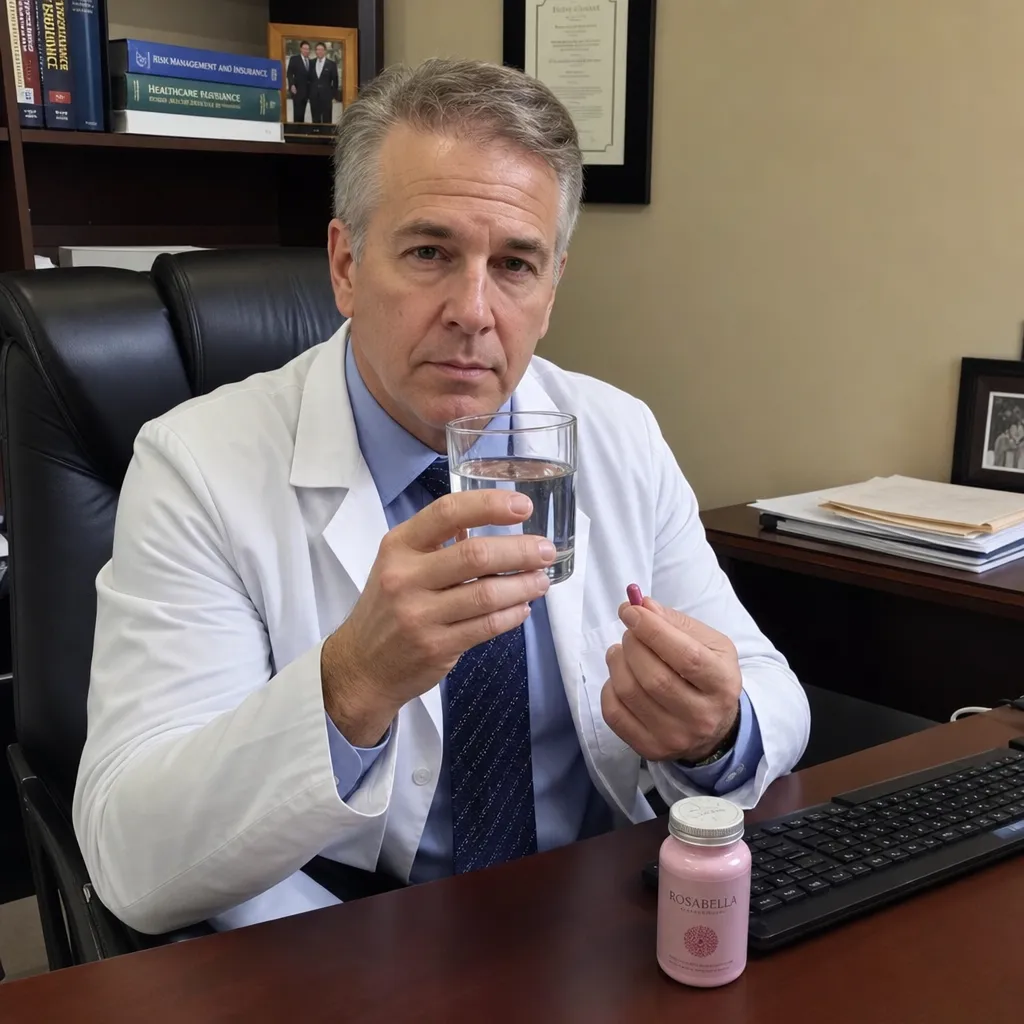
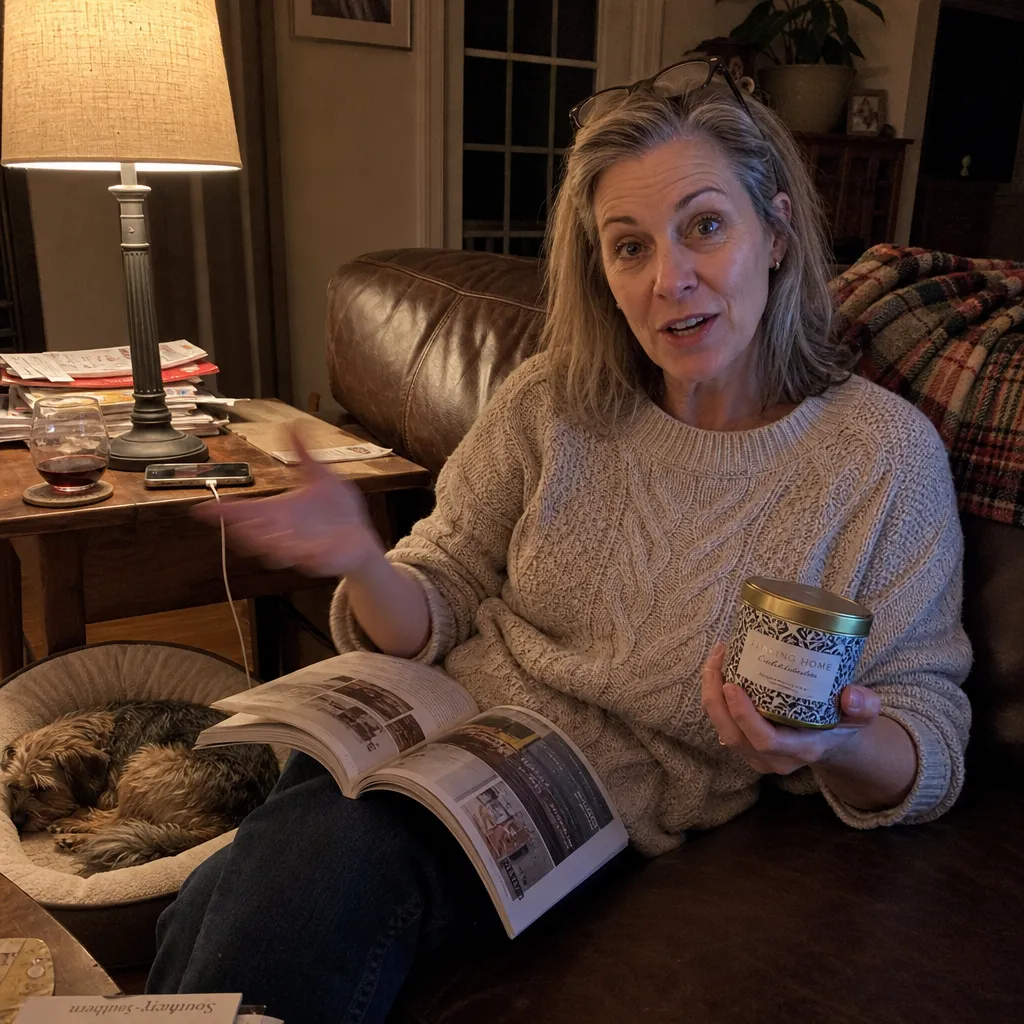
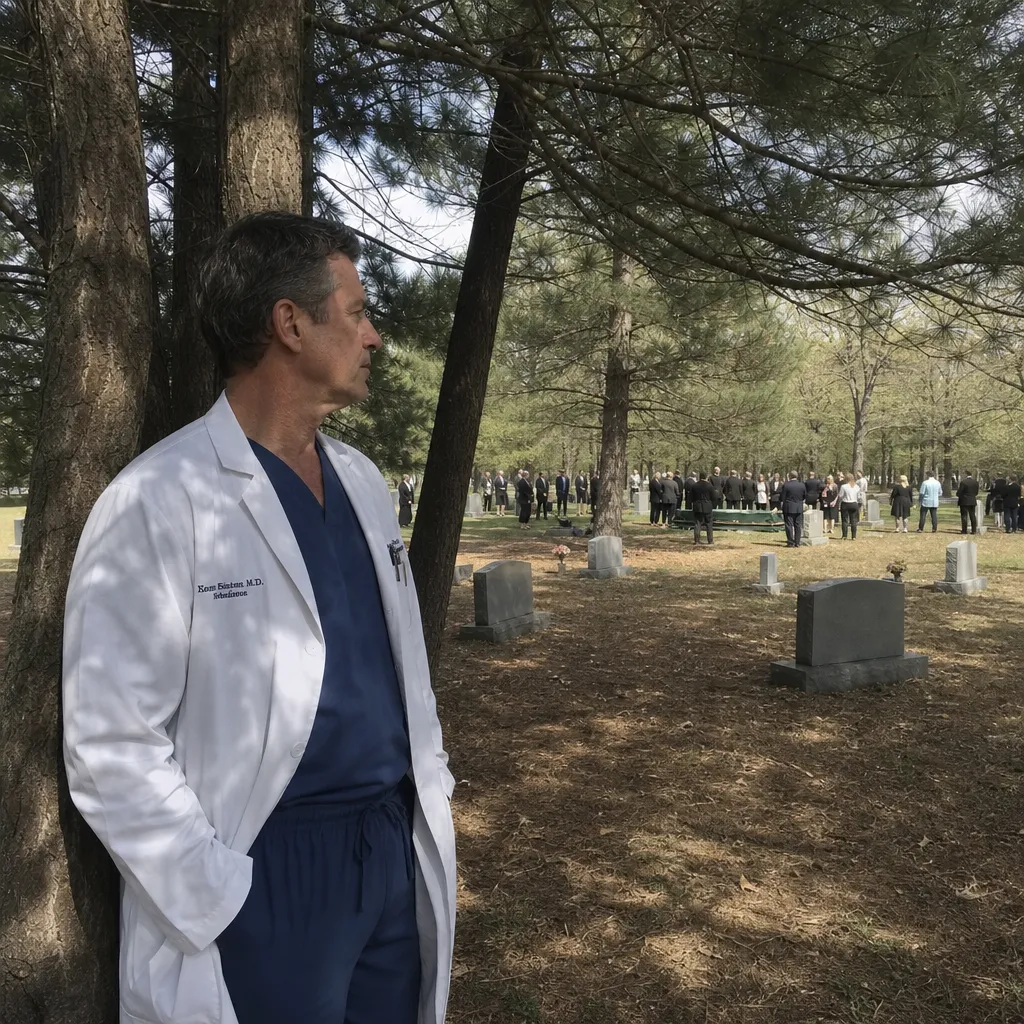
My husband has written over four thousand statin prescriptions in his career. I know because I asked him once, years ago, and the number shocked me. What shocked me more was the bottle I found in his desk drawer that same year — the one he'd been taking every morning and never once mentioned to me, his own wife, despite knowing my cholesterol was climbing. I'm going to tell you what was in that bottle. And I'm going to tell you why a man who has spent twenty-six years telling his patients to take their statins religiously has never — not once — swallowed one himself. But first I need you to understand what it cost me to get the truth out of him. Because I've been married to this man for twenty-six years. I've slept next to him. I've eaten what he cooks. I've asked him, directly, at our own kitchen table, what I should do about my cholesterol — and he told me to talk to my doctor. My own husband. A cardiologist. Told me to talk to my doctor. While a bottle of something sat in his desk drawer six feet away. I'm not protecting him anymore. My name is Claire. I'm fifty-four years old. I'm a high school librarian in a suburb of Philadelphia, and I've been married to one of the most respected cardiologists in this state since we were both twenty-eight. I want to be careful about what I call him here, because by the time you finish reading this you'll understand why I can't use his real name. So I'll call him David. Close enough. Not quite. David is a good man. I need to say that at the beginning, because by the time I'm done you might doubt it, and I don't want you to. He is kind. He is careful. He genuinely believes he helps his patients. In twenty-six years I have never seen him be careless with someone's life. But he has been careless with mine. And the reason — the specific, structural, cowardly reason — is the thing I'm finally going to say out loud. Let me go back to the night I found the bottle. It was a Tuesday. October. I remember because the windows were open and I could hear the neighbor's kid bouncing a basketball in the driveway next door, which meant it was still warm enough for that. David had already gone to bed. He was operating the next morning — not him personally cutting, he's not a surgeon, but he was doing a catheterization at six-thirty and he always sleeps early the night before procedures. Twenty-six years of that rhythm. I know it like weather. I was in his home office looking for a book he'd borrowed off my shelf. He has a habit of absorbing books into his own collection without returning them. I'd been looking for a specific one for a week and finally decided to check his desk. The drawer on the left side was the one I opened. That drawer had always been his — not locked, not forbidden, just his — and I'd never had a reason to look in it. It was full of what you'd expect. Old conference badges. A stethoscope he doesn't use anymore. Some journal articles paperclipped together. And a pink bottle. Sitting toward the back, behind the stethoscope, like something placed there to not be noticed first. It wasn't hidden exactly. But it wasn't visible either. It was in the place you put a thing you use every day that you don't want to explain. I picked it up. I turned it over and read the back — two capsules daily — and I noticed the bottle was about two-thirds empty. Which meant he'd been taking it. Regularly. For a while. I put it back. I didn't take the book. I closed the drawer and I went to bed next to him and I lay there in the dark with the basketball still bouncing outside and I thought about something that had happened four months earlier at our kitchen table. Let me tell you what happened four months earlier. I'd gone for my annual physical in June. My doctor — not David, my own GP — had called me back about my bloodwork and told me my LDL was elevated. Not emergency elevated. Trending-up elevated. The kind of number that gets you a "let's watch it" and a note about diet. I did what any woman married to a cardiologist would do. I came home and told David. We were eating dinner. I said, "My cholesterol's up. Dr. Morrow says I should watch it." He nodded. He asked what the number was. I told him. He chewed his food and said, "That's not terrible. Keep an eye on it. Cut back on the cheese. If it's still climbing in six months she'll probably want to talk about a statin." That was the whole conversation. Maybe two minutes. He went back to the salmon I'd made and we talked about something else. Now — I want you to hear what he didn't say. He didn't say: "Actually, Claire, I take something for this myself." He didn't say: "There's a bottle in my desk you should know about." He didn't say: "The statin your doctor will want to put you on — I've written four thousand of those prescriptions and I wouldn't take one if you put a gun to my head." He said "cut back on the cheese" and went back to his salmon. And I didn't think anything of it. Why would I? My husband's a cardiologist. If there were something I should know, he'd tell me. That's the whole point of being married to the expert. You don't have to go looking for the answer — it sleeps next to you. Except it doesn't. It sits in a desk drawer behind an old stethoscope, in a pink bottle that was never once offered to me. That was what I was lying in bed thinking about in October when I found it. Four months of climbing numbers. Four months of watching my cheese intake like it mattered. And the whole time — the whole time — a bottle in the next room. I didn't bring it up that night. Or the next morning. David left at five-fifteen for his cath procedure and I got dressed and went to work and shelved books and helped teenagers find sources for their papers and the whole time I was running the math. How long had that bottle been there? How many mornings had he taken two capsules from it while I ate my oatmeal in the kitchen and believed I was doing my part? How many times had he sat across from a patient and written "atorvastatin" on a pad and then gone home and opened that same drawer? I gave it a week. I needed the week not because I was unsure I'd ask, but because I needed to be calm enough to hear whatever he said without throwing something. Twenty-six years earns you at least that much restraint. I chose a Saturday morning because he had nowhere to be and I had nowhere to be and the house would be quiet enough to hear the things he said between the things he said. I put the bottle on the kitchen table. Not a word. Just set it there, label facing him, between his coffee mug and the newspaper, and sat down across from him. He saw it. His face didn't change the way a guilty man's face changes — it changed the way a man's face changes when he realizes a structure he's been holding up for years just got kicked out from under him. Not shame. Exhaustion. The look of someone who always knew this conversation was coming and is almost relieved it's finally here. He picked it up. Turned it over once, like he was checking it was the same bottle. Then he set it back on the table and looked at me. "How long?" I said. "Seven years." Seven years. The answer was seven years. I had been married to a man for twenty-six years who had been taking something for his heart for seven of them and had never told me — his wife, the mother of his children, the woman who cooks his meals and lies next to his heartbeat every night. Seven years. "Why?" I said. Though what I meant was: why didn't you tell ME? He didn't answer that question first. He answered a different one — the one underneath it, the one I didn't know I was asking yet. And I think he did that on purpose, because he knew once I understood the answer to the underneath question, the answer to my actual question would make a terrible kind of sense. Here is what my husband told me that Saturday morning. And here is why, once I heard it, I understood him — and could not forgive him at the same time. He started with the thing I thought I already knew. "Claire, you've been hearing me talk about cholesterol for twenty-six years. I need you to forget most of it. Not because I lied to you. Because I was telling you the version I was trained to tell, and the version I was trained to tell is missing the part that matters." I let him talk. He told me that cholesterol isn't the problem. That your body makes it on purpose — for your cells, your hormones, the insulation on your nerves. That a body without cholesterol is a body that's dying. That it was never a poison. That calling it one was the original misread, and everything that followed — the drugs, the diets, the panic over a number — was built on that misread. I said, "Then what IS the problem? Because something is killing people. I've watched you go to work every morning for twenty-six years because something is filling up their arteries." "Something is," he said. "But it's not the cholesterol. It's what happens to the cholesterol after. It rusts." He used that word — rusts — the way you use a word you've chosen carefully because no other word will carry it. Cholesterol, he told me, only becomes dangerous when it oxidizes. The exact same chemical reaction that turns iron orange and crumbling. The same reaction that browns an apple on the counter. Not something added from the outside. Something the air does. Something time does. Most of the cholesterol in your blood, he said, rides along harmlessly, doing its job. But some of it — exposed to inflammation, stress, processed food, years — oxidizes. It rusts. And rusted cholesterol doesn't behave. Rusted cholesterol gets sticky. It gets damaged. It burrows into the lining of the artery wall. And once it's in there, it packs in. Layer after layer. Year after year. Hardening into the plaque that narrows the artery until one day it cracks, a clot forms, and the artery seals shut. Heart attack. Stroke. The things he's spent twenty-six years treating and I've spent twenty-six years watching him leave the house to treat. That's not bad luck. That's not genetics. That's the last second of a process that's been running quietly for decades. The rust did the work. The clot just finished it. He waited for me to absorb that. I was sitting at my own kitchen table, looking at the man I'd built my life around, and he was telling me that the thing he'd been chasing in other people for a quarter century was not what he'd led me — led everyone — to believe. "Then why," I said, very slowly, "do you spend all day every day measuring cholesterol?" He didn't smile, but his mouth did the thing it does when something is funny in a way that hurts. "Because the cholesterol is easy to measure. It's a five-dollar blood test. Any lab in the country runs it in an hour. The oxidation — the rust — barely shows up on anything routine. So forty years ago medicine standardized on the number it could actually get, and somewhere between then and now everyone forgot that number was only ever a proxy for the thing that matters." "The number counts how much cholesterol is in your blood," he said. "Like counting how many nails are in a bucket. It cannot tell you how many of those nails have rusted. It cannot tell you which ones are about to embed themselves in a wall. A man can have a low nail count and a bucket full of rust, and another man can have a high count and clean steel. The number doesn't know the difference. And I've spent twenty-six years pretending it does." I thought about my own number. The one my GP had called "trending up." The one that had me cutting cheese and eating oatmeal and being told to "watch it." "My cholesterol," I said. "The one that's climbing." "Is a number that cannot tell you the thing you need to know," he said. "It can't tell you whether what's in your blood is clean or rusted. It can't tell you whether your walls are building up or clear. It's the cover of a book that nobody opens. And if the only thing your doctor does is stare at that cover and hand you a statin when it gets too high — you'll do exactly what thousands of my own patients have done. You'll take the pill. Your number will come down. Your doctor will say 'looks good.' And underneath that good number, in the wall, where nobody is looking and no routine test is pointed, the rust will keep building." "For years," he said. "For decades. The way it built in patients I've catheterized whose numbers were beautiful on paper and whose arteries were a disaster on the screen." I felt cold in a way that wasn't the kitchen. Because I'd been doing exactly what he described. Watching the number. Cutting the cheese. Waiting for the number to tell me if I was safe. And the number couldn't tell me that. Had never been able to tell me that. Was constitutionally incapable of telling me that. "And the statin?" I said. "The one you'd have let Dr. Morrow put me on in six months? The one you write four thousand times?" This is where his face changed. Not guilt exactly — something closer to grief. The face of a man looking at something he's carried so long it's worn a groove in him. "The statin does one job," he said. "It reaches into your liver and shuts down the assembly line that produces cholesterol. Less cholesterol made, lower number on the chart. That is the entire mechanism. It is extremely effective at that one task." "And it does not touch the rust." He said it flat. Like reading a lab result. "It lowers the amount in the bucket. Fewer nails. But it does nothing to the nails that have already rusted. Nothing to the ones currently rusting. Nothing to the reaction itself. The statin cannot see oxidation. It wasn't built to. It presses the number down and calls that success, and underneath that success the rust keeps going." "But there's worse," he said. "That assembly line it shuts down? It doesn't only produce cholesterol. It also produces CoQ10 — the molecule every cell in your body uses for energy. The literal spark that powers your muscles. Shut the line down to force the number lower, and you strangle the energy supply in the same motion. You can't do one without the other. They're on the same pathway." "So the drug starves you of energy?" I said. "It starves everything of energy. But especially the muscle that uses the most of it — which is the heart. The organ the drug was supposedly prescribed to protect. Quietly weakened, every day, by the thing making the chart look good." I stared at him. "The fatigue," he said. "The bone-tiredness. The patients who tell me they've lost a step and blame it on getting older. Half the time it isn't age. It's the pill, doing exactly what it's designed to do — and nobody ever connects it because the chart looks better than ever." "David," I said. "You write this. You hand this to people. You told me to talk to my doctor about getting one." "I know." "Four thousand times." "I know, Claire." "Then why — WHY — do you do it?" He didn't look away. I'll give him that. He sat in it. "Because there's a standard of care," he said. "A guideline. When a patient's number crosses a line, the guideline says statin. And if I don't prescribe it — if I tell them to take something else, something I actually trust, something I take myself — I have deviated from the standard. And the first patient who has a cardiac event, for any reason, while not on the statin I should have prescribed — that's my malpractice. That's my license. That's twenty-six years of practice ended in a hearing room. The hospital drops me from their roster. The insurers won't cover me. It's over." He picked up his coffee but didn't drink it. "And here's what actually stops me. If I fell on that sword tomorrow — refused to write another statin, told every patient the truth — they wouldn't follow me out the door. They'd go down the hall to the next cardiologist, who'd write the statin without a second thought and tell them their number looks great. I'd have destroyed my career and changed nothing for them." "So instead," he said, "I write the prescription. Because it does its one thing, and the guideline requires it, and the system demands it. And the people I actually love — the people I can reach without a chart between us — I tell them about the bottle. Quietly. Off the record. Where it can never be traced back to a prescribing decision." He looked at me across our kitchen table — our table, the one we'd eaten ten thousand meals at — and he said the thing that landed hardest. "You should have been the first person I told. You weren't. And I don't have a good reason for that. I have a coward's reason — I told myself you'd ask questions I'd have to answer carefully, and that carefully would turn into a conversation I wasn't ready to have out loud, even at home. I told myself I was protecting you from having to carry it. That was the lie. I was protecting myself from seeing the look you're giving me right now." I was giving him a look. He was right about what it contained. Twenty-six years. I'd been sleeping next to the answer for seven of them. My cholesterol climbing for two of those seven. "Cut back on the cheese" for four months — while two capsules from a pink bottle sat in a drawer I'd never thought to open. And every morning he'd gotten up, walked to his office, opened that drawer, taken his capsules — and then come to the kitchen where I was eating my oatmeal and not said a word. I didn't yell. I wanted to. But by then I needed to know the rest more than I needed to be angry. So I asked him the question — the one about the bottle. "What is it? What have you been taking for seven years that you trust more than the drug you write four thousand times?" He picked up the pink bottle from between us on the table. "It's beetroot," he said. I want to tell you my honest reaction, because I think it'll be yours too. I almost laughed. Or cried. I don't know which was closer. Because I'd spent a week building this up — the secrecy, the drawer, the seven years — and in my head it had become something with a long pharmaceutical name. Something restricted. Something you couldn't just get. It was a beet. He watched me have that reaction — the one he'd probably had himself once, years ago — and he didn't try to argue me past it. He let me sit in the absurdity of it for a second. Then he said: "That's exactly why it works as a secret even when it’s in plain sight. Nobody believes the thing that stops the rust is a vegetable. It sounds too small to be real. So people walk past it, straight back to the drug with the serious-sounding name that doesn't touch what's actually killing them. The simplicity is its own camouflage." Then his voice shifted — the voice he uses with residents, when he's about to correct something important. "But Claire. Almost no beetroot product will do what this one does. Not the beets at the grocery store. Not the juice. Not the twelve-dollar bottle from the vitamin aisle. Ninety-nine percent of what calls itself beetroot is useless for this — and it took me almost two years of research to understand why." He told me to think about what makes a beet red. That intense, impossible pigment that stains everything it touches. That color has a name — betalains — and it isn't cosmetic. It's an antioxidant. A rust-fighter. But not the kind I'd heard of. "Most antioxidants work like buckshot," he said. "You take them and they scatter everywhere — hit whatever they hit, including things your body didn't need hit. They spend themselves across every system and concentrate in none of them. Indiscriminate." "Betalains don't scatter. They target one specific chemical reaction — the exact oxidation event that turns cholesterol to rust — and neutralize it right there, inside the cholesterol particle, before it can oxidize, before it goes sticky, before it can embed in the wall and become the plaque that fills my patients' arteries for decades." "A precision strike," he said. "Not buckshot. One job, at the one place the damage actually starts." "And it never touches the assembly line in your liver. Never throttles the CoQ10. It goes after the rust and leaves your energy alone. All of the benefit, none of the cost." "And when it lowers your cholesterol number," he said, "it lowers it the right way. Not the drug forcing it down from outside while the rust keeps spinning underneath. The rust stops, so the body stops overproducing cholesterol to patch the damage signal, so the number comes down on its own — and stays down. Not held there by a fist. Resolved. A number that no longer has a reason to be high." I sat there, in my own kitchen, and understood for the first time what the last twenty-six years of my marriage to a cardiologist had actually meant. He'd been carrying this the whole time. The whole time. I asked him the question I'd want you to ask. The skeptical one. "Is there data? Or does this just sound good at a kitchen table?" He liked that I asked. He said most people who land on supplements never bother. "There's a trial I keep coming back to," he said. "Twelve weeks. Concentrated betalains, daily dose. Yes — the LDL came down. About fifteen points average. A real move, not a dramatic one, and if that were the whole story I wouldn't bother with it." He leaned forward. "But they didn't just measure the total amount. They measured oxidized LDL. The rust itself. The thing nobody routinely tests for. And the oxidized LDL didn't come down fifteen points like the total. It dropped more than twenty percent. The rust fell further and faster than the cholesterol number." He waited, because he could see I understood. "That's the only result I trust," he said. "Not the one that moves the number everyone stares at. The one that moves the thing underneath it — more." Then he told me why he takes it every single morning without exception. The processed food, the stress, the air, the years — all the things oxidizing your cholesterol don't take a day off. So the thing that neutralizes them can't either. Every dose stops that day's rusting before it can start the wheel turning again. "The morning I skip it," he said, "is the morning the rust gets the day back. I don't skip it." Then I asked the last question. The one that was sitting under everything. "David. If you've known this for seven years. If you take it yourself every morning. If you wouldn't touch a statin — then why in God's name didn't you tell ME? I'm your wife. My cholesterol is climbing. I was going to end up on the same drug you won't take. And you said 'cut back on the cheese.'" He set his mug down. He looked at the bottle on the table. Then he said the thing I'm still carrying. "Because if I tell you — I have to tell you why. And once you know why, you'll want to know why I haven't told my patients. And once you know that — you'll look at me the way you're looking at me right now, and you'll be right to. I wasn't protecting you from information, Claire. I was protecting myself from this exact conversation." He was quiet for a long time. "I'm sorry," he said. "I've been sorry about it for two years. Every time you mentioned the number. Every time you put the oatmeal on. I was sorry and I still didn't say it, and the only reason I can give you is that I'm a coward about the things that aren't on a chart." I don't know how long we sat there. Long enough for the coffee to go cold. Long enough for the sunlight to move from one side of the table to the other. Then he said: "What are you going to do?" And I told him the truth: "I'm going to start taking it. Today. And I'm going to write this down and put it somewhere that people can find it — the people who are in the exact position I was in. A number climbing. A statin coming. And no one at their kitchen table who'll tell them the truth." He didn't try to stop me. He said: "I can't be the one who says this. You know that now. You've seen why. But you're not a cardiologist. You don't have a license for them to pull. You don't have privileges to lose. You don't prescribe anything. You're just a woman who found out her husband was keeping something from her and decided that wasn't acceptable." He picked up the bottle. Held it a second. Put it back down. "Tell them all of it," he said. "Tell them about the rust. Tell them why the number lies. And tell them the one thing that matters most — that I take this myself every morning and I wouldn't trade it for any statin on the market. Don't let anyone think I recommend this from a distance. This is the thing I trust with my own heart. It's the thing I should have trusted with yours seven years ago." Then he went upstairs to shower before our daughter came over for lunch. And I sat alone at the table with the pink bottle and started writing what you're reading now. He told me to tell you exactly what's in the bottle, so let me, because if I just told you to "buy beetroot" I'd be making the same mistake every other source makes — and it's the mistake David spent half the conversation warning me about. The bottle is a brand called Rosabella. And this isn't brand loyalty or habit. I asked him — why this one, specifically, when there are a hundred beetroot supplements available? His answer was precise, the way all his answers are precise, and it came down to three things that almost nothing else on the market survives. The strain. Most commercial beets have been bred for a hundred years toward sugar — sweeter, fatter, easier to mass-produce. The breeding selected for sugar content and bred the betalains out. The modern supermarket beet still stains the cutting board, so it looks like it should work, but the actual rust-fighting pigment has been diluted to a fraction of what the plant used to carry. Rosabella doesn't use that beet. They use an heirloom strain grown by Amish farmers in Lancaster County — a cultivar they've hand-saved for over a hundred and fifty years, called Blutwurzel. Blood root. Never crossed with sugar beets. Dense and dark and bitter, with betalain concentrations many times higher than anything in a grocery store. The medicine, David said, lives in the old beet nobody bred the value out of. The drying. This was the part I didn't know, and it's the part that made me look at every beetroot supplement differently. Betalains are fragile. Heat destroys them. And almost every beetroot product on the shelf is dried fast and at high temperatures, because it's cheaper — which cooks the betalains dead before the capsule is ever sealed. What's left is brown powder that looks like medicine and is essentially inert. There's even a visual tell, David said. Live betalains are a deep crimson, almost violet. Heat them and they turn dull brown. The brown ones are dead. Rosabella is shade-dried. Slowly. Never heated. So what reaches the capsule is still alive — still that deep, violent pigment that does the actual work. The dose. Standardized extract — not random ground-up root — at the full 1,300 milligrams used in the actual clinical research. Not a "proprietary blend" that hides how little is actually in there. And a third-party certificate of analysis, an independent lab testing each batch and posting the results publicly. "I don't put anything in my body that I can't see the lab report on," David told me. "I wouldn't do it to a patient and I won't do it to myself." That's why this one and not the twelve-dollar bottle with the nice label from the health food store. The same precision he brings to every other decision — the man doesn't leave margin to chance. I started that same afternoon. Two capsules, water, at my own kitchen table — the same table where I'd spent a week being furious, the same table where he'd finally told me the truth. When I opened the bottle, the powder inside the capsule was that deep violet-crimson, the live color, the one he'd told me to look for. Not the dead brown. I held it in my hand and understood, for the first time, that I was holding the thing my own husband had trusted over his own prescriptions for seven years. Here's what happened. The first two weeks, I'll be honest — I didn't feel anything dramatic. David had warned me about that. "The work is happening at the particle level," he said. "The rust getting neutralized before it can form. You're not going to feel fireworks. You're going to feel nothing, and you have to trust the chemistry." What I did notice, around the end of week two, was that I stopped waking up at four in the morning. I'd been a bad sleeper for two years — up before the alarm, wired, unable to fall back. It didn't occur to me to connect it to the capsules until David pointed out that oxidative stress disrupts sleep. Once the body stops fighting a constant assault, the nervous system calms. It calmed. Weeks three and four: energy. Not jittery energy. Not caffeine energy. Something underneath — a steadiness I'd lost so gradually I didn't know it was gone until it came back. I stopped dragging through the afternoons. I stopped bargaining with myself about whether I had the energy to take a walk after dinner. I just had it. The way I used to have it five years ago and had quietly accepted I'd lost. Weeks five through eight: I noticed I'd stopped thinking about my heart. That sounds small. It wasn't. For two years — since the first "trending up" conversation — I'd had a low hum of worry underneath everything. A vigilance. Is that tightness something? Is that flutter normal? Am I becoming my mother? It faded. Not because I decided to stop worrying. Because my body stopped giving me reasons to. Then, at ten weeks, I went back for bloodwork. Here's what you need to understand about how I read the results — because six months ago I'd have read them wrong. My LDL came down. Not dramatically — it hadn't been dangerously high to begin with. But it came down. On its own. No statin. No drug forcing it. And I understood, because David had taught me, what that actually meant. It wasn't the number I was celebrating. It was the reason the number fell. The rust had stopped sending the damage signal. My body had stopped overproducing cholesterol to patch it. The wheel slowed on its own. The number came down not because something was holding it down, but because the reason it was high had been addressed. The number was the receipt. The proof that the thing underneath had turned. My GP looked at the results, looked at me, and said, "Whatever you're doing, keep doing it." She did not prescribe a statin. She did not mention one. The number no longer warranted it — and it had come down without one. I came home and put the lab printout on David's desk, next to the pink bottle that had been there for seven years. He looked at it. He nodded once. And for a moment he looked like a man who'd been holding his breath for a very long time and finally let it go. I'm telling you all of this because there's a good chance you're where I was that night in October. Let me be specific, so you recognize yourself. If your number is climbing and your doctor is making noises about "maybe a statin soon." I'm telling you what my husband — a cardiologist who has written four thousand of those prescriptions — wouldn't take himself. That statin will push the number down. It will not touch the rust. And the chart will look good while the wall keeps building. If you're already on a statin and you're tired. If you've lost a step you can't explain. If your legs feel heavier on the stairs and everyone keeps saying "well, you're getting older." I'm telling you what David told me: it might not be age. It might be the pill strangling the spark your muscles — and your heart — run on. The chart looks perfect. Your body is paying for it. If your numbers are "fine" and everyone says you're healthy — but something feels off and you can't point to why. I'm telling you what twenty-six years married to a cardiologist taught me: "fine" means the number is fine. The number was never measuring the thing that kills you. A man can have fine numbers and a wall full of rust, and nobody will know until the day the rust wins. And if you're the spouse. If you're the one lying next to someone every night and carrying a worry you can't solve and trusting that the system will protect both of you. I'm telling you what I learned the hard way: the system protects itself. Not you. You deserve the information that the system was never built to give you. There is something that goes after the rust that the statin was never built to touch. My husband has taken it himself every morning for seven years. He trusts it over the drug he prescribes to everyone else. It's a concentrated heirloom beetroot called Rosabella — the right strain, shade-dried alive instead of cooked dead, the full clinical dose, the lab results posted where you can read them. Two capsules a day. It's what I started taking the afternoon I finally got the truth out of the man I've slept next to for twenty-six years. And it's what I'd put in front of anyone I love. Let me be clear about who I am, because you should be skeptical. I'm not a doctor. I'm not a salesperson. I'm a high school librarian married to a cardiologist, and I don't work for Rosabella, I don't get paid if you click anything, and I don't profit in any way from whether you buy this or close the page and never think about it again. I have a teacher's pension and a library full of books and no reason on earth to write this many words about a beet except the one I'm about to tell you. I'm writing this because my husband kept something from me for seven years — something he trusted with his own heart but was too afraid to trust me with — and by the time I found it, my own arteries had been rusting in the dark while I ate oatmeal and watched a number that couldn't see the thing that was actually wrong. I'm writing this because the man I love most in the world is trapped inside a system that punishes him for telling the truth to the people who need it, and he's been carrying that for seven years in silence, and he asked me to say what he can't. I'm writing this because four thousand people walked out of my husband's office with a prescription that doesn't touch the thing that's killing them, and he knew, and he wrote it anyway, because the alternative was losing everything he'd built — and I understand that, and I'm furious about it, and both of those things are true at the same time. That's the reason. There isn't another one. Here's the thing that, after everything David told me, I cannot get over. Rosabella comes with a ninety-day money-back guarantee. You take it for three months. You get your blood drawn — you keep your doctor watching you, the way mine watched me. And if your numbers don't move, or you don't feel a difference, you send the bottles back. The empty ones too. And you get every dollar back. Now think about what I'm comparing that to. My husband has written four thousand statin prescriptions. Not one of those patients was ever offered their money back if the drug didn't protect them. Not one. The patients whose numbers looked good for years and still ended up in the cath lab — nobody refunded them. Nobody refunded the ones who ended up on his table anyway. A lifetime of copays and refills and side effects, and not a single word of a guarantee that any of it would work. A small company selling heirloom beet capsules will bet its own money that this helps you. The pharmaceutical companies whose drugs my husband prescribes every day will not. I'm not going to tell you what that means. I'm going to let you sit with it the way I sat with it. One thing about supply, because I ran into this myself. There isn't unlimited Rosabella. The Blutwurzel is harvested by hand from a small number of Amish farms, once a year, in the fall. The shade-drying process that keeps the betalains alive can't be rushed — you can't scale a hundred-and-fifty-year-old seed line like you'd scale a commercial crop. When a batch is gone, it's gone until the next harvest. David has run out twice in seven years. Both times he was visibly irritated in a way I've rarely seen him be about anything that isn't a misread chart. Right now they're running a buy-three-get-three offer — three months for you, three to give to someone. That's the one I'd take, because nobody should be doing this alone, and because the man who trusts this with his own heart counts the days when it's out of stock. But supply isn't really the reason to act today. This is: Every day the rust is running. If your number is climbing, it's climbing today. If there's plaque building in a wall somewhere in your body, it's building today — the same way it built in David's patients for years while their charts said "looks good." The disease does not wait. It does not take a weekend off. It doesn't pause while you think about it. It is working right now, in the quiet, where no routine test is pointed. If you have a doctor's appointment coming — imagine walking in with the wheel already slowing instead of still accelerating. Imagine handing them a number that came down for the right reason. That doesn't happen if you start the week before. It happens if you start now. Here's where to get the same bottle that's been sitting in my husband's desk drawer for seven years: https://track.tryrosabella.com/cdc16426-3e48-40a7-9fad-21098084f6cf I found the bottle in October. By January my numbers had resolved without a drug. It took me until now to write it all down — not because I wasn't sure, but because I needed to find the words for what it means to discover that the person you trust most in the world has been quietly protecting himself with something he let you go without. I've found the words. You're reading them. Don't wait seven years like I did. Don't wait for someone to slip up and leave the drawer open. The truth is in front of you right now. You still have time. Take it. ~ Claire Moreno Philadelphia, PA P.S. — I need to say this clearly. Do not stop a medication on your own because a librarian on the internet told you to. I made a specific decision about a drug I had not yet been prescribed, with my eyes open and my doctor monitoring me. If you're already on a statin, don't throw it in a drawer. Bring this to your doctor. Ask them to look at the actual oxidation, not just the number. Ask for a recheck in eight to twelve weeks. The point was never to fight your doctor. The point is to put the thing on the table that the prescription pad was never allowed to. P.P.S. — About the first few weeks. This is not a stimulant. It doesn't announce itself with fireworks. The early work is happening at the particle level — rust getting neutralized before it forms. Most people notice the quieter things first: sleeping more deeply, a little more steadiness by the end of the day. The number on your chart is the slowest part, because arterial tissue heals on its own timetable. That's why the guarantee runs a full ninety days. Give it the whole window. If you feel nothing and your numbers haven't moved by the end, send the bottles back. It costs you nothing. P.P.P.S. — The guarantee is the thing I keep circling back to. A small company selling an heirloom vegetable will stake its own revenue on whether this helps you. The companies making the drugs my husband writes every single day will not. Decide for yourself what that means. I've decided what it means to me. P.P.P.P.S. — David read this before I posted it. He asked me to change his name — I did. He asked me to leave out the hospital and our city — I changed the city. He asked me if I thought his colleagues would recognize themselves in it. I told him some already know everything in here and are making the same private calculations he made. He didn't ask me to take it down. And this morning, before he left for the office, I watched him open the desk drawer, take out the pink bottle, swallow two capsules with water from the kitchen tap — the same as he has every morning for seven years. He still can't tell you. I just did. https://track.tryrosabella.com/cdc16426-3e48-40a7-9fad-21098084f6cf
More from The Heart Health Project

Support stamina and heart health every day
The Heart Health Project
Support stamina and heart health every day
The Heart Health Project
Support stamina and heart health every day
The Heart Health Project

Support stamina and heart health every day
The Heart Health Project
Support stamina and heart health every day
The Heart Health Project
Support stamina and heart health every day
The Heart Health Project
Support stamina and heart health every day
The Heart Health Project
Support stamina and heart health every day
The Heart Health Project

Support stamina and heart health every day
The Heart Health Project
Support stamina and heart health every day
The Heart Health Project

Support stamina and heart health every day
The Heart Health Project

Support stamina and heart health every day
The Heart Health Project

 Add to Chrome