“That’s Plastic. Not in Mattie’s Skillet.”
Ad Copy
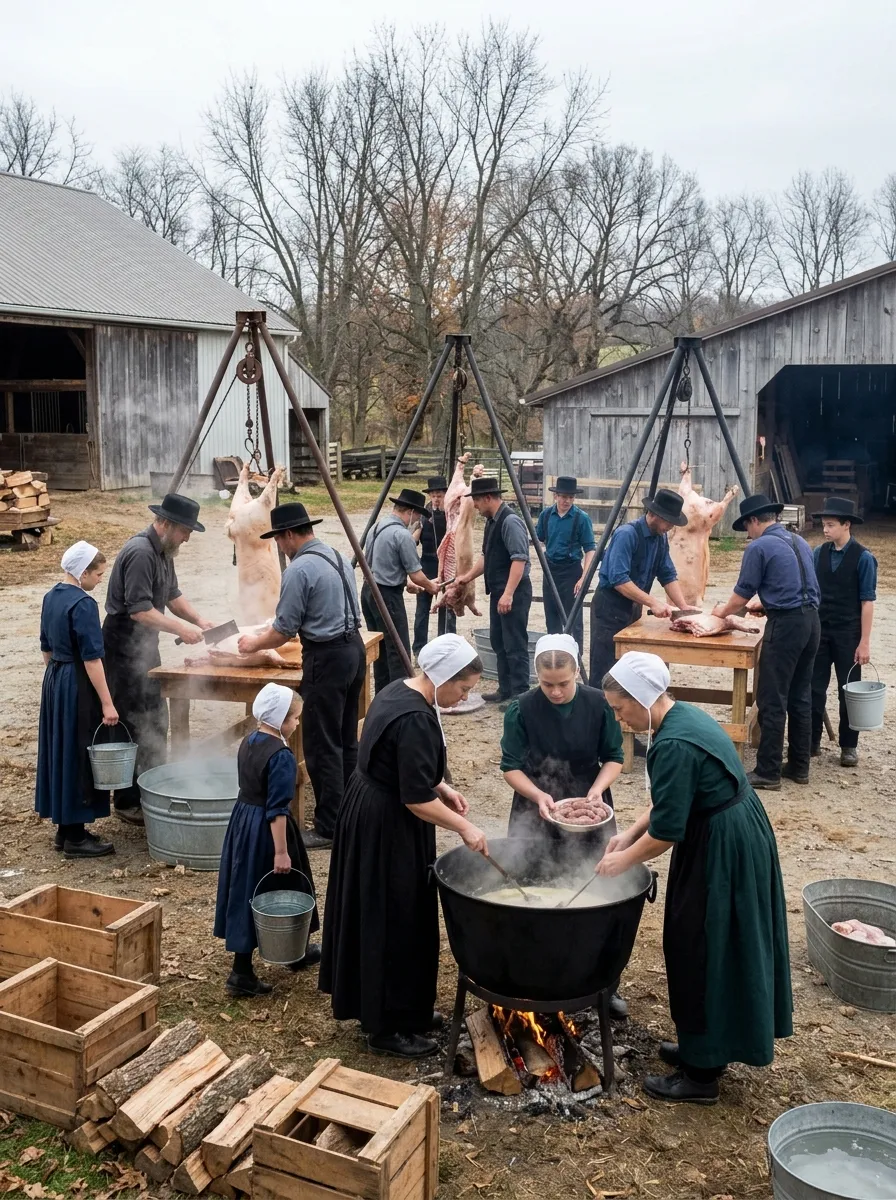
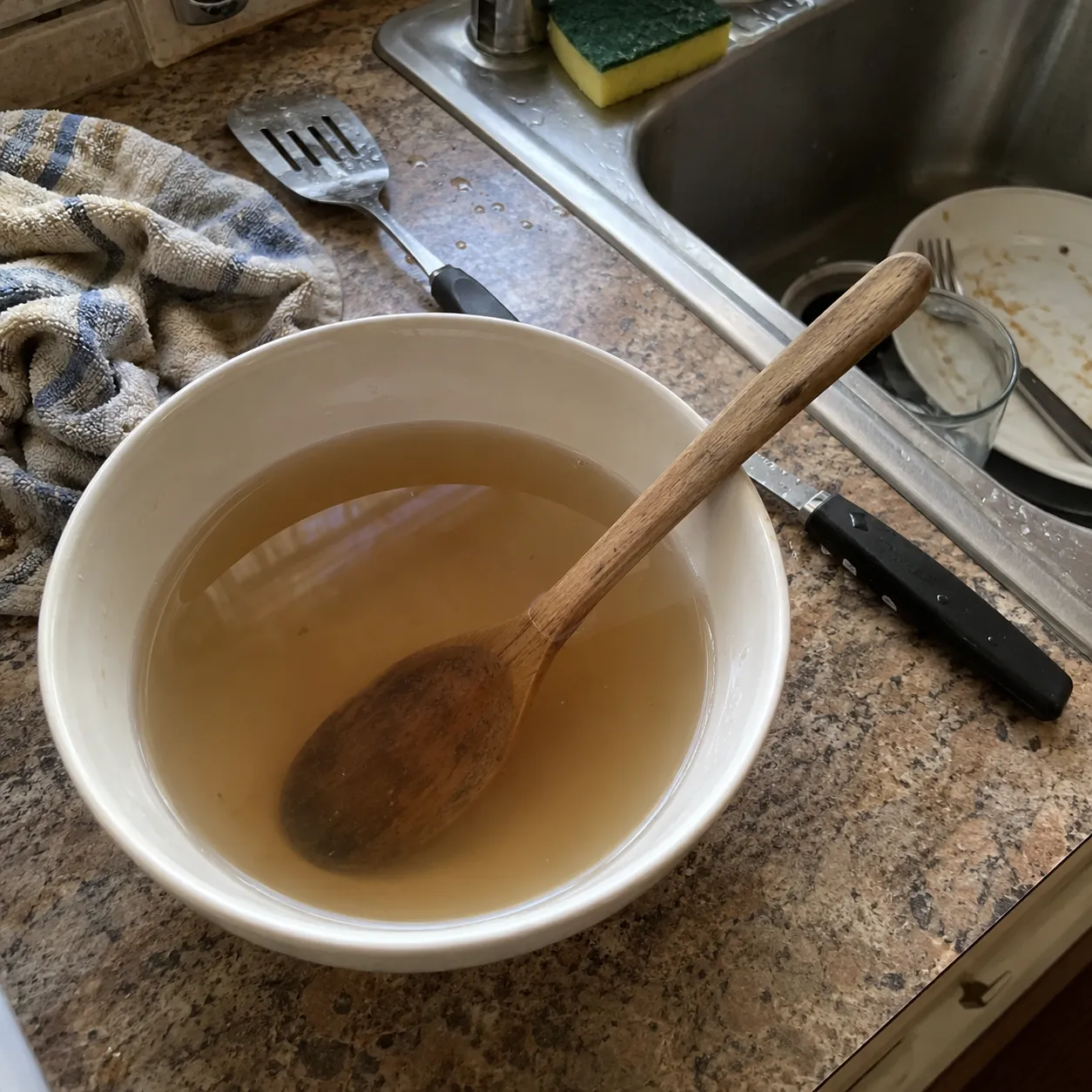
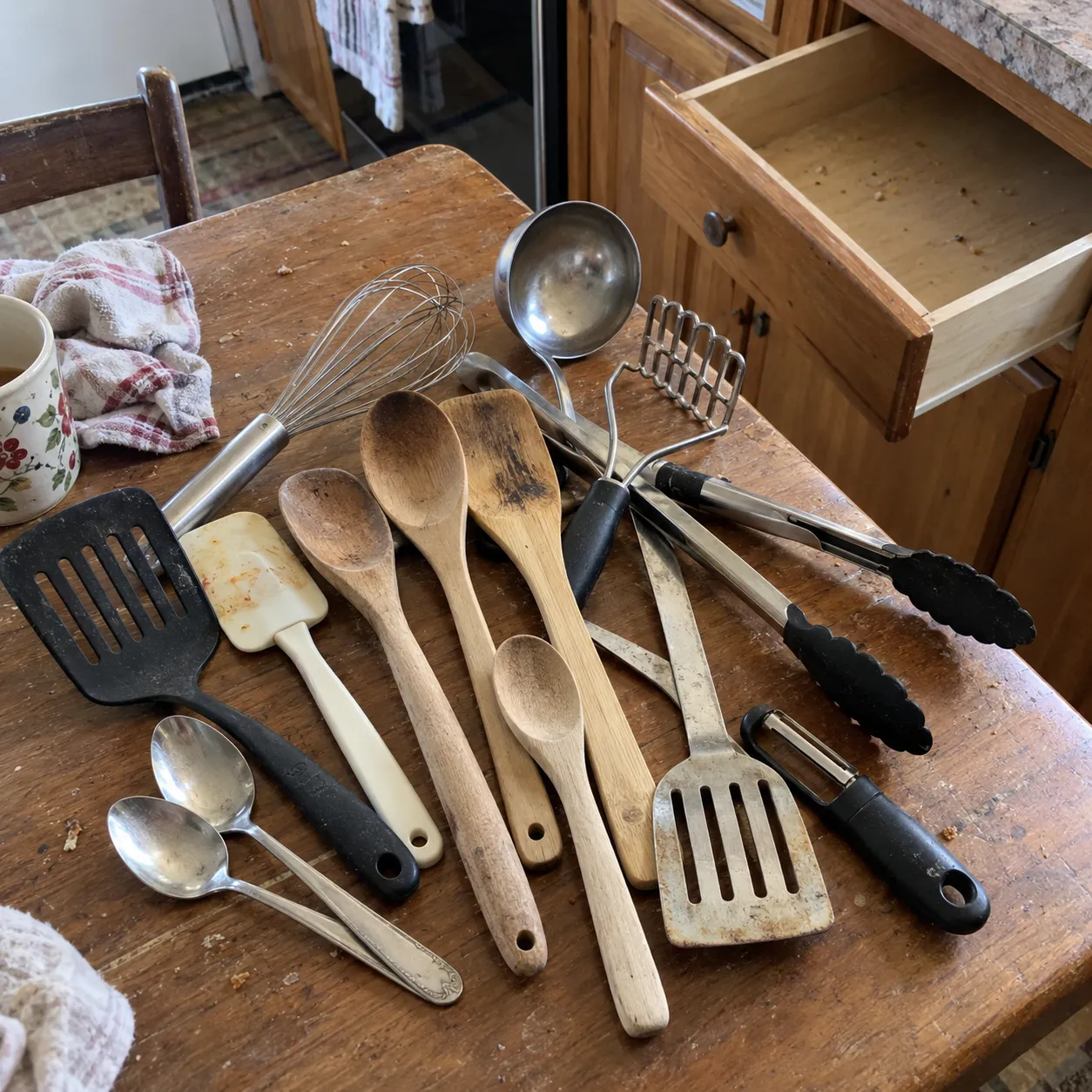
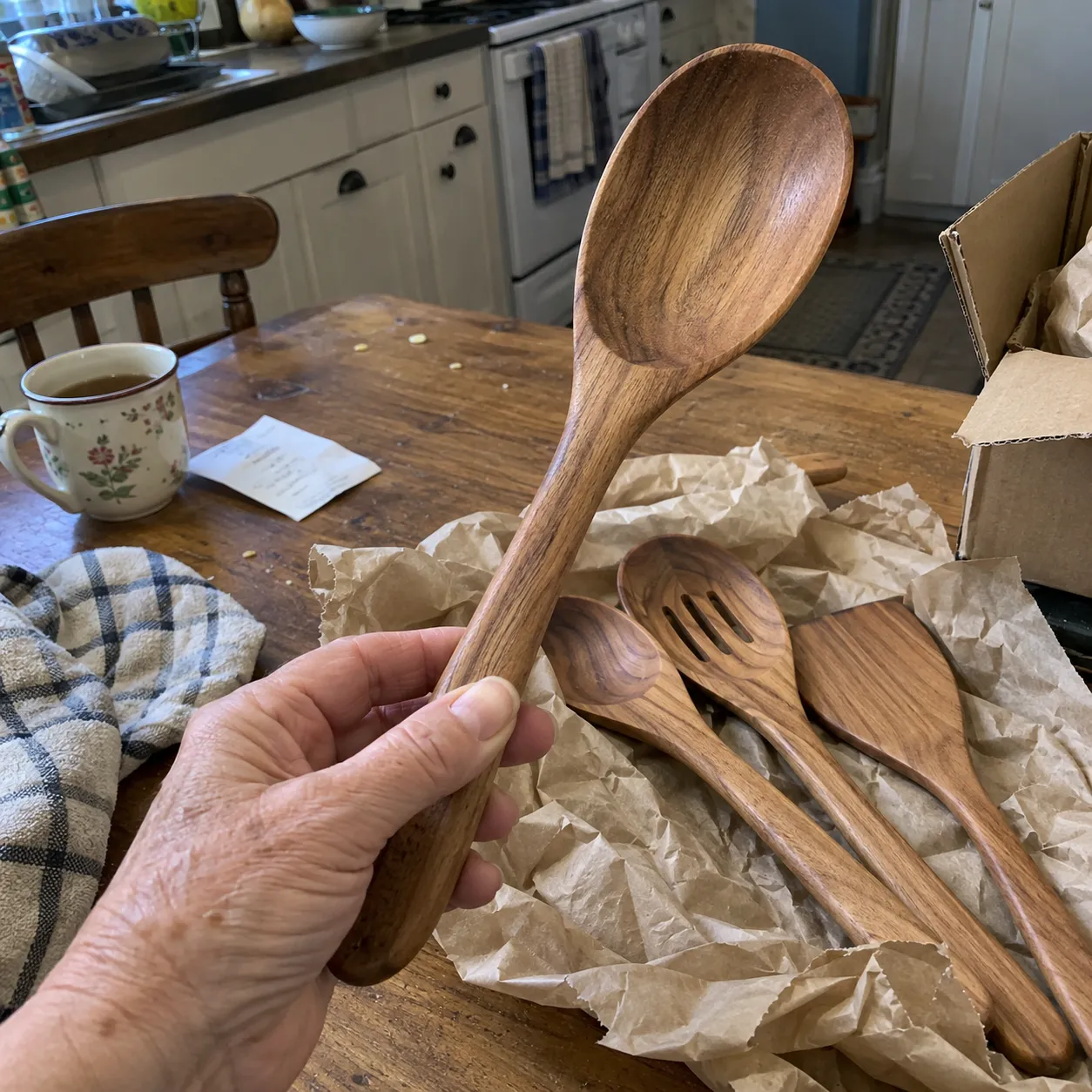
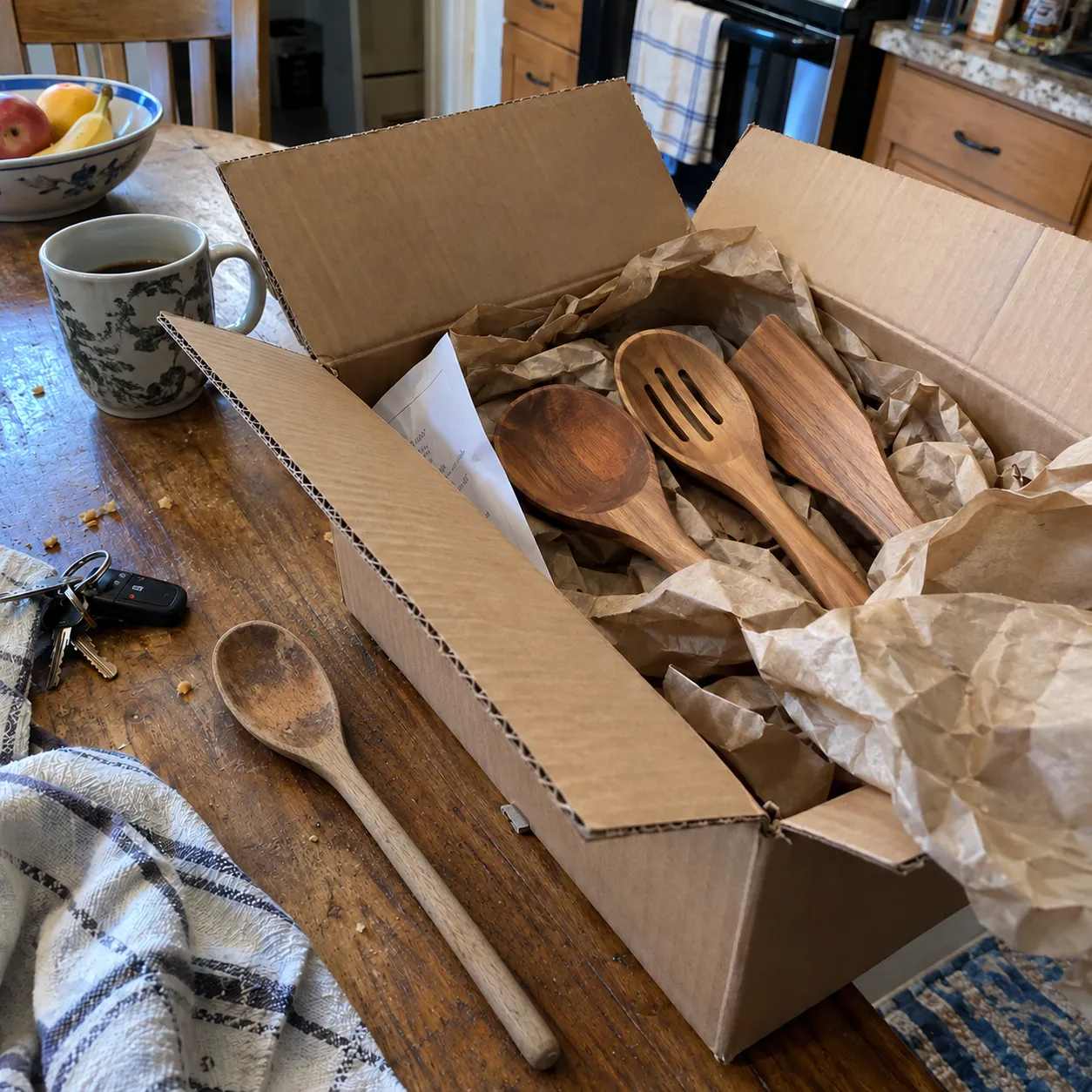
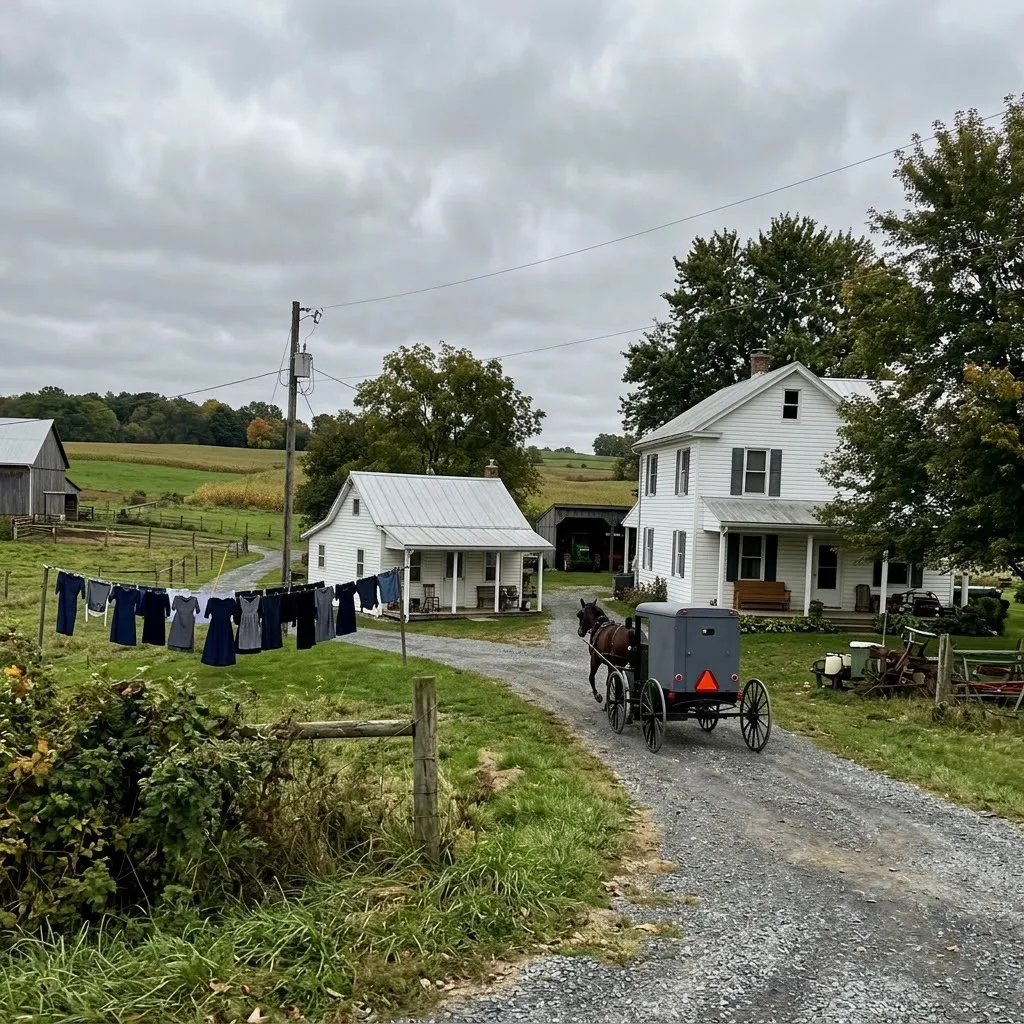
My husband hadn’t tasted his mother’s sausage gravy in twenty-seven years. Last December he took one bite at our own table, put down his fork and said, “Joyce. That’s Mom’s.” The Amish woman who made it used his mother’s recipe, word for word. So do I, and I have made it for forty-five winters. Every December three Amish families butcher their hogs in our machine shed, and last year their oldest took my spatula away. He is 84. He said, “That’s plastic. Not in Mattie’s skillet,” and what he told me the next morning is the reason there are now three heavy boxes in our family, in three different states. I’m Joyce. I’m 67, and my husband, Dale, and I farm four hundred acres of corn and beans outside LaGrange, Indiana. Dale’s family has been on this ground since 1919. I was a court reporter at the county courthouse for thirty-one years. I took down every word anybody said in that room, and I learned not to believe a thing until I’d read it back. Our machine shed is the only building on our road with a concrete floor, a drain and a beam strong enough for a chain hoist. So since 2003, on the first cold Saturday in December, the Hochstetlers, the Bontragers and the Lehmans have come down the road in the dark with their wagons. By suppertime a winter’s worth of sausage, lard and hams is wrapped in white paper and stacked in those wagons to go home. I don’t go out to the shed. I’m a farm wife, not a saint. What I do is the kitchen. The women grind and season the sausage on my back porch, where it’s cold enough to work. At eleven o’clock they come inside and cook dinner for the crew. Fried potatoes, applesauce, biscuits, three kinds of pie. And sausage gravy, made from the first sausage of the day, in a cast-iron skillet as big as a hubcap. Now I have to tell you about Dale’s mother’s gravy. Ruth Sanders made sausage gravy on every butchering day of Dale’s boyhood, at the same stove I cook on now, with the first sausage off the grinder. The Sanderses butchered with the Hochstetlers back then too. After Dale’s father sold the hogs in 1974, she made it every Saturday morning with sausage from the locker in town, and it was still the best thing anybody on this road ever put on a biscuit. She died in 1998. Her card is in a tin on my windowsill, in pencil. One pound fresh sausage. A third cup flour. Three cups whole milk. Salt. “Pepper till it looks right.” And on the last line, underlined twice: “Don’t rush the flour.” Ruth’s gravy was the color of a brown paper sack. It was peppery enough to make your eyes water and smooth enough to run off a spoon in one ribbon. Dale still talks about it the way some men talk about a truck they had in high school. I’ve made it from that card since the winter we married, which is forty-five winters, and since 1998 I’ve made it in Ruth’s own skillet. Mine comes out a shade gray. A little pasty. Flat somewhere in the middle, like a word you can’t quite remember. Dale eats it and says, “That’s good, Joyce.” He has said it for forty-five years. That’s what a man says when he loves you and isn’t going to lie to you. Last December I was at the stove when Mattie Hochstetler came in with her skillet. Mattie is 58, married to Eli’s oldest son, and she has made the butchering-day gravy on our road for twenty years. She started the sausage, and when she went out to the porch for the milk, I picked up my black spatula to keep it moving. I wasn’t going to stand there with my hands folded in my own kitchen. Eli Hochstetler had come in to wash up. He has stirred the lard kettle at every butchering on this road since he was seventeen, eight hours at a stretch, with a white oak paddle as long as he is. His beard is white and reaches his belt, and he is the only man I know who can stand over a fire all morning and come inside smelling like nothing but wood smoke. He dried his hands, crossed my kitchen in three steps and took the spatula out of my hand the way you’d take a match from a child. “That’s plastic,” he said. “Not in Mattie’s skillet.” He laid it on the counter. Mattie came back with the milk, looked at the spatula, looked at Eli, and handed me a wooden spoon from the towel she’d wrapped her things in. It was dark as coffee, and one side of the bowl was worn flat from forty winters of cast iron. I stirred with it until the gravy was done. My face was hot, and not from the stove. I’d been cooking in that kitchen for forty-five years, and I had just been told what not to cook with in it. Dinner was at noon, at the two long tables we set up in the dining room every year. Twelve men and ten boys, with their hats in a row on the bench by the door. The women and girls eat at the second sitting. That’s how it’s done, and I gave up arguing about it in 2004. Dale sat where he always sits, at the end by the window. He split a biscuit, ladled the gravy over it and took one bite. Then he put his fork down. “Joyce,” he said. “That’s Mom’s.” The table went quiet. Twenty people who didn’t know what he meant, and Eli, who did. I tasted it standing at the stove. It was the color of a paper sack. The pepper came up the back of my throat. It ran off the spoon in one ribbon. I hadn’t tasted Ruth’s gravy since the winter before she died, and I’d never once made it. After the pie, I asked Mattie what she put in hers. “Sausage,” she said. “Flour. Milk. Salt. Pepper till it looks right.” She smiled. “And you don’t rush the flour.” I went to the windowsill and brought her the tin. “That’s my mother-in-law’s card,” I said. “Word for word.” Eli was having his coffee at the end of the table. “Ruth learned it at my mother’s stove,” he said. “1952. She was a bride, and her gravy came out like wallpaper paste. My mother taught her in an afternoon.” “Then why doesn’t mine taste like that?” “It’s not the card,” Eli said. “You just showed me the card. And you’ve made it forty-five years, so it isn’t your hands.” He set his cup down. “So what’s left?” “The sausage,” I said. “That sausage was in the grinder at ten o’clock this morning.” He looked at Mattie. Before they loaded the wagons, she wrapped two pounds of that same sausage in white paper and set it on my counter. “Then make it tonight,” Eli said, “and tell me.” That evening I made Ruth’s gravy for Dale’s supper. The same sausage, from the same grinder, from the same morning. The same card. Ruth’s own skillet, the one she made it in for forty-six years. My own black spatula. I didn’t rush the flour. Dale took one bite and said, “That’s good, Joyce.” Same hog. Same day. Same card. Same skillet. The only thing that had changed between noon and six o’clock was the spoon. I didn’t sleep much. At five the next morning I put my coat on and walked up the road to the Hochstetlers’ with the black spatula in my pocket. Eli was in the barn with a lantern, forking hay. “Good,” I told him. “That’s what Dale said. Good.” He held out his hand, and I gave him the spatula. He turned it over under the lantern and held it where I could see. “Look at the edge. Was it straight when you bought it? Then where do you think the rest of it went?” It had been straight. I bought it new six years ago. The front edge had gone thin and wavy, and one corner was simply gone. I had washed that spatula a thousand times. I had never once looked at it. “Hot gravy takes a little of whatever you stir it with,” Eli said. “Every time. It took that. I’ve stood over that kettle since I was seventeen. I know what heat takes out of things.” Then he asked what else was in my drawer, and I told him. Two red silicone spatulas. A bamboo set our daughter-in-law gave us. And three wooden spoons from the grocery store in town that come in a pack. “The red ones bend when they’re hot,” he said. “I don’t know what they’re made of, and I don’t believe the people who sold them to you do either.” “The bamboo is grass, cut in strips and pressed together with glue. And the store spoons are soft wood, glued up out of scraps so you’d think it was one piece. Gravy finds the glue.” “My mother had a saying for all of it. If God didn’t create it, don’t use it.” “Eli,” I said, “Dale has eaten off that spatula for six years. He hasn’t been sick a day.” “I didn’t say anybody was sick,” he said. “I said it isn’t Ruth’s. Dale told you that himself, at your own table, in front of twenty-one people.” “Tonight, stand every spoon you own in a jar of water. Just water, from the tap. Leave them till morning. The wood will tell on itself. The plastic won’t tell you anything. That’s worse.” I asked about Mattie’s spoon. I said I’d pay whatever she wanted for it, so Dale could have his mother’s gravy on the other fifty-one Saturdays of the year. Eli shook his head. “Those don’t get sold. They get handed down. That one was Mattie’s mother’s, and it goes to her Ida.” Then he pointed his chin at the white oak paddle hanging on two pegs by the barn door. “And don’t ask me for that. My father carved it in 1949. It goes to whoever stands at the kettle after me.” “Then where do I find one?” “Not that one,” he said. “But you know what you’re looking for now. One piece of wood. Carved, not glued. Hard, so there’s weight in your hand. And whoever sells it has to tell you what tree it came from.” That night I lined up seven quart jars on the counter, filled them at the tap and stood one thing in each. I put a strip of masking tape on every jar and wrote what was in it, the way I used to label exhibits. Dale asked what I was doing. I told him I was taking testimony. In the morning, three jars were the color of weak tea. Those were the grocery store spoons. The bamboo jar had gone cloudy. The black spatula and the two red ones stood in water as clear as the minute I ran it. Eli had told me they would. One night, in cold water. And I had been dragging spoons like those through hot gravy for forty-five winters. Dale came in from the shop and stood over the jars a long time with his coffee. “If I hauled a load of beans to the elevator that color,” he said, “they’d dock me half.” He poured the brown jars down the sink himself, and then he held the trash bag open while I emptied the drawer. If your drawer looks like mine did, this is not your fault. Nobody told Ruth’s daughter-in-law, and nobody told you. It’s the same drawer in nearly every kitchen in the county. For thirty-one years I took down testimony, and the first thing you learn in a courtroom is that a witness can tell you the truth and still leave out the part that matters. So I wrote down everything Eli said, word for word, the way I would have in court, and then I checked every line of it. He was right about the store spoons. Cheap soft wood cracks and splinters and soaks up every smell, and whatever turned that water brown has been leaching into your food, meal after meal, for as long as you’ve owned it. He was right about the bamboo. Bamboo isn’t wood. It’s a hollow grass, so it can’t be carved from one piece. It’s thin strips compressed with formaldehyde glue, and formaldehyde is a known cause of cancer. Add heat and that glue releases right into whatever you eat. He was right not to trust the red ones. Silicone looks like it’s just softening, but that’s chemistry. Past a certain point of heat, siloxanes leach out. In 2018, Europe’s chemicals agency put three siloxanes on its list of substances of very high concern. Its words: very persistent and very bioaccumulative. It’s no better than plastic. Those red spatulas came on a card that said what heat they’d stand. It never said what came off them. In court we’d call that answering a question nobody asked. And he was right about the black spatula. Black plastic kitchen tools shed tiny particles into hot food. Some black plastic is made from recycled electronics and has turned up carrying flame retardants, chemicals linked to cancer. And US researchers keep finding microplastics in nearly every person they test, in blood and even in brain tissue. What it all does in there, they say, is still being studied. Eli has never read a word of any of it. He has stood over a kettle since 1958, and he can tell what heat does to a thing by looking at it. I couldn’t have Mattie’s spoon, and I couldn’t have Eli’s paddle. So I went looking with his list. One piece. Hard wood, with weight to it. Carved, not glued. A seller who names the tree. I added one line of my own, because thirty-one years in a courtroom teaches you that nobody’s word counts until it’s on the record. I wanted it tested by somebody who wasn’t selling it. That list empties a shelf fast. Most sets say “acacia” on the box and stop there. They don’t say which acacia, or whether a spoon is one block of wood or strips glued up, like the three that turned my jars brown. And once I had seen those jars, every line on it made sense. Soft wood drinks the water, so it has to be hard, and hard wood is heavy in the hand. A glue line is where hot gravy gets in first, so it has to be one piece. And my own eyes had missed that spatula for six years, so I wanted a lab’s word, not mine. One small company put every line on the record. Woodsen. Small-leaf acacia, the densest of all 1,300 acacia species. Every piece hand-carved from one solid piece of wood. No glue. Finished with food-grade oil. No plastic, no microplastics, no forever chemicals. Over 15,000 families cook with it. Third-party lab tested to FDA food contact standards, with zero chemicals detected. And a lifetime warranty: if a piece ever cracks, they replace it. It isn’t Amish, and nobody says it is. Eli’s paddle came out of a white oak his father cut in 1949, and Mattie has never laid eyes on this. But it is one piece of hard wood, they name the tree, and somebody who wasn’t selling it tested it. At coffee hour I told our pastor about the jars, and he asked what kind of wood. “Acacia,” I said. He went to his study and came back with his Bible. “Exodus twenty-five, verse ten. And they shall make an ark of shittim wood.” “That’s acacia, Joyce. The newer translations just print acacia wood. When God wanted a thing carried through the desert for forty years, that’s the wood He named.” I hadn’t gotten there through a Bible verse. I got there through a skillet and an 84-year-old man who came in to wash his hands. But I wrote the verse on the back of Ruth’s card. I ordered the seven-piece set for our kitchen in Indiana. I ordered one for Dale’s sister, Karen, in Kalamazoo, Michigan, because she has a copy of Ruth’s card and has never once gotten that gravy right either. And I ordered one for our son, Brian, in Columbus, Ohio, because he’s the one who will stand at this stove after us. That’s the three heavy boxes. Indiana, Michigan and Ohio. When ours came, I took out the long spoon, and my wrist dipped. It had the weight Mattie’s had. That night it stood in a jar of tap water, and in the morning the water was clear. I walked up the road and asked Mattie for one more pound of sausage, the same as before. She wrapped it in white paper and didn’t ask why. I made Ruth’s gravy that Saturday. Same card. Same skillet. I didn’t rush the flour, and I stirred it with one piece of wood the whole time. Dale split a biscuit and took one bite. Then he got up without a word, went to the hutch and came back with his mother’s gravy boat, the white one with the chip in the spout that nobody had used since 1998. He poured the rest of the skillet into it and set it by his plate. Karen called the night her box came. She’d made it too. She didn’t say hello. “Joyce,” she said. “Mom was in my kitchen tonight.” Next butchering day, the Hochstetlers will be back in our shed and I’ll be at the stove beside Mattie. When Eli comes in to wash up, there won’t be a thing on my counter for him to take away. For forty-five winters I blamed the store sausage, the milk, my stove and my own two hands. It took a man in from the lard kettle to show me the one thing that was never on Ruth’s card: what she stirred it with. If you make your mother-in-law’s recipe from her own card, and the best you’ve ever heard is “That’s good,” it might not be your cooking. It might be what’s in your hand. When I checked this morning, their page said up to 50% off, this week only. Thirty-one years in a courtroom teaches you to listen hardest when something sounds too good. Half off sounded too good. That made me suspicious, so I went looking for the catch. The only catch I found is that Woodsen is a small company, and they make their sets in small batches, so when a set sells out, it can take a while to come back. I wouldn’t count on them staying in stock, or staying at this price. Joyce P.S. Here’s the exact set I bought. They were running a sale when I checked. https://woodsen.co/pages/ac2 P.P.S. Put every spoon in your kitchen in its own jar of water tonight. By morning, you’ll know. If the link still works, the price is still live.
More from Your Daily Health

fb.com
Your Daily Health

Say no to chemicals in your food!
Your Daily Health

Say no to chemicals in your food!
Your Daily Health
Say no to chemicals in your food!
Your Daily Health
Say no to chemicals in your food!
Your Daily Health
Say no to chemicals in your food!
Your Daily Health
Say no to chemicals in your food!
Your Daily Health
Say no to chemicals in your food!
Your Daily Health
Say no to chemicals in your food!
Your Daily Health
Say no to chemicals in your food!
Your Daily Health

Say no to chemicals in your food!
Your Daily Health
Say no to chemicals in your food!
Your Daily Health

 Add to Chrome