Support Healthy Eyes and Vision Every Day
Ad Copy
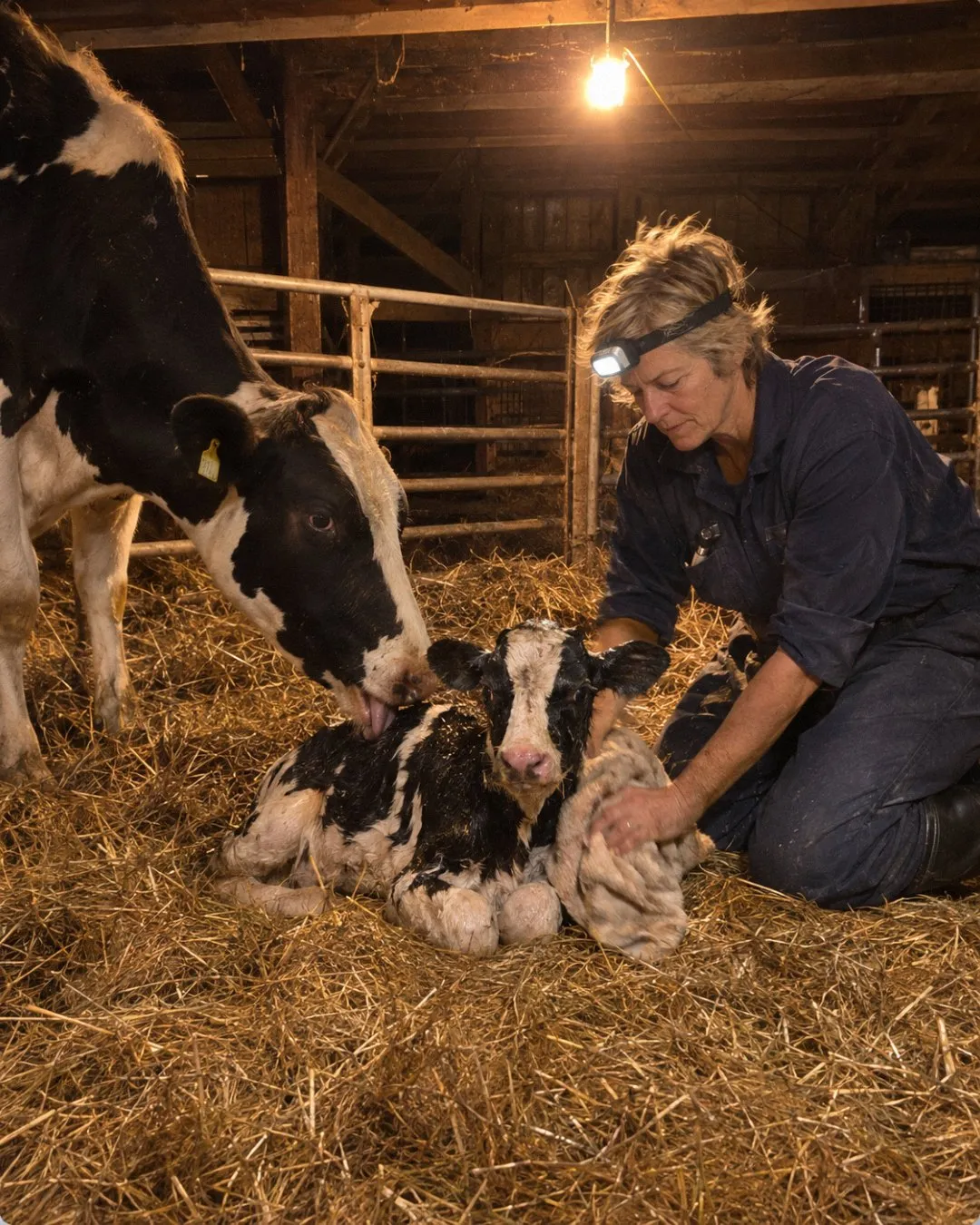
My father was a dairy vet for 36 years. He taught me never to reach for the needle first. Then for six years, a retina doctor put a needle in each of his eyes, every four weeks. He went blind anyway. By the end, he couldn't see my face across the kitchen table. Years later, I found the same thing starting in my own eyes. I'm a dairy vet, like he was. My retina doctor's answer was the same needle. Here's what I did instead. My name is Dr. Maren Kittredge. I'm 61 years old. I've been a large-animal veterinarian around Swanton, up in Franklin County, Vermont, for 33 years. Dairy cows, mostly. Some goats, a few horses, the occasional pig. I've looked into thousands of animal eyes. When a cow goes blind, I'm the one the farmer calls. I learned the trade from my father. He ran this practice for 36 years before it was mine. He taught me one rule above every other. When a herd gets sick, you don't reach for the needle first. You walk the feed bunk. You smell the silage. You test the water. You find out what changed, and you fix that first. You don't put a needle in 300 cows to cover up whatever is making them sick. Five years ago, two of the other large-animal vets up our way retired the same winter. Most of their farms between St. Albans and the Canadian border ended up on my phone. I'm not complaining. These are good farm families. There are good doctors in Burlington, too, people I still respect. But that job wrote itself into my eyes, and that's the reason for this letter. I practically live in my truck now. My father's old ophthalmoscope, the little handheld scope he used to look into the back of cows' eyes, still rides on my dash. I've never moved it. Nobody in my family thought of me as the one to worry about. Neither did I. I had 20/20 vision my whole life. I could read an ear tag across a free-stall barn. I could read a syringe line in a dark calving pen by headlamp. My mother is 87 and still does the crossword in pen. But somewhere along the way, I stopped eating like a farm kid. Coffee after coffee with flavored creamer from whichever gas station on Route 7 was open at 4 AM. A breakfast sandwich eaten one-handed on the drive. Granola bars in the glovebox. Supper at 10 at night, standing up, while I typed up herd records. I hadn't eaten anything green that didn't come in a bag in about four years. At my eye exam that spring, the optometrist went quiet for a while. Then she said, "You've got a few drusen." Little yellow deposits under the retina. A few are normal after 50, she said. We'll keep an eye on it. The next year, there were more. The year after that, she sent me to a retina specialist in Burlington. Dr. Pruett had me in and out in about 90 seconds. He looked at the scan, said the word "intermediate," and handed me a sheet. Macular degeneration. Dry, for now. My vision had slipped to 20/40 in my left eye. He told me to take PreserVision, the eye vitamin. Check an Amsler grid every morning, a little square of lines taped to the fridge. And call the moment the lines started to bend. "If it turns wet, we start injections," he said. "There's also a newer shot now for the dry kind. We'll talk about it at your next visit." A needle. In my eye. Every month, maybe for the rest of my life. Dad never reached for the needle first. Dr. Pruett never asked what I ate. He never asked what had changed. I asked him whether anybody looked at blood flow to the retina. Whether what I ate had anything to do with it. He smiled at me. "You're a vet, Maren. Leave the eyes to me." I'd never treat a going-blind cow the way he'd just treated me. I folded the vitamin sheet and the injection consent form into my coverall pocket and said I'd think about it. I already knew I'd never sign the form. I'm not against medicine. I give animals needles every single day. But I've also watched what happens when you treat what you can see and never fix what caused it. The chart looks managed. The animal keeps going downhill underneath. And here's what I knew from 33 years of reading rations. Every dairy ration in this country is balanced for the eyes. Not as a courtesy. Because a cow fed a ration missing what her retina needs goes blind. Slowly at first. Then she walks into gates. When that happens, you don't put a needle in her eye. You fix the feed. Nobody had asked me one question about mine. Six weeks later, I was at the Bessette farm, Maple Run, at 3 in the morning. First-calf heifer, calf coming backward. I was down in the straw, reaching for the calving chain, and I couldn't read the markings on the handles. There was a gray smudge in the middle of my headlamp beam. Wherever I looked, the smudge was there first. I got the calf out by feel. Their son Luc held the heifer's tail and didn't say a word. Driving home, the fence posts along Route 78 bent as I went by them. Straight posts. Bending, like a reflection in moving water. The next morning, my Amsler grid had six wavy squares in it. The week before, it had two. Dr. Pruett's office got me in two days later. The new scan showed larger drusen and early thinning in the center of my left retina. His nurse called that afternoon. He wanted to talk about starting the shot. The next Tuesday, I got a call to a hill farm outside Highgate. A 9-year-old Holstein had gone blind over the winter. The farmer had cut corners on his ration to get through a bad milk price year. I've seen it a dozen times. A cow short on what her retina needs. The light cells starve, a little at a time, until she can't see the feed bunk. I took my father's ophthalmoscope off the dash and looked into the back of her eye. The center was pale and blotched and spotted. Then I pulled up the photo of my own retina on my phone. Cows don't get macular degeneration the way people do. But a retina starved of what it needs looks starved in any animal. And hers looked like mine. The researchers know this, too. Pig eyes from the packing plants go to university labs, because a pig's retina is built so much like ours that they study human eye disease on them. I sat in my truck afterward with the phone face-down on the seat beside me. I wasn't thinking like a vet anymore. I was scared. Because I knew exactly how this goes. I'd already watched it take my father. He started the injections at 73. A needle in each eye, every four weeks, for six years. He never missed one. He took the eye vitamins, every bottle. The man who taught me never to reach for the needle first sat in a retina doctor's chair every four weeks for six years, because nobody ever told him there was a feed bunk to walk. He went legally blind anyway. The last year of his life, he couldn't see the cows. He couldn't read the paper. Near the end, in the dark, he'd call me by my mother's name. He died at 79. And his ophthalmoscope was sitting right there on my dash in front of me. My son Tobias is in his third year of vet school at Cornell. He's coming home to practice with me. That was always the plan. I wasn't going to hand him this practice the way my father handed it to me. Blind at the end of it. Dr. Pruett's office called twice more that spring. I let it ring. I ran my own eyes like a feeding trial instead. PreserVision every morning, both pills. Kale, spinach, salmon twice a week. Sunglasses on every call, even in February. I quit the creamer. Three months later, my left eye still read 20/40. My grid still had five or six wavy squares, depending on the morning. It wasn't sliding. It wasn't getting better either. I was feeding my retina and still watching it starve. Then I remembered something from a dairy nutrition conference at the university in Burlington years back. Researchers had been looking at beets in cattle rations. Beet pulp, we feed every day. But they were interested in two things in the whole beet. The nitrate. And the deep red pigments, called betalains. I bought beetroot capsules at the drugstore. Two a day for eight weeks. My grid didn't change. I tried a different brand online. Six more weeks. Same thing. I figured my retinas were too far gone for a beet to matter. That turned out to be the wrong diagnosis. Seven months ago, I was at Aurèle Gagnon's farm for a herd check. Aurèle is 84. His family has milked cows outside Swanton for three generations. I've treated his herd since 1993. He has macular degeneration, too. The wet kind. He'd been getting injections every four weeks for two years. He waited until we were done in the parlor. Then he pulled a folded printout from inside his barn coat. "Doc. Regarde ça." It was from his retina doctor. The wet activity was quiet. His vision in that eye had gone from 20/80 to 20/50. And his injections had been spaced out. Every four weeks, then every eight, then every twelve. His doctor told him whatever he was doing, to keep doing it. I asked him what he'd changed. He reached into his other pocket and set a bottle on the rail. Beetroot capsules. I'd already wasted money on two brands of those. I didn't even look at the label. "My granddaughter Josée," he said. "She kept reading. The drugstore ones did nothing. Then she got to asking me about Mémère's beet." Aurèle's grandmother brought beet seed down from the Beauce, in Québec, when she married into the farm in 1922. He said it grew small and so dark red it stained the wooden spoons purple. The family grew it for 40 years. Then in the 1960s, his father started buying seed from the co-op like everybody else. Bigger beets, sweeter, easier to sell. Nobody saved the old seed. "Josée went looking for anything still growing like Mémère's. Took her three bottles to find it." I told him to keep doing whatever he was doing. That night I sat in my truck outside a heifer barn at 1 AM, waiting on a cow, and read on my phone the way I should have read months earlier. What I read that night changed how I saw every blind animal I'd ever looked at. Your retina is the hungriest tissue in your body. Ounce for ounce, it burns through more oxygen than almost anything you've got. It's fed from behind by a thin layer of tiny blood vessels called the choroid. That layer is the retina's whole supply line. As you age, two things happen. Blood flow through that layer drops. Your body makes less nitric oxide, the molecule that tells those little vessels to open. The supply line narrows. And the retina rusts. All that oxygen, year after year, throws off free radicals, the same reaction that rusts a gate hinge or turns fat rancid in a feed bin. Starved and rusting, the retina can't clear its own waste. The waste piles up underneath it. Those piles are the drusen. The light-sensing cells sitting on top of them start to starve. The center goes first, because the center works hardest. That's the smudge in my headlamp. That's the bent fence posts. That's what was in the back of that Holstein's eye. And here's what nobody had explained to me. The eye vitamins feed the cells. They do nothing to open the vessels that carry the food in. And nothing to stop the rust. The injections only go after leaking vessels, once the damage has turned wet. They don't touch why the retina was starving in the first place. That's why my father did everything and went blind anyway. And that's why my kale and my vitamins held me at 20/40 and no further. A dairy farmer protects his cows' retinas better than my retina doctor protected mine. Nobody puts a needle in a cow's eye. They fix the feed. If your grid keeps getting wavier while you take your vitamins and eat your greens, that's not your failure. You were handed tools that were never aimed at the supply line or the rust. Then I went back to the beets. The nitrate in a beet is turned by your body into nitric oxide. The signal that opens those little vessels back up. And there's a study I wish my father had seen. Researchers in Australia followed more than 2,000 adults over 49 for 15 years. The people who ate the most vegetable nitrate, about 100 to 142 milligrams a day, had a 35 percent lower risk of developing early macular degeneration. Thirty-five percent. From what was on their plates. Then the betalains. The deep red. Peer-reviewed research has shown them neutralizing the free radicals that do the rusting. Open the supply line. Stop the rust. That's two jobs, and the right beet does both. That's when the drugstore capsules finally made sense. I've fed beet pulp to cows for 30 years. Beet pulp is what's left after the sugar plant takes the good out of a sugar beet. Most beets grown in this country have been bred for over a century for sugar, size and shelf life. Nobody bred them for betalains. That goes for the red beet in the produce aisle too. It was bred bigger and sweeter, the same way Aurèle's father traded Mémère's seed for the co-op's. And neither the nitrate nor the betalains survive heat. Boil a beet or roast it, and most of them are gone before it reaches your plate. Most beetroot powder gets blasted dry at high temperatures, because it's fast and cheap. The good is cooked out before the capsule is ever sealed. You get red powder that says beetroot on the label, with the part that feeds your retina gone. The two brands I tried failed on one count or both. So I needed three things. An old seed line with the full betalain content. Dried without heat. And enough of it to matter. At 1:30 AM, I texted Josée and asked what was in her grandfather's bottle. She answered in the morning. Rosabella. Under it she'd typed out what she found. A handful of Amish families in Lancaster County, Pennsylvania, still grow an heirloom beet from seed their great-grandparents brought over in the 1890s. They call it Blutwurzel. Blood root. They've saved the seed by hand for over a century. Never crossed it with the sugar beet. Then she sent a photo of one cut in half, so dark red it was almost black. The last line of her text said Aurèle took one look at that photo and said, "C'est la betterave à Mémère." That's Mémère's beet. I called the company before I ordered anything. I read ration analyses for a living. I don't put anything into an animal without seeing the paperwork. I wasn't going to put anything into myself without it either. I asked for the Certificate of Analysis. I asked where the beets came from and what seed line they were grown from. I asked how they were dried. I asked how much was in a serving. I asked for heavy metal testing. They sent all of it the same day. Heirloom Blutwurzel grown by Amish families in Lancaster County, never crossed with the sugar beet. Pulled after the first frost. Shade-dried, never heated, so the nitrate and the betalains survive. Up to ten times the betalains of an ordinary beet. 1,300 milligrams per serving. Third-party tested. Heavy metal screening. Made in the USA. No fillers. I read it like a ration analysis. It passed every line. I ordered six bottles that afternoon. I started on a Monday. Two capsules with breakfast, washed down with gas-station coffee. Nothing else changed. I kept my PreserVision and my kale. Week 1, the oncoming headlights on my 3 AM drives stopped exploding into stars. The glare was still there. It was smaller. Week 2, my morning grid had four wavy squares instead of six. Week 4, I read an ear tag at the far end of the Bessettes' free-stall barn. Number 1186. I said it out loud to nobody. Week 8, I read the hymnal at my mother's church without the magnifier. Second verse and all. Week 12, I went back to Dr. Pruett. Left eye: 20/30. Up from 20/40. New scan: no new drusen. No growth in the ones I had. The thinning hadn't spread. Three wavy squares on the grid. Two on a good morning. He pulled up my scan from the spring and the new one side by side. He looked at them a long time. "Maren, what are you doing?" I slid the bottle across his desk and told him about Aurèle. He took a pen out of his coat and asked me how to spell betalains. He didn't mention the shot. I never signed the consent form. My father would have started exactly here. You fix the feed before you ever reach for the needle. I'm telling you this because I've spent 33 years watching the families I serve. Farmers in their seventies and eighties taking their eye vitamins, eating their greens, checking their grids. Watching the lines bend anyway. Driving 45 minutes to Burlington every four weeks for another needle. They think their eyes are just getting old. Their eyes aren't just getting old. They were handed tools aimed at the wrong thing. Most retina doctors were trained to treat the damage. The supply line and the rust were never part of that training. They do what they were trained to do. The research is out there. You don't need your doctor's permission to read it. I've told 19 farm families about Rosabella since then. Every one that ordered has told me about a grid that got straighter, or a line they could read again. Réjean Paquette, 67, milks 80 head up near the border. Dry macular degeneration in both eyes. In three months, the bend in his grid's center line straightened out. He can see his grandkids' faces at the supper table again. He told me, "Doc, I don't have to turn my head to see them anymore." Last month I got called to the Bessette place again. 3 AM. Another heifer, another calf coming backward. Tobias was home on break. He held the light. I went down in the straw and read the markings on the calving chain myself. I pulled that calf out alive. No gray smudge in the beam. When I climbed back in the truck, my father's ophthalmoscope was riding on the dash. On the drive home, the fence posts along Route 78 stayed straight. I think he would have liked to see that. If I could go back and tell myself one thing in that truck outside Highgate, it would be this. The beet research is real. But most of what's on the shelf is the wrong beet, dried the wrong way. That's why so many people say they tried beetroot and nothing happened. Rosabella is the heirloom Blutwurzel, the old seed line Amish families in Lancaster County have saved by hand for over a century, never crossed with the sugar beet. Pulled after the first frost, shade-dried and never heated, so what feeds your retina survives. 1,300 milligrams per serving. Third-party tested. Made in the USA. No fillers. That's what Aurèle's bottle had that mine didn't. If he hadn't pulled it out of his barn coat that day, I'd be sitting in Dr. Pruett's chair right now with my chin in the rest, waiting for the needle. If you've been told you have drusen and to "watch and wait." If you're taking your eye vitamins and the lines on your grid keep bending. If you're already getting injections and dreading the next one. If you've watched a mother or father lose their sight to this, and you're starting to see their eyes in yours. More vitamins won't fix this. A needle won't fix what caused it. Opening the supply line and stopping the rust will. Nobody pays me to say this. I get nothing from Rosabella. I tell people because the mechanism makes sense, the research backs it, and I've seen it in my own scans and in the families I serve. 90-day money-back guarantee. Two capsules with breakfast. No prescription. Every farmer in this county knows you fix the feed before you lose the herd. Nobody ever told you to fix yours. ~ Dr. Maren Kittredge, DVM, 33 years https://track.tryrosabella.com/cdc16426-3e48-40a7-9fad-21098084f6cf P.S. My most recent visit, seven months in: left eye holding at 20/30. Still no new drusen. Two wavy squares most mornings. The injection consent form is still folded in my coverall pocket. P.P.S. Don't make my drugstore mistake. Most cheap beetroot is sugar-bred stock, heat-dried until there's nothing left. If you tried beets before and nothing happened, it wasn't the beet. It was the heat. P.P.P.S. I didn't stop my PreserVision, and I'm not telling you to stop anything your doctor gave you. If you're on injections, stay on them. Aurèle did. His doctor spaced them out himself, with the scans in front of him. That's the only way to do it. P.P.P.P.S. Give it time. In my notebook and my families', it went glare first, in the first week or two. The grid next, between weeks two and four. Reading and distance by week eight. The scan at twelve. That's why the guarantee is a full 90 days. P.P.P.P.P.S. It's not on Amazon. Anything you find there isn't this beet. It only comes direct from their site, and right now it's buy one, get one free. P.P.P.P.P.P.S. Tobias takes it now too. He's 26. He says he's not waiting for an optometrist to go quiet on him. https://track.tryrosabella.com/cdc16426-3e48-40a7-9fad-21098084f6cf
More from Essential Health Finds
Support stamina and heart health every day
Essential Health Finds
Support stamina and heart health every day
Essential Health Finds
Support stamina and heart health every day
Essential Health Finds
Support stamina and heart health every day
Essential Health Finds
Support stamina and heart health every day
Essential Health Finds

Support stamina and heart health every day
Essential Health Finds
Support stamina and heart health every day
Essential Health Finds
Support stamina and heart health every day
Essential Health Finds
Support stamina and heart health every day
Essential Health Finds
Support stamina and heart health every day
Essential Health Finds
Support stamina and heart health every day
Essential Health Finds
Support stamina and heart health every day
Essential Health Finds

 Add to Chrome