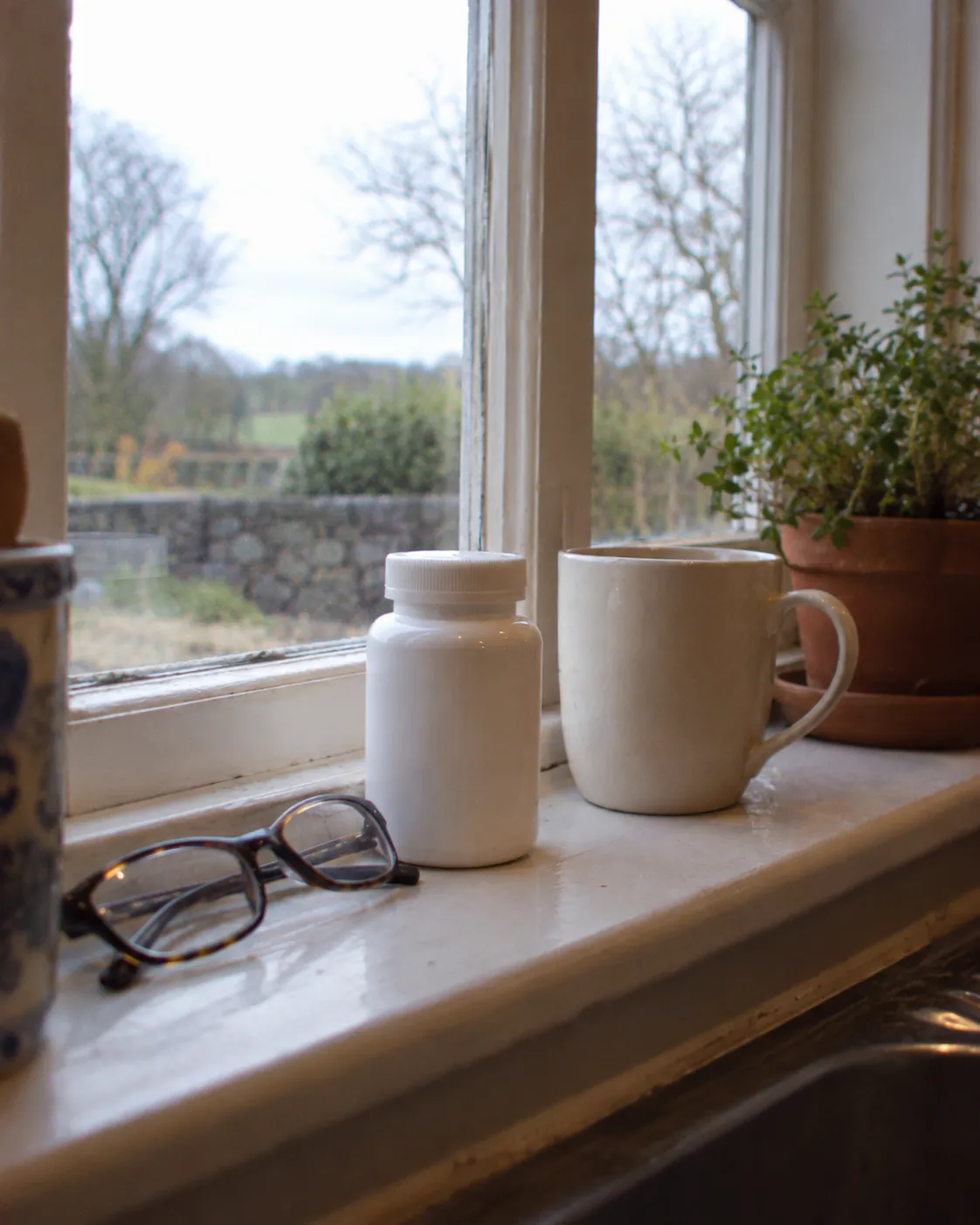
Support stamina and heart health every day
Ad Copy
In one river town, the autumn roots still go into a sand pit by the water to see out the winter, and every house that helps dig it owns a fridge. Call the town Stanhope. A river with a sandy bend, a village hall with a porch, and a spade that hangs in the porch eleven months of the year. Stanhope isn’t a real town. Nobody holding that spade is anybody; it’s a custom drawn as a place, so you can stand on the bank and watch. Here’s the pit. Dug in October, in the river sand at the bend, a trench about the length of a parked car. The roots go in — beetroot, carrots, turnips, whatever the gardens had — laid in layers with straw between, then covered over and tamped down with the back of the spade. A stick goes in at one end so the pit can be found in February. That’s the whole engineering. Here’s who digs it. Whoever took the spade down last year hands it to whoever asks for it this year. Some years that’s a man who’s done it twenty times. Some years it’s a girl of twelve, with her grandfather standing on the bank saying nothing and letting her get on with it. There’s no list. The spade finds its way. Here’s why it started, as far as anyone can tell. Before fridges, roots kept in cool sand. Stanhope says it’s been doing this since before the hall was built, and the hall is old, and nobody has ever checked the claim because nobody has ever needed it to be true. Here’s why it continues, which is a different question with no answer. Every house in the town has a fridge. Most have a cellar. The shop sells the same roots in February, ten minutes’ walk. The pit gets dug anyway. Here’s February. Somebody goes down to the bend with a fork and a bucket, finds the stick, opens one end of the pit, and comes back with roots that are fine. Not better than the shop’s. Fine. Sandy, cold, and the same thing they were in October. That’s the whole of the return. The town has never asked for more from it. Here’s the flood. About one year in ten, the river comes up over the bend and takes the pit, and the roots with it. The stick turns up a mile downstream, or doesn’t. Nobody is upset. “The river gets a turn,” is how the woman with the fork puts it. The next October the spade comes down off the hook and the pit gets dug in the same sand, and the river is not held against. Here’s the visitor, because every custom gets one. She watches the digging from the bank for a while and then says the obvious thing. “You’ve all got fridges.” The man with the spade, not stopping: “We have.” “So what’s the pit for?” He thinks about it, tamps a bit of sand, and says, “The roots.” She waits for the rest. There isn’t any. Here’s what’s worth noticing, and it isn’t that the town is stubborn. Beetroot has a long history as a food. Stanhope’s pit is one way one town kept it through a winter. There were other ways in other places, and there are fridges now, and the pit isn’t better than any of them. It’s older, and it’s the one thing the town still does with its hands that it doesn’t have to. An old way of keeping a food can outlast its reason and not go looking for a new one. Here’s this October. The spade comes off its hook. The trench goes in at the bend. Straw, roots, straw, sand, stick. Someone’s grandchild is handed the spade for the last few feet and is told nothing about why. The river may take it. The fridges are full. The pit is dug. So here’s the thought, and it comes from a town that isn’t there, so take it as that: Some things may be worth doing the old way precisely because the reason has gone. What’s left is the doing, and the doing is enough. It may be worth looking at what you still do the old way with no reason left — and asking whether you’d even want one. Now the seam, stated the way we always state it. Nothing above is about a supplement, and the observation doesn’t change when the subject is one. A pit is a pit. A capsule doesn’t go in the sand, and no river takes it. That history is a fact about kitchens, not about bodies. Longevity isn’t proof of a health effect, and we’re not offering it as one. Rosabella is a beetroot powder supplement in capsule form. Here’s what’s on the label. Rosabella Beetroot is organic beetroot powder in capsules — two capsules, once a day. What’s in it reads in one breath: 1,300mg of organic beetroot powder per serving — a serving being those two capsules. One dietary ingredient, with the amount printed plainly on the label, nothing to decode. Non-GMO, third-party lab tested, made in the USA from globally sourced ingredients. It contains no caffeine. Sixty capsules in a bottle; thirty days. Follow the directions on the label. Where that sits — a kitchen windowsill, or nowhere in particular — is up to you. One thing before anything goes in a cart: talk to your doctor or pharmacist before adding any supplement, especially if you take any medication. This goes alongside the rest of a routine — the meals, the walks, the sleep — not in place of any of it. 4.4/5 from 18,365 Amazon ratings (as of October 27, 2026) And the last part, plainly. Nobody here is going to promise you a transformation. We’re not going to tell you what you’ll feel or when. Bodies are different, and yours doesn’t owe an advertisement anything. Stanhope digs the pit with no reason left. We’re not handing you one either. It’s a capsule, and the label’s above. What we provide is a format, stated as a fact. The format is capsules. The labeled serving is two capsules, once a day. P.S. If you’d like Stanhope’s test for your own year, it’s one question: what do you still do the old way — and when did the reason leave? There’s no answer to send anywhere. It may just be worth knowing which of your spades still come off the hook. P.P.S. You don’t have to take our word for what’s in the bottle. Read the label, check the serving, and decide for yourself. P.P.P.S. Not satisfied for any reason? Return the product within 90 days of delivery for a full refund. Individual experiences vary. https://track.tryrosabella.com/cdc16426-3e48-40a7-9fad-21098084f6cf These statements have not been evaluated by the Food and Drug Administration. This product is not intended to diagnose, treat, cure, or prevent any disease.
More from Essential Health Finds
Support stamina and heart health every day
Essential Health Finds
Support stamina and heart health every day
Essential Health Finds
Support stamina and heart health every day
Essential Health Finds
Support stamina and heart health every day
Essential Health Finds

Support stamina and heart health every day
Essential Health Finds

Support stamina and heart health every day
Essential Health Finds
Support stamina and heart health every day
Essential Health Finds
Support stamina and heart health every day
Essential Health Finds

Support stamina and heart health every day
Essential Health Finds
Support stamina and heart health every day
Essential Health Finds

Support stamina and heart health every day
Essential Health Finds
Support stamina and heart health every day
Essential Health Finds

 Add to Chrome