A Natural Mineral For Fibromyalgia Relief
Ad Copy
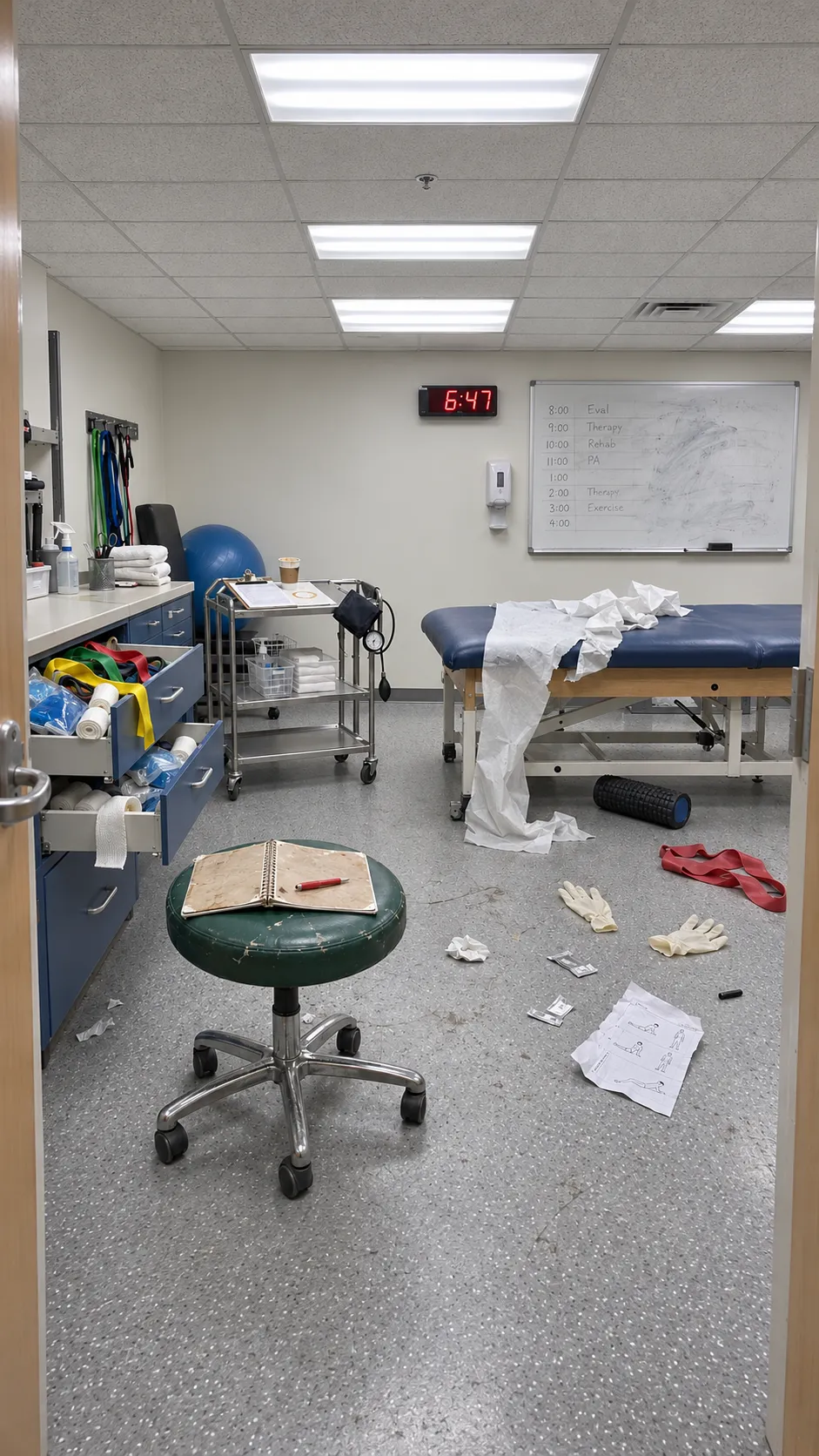
I worked the rehabilitation floor of a chronic pain clinic for 31 years. I guided over 2,000 women through recovery programs for conditions their doctors had stopped trying to explain. And there is something that happened in that clinic, week after week, year after year, that nobody outside those walls has ever been told. I was a rehabilitation therapist. I should explain what that means, because when I tell people after church they assume I helped athletes stretch after knee surgery. In a chronic pain rehabilitation program, patients arrive after the medical system has finished with them. They have been tested, scanned, medicated, referred, and released. They come to us because nobody else has anything left to offer. Our job is to help them build a life around what remains. So for 31 years, while the doctors wrote the prescriptions and moved on, I was the one who sat with what happened after. Every morning. Every patient. Every small movement that cost more than it should. I am 63 now. Retired two years. And my sister told me to let this go, because nobody owes anybody answers and the clinic closed anyway. But I sat across from 2,000 women who had been told their pain was managed, and I watched which ones actually got better and which ones just got quieter. And I have been silent about what I noticed for long enough. So here it is. The part of chronic pain recovery that nobody discusses is who responds and who does not. Every patient arrives with the same folder. Diagnosis. Medications. Failed treatments. Goals. And then we begin the program. Eight weeks of guided movement, pacing strategies, sleep hygiene, cognitive techniques, the whole protocol. Some of them respond. Not fast. Not dramatically. But by week four you can see it. The way they stand changes. The grip on the chair arm loosens. They stop bracing before they move. And the physical therapist looks at me across the room and we both know this one is going to be okay. And some of them do not respond at all. They do every exercise. They follow every instruction. They show up every morning with the same quiet determination. And nothing changes. The pain stays. The sleep stays broken. The fog stays thick. And by week six the determination has gone out of their eyes and something else has taken its place. The look of a woman who has just added one more thing to the list of things that did not work. I watched that division happen 2,000 times. I can tell you within the first two weeks which kind you have got. And here is the thing I never said out loud. The recovery protocol we used included a magnesium component. Supplementation alongside the physical work. That is not unusual. It is in the program handbook. And when a patient who had been stuck, truly stuck, flat, no progress for weeks, suddenly started responding, one of the first things that had changed was always the same. Her magnesium levels had come up on the intracellular panel. Not the blood test. The cellular one. And you could see it in her body before you saw it in the labs. The bracing softened. The sleep improved. The pain did not vanish but it loosened its grip, like something that had been clenched for years had finally been given permission to let go. The doctors in the program knew that. The senior therapists knew that. Every person on that recovery floor knew that the women whose cells had magnesium responded, and the women whose cells were empty could do every exercise in the book and nothing would move. Then the patient went home. To a family doctor who never mentioned the word. And for women who look like us, the numbers were worse. Nine out of ten already running low before they ever walked through our door. The baseline was lower. The gap was wider. And the chart never said a word about it. I want to tell you about the first two patients who made me want to say something. And why I did not. It was 2003. A woman named Denise. 52. She worked the front desk at a nursing home across town and she had been diagnosed with fibromyalgia three years earlier after a fall on the ice that never quite healed right. She had done everything right. Her husband told me in the hallway. One doctor. The same one for seven years. He had put her on Cymbalta before he ran the full panel. Physical therapy twice a week for a year. An anti-inflammatory diet. Lost 14 pounds. Her doctor had said "you are doing everything you can, let us give it time," and at the follow up the pain score had not moved, and nobody seemed puzzled. He looked at the chart. He did not look at her. Eight weeks into our program, Denise was one of the ones who did not respond. Not because she did not try. She was the first one in the room every morning. But her intracellular magnesium was critically low, and the supplement in the program was magnesium oxide, the cheapest form available, and it was doing nothing for her cells. I watched her take it every morning and I knew it was not reaching where it needed to go. Her husband found me in the hallway on the last day. He asked me, very quietly, why a woman who had done everything right was leaving in the same condition she had arrived in. I did not have an answer that fit in a discharge summary. And it was not my place. A rehabilitation therapist does not override the program. You follow the protocol. You do not tell the prescribing physician which form of magnesium belongs in the formulary. So I told him she had worked incredibly hard and that progress sometimes comes in waves. Which was partly true. And I carried the rest. I went home that night and started a notebook. Every patient arrives with an intake form. Age. Diagnosis. Medications. Duration of symptoms. Failed treatments. And a line at the bottom for supplements. I started copying the forms into the notebook, with one column of my own added at the end. Did she respond, or did she stay stuck. I did that for 22 more years. Twelve years after Denise, I sat across from a woman and wanted to walk out of the clinic. Her name was Brenda. 2015. 57 years old. Retired cafeteria manager at an elementary school. Seven years with fibromyalgia. Her doctor had told her, and her daughter said this to me in the waiting room, that she was "one of the most compliant patients I have ever treated." Her intake form had eight medications on it. Cymbalta. A muscle relaxer. A sleep aid. An acid blocker. Ibuprofen. Gabapentin. A low dose antidepressant. And under supplements, in her own handwriting: "magnesium, drugstore, every night." Brenda responded less than Denise had. Not a little less. After eight weeks she was scoring worse on two of the four pain scales. She was sleeping less than when she arrived. She told me on week six, very calmly, that she had started to believe the clinic was the last thing that might have worked and now she knew it was not going to. I sat across from her and thought: the compliance is perfect. The prescriptions multiplied. And the woman in front of me is emptier than the woman who came through with half the medication list twelve years ago. Nobody was watching the tank. Everyone was watching the scores. That night I went through the notebook. Twelve years of it. And the column at the end had sorted itself while I was not looking. The women who stayed stuck had the longest medication lists. Cymbalta, gabapentin, muscle relaxer, sleep aid, acid blocker. Five bottles, six, eight. And almost every one of them had the same thing written under supplements. Magnesium. Drugstore. Every night. I did not know what it meant yet. I just knew it was there. And there was one more thing in that notebook I did not understand until much later. In my last eight years at the clinic, a handful of patients came through who responded within the first two weeks. Short medication lists. Early progress. And they all had the same referring physician, across town, a woman I never met. Every one of her patients had a line on their intake that nobody else had. "Magnesium bisglycinate. Started day one." I noticed it. I wrote it down. I did not ask. Here is where it stopped being something I carried and became something I could not live with. My sister Joyce. 52. Worked the front desk at Meadowbrook Long Term Care for nineteen years. The woman organized our entire family's Sunday dinner from a kitchen that could barely fit four people and could carry two bags of groceries up a flight of stairs without stopping. Where I come from, you do not stop for pain. That is not something anybody teaches you. It is something you watch your mama do until it becomes the way you are built. Three years ago the pain started. Not a specific injury. Not a fall. It arrived the way fibromyalgia arrives for most women. Slowly. A shoulder that would not loosen. A hip that ached after sitting too long. Sleep that stopped being restful. And then, gradually, everything. Her doctor ran the standard panels. Inflammation markers. Thyroid. Vitamin D. Sed rate. ANA. Everything within range. Everything normal on paper. And every time Joyce walked out with clean results and a body that hurt more than it had the month before, the gap between what the labs said and what her body knew got wider. She had one doctor. The same one for seven years. He was the only one she could get to see her regularly. He looked at the chart every visit. He never once looked at her. He was the one who named it. Fibromyalgia. He said it carefully, the way they all do, and then he said: "Joyce, this is a condition we manage. There is no cure, but we can work on your quality of life." He put her on Cymbalta before he ran the intracellular panel. Before he checked the cellular magnesium. Before he did anything except look at the chart and write. Joyce heard what he actually meant. She stopped bringing it up at appointments after that. She never told me she had given up on the doctor explaining it. I found out when she cancelled our Sunday walk for the fourth week in a row and said it was just a busy month. It was not a busy month. She had stopped walking because a twenty minute walk cost her the rest of the afternoon. That was the moment I understood something had shifted and she was not going to tell me what. The prescriptions came and went. Cymbalta first. Then painkillers when the Cymbalta was not enough. A muscle relaxer that made her foggy until noon. Each one started with a small hope and ended with the same flat expression that meant this one does not work either. I watched her try and fail and try and fail and I did not know that every failure was cementing something inside her. The belief that her body was permanently broken and nobody could do anything about it. And underneath all of it, the belief Mama had planted before either of us was old enough to question it. Some bodies wear out faster. Mama said that from the recliner. Said it the way you say something that has been true so long it does not need defending anymore. She had been in that recliner for years by then. Same pain. Same fog. Same doctor who never tested anything beyond the blood. She passed in 2019 in that recliner, and neither one of us ever asked whether it had to be that way. The thing about fibromyalgia that nobody warns you about is the silence it creates. Joyce stopped talking about the pain. Not because it stopped. Because she had learned that naming it changed nothing. I would ask how she was feeling and she would say fine. We both knew it was not true. We both let it stand. That quiet decision to stop naming the thing that was in every room of her life is what I carry worst when I look back. My sister is not fragile. Where I come from, the women are not fragile. She kept working through all of it. Front desk at Meadowbrook every day, on her feet, managing intake paperwork and family calls and discharge schedules. She drove herself to work every morning and sat in her car for five minutes before going in because the walk from the parking lot to her desk took something out of her that it never used to. She is one of the strongest people I have ever known. And for three years I watched that strength get used up entirely on just getting through the day. I would visit on weekends and move through her house the way I always had. Help with Sunday dinner. Play with her grandbaby on the floor. Carry boxes down from the attic. None of it cost me anything. I never once thought about what that must have looked like from her end of the recliner. She told me later. She said it felt like watching everyone else live in a world she used to belong to. Same house. Same kitchen. Same family. But she was behind glass now and the glass kept getting thicker. On the outside she looked completely fine. That was the part nobody understood. And the one appointment she had ended the same way every time. "It could be perimenopause." "Stress makes it worse." "Have you tried yoga?" She tried yoga. It made the pain worse for a week. The slow disappearing was the hardest part. She stopped saying yes to things. Sunday dinner at her table. Saturday morning at the beauty shop. Her grandbaby's first birthday party at the park. She missed it because two hours on a folding chair would have cost her two days of recovery. I went without her. And I felt guilty for going. And I felt guilty for feeling guilty because it was not about me. At some point I started to believe this was just permanent. That she would spend whatever years she had left in that recliner while the rest of us moved through everything on the other side of the glass. The way Mama did. I knew what I was looking at. I had sat across from 2,000 women showing me the same thing. The pain that would not settle. The sleep that would not come. The fog that thickened month by month while the medication list grew. I knew which ones got better and which ones did not. And I was watching my sister become the second kind. And here is what I understood standing in her kitchen that no one had said to Joyce: a standard blood test measures the magnesium floating in the blood. That is about one percent of what is in you. The other ninety nine percent is inside your cells, where nothing routine ever looks. Her body could be running on empty and pass every test they have. I had watched 2,000 women prove it. And for women who look like us, the starting level is already lower. Nine out of ten. The test misses everybody. But it misses us worse. I had 22 years of intake forms in a drawer telling me the same thing. And when my own sister stood in my kitchen asking me what was happening to her, I did not connect it. I knew which patients responded and which ones did not. I knew it correlated with intracellular magnesium. I knew the oxide supplement in the program was not reaching the cells. And I still did not see it clearly enough to say it out loud to the person I grew up with. I want you to sit with that for a second, because I have. I did what any sister would do when someone she loves is disappearing in front of her. I tried the two things I had heard of. Advil, because that was what Mama always kept in the cabinet and it was what everybody reached for first. And I doubled her turmeric, because a woman at church swore it was the only thing that touched inflammation. Six weeks. Nothing. Pain still everywhere. Still 3am. Still the glass getting thicker. So I went at the magnesium. If the drugstore bottle was not working, I would get a better one. I bought CBD cream from the beauty supply on Lamar, the expensive one, because three women in her prayer group said it changed their life. Then I bought a "nerve formula" magnesium powder from the health food store, and it ran straight through her. Then Epsom salt baths every night. Two weeks of all of that and she asked me, gently, to stop suggesting things. I sat at her kitchen table with four bottles on the windowsill and understood something humbling. I had spent 31 years watching magnesium separate the women who recovered from the women who stayed stuck. And I had no idea how to get it into my sister. And then I thought about Mama. That green and white bottle on her nightstand. The one I drove to the grocery store to buy for her. The one I brought to her recliner every night like it was love in a bottle. I read the back of it once. Magnesium oxide. I did not know what that meant. I just knew it was the one they had. Nine dollars. I bought my own mama oxide and called it helping. She took it every night for three years. And she passed in that recliner anyway. So I called the woman who had been getting it right. Dawn. Nurse practitioner. 31 years in rheumatology and pain management. She consulted at the clinic for the last twelve of my years there. She was the one whose patients always responded early. Retired now, still in Memphis, helping her daughter with the grandkids. She listened like nobody in a white coat ever had. That is what I remember most. She did not interrupt. She did not redirect. She sat with it. I told her about Joyce. The diagnosis. The medications. The fog. The bottles on the windowsill. The glass getting thicker. She was quiet for a moment. Then she said, "You have been looking at this wrong your whole career, Lorraine. And so was I, for most of mine." "Come on." "I am serious. You have watched 2,000 patients come through that clinic. You know exactly which ones got better and which ones did not. You have watched the intracellular panels tell you the same story for two decades. And you are sitting there wondering why your sister is not getting better at home." "So tell me what I am missing." "Grab a pen." I grabbed a pen. "Her stress response is a thermostat. Goes up under pressure, comes back down after. Magnesium is what lets it come back down. When the tank is low, the thermostat sticks on high, and the body reads that as an emergency. All day. All night." "And when that thermostat is stuck on high, it burns through magnesium. Every single night. Cortisol goes up, magnesium goes down. It has been doing that to your sister for three years. The tank did not empty in a month, Lorraine. It emptied one night at a time, while she was lying there wondering why her body would not stop hurting." "And in an emergency, the pain gate stays open. There is a receptor called the NMDA receptor. Think of it as a gate in the spinal cord and brain. When magnesium is present, the gate stays closed. Pain signals get filtered normally. You feel what you should feel and nothing more." "When magnesium is depleted, the gate sticks open. Every signal passes through amplified. That is the widespread pain. That is the sensitivity to touch. That is the all over aching that moves and never settles. It is not that her nerves are damaged. It is that the gate that regulates them has nothing to close it with." "And every muscle in the body holds on. Calcium clenches a muscle. Magnesium lets it go. Run low and nothing fully lets go. Her shoulders. Her hips. Her jaw at night. The stiffness every morning that takes an hour to work through. That is not aging. That is not some bodies wearing out faster, no matter what your mama told you. That is a body that cannot unclench because the mineral that does the unclenching has been burned through." "And the sleep. Cortisol is supposed to drop at night. Magnesium is part of what brings it down. When the tank is empty, cortisol stays elevated through the night, and the brain never enters the deep recovery stages. She wakes exhausted because she never actually reached the sleep that restores." "One mineral. One depletion. Pain that will not stop, muscles that will not release, sleep that does not restore. Not three problems. One." I was not writing anymore. "Now here is the part you watched for 31 years and never connected," she said. "The medications." "What about them." "Cymbalta does not close the gate. It dampens the signal after it has already passed through. It sedates the whole house to quiet one room. And the room is still not quiet. Meanwhile, the acid blocker she is probably on for the stomach issues the Cymbalta caused stops magnesium from being absorbed from food. The muscle relaxer masks the symptom of a mineral deficiency. And the sleep aid forces unconsciousness without allowing the deep stages where repair actually happens." "Every bottle on that counter is treating a symptom of a gate that will not close. And some of them are draining the one mineral that would close it." "That is Brenda," I said. "Say more." "2015. Seven years on Cymbalta and painkillers. Eight medications. Most compliant patient her doctor had ever seen. She left our program worse than she arrived. I sat across from her for eight weeks and watched the protocol do nothing. She was taking magnesium every night. Drugstore. Same bottle I saw on a hundred intake forms. Same bottle I bought for Mama." "And you can explain it now." "The medications multiplied. The gate stayed open. The tank kept draining. And Mama took the same bottle for three years and it did not do a thing." "The tank kept draining. And here is why it drains, and you are going to recognize every word of this from your notebook." She went down the list. Almost all your magnesium comes from food. Most women over 50 are already running low. The soil has less in it than it used to. And for women who look like us, the baseline is lower to begin with. Nine out of ten. Before the stress. Before the medications. Before any of it. Stress burns through it. Then the Cymbalta disrupts absorption. Then the acid blocker, which does not just draw from the tank, it stops the magnesium in your food from getting in at all. Then the muscle relaxer masks the deficiency so nobody notices it is there. "And the diet," she said. "What did her doctor tell her to cut?" Gluten. Dairy. Nuts. Dark chocolate. "Some of the richest magnesium foods there are. She cut them because she was told they cause inflammation. Every clean month, less coming in. Every new bottle, more going out." "Two drains, Lorraine. Nothing filling. That is your notebook. That is why the long medication lists never responded." I sat there with the phone and thought about every stuck patient I had worked with. The lists. The handwriting under supplements. Magnesium, drugstore, every night. And I thought about Mama. Same handwriting. Same bottle. Same recliner. "Then why did the drugstore magnesium not help any of them. Why is it not helping Joyce. Why did it not help Mama. She took it every night for three years." "Go read the back of her bottle." I got up and got it. Magnesium oxide. "That is the cheapest form there is, which is why it is the one on the shelf. The body absorbs maybe four percent of it. The rest sits in the gut and passes through. That is why it helps a woman stay regular and does nothing for her pain. It never gets into the blood, let alone the cells where the gate is stuck." "Same bottle I gave Mama," I said. And I had to sit down for a minute. "And the CBD was not a bad guess. It just was not the thing she was out of. Turmeric floats in the blood. Her problem is at the gate and in the muscle, and turmeric does not go there." "So what does." "Now listen, because this is the part that took me three years to accept after I retired, and I had been watching the intracellular panels tell me the same thing my whole career." "Go." "For a magnesium to close the gate at home the way it closes on the clinic panels, four things have to be true. And almost nothing on a drugstore shelf hits all four." "One. The right form. Bisglycinate. The magnesium is bound to glycine, an amino acid that is itself an inhibitory neurotransmitter. It works directly on the NMDA receptor. So the magnesium fills the tank and the glycine helps close the gate from the other side. You are not just replacing what cortisol burned. You are actively quieting the receptor that is keeping the pain amplified. It breaks the loop from both ends at once." "Two. The right delivery. Not a pressed tablet. A hard tablet needs a strong stomach to break it down. After 50 most women do not have one, and Joyce is on an acid blocker, which guarantees she does not. It has to be something you chew. Breaks down like food, gets treated like food." "Three. The right timing. Night. The thermostat has to turn down for her to sleep, and the gate resets overnight. At least four hours away from the Cymbalta. Cymbalta in the morning, magnesium at bed." "Four. Every day for at least two months. The tank empties over years. It fills slower than it drains. Two weeks of anything tells you nothing." "Dawn. Where am I supposed to find that." "The referring physician across town. Your notebook. Every one of her patients responded within two weeks." "You knew about her?" "I asked, a long time ago. You never did. Her patients are all on the same thing. Bisglycinate gummies. A small company called Celuvida. My sister has been on them four years. I am on them. Two before bed." I was quiet for a while. She let me be quiet. That is how you know a woman was a colleague. And a friend. "Dawn. Why did you never say anything. At the clinic. In twelve years." "Would you have listened? If I had turned to you across a patient's intake form and said the fix for half of what we see in this clinic is a gummy, what would you have said?" She was right. I would have laughed at her. I was not laughing. My sister was at home in that recliner with the glass getting thicker, sitting in the same spot Mama sat in for years, and for the first time in three months I was looking at something that connected. I ordered that night. 90 day money back guarantee. After three months of watching Joyce disappear, the cost of a bag of gummies was not the risk in my life. The bag came four days later. I read the back the way I would have read an intake form. Magnesium bisglycinate. Two gummies. I drove to Joyce's house that evening and I told her everything. The thermostat. The gate. The two drains. Denise. Brenda. The four things. Dawn's two months. And I told her about Mama. That the bottle I had brought to her recliner every night was the wrong one. That the oxide never reached her cells. That I had called it love and it was four percent. Joyce looked at me for a long moment. Then she chewed them. Day one, nothing. I want to be honest about that, because Dawn had told me to expect it. End of week one, she was falling asleep faster. The ceiling staring shrank. She told me Tuesday morning that she had slept past two without waking for the first time in over a year. Week two is when it happened. She slept through the night. Straight through. No 2am. No lying there cataloguing which parts of her body hurt. I called her Saturday morning and she answered on the second ring, and her voice sounded like something I had not heard in three years. Rested. And here is the part I need to be precise about, because I know how a chart gets read. Nothing about her medication changed. Same Cymbalta, same dose. Same everything that had done nothing for three years. The medications did not suddenly start working. They never stopped doing what they do. Her body finally had what it needed to close the gate they could not reach. Week three, she called me on a Saturday morning and said she had walked to the mailbox and back without thinking about it. Then she stood in her kitchen doorway holding the mail and cried. Not from pain. From the ordinary ordinary-ness of what she had just done. Walking to the mailbox. The way it used to be. Week five, she got up from the recliner while I was visiting and I said it without thinking. "You did not make the sound." She looked at me. "What sound?" "The sound you make every time you stand up. You did not make it." She had not noticed. Her body had stopped bracing. And she had not noticed because for the first time in three years, standing up was just standing up. Mama made the exact same sound. Every time she pushed herself out of that recliner. I heard it for years and never once called it what it was. That was the moment I knew something had actually changed. Not because of any lab result or any practitioner's explanation. Because my sister stood up from the recliner and it was just a person standing up. The way it is supposed to be. The way Mama never got to. Within three months she described it this way. She said: "I feel like someone finally turned down the volume. Not off. But down. Down enough that I can hear the rest of my life again." She made Sunday dinner last month. The whole thing. Collards and mac and cheese and cornbread and sweet tea and enough for everybody to take a plate home. She stood in that kitchen for three hours and did not sit down once. Her grandbaby pulled on her leg the whole time and she reached down and picked her up without thinking about it. She still has the fibromyalgia diagnosis on her chart. Because nobody goes back and removes labels. Especially not for women who look like us. But what she does not have anymore is the gate that was keeping it amplified. Mama was wrong about one thing. Some bodies do not wear out faster. They run out of the one thing nobody checks for. And the test that would catch it is the one they never run. If your sister has been diagnosed with fibromyalgia, or if you are the one with the diagnosis and the people around you have gone quiet because they have run out of ways to help, this is the pattern worth understanding. The cortisol magnesium loop is real. It is measurable with the right tests. And it is addressable without a prescription. Consistency matters more than anything with this. Restoring intracellular magnesium is not a one night fix. Cortisol depletes it every single night. You have to replenish it every single night. The form has to work. And it has to be something she will actually do without resistance, without friction, without it feeling like one more medical obligation in a life that already has too many of them. Joyce carried this for three years before someone finally measured the right thing. Mama carried it until the end. I sat across from 2,000 women for 31 years and I did not connect what I was watching to the person I grew up with. I did not connect it to the woman who raised us. I do now. You do not have to keep watching someone you love disappear into that recliner. The exact magnesium bisglycinate Joyce takes every night, full dose, no oxide, no proprietary blend, no fillers, is available below. It comes with a 90 day money back guarantee. Three full months. That is the window Dawn told me it takes. If it does not change anything, you get every cent back, no return needed. But if it does, the way it did for Joyce, you will notice the sleep change first. Then the mornings. Then one evening she will get up from the recliner and you will realize she did not make the sound. The sound Mama made every single time. The one I heard for years and never understood. You will wish you had found it years ago. I know I do. I had it in a notebook for 22 years and never brought it home. And I had the wrong bottle on Mama's nightstand for three. Anyway, I am linking a five minute article below that explains the magnesium link better than I can. → Read the article here. celuvida.com/pages/woman-advertorial-fibromyalgia P.S. I need to say this clearly. Joyce is still on her Cymbalta. Dawn's first words about it were "keep her on it," and that is the only version of this I would ever put my name to. If you are on Cymbalta, or gabapentin, or a muscle relaxer, or a sleep aid, keep taking every one of them exactly as prescribed. The point was never to fight the prescription. The point is to close the gate the prescription cannot reach. P.P.S. The timing matters. Cymbalta in the morning, gummies at bed, at least four hours apart. Night is when the gate resets, and it is when cortisol is supposed to come down. Two gummies, thirty seconds to chew. P.P.P.S. Do not quit early. The gate closes in the order it opened. Sleep first, usually in the first week. Then the 2am and the stiffness. Then the widespread pain and the bracing, around weeks three to five. The fog last, usually around week six to eight. Dawn told me two months before I should judge anything, and it landed exactly the way she said. P.P.P.P.S. The guarantee is the part I keep coming back to. 90 days. If she is not sleeping through and the bracing has not softened and the sound is still there every time she stands up, send the bag back, empty or full, and every penny comes back. I sat across from 2,000 women in a clinic. Nobody in that program ever offered a refund. P.P.P.P.P.S. My niece Keisha is a nurse. BSN. Works the floor at a long term care facility in East Memphis. She sees women who look like our mama every shift. She told me something last month that I have not stopped thinking about. She said: "The chart gets read. The patient does not. And the bottle on the nightstand is always the same one." She is the reason I am writing this down. Because the women on her floor deserve what Joyce got. What Mama never did. Grandma would have loved this.
More from Tracey Coleman
The Relief Mineral For Fibromyalgia
Tracey Coleman
The Relief Mineral For Fibromyalgia
Tracey Coleman
The Relief Mineral For Fibromyalgia
Tracey Coleman

I’m A Rheumatologist. Then I Got Fibro.
Tracey Coleman
I’m A Rheumatologist. Then I Got Fibro.
Tracey Coleman
I’m A Rheumatologist. Then I Got Fibro.
Tracey Coleman

I’m A Rheumatologist. Then I Got Fibro.
Tracey Coleman
I’m A Rheumatologist. Then I Got Fibro.
Tracey Coleman

It Was Not My Marriage. It Was My Body.
Tracey Coleman

It Was Not My Marriage. It Was My Body.
Tracey Coleman

One in three women used the same word
Tracey Coleman

I almost let my husband walk up the mountain alone 💔
Tracey Coleman

 Add to Chrome