I’m A Rheumatologist. Then I Got Fibro.
Ad Copy
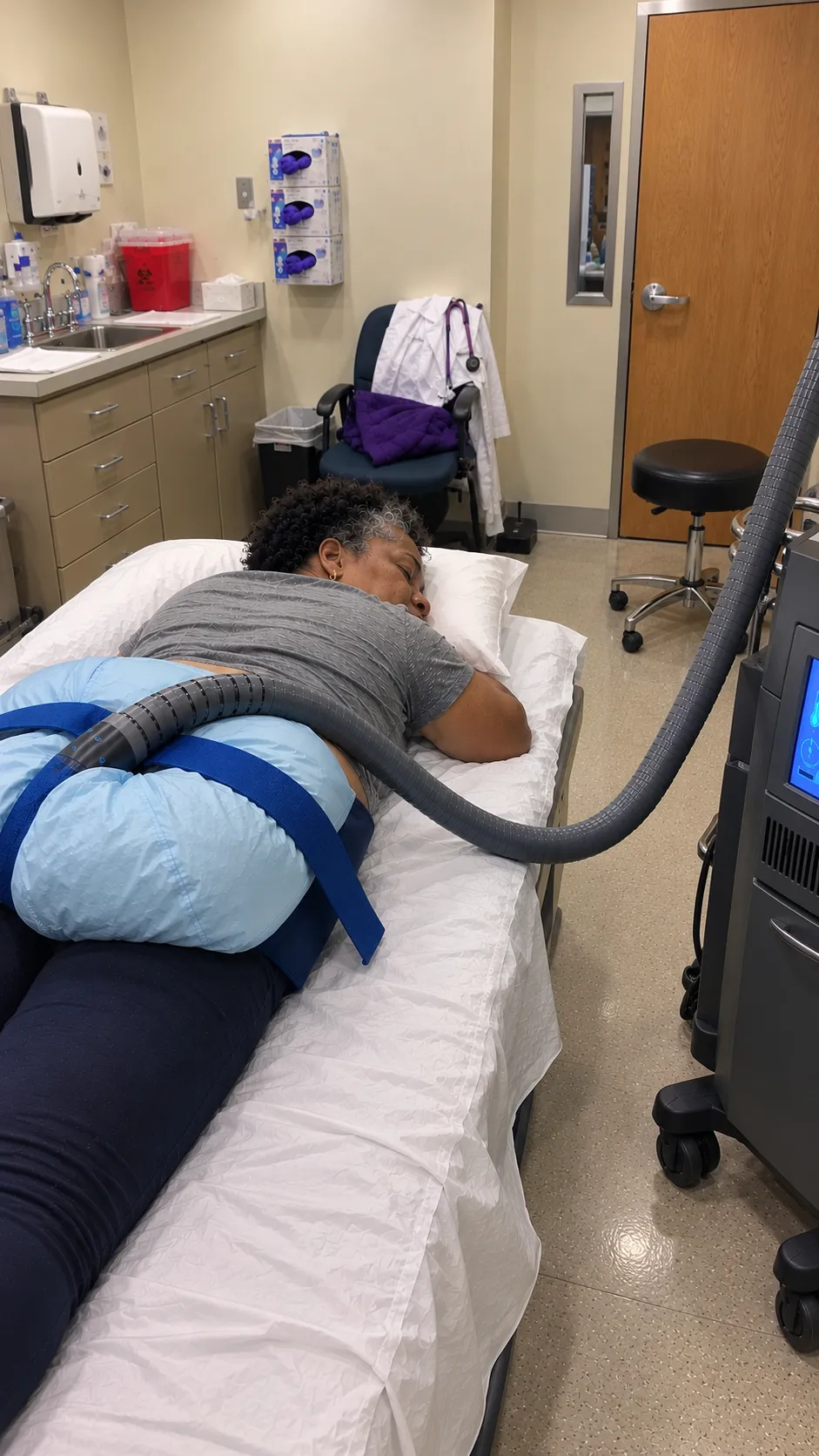
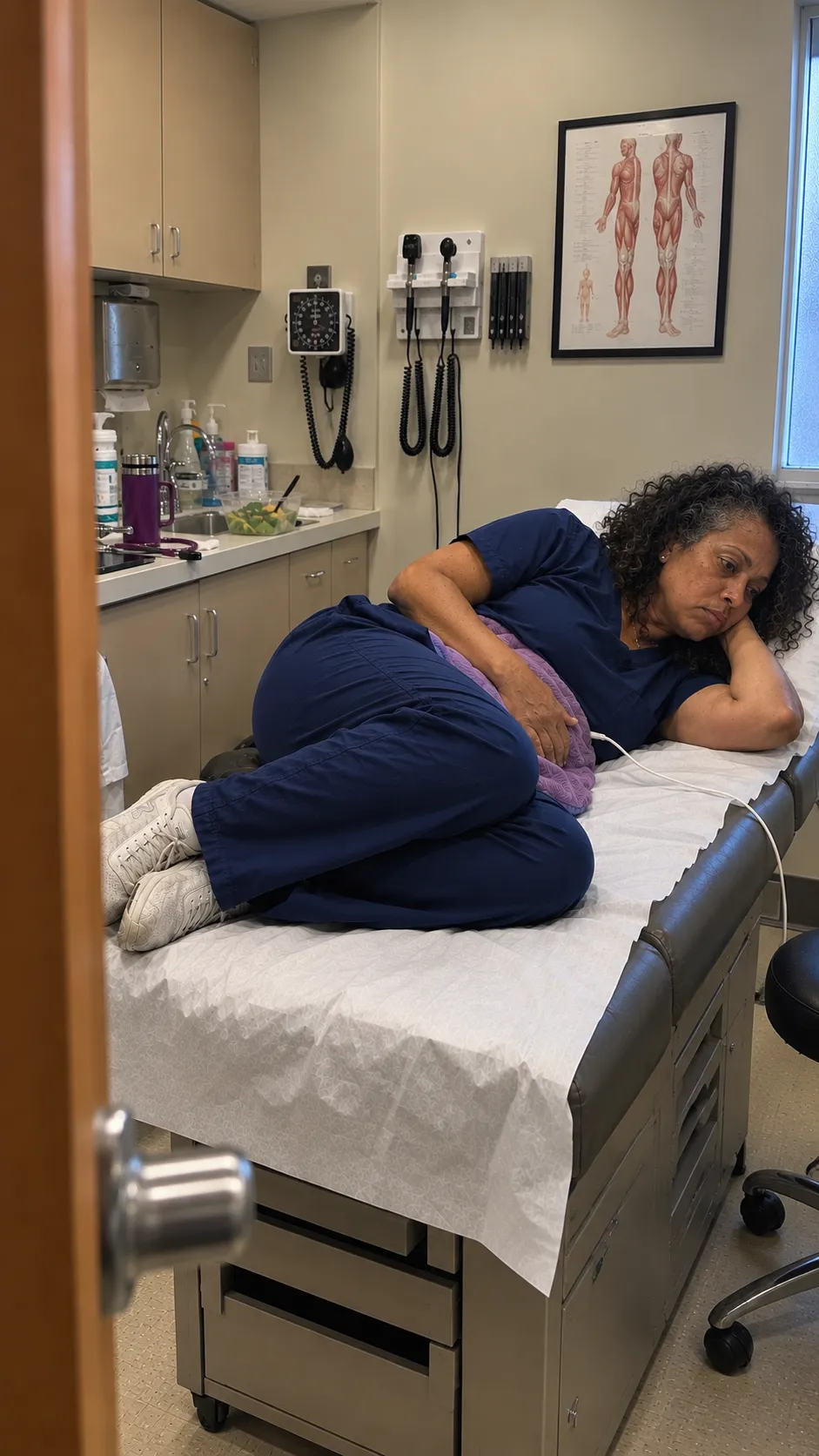
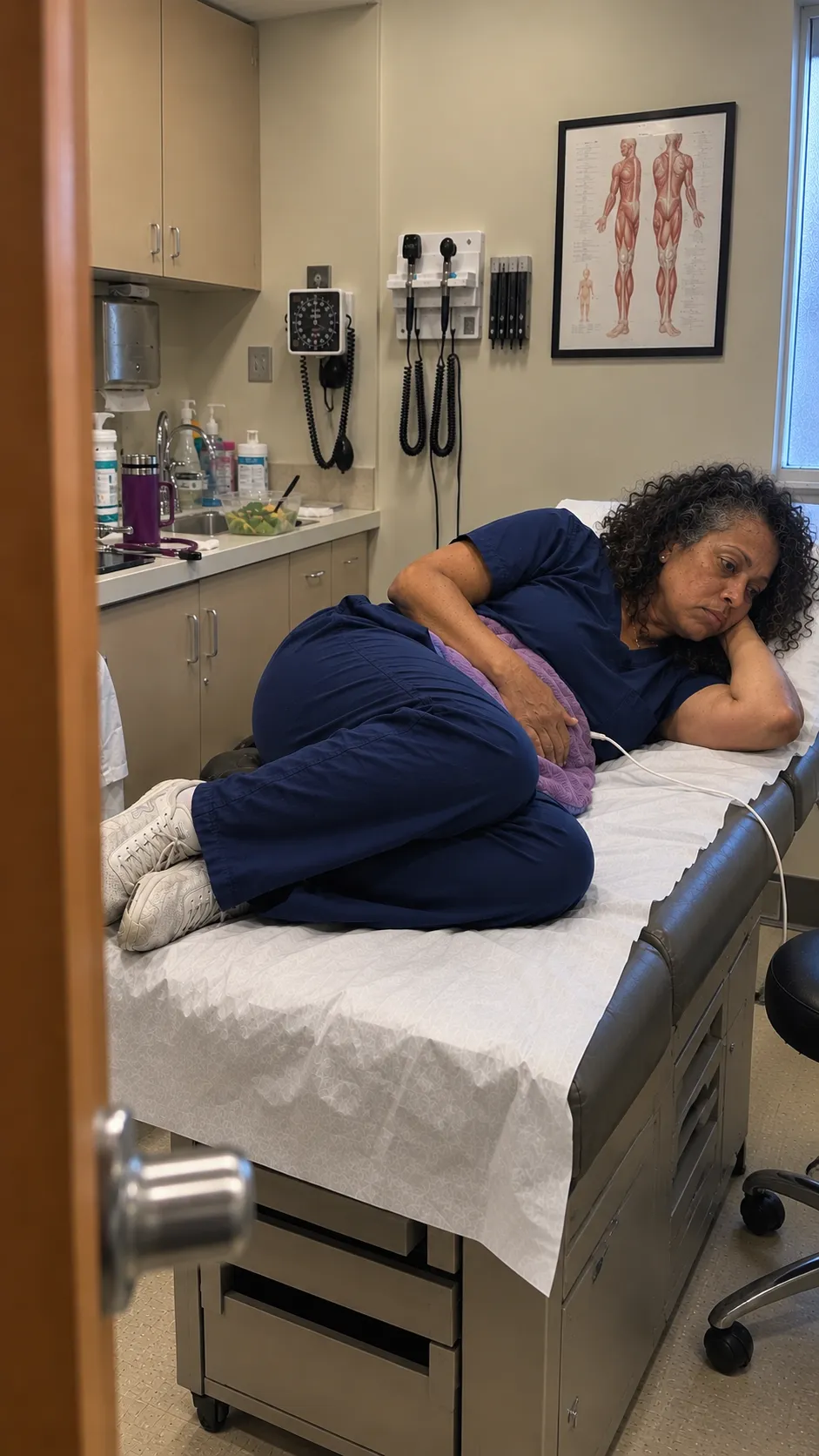
If you have fibromyalgia and your stomach cramps and swells every afternoon, I need to tell you something your doctor isn't seeing. I've treated over 3,400 patients with fibromyalgia in 13 years as a rheumatologist specializing in chronic pain. Many of them women who look like me. And when someone walks into my office with widespread pain, exhaustion that sleep doesn't touch, and a gut that cramps and bloats by three in the afternoon, I already know what their intracellular magnesium test will show. Because their doctor never ordered one. Severe magnesium depletion inside the cells. The same depletion keeping their muscles braced is keeping their gut in spasm right now. I'm Dr. Angela Brooks. I'm a rheumatologist specializing in fibromyalgia and chronic pain conditions. And when my own fibromyalgia started at 48, eight months after I lost my Mama, I knew something most doctors never tell their patients. Your pain isn't a pain problem. And your stomach isn't a stomach problem. They're the same warning, coming from the same place. I've been reviewing patient labs for 13 years. I've seen thousands of fibromyalgia patients with the same gut. Thousands who got told "your bloodwork looks normal" or got handed an antidepressant and an IBS handout before anyone ran a single real test. And I've seen what happens two to four years later when nobody orders the test that actually matters. Because they see you once. One doctor. One appointment. He looks at your chart, not at you. Tells you it's fibromyalgia with IBS overlap. Sends you home with a prescription and a low FODMAP chart. He doesn't see you three years later when you're on three medications, eating twelve safe foods, and still can't get through an afternoon without unbuttoning your jeans and lying down. But I do. Because I see what happens to the women who muted their symptoms with pills that dull the signal but never fix what's actually wrong. The 58 year old who'd seen one doctor in seven years. He put her on an antidepressant before he ordered a single test. Then Lyrica. Started at 75 milligrams. Then 150. Then 300. Gained 22 pounds. Still woke up every night at 3am with her whole body aching and her stomach knotted. Her body tried to warn her for six years that it was running out of the one mineral it needed to let go. She chemically dulled the pain while the depletion kept deepening underneath. The 63 year old. "Just fibro and a sensitive stomach, baby. Nothing serious." Her doctor said it was common at her age. Never once looked up from her chart. Started her on an antidepressant and an antispasmodic. She followed the plan perfectly for four years. Kept working. Kept cooking Sunday dinner. Never complained. Came to me so exhausted she could barely stand, cramping after every meal, sleeping four broken hours a night. Her pain and her gut were the early warning system screaming that her nervous system had lost the ability to switch off. The pills just turned the volume down on the alarm while the loop kept running. I see them in my office after years of suffering. They don't complain about the doctors who missed it. They're just grateful someone finally looked at them instead of their chart. But I know what they lost. They had years to restore what was missing. Years to get their body out of high alert. Years to save themselves from the medication stack, the weight, the canceled plans, the life that kept getting smaller. Their body was screaming the warning. The prescriptions just silenced it while the real problem got worse. My hard year was my Mama. She'd been sick for 22 years. Nobody ever found out why. "Some bodies wear out faster, baby." That's what she used to say. Twelve months of caring for her at the end. Hospital visits. Night calls. Seeing patients all day and then driving to her house to do everything she couldn't do anymore. She passed in the recliner she had barely left in years. Eight months later, the pain started. Everywhere and nowhere. Shoulders. Hips. Hands. And my stomach. Cramping after meals. Swelling by mid afternoon. Some weeks I couldn't go at all, then the cramping would double me over. And I kept going. Because where I come from, you do not stop for pain. You show up. You smile at your patients. You cook Sunday dinner. You don't let anybody see. My husband saw it anyway. I saw it in his face. The concern. The worry that I'd become one of those women who stops showing up for her own life. I went to a colleague. He looked at my chart. Not at me. He didn't order a single test. "Classic fibromyalgia with IBS overlap. Grief triggered it. Let's start you on an antidepressant. Add Lyrica for the pain, an antispasmodic for the gut. Try low FODMAP. Most people adapt within a year. You'll manage it fine." I'm a rheumatologist. And I still got the chart treatment. So I know exactly what happens to the woman at the front desk, the woman on the night shift, the woman who gets one appointment a year. I knew Lyrica would dull the pain. That's not the point. It was my daughter who asked the question. Keisha is a nurse. She sees women who look like her grandmother on every shift. "Mama. Has anybody checked your magnesium? Not your blood. Inside your cells." I'm a rheumatologist. And it took my own child to ask me that. I ordered my own red blood cell magnesium test the next morning. Because I know what a year of relentless stress actually does to a body. My intracellular magnesium was severely depleted. My serum magnesium, the number on the standard panel, was perfectly normal. My cortisol was still elevated late at night, when it should have been at its lowest. My pain wasn't a pain problem. My stomach wasn't a stomach problem. It was a year of cortisol burning through the mineral my body uses to calm everything down. And Lyrica would have muted the only warning sign I had before the loop locked itself in. --- Here's what doctors don't tell you because they don't order intracellular magnesium tests. Magnesium is the mineral your body uses to let go. It's what allows a muscle to release after it contracts. Every muscle. The ones in your shoulders and hips. And the smooth muscle that lines your entire gut. But when stress stays high for months, cortisol stays elevated. And cortisol burns through magnesium. Every single night. Faster than food can replace it. Once your cells are running low, three things happen. Your body's muscles can't fully release. They stay braced. That's the deep, widespread ache that moves around and never fully leaves. Your gut wall can't fully release either. It spasms instead of moving in smooth waves. Food and gas get stuck. That's why you wake up flat and look six months pregnant by three in the afternoon. That's the cramping. That's the days when nothing moves at all. And your nervous system loses its brake. Every signal gets amplified. From your muscles. From your gut. That's why everything hurts more than it should, and why your stomach feels every meal like an injury. But here's what's happening that you CAN'T see: Your nervous system is stuck in high alert. Day and night. When your nervous system can't switch off, your body can't reach deep sleep. No deep sleep = no real recovery. The rest you tried to get? Your body never used it. Exhaustion begins. The stretching, the walks, the diets? Your braced muscles and spasming gut fight every one of them. The magnesium you might have tried from the pharmacy? Most of it never got inside a single cell. You're not "just having fibromyalgia" or "eating the wrong foods." Your cells are running empty. Your body can't let go. The pain and the bloating are the warnings you can FEEL. The depletion is the damage happening silently. Right now. Studies have found that up to seventy percent of people with fibromyalgia also live with IBS symptoms. Seven in ten. And less than one percent of your body's magnesium is found in your blood. Which means the standard test your doctor runs can come back normal while your cells are running on empty. And for women who look like us, that test tells even less. So many of us start out with lower magnesium to begin with. The gap opens faster. And the blood test still says fine. Your symptoms aren't embarrassing. They're life saving information. They're your early warning system that your body has lost the ability to calm itself down. And the prescriptions silence that alarm while the depletion keeps growing. But doctors don't order intracellular magnesium tests. They don't connect chronic stress to fibromyalgia and a cramping gut at the same time. They don't test for it. So they tell you "it's fibro, it's IBS, manage your stress" and send you home. My next step was clear. Not more medication. Not more restriction. I tried what fibromyalgia patients try first. Low FODMAP. Followed it religiously. Cut out garlic, onions, wheat, dairy, most fruits. Stopped bringing a plate to Sunday dinner because I couldn't eat half of it. Helped the bloating a little. The cramping and the pain stayed exactly where they were. Probiotics. Spent hundreds on different brands. Different strains. Different counts. Didn't move the needle. Because the problem was never the bacteria. It was a gut wall that couldn't let go. Magnesium from the pharmacy. The big bottle on the bottom shelf. Magnesium oxide. Within three days I was running to the bathroom all morning and cramping worse than before. So I stopped. Like almost every patient I've ever had who tried it. And standing in my bathroom holding that bottle, I recognized it. It was the same bottle I had bought for Mama. Years before she passed. I'm a doctor. And I handed my own Mama that bottle and told her it would help. Lyrica. Started at 75 milligrams. Then 150. Dulled the edges of the pain. Made me foggy. Did nothing for my gut. Tolerance building every month. The depletion wasn't improving. My pain was still everywhere. My safe foods list kept getting shorter. I stopped going to Sunday service because I couldn't stand through the hymns. Nothing was restoring the mineral a year of cortisol had burned through. But I kept thinking about something that made no sense. Magnesium CAN be restored. The loop CAN be broken. The research proves it. So why wasn't mine improving? Because everything I was taking was either muting symptoms or couldn't get magnesium inside my cells. November 3rd. 10:52 PM. I was reviewing research after a difficult case. Couldn't sleep. The pain was worse despite the Lyrica, and my stomach had been knotted since lunch. I was reading through studies on magnesium absorption. Not looking for anything specific. Just desperate. I found the research on magnesium forms. Here's what stopped me cold. Magnesium oxide, the form on every pharmacy shelf, the form most doctors recommend, absorbs at roughly four percent. Four. The other ninety six percent never leaves your gut. It sits there, pulls water into your intestines, and sends you running to the bathroom. That's not a side effect. That's what magnesium oxide does. It's sold as a laxative for a reason. That's why my pharmacy bottle made everything worse. That's why so many of my patients told me "magnesium doesn't work for me." That's why Mama's bottle never did a thing for her. It never had a chance to. But one form is different. Magnesium bisglycinate. Magnesium bonded to two molecules of glycine. Your body recognizes that bond and carries it across the gut wall the same way it absorbs protein. Around ninety percent absorbed. Into the bloodstream. Into the cells. Into the nervous system. It doesn't sit in your gut. It doesn't pull water. It doesn't send you running. It's gentle on the exact stomach that couldn't tolerate the pharmacy version. I sat there at 10:52 PM reading the mechanism pathway. Lyrica calms nerve signaling by binding to calcium channels. Then the dose stops holding. Your depletion doesn't improve. It's chemically dulled. Magnesium bisglycinate restores the mineral your cells have been running without. The muscles that have been braced for years can finally release. The gut wall can move in smooth waves again instead of spasming. The nervous system gets its brake back. Your body heals instead of being chemically sedated. But absorption was only the first step. The glycine itself matters too. It's a calming amino acid your nervous system uses to wind down at night. Bonded to the magnesium, it arrives exactly where the loop needs to be broken. And timing matters. Cortisol was burning through my magnesium every night while I slept. So that's when it needed to be replaced. In the evening. Before bed. Every night. I've been a rheumatologist for 13 years. I've studied chronic pain my entire career. And I'd never connected the form of magnesium to fibromyalgia and a cramping gut at this level. Because most doctors just prescribe an antidepressant, Lyrica, and an antispasmodic. They don't think about why magnesium "fails" in so many patients. They don't consider that the bottle on the pharmacy shelf is absorbing at four percent and irritating the exact gut they're trying to calm. At 11:18 PM, I ordered magnesium bisglycinate in a gummy. Full dose. Third party tested. Sugar free. Something I'd actually take every single night instead of forgetting. I didn't expect miracles. But the mechanism was sound. I started November 4th. Two gummies every evening before bed. November 7th. 3 days in. I woke up at 6am and realized I hadn't woken at 3am. First time in months. I lay there waiting for the ache to start. Thinking it was just a good night. But it wasn't. The magnesium was getting where it needed to go, doing what the pharmacy bottle never could because it had never reached a single cell. November 10th. 6 days in. Ate lunch. Saw patients the whole afternoon. At 4pm I realized my stomach was still flat. No swelling. No cramping. No slacks unbuttoned under my white coat. My husband looked at me at dinner. "Baby. You didn't lie down after work." I hadn't told him I was taking anything. I wanted to see if the mechanism would show results before I said anything. "Different approach," I said. "Whatever you're doing, keep doing it." November 18th. 14 days in. The bloating was mostly gone. My gut was moving on its own again, regularly, without cramping. No bathroom running. The ache in my shoulders and hips had quieted from a roar to a whisper. That Sunday I went back to service. I stood through every hymn. I felt like my body before that year. But more importantly, I wanted proof this was system wide. February 2nd. 90 days in. Follow up red blood cell magnesium test and cortisol panel. I sat in the lab waiting for my results. When they came back, I stared at the numbers for a full minute. Intracellular magnesium restored to a healthy range. Nighttime cortisol down. My pain scores, which I'd tracked every day like I make my patients do, down by more than half. I pulled up the comparison. November panel vs February panel. The depletion had reversed. The cortisol pattern had normalized. And I'd reduced my Lyrica with my doctor's supervision. My fibromyalgia and my gut were improving because the mineral had been restored, the loop had been broken, and my nervous system finally had its brake back. Not muted. Restored. I showed Keisha first. She read both reports twice. Then she put the papers down. "Grandma would have loved this." I printed both reports. Walked down to my colleague's office. Dr. Patel looked at the results. Looked at me. Looked back at the labs. "Angela, what did you do? Fibromyalgia patients don't turn around like this." I explained the form. The four percent. The reason the pharmacy bottle had made my gut worse and why so many of our patients quit magnesium after three days. The ninety percent absorption of bisglycinate. The glycine. The timing at night, when cortisol does its damage. She studied the results for another minute. "Your magnesium is restored. Cortisol normalized. And... you said your stomach is better too?" "Almost completely." She was quiet for a moment. "I need to start ordering intracellular magnesium on my fibromyalgia patients instead of just adjusting their Lyrica and handing out FODMAP charts." I canceled nothing. Because I wasn't avoiding life anymore. But I started telling fibromyalgia patients something doctors don't. I'm not telling you this because I'm against Lyrica or low FODMAP. These tools help manage symptoms. They dull the pain. They reduce bloating triggers. They work exactly as designed. But they don't restore the mineral your cells are running without. They don't let your muscles release. They don't let your gut wall move freely. They don't give your nervous system its brake back. They don't stop the loop. They temporarily manage the signal while the real problem progresses. And I see what happens two to four years later when those women are on three medications, twenty pounds heavier, living on twelve safe foods, and still waking at 3am. Your body isn't failing you. It's warning you. The same depletion causing the pain is causing the cramping, the bloating, and the exhaustion right now. And you have two choices. Mute the warning with pills that dull the signal while the depletion deepens. Or restore what's missing, in a form your body can actually absorb, and give your body the conditions it needs to actually let go. I think about what I almost did. Not just accepting fibromyalgia and a life of safe foods. That's not the point. I almost muted a depleted nervous system with a rising Lyrica dose. I almost silenced my body's early warning system because where I come from, you don't stop for pain. You push through it until it takes you. I almost became Mama. Twenty two years in a recliner, believing some bodies just wear out faster. It was never a body that wears out faster. It was a body running out of something nobody ever measured. Because once the loop has run for years, recovery takes longer. Once the medication stack builds, coming off it is slow and difficult. Once you've organized your entire life around pain and your stomach, your life has fundamentally changed. You don't get a second warning. Your symptoms are your first warning. Your only warning you can still act on. I'm sharing this because if you have fibromyalgia and a gut that won't settle, you deserve to know what I know. Not from a textbook. From the labs I review every single day. And from my own. Your pain isn't the problem. It's the symptom. Your cells are running low because cortisol has been burning through your magnesium for years. Your muscles can't release. Your gut wall can't release. Your nervous system has lost its brake. And every month you mute it with pills that only dull the signal is another month the depletion deepens and the loop tightens. The pain and the bloating show up first because they're the most obvious symptoms. The exhaustion and the broken sleep are the damage building quietly underneath. By then, you're not looking at symptom management. You're looking at a life rebuilt around your illness. Or worse. Ninety days. That's how long it took for my magnesium to be restored and my body to remember how to let go. Ninety days of restoring what was missing instead of muting what was left. Heal. I'm not saying stop your medication. I'm saying understand what you're muting. Your pain is your check engine light. The prescriptions are electrical tape over the warning indicator. The engine is still running low. You just can't see the light anymore. But I see it every day in the labs of fibromyalgia patients. Women who muted their pain for years with rising doses and shrinking food lists. Then came to me depleted and worn down. Every single one says the same thing. "I wish someone had looked at me instead of my chart. I wish someone had told me my pain and my stomach were connected, and that the magnesium I tried was never going to work in that form." I'm telling you now. Your fibromyalgia and your gut are connected. The same depletion causing both. Restore the mineral, break the loop, and you potentially get back both your body and your life. Or mute the symptoms, and risk everything. I'm a rheumatologist. I understand chronic pain at a cellular level. And I chose to restore what was missing before the loop locked itself in for good. That's all I'm asking you to consider. Give your body a chance to heal before you accept a lifelong medication stack. Because once the loop has run for years, once the medications pile up, once your safe foods list shrinks to twelve and your days end in a recliner at 7pm, recovery is so much harder. Your symptoms are giving you months or years of advance warning. Use them. Ninety days. That's all it took to restore my magnesium, quiet the pain, and get my gut moving like it used to. Ninety days of addressing the source instead of muting the symptoms. Dr. Angela Brooks Rheumatologist, 13 years Specializing in Fibromyalgia and Chronic Pain P.S. I wrote down everything. The exact form. The dose. Why the timing at night matters. What to expect at 14 days, 30 to 60 days, and 90 days. And why most of the magnesium on the shelf does the opposite of what you need. If you have fibromyalgia and your stomach won't settle, read it before you take another bottle off the pharmacy shelf. The same bottle I gave my Mama. I've reviewed too many labs from women who look like us showing preventable depletion to not share this with you.
More from Tracey Coleman
The Relief Mineral For Fibromyalgia
Tracey Coleman

The Relief Mineral For Fibromyalgia
Tracey Coleman

The Relief Mineral For Fibromyalgia
Tracey Coleman

I’m A Rheumatologist. Then I Got Fibro.
Tracey Coleman
I’m A Rheumatologist. Then I Got Fibro.
Tracey Coleman
I’m A Rheumatologist. Then I Got Fibro.
Tracey Coleman

I’m A Rheumatologist. Then I Got Fibro.
Tracey Coleman

It Was Not My Marriage. It Was My Body.
Tracey Coleman

It Was Not My Marriage. It Was My Body.
Tracey Coleman

One in three women used the same word
Tracey Coleman

I almost let my husband walk up the mountain alone 💔
Tracey Coleman

Migraine frequency dropped 41% in one clinical trial. But the reason why changes everything you think you know about your pain. 👉
Tracey Coleman

 Add to Chrome