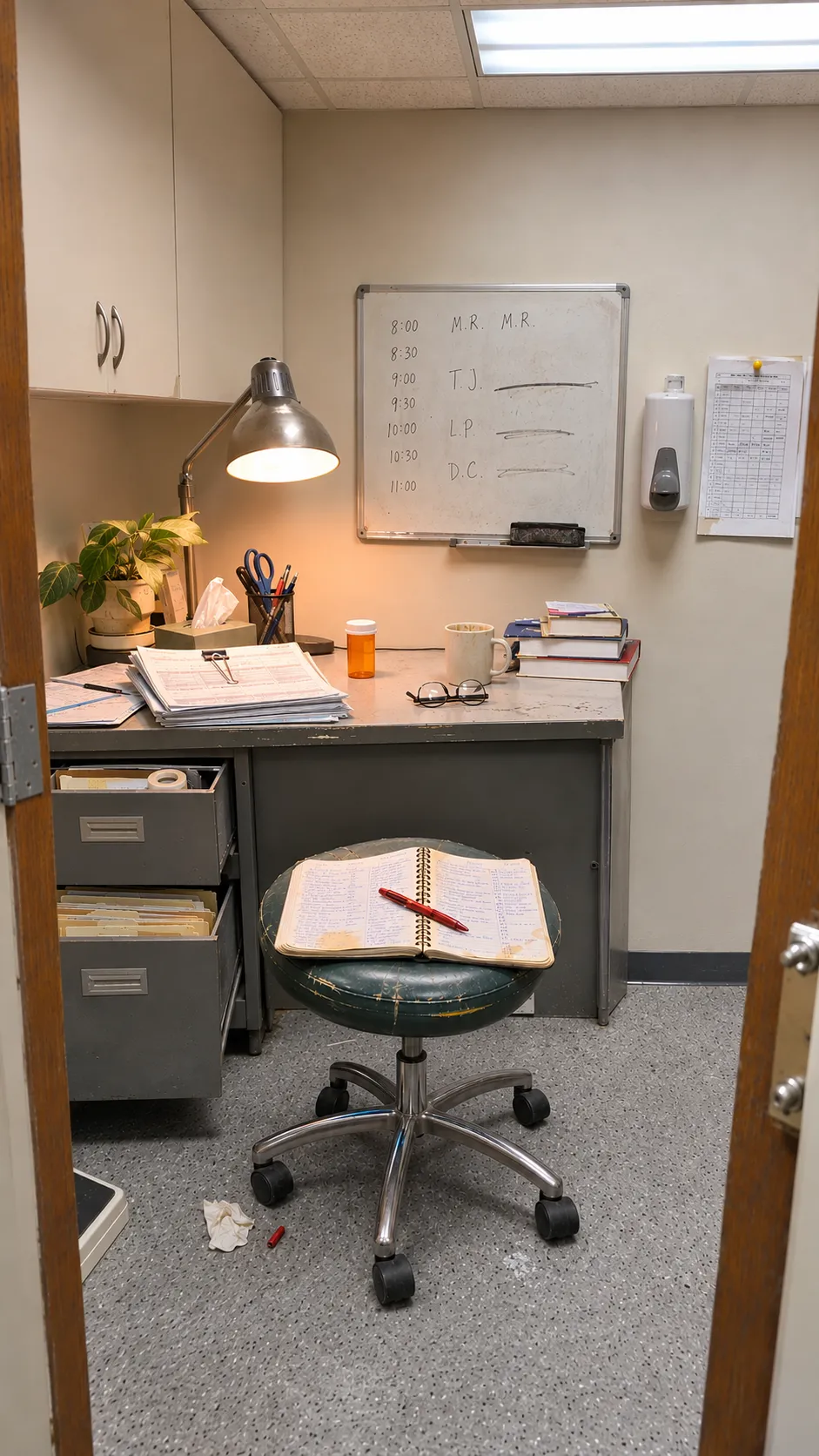
A Natural Mineral For Fibromyalgia Relief
Ad Copy
For 31 years I ran the rehabilitation floor of a chronic pain program. I worked with more than 2,000 women whose doctors had given up on finding answers. And something happened inside that clinic, over and over, that I have never told anyone outside those walls until now. I was a rehabilitation therapist. I should tell you what that actually involves, because when I mention it at the church cookout people assume I was helping athletes recover from torn ligaments. In a chronic pain rehabilitation setting, patients show up after medicine has exhausted its options for them. They have been through the scans, the bloodwork, the referrals, the prescriptions, the discharge papers. They come to us because there is nothing left on the medical side. Our role is to help them construct a daily life around whatever their body still allows. So for three decades, while the physicians signed the charts and moved along, I was the person who stayed with the aftermath. Every single morning. Every single patient. Every careful movement that took more out of her than it should have. I am 63 now. Two years into retirement. And my sister said I should leave this alone, because the clinic is closed and nobody is owed an explanation. But I spent 31 years sitting across from 2,000 women who had been told their pain was under control, and I could see which ones actually improved and which ones just went silent. And I have kept what I observed to myself for too long. So I am telling it now. The part of chronic pain rehabilitation that no one talks about is who improves and who does not. Every patient walks in carrying the same folder. The diagnosis. The pill list. The treatments that failed. The recovery goals. And then we start the protocol. Eight weeks of structured movement, energy management, sleep training, cognitive exercises, the full program. Some of them improve. Not quickly. Not in any dramatic way. But somewhere around week four it becomes visible. Their posture shifts. The death grip on the armrest releases. They stop tensing before every motion. And the physical therapist catches my eye from across the room and we both understand this woman is going to make it. And some of them do not improve at all. They complete every exercise. They follow every direction. They arrive every morning with the same steady resolve. And nothing shifts. The pain remains. The sleep stays shattered. The mental fog stays dense. And by week six the resolve has drained from their eyes and something else has settled in. The expression of a woman who has just added another item to a list of things that failed her. I watched that split happen over 2,000 times. I could identify within the first two weeks which group a woman belonged to. And here is the thing I never spoke aloud. The recovery program we ran included a magnesium element. Supplementation alongside the physical therapy. That is standard practice. It is written into the clinical handbook. And when a patient who had been stalled, genuinely stalled, showing zero progress for weeks, suddenly began improving, one of the first things that had shifted was always the same. Her magnesium had risen on the intracellular test. Not the standard blood draw. The cellular one. And you could see it in her body before the labs confirmed it. The guarding softened. The sleep got better. The pain did not disappear but it loosened, as though something that had been locked down for years had finally received permission to release. The physicians in the program understood that. The senior therapists understood that. Everyone on that rehabilitation floor understood that the women whose cells held magnesium got better, and the women whose cells were depleted could do every exercise we assigned and nothing would shift. Then the patient went home. To a primary care doctor who never brought up the word. And for women who look like us, the numbers were worse. Nine out of ten already depleted before they ever stepped into our building. The starting level was lower. The deficit was deeper. And the chart never mentioned it once. I want to tell you about the first two patients who made me feel I should speak up. And why I stayed quiet. It was 2003. A woman named Denise. 52 years old. She worked the front desk at a nursing home on the other side of town and had been given a fibromyalgia diagnosis three years earlier after a slip on black ice that never properly healed. She had followed every instruction. Her husband mentioned this to me in the hallway. One doctor. The same one for seven years. He had started her on Cymbalta before ordering the full workup. Physical therapy twice a week for twelve months. A strict anti-inflammatory diet. Dropped 14 pounds. Her doctor had told her "you are doing everything right, let us be patient," and at the next visit the pain score was unchanged, and no one seemed troubled by that. He reviewed the chart. He did not look at her. After eight weeks in our program, Denise was one of the ones who did not improve. Not for lack of effort. She was always the first person in the room each morning. But her intracellular magnesium was critically depleted, and the supplement we used in the program was magnesium oxide, the cheapest variety on the market, and it was doing nothing at the cellular level. I watched her take it every morning knowing it was never arriving where her body needed it. Her husband stopped me in the hallway on discharge day. He asked me, very softly, why a woman who had followed every rule was leaving in exactly the condition she came in. I did not have a response that would fit on a discharge form. And it was not my role. A rehabilitation therapist does not contradict the program. You adhere to the protocol. You do not tell the prescribing doctor which magnesium formulation should be in the supply closet. So I told him she had put in extraordinary effort and that improvement sometimes arrives in stages. Which was partially accurate. And I carried the rest with me. I went home that evening and opened a notebook. Every patient comes in with an intake document. Age. Diagnosis. Medications. How long the symptoms have lasted. Failed interventions. And a line at the bottom for supplements. I began copying the documents into the notebook, adding one column of my own at the end. Did she improve, or did she stay stuck. I kept that record for 22 more years. Twelve years after Denise, I sat across from a woman and wanted to leave the building. Her name was Brenda. 2015. 57 years old. Retired cafeteria manager from an elementary school. Seven years living with fibromyalgia. Her doctor had described her, and her daughter relayed this to me in the waiting area, as "one of the most cooperative patients I have ever had." Her intake document listed eight prescriptions. Cymbalta. A muscle relaxer. A sleeping pill. An acid reducer. Ibuprofen. Gabapentin. A low dose antidepressant. And in the supplements section, in her own handwriting: "magnesium, drugstore, every night." Brenda improved even less than Denise had. Not slightly less. After eight weeks her numbers were worse on two of the four pain assessments. She was sleeping less than when she arrived. She told me during week six, with perfect composure, that she had come to believe the clinic was the last option that might have helped and now she understood it was not going to. I sat across from her and thought: the compliance is flawless. The prescriptions kept multiplying. And the woman in front of me is more depleted than the woman who came through with half the medications twelve years earlier. Nobody was monitoring the reservoir. Everybody was monitoring the scores. That evening I went through the notebook. Twelve years of entries. And the column at the end had organized itself while I was not paying attention. The women who stayed stuck carried the longest medication lists. Cymbalta, gabapentin, muscle relaxer, sleeping pill, acid reducer. Five prescriptions, six, eight. And nearly every one of them had the same notation under supplements. Magnesium. Drugstore. Every night. I did not understand what it meant yet. I only knew the pattern was there. And there was one additional detail in that notebook I did not piece together until much later. During my final eight years at the clinic, a small number of patients came through who improved within the first two weeks. Short medication lists. Early gains. And they all shared the same referring provider, from a practice across town, a woman I had never met. Every one of her referrals had a notation on the intake that no one else included. "Magnesium bisglycinate. Started day one." I noticed it. I recorded it. I did not ask about it. Here is where it stopped being something I carried privately and became something I could not live with. My sister Joyce. 52 years old. Worked the front desk at Meadowbrook Long Term Care for nineteen years. The woman who coordinated our entire family's Sunday dinner from a kitchen barely big enough for four people and could haul two bags of groceries up a flight of stairs without pausing. Where I come from, you do not stop for pain. Nobody sits you down and teaches you that. It is something you observe your mama do until it becomes part of how you are wired. Three years ago the pain appeared. Not from a particular injury. Not from a fall. It showed up the way fibromyalgia shows up for most women. Gradually. A shoulder that refused to release. A hip that throbbed after sitting too long. Sleep that stopped being restorative. And then, piece by piece, everything. Her doctor ordered the routine panels. Inflammatory markers. Thyroid. Vitamin D. Sed rate. ANA. Everything came back within range. Everything normal on the printout. And every time Joyce left with clean results and a body that hurt worse than it had the month before, the distance between what the bloodwork claimed and what her body experienced grew wider. She had one doctor. The same one for seven years. He was the only provider she could get in to see consistently. He reviewed the chart at every appointment. He never once looked at her. He was the one who gave it a name. Fibromyalgia. He said it carefully, the way they always do, and then he added: "Joyce, this is something we manage. There is no cure, but we can focus on your quality of life." He started her on Cymbalta before he ordered the intracellular panel. Before he checked cellular magnesium. Before he did anything except study the chart and write. Joyce understood what he was actually saying. She stopped raising the topic at visits after that. She never admitted to me that she had given up on her doctor making sense of it. I discovered it when she cancelled our Sunday walk the fourth week straight and claimed it was a hectic month. It was not a hectic month. She had stopped walking because a twenty minute walk took the rest of her afternoon away. That was the moment I realized something fundamental had shifted and she was not going to volunteer it. The prescriptions rotated in and out. Cymbalta first. Then painkillers when the Cymbalta fell short. A muscle relaxer that left her cloudy until noon. Each one arrived with a flicker of hope and ended with the same flat expression that meant this one failed too. I watched her try and fail and try and fail and I did not grasp that every failure was hardening something inside her. The conviction that her body was permanently damaged and no one could do anything about it. And beneath everything, the belief Mama had embedded before either of us was old enough to push back. Some bodies wear out faster. Mama said that from the recliner. Said it the way you say something that has been true so long it does not require a defense. She had lived in that recliner for years by then. Same pain. Same fog. Same doctor who never tested beyond the standard blood draw. She passed in 2019 in that recliner, and neither one of us ever wondered whether it had to go that way. The thing about fibromyalgia that nobody prepares you for is the silence it builds around itself. Joyce stopped mentioning the pain. Not because it faded. Because she had discovered that naming it accomplished nothing. I would ask how she was doing and she would say fine. We both recognized it was untrue. We both allowed it to stand. That quiet agreement to stop speaking the name of the thing that occupied every room of her life is what weighs on me most when I look back. My sister is not delicate. Where I come from, the women are not delicate. She kept showing up to work through all of it. Front desk at Meadowbrook every day, on her feet, handling admission paperwork and family calls and discharge logistics. She drove herself there every morning and sat in her car for five minutes before walking in because the distance from the parking lot to her desk extracted something from her that it never used to. She is one of the toughest people I have ever known. And for three years I watched all of that toughness get consumed entirely by the act of surviving the day. I would come by on weekends and move through her house the way I always had. Help prepare Sunday dinner. Get down on the floor with her grandbaby. Carry storage boxes from the attic. None of it cost me a thing. I never once considered what that must have looked like from her side of the recliner. She told me afterward. She said it felt like watching everyone else move through a world she used to be part of. Same house. Same kitchen. Same family. But she was behind glass now and the glass kept growing thicker. On the surface she appeared perfectly fine. That was the part no one grasped. And the one appointment she had ended identically every time. "It might be perimenopause." "Stress can amplify it." "Have you looked into yoga?" She tried yoga. The pain was worse for a week afterward. The gradual vanishing was the hardest part. She started declining everything. Sunday dinner at her table. Saturday morning at the beauty shop. Her grandbaby's first birthday celebration at the park. She missed it because two hours on a folding chair would have meant two days of paying for it. I went without her. And I felt guilty for being there. And I felt guilty for the guilt because it was not about me. At some point I started accepting this as permanent. That she would spend whatever years she had left in that recliner while the rest of us moved through everything on the other side of the glass. The way Mama did. I recognized what I was looking at. I had sat across from 2,000 women presenting the identical picture. The pain that refused to quiet. The sleep that would not arrive. The fog that thickened month after month while the prescription list expanded. I knew which women recovered and which ones did not. And I was watching my sister become the second kind. And here is what I grasped standing in her kitchen that nobody had communicated to Joyce: a routine blood test measures the magnesium circulating in the bloodstream. That represents roughly one percent of what the body contains. The other ninety nine percent lives inside the cells, where no standard test ever reaches. Her body could be running on fumes and clear every panel they order. I had watched 2,000 women demonstrate it. And for women who look like us, the baseline is already lower. Nine out of ten. The standard test misses everyone. But it misses us worse. I had 22 years of intake records in a drawer telling me the identical story. And when my own sister stood in my kitchen asking me what was happening to her body, I failed to connect it. I knew which patients improved and which ones did not. I knew it tracked with intracellular magnesium. I knew the oxide supplement in the program was not penetrating the cells. And I still could not see it clearly enough to say it out loud to the woman I grew up beside. I need you to sit with that for a moment, because I have sat with it for a long time. I did what any sister would do when someone she loves is fading in front of her. I tried the two things I knew. Advil, because that is what Mama always kept in the cabinet and it was what everybody reached for first. And I doubled her turmeric, because a woman at church insisted it was the only thing that made a difference with inflammation. Six weeks. Nothing. Pain still everywhere. Still wide awake at 3am. Still the glass thickening. So I went after the magnesium. If the drugstore bottle was failing, I would find something stronger. I picked up CBD cream from the beauty supply on Lamar, the pricey one, because three women in her prayer group claimed it transformed their lives. Then I bought a "nerve support" magnesium powder from the health food store, and it ran straight through her system. Then Epsom salt baths every night. After two weeks of all of that she asked me, gently, to please stop recommending things. I sat at her kitchen table with four bottles lined up on the windowsill and understood something humbling. I had spent 31 years watching magnesium divide the women who recovered from the women who stayed stuck. And I had no idea how to actually get it into my sister. And then I thought about Mama. That green and white bottle on her nightstand. The one I drove to the grocery store to pick up for her. The one I carried to her recliner every evening like it was love in a bottle. I turned it around and read the back once. Magnesium oxide. I did not understand what that meant. I just knew it was the one on the shelf. Nine dollars. I bought my own mama oxide and called it caring for her. She took it every night for three years. And she passed in that recliner anyway. So I called the woman who had been getting it right. Dawn. Nurse practitioner. 31 years in rheumatology and pain management. She had consulted at the clinic during my last twelve years there. She was the one whose referrals always improved early. Retired now, still living in Memphis, helping her daughter with the grandchildren. She listened the way nobody in a white coat ever had. That is the detail I hold onto most. She did not cut in. She did not steer me somewhere else. She sat with it. I told her about Joyce. The diagnosis. The prescriptions. The fog. The bottles on the windowsill. The glass growing thicker. She was quiet for a beat. Then she said, "You have been looking at this the wrong way for your entire career, Lorraine. And so was I, for most of mine." "Come on." "I mean it. You have worked with 2,000 patients in that clinic. You know precisely which ones recovered and which ones did not. You have watched the intracellular panels tell you the identical story for twenty years. And you are sitting there puzzled about why your sister is not getting better at home." "So tell me what I am not seeing." "Get a pen." I got a pen. "Her stress response works like a thermostat. Climbs under pressure, drops back down after. Magnesium is what allows it to drop. When the supply is low, the thermostat locks on high, and the body interprets that as a crisis. Every hour. Every night." "And when that thermostat is locked on high, it consumes magnesium. Every single night. Cortisol rises, magnesium falls. It has been doing that to your sister for three years. The supply did not empty in a month, Lorraine. It emptied one night at a time, while she lay there wondering why her body refused to stop aching." "And in a crisis state, the pain gate remains open. There is a receptor called the NMDA receptor. Picture it as a gate in the spinal cord and brain. When magnesium is available, the gate stays shut. Pain signals get processed normally. You feel what you ought to feel and nothing beyond that." "When magnesium is gone, the gate locks open. Every signal passes through amplified. That is the widespread pain. That is the sensitivity to pressure. That is the full body aching that travels and never settles. It is not that her nerves are injured. It is that the gate regulating them has nothing to shut it with." "And every muscle in her body holds tight. Calcium contracts a muscle. Magnesium releases it. Run low and nothing fully releases. Her shoulders. Her hips. Her jaw clenching at night. The stiffness each morning that takes an hour to move through. That is not aging. That is not some bodies wearing out faster, regardless of what your mama taught you. That is a body that cannot unclench because the mineral responsible for the unclenching has been depleted." "And the sleep. Cortisol is meant to fall at night. Magnesium is part of what brings it down. When the supply is empty, cortisol stays high through the night, and the brain never descends into the deep recovery phases. She wakes exhausted because she never actually reached the sleep that rebuilds." "One mineral. One depletion. Pain that refuses to stop, muscles that refuse to release, sleep that does not rebuild. Not three separate problems. One." I had stopped writing. "Now here is the part you watched for 31 years and never put together," she said. "The medications." "What about them." "Cymbalta does not shut the gate. It muffles the signal after it has already gotten through. It sedates the entire house to quiet one room. And the room is still not quiet. Meanwhile, the acid reducer she is likely taking for the stomach issues the Cymbalta triggered blocks magnesium from being absorbed from food. The muscle relaxer covers up the symptom of a mineral deficit. And the sleeping pill forces unconsciousness without allowing the deep phases where actual repair takes place." "Every bottle on that counter is treating a symptom of a gate that refuses to close. And some of them are draining the one mineral that would close it." "That is Brenda," I said. "Tell me." "2015. Seven years on Cymbalta and painkillers. Eight prescriptions. Most cooperative patient her doctor had ever treated. She left our program in worse shape than she arrived. I sat across from her for eight weeks and watched the protocol accomplish nothing. She was taking magnesium every night. Drugstore. Same bottle I found on a hundred intake forms. Same bottle I bought for Mama." "And you can explain it now." "The prescriptions multiplied. The gate remained open. The supply kept draining. And Mama took the same bottle for three years and it did not accomplish a thing." "The supply kept draining. And here is why it drains, and you are going to hear your own notebook in every word of this." She went through the list. Nearly all your magnesium comes from food. Most women past 50 are already running low. The soil contains less of it than it once did. And for women who look like us, the baseline is lower from the start. Nine out of ten. Before the stress. Before the prescriptions. Before any of it. Stress burns through it. Then the Cymbalta interferes with absorption. Then the acid reducer, which does not merely draw from the supply, it prevents the magnesium in your food from entering the system at all. Then the muscle relaxer disguises the deficit so nobody recognizes it exists. "And the diet," she said. "What did her doctor tell her to eliminate?" Gluten. Dairy. Nuts. Dark chocolate. "Some of the most magnesium dense foods that exist. She cut them because she was told they drive inflammation. Every clean month, less arriving. Every new prescription, more departing." "Two drains, Lorraine. Nothing replenishing. That is your notebook. That is why the lengthy medication lists never improved." I sat with the phone and thought about every stuck patient I had ever worked with. The lists. The handwriting in the supplement section. Magnesium, drugstore, every night. And I thought about Mama. Same handwriting. Same bottle. Same recliner. "Then why did the drugstore magnesium fail every one of them. Why is it failing Joyce. Why did it fail Mama. She took it every night for three years." "Go look at the back of her bottle." I stood up and retrieved it. Magnesium oxide. "That is the cheapest form available, which is why it is the one on every shelf. The body absorbs roughly four percent of it. The rest stays in the digestive tract and passes through. That is why it keeps a woman regular and does nothing for her pain. It never makes it into the blood, much less into the cells where the gate is stuck." "Same bottle I gave Mama," I said. And I had to sit down for a minute. "And the CBD was not a foolish idea. It simply was not the thing she was out of. Turmeric circulates in the bloodstream. Her problem is at the gate and inside the muscle, and turmeric does not reach there." "So what does." "Now listen carefully, because this is the piece that took me three years to accept after I retired, and I had been watching the intracellular panels tell me the identical story for my entire career." "Go ahead." "For a magnesium to close the gate at home the way it closes on the clinic panels, four things have to be true. And almost nothing on a drugstore shelf satisfies all four." "One. The right form. Bisglycinate. The magnesium is bonded to glycine, an amino acid that is itself an inhibitory neurotransmitter. It acts directly on the NMDA receptor. So the magnesium refills the supply and the glycine helps shut the gate from the opposite direction. You are not merely replacing what cortisol consumed. You are actively quieting the receptor that has been amplifying the pain. It interrupts the cycle from both ends simultaneously." "Two. The right delivery. Not a compressed tablet. A hard tablet requires a strong stomach to dissolve it. Past 50 most women do not have one, and Joyce is on an acid reducer, which ensures she does not. It needs to be something you chew. Dissolves the way food does, gets processed the way food does." "Three. The right timing. Night. The thermostat has to lower for her to sleep, and the gate resets during the night. At least four hours after the Cymbalta. Cymbalta in the morning, magnesium at bedtime." "Four. Every day for a minimum of two months. The supply empties over years. It refills more slowly than it drains. Two weeks of anything reveals nothing." "Dawn. Where am I going to find that." "The referring provider across town. Your notebook. Every one of her referrals improved within two weeks." "You knew about her?" "I looked into it, years ago. You never did. Her patients are all taking the same thing. Bisglycinate gummies. A small company called Celuvida. My sister has been on them four years. I take them myself. Two at bedtime." I was quiet for a while. She let me be quiet. That is how you recognize a woman who was a colleague. And a friend. "Dawn. Why did you never say anything. At the clinic. In twelve years." "Would you have heard me? If I had turned to you over a patient's intake form and told you the solution for half of what we treat in this clinic is a gummy, what would you have said?" She was right. I would have dismissed her. I was not dismissing anything now. My sister was at home in that recliner with the glass growing thicker, occupying the same spot Mama had occupied for years, and for the first time in three months I was looking at something that made sense. I placed the order that night. 90 day money back guarantee. After three months of watching Joyce fade, the price of a bag of gummies was not the risk in my life. The bag arrived four days later. I read the label the way I would have read an intake document. Magnesium bisglycinate. Two gummies. I drove to Joyce's house that evening and told her everything. The thermostat. The gate. The two drains. Denise. Brenda. The four requirements. Dawn's two month timeline. And I told her about Mama. That the bottle I had carried to her recliner every night was the wrong one. That the oxide never penetrated her cells. That I had called it love and it was four percent. Joyce studied me for a long moment. Then she chewed them. Day one, nothing. I want to be straightforward about that, because Dawn had warned me to expect it. By the end of week one, she was falling asleep sooner. The hours spent staring at the ceiling shrank. She told me Tuesday morning that she had slept past two without waking up for the first time in over a year. Week two is when it happened. She slept the entire night. All the way through. No 2am. No lying there taking inventory of which parts of her body hurt. I called her Saturday morning and she picked up on the second ring, and her voice sounded like something I had not heard in three years. Rested. And here is the part I need to be exact about, because I understand how a chart gets interpreted. Nothing about her medication changed. Same Cymbalta, same dose. Same everything that had accomplished nothing for three years. The medications did not suddenly begin working. They never stopped doing what they do. Her body finally received what it needed to shut the gate they could not reach. Week three, she called me on a Saturday morning and said she had walked to the mailbox and back without giving it a thought. Then she stood in her kitchen doorway holding the envelopes and cried. Not from pain. From the sheer ordinariness of what she had just done. Walking to the mailbox. The way it used to be. Week five, she pushed herself up from the recliner while I was visiting and I said it before I could stop myself. "You did not make the sound." She looked at me. "What sound?" "The sound you make every time you get up. You did not make it." She had not realized. Her body had stopped bracing. And she had not realized because for the first time in three years, getting up was simply getting up. Mama made the very same sound. Every time she forced herself out of that recliner. I heard it for years and never once named it for what it was. That was the moment I knew something had genuinely shifted. Not because of any test result or any clinician's explanation. Because my sister rose from the recliner and it was just a person rising. The way it is supposed to be. The way Mama never got to. Within three months she put it this way. She said: "I feel like someone finally turned the volume down. Not off. But down. Down enough that I can hear the rest of my life again." She made Sunday dinner last month. Every bit of it. Collards and mac and cheese and cornbread and sweet tea and enough for everybody to carry a plate home. She stood in that kitchen for three hours and never sat down once. Her grandbaby tugged at her leg the entire time and she bent down and scooped her up without a second thought. She still carries the fibromyalgia diagnosis on her chart. Because nobody goes back and removes those labels. Especially not for women who look like us. But what she no longer has is the gate that was keeping it amplified. Mama was wrong about one thing. Some bodies do not wear out faster. They run out of the one thing nobody tests for. And the test that would reveal it is the one they never order. If your sister has been diagnosed with fibromyalgia, or if you are the one carrying the diagnosis and the people around you have gone quiet because they have run out of ways to be useful, this is the pattern worth knowing. The cortisol magnesium loop is real. It is measurable with the correct tests. And it is addressable without a prescription. Consistency is what matters most. Restoring intracellular magnesium is not an overnight correction. Cortisol drains it every single night. You have to restore it every single night. The form has to be effective. And it has to be something she will actually do without resistance, without effort, without it becoming one more medical task in a life already overloaded with them. Joyce endured this for three years before someone finally measured the right thing. Mama endured it until the end. I sat across from 2,000 women for 31 years and I failed to connect what I was observing to the woman I grew up with. I failed to connect it to the woman who raised us. I see it now. You do not have to keep watching someone you love disappear into that recliner. The exact magnesium bisglycinate Joyce takes every night, full dose, no oxide, no proprietary blend, no fillers, is available below. It comes with a 90 day money back guarantee. Three full months. That is the window Dawn told me it takes. If it changes nothing, you receive every cent back, no return needed. But if it does, the way it did for Joyce, you will notice the sleep shift first. Then the mornings. Then one evening she will rise from the recliner and you will realize she did not make the sound. The sound Mama made every single time. The one I heard for years and never understood. You will wish you had discovered it years ago. I know I do. I had it in a notebook for 22 years and never brought it home. And I had the wrong bottle on Mama's nightstand for three. Anyway, I am linking a five minute article below that lays out the magnesium connection better than I can. → Read the article here. celuvida.com/pages/woman-advertorial-fibromyalgia P.S. I need to state this plainly. Joyce is still on her Cymbalta. Dawn's first instruction about it was "keep her on it," and that is the only version of this I would ever attach my name to. If you are on Cymbalta, or gabapentin, or a muscle relaxer, or a sleeping pill, keep taking every one of them exactly as prescribed. The point was never to replace the prescription. The point is to shut the gate the prescription cannot reach. P.P.S. The timing is important. Cymbalta in the morning, gummies at bedtime, at least four hours between them. Night is when the gate resets, and it is when cortisol is meant to descend. Two gummies, thirty seconds to chew. P.P.P.S. Do not stop early. The gate closes in the sequence it opened. Sleep first, typically within the first week. Then the 2am awakenings and the stiffness. Then the widespread pain and the bracing, somewhere around weeks three to five. The fog last, usually around weeks six to eight. Dawn told me two months before I should evaluate anything, and it unfolded precisely the way she described. P.P.P.P.S. The guarantee is the part I keep returning to. 90 days. If she is not sleeping through and the bracing has not eased and the sound is still there every time she stands, send the bag back, empty or full, and every penny is returned. I sat across from 2,000 women in a clinic. No one in that program ever offered a refund. P.P.P.P.P.S. My niece Keisha is a nurse. BSN. Works the floor at a long term care facility in East Memphis. She sees women who look like our mama every shift. She told me something last month that I have not been able to stop thinking about. She said: "The chart gets read. The patient does not. And the bottle on the nightstand is always the same one." She is the reason I am putting this in writing. Because the women on her floor deserve what Joyce received. What Mama never did. Grandma would have loved this.
More from Tracey Coleman
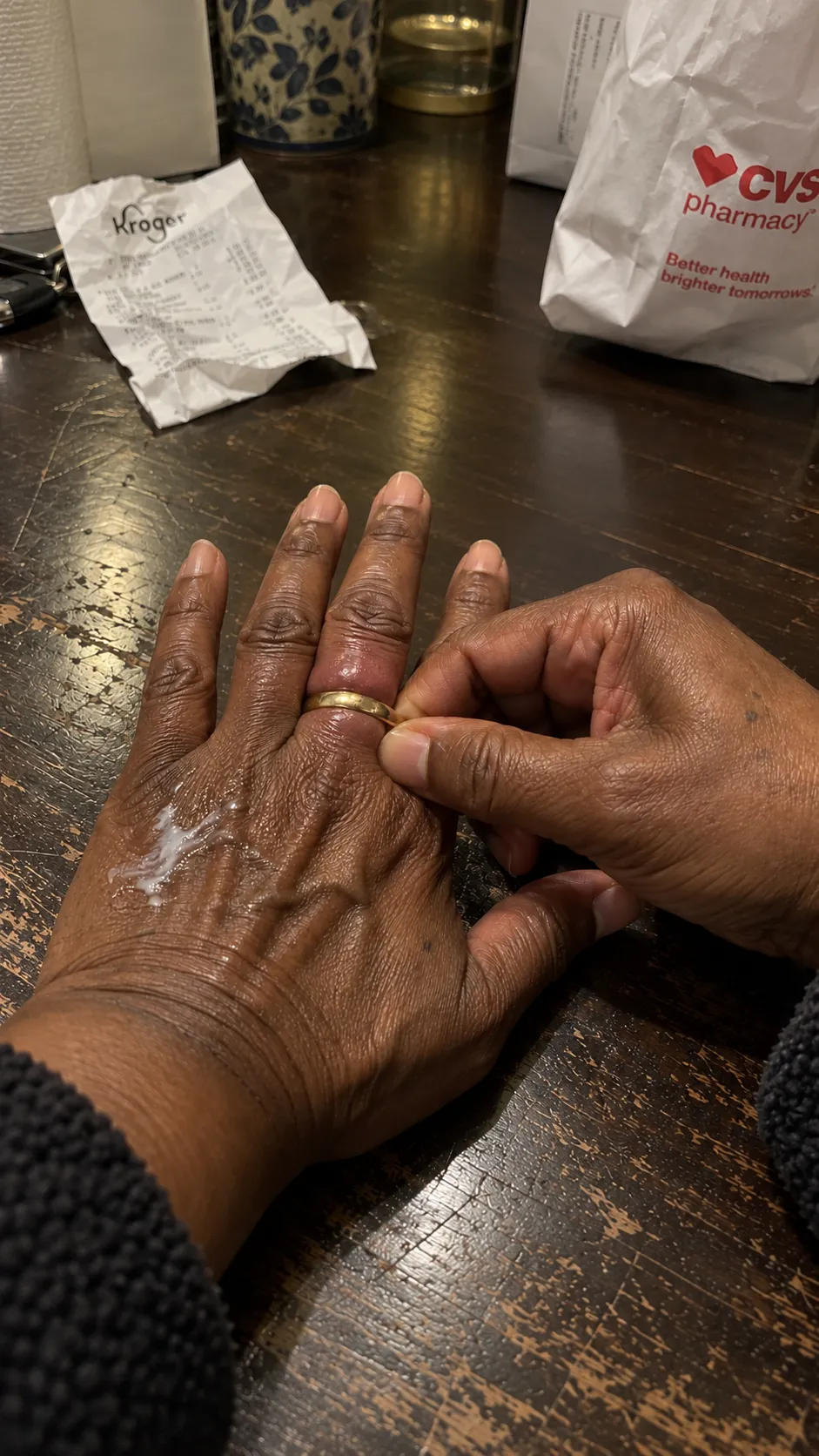
The Relief Mineral For Fibromyalgia
Tracey Coleman
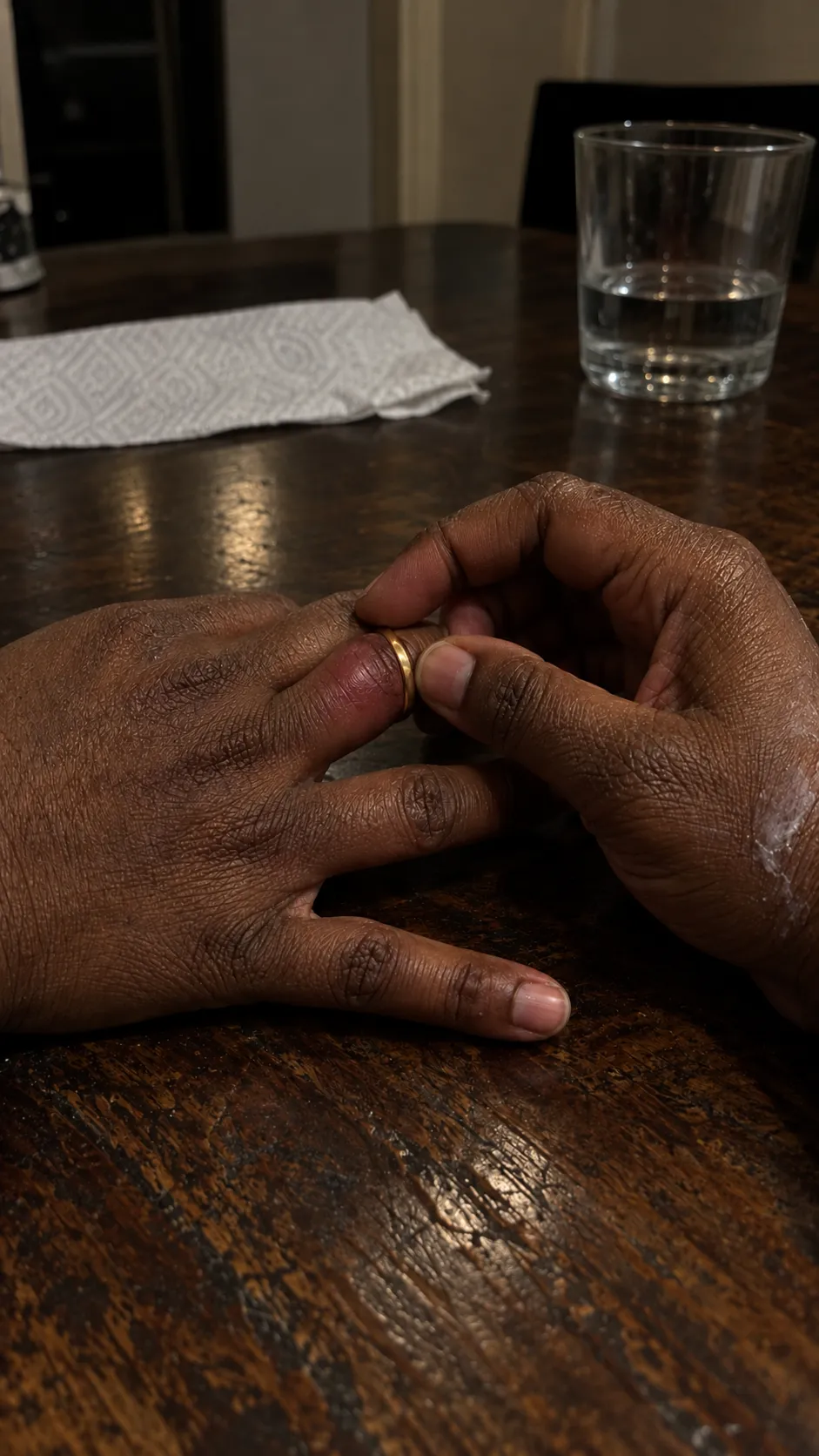
The Relief Mineral For Fibromyalgia
Tracey Coleman
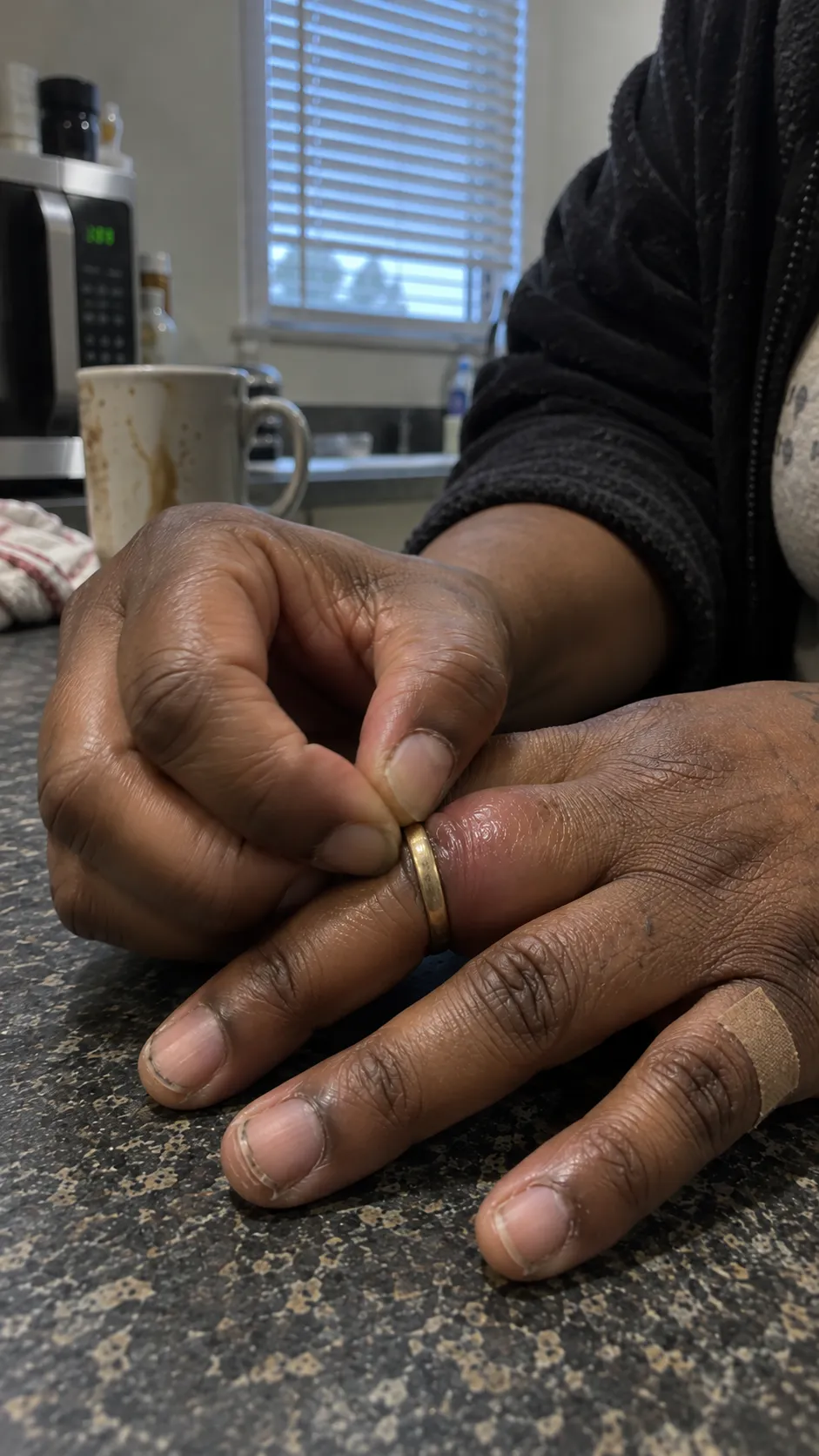
The Relief Mineral For Fibromyalgia
Tracey Coleman

I’m A Rheumatologist. Then I Got Fibro.
Tracey Coleman
I’m A Rheumatologist. Then I Got Fibro.
Tracey Coleman
I’m A Rheumatologist. Then I Got Fibro.
Tracey Coleman

I’m A Rheumatologist. Then I Got Fibro.
Tracey Coleman
I’m A Rheumatologist. Then I Got Fibro.
Tracey Coleman

It Was Not My Marriage. It Was My Body.
Tracey Coleman

It Was Not My Marriage. It Was My Body.
Tracey Coleman

One in three women used the same word
Tracey Coleman

I almost let my husband walk up the mountain alone 💔
Tracey Coleman

 Add to Chrome