If Your Husband Has Ringing In His Ears, You'll Want To Read This 👆
Ad Copy
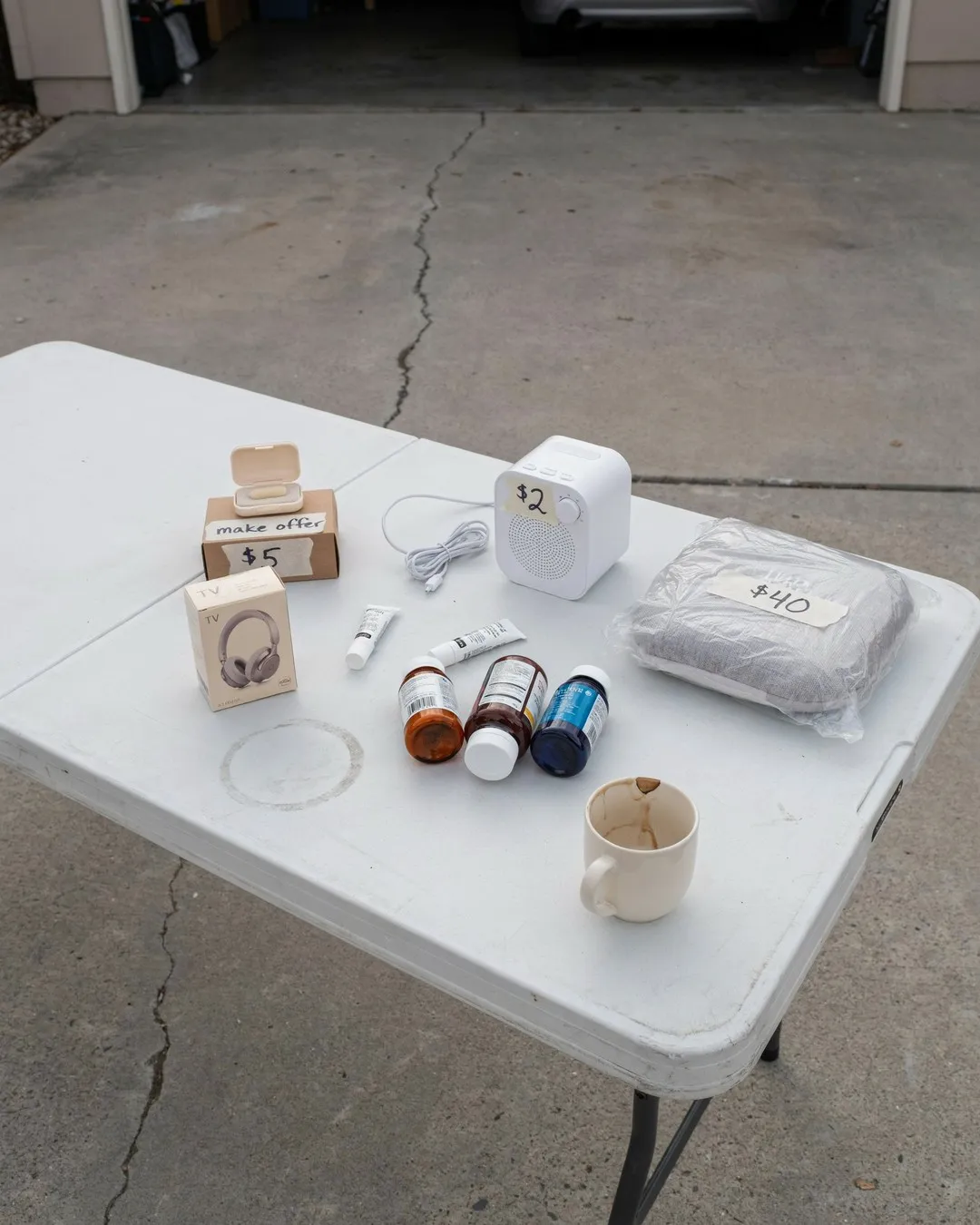
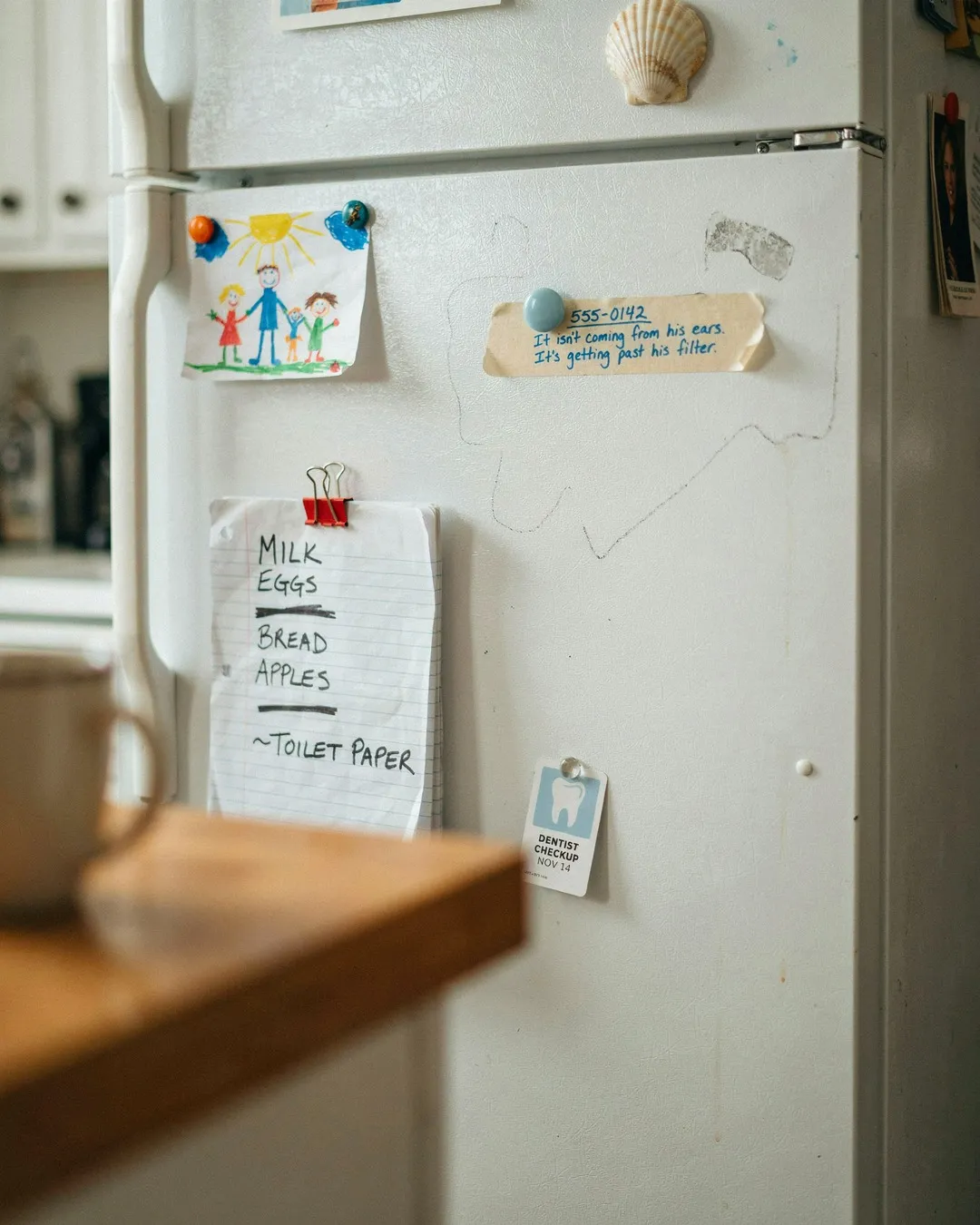
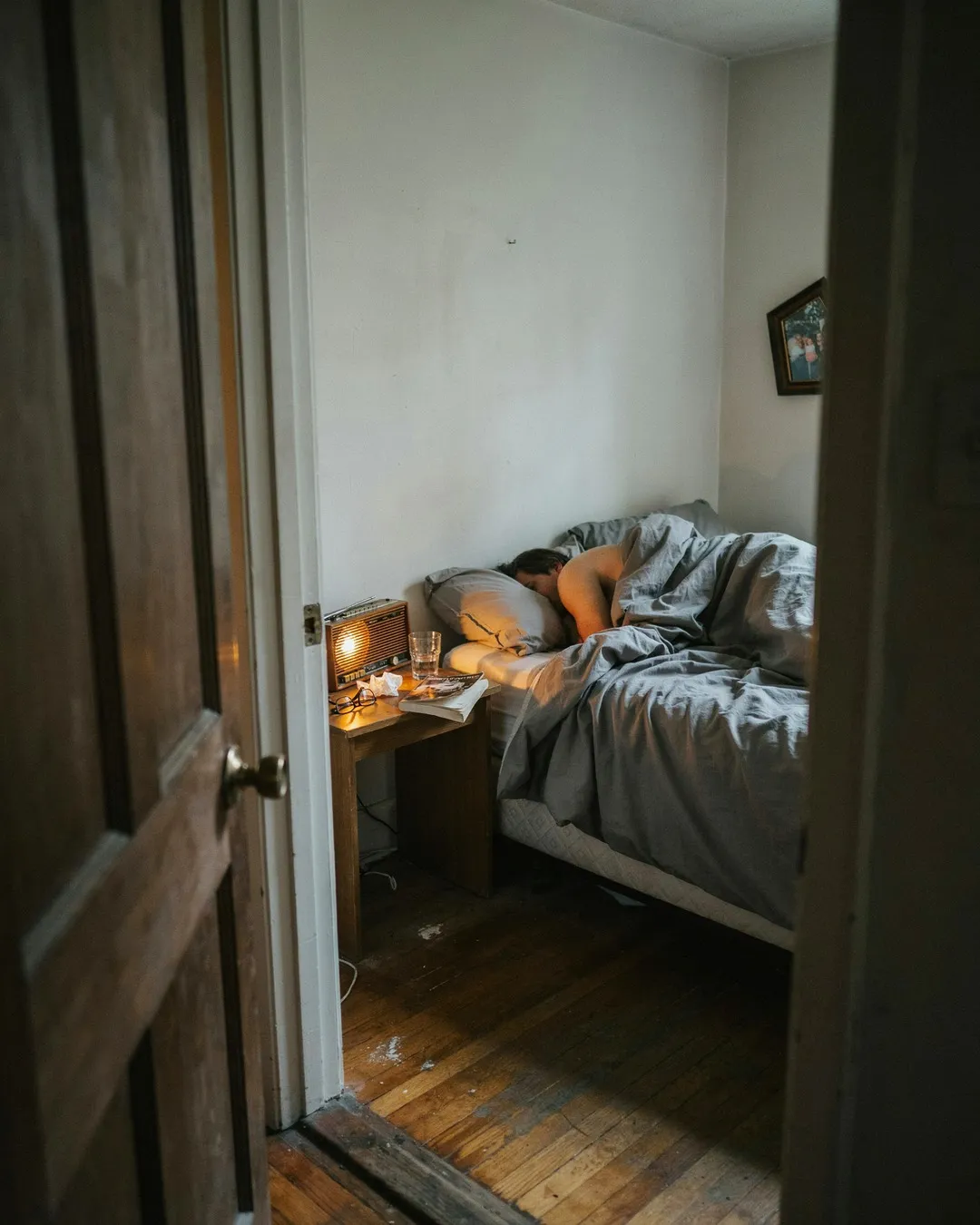
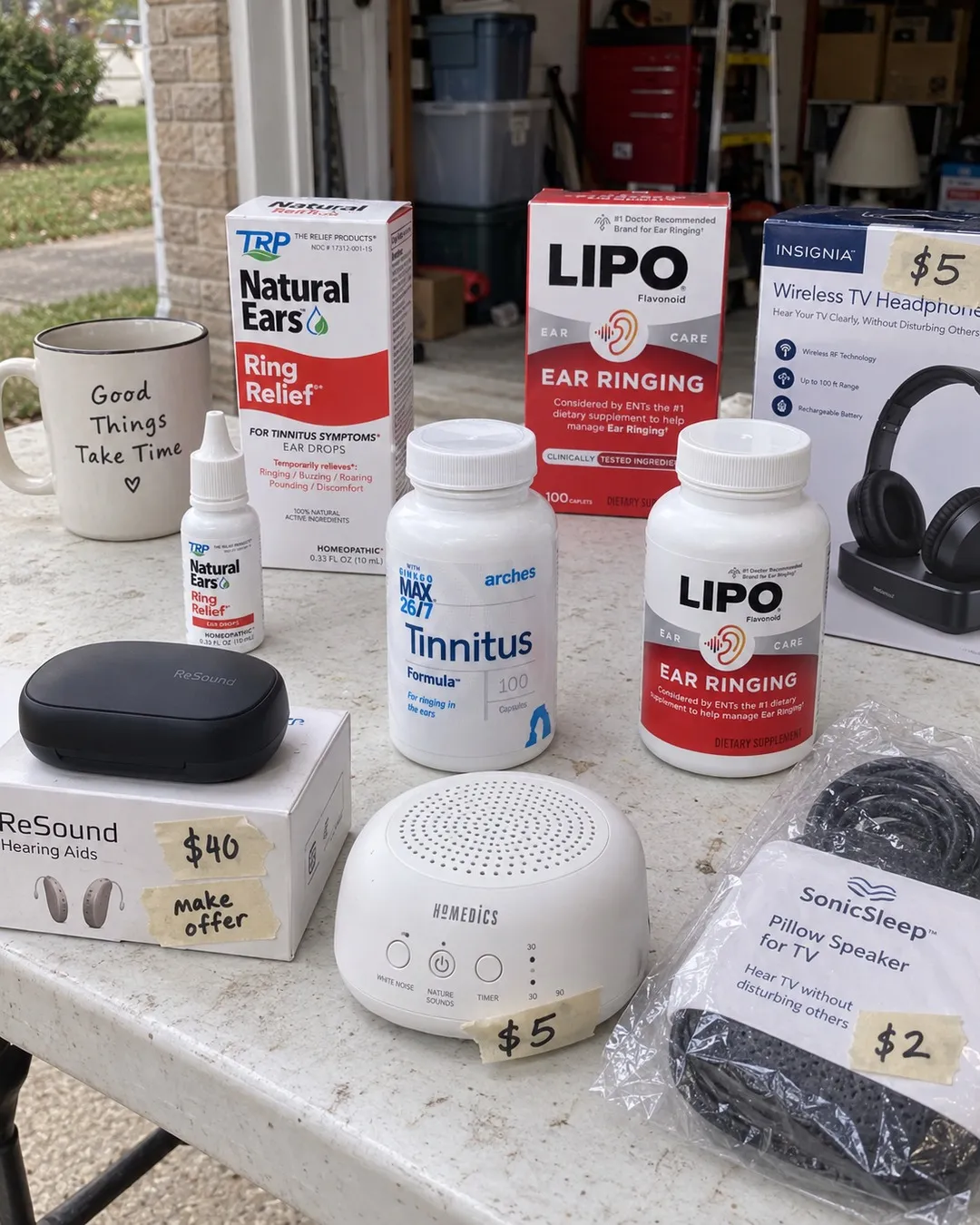
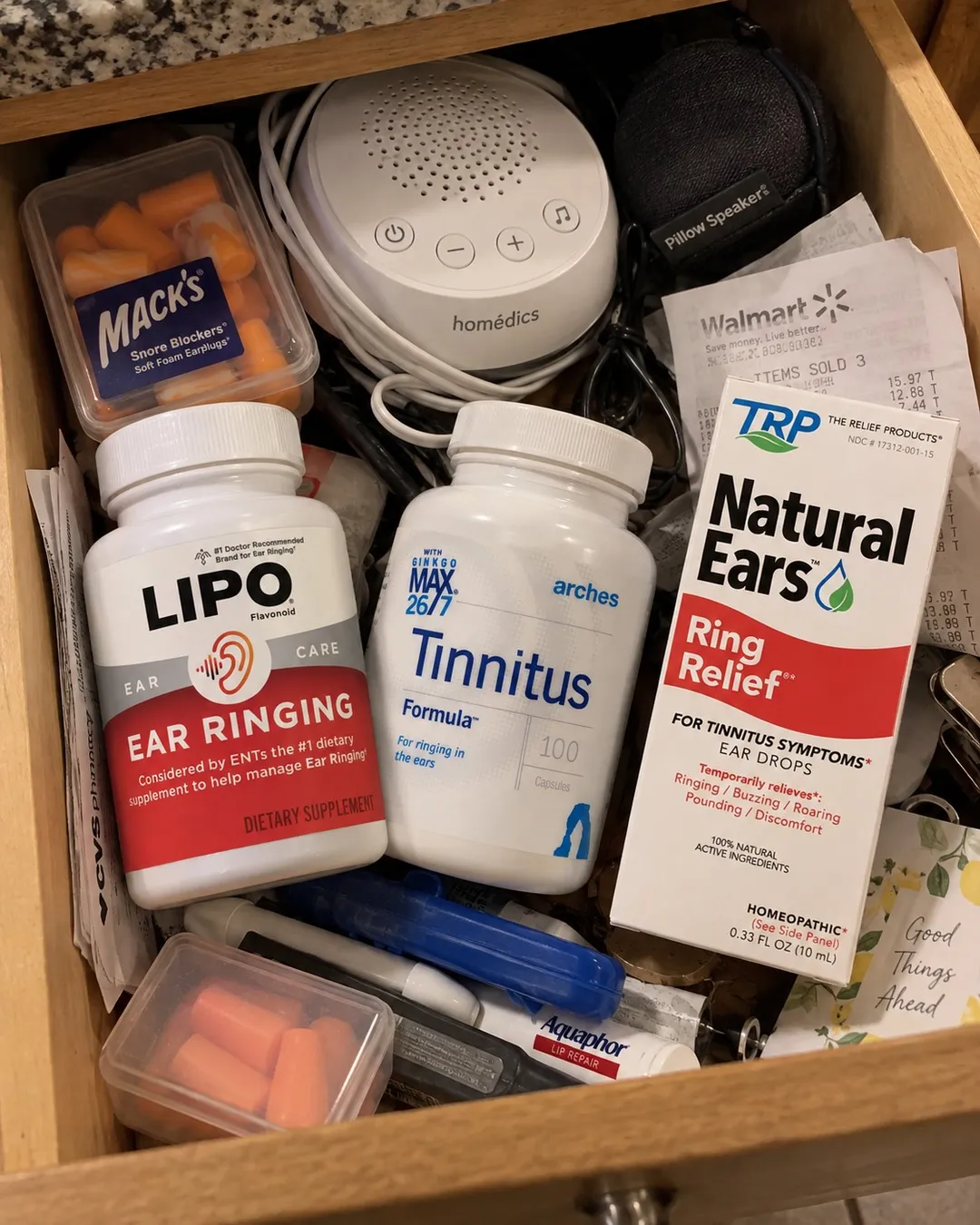
Last June I put everything I've ever bought my husband for the ringing in his ears on two card tables at the end of our driveway. A woman I had never met picked up the sound machine, looked at the rest of the table for a long moment, and asked me one question. Nobody had asked it in eleven years. Not his doctor. Not the three ear specialists. Not me. I want to tell you what she asked, and what her husband said on the phone that night. Because I think it's the reason Don sleeps in our bed again. I'm 66. Don is 69. We've been married 43 years. He ran a punch press for most of his working life. Forty years of it. The ringing started a couple of years before he retired, and it never left. If you're married to a man like Don, you already know how this goes. He doesn't complain. He's the kind who sucks it up and deals with it. He's also the kind who won't take an aspirin unless I put it in his hand. One blood pressure tablet in the morning, because his doctor made him promise, and that's his limit. "I'm not a pill person," he says, like it's a church he belongs to. So you learn to read it in other ways. The TV. He doesn't turn it up to hear it. He has his aids for that. He turns it up so it's louder than the thing in his head. The grandkids put their hands over their ears and laugh, and Don doesn't laugh. On a good day it's around 20. On a bad day it's at 38, and I know not to ask him anything. I can read his whole day off that number before he says a word. Snapping at the grandkids over nothing, then going out to the garage to be sorry by himself. The little radio on his nightstand, on low, all night, every night. Talk radio. He said he didn't listen to it. He said he needed it there. Him walking the house at three in the morning. I'd hear the floor in the hall and know. And then one night in March he took his pillow down the hall to the spare room. He said it was so I could sleep. He's slept in there most nights since. I'm not telling you any of this to make him sound pitiful. He isn't. He still mows the lawn. He fixed the neighbor's gate. I'm telling you because of the one thing he said, maybe a year ago, sitting on the edge of the bed with the radio going. He said: "I just want to hear silence. Once." I would have given anything to take it away for him. I couldn't. So I did what wives do. I bought things. That's what was on the tables. The hearing aids. His first pair, forty-seven hundred dollars. The audiologist said they'd help with the ringing too. They helped him hear the pastor. The ringing came right back the minute he took them out at night. He wears a plainer pair to church now. The first pair lived in a drawer. The sound machine. That one has a story, and I'll keep it short, because the appointment was. We waited four months to see the third ear specialist. He came in, looked at Don's hearing test, and stood in the doorway with his hand on the knob. He talked for about five minutes. Nothing showed up on anything. Nothing to be done. "You'll have to learn to live with it," he said. Then he left. On the way out, the girl at the front desk sold us the sound machine. Eighty-nine dollars. "Doctor recommends it," she said. So that's what we carried out to the car. Learn to live with it, and something to cover it up with. Rain, ocean, "brown noise." Don tried all of them. He said it was like putting a radio next to a radio. A pillow with a speaker sewn inside it. Still in the plastic. He said he wouldn't be able to sleep on it, and he was right. Headphones for the TV. Never opened. Not used once. Three different bottles of ear pills from the internet, each one half full. Each one had a picture of an ear on the label. He took them because I set them out, and every morning he let me know what a pill person he wasn't. Ear drops. A magnesium I read about on a forum at two in the morning. Six weeks of it. Nothing. Keep that one in mind. It comes back into this story. And somewhere underneath all of it, the folder. Three specialists. A hearing test every October. An MRI. Everyone looked at his ears, and everyone found nothing. He's been learning to live with it for eleven years. His next hearing test was already booked for October. I remember thinking I could fill in the result myself. I'll tell you what it said. It said exactly what I expected. It was what Don said in the parking lot afterward that I didn't expect. I didn't put that folder on the table, of course. But I thought about it while I was pricing things. I was pricing eleven years of hoping. Two dollars. Five dollars. Make offer. Forty-seven hundred dollars of hearing aids. An eighty-nine-dollar sound machine. A pillow with a speaker in it. Three bottles of ear pills and a magnesium. By noon I'd sold nearly all of it for about sixty dollars. The woman came up the driveway about nine-thirty. Early seventies, a green windbreaker, reading glasses on a cord. She'd come for my canning jars. She paid for the jars, and then she picked up the sound machine and turned it over in her hands. "Tinnitus?" she said. I said, "My husband. Eleven years." She nodded. She set the sound machine down and looked at the whole table. The aids. The pillow. The bottles. She took her time. Then she said, "Everything on this table goes after his ears." I said something like, well, that's where the ringing is. And she asked me the question. "Has anybody ever told you it isn't coming from his ears?" I laughed, a little. Not because it was funny. Because nobody had, and it felt like the kind of thing you'd say at a yard sale. She didn't laugh. Her name was Susan. Her husband, Walt, had had the ringing for nine years. A high whine, she said, like a TV left on in another room. She said Walt is "the reader" in their house, and it was Walt who finally found someone who explained it to him in plain English. She explained it to me standing in my driveway, holding a jar of canning rings. I'll give it to you the way she gave it to me. "Your hearing nerve is never completely quiet," she said. "Not in anyone. Even in a silent room it sends little stray signals up to the brain all day long. That's normal. Everybody's does." "The reason you don't hear them is a filter. It sits in the brainstem, the little stalk at the base of your brain where the hearing nerve plugs in. It lets the real sounds through, and it blocks the stray ones before you ever notice them." "That filter runs on a natural calming signal your brain makes. Getting older runs it low. Hearing loss runs it low. Stress does. Years of loud noise do." "When it runs low, the stray signals get through. And the brain turns them into sound." "That's the ringing," she said. "It isn't coming from his ears. It's getting past his filter." I stood there. Then I said the thing I suppose everybody says. "But they checked his ears. His hearing test showed he's lost some hearing, that's all." "Exactly," Susan said. "They checked his ears. A hearing test tests the ears. Hearing aids help the ears hear. That machine" (she tapped the sound machine) "covers the noise up. And those pills are all trying to feed the ear." "None of it touches the filter. You can't cover it up with noise, honey. You have to fill the filter back up." I didn't tell her where the sound machine came from. I didn't have to. I want to tell you what went through my head right then, because it was not what I expected. It wasn't anger. It was a kind of click. Because suddenly everything I'd watched for eleven years made sense. Why it was always worst at night. The minute the TV went off and the hearing aids came out, there was nothing left for his brain to listen to except the stray signals. Why the radio on low helped a little. It gave his brain something else to listen to. It didn't fix anything. It just covered it. Why the TV climbed on the bad days. He'd been doing the same thing as the radio, only louder. Why the ringing got worse after a bad week, or a bad night's sleep. Susan said stress and poor sleep drain the filter faster. Why the aids helped him hear the pastor and did nothing for the ringing once they came out. Why the man in the doorway found nothing. He looked at the ears. The ears were doing what sixty-nine-year-old ears do. Why the ear pills did nothing. They were all trying to fix the one place the problem wasn't. I hadn't been buying the wrong brands. I'd been buying for the wrong place. For eleven years. "An empty filter isn't a broken one," Susan said. "That's what Walt keeps telling me." I asked her what Walt did about it. She said he takes something at night now. Two capsules at bedtime, she thought. She couldn't remember the name for the life of her. A white bottle, she said, on his side of the bed. She bought the sound machine for three dollars. For the grandbaby's room, she said. Eighty-nine dollars at the specialist's front desk. Three dollars in my driveway. I've thought about that more than I should. Then she wrote her phone number on the back of one of my price stickers and said, "Call me tonight. Walt will know the name." I almost didn't call. I want to be honest about that. I'm not someone who believes things because a stranger says them in a driveway. I've been burned by the internet enough times. You've seen the tables. So that afternoon, before I called anybody, I read. I read about the brainstem and how it filters sound. I read until Don came in and asked why I was sitting in the dark. Nothing I read contradicted Susan. And for the first time in eleven years, something explained all of it at once: the nights, the quiet rooms, the bad weeks, the aids, the bottles. And I found out the calming signal Susan talked about has a name. It's called glycine. Your brain makes it, and the filter runs on it. When there isn't enough of it, the filter can't hold the stray signals back. I wrote it on the notepad by the phone. Glycine. Eleven years of buying things for that man, and I had never once seen the word on a label. I also read that magnesium helps the filter hold. My stomach dropped when I read that. We'd had a magnesium. I'd priced it at two dollars that morning. I'll come back to that, because it nearly stopped me. By suppertime I knew what I was looking for. More importantly, I knew what I wasn't looking for. First, it had to refill the filter. Not help it hold. Not cover it up. Put back the glycine it runs on. A filter can't hold what isn't there. It could not be one more thing he has to wear. He wears his aids to church and that's his limit. It could not be one more thing that covers the noise. We had a table full of those. It could not be another pill for his ears. We had a table full of those too. It had to be something he takes at night, when it's worst. And it had to be simple, because you've met Don. He is not a pill person, and he will not do a routine. I called Susan at twenty to nine. Walt picked up the phone before she could. He didn't say hello. He said, "Is this the lady with the sound machine?" I said it was. He said, "Write this down. It's called Quietra." And then, before he handed the phone back, he said, "And tell your husband something from me. Word for word." I had my pen ready. "The ringing isn't coming from your ears. It's getting past your filter. You can't cover it up with noise. You have to refill the filter. That's why nothing worked." I wrote the short version on the back of the same price sticker, under Susan's number. I still have it on the fridge. This next part is the part I did carefully, because I'm careful about what goes into Don. I looked at exactly what's in it. Four ingredients, all listed by name, with no mystery blend. The first thing I looked for was glycine. It's there. Then I saw the word magnesium, and my heart sank. We already tried a magnesium. I'd sold it that morning for two dollars. So I went back to what I'd read. Magnesium does help the filter hold. It calms the overworked nerves that burn through the calming signal. That part was never wrong. But Don's filter was running empty, and for those six weeks nothing was putting anything back. A magnesium on its own is a good lid on an empty jar. I'd had forty empty jars on my driveway that morning. I know what a lid is worth with nothing under it. Susan said everything on my table went after his ears. The magnesium was the one thing that didn't. It was aimed at the right place. It just couldn't refill anything. That's why refill was first on my list. And here the magnesium isn't working alone. The glycine fills the filter back up. The magnesium helps it hold. The theanine and the saffron stop the worry draining it again. Two capsules at bedtime. That's all. No fitting, no appointment, nothing to wear, nothing to plug in. Don takes that blood pressure tablet in the morning, so I wrote his list down and took it and the label to our pharmacist before I ordered anything. I'd tell anyone to do the same. Then I ordered it. Now here's the part where I have to tell you how I got it into him. You probably have a Don. I didn't make a speech. I'd made eleven years of speeches. I put two capsules next to the water glass on his nightstand. The spare room nightstand. Next to the radio. He came out holding them. "What's this? You know I'm not a pill person." I said, "It's for the ringing. It's not for your ears." He looked at me for a second. I think it was the "not for your ears" part. He took them. He doesn't have to believe in it. He doesn't have to wear anything or see anyone. He just has to swallow two capsules with the glass of water he already drinks before bed. I'd promised myself I wouldn't watch him like a hawk. I watched him like a hawk. The first week, nothing. Or nothing I could see. I told myself that was fine. Eleven years doesn't undo in a week. Somewhere in the second week, I noticed he was asleep before the late news ended. Don hasn't fallen asleep before the late news in years. It was always the ringing first, then sleep, if sleep came. I didn't say a word. The third week, I got up at two in the morning for water and went past the spare room. The door was open a crack. The radio was off. I stood in that hallway longer than I'd like to admit. The fourth week, my daughter was over with the kids on a Sunday, and she said, "Mom, did you turn the TV down?" I hadn't. It was on 20. A good-day number, with three grandkids climbing all over him. He let the littlest one do his crossword. He never once went out to the garage. Then, in the fifth week, I made a mistake. I was late reordering. I told myself I'd do it Monday, and then it was Thursday. Two nights without. The second night, I heard the floor in the hall at three in the morning. The first time in a month. The next morning Don came into the kitchen holding the empty bottle. This is a man who has not asked me for a pill in forty-three years. Not an aspirin. Not a cough drop. He said, "Did you forget to order my ringing stuff? Because I was up half the night with it." "Your ringing stuff," I said. He said, "Don't start. Just order it." I ordered it before I poured his coffee. Then I went into the pantry for a minute so he wouldn't see my face. And the thing I'd been waiting for, the thing I didn't dare ask for, came in the sixth week. We were doing the dishes. Out of nowhere he said, "I'm not lying there waiting for it anymore." I kept washing the pan. He said, "It's not gone. Don't go telling people it's gone. But I get to sleep before it gets to me." That's the most he's said about it in eleven years. I want to be careful here, because I've read too many stories that make it sound like a miracle, and I don't trust any of them. It isn't gone. Some nights, when he's worn out or had a rough day, it's louder, and he'll tell me so. He still wears his aids to church. And I can't tell you it will do for your husband what it's done for mine. I don't know your husband. Everybody's different, and some people notice something sooner than others. What I can tell you is what changed in our house. Seven weeks in, on a Tuesday night, I was already in bed reading when Don came down the hall. He didn't go into the spare room. He came in, set his water glass on his old nightstand, the one on my side of the room that had been empty since March, and got into bed. I asked him if he wanted me to get the radio. He said, "No. I don't need the radio." Forty-three years, and I cried like it was the first one. Then October came, and the hearing test. Same booth. Same beeps. Same young woman with the clipboard. Same result, near enough: a little hearing lost, the way you'd expect after forty years at a punch press. Nothing else to see. I could have filled it in myself, like I said. Then she asked him what they always ask. "And how's the ringing?" Every other October, that question got a shrug and one word. "Same." This time Don said, "Still there. It's in the back where it belongs. I'm sleeping." She wrote something down. In the parking lot he stopped with his hand on the car door and said, "A hearing test tests the ears." I asked him where he got that. He said, "You. You've said it about forty times." Then he said, "That fellow in the doorway told me to learn to live with it." He opened the car door. "I'm living with it. I'm just not losing sleep to it." I think about that yard sale a lot. I spent eleven years trying to take the ringing away for him. I couldn't. I never could have. But I could stop buying things for the wrong place. So if you're like I was, if you have a closet or a drawer or two card tables' worth of things you bought for his ears, here's what I'd want someone to tell you, the way Susan and Walt told me: The ringing isn't coming from his ears. It's getting past his filter. You can't cover it up with noise. You have to refill the filter. That's why nothing on your table worked. It wasn't you. It wasn't him. You were aiming at the wrong place. And if you look into it yourself, look for the refill first. A magnesium on its own helps a filter hold, but if nothing is refilling it, you've bought a lid for an empty jar. I sold mine for two dollars. He doesn't have to believe it. He doesn't have to wear anything or see anyone. Two capsules with the glass of water he already drinks at night. Give it a couple of weeks before you decide anything. Don't ask him every morning. You'll drive him crazy and he'll dig his heels in. Just notice whether he reaches for the radio. And it comes with a money-back guarantee. If he's still reaching for the radio, you send it back and get your money. He doesn't have to prove anything to anybody. And right now it's on sale. The link is below. Here's where Walt told me to look: 👉 https://noxtee.com/products/noxtee-quietra That's all. Thank you for reading this far. I hope something in it helps your Don. — Carol, 66 P.S. The sound machine is in Susan's grandbaby's room now. Eighty-nine dollars from the man in the doorway, three dollars from me, and it's finally doing a job it can actually do: covering the noise of a busy house for a sleeping baby. Not the noise inside a grown man's head. P.P.S. I didn't sell the TV headphones. Never used, still in the box. I gave them to Don's brother Ray, who has the ringing too and has his own table of things, I'd bet. I put a bottle in the box before I taped it back up. I'll let you know. P.P.P.S. If he takes anything else every day, take the label and his list to your pharmacist first, like I did. It takes two minutes. P.P.P.P.S. The price sticker with Walt's words on it is still on our fridge. It says: Quietra. Not his ears. His filter. Don read it the other morning and said, "Who wrote that?" I said a man I've never met. He said, "Well, he's right." He's still not a pill person, he says. He also checks the bottle on Sundays now, to make sure I haven't let it run low.
More from Hearing Health Report
If Your Husband Has Ringing In His Ears, You'll Want To Read This 👆
Hearing Health Report
If You've Bought Your Husband Everything For The Ringing In His Ears, Read This 👆
Hearing Health Report
If Your Husband Has Ringing In His Ears, You'll Want To Read This 👆
Hearing Health Report
If Your Husband Has Ringing In His Ears, You'll Want To Read This 👆
Hearing Health Report
If You've Bought Your Husband Everything For The Ringing In His Ears, Read This 👆
Hearing Health Report
If You've Bought Your Husband Everything For The Ringing In His Ears, Read This 👆
Hearing Health Report

Subscribe and Save 20% On First Three Orders
Ancient + Brave

SOLD OUT in 48 hours last year
Purdy & Figg

How it feels fr 🙏 #jobsearch #interview #career #workhumor #funny
AI Apply

Dog Advent Calendar, Only £8!
Scrumbles

Près d'Aix-en-ProvenceVin - Architecture - ArtHôtel - Restaurants
Château La Coste
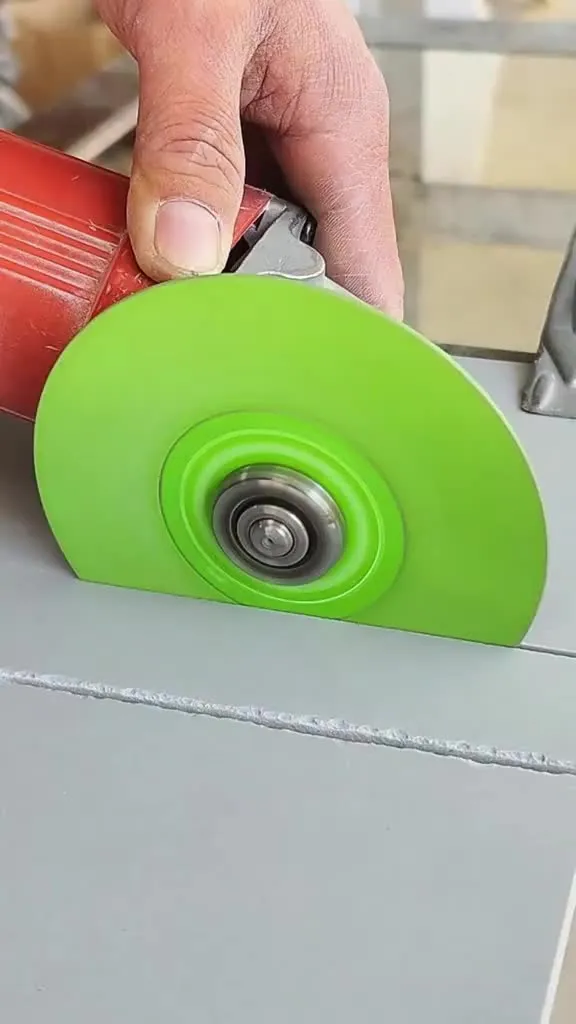
🛠️ Grind Smarter, Work Faster! 💨 Upgrade your toolkit with the Rock Slab Grinding Disc! Designed for precision and durability, it delivers smooth, efficient grinding on stone, concrete, and more. Perfect for professionals and DIYers alike! 🔧✨ #GrindingMadeEasy #DIYTools #PrecisionGrinding
LifeSparking

 Add to Chrome