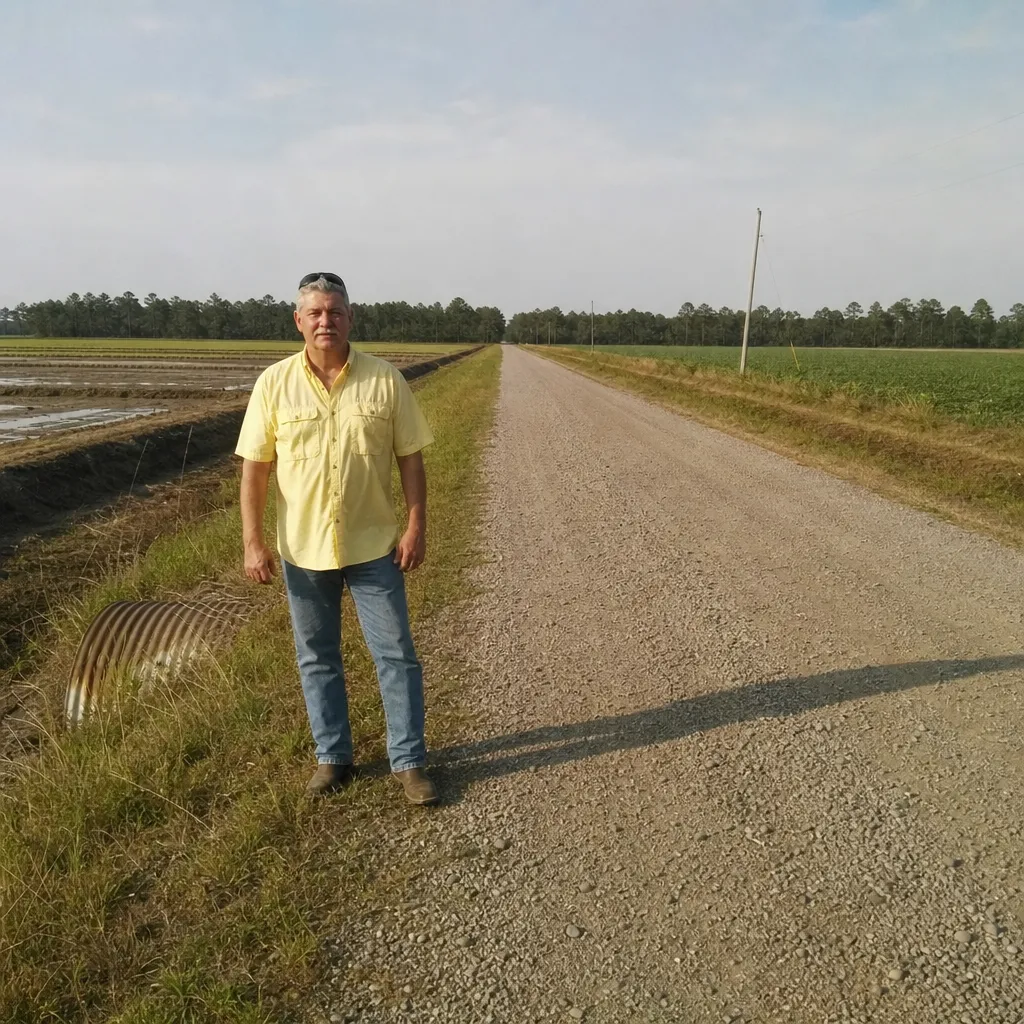
Support stamina and heart health every day
Ad Copy
I told my cardiologist to f*ck himself in his own office with an LDL of 168. Then I walked out and did in twelve weeks what he could not do in three months. Last week my lipid panel came back at 127. A number my doctor told me I would never reach without atorvastatin. I am 61 years old. High cholesterol. And I have not felt this sharp, this strong, this clear since before I got diagnosed. Let me tell you how I got here. My name is David. I live in Houston, Texas. I spent 35 years running every kind of job you can run in commercial plumbing. I owned my own company for the last 18 of those years. Sold it three years ago to a young man I trained from when he was 20. His name is Marcus and he is running it better than I did. I have been married to my wife Linda for 35 years. We have one son, one daughter-in-law, and two grandkids. I say this because I want you to understand who I am before I tell you what I did. I am not the kind of man who talks back to a doctor. Not the kind of man who curses at professionals in their own office. Not the kind of man who researches medical journals at his kitchen table until 2 AM three nights in a row. I am the kind of man who takes his prescription and does what he is told. Or I was. ⠀ Until the day my cardiologist told me that if I did not do what she said, I was looking at a heart attack within five years. Then something in me broke. Not because of what she said about my future. Because of what I watched that exact medication do to my father. My father took atorvastatin for 22 years. Twenty-two years. His doctor called it the gold standard. Said it was safe and effective. Said it would protect his heart. Within six months, the fog started. Not normal forgetfulness. I am talking about a man who ran his own business for forty years — managed payroll, inventory, client relationships — suddenly forgetting where he put his keys. Missing appointments he had written down that morning. Asking the same question three times in one conversation. By year five he could not follow a book anymore. Said the words would not stay in his head long enough to track the story. Then the muscle pain started. His legs ached so bad he would grip the armrests just to stand up from his chair. The man who built our back deck with his own hands could not grip a jar lid. Year ten he looked at my daughter — his granddaughter, the one he had held the day she was born — and asked my mother, "Whose little girl is that?" My mom's voice cracked when she told me. "He didn't know her, David. He didn't know his own granddaughter." Twenty-two years of medication. His cholesterol numbers were "perfect" the whole time. And then the heart attack took him anyway. Sixty-eight years old. Numbers perfect. Died anyway. At the funeral my mom grabbed my hand and said something I will never forget: "The pills didn't save him, David. They just made him disappear." I got my appointment in March. Routine blood draw at my annual physical I had almost skipped. Three days later my phone rang. "Mr. Torres, Dr. Patel needs to see you about your results." LDL: 168. Total cholesterol: 252. My doctor sat me down. Pulled up my chart. Looked at me. "David, your cholesterol is elevated. Your LDL is well into the danger zone. We need to start you on medication." My chest tightened. "What medication?" "Atorvastatin. 10 milligrams daily. It's the gold standard—" I stopped hearing her. Atorvastatin. Twenty-two years of watching my father forget where he lived. Twenty-two years of watching the fog roll in. Twenty-two years of watching the man who ran his own business become someone who could not follow a conversation. And then the heart attack took him anyway. Numbers "perfect" the whole time. I want to tell you what that felt like, because unless you are a man sitting in that chair for the first time hearing the name of the drug that destroyed your father's mind, you cannot know. It felt like being told the rest of my life was going to follow the same path I watched him walk. The fog. The forgetting. The slow disappearing. And then the heart attack at the end anyway. She prescribed atorvastatin, 10 mg once a day. Told me to cut red meat, reduce saturated fat, add more exercise. Told me to come back in 3 months for a repeat lipid panel. I walked out of her office and I did every single thing she told me to do. For 3 months I was the most compliant patient she had ever had. I took the atorvastatin every morning at 7 AM with breakfast. Linda put them in a Sunday-through-Saturday pill organizer for me. I never missed a dose. I cut red meat entirely. Linda made oatmeal for me every morning. I ate it. I hated it. I ate egg whites and turkey bacon for breakfast. Grilled chicken breast and steamed broccoli for lunch. Baked fish and green beans for dinner. No butter. No cheese. No sauce. I ran four days a week instead of three. Added long walks every evening. On the weekends I walked twice. I sat through my son's Fourth of July cookout eating a naked salad while my family ate burgers and hot dogs and my daughter-in-law's potato salad. I sat at Sunday dinner at Linda's sister's house eating grilled chicken while everyone else ate her brisket. I sat at my grandson's fifth birthday in August, two months in, watching him blow out candles while I ate carrot sticks and hummus. At the same time I was noticing things in my own body I had never noticed before. The brain fog that started around week three. Not dramatic at first. Just a thickness behind my eyes in the morning that used to clear by my second cup of coffee and now did not clear at all. By week five it was there all day. A dullness. Like thinking through gauze. The muscle pain that came on around week four. My legs ached like I had run a marathon in my sleep. Some mornings I would grip the armrests just to stand up from my recliner and hear myself grunt. I had not made that sound in my life. The forgetting. I would be telling Linda about something that happened during the day and the word I needed would just vanish. Right in the middle of a sentence. Like a light switching off. I would stand there with my mouth open searching for a word I had used ten thousand times. ⠀ My father used to do the same thing. Year three on atorvastatin. Standing in the kitchen doorway, mouth open, searching for a word that was not there anymore. I was watching myself become him. The energy crash after every single meal. I would eat lunch and by 1 PM I would be so tired I would sit in my recliner and fall asleep. Linda started calling it "the coma." The joint stiffness that settled into my knees and shoulders. Getting out of bed in the morning became something I had to think about before doing. A short walk to the end of the block felt like a negotiation with my own body. And one more thing. The one I did not tell my doctor. The one no man tells his doctor on the first visit. The erections had stopped working the way they had for 35 years. I was too embarrassed to bring it up. And I told myself once the atorvastatin got my numbers down, that would probably come back too. That is the state I was in when I walked into my 3-month follow-up. Dr. Patel pulled up my chart. She read it. She read it again. Then she looked at me. "David. Your LDL is 161." I asked her what that meant. "It means we moved 7 points in 3 months. That is not enough. Not close to enough." ⠀ I told her I had done everything she told me to do. Every meal. Every walk. Every pill. She nodded, not really listening. "David, some patients don't respond as well to the standard dose. What we are going to do is increase your atorvastatin to 40 mg daily. And if we do not see meaningful movement at your next visit in 3 months, we are going to add ezetimibe. Possibly a PCSK9 inhibitor injection. We have to be aggressive here." I sat in the chair and I felt something I had not felt in a doctor's office in my life. I was not scared. I was angry. I told her I had been eating oatmeal and grilled chicken and naked salads for 3 months. I had not touched a burger at my son's Fourth of July cookout. I had been running four days a week and walking every evening. I had done every single thing she told me to do. She looked at me over her glasses. ⠀ "David, patients with your family history who delay treatment don't have the luxury of time. Your father died of a heart attack at sixty-eight. You are sixty-one. I need you on board here. Otherwise we are looking at the same outcome. Maybe sooner." That was the sentence. I sat there for about ten seconds. I remember the second hand on the clock behind her because I was staring at it. Then I stood up. "Doc. You can go f*ck yourself." She blinked. I said it again, calmer this time, because I wanted her to hear it. "I have taken your atorvastatin every morning for three months. I have lived with the brain fog. I have lived with the muscle pain. The exhaustion. The forgetting words in the middle of sentences. I am watching myself turn into my father. I have given up every food I have loved. And my number moved 7 points. Now you are telling me to quadruple the pill that barely worked and stack another one on top of it and call it aggressive care. I am not the problem here. You are. The pill is. My father took this exact medication for twenty-two years. His numbers were perfect the whole time. And the heart attack killed him anyway." She tried to say something. I do not remember what. I walked out. Linda was in the waiting room. She stood up when she saw my face. I told her what happened in the car on the way home. She was quiet for a long time. Then she said, "David, please go back. Take the prescription. We can figure out the rest later." I told her no. I told her whatever the answer to this was, it was not in that woman's office. That night I sat at my kitchen table until 2 in the morning with my laptop open. I started reading. Actually reading. Not diet articles. Not Facebook posts. Medical journals. Cholesterol studies. Research out of countries where people eat differently than Americans do and do not die of heart attacks the way we do. I did that Tuesday night. And Wednesday night. And Thursday night. Thursday around 1 AM I found a population study that stopped me cold. Lancaster County, Pennsylvania. Old Order Amish. Cardiovascular death rate 74% lower than the rest of the state. Not 10% lower. Not 30%. Seventy-four percent. I stared at the number. Read it again. Clicked through to the citations. That led me to an interview with a cardiovascular researcher named Dr. Erik Janssen. He had trained in Amsterdam for 16 years and moved to Johns Hopkins. He had spent the last decade studying why certain populations — including Old Order Amish in Lancaster County — had dramatically lower rates of heart disease despite diets rich in fats, eggs, butter, and red meat. Diets that should have killed them according to every standard model. He said something in the interview that stopped me cold. He said: "Heart disease is not really a cholesterol number problem. The LDL on your lab report is just the surface measurement. The real problem is what happens to that cholesterol once it is in your bloodstream. When LDL gets attacked by free radicals, it oxidizes. It turns sticky. It starts clinging to your artery walls and building plaque. That is what causes heart attacks. Statins lower the number on the chart. They do nothing to stop the oxidation. That is why patients on statins with perfect numbers still have heart attacks. The number looks good. The damage never stopped." I watched the interview three times. But I needed to learn more. At the bottom of the article there was a contact link. I sent an email at 1:47 AM saying I was a high cholesterol patient in Houston who had walked out on my doctor and was trying to understand what he had said in the interview. I did not expect a reply. He wrote back at 6:12 the next morning with a phone number and a time. I called him that Saturday at 9 AM my time. It was mid-morning on the East Coast. He answered on the second ring. I want to tell you what he told me on that call, because it was the first time in 3 months a doctor talked to me like I was a person and not a number on a chart. He asked me my numbers. I told him. He asked me my symptoms. I told him. All of them. Including the one I had not told my doctor. He was quiet for a moment. Then he said: "David. Everything you just described — the brain fog, the muscle pain, the exhaustion, the forgetting words — those are documented statin side effects. But the cholesterol problem underneath is real too. Here is what no one is telling you. The cholesterol in your blood is not the enemy. It only becomes dangerous when it oxidizes. When free radicals attack your LDL particles, those particles turn sticky. They stick to your artery walls like glue. They form plaque. That is what causes heart attacks. Not the number on your chart. The oxidation." He said that was why my father died despite twenty-two years of perfect numbers. The statin lowered the cholesterol count. But the cholesterol that remained was still getting attacked by free radicals. Still oxidizing. Still turning sticky. Still building plaque in his arteries. Every hour of every day for twenty-two years. No one ever tested for it. No one ever measured the thing that was actually killing him. He said the oxidized LDL was grinding through my artery walls right now. Through the coronary arteries feeding my heart. Through the carotid arteries feeding my brain. Through the small vessels feeding the nerves in my extremities. Through the vessels feeding the smooth muscle downstairs. Building plaque silently. Getting worse every day. He said the statin brain fog and muscle damage were real side effects. But even without the statin, my circulation was already being compromised by oxidized LDL narrowing my vessels. The fatigue. The dullness. The sluggishness I had been blaming on the pill — some of that was the pill. And some of it was the disease itself, quietly strangling my blood flow to every organ. But he said the high LDL number was not the disease. The high number was the RESULT of poor lipid metabolism. The disease was the oxidation. The free radical attack that turned harmless cholesterol into artery-destroying plaque. Atorvastatin does not stop the oxidation. It tells the liver to make less cholesterol. Reduces the supply. Never protects a single LDL particle from turning into plaque. Ezetimibe does not stop the oxidation either. It blocks cholesterol absorption in the gut so less enters the bloodstream. Never protects a single particle. The oxidation was the problem. No medication on the market touched the oxidation. I asked him what did. He said one class of compounds had been studied for over two decades for this exact mechanism. Betalains. The most concentrated natural source was from a specific root vegetable. Beetroot. Not the sugar beets bred for the commercial market. Not the uniform red spheres in the grocery store. Heirloom beets grown from seed lines that had never been crossbred for sugar content or shelf appearance. The same seed lines Amish families in Lancaster County had been growing for six generations. He said betalains neutralize free radicals before they can attack LDL particles. If the free radicals never reach the cholesterol, the cholesterol never oxidizes. If it never oxidizes, it never turns sticky. If it never turns sticky, it never clings to artery walls. The entire cascade that causes heart attacks gets broken at the source. He said there was a second mechanism. Beetroot nitrates convert to nitric oxide in the bloodstream. Nitric oxide relaxes and dilates blood vessels — including the coronary arteries, the carotids, and the vessels feeding the extremities and reproductive organs. The vessels that had been narrowing under years of oxidative plaque buildup could begin to open and repair. Two mechanisms. From one plant. One neutralizes the free radicals that cause the damage. The other opens the vessels that have been narrowing from the damage already done.⠀ I asked him if it mattered which brand I picked. I figured beetroot was beetroot. Grab whatever they have at the grocery store and call it a day. He said absolutely not. He said most beetroot supplements on the market are practically useless. And it starts before the capsule is even made. The majority use modern commercial beets — varieties that have been selectively bred for over a century for sugar content, uniform shape, and shelf appearance. Nobody measured or protected the betalain concentration during that breeding process. So the raw material itself has had the medicine stripped out of it at the genetic level. You are starting with a beet that barely contains the compounds you need. Then they process it with high-heat spray drying — cheap and fast. But heat destroys betalains. The very antioxidants that neutralize free radicals before they can attack your LDL. Without them, you are swallowing a capsule of red dust. He said you could take a whole bottle of the cheap stuff and your cholesterol would not be one particle safer from oxidation. On top of that, most of them are packed with fillers, artificial flavoring, and added sugars — which is borderline criminal when you think about it. You are taking a supplement to protect your cholesterol from oxidizing and the manufacturer dumped sugar and synthetic garbage into the capsule. Ingredients that spike inflammation. Ingredients that generate the very free radicals you are trying to neutralize. You are literally fueling the fire you are trying to put out. He said the supplement aisle is full of products that look right on the label and do absolutely nothing inside the body. Some of them might actually be accelerating the oxidation. Then he told me the one he used. He said it was the only one on the American market that used heirloom beetroot seeds — the same genetic line grown by Amish farmers for six generations — with ten times the betalain concentration of grocery store beets. Shade-dried instead of heat-processed so the betalains survive intact and actually reach your bloodstream. Dosed at 1,300 milligrams per serving to match what was actually used in the clinical research on cholesterol oxidation. A single ingredient with no fillers and no added sugars that would drive inflammation and feed the free radical damage you are trying to stop. And third-party lab tested every batch with published results so you knew exactly what was in it. He said he had recommended it to twelve of his own patients since he had discovered it. Every single one of them had come back with better numbers. It was called Rosabella. I ordered three bottles that afternoon. They arrived on a Wednesday. I took the first capsules the next morning with my breakfast. Seventeen minutes. That is how long it took. A lift. Like someone had turned up the oxygen in my blood. The fog that had been sitting behind my eyes for three months — the statin fog I had been telling myself was normal — just cleared. Like a window I did not know was dirty had been wiped clean. Week 1, I slept a full seven hours for the first time in 3 months. I had not realized how bad my sleep had gotten until I got a good night of it back. Week 2, the muscle pain quieted. I noticed it getting out of my recliner on a Thursday morning. I stood up without gripping the armrests. Without the grunt. My legs felt like legs again. Week 3, the energy crashes after meals disappeared. I ate lunch and stayed awake through the whole afternoon for the first time in months. And the words stopped vanishing. I could hold a full conversation with Linda without losing my train of thought. Could finish a paragraph in a book without rereading it. Week 4, the thing I had not told my doctor about started working again. The thing men my age do not talk about at appointments. The thing that had been fading for a year before my diagnosis and that I had been quietly writing off as part of getting older. My wife knew. Week 6, I bought a home cholesterol test kit at CVS. I tested my LDL one morning. 148. Down from 161 at my last appointment. Week 7, 141. Then 136. Then 134 three tests in a row. The brain fog was gone entirely. I was reading books again. Following conversations. Remembering names, dates, details I would have lost three months earlier. My mind felt like my mind again. By week 8 I started doing something I want to tell you about carefully. I started eating things I had not touched in months. I did not go crazy. I know better than that. But one Saturday morning I drove down to the diner Marcus likes and I sat at the counter and I ordered a steak and eggs. Real butter. Two fried eggs. Hash browns. Coffee with cream for the first time in three months. I tested my LDL the following Monday. 132. The Saturday after that I smoked ribs in my backyard for the first time since my diagnosis. Three of them. Sauce. Cornbread. Linda stood at the kitchen window watching me eat at the patio table and did not say a word. Tested again three days later. 129. None of those numbers should have been possible. Not after three months of atorvastatin barely moved the needle. Not with my genetics. Not with my family history. The betalains had done their work. The free radicals that had been attacking my cholesterol were being neutralized before they could do damage. My LDL was not just dropping — it was protected. The oxidation cascade that builds plaque and causes heart attacks was being broken at the source. My body was finally handling cholesterol the way it was supposed to. Which brings me to last week. I ate two helpings of my daughter-in-law's brisket in front of my whole family. My grandson climbed into my lap while I ate the second plate and asked if he could have a bite. I did not tell anyone what I was doing. Linda knew. She caught my eye across the kitchen when I went back for seconds. She did not stop me. She smiled the smile she used to smile at me at Sunday dinners before all of this started. I did not step outside to check a meter. I did not need to. I knew because of something no test can measure. I was there. Fully there. Sharp. Present. I remembered every face at that table. I could follow every conversation. I could feel every detail of that evening in high definition. I was not foggy. I was not fading. I was not disappearing. I stood on my son's porch and I cried for the first time since I got diagnosed. Not because of a number. Because I was standing there with a mind that worked and a body that moved and I could remember every single face at that dinner table. And I was not becoming my father. I was not following him down that hallway. I was still here. All of me. Two days later I went back to my doctor's office. Same waiting room. Same receptionist who remembered my name and looked nervous when I signed in. Same doctor. She came into the exam room with my chart already pulled up on her tablet. She did not say hello. She said: "David. Your LDL is 129. From 161 twelve weeks ago. Your total cholesterol is 198. Down from 252. That kind of movement without medication is not something I see. What are you doing?" I told her. I told her about the Dutch cardiovascular researcher. About the phone call. About the betalains. About the oxidation. About the two mechanisms. About the heirloom beets and the free radicals. She interrupted me halfway through. "David, this is anecdotal. This is not evidence-based. You are describing a supplement. Supplements are not regulated. There is no way a beetroot extract moved your LDL 32 points in 12 weeks." I told her it did. She stared at the chart. Then she said, and this is the sentence I will not forget: "Those numbers cannot be right. I want to redraw the labs today." She redrew them. I sat in the exam room for 45 minutes while the lab ran the panel again. She came back with the printout in her hand. LDL: 127. Total cholesterol: 195. Even better than the first draw. She sat down on the stool in the exam room and she did not say anything for what felt like a long time. Then she said, very quietly: "David. I owe you an apology. I do not know what you are doing. But whatever it is, keep doing it. ⠀ I did not say anything. I let her sit with it. Then she said: "Can you write down what you are taking. I want to look at it." I wrote it down for her. She folded the paper and put it in her coat pocket. Then she said something I did not expect. "I am ordering one more test. Oxidized LDL. It measures how much of your cholesterol has been damaged by free radicals.” A week later the results came back. Oxidized LDL: 40 U/L. Population average for someone with my starting numbers would typically be 65 to 75. She called me personally. "David. Whatever this supplement is doing, it is not just lowering your LDL. It is protecting it from oxidizing. That is the cholesterol that actually damages arteries. These numbers are remarkable." She stopped my atorvastatin that day. Did not mention increasing the dose. Did not mention ezetimibe. Did not mention a PCSK9 inhibitor ⠀ On my way out the receptionist smiled at me the way she used to smile when I first started coming in. I smiled back at her for the first time in six months. I am 61 years old. I had high cholesterol and my LDL is 127. My oxidized LDL is 40. I have eaten steak and eggs, ribs with sauce, brisket and cornbread in the last four weeks. My numbers have stayed in the healthy range through every one of those meals. My mind is sharp. My body works. I can follow a book. I can finish a sentence. I can remember every face at a dinner table. I am not following my father's path. I am writing this for one reason. Because if you are sitting where I was sitting three months ago, angry, scared, cornered by a doctor who is telling you to take the same medication you watched destroy someone you love, and you are watching your grandkids blow out candles from across the room and telling yourself this is just how it has to be for the rest of your life, I am here to tell you it does not have to be. The cholesterol in your blood is being attacked by free radicals every hour of every day. Every pill your doctor has given you is aimed at the number on the chart. Not one of them stops the oxidation that actually causes heart attacks. There is something that does. Rosabella. Organic heirloom beetroot grown from the same seed line Amish farmers have cultivated for six generations. Shade-dried to preserve the betalains that heat processing destroys. Dosed at 1,300mg per serving to match the published clinical research. Third-party tested per batch with published results. Made in the USA. No fillers. Two capsules every morning with breakfast. That is the whole protocol. 90-day money-back guarantee. If your numbers do not move, you send the bottles back and they refund you every dollar. 👉 https://track.tryrosabella.com/cdc16426-3e48-40a7-9fad-21098084f6cf ~ David, Houston, Texas P.S. My LDL at my last redraw was 127. My oxidized LDL was 40. Every side effect I was living with from the statin is gone. The brain fog is gone. The muscle pain is gone. The words do not vanish anymore. I sleep straight through until the alarm. Linda got her husband back. That is not a small thing. That is everything. P.P.S. Please do not go buy the cheap beetroot capsules off the shelf and think you have done what I did. Ninety percent of what is sold as beetroot supplements use modern beets that have had the betalains bred out of them over generations. Then processed with high heat that destroys whatever was left. Doses so low they could not move the needle if they tried. You would not be taking beetroot. You would be taking red dust. Rosabella uses heirloom seeds from Amish farmland, shade-dries the beets to preserve the compounds, and third-party tests every batch with published results. That is what makes the difference. ⠀ P.P.P.S. Please talk to your doctor before you change anything. I did not stop my atorvastatin on my own. My doctor cut it after she saw the numbers. Bring your doctor into this. Show her the numbers. Let her watch you get better. That is how you do this correctly. P.P.P.P.S. If you are the wife of a man who has been cornered by his doctor with a statin prescription, please put this letter on his kitchen table. He will not ask you for help. He will not admit he is scared. But if you put this in front of him with a cup of coffee on a Saturday morning, he will read it. Linda did that for me. I am here writing this because she did. 👉 https://track.tryrosabella.com/cdc16426-3e48-40a7-9fad-21098084f6cf
More from Essential Health Finds
Support nerve health and healthy circulation every day
Essential Health Finds
Support nerve health and healthy circulation every day
Essential Health Finds
Support stamina and heart health every day
Essential Health Finds
Support stamina and heart health every day
Essential Health Finds
Support stamina and heart health every day
Essential Health Finds
Support stamina and heart health every day
Essential Health Finds
Support stamina and heart health every day
Essential Health Finds
Support stamina and heart health every day
Essential Health Finds
Support stamina and heart health every day
Essential Health Finds
Support stamina and heart health every day
Essential Health Finds
Support stamina and heart health every day
Essential Health Finds
Support stamina and heart health every day
Essential Health Finds

 Add to Chrome