Support stamina and heart health every day
Ad Copy
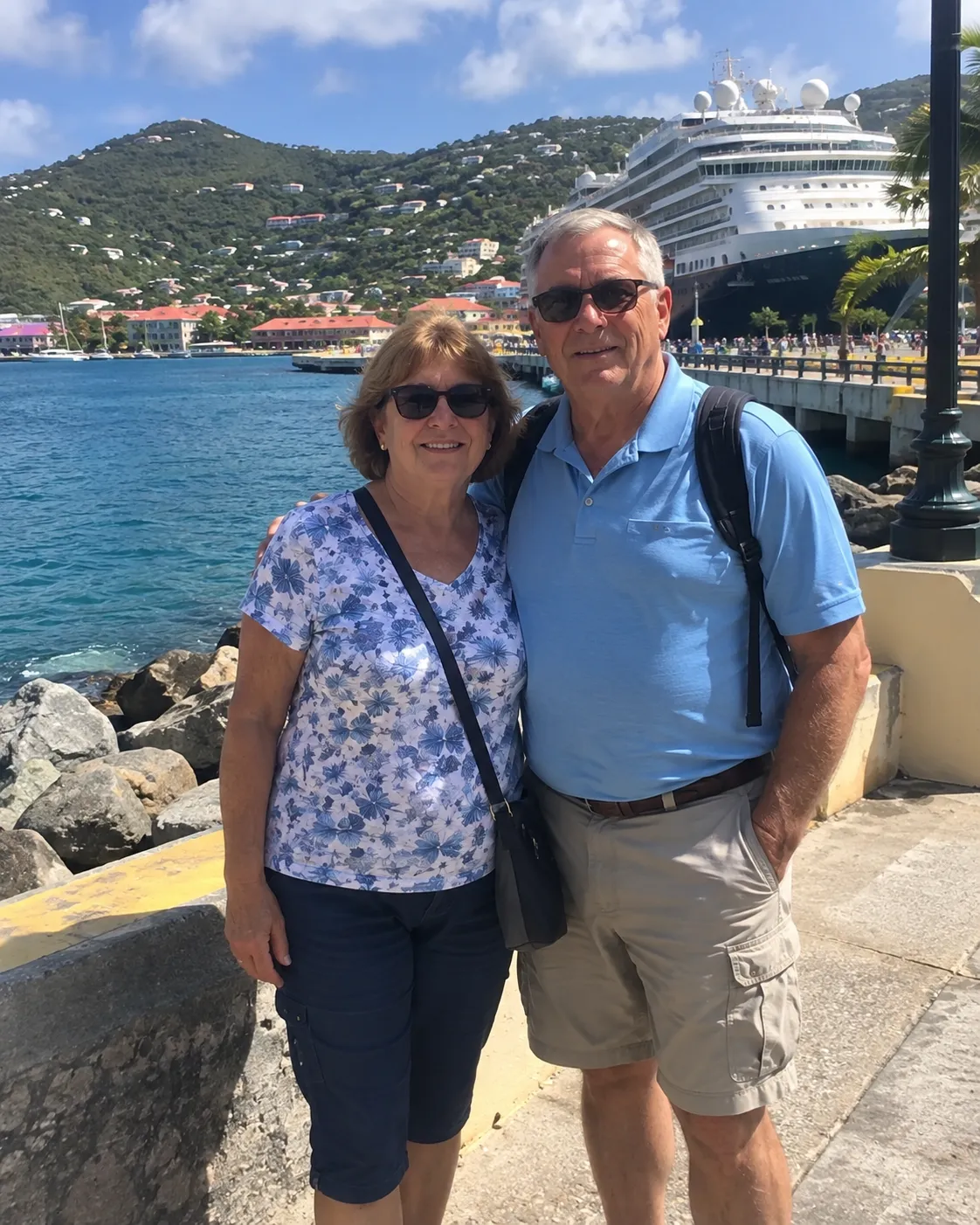
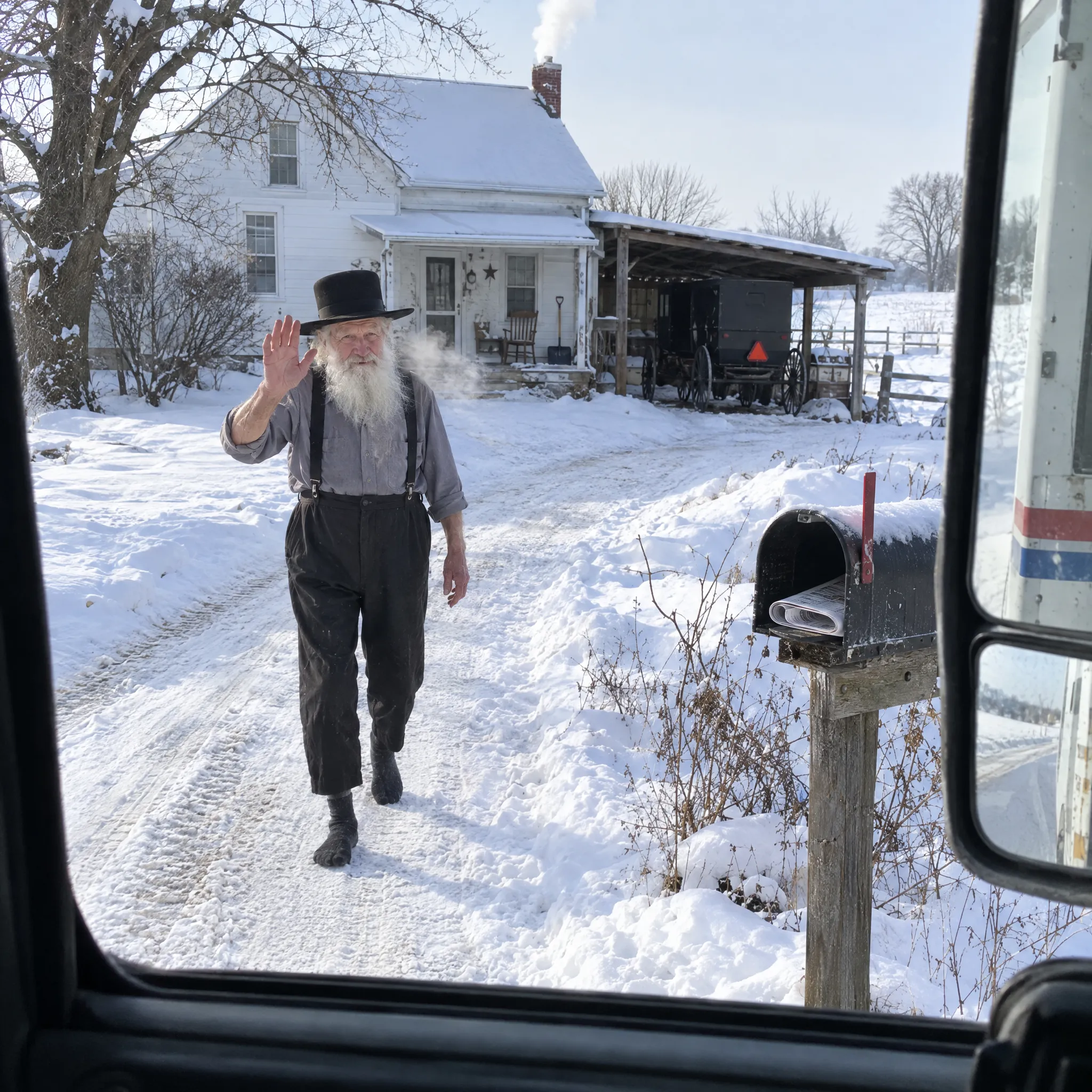
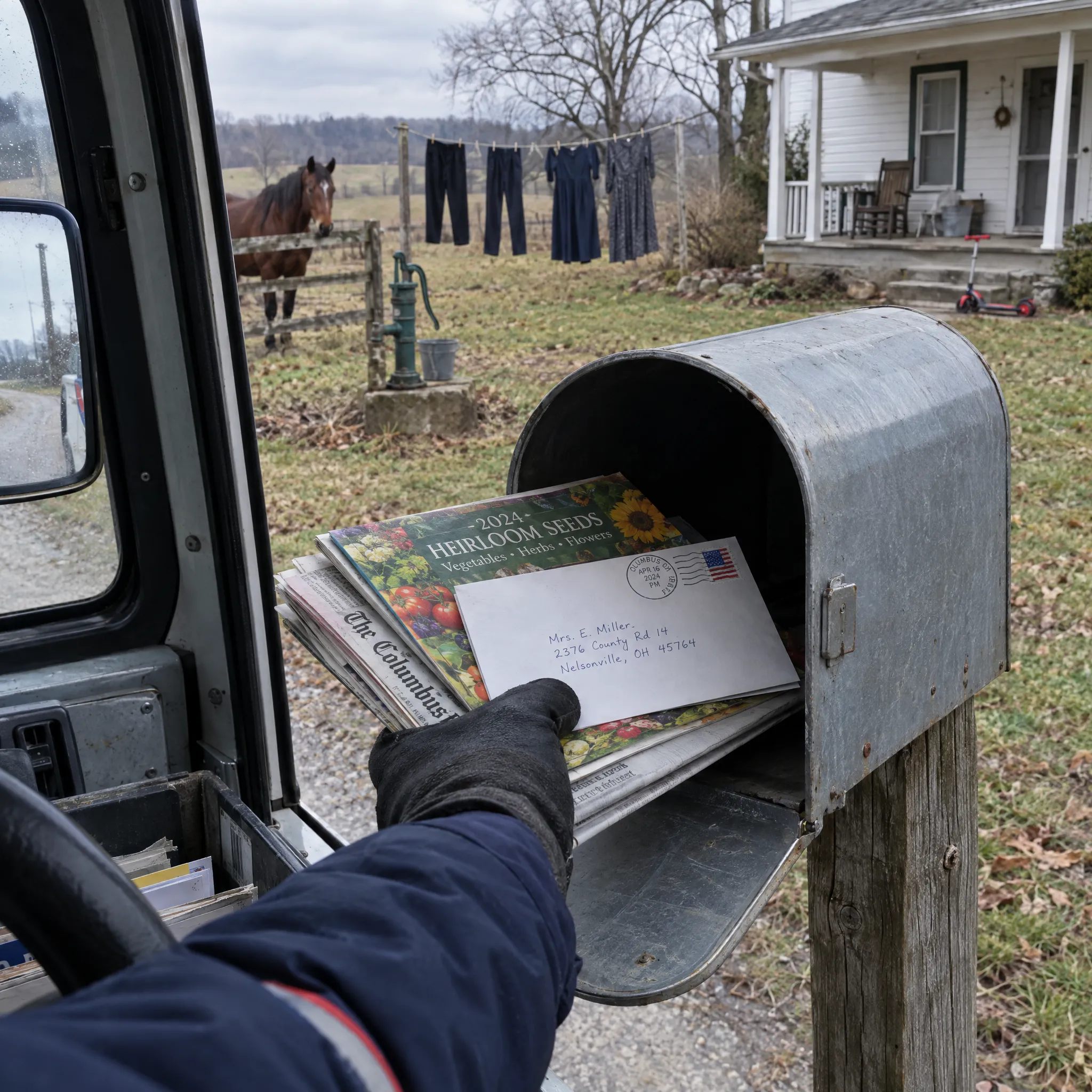
My father died at his kitchen table on a Sunday morning. He just slumped forward. Twenty-five years later, I sat down on a stone wall in the Caribbean and felt the same thing start in my chest. A Swiss doctor told me that night it wasn't bad luck. It wasn't genetics. It was something my own doctor had been looking straight at for three years and never saw. I'm 64 years old. My husband and I had been saving for this trip for almost three years. Caribbean cruise. Ten days. Puerto Rico, St. Thomas, St. Lucia. We'd talked about this trip since the kids were in college. The kind of trip you plan in your forties for your sixties. The reason you keep showing up to a job you stopped loving years ago. Day four, we're walking up the cobblestone streets of Charlotte Amalie toward Blackbeard's Castle for sunset. You've seen the pictures. White and coral colonial buildings climbing the hillside. Red tin rooftops in the sun. The turquoise Caribbean spread out below. Cobblestones underfoot worn smooth by two hundred years of Danish, then American, then tourist feet. The kind of place you put on a wall when you finally get home. My husband was walking ahead of me. He had his phone out taking pictures. Laughing at something a vendor had said in broken English. I was about thirty feet behind him. I'd noticed the climbing starting to get to me about halfway up. My heart was pounding hard. Not just the regular hard you'd expect on a hill. The deep pounding that I'd been feeling at home for the last six months walking up the stairs to our bedroom. I'd been telling myself it was just getting older. Just being out of shape from a winter of sitting at a desk. I'd been telling my husband the same thing. I stopped on the cobblestones to catch my breath. Put my hand on a stone wall. Tried to slow my breathing. It didn't slow. The pounding got worse. My chest started to feel tight, not painful exactly, but like someone was pressing a hand against my sternum. I started to sweat through my blouse. I felt the blood drain out of my face. I sat down on the wall. I tried to call out to my husband but my voice wouldn't come. Tourists kept walking around me. Stepping over my feet. Taking pictures of the view behind me. I sat there with my hand on my chest thinking about my father. My father died of a heart attack at 72. He was sitting at his kitchen table on a Sunday morning reading the sports section. He just slumped forward. I was 39 when that happened. And here I was, 64 years old, on a Caribbean cobblestone wall two thousand miles from home, doing the same thing. My husband turned around. I will never forget his face. He'd been laughing one second. The next second he dropped his phone on the cobblestones and ran back to me. 'Caroline. Caroline what's happening.' I couldn't speak. He grabbed my arm. Yelled for someone to help. A local man in his sixties from a nearby cafe came running with a chair. They got me into the chair. Somebody brought water. The cafe owner called for a vehicle. We're in the old town of Charlotte Amalie. The streets are too narrow for ambulances to move fast. They had a small cart that could navigate the cobblestones. They got me onto it and drove us down to the port. My husband held my hand the whole way down. He didn't say anything. Just held my hand and looked at me with the face I had been seeing in nightmares for twenty-five years since my father died. We got onto the tender boat back to the ship. He kept his hand on my chest the whole way across the water. I told him I was okay. I wasn't. The ship's doctor was waiting for us when we got on board. Someone had radioed ahead. Her name was Dr. Steiner. Swiss accent. White hair cut short. Maybe early sixties. She had me lie down on the exam table in the medical center on Deck 3. Hooked me up to a monitor. Took my blood pressure twice. Frowned at the reading. Drew blood. Looked at the numbers. 'You did not have a heart attack today,' she said. 'But you came close.' I was lying there with my husband sitting next to me holding my hand. I just looked at the ceiling. 'Your blood pressure is 178 over 104. Your pulse is irregular. You are on a medication for your cholesterol, yes?' 'Atorvastatin. Three years.' 'And your doctor. He is pleased with your numbers?' I said something about how my LDL had been sitting around 125 for two years and my doctor always said it was right where it should be. He'd been talking about bumping the dose at my last appointment anyway — said at my age they like it under a hundred. Dr. Steiner looked at me for a moment. Then she set down her stethoscope. 'How long has your American doctor been telling you your cholesterol is managed while your blood pressure has been climbing?' The question hit me sideways. I tried to answer. Couldn't. Because the answer was years. My BP had been creeping up at every annual for at least five years. My doctor kept saying we'd watch it. Maybe add a blood pressure medication next year if it didn't come down. It never came down. 'I want to tell you something I have spent the last two years quietly frustrated about,' she said. 'I trained in Switzerland. I practiced for almost twenty years in Zurich before I took this ship contract. And what I see when I see American patients on statins is the same thing every time.' She pulled up a chair. 'American statin patients come to me on cruise ships from all over the country. Different states. Different insurance plans. Different doctors.' 'And every single one of them tells me the same story. Their cholesterol is well-controlled. Their doctor has been monitoring them for years. They are doing everything they were told.' 'And every single one of them is sitting in front of me tired in a way sleep does not fix, with hands that do not grip the way they used to, their blood pressure climbing, and their hearts straining to move blood through vessels that have been stiffening for years.' 'The American healthcare system has decided that monitoring a statin patient is the same thing as treating one. It is not.' 'Monitoring is watching the damage happen and writing it down. Treating is addressing what is causing the damage in the first place. American doctors are very good at the first one. They are not trained for the second one.' 'That is not a criticism of your doctor. He is doing what he was taught. He looks at your cholesterol. He adjusts the doses. He writes the next prescription.' 'That is the protocol. And the protocol is what is failing you.' She paused. 'And what I see, every time I treat an American statin patient, is what just happened to you on that hill. A 64-year-old woman with managed cholesterol, on atorvastatin for three years, who came within a hair of a cardiac event on what should have been a vacation walk.' I asked her what I should have been told. 'You should have been told that cholesterol is not your enemy. Your body makes it on purpose. Your brain runs on it. Your hormones depend on it. Every cell in your body needs it.' She held up her hand. 'What is actually happening is that the cholesterol in your blood is being attacked. Free radicals — from stress, from processed food, from the years — hit it and it oxidizes. It rusts. The same thing that happens to a sliced apple left on the counter. Nobody added anything to the apple. The air did it.' She looked at me. 'And rusted cholesterol does not sit politely. It turns sticky. It burrows into the walls of your arteries and packs in, layer over layer, year after year, and hardens into plaque. Then one day a piece tears loose, the artery jams shut, and that is the heart attack.' I wanted to say something but she held up her finger. 'The number your doctor watches counts how much cholesterol you have. It says nothing about how much of it has already gone brown. You can have a beautiful number and rusting arteries in the same body.' 'And when your cholesterol rusts, your body reads that rust as damage. So it makes more to patch it. Which gives the rust more to work on. It is a wheel. Round it goes.' 'You have been feeling this already. Do you get winded on stairs you used to climb without thinking?' 'Yes.' 'Does your chest tighten when you walk uphill? Not pain. Pressure.' 'Yes. For about six months.' 'And your blood pressure. Your doctor has been watching it climb.' 'Five years.' 'And then. The arteries feeding your heart muscle.' She paused. 'What just happened to you on that hill was the rust that has been building in your arteries for three years while your doctor watched the number and called it managed. It just reached your heart today. The arteries feeding your heart muscle are stiffer than they should be for a woman your age. The hill demanded blood flow your vessels could no longer deliver. Your heart pounded because it was trying to compensate. You came close to a cardiac event.' My husband was crying silently next to me. I could feel his hand shaking against mine. 'My father died of a heart attack at 72,' I said. Dr. Steiner nodded. 'Then you have known what this looks like. And you have been walking toward it for three years while your doctor told you everything was fine.' I asked her what the atorvastatin had been doing for me if all of this was happening underneath it. 'The statin goes into your liver and shuts down the production line. You make less cholesterol. The number on your chart drops. Your doctor is satisfied.' 'But it never touches the rust. The cholesterol you still have — and you need it, you cannot live without it — keeps rusting. Keeps sticking. Keeps building. Right where nobody is looking.' 'It bails water as fast as it can. It never finds the hole the water is coming in through.' I sat with that. 'And the dose,' I said. 'My doctor wanted to bump the dose next.' She nodded slowly. 'More of the same. A bigger pill that chops harder at the number. That is the whole protocol — when the number drifts, raise the milligrams. And every time they raise it, they take something else from you.' She let that land. 'That production line the statin shuts down in your liver does not only make cholesterol. It also makes something called CoQ10. The spark plug. The energy every muscle in your body burns to do its work. Your legs. Your hands. Your heart.' 'Shut that line down to force the number lower, and you throttle the spark at the same time. Same switch. You cannot shut off one without the other.' She looked at my hands. 'The tiredness that sleep does not touch. The grip going soft. The fog that eats the back half of your sentences. That is not your cholesterol — high cholesterol has no symptoms at all, it is silent. And it is not your age.' 'It is the pill. Draining the spark out of every muscle you have. They call it a side effect. It is not. It is the drug doing exactly what it was designed to do.' 'I have seen it in patients for twenty years. Good number on the chart. Doctor pleased. And the woman sitting across from me cannot open a jar she opened with one hand a year ago.' She was quiet for a moment. Then she said something I did not expect. 'I watched it happen to my own husband.' 'Seven years on rosuvastatin. His numbers were perfect. His doctor wrote "excellent" in the chart every six months.' 'And every six months I watched him get a little more tired. His hands went first. Then the words. He blamed his age. His doctor agreed.' 'He died of a cardiac event at sixty-one. The last panel was in a drawer in our kitchen. Beautiful numbers. Not one word about the rust.' She picked her stethoscope back up. 'That is why I am telling you this. I could not tell him. I did not know then what I know now.' I asked her what addresses it if the medication doesn't. 'Not a drug,' she said. 'A pigment.' She pulled out a small notebook from her pocket. Started writing. 'You know the deep red that stains everything when you cut a beet? The color that will not come off your hands or your cutting board? That color has a name. Betalain. It is an antioxidant — but not like any antioxidant you have heard of. It does two things none of the others do.' She kept writing. 'First — most antioxidants are a carpet bomb. They knock out every free radical in your body, including the ones you need. Betalains are a smart missile. They target only the specific reaction that turns your cholesterol rancid. Only that one. Leave the rest alone.' 'Second — they actually get inside. Carried into the bloodstream, folded right inside the cholesterol particle itself, where the rusting starts. A statin cannot reach in there. Fish oil cannot. Nothing on your kitchen counter can.' She tore off the page and handed it to me. 'They stop the rust at the source — before it turns sticky, before it builds the plaque. And they do it without touching that production line in your liver. They never lay a finger on your CoQ10. Stop the rust the pill ignores. Leave the spark the pill drains.' 'And your number comes down too. Not because something is holding it down. Because the rust was the reason it was high — the body kept making more to patch the damage. Take away the rust, and it stops. The number comes down on its own. Not forced. Resolved.' I looked at what she had written. 'If this is in the research,' I said, 'why has my doctor never said a word about it?' 'Because the day an American doctor writes beetroot on a chart instead of a statin, he is finished. There is a standard of care. If your numbers say statin, the guideline says statin.' 'If he tells you to take something else and anything goes wrong for any reason, the family attorney pulls his records and that is his license.' 'He cannot afford to know what I know. So he watches the chart and writes the prescription and hopes.' 'I am not inside that system. I can say it. He cannot.' 'There is one caveat. Not every beet is the same. I learned this the hard way.' 'After my husband died, I read the research and I did what anyone would do. I bought the first bottle of beetroot capsules I could find. Fourteen euros. Took them for a month. Nothing.' 'The beet in your grocery store has been bred for a hundred years for one thing — sugar. Sweeter, bigger, easier to ship. Every time they bred it sweeter, they bred the betalains down. The beet that used to be medicine became candy.' 'And then the supplement companies take that beet and dry it at high heat, because it is fast and cheap. Heat destroys betalains. What is left looks like medicine and does nothing.' 'So I went back to the studies. Not the results — the fine print. What beet they used. How it was dried. What dose. And I found four things that matter.' She wrote them down. 'One — the old variety. There is an heirloom line the farming families kept going. In German it is Blutwurzel. Blood root. The Amish came from those valleys — Switzerland, the German Palatinate — generations ago, and they took the seed with them. They still grow it in Lancaster County, Pennsylvania. Up to ten times the betalains of a commercial beet.' 'Two — harvested after the first frost. The cold stresses the root and it floods itself with betalains. That defense is the medicine.' 'Three — never heated. Shade-dried, slowly, so the pigment survives into the capsule. It takes weeks. Almost nobody does it.' 'Four — a real dose, verified. Thirteen hundred milligrams, with the betalain content tested by a laboratory. Numbers on paper. Not promises on a label.' She named a company she had been recommending to her own patients for two years. Rosabella. She wrote that name down too. 'I called this company myself before I recommended it to anyone,' she said. 'That is how I was trained in Switzerland. You do not put your name behind a supplement the way you would not put your name behind a medication. You verify the source. You read the lab work.' 'They sent me everything within the day. All four. The strain, the harvest, the drying, the certificate. The strain was real. The drying was real. The labs were clean.' 'And here is how you will know if what they send you is real. Open a capsule onto a white dish. If it stains deep crimson, it is real. If it is brown dust, it was cooked. The betalains are dead. Send it back.' She looked at me one more time. 'Your body is not failing you. The protocol treating your compliance as the solution is failing you. The rust is the problem. The number is the cover of the book. The betalains go where the statin cannot. That is what we do in Switzerland. That is what you should be doing in the US.' I asked her what I should do for the rest of the cruise. She told me to take it easy. No more hills. She gave me a beta blocker to bring the blood pressure down. Told me to skip the buffet and stick to grilled fish or chicken with vegetables at dinner. Plenty of water. She would check on me again in two days. She also said something I have not been able to forget. 'You did not have a heart attack today. But your body is telling you it is preparing for one. Your doctor has been monitoring you. He has not been treating you. There is a difference.' My husband and I went back to our cabin. I sat on the edge of the bed for a long time and just stared at the wall. My husband sat next to me without saying anything. He finally said, 'Your father died at 72. We have eight years if we do nothing different.' I told him I knew. We did not go on the St. Lucia excursion the next day. We sat on the ship's deck and watched the island go by from the railing. I did not feel sorry for the missed excursion. I felt sorry for the three years. The rest of the cruise was different. I kept thinking about what Dr. Steiner had said. About the rust. About the spark. About how the same thing that had been making my hands stiff in the morning had just made my heart pound on the hill. I had been treating those things like separate problems for years. The tiredness by three in the afternoon I had blamed on getting older. The hands that needed two tries to open a jar I had blamed on arthritis. The words I lost in the middle of sentences I had blamed on not sleeping well. The blood pressure I had told myself I would deal with at some point. The heart pounding on the stairs at home I had blamed on being out of shape. Dr. Steiner had connected all of it in twenty minutes. My American doctor had been seeing me twice a year for three years. He had never once connected any of it. We got home on a Sunday. That night I could not sleep. My husband was already in bed. I went downstairs at 11:30 PM and opened my laptop. I typed in what Dr. Steiner had written down. Betalains. Oxidized LDL. Blutwurzel. I went down the rabbit hole. The twelve-week clinical trial. Real human patients. Concentrated betalains, daily. Total cholesterol down. And the oxidized LDL — the rust, the thing my doctor had never once tested for — down more than twenty percent. Peer-reviewed. Universities in Germany. Italy. Clinics across Europe. Same results across the board. I sat there at my kitchen table at 1 AM reading study after study. The mechanism was exactly what Dr. Steiner had described. The rust. The sticky particles burrowing into artery walls. The production line the statin shuts down — and the spark it takes with it. All of it published. All of it in journals American doctors should have been reading. All of it sitting there in the medical literature while my doctor wrote me atorvastatin scripts for three years and watched my blood pressure climb without ever asking what was causing it to climb. I felt something rising in my chest. Not anger. Something else. The same thing I had felt sitting on that wall in Charlotte Amalie knowing my father had died this way. I started searching for the brand Dr. Steiner had named. Rosabella. Most beetroot supplements online were garbage. Grocery beet powder, spray-dried at high heat. Five hundred milligrams hidden inside a proprietary blend. No strain listed. No lab report. Nothing matching what the research used. Rosabella was the only one I found that matched what Dr. Steiner had described. The heirloom Blutwurzel strain from Amish farms in Lancaster County. Hand-harvested after the first frost. Shade-dried at low temperature so the betalains reach the capsule alive. Thirteen hundred milligrams. A certificate of analysis posted right on their site — an outside lab, testing the actual batch. I read the reviews. People on statins describing exactly what I had been going through. Years of atorvastatin that never moved anything but the number. Then the tiredness lifting, the hands coming back, the numbers dropping within weeks once they stopped the rust instead of chasing the chart. I ordered three bottles at 2:15 AM. I was not going to do this halfway. The bottles arrived 6 days later. I did what Dr. Steiner told me to do first. Opened a capsule over a white saucer. Deep crimson. Almost violet. It bled across the porcelain the second the powder touched it. I tipped a drop of water on it and the red spread like a cut. Not brown. Not dust. The real thing. Two capsules with breakfast. That was the whole protocol. Week one. I want to be honest about what the first week felt like. The cholesterol part takes weeks. I knew that. Dr. Steiner had been clear. But something happened the first morning that I need to tell you. About seventeen minutes in, I was standing at the sink, and I felt warmth. In my hands first. Then my face. Like circulation coming back to a foot that fell asleep, except everywhere. Dr. Steiner had told me it might happen — the betalains help your blood vessels relax and open, and some people feel it fast. "That is not the cholesterol part," she'd said. "That is just the blood moving the way it is supposed to." I stood there with my hands on the counter and felt them warm up for the first time in months. Week two. The afternoon fatigue I had been pushing through for years started lifting. I came home from the grocery store on a Wednesday and did not collapse into the recliner like I had every weekday for the last year. I cooked dinner with my husband. Sat at the table. Watched a full movie awake. Week three. I did something I'm not going to tell you was the right thing to do. I stopped the atorvastatin. I stood in my bathroom with the pill in my hand — the same pill I'd taken every morning for three years because a doctor told me my number was too high and this would fix it. And I thought about the wall in Charlotte Amalie. And Dr. Steiner's husband. And the drawer with the beautiful numbers in it. I put the pill in the drawer and closed it. I'm not telling you to do that. I'll say more about it at the end, because it matters. But I'm not going to pretend it didn't happen. Week four. The hands. I opened a jar of pickles on the first try — the same jar I'd been handing to my husband for a year. I stood at the counter holding it and didn't say anything. He looked up from the paper. Looked at the jar. Looked at me. Went back to the paper. Week five. The fog. I lost fewer words. I finished a crossword. I called my daughter and remembered I'd already told her about the cruise — three days earlier, in detail. I hadn't caught myself doing that in a year. Week six. I went to one of those walk-in lab places and paid for a cholesterol panel myself. No doctor. No chart. Just me, finding out. Three days later I was holding the printout in my kitchen. LDL: 116. Down from 125 — the number three years of atorvastatin had held it at. Three weeks without the pill, and it was lower than the medication had ever taken it. HDL: up nine points. Week eight. The stairs. I came up the stairs to our bedroom one night and realized halfway up that my heart was not pounding. The same stairs that had been making me stop at the landing for months. The same pounding that had nearly killed me on the hill in Charlotte Amalie. I went up. Then back down. Then up again. Just to make sure. My husband was already in bed reading. He looked up at me confused. I told him what I had just done. He set his book down. We both just sat there for a minute. Week twelve. I went to my regular doctor's office for a follow-up. Full panel. LDL: 110. Down from 125 at my last appointment — the number three years of atorvastatin had never moved below. HDL: 56. Up from 42. The protective one. The one the medication had never touched. Blood pressure: 124 over 76. Triglycerides: down by a third. The nurse ran the panel twice because the first one came back so different from my prior numbers that she thought the lab had made a mistake. My doctor walked in. Pulled up my chart. Stopped. Scrolled. Looked at me. 'Caroline. What did you change?' I told him. The Swiss ship doctor. The hill in Charlotte Amalie. The rust. The spark. The twelve-week trial. And that I'd stopped the atorvastatin nine weeks ago. I talked for twenty minutes. He did not interrupt once. He put his pen down. 'You stopped it on your own. Without telling me.' 'Yes.' 'Caroline, you don't do that. Whatever you think of the medication — coming off it is something we manage together. Slowly. Watched. People have events doing what you did.' 'I know. I'm not recommending it to anyone. I'm telling you because you should know, and because I'd like you to look at the numbers.' He was quiet for a long time. Then he said, 'I have not been trained on this. But your numbers have not just held — they have come down off the medication. I want to see you again in ninety days. If these hold, we don't need to revisit the atorvastatin.' He didn't ask what it was called. He didn't endorse it. He just looked at the numbers, and then — for the first time in three years of appointments — he looked at me. I walked out of his office without a new prescription for the first time in three years. The atorvastatin is still in the drawer. I haven't opened it since. I am writing this because I almost died on a hill in Charlotte Amalie and my American doctor would never have known why. If I had had the heart attack that day, my husband would have flown my body home and buried me next to my father. The autopsy would have said the same thing my father's said. Cardiac event in a woman with managed cholesterol on a statin. Common in patients her age. Nothing that could have been done. Nobody would have asked why a woman with 'managed' numbers had been steadily losing her energy and her hands and her words for three years while her doctor wrote prescriptions for a drug that only addressed the number on the chart. It took a Swiss ship doctor twenty minutes to explain what my American doctor never explained in three years. It took a hill in Charlotte Amalie to make me listen. If you are on a statin and your numbers have been 'managed' for years while you have been quietly losing function. Tired in a way sleep doesn't fix. Hands that need two tries. Words that walk away mid-sentence. Climbing blood pressure. Heart pounding on the stairs you have been blaming on being out of shape. Please listen. The same rust that almost killed me on that hill is doing the same thing to you right now. The atorvastatin is not stopping it. A bigger dose will not stop it. It manages the number on the chart. It does not touch the rust. And every year it drains a little more of the spark out of every muscle you have. There is something that does. Rosabella is the product Dr. Steiner wrote down for me on a piece of paper in the medical center of that cruise ship. The same product she had been recommending to her own patients for two years. Heirloom Blutwurzel beetroot. The old strain, saved by Amish families in Lancaster County for over a hundred and fifty years. Hand-harvested after the first frost. Shade-dried so the betalains reach the capsule alive. Thirteen hundred milligrams per capsule. Lab-verified. No fillers. Two capsules every morning. With a glass of water. That is the whole protocol. 90-day money-back guarantee. If your numbers do not move, you get a full refund. I have been ordering Rosabella monthly since I got home from that cruise. It is backordered more often than not. They produce in small batches to keep the potency intact. There are also knockoffs flooding Amazon with beetroot on the label and brown dust inside — grocery beet, spray-dried at high heat, dead before it reaches you. The saucer will tell you in one second. Only order through the official site. If it is in stock when you click, do not wait. If you have a doctor's appointment in the next 30 or 60 days and you want to give your body a real chance before that visit, check availability now. Don't wait. Every day the rust keeps building is another day closer to the dose increase your doctor is already planning. And another day closer to the hill that might not have a Swiss ship doctor at the bottom of it. — Caroline M. https://track.tryrosabella.com/bfcb877b-9f52-4175-9be6-9bc1a89ce3a8 P.S. — If you got all the way here, I think I know why. Somebody's face kept showing up while you read. Maybe your own, in the mirror, pausing on the landing. Maybe your husband's, asleep in his chair before the news is over. Maybe you've been telling yourself it's age because your doctor keeps telling you the numbers are fine. Trust what you've been seeing. The chart said I was managed. The hill in Charlotte Amalie said otherwise. P.P.S. — I wrote to Dr. Steiner when my numbers came back. She'd written her email on the same page as the four things. She wrote back one line: "Now you know what I could not tell my husband." P.P.P.S. — When your bottle arrives, do the saucer test before you take the first capsule. Open one over a white dish. If it stains deep crimson, it's real. If it's brown dust, send it back. Then take your first two with a glass of water and pay attention around the seventeen-minute mark. Not for a miracle. For the warmth. That's not the cholesterol — that takes weeks. That's your blood moving the way it's supposed to for the first time in a long time. And after that, be patient the way I almost wasn't. The rust took years to build. The bloodwork takes weeks to answer. Mine answered at week six. It answers. P.P.P.P.S. — One more time about the statin, because I meant what I said. I stopped the atorvastatin on my own, in my bathroom, without telling my doctor first. That was my choice and my doctor was right to correct me for it. If you're on a statin right now, bring your doctor. Show them the research. Come off slowly and watched, or don't come off at all. The beetroot doesn't ask you to choose. It works on the rust either way. P.P.P.P.P.S. — Rosabella is small. One heirloom seed line. A handful of Amish farms. One harvest a year after the first frost. Shade-dried for weeks because it can't be rushed. When a season's batch is gone, it's gone until the next one. They run a buy-3-get-3 deal — six months for the price of three. I used it. I keep a spare now because I ran out once and waited eleven days and I will not do that again. The buy-3-get-3 covers you and someone else for three months each. You already know who your someone else is. You've been thinking about them this whole time. P.P.P.P.P.P.S. — 90-day money-back guarantee. Even on empty bottles. If your saucer doesn't stain, if your energy doesn't shift, if your numbers don't move — send it back, full refund. Three years of atorvastatin never came with a guarantee. It came with a drawer. And a hill I almost didn't come back from. https://track.tryrosabella.com/bfcb877b-9f52-4175-9be6-9bc1a89ce3a8
More from The Health Haven
Support stamina and heart health every day
The Health Haven
Support stamina and heart health every day
The Health Haven
Support stamina and heart health every day
The Health Haven
Support stamina and heart health every day
The Health Haven
Support stamina and heart health every day
The Health Haven
Support stamina and heart health every day
The Health Haven
Support stamina and heart health every day
The Health Haven
Support stamina and heart health every day
The Health Haven
Support stamina and heart health every day
The Health Haven

Stop leaky blood vessels naturally
The Health Haven
Support stamina and heart health every day
The Health Haven

Stop leaky blood vessels naturally
The Health Haven

 Add to Chrome