Support heart health and stamina every day
Ad Copy
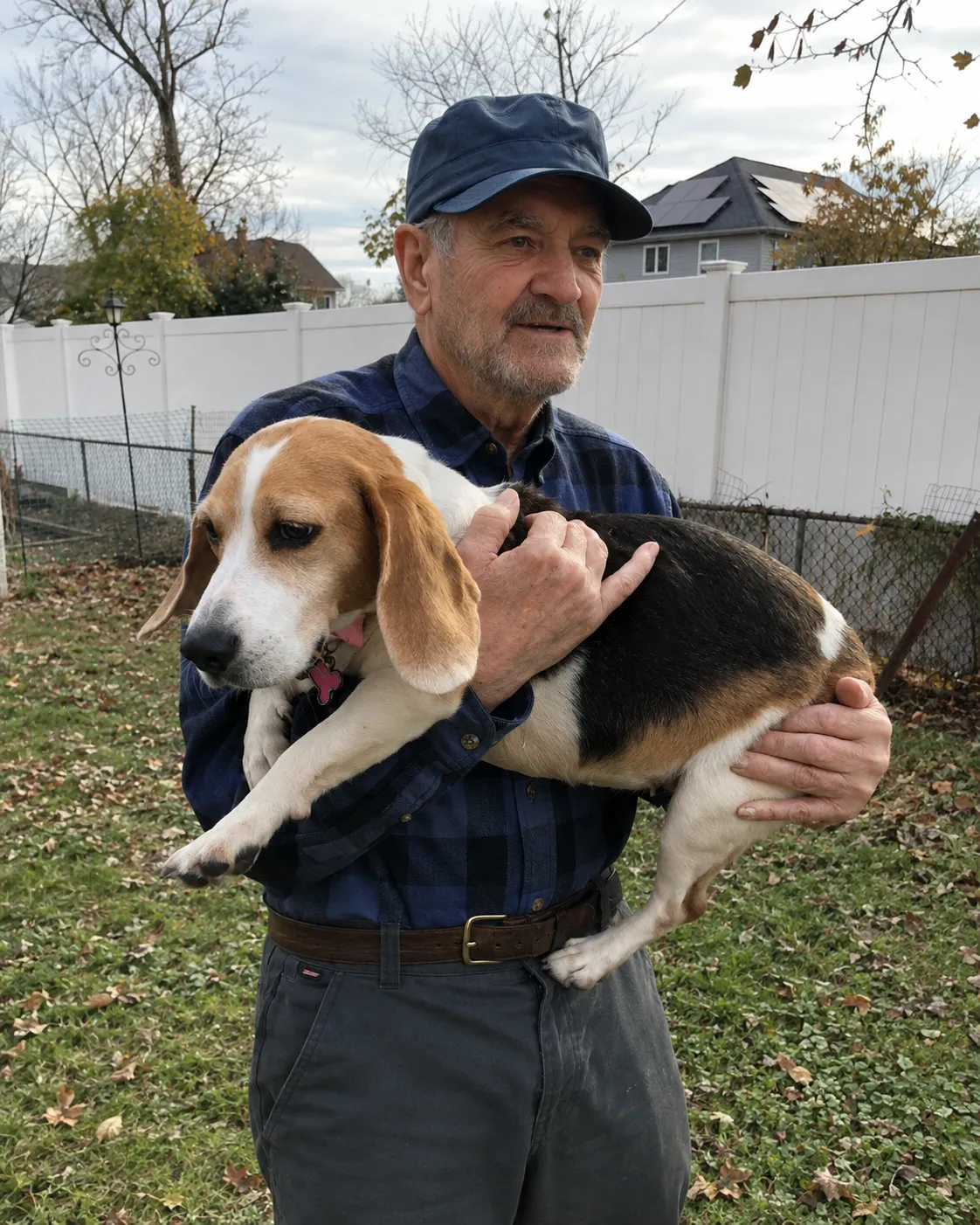
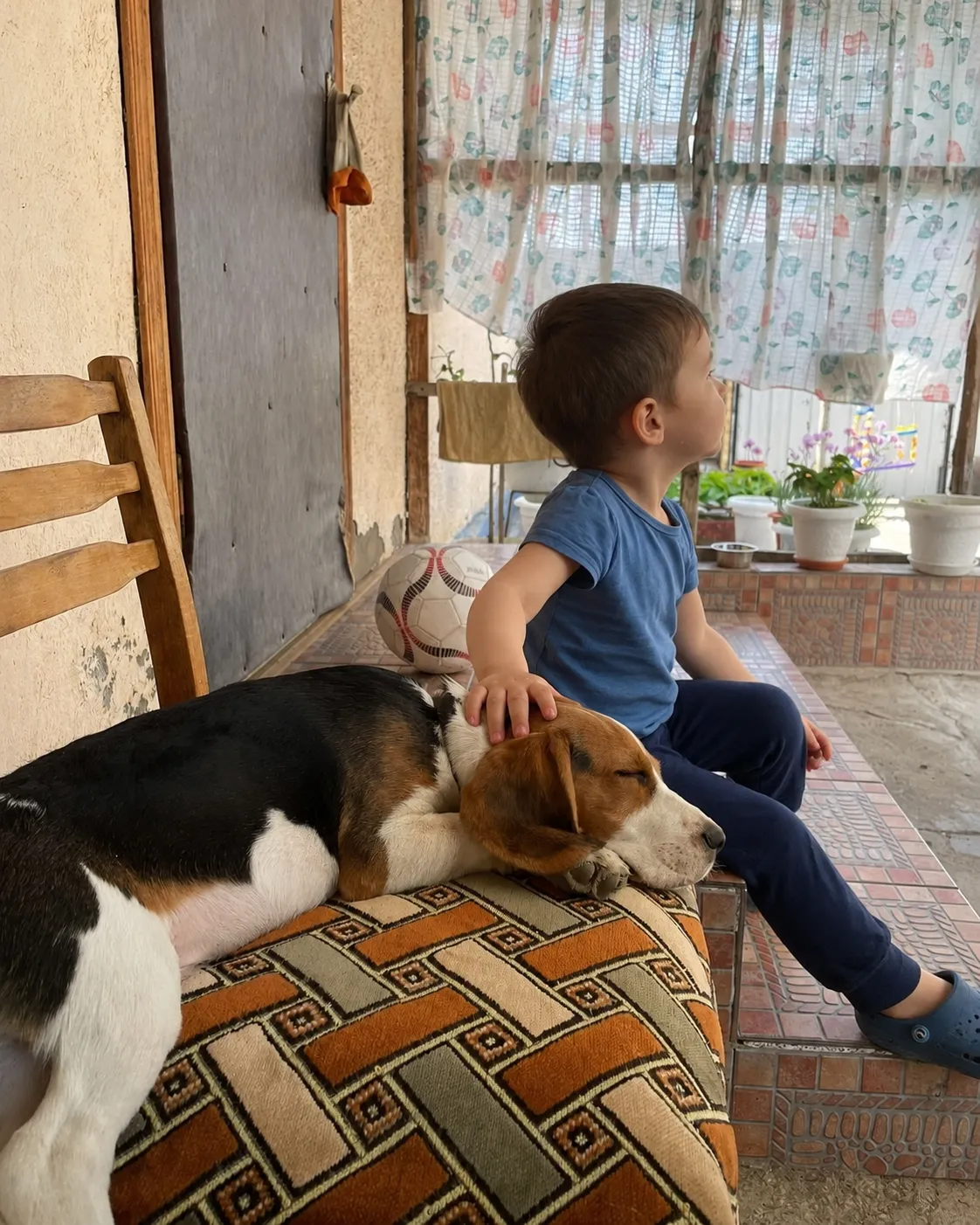
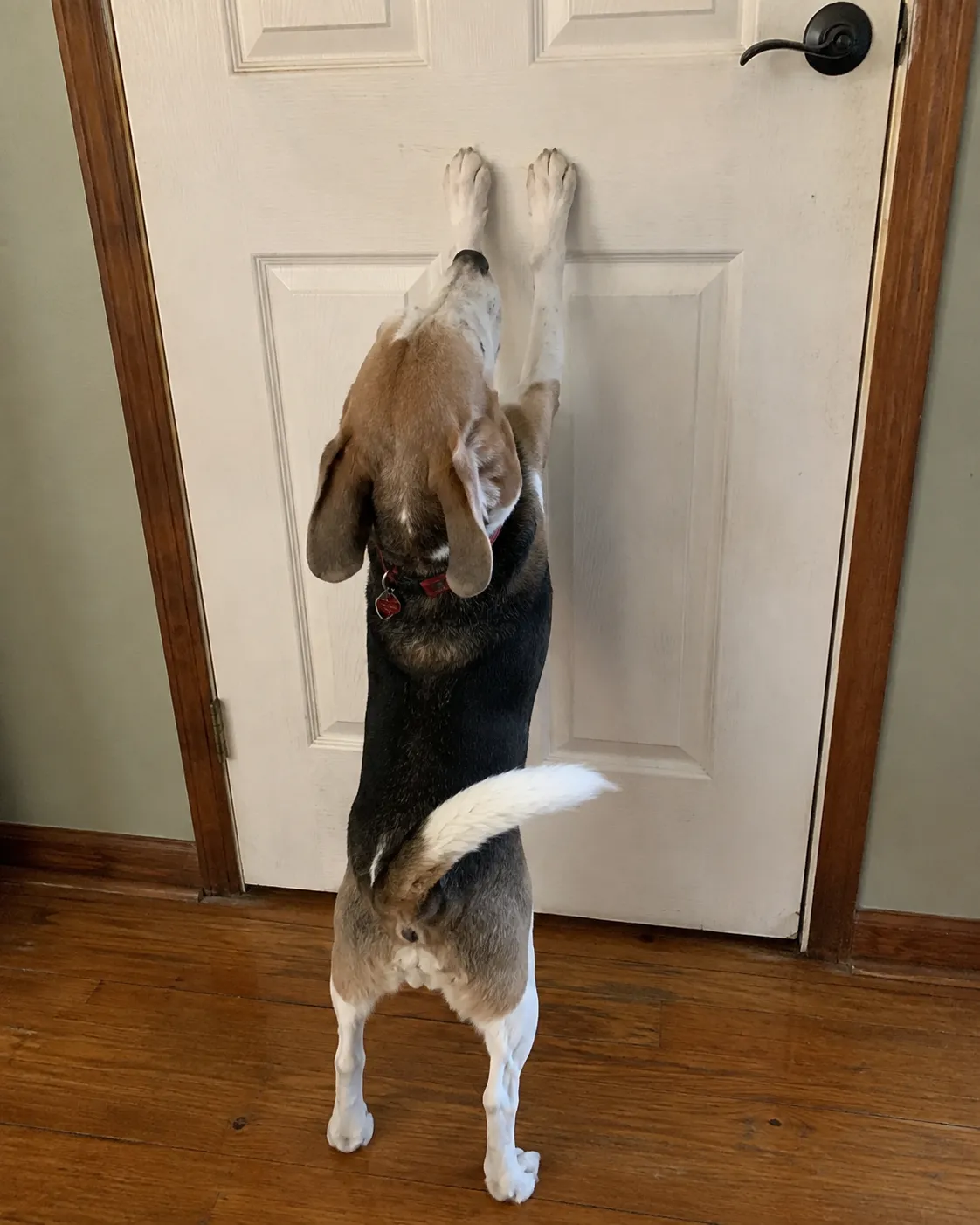
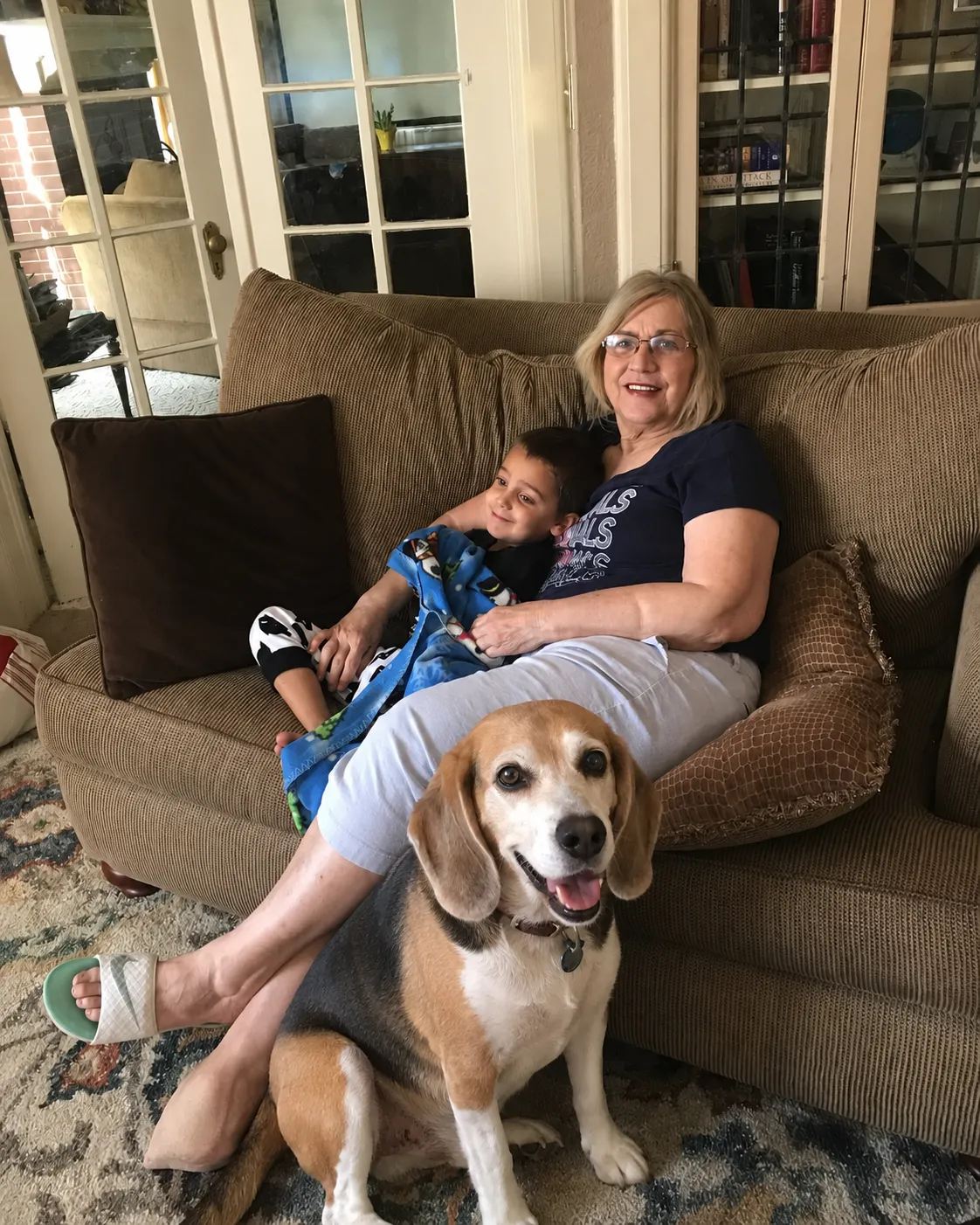
Fourteen months after my husband died on our workshop floor, our dog still scratches at the door at 4:30 every afternoon looking for him. His name is Buck. He's an old beagle. The classic black and tan and white kind. Starting to gray on the muzzle now, ears too long for his head. He was Ray's dog, really — I fed him and I loved him, but he was Ray's — and he has not, in fourteen months, worked out where Ray went. 4:30 was Ray's coffee break. That dog has never once been wrong about the time. Doesn't matter if the clocks fall back. Doesn't matter if it rains. 4:30, Buck is at that door. Behind it is my husband's workshop. His pegboard. His workbench. The coffee cup he set down on a Tuesday afternoon in September that I have not moved. And a fishing rod he was building for our grandson Owen — hand-wrapped guides, cork handle, Owen's initials burned into the base — still in the vise where Ray left it. I have not opened that door since the day the ambulance came. My daughter Rachel brought Owen over on Sunday. He's seven. Missing his front two teeth. He came running through the back door with Buck at his heels and grabbed my hand and said, "Nana, come play." I said of course. I got up and I walked out into the yard with him. I want you to picture what I mean when I say my body did not go with me. I made it four steps into the grass. Owen was already at the other end of the yard with a stick, Buck circling him the way he used to circle Ray, and I went to take a fifth step and my leg did not answer. My hand went to my chest — the way Ray's must have gone to his, I've thought about that a hundred times — and I went down on one knee in the grass. Buck stopped running. Came back. Stood at my hip and looked at me. "Nana?" "I'm okay, baby. I just need a minute." I got up. I made it back to the porch. I sat down on the step and I watched my grandson play with the dog from twenty feet away, and my hand stayed under my sweater on my chest for a long time. Rachel saw my face before Owen ran to her. She stood in my kitchen with her keys in her hand and said, "Mom. What happened." "Nothing happened. I was just tired." "You look terrible." "I'm fine, Rachel." She waited. When I didn't say anything else, she kissed my cheek and got Owen in the car and drove away. I closed the door. I sat down at the kitchen table. And I cried the way you cry when nobody can hear you. At 4:30 Buck got up from under the table and went to the workshop door and started scratching. Let me back up. My name is Marlene Corliss. I'm 65. I taught second grade at Hallowell Elementary for 34 years — the same school I went to when I was seven, in the same town I've lived in every year of my life. I retired in 2020. Ray retired the year after. We had plans. Ray was a lineman for the power company for forty-one years. Big man, quiet, hands like catcher's mitts. He built the house we live in with his uncle Del the summer before we got married. He built the workshop off the back of the house the summer after. Every table I've eaten dinner on for the last forty years was made by my husband. He died on a Tuesday in September, fourteen months ago. Heart attack. He was 68. He was in the workshop when it happened. I'd gone to the grocery store for the eggs I'd forgotten. I was gone about forty minutes. When I came back, Buck was scratching at the door — same as he does now, only that day he was scratching for a different reason — and I found Ray on the floor next to his workbench. Three weeks earlier, he'd had his physical. His numbers were good. He was on his cholesterol pill like a clock — never missed a dose in six years. His doctor called him a model patient at that last visit. Ray told me on the drive home. He was proud of it. Three weeks later he was on our workshop floor. I have not been to church since three days after his funeral. Three months after Ray died, I went in for my own physical. I hadn't been sleeping. I was having palpitations at night — my heart would go, and I would lie there in our bed on my side, and I would wait to see if this was the one. Dr. Halstead ran the bloodwork. He had been our family doctor for twenty years. Ray saw a cardiologist over at Ridgeview for his cholesterol, but Halstead did our physicals. He is a good man. He called me back three days later. My cholesterol had come up. Not by a lot. But enough, he said, that we should get in front of it. Grief does this, he told me. It's not uncommon. Widows have heart attacks in the first year at rates you wouldn't believe. He wrote me a prescription for atorvastatin. Twenty milligrams. To be safe. I didn't ask him what Ray had been on. I filled it that afternoon at the pharmacy inside the grocery store. I stood in line behind a woman buying diapers and a man buying beer, and when the pharmacist handed me the little white bag I looked at the label and I already knew what it was going to say before I read it. I took it home. I put the bottle on the counter next to Ray's coffee maker. I took the first one that night with a glass of water. I would have taken anything. I was numb from grief. If Dr. Halstead had handed me a pill that turned my hair blue I would have taken it and asked no questions. Anything not to be next. The legs came first. Not right away. Six or seven weeks in. I would go to stand up from my chair and my thighs would feel heavy, like there was something in them that hadn't been there the day before. I told myself I was just sitting too much. Everybody sits too much. I was 65 years old and my husband was dead. Of course my legs felt heavy. Then the fog. I would walk into the kitchen and forget what I was looking for. I would call my daughter Rachel and lose the middle of a sentence. Once I stood in the produce aisle at the grocery store and could not remember the word for the vegetable I was holding. It was a squash. I looked at it for a full minute. Then the tiredness that no sleep touched. I would go to bed at nine and wake up at eight and feel like I had not slept at all. I stopped walking Buck. Ray used to take him twice a day. All the way down our road and back — that's a half a mile round trip. Buck knew the route by heart. He would stand at the door with his leash in his mouth at 6:30 in the morning and 5:15 in the afternoon like it was on a clock. After Ray died I did the walks. I owed Buck that. I did them for the first eleven months and then one Wednesday afternoon I got to the mailbox at the end of the drive and I couldn't make it any further and I turned around and came back. Buck stopped bringing me the leash. I made an appointment. I went back to Dr. Halstead. I told him about the legs and the fog and the fatigue. I told him I could not walk to the end of my own driveway. He listened. He nodded. He looked at my chart. "Marlene," he said, "your grief is catching up to you. It does this. It hits when you think you're past the worst of it. Give yourself time. Try to get out of the house. Eat something warm. It gets better." I sat there in that chair and I nodded and I said thank you. I did not tell him about the palpitations coming back. I did not tell him that some nights I put my hand on my chest and left it there. I did not want to hear him say it was grief. Because it might not have been grief. The people who loved me started to move around me carefully. Rachel started calling every Sunday afternoon at 2 o'clock. Not because we had ever done that. Because now she needed to know I was still picking up the phone. If I didn't pick up she would call back at 2:20 and then at 3, and once when I had fallen asleep with the ringer off she drove the forty-five minutes over here and let herself in with her key at 4:15 and I woke up to my daughter standing in my kitchen with her coat still on. The mail carrier started walking my packages up the driveway instead of leaving them in the box at the road. She never said anything about it. She just started doing it. Every Wednesday afternoon Elaine from church would drop off a casserole at the door — chicken and rice one week, tuna noodle the next — and I would put them in the freezer without eating them. My phone would buzz on Sunday mornings from the church group thread — missing you at coffee hour, save you a seat — and by month six I had turned the notifications off. I appreciated it. And I hated it. Both things at once. I hated it because I knew what it meant. It meant the people who loved me had decided, together and without a meeting, that I was somebody who needed to be watched now. That the woman who ran the Christmas potluck for seventeen years was gone, and what was left was somebody they had to keep an eye on so she didn't fall down the stairs alone in her house and not be found for a week. I hated it because they were right. There was a photograph on the refrigerator from three summers ago. Ray and me at Owen's fourth birthday party. I was holding Owen on my hip — thirty-eight pounds of little boy — and laughing at something Ray had just said. I looked at that picture one Tuesday afternoon and I did not recognize the woman in it. I mean I recognized her as me. I did not recognize her as a person I could still be. I took the picture down. I put it in a drawer. Then I felt bad and I took it out of the drawer and I put it back on the fridge. Then I sat down at my kitchen table and I cried, and I did not know if I was crying about Ray, or about the woman in the picture, or about the fact that I could not tell the difference anymore. I called Dr. Halstead the morning after Owen's visit. I told the front desk I needed to see him that week, not next month. Something in my voice must have caught, because she got me in on Thursday. I told him about the fall in the yard. I told him about my hand going to my chest. I told him I could not walk to the end of my own driveway anymore and I had not been able to for weeks. He was good about it. He was thorough. He put me on the table and listened to my heart. He ran an EKG right there in the office. He drew blood and had them run the panel while I waited. He came back in with the results. "Marlene," he said, "your numbers are excellent. Total cholesterol 178. Your LDL is 94. That's better than most 45-year-olds. The atorvastatin is doing exactly what we want it to do." He sat down on the little stool with the wheels and rolled it over to face me. "Your EKG is clean. Your heart sounds strong. What you're describing — the tiredness, the trouble getting around — that's your body catching up to what you've been through. It's been a hard year. Try to walk a little every day. Get out in the sun when you can. I want to see you back in three months for another panel. Keep taking the pill." He put his hand on top of mine on the exam table. His hand was warm. He meant every word of it. I drove home. I sat in my driveway for a long time before I went in the house. The thing that would not leave me alone was one word. Not the diagnosis. The reassurance. "Excellent." Ray had come out to the truck one afternoon in August, three weeks before he died, with the same word in his mouth. His cardiologist over at Ridgeview had just told him his numbers were "excellent." Model patient. See you next year. I went inside. Buck met me at the door. I sat down at the kitchen table without taking my coat off, and I understood something I had not let myself understand until that moment. The reassurance was the danger. "Excellent" was the last word my husband heard about his health. And it was the word that had just been said to me, by a different man, in a different room, about a different chart. It was the same word. If "excellent" was the right answer, then the right answer was what killed Ray. That night I lay in our bed on my side of it, and I could not sleep. I put my hand on my chest under the blanket and I left it there. I stayed like that until the sun came up. I ran out of dog food on a Tuesday. I had not been to the store in three weeks. Rachel had been picking up groceries for me and dropping them at the door on her way home from work, and I had been eating what she brought and not asking for anything else. But the dog food was a big bag and I had not thought to put it on the list, and Buck was standing at his bowl looking at me. I put on real clothes. I found my keys. I drove to the Walmart on 62. The lights in there are always too bright. That is the thing I remember about that afternoon. Standing in the pet aisle in my coat with a cart in front of me, and the fluorescent lights buzzing overhead, and me trying to remember which bag of food Ray used to buy for Buck because I could not remember which brand it was and every bag on the shelf looked wrong. "Marlene?" I knew the voice before I turned around. Betty Hollifield. Grace Lutheran, second pew back from mine on the right side. Her husband Hal used to fish with Ray. Their oldest boy was in my second grade class the year I got my certification. I had known Betty for thirty-one years. I turned around. She was standing at the end of the aisle with a bag of birdseed under one arm. She looked at me for a second longer than she needed to. Then she said what she said. "Marlene. Honey. We've been saving your pew." I did not know what to say. I stood there in the pet aisle with the fluorescent lights buzzing and I felt something in my throat that I had not felt in a year. She walked down the aisle toward me. She did not hug me. Betty knows better than that. She put her hand on my cart. "How are you?" "I'm fine, Betty." She looked at me. "No you're not." I did not answer. She stood there with her hand on my cart for a minute. Then she said, "Come by the house this week. I want to tell you about Hal." "Betty, I don't —" "Not to talk about Ray. You don't have to talk about Ray. I want to tell you about Hal." I looked at her. She was not letting me leave without an answer. "Alright." "Thursday. Two o'clock. I'll make coffee." "Alright." She patted the side of my cart twice, the way you pat a horse. Then she walked away with her birdseed and left me standing in front of the dog food. I picked the bag with the yellow lab on it because that was the one that looked the most familiar. I got it into the cart. I got it up to the register. I got it out to the car by myself and I loaded it into the trunk. I sat in the driver's seat for a minute with the engine off before I turned the key. I had said yes. I had not planned to. It had just come out of my mouth. I drove home. Betty lived twelve minutes from me on a road that used to be farmland and now has a Dollar General on the corner. I had not been to her house in over a year. I sat in the driveway for a minute before I got out. She met me at the door and did not comment on how long it had been. She just took my coat and walked me back to the kitchen and poured coffee into two mugs that had our church name on them from the 175th anniversary in 2008. There was a stack of notebooks on the table. Three of them, spiral-bound, the cheap kind you buy at the drugstore for a dollar. And a manila envelope next to them with printed pages sticking out — some with post-it flags in yellow and pink. I looked at the stack. Betty saw me looking. "Sit down," she said. "I'm going to tell you about Hal." I sat. "Hal's numbers started climbing about four years ago. His doctor put him on rosuvastatin. Then upped the dose. Then upped it again. Six months ago Hal had chest pressure so bad we drove to the hospital at two in the morning. They kept him overnight. His troponin was up. They said he'd had what they called a warning event." I put my coffee down. "They sent him home. The cardiologist wanted to double the statin. I said give me a week to think about it." She stopped and took a sip of her coffee. "A few days after that I was downstairs starting the laundry. I heard Hal on the steps and I heard him stop. He was quiet for a long time. So I went to the bottom of the stairs and I looked up, and he was standing on the landing with both hands on the rail, and I asked him what was wrong, and he said 'I don't remember if I was going up or coming down.'" She looked at me over her coffee. "That was the night I started reading." She rested her hand on the top notebook. "There is six months of reading in here, Marlene. I am not going to read it to you. I am going to tell you what it says. If you want to check any of it, it's all right here, and I've marked the pages." I nodded. "The number they check," Betty said. "The cholesterol number on your bloodwork. That's not the thing that kills you." "What?" "That's not the thing that kills you. Cholesterol by itself does not stick to the walls of your arteries. Your body makes cholesterol on purpose. Your brain runs on it. Every cell in your body needs it. It only becomes dangerous when it goes bad." "Goes bad how?" "You know how a piece of apple turns brown on the counter after you cut it? Nothing happened to it. Nobody added anything. The air did that. That's oxidation. Same thing happens to some of the cholesterol in your blood. It goes bad. And the bad part — the oxidized part — is what sticks to the walls of the arteries and hardens. That's the plaque. That's what causes the heart attack." I sat with that. "How do they know that if it's not on the blood test." "It's a research test, not a standard test. They can measure it in a lab if they run the specific one. But nobody runs it because nobody's watching it." She reached into the envelope and pulled out a paper with a pink flag on it. "There's a study out of Italy in here. They ran the oxidized measurement in people who had heart attacks and in people who didn't. It was higher in the ones who had heart attacks. Way higher. Even when their regular cholesterol numbers looked the same." She put the paper back. "But Ray had a cardiologist," I said. "They did stress tests. They did the whole workup. They would have found something." "The stress test measures how your blood is flowing right now. It doesn't measure what's been building slowly for twenty years. By the time the stress test shows the flow is bad, the plaque is already there. The rust is invisible to the tests they run until it's too late to matter." I sat there. "And the pill?" "The pill lowers the total cholesterol number. That's what it does. That's all it does. It doesn't touch the part that's already gone bad. Which is why Ray's numbers were 'excellent.' Which is why Hal's numbers were coming down and he still had the warning event. The number was moving in the right direction and it did not save him." She turned the top notebook toward me, opened it to a page with yellow flags stuck along the margin. "That's not even the worst part. Here's the worst part." I looked. "The same switch in your body that the statin turns off to lower the cholesterol number — that switch also makes a thing called CoQ10. That's the fuel every muscle in your body runs on. Your legs. Your hands. Your heart. When the statin turns off the switch, your body makes less cholesterol and less CoQ10. Both at the same time. You cannot do one without the other. It's the same switch." She flipped a page. "There's a study out of the Netherlands. They measured how much CoQ10 drops in people on the pill. Twenty to forty percent within a few weeks of starting. Every study since has found the same thing." I looked down at my hands on Betty's kitchen table. "That's why my legs. That's why the fog. That's what's happening to me right now." "That's what's happening to you right now." I sat there for a long time. "Betty," I said. "Ray tried things." "I know." "Fish oil, every night. And some beetroot capsules he ordered off the computer. He took them for months. Nothing changed. He kept getting more tired. And then he was on the workshop floor." "I know." "So what makes what you've got any different from what he ordered off the computer." Betty looked at me. "Come to my house Saturday morning. Nine o'clock. Bring that beetroot bottle. I'll show you." I looked at her. "Alright." Saturday morning I put Ray's beetroot bottle in my coat pocket and I drove to Betty's. Hal was out in the yard when I pulled up. He waved. He looked all right. Better than I would have expected from what Betty had described. Betty saw me looking through the windshield and said, when I got out, "He's felt good enough to drive to his brother's the last couple weekends. He's going out there this afternoon." I followed her back to the kitchen. She had cleared the table since Thursday. The notebooks were gone. In their place were two small white saucers set side by side, and a brown glass bottle with a plain white label on it, and a small glass of water. "Give me his bottle," she said. I took Ray's bottle out of my coat pocket and set it on the table. It was the one he'd ordered off the computer eight months before he died. Cheap plastic. The label said BEETROOT in green letters and had a stock photo of some beets on it. I had not moved it from the pantry since he'd died. Betty picked it up and turned it in her hands. Then she opened it and shook one capsule out into her palm. "Watch." She twisted the capsule open over the left saucer. A dull brown powder came out. The color of dirt. She tapped the empty capsule against the saucer to get the rest of it out. Then she picked up her own bottle. She twisted a capsule open over the right saucer. The powder that came out was not brown. It was a deep dark red that was almost purple. It stained the white saucer like ink the moment it landed. I have grown beets in my garden for thirty years and I know that color. That is the color a fresh beet makes on your cutting board. Betty picked up the glass of water. She let one drop fall on the brown powder. It turned into gray mud. She let one drop fall on the red powder. It bled across the saucer in a bright red streak. I sat looking at the two saucers. "That," Betty said, "is why what Ray took didn't work." She sat down. "The thing in the beet that does the work is a pigment called betalain. It's what makes a beet bleed red on your cutting board. It's the antioxidant that gets into the cholesterol and stops the oxidation. It's not the nitrates — the nitrates are what makes your blood pressure come down in twenty minutes. Different job. Betalains are what actually stops the rust." She pointed at the two saucers. "Betalains are red. When they're alive, they're that red. When they're dead, they're brown." I looked at Ray's brown powder. "Now before I get to the beet part — you mentioned Ray took fish oil too. Fish oil isn't a bad thing. It's just outside. It floats around in the blood but it can't get inside the cholesterol particle where the rust is happening. That's the whole trick — an antioxidant has to be able to reach the place where the damage is. Fish oil never does. Most antioxidants never do. Betalains can. They cross into the particle where the oxidation is starting and stop it there. That's the thing that makes them different from almost every other antioxidant on the market." I nodded. "So the fish oil was doing nothing." "The fish oil was doing nothing. And then he moved on to beetroot, which was the right idea. He just bought the dead version." She turned back to Ray's brown powder. "Two things kill betalains before the capsule gets sealed. One is the beet. The beet you buy at the grocery store — the one that goes into almost every supplement — has been bred for a hundred years for sugar. Sweeter, bigger, easier to grow. Every time they bred it for sugar, they bred the betalains down. What Ray ordered off the computer was the sweet beet with almost no medicine left in it. And two — even that little bit of medicine gets destroyed by heat. Cheap manufacturers spray-dry the powder at high temperatures because it's fast. The heat kills what's left. Which is why the powder is brown before you even swallow the capsule." She reached for her own bottle and set it in front of her. "I looked at every beetroot on the market for two months, Marlene. Almost every one is the sugar beet spray-dried in a factory. Dead brown powder like Ray's. One wasn't. One company works direct with a group of Amish families in Lancaster County that kept a heritage seed alive for a hundred and fifty years and never crossed it with the sugar beet. They harvest it after the first frost when the pigment is at its highest. They shade-dry it at low temperature so the betalains stay alive. That's why it's still red when the capsule opens. That's the medicine Ray was trying to buy. He just bought the dead version of it because that's all that was on the shelf." She turned the bottle so the label faced me. "It's called Rosabella." I sat there with my hand on the table. "So he had the right idea." "He had the right idea, Marlene. He bought the wrong beet." I looked at Ray's bottle sitting on the table. Eight months of him swallowing dead brown powder every night after dinner. Trying to save himself. Buying the wrong bottle because the right one was not where you would look for it. I picked up Betty's bottle. The label said Rosabella. It listed the dosage — 1,300 milligrams per capsule — and it said the lab certification was posted on their website. "How many," I said. "Two. In the morning. With a glass of water. That's it." I looked at the two saucers on the table. The gray mud on the left. The bright red bleed on the right. "Can I try one now." Betty poured me a fresh glass of water. She twisted two capsules out of the bottle and set them on the table in front of me. I took them with the water. I sat there for a minute after I swallowed them and I did not know what I was expecting to feel. Nothing happened. That was fine. That was what she had said would happen. She put the bottle in my hand and closed my fingers around it. "Take that one with you. I've got more." I drove home with Rosabella in my coat pocket and Ray's dead brown bottle in the other one. Buck met me at the door. I put the good bottle on the counter next to the coffee maker. I put Ray's bottle in the trash. Then I stood at the counter for a minute and I looked at the label on the good one. I did not feel hopeful. That would be too much to say. But I felt something I had not felt in fourteen months. I felt like I had done something. I took two Rosabella every morning for the first three weeks. By the end of the second week I had walked all the way down the drive to the mailbox and back without stopping, and Buck had walked it with me. He had not gotten a real walk from me in five months. He was pulling at the leash the way he used to pull it for Ray. By the end of the third week I had made dinner from scratch two nights in a row and I had not felt like I needed to sit down before I was done. I was still taking the atorvastatin at night. Same as I had done for eleven months. It sat on my nightstand next to the water glass. But I started looking at the bottle differently. I would pick it up and read the label. Atorvastatin, 20 mg. Same drug Ray had been on. Same pharmacy. The label had my name printed on it and the doctor's name printed on it and a warning sticker on the side about grapefruit juice. I started thinking about the "excellent" appointment. The one where Dr. Halstead had sat down on the wheeled stool and told me my numbers were excellent and I had driven home and lain in bed until the sun came up. I started thinking about Ray in August in the truck. One night I picked up the bottle and I did not take the pill. I put it back on the nightstand. I turned out the light. Buck was at the foot of the bed on Ray's side. I lay there in the dark and I waited to see if anything would happen. Nothing happened. I fell asleep. I woke up at seven. My chest was fine. My hands were fine. Buck was scratching at the workshop door on schedule at 4:30 that afternoon and I fed him and I took the Rosabella at 8 the next morning and I did not take the atorvastatin at 10 that night either. On the third night of not taking it I moved the bottle from the nightstand to the drawer in the bathroom. I did not throw it out. But I put it away. I did not tell Rachel. I did not tell Betty. I did not tell Dr. Halstead. I sat at my kitchen table the next morning with my coffee and Buck at my feet and I understood what I had done. I did what Ray wasn't allowed to do. Ray died on that pill. He didn't stop taking it. He took it exactly like they told him. And it didn't save him. I sat there for a long time with my hand around the coffee mug. I said out loud, to Buck, to the kitchen, to Ray: "I don't want to be next." Then I got up and I got Buck's leash off the hook by the door and I took him to the end of the drive and back. Week 4. I was making Buck's dinner and I opened a can of dog food and I did not have to stop halfway through the can opener to shake my hand out. I did not think about it until I was rinsing the can in the sink and I realized I had opened it in one go. I stood at the sink with the wet can in my hand for a minute. Week 5. I woke up at three in the morning and I lay there and I waited for the palpitations. They did not come. I put my hand on my chest under the blanket and I left it there for a while, checking, and there was nothing to check for. I fell back asleep. Week 6. Rachel came over on a Saturday and we cleaned out the garage together. Not the workshop. The garage. Boxes of Christmas ornaments and old paint cans and things Ray had meant to get to. Rachel kept looking at me sideways while we worked. Finally she said, "Mom. You're moving different." I said, "I know." She said, "Are you okay?" I said, "I'm okay, honey." She did not ask what had changed. I did not tell her. Week 7. Buck brought me his leash. He had not done that in a year. He had been standing at the door for me every morning and every afternoon since I'd started walking him again, but he hadn't brought the leash. That was Ray's thing. Buck used to stand in front of Ray with the leash in his mouth and drop it at Ray's feet. Ray would say "alright, buddy" and take it. That was their thing. I was in the kitchen on a Wednesday afternoon at 5:15 and I heard him coming down the hall and I turned around and he was standing there with the leash in his mouth and he dropped it at my feet. I bent down and picked it up and I said out loud, without thinking, "alright, buddy." He wagged. He had not wagged like that in fourteen months. I walked him a mile that afternoon. We went all the way to where our road meets the county road and back. I stood at the intersection with him and I watched the cars go by and I thought about the fact that I had not been to this intersection on foot since before Ray died. Week 8. I went into the workshop. Not all the way. I opened the door and I stood in the doorway for a minute and I looked at the workbench and Ray's coffee cup and the fishing rod in the vise. I did not go in. I closed the door. But I opened it. Buck came and sat next to me on the hallway side. He did not scratch that day. I think he did not need to, because I had done it for him. That was the week I called Dr. Halstead's office and made the appointment for bloodwork. Dr. Halstead came into the exam room with the printout in his hand. He sat down on the wheeled stool and rolled it over to face me the way he had the last time. He looked at the printout. He read it. He read it again. "Marlene," he said. He looked up at me. He looked back down at the paper. "Your total cholesterol is 168. Your LDL is 88. Your HDL is up from 42 to 61. Your triglycerides are down. This is —" He stopped. "This is a completely different profile." I sat there with my hands in my lap. "I stopped the atorvastatin six weeks ago." He put the printout down on the exam table. He looked at me. I did not look away. He picked the printout back up. He read it a third time. He was doing the math in his head. I could see him doing it. He was trying to figure out what should have happened when I stopped the pill and reconcile it with the paper in his hand that said the opposite. "HDL doesn't move like this on atorvastatin," he said, mostly to himself. "This isn't the pill working better. This is —" He stopped again. "What are you taking?" "A beetroot supplement. Heirloom, from Amish farms in Pennsylvania. Two capsules a day." He wrote something on his pad. Not a prescription. Just the name I gave him. He underlined it once. "How long have you been on it?" "Ten weeks. Six weeks off the atorvastatin." He nodded. He looked at the printout again. He was quiet for what felt like a long time. Then he said, "Marlene. Whatever you're doing — keep doing it." I said, "I intend to." He nodded again. He put the printout in my file and stood up and put his hand on my shoulder for a second on the way out and told the nurse to schedule me back in three months. I walked out to my car. I sat in the driver's seat for a minute before I turned the key. Not because I was upset. The other reason people sit in their cars. Because for the first time in fourteen months I did not know what to do next. Not in a lost way. In the way you don't know what to do next when the thing you have been surviving is over. I drove home. Buck met me at the door. I sat down on the floor next to him in the front hall and I put my arm around him and he leaned into me and I said, "we did it, buddy." He wagged. Owen came over the next Saturday. Rachel dropped him off in the morning. She was going to a baby shower two hours away and she needed me to have him until dinner. She looked at me in the driveway with the car still running and she said, "you sure, Mom?" and I said "I'm sure," and she watched me carry his overnight bag into the house before she pulled away. Owen was in the backyard with Buck inside of a minute. I made him a peanut butter sandwich and I stood at the kitchen window and I watched him throw a tennis ball for Buck across the whole length of the yard. Buck brought it back every time. Owen was laughing that laugh he has. He came inside for the sandwich and he sat at the counter and he ate half of it and then he looked up at me. "Nana." "Yeah baby." "Grandpa said he was making me something. Before he died. He told me at Christmas. He said it was a fishing pole and it was going to be my fishing pole and we were going to go to the pond." I set the dish towel down on the counter. "He said he was almost done. Where is it?" I had not been asked this question. Not once in fourteen months. Rachel had not asked. Owen had not asked. I had assumed everyone had forgotten, or knew better than to bring it up, or had decided among themselves not to. Owen was seven and he had not forgotten. I stood there with the dish towel in my hand. "Come with me," I said. I walked him down the hall. Buck came with us. The dog went past me and stood at the workshop door and waited. He had been waiting at that door for fourteen months and he had never once looked at me the way he looked at me now. Which was not scratching. Which was patient. Like he had known this was coming and he had been holding a place for it. I put my hand on the knob. I turned it. I opened the door. Ray's workshop smelled like Ray. Sawdust and coffee and the WD-40 he sprayed on everything. The light came in through the two small windows over the workbench and lit up the dust in the air. His coffee cup was where he had left it. His pegboard was where he had left it. The fishing rod was in the vise. Owen walked past me into the room. He walked right up to the vise and he looked at the rod and he put his hand on the cork handle and he read what was burned into the base out loud. "O.C.C. That's me. Owen Cooper Corliss." "That's you." "Grandpa did this?" "Grandpa did this." Owen looked at the rod. He looked at me. "Is it done?" "It's almost done. He didn't get to finish it." Owen thought about that. "Can we finish it?" I stood there in the doorway of my husband's workshop with my grandson holding the rod my husband had made for him. "Yeah baby. We can finish it. You and me." "And then we can go to the pond?" "And then we can go to the pond." Owen took the rod out of the vise the way you take a bird off a branch. Careful. Two hands. He carried it out of the workshop past me and Buck and set it on the kitchen table. Buck did not follow the rod. Buck sat down in the doorway of the workshop and he looked into it for a minute and then he got up and he walked back down the hall to the kitchen with Owen. I stood alone in the workshop for a second. I picked up Ray's coffee cup off the workbench. It was empty. It had been empty for fourteen months. I put it in my hand and I felt the weight of it and I set it back down where he had left it. I turned the light off. I closed the door behind me. Owen and I finished the rod on a Tuesday evening about three weeks after the workshop door came open. We worked on it at the kitchen table. He would come over after school and Rachel would pick him up at seven. We wrapped the guides together. He held the thread, I turned the rod. He was too little to do the tension right on his own but he was old enough to want to try, so I let him try, and then I did the ones he couldn't get. I went out to the workshop twice that evening for tools I needed — a small file the first time, a bottle of finish the second time. Both times I walked in, got what I needed, and walked back out. The workshop was a workshop. We finished the rod. Owen took it home with him to show his mother. The Saturday after that we drove to the pond out past the county line — the one Ray used to take him to when he was three, small enough to be up on Ray's shoulders. Owen had brought the rod. It was cold enough that we could see our breath. Buck was in the back seat with his head between us. Owen made his first cast and the line went about eight feet and then it dropped in the water like a rock. He looked at me. I said, "that was your first cast. It gets easier." He tried again. The line went further this time. He was quiet the whole afternoon. He caught nothing. He did not care. He kept casting. We went back the next Saturday. He caught a bluegill on the fourth cast and he shook the whole way home. I went back to church the Sunday after that first pond trip. Betty picked me up. I sat in my pew — second from the front on the right, three from the aisle — and I stayed for the whole service. After the service I walked out to the parking lot with Betty and I said, "the bottle you gave me. Where do you order more?" She wrote the website down for me on the back of the bulletin. I ordered three bottles the next day. One for me. Two extras. The first one I gave to Elaine — the woman who had brought me casseroles for a year. I gave it to her the following Sunday and I told her what it was and I told her to take two in the morning and to give it eight weeks. She called me two weeks in and said she had walked to her mailbox that morning. She had not been able to do that since her husband died in 2022. She was crying on the phone. I told her to keep going. Eight more weeks. Get your bloodwork. She got her bloodwork at the ten week mark. Her LDL had come down from 210 to 142. She called me from the parking lot of Dr. Halstead's office. Delores — Pastor Reynolds's wife — asked me about it at a potluck after Elaine told her. She was 71. She had been on rosuvastatin for eight years and her leg pain was so bad she could barely stand at the sink long enough to wash her supper dishes. I ordered the Six Bottle Bundle for her that night — three bottles she paid for and three came free — and I told her to take two every morning. Ten weeks later she was standing at the sink through a full dinner and dessert. I ordered four more bottles. I gave them out through the winter. A woman in the choir. Betty's brother-in-law, who had been on a statin since his fifties. A man named Cal — a retired mechanic Ray used to hunt with — whose wife brought him to Betty's kitchen the way Betty had brought me to hers. Pastor Reynolds himself, quietly, after Delores told him what had happened with her. Two other people from the second service. Every one of them was somebody I would have said hello to in the narthex and known their name and not really known them until we were both suddenly on the same road. Every one of them, so far, has had their numbers move. I am not a doctor. I am a retired second-grade teacher. I do not know why it works. I know what I have seen with my own eyes in my own church in the last four months. And I know I am not next. If you have read this far you are here for a reason. Maybe you buried somebody who did everything right and it did not save him. Maybe you are on the same pill he was on. Maybe your legs have gotten heavy and your hands have gotten strange and your doctor keeps telling you your numbers are excellent while you get worse. Maybe you have a dog scratching at a door you cannot open. I am not a doctor. I am the woman who found her husband on the workshop floor and then almost followed him. What I know I know from a stack of notebooks on Betty's kitchen table and months of watching my dog get his life back. It is called Rosabella. It is a heirloom beetroot from a group of Amish farms in Lancaster County, Pennsylvania — shade-dried, harvested after the first frost, 1,300 milligrams per capsule. The lab certification is posted on their site. Two capsules in the morning with a glass of water. That is the whole thing. You will feel the nitrates inside twenty minutes. That is your blood pressure coming down. The real work — the part that stops the oxidation in your arteries — is slow. It shows up on your bloodwork in eight to twelve weeks. Do not judge it by a feeling. Judge it by your next appointment. Ninety day money-back guarantee. Empty bottles included. If your numbers do not move in ninety days you send the empty bottles back and they refund every dollar. I have never in my life bought a drug at a pharmacy that came with a promise like that. Not one. The Amish grow one harvest a year, after the first frost. When the batch runs out it is out until the next fall. Betty had to wait three weeks for hers last April. If you are on the fence, do not sit on the fence. It is not on Amazon. It is not at CVS. It is not at your grocery store. Cheap knockoffs on Amazon use the word "heirloom" on the label and I promise you they are the dead brown powder Ray was taking. If it is not from the link below it is not the right beet. I do not know what your life looks like right now. I know what mine looked like a year ago. I was in a bathrobe on Sunday mornings and I could not walk to my mailbox and my dog was scratching at a door I could not open and I was on the same pill that killed my husband and I was waiting for it to kill me too. I am not on that pill. I walked my dog a mile this morning. My grandson caught a bluegill in a pond with a rod his grandfather built for him, and I stood next to him in the cold and I watched him do it. The workshop door is closed right now because Buck and I are on the porch. It is closed because we are out here. Not because we cannot go in. Order the bottle. Not just for yourself, but for whoever you or your loved one might leave behind. https://track.tryrosabella.com/e73e2b82-57e8-45b3-b98f-f257632c842b — Marlene P.S. If you are on a statin right now do not stop taking it because I stopped taking mine. I stopped mine on my own and my hands were shaking when I put that bottle in the drawer, and I got lucky. The right way to do what I did is with your doctor watching your bloodwork the whole way. Take the Rosabella. Take it for eight to twelve weeks. Get your bloodwork done. Bring the new numbers to your doctor and let your doctor make the call about the statin. That is the way I wish I had done it. P.P.S. If you want to see what I saw at Betty's kitchen table, twist a capsule open over a white saucer when your bottle arrives. Let one drop of water fall on it. If the powder is deep red and it bleeds bright red when the water hits it, the medicine is alive. If the powder is brown and the water turns it to gray mud, the medicine is dead. That is what Ray had in his cupboard for eight months. That is what I want you to be able to see with your own eyes before you swallow the first capsule. https://track.tryrosabella.com/e73e2b82-57e8-45b3-b98f-f257632c842b P.P.P.S. If there is somebody sitting across your kitchen table who is where I was — somebody whose doctor keeps saying the numbers are excellent while you watch them disappear — you can order the bottle for them. Put it next to their coffee maker in the morning. Tell them a woman in Northeast Texas who buried her husband said to take two. That is what Betty did for me. Every one of us in my church who is on this now got it from somebody who ordered it for us first. P.P.P.P.S. If you are ordering, get the Six Bottle Bundle. That is what I ordered the first time and what I keep ordering. Three bottles pay for it. Three come free. That is six months of Rosabella, and you cannot judge Rosabella in less. The nitrates you feel in twenty minutes. The real work — the part that stops the oxidation in your arteries — needs full months. Six months is also enough for you and for the person across your table. P.P.P.P.P.S. Buck is on the porch with me as I write this. It is 4:30 in the afternoon and he is not at the workshop door. He has not been at the workshop door in three months. He is out here next to my chair where he used to lie next to Ray's chair when Ray was reading in the evenings. I did not know when I opened that door for Owen that I was also opening it for him. He knew before I did. I think dogs know before we do. https://track.tryrosabella.com/e73e2b82-57e8-45b3-b98f-f257632c842b
More from Leslie Hosmer
Support heart health and stamina every day
Leslie Hosmer
Support heart health and stamina every day
Leslie Hosmer
Support heart health and stamina every day
Leslie Hosmer
Support heart health and stamina every day
Leslie Hosmer
Support stamina and heart health every day
Leslie Hosmer
Support stamina and heart health every day
Leslie Hosmer
Support stamina and heart health every day
Leslie Hosmer
Support stamina and heart health every day
Leslie Hosmer
Support stamina and heart health every day
Leslie Hosmer
Support stamina and heart health every day
Leslie Hosmer
Support stamina and heart health every day
Leslie Hosmer
Support stamina and heart health every day
Leslie Hosmer

 Add to Chrome