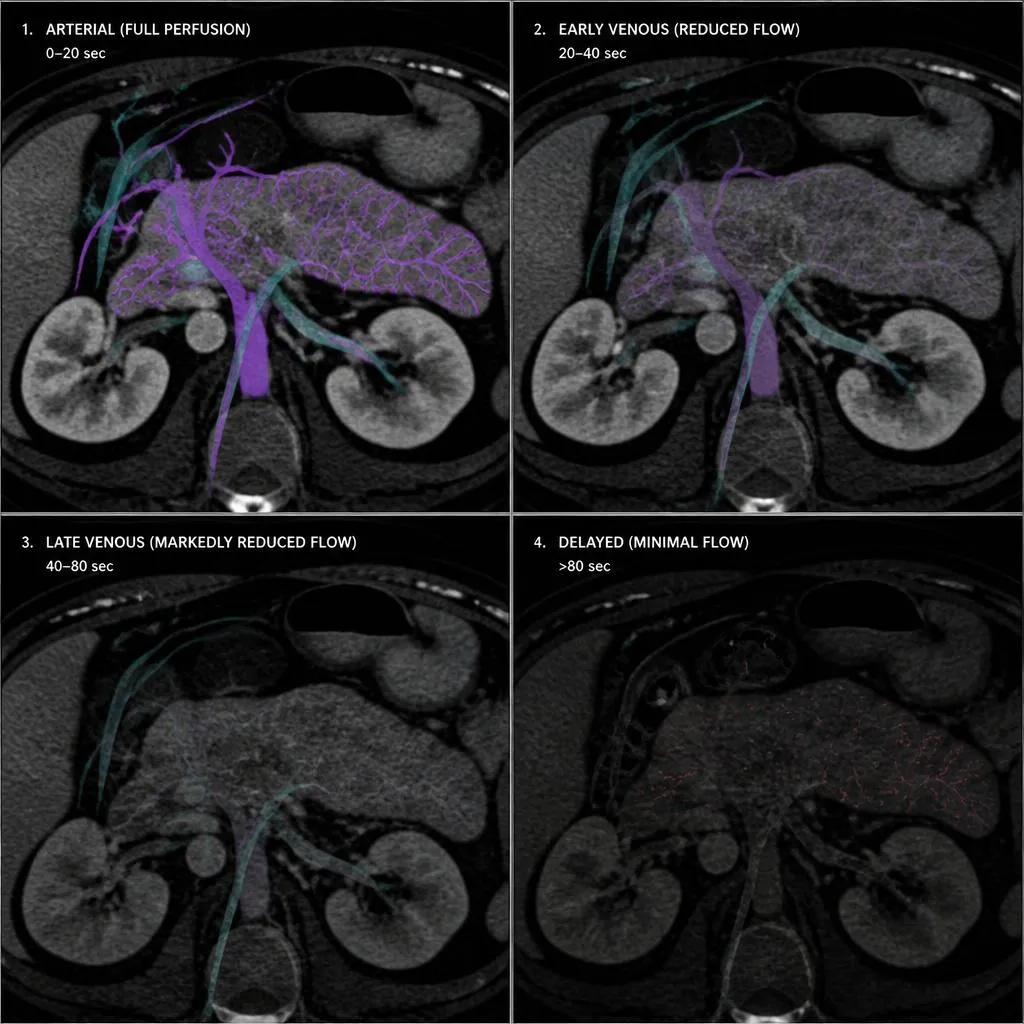
Support stamina and heart health every day
Ad Copy
I told my endocrinologist to go f*ck herself in her own exam room with an A1C of 7.3. Then I walked out and did in twelve weeks what she could not do in three years. Last Tuesday my glucose meter read 97 forty minutes after I ate a plate of French toast with real maple syrup and powdered sugar. I am sixty-four years old. Type 2 diabetic. And I have not been this steady since before I was diagnosed. Let me tell you how I got here. My name is Diane. I live in Westerville, Ohio, about twenty minutes north of Columbus. I spent 33 years as the front office manager at Genoa Middle School. I retired two years ago. I still come in three mornings a week because the new girl cannot figure out the attendance system and the principal keeps calling me. I have been married to my husband Frank for 36 years. We have two daughters, one son-in-law, and three grandchildren. I say this because I want you to understand who I am before I tell you what I did. I am not the kind of woman who curses at a doctor. Not the kind of woman who walks out of a medical office. Not the kind of woman who sits at her kitchen table until 2 AM reading medical research she has no business reading. I am the kind of woman who takes her prescription, does what she is told, and shows up to every appointment on time. Or I was. Until the day my endocrinologist told me I was going to lose my feet if I did not do exactly what she said. Then something in me broke. And what came out of that break saved my life. I got diagnosed with Type 2 three years ago. A1C came back at 7.3 at a routine physical I almost rescheduled because my granddaughter Lily had a dance recital that afternoon. My doctor referred me to an endocrinologist. A woman about my daughters' age. Nice office. Very clean. Diplomas on every wall. She sat me down and told me how things were going to change. No more of the cinnamon rolls I have baked every Sunday morning since my mother taught me the recipe when I was nineteen. No more of the pot roast with potatoes and gravy I make for my family every other Sunday evening. No more of the cornbread I bring to every church potluck. No more of the peach cobbler my daughter Beth makes for every birthday. No more of the breakfast casserole I have made every Christmas morning for 36 years. No more rolls. No more rice. No more pasta. I want to tell you what that felt like, because unless you are a Type 2 diabetic woman sitting in that chair for the first time, you cannot know. It felt like being told the last third of my life was going to be spent eating food I did not want to eat and watching everyone else at my own table enjoy what I had spent my whole life learning to cook for them. She prescribed Metformin, 500 mg twice a day. Told me to walk 30 minutes a day. Told me to come back in 3 months. I walked out of her office and I did every single thing she told me to do. For three years I was the most obedient patient she had ever had. I took the Metformin every morning at 7:15 with breakfast and every evening at 6 PM with dinner. I set two alarms on my phone. I never missed a dose. Not once. Not in three years. I cut my evening glass of wine. I cut the cream in my coffee. I switched to black coffee and I hated it and I drank it anyway every single morning for three years. I ate scrambled egg whites and a single piece of dry wheat toast for breakfast. Grilled chicken and steamed broccoli for lunch. Baked tilapia and a side salad with no dressing for dinner. That was my life. That was every day. For three years. I walked 35 minutes every morning at 6 AM before Frank was awake. In the dark. In the rain. Through three Ohio winters. On the mornings it was 9 degrees and the sidewalks on State Street were sheets of ice I still laced up my shoes and I went out because she told me to go out and I did what I was told. I sat through three Thanksgivings at my daughter Beth's house eating plain turkey breast and green beans while my family ate stuffing and mashed potatoes and the cornbread I had made and brought for them. I sat through three Christmases watching Frank and the girls eat my breakfast casserole — the one my mother taught me, the one I have made every December 25th for 36 years — while I ate a hard-boiled egg and half a grapefruit. I sat through three of my granddaughter Lily's birthdays watching her blow out candles while I drank a glass of water. She went from four to six years old during the time I was not allowed to eat cake at her party. I baked my cinnamon rolls every Sunday morning for three years and did not eat one. I brought cornbread to every church potluck and watched other women eat it while I ate almonds out of a ziplock bag I kept in my purse. I cooked Thanksgiving dinner. Christmas dinner. Easter dinner. Every Sunday dinner. I set the table. I served the food. I sat down with my family and I ate something different from what I had made for them. Every time. For three years. I want you to understand what three years of that does to a woman. It does not just take your food. It takes your place at your own table. It turns you into a visitor in your own kitchen. You are the woman who cooks for everyone and eats nothing. You are the woman who watches. You are the woman who says "no thank you" when your own granddaughter holds out a forkful of the cobbler you taught her mother to make. After three years of that, something inside you goes quiet. You stop being angry about it. You stop being sad about it. You just accept it. And that acceptance is the worst part. Because it means you have stopped asking whether the instructions you followed so perfectly were ever aimed at the right thing. And the whole time I was watching things in my body get worse year after year despite doing everything right. The tingling in my feet started in the first year. Just a low buzzing when I got into bed at night. By the second year it was a burning. Some nights I would push the blankets off my feet because they felt like they were wrapped in something hot. By the third year I could not wear socks to bed. Some mornings the bottoms of my feet were numb until I had been walking for ten minutes. The blurry vision came and went. In the first year it was occasional. I would sit down with my book club novel in the evening and the words would soften around the edges. I bought reading glasses at Walgreens. They did not help. By the third year it was happening every day. I stopped reading at night because I could not trust my eyes. Getting up at night to use the bathroom. Once a night the first year. Twice the second. Three times by the third. Frank slept through it. I did not. I had not slept more than four hours in a row in over a year. The exhaustion after every meal. In the first year it was an afternoon heaviness. By the third year it was a collapse. I would eat lunch and by 1 PM I was sitting in the recliner unable to keep my eyes open. My daughter Katie started calling me during the day and I would not hear the phone. She thought something was wrong. Something was wrong. I was sixty-four years old and I was falling asleep in the middle of the afternoon like I was ninety. The breathlessness walking up the stairs. Twelve steps from my living room to my bedroom. I used to take them without thinking. By year three I was stopping halfway, gripping the railing, waiting for my heart to stop pounding. Twelve steps. I counted them every night because I had started dreading them. The weight I could not lose. I had gained 19 pounds since my diagnosis despite eating like I was being punished for three years. My endocrinologist told me to be more disciplined. I wanted to throw something at her. And one more thing. The one I did not tell my endocrinologist. The one no woman my age talks about at her appointments. The closeness with Frank had been disappearing for three years. Not just desire. Everything. The warmth. The response. The feeling of being a woman in the way I had been a woman with my husband for three decades. It started fading before my diagnosis and it got worse every year after. I told myself it was menopause. I told myself it was age. I told myself it was stress. But it was not any of those things. And I did not know what it was because nobody had ever told me what it was. I just called it getting older. The same way I called the exhaustion getting older. The same way I called the fog getting older. Managed. That is what you call it when the decline is slow enough to schedule around. By the third year Frank and I slept in the same bed like two people who had run out of things to say. He never complained. He never pushed. He just quietly stopped reaching for me. And I quietly stopped wishing he would. That was the loneliest part of all of this. And I never said a word about it to anyone. Over three years my endocrinologist adjusted my protocol seven times. She increased my Metformin from 500 mg twice a day to 1000 mg twice a day after my first follow-up. My A1C had moved from 7.3 to 7.1. She said it was not enough. Six months later she added Glipizide. My A1C went to 6.9. She said it was progress but not sufficient. A year in she switched me to extended-release Metformin because the regular was destroying my stomach. The diarrhea had gotten so bad I had to leave my desk at the school three times in one morning. I started keeping a change of clothes in a bag in the trunk of my car. I never told anyone why. At the 18-month mark she added Jardiance. My A1C dropped to 6.8. She said we were getting somewhere. I was taking three medications, walking every morning, eating food I hated, and my number had moved five tenths of a point in a year and a half. At two years she started talking about Ozempic. I told her I did not want an injection. She said we might not have a choice. At two and a half years she started talking about insulin. But here is the thing that terrified me more than the number on the chart. My A1C had come down. From 7.3 to 6.8. It was lower. The medications were doing their job. The number was moving in the right direction. And my body was getting worse. The feet were worse. The vision was worse. The bathroom trips were worse. The exhaustion was worse. The breathlessness was worse. The weight was worse. The intimacy with Frank was worse. Every complication I had — every single one — had gotten worse over three years while the number on the chart improved. I asked my endocrinologist about this at my two-year appointment. I told her my feet were burning. I told her I could not see my book at night. I told her I was getting up three times to use the bathroom. I told her I was falling asleep at 1 PM every day. She looked at my chart. She looked at my A1C — 6.9 at that visit. She said, "Diane, your numbers are improving. We are managing this. These symptoms are common in diabetic patients and we will continue to monitor them." Managing. That word. I heard it at every appointment for three years. We are managing this. Your numbers are managed. The diabetes is managed. My feet were on fire every night and I was told it was managed. Then came the appointment that changed everything. My A1C had bounced back up. It did that — 6.8 one visit, 7.1 the next, back to 6.9, then 7.3. It would not stay down. Three medications, walking every morning, eating nothing I wanted, and the number would not hold. She pulled up my chart. She read it. Then she looked at me. "Diane. Your A1C is 7.3. We are back where we started three years ago. I have to be direct with you. We have tried Metformin. We have tried Glipizide. We have tried Jardiance. I want to start you on Ozempic this week. And if we do not see significant improvement in 90 days, we are going to add basal insulin." I sat in the chair. "We have to be aggressive now. We are running out of runway. You are looking at neuropathy progression, kidney involvement, and serious cardiovascular risk within five years if we do not get this under control." I sat in that chair and I felt something I had never felt in a doctor's office in my life. I was not scared. I was angry. I told her I had been doing everything she asked for three years. Three Thanksgivings. Three Christmases. Three of my granddaughter's birthdays. I had walked in the dark at 6 AM in 9-degree weather on ice-covered sidewalks. I had given up wine. I had given up bread. I had given up cooking for myself at my own table. I had taken every pill. I had swallowed every side effect. I had changed my clothes in a school bathroom after the diarrhea her medication gave me. I had done everything she told me to do for three years. And my body was worse than when I started. Not the same. Worse. While the number she kept watching went up and down and up and down like it had a mind of its own. She looked at me the way you look at a patient who does not understand the situation. "Diane, I understand your frustration. But Type 2 is a progressive disease. If you resist the protocol, the outcomes are very predictable. I need you on board." That was the sentence. I sat there for about ten seconds. I remember the clock on the wall behind her because I was staring at it. Then I stood up. "Doc. You can go f*ck yourself." She blinked. I said it again, slower, because I wanted her to hear every word. "I have taken your pills every morning and every evening for three years. Three different medications. I have lived with the nausea. The stomach cramps. The diarrhea that humiliated me at my own workplace. I have given up every food I love. I have cooked for my family and eaten nothing at my own table for three years. And my feet are worse. My eyes are worse. My sleep is worse. Everything is worse. Except the number. The number moved half a point. So now you want to add a needle on top of three pills that did not stop what is happening to my body and call it aggressive care. I am not the problem here. The pills are." She tried to say something. I do not remember what. I picked up my purse and I walked out. Frank was in the waiting room. He stood up when he saw my face. I told him what happened in the car on the way home. He was quiet for a long time. Then he said, "Diane. Please go back. Take the prescription. We will figure the rest out later." I told him no. I told him whatever the answer was, it was not in that woman's office. It had not been in that office for three years. That night I sat at my kitchen table until 2 AM with my laptop open. I started reading. Not Facebook posts from women sharing cinnamon tea recipes. Not diet blogs. Medical journals. Diabetes research. The actual published science. I did that Tuesday night. And Wednesday night. And Thursday night. Thursday around 1:30 AM I found a lecture transcript from a metabolic biochemist at the University of Michigan named Dr. Anand Mehta. He had spent 22 years studying why diabetic patients develop complications even when their glucose numbers are controlled. He was explaining something that stopped me cold. He said: "In American endocrinology, the treatment goal is the A1C number. Bring the number down. Manage the number. But no one is asking the more important question: can the patient's body still clear sugar on its own?" I read that sentence three times. He continued: "What is supposed to happen after every meal is this. Sugar floods into the blood — that is normal — and the body clears it. Moves it out of the blood and into the cells for energy. That is what a healthy body does. It clears. In a diabetic body, the system that does the clearing has been destroyed. And not one medication in any pharmacy has ever been designed to fix it." I sat at my kitchen table and I felt the blood leave my face. He explained it plainly. "Two things destroy the clearance system. First, the sugar itself bonds to the proteins in the vessel walls. There is a word for it — glycation — sugar turning to a kind of glue, then hardening into a glaze. The vessels stiffen. Lose their give." "Second, oxidative stress — free radicals from years of elevated sugar — scars the lining of those same vessels. Burns through it. Glue on the inside. Fire on top. The vessels that are supposed to carry sugar out of the blood and into the cells cannot do their job anymore." "And the longer the sugar lingers, the more it glues and the more it burns — which makes the vessels stiffer, which makes the next meal's sugar linger even longer. A cycle that feeds itself." I thought of my kitchen sink. You are standing there after dinner and the water will not go down. So you turn the faucet lower. The water drops a little. Then it rises back. You turn it lower again. It drops half an inch. Rises. So you call someone and they add a second valve. Then a third. And the water keeps rising and falling, rising and falling, because the drain is clogged. Nobody is looking at the drain. Everyone is adjusting the faucet. That was my A1C. 6.8 one visit. 7.1 the next. Back to 6.9. Then 7.3. Rising and falling, rising and falling. Three medications adjusting the faucet. Nobody ever checking whether the drain was open. Dr. Mehta continued. "There is one more thing. The blood vessels that move sugar out of the blood — they open on a signal. The body produces it. It is called nitric oxide. It is the instruction that tells the vessel walls to relax and let the blood, and the sugar it is carrying, get where it needs to go." "The same damage that clogs the vessels destroys that signal. Burns it out. The one instruction your body needs to clear sugar properly — gone. And nobody checks for it. Nobody tests for it. Because the standard of care is aimed at the number on the chart, and the number says nothing about whether the drain is open." I sat back in my chair. Three years. Three medications. Seven protocol adjustments. And not one of them had ever asked whether my body could still clear sugar on its own. Not one had ever touched the glue in my vessel walls or the scarring on the lining or the signal that was supposed to tell them to open. Every medication was aimed at the faucet. Metformin told my liver to release less sugar. Turned the faucet down. Never checked the drain. Glipizide squeezed my pancreas to push out more insulin — more pressure on the same clogged pipes. Never checked the drain. Jardiance forced my kidneys to flush excess sugar through my urine. That was why I was in the bathroom three times a night. A bypass pipe around a clogged drain. And the Ozempic my endocrinologist wanted to inject — it slows how fast the stomach empties so less sugar enters the blood after a meal. Turns the faucet down even further. Never. Checks. The drain. Three years. Three medications. And the system that was supposed to move sugar out of my blood — the drain — had been clogged shut the entire time. Nobody had checked it. Nobody had mentioned it. Nobody had aimed a single pill at it. I understood at 2 AM on a Thursday night in my kitchen why my number would not stay down. The pills pushed it lower. My body could not keep it there. Because the system that was supposed to clear the sugar was clogged shut and nobody had ever looked. Further in the transcript, Dr. Mehta explained something that made me set down my coffee cup and sit completely still. "Every supplement people reach for — cinnamon, berberine, chromium, the blood sugar support bottles on the pharmacy shelf — does the same thing the medication does. Chases the sugar. Tries to push the level down. Not one of them goes anywhere near the drain." "And the things people call antioxidants — vitamin C, turmeric — they are carpet bombs. They flood the body and knock out every free radical they touch, including the ones you need for immune function, for healing, for signaling. You cannot bomb your own bloodstream and expect it to go well." He paused. "There is a plant pigment that does something no diabetes medication and no supplement has ever been designed to do. It goes after only the specific damage that is clogging the clearance system — the scarring, the glue — and neutralizes it while leaving everything the body needs alone. A smart missile instead of a carpet bomb. It does not push sugar down. It clears the damage that is keeping sugar from moving out." The interviewer asked what it was. "It is called betalain. It is the deep red pigment that gives certain root vegetables their color. The stain that will not scrub off your hands or your cutting board." He continued: "But the plant does something else. It carries dietary nitrates. And the body converts those nitrates into the exact signal the damage had destroyed — the instruction that tells the blood vessels to open and let the sugar clear." He paused. "Clear the damage. Restore the signal. The drain opens. The sugar moves out the way it is supposed to. Not forcing it lower. Fixing why it stays high." I read that sentence and I sat still for a long time. He referenced studies. Patients taking concentrated betalains saw their fasting glucose drop. But that was not the number he emphasized. The number he emphasized was the clearance — how quickly sugar moved out of the blood after meals. The lingering stopped. The sugar that used to sit for hours after every meal was clearing the way it was supposed to. And the markers of the damage itself — the scarring, the glue — those fell by more than a fifth. The drain was being unclogged. I sat in my kitchen chair at 2:47 AM and I thought about three years. Three medications. Walking in the dark at 6 AM. Egg whites and dry toast. The almonds in the ziplock bag. The recliner at 1 PM. The railing on the stairs. Frank not reaching for me. My granddaughter turning six without me eating a single bite of her cake. Three years of adjusting the faucet. And not one pill, not one appointment, not one conversation had ever checked the drain. Not one had ever asked whether my body could still clear sugar on its own. I had been the most obedient patient my endocrinologist had ever had. I had done everything she told me to do for three years. And I had never once asked whether what she told me to do was aimed at the right thing. That was the part that kept me up until 3 AM. Not the anger at her. The anger at myself. I was so good at following instructions that I followed them for three years without asking what the instructions were pointed at. Three years of adjusting the faucet. Not once checking the drain. I ordered a beetroot supplement from Amazon before I closed my laptop that night. Four and a half stars. Twenty-two dollars. I did not think about it. I typed "beetroot capsules" into the search bar and bought the first one with good reviews. The woman who set two alarms for her Metformin and never missed a dose ordered a supplement at 3 AM the way a teenager orders a phone case. It arrived two days later. I took two capsules with dinner. Then two the next morning. Then two the next evening. Three days. Nothing. No warmth. No clarity. No shift. Just brown capsules and a glass of water and the same fog settling over me every afternoon. I almost quit. I almost told myself the research was wrong, the way you tell yourself a lot of things are wrong when you are tired enough. But the studies were real. Published. Peer-reviewed. Something was wrong with what I was taking, not with what I had read. So I went back to the research. And this time I read past the mechanism and into the specifications — the part I had skipped in my rush to order something, anything, at 3 AM. Not all beets are the same. And most of what you can buy is the wrong one. The common beet — the one in every grocery store, the one in every cheap supplement on Amazon — has been bred for sugar content for over a century. Sweeter and sweeter, generation after generation. The deep red pigment, the betalains, were bred out of it the same way nutrition was bred out of wheat. What is left is a root vegetable that tastes good in a salad and delivers a fraction of the medicinal compound it once carried. And even if you started with the right beet, heat destroys betalains. Most commercial beetroot powders are spray-dried at high temperature. The pigment dies. What reaches the capsule is brown dust — dead before it ever reaches your body. Enough to turn your urine pink. Not enough to unclog anything. The dose matters. The studies that showed results used concentrated amounts — not the 500 milligrams hidden inside a "proprietary blend" on a label designed to make you think you are getting more than you are. A blend is where the truth goes to hide. And the proof matters. Anyone can write a number on a label. An independent lab report — a Certificate of Analysis — means someone outside the company tested a real batch and published exactly what was in it. The betalain content. The purity. The heavy metals. If they will not show you what is in it, do not buy it. I went to my kitchen and twisted one of the Amazon capsules open over a white saucer. A dull, brick-brown powder. Not the deep crimson the studies described. Dead. Heat-killed before it ever left the factory. I picked up the bottle and checked the label. "Beet root powder." No strain. The sugar-bred grocery beet. 500 milligrams inside a proprietary blend. No certificate of analysis anywhere on the bottle or the website. Three days of swallowing brown dust. The woman who follows every instruction had skipped the most important one. I threw it in the trash. Then I sat down at my kitchen table and I went through every beetroot product I could find, one by one, checking each against what the research actually required. Grocery-strain powders — the common beet bred for sugar. Failed. Anything spray-dried or heat-processed — dead before the bottle was sealed. Failed. Cheap capsules with a fraction of the study dose hidden in a blend. Failed. Brands that would not publish a lab result. Failed. I was crossing off everything. Then I found one that passed. Rosabella. Heirloom Blutwurzel beetroot — the old strain. Blood root. The one nobody ever bred the medicine out of. Grown by a handful of Amish families in Lancaster County, Pennsylvania, from a seed line hand-saved for over 150 years. Never crossed with the sugar beet. Hand-harvested after the first frost, when the plant pulls everything down into the root. Shade-dried at low temperature — weeks, not hours — so the betalains and the nitrates reach the capsule alive instead of cooked to dust. 1,300 milligrams per capsule. The study dose. A Certificate of Analysis from an independent lab published on their website. Betalain content. Purity. Heavy-metal screening. Every number verified by someone who did not make the product. I ordered it that night. When it arrived three days later, I twisted a capsule open over the same white saucer I had used for the Amazon brand. Deep crimson. Almost violet. And the second a drop of water touched it, it bled red across the dish like a fresh cut. A completely different thing. In every way that mattered. I shook two capsules into my palm, took them with a tall glass of water, and sat on my back porch. It was September. Still warm. I sat in the chair Frank and I sit in after dinner and I waited. Twenty minutes. That is when I felt it. A warmth moving down my arms and into my hands. The low heaviness behind my eyes — the static that had been settling over me every evening for three years — it lifted. Not a jolt. Not a caffeine rush. A quiet shift. Like someone had adjusted the brightness on a screen I did not know was dim. I sat on my porch and I thought: something reached. For the first time in three years, something reached where it needed to go. Now I want to be careful here. Because that warmth is not the blood sugar benefit. Dr. Mehta was clear about this. The drain does not unclog in twenty minutes. That takes weeks and shows up on bloodwork, not on a back porch. What I felt was the simpler gift — the nitrates beginning to open vessels that had been clogged and starved for three years. Blood moving where it had not been moving. It was not proof the drain was clear. The proof would come on paper. But I knew something was different. Not the way I hoped supplements were different after three days and then gave up. This was different in kind. Not degree. Kind. I had taken the Amazon capsules for three days and felt nothing. Not once. This was twenty minutes. Week one. I slept five and a half hours straight for the first time in over a year. I did not realize how broken my sleep had been until I got a full stretch of it back. I woke up at 6 AM and I was not tired. I cannot explain what that felt like after three years of exhaustion. It felt like someone had turned the lights back on inside my body. Week two. The burning in my feet at night went quiet. Not gone. Quiet. Like someone turned the volume down on a sound that had been getting louder for three years. I pulled the sheet over my feet for the first time in months. They felt like my feet again. Week three. The crashes after meals disappeared. I ate lunch on a Wednesday and I stayed awake through the entire afternoon. I read 60 pages of my book club novel in the recliner. I had not done that in two years. And I got up once at night to use the bathroom instead of three times. Week four. I walked up all twelve stairs without stopping. I did not realize I had done it until I was at the top. Then I stood in the hallway and I put my hand on the wall and I cried. Because I had forgotten what it felt like to just walk up the stairs in my own house without my chest hammering. I had been stopping halfway and gripping the railing for two years. And I was at the top. Just standing there. Like it was nothing. Week five. The thing I had not told my endocrinologist about started coming back. The warmth. The response. The closeness with Frank that I had been quietly grieving for three years. I am not going to say more than that. But Frank knew. And I knew. And neither of us needed to say anything about it. He reached for me for the first time in a very long time. And I was there. Week six. I bought a home glucose meter at CVS. I tested my fasting glucose on a Monday morning. 108. I had not seen a number that low since before my diagnosis. My fasting had been running 155 to 175 for the past year. Week seven. 101. Then 96. Then 94 three mornings in a row. I stood in my bathroom staring at that meter reading 94 and I could not breathe. Three years of pills had never gotten me below 130 fasting. And I was at 94. But it was not the fasting number that told me the drain was opening. It was what happened after meals. I tested after lunch one afternoon. Then after dinner. Then after breakfast the next morning. The sugar was clearing. Not being forced down. Clearing. Moving out of my blood the way it is supposed to move. The number would rise after a meal the way it rises in everyone and then it would come down — smoothly, steadily, the way water goes down a drain that is finally open. Three years of pills and my post-meal sugar had bounced and lingered and sat. Now it cleared. That was the difference. That was everything. The morning walk changed. I started walking past State Street. Past the library. Through Alum Creek Park, the same route I used to walk with Frank before any of this started. My legs did not ache. My chest did not pound. I was not winded. I felt like myself again. For the first time in three years. I felt like Diane. By week eight I started doing something I want to tell you about carefully. I started eating things I had not touched in three years. I did not go wild. I know better than that. But one Saturday morning I went into my own kitchen and I made French toast. Two thick slices of challah bread. Real butter in the pan. Powdered sugar on top. Real maple syrup. Coffee with cream for the first time in three years. I sat at my kitchen table and I ate every bite. Then I pricked my finger. I sat there staring at the number. I had not eaten French toast in three years. Three years of dry toast and egg whites. Three years of watching Frank eat breakfast while I ate nothing. And my blood sugar after French toast with syrup and powdered sugar was 109. The Saturday after that I baked my cinnamon rolls for the first time in three years. My mother's recipe. The one I had been making every Sunday morning for decades. The one I had kept making for Frank and the girls while eating nothing. I pulled one off the tray and I ate it standing at my kitchen counter. Warm. Soft. The sugar glaze on my fingers. Frank walked in from the garage and he stopped in the kitchen doorway. He looked at the tray on the counter. He looked at the cinnamon roll in my hand. He looked at my face. He did not say a word. He just stood there and his eyes got wet and he smiled. Glucose an hour later. 114. And an hour after that, back to 98. Cleared. The drain was open. None of those numbers should have been possible in a diabetic body. Not after three years of complications. Not with the neuropathy and the vision problems and the kidney strain and everything else my body had been through. But the damage that had been clogging my clearance system for three years was being cleaned out. And the signal that told my blood vessels to open — the one that had been destroyed for years — was being restored. My body was clearing sugar the way it was supposed to. Not because a pill forced the number down from the outside. Because the drain was finally open. Not forcing lower. Clearing better. Which brings me to two Sundays ago. I made my pot roast for Sunday dinner at my house. Potatoes. Gravy. Cornbread on the side. I set the table for eight. Frank. Beth and Kevin. Katie. The three grandchildren. I served myself a full plate. Cornbread and all. Lily — she is six now — looked at my plate and then looked at me. "Grandma, you are eating the same food as us." That sentence. She had never seen it. She was three when I got diagnosed. Every Sunday dinner she had ever been to, every holiday, every birthday — grandma ate something different. She did not know there was ever a time when grandma ate what everyone else ate. She thought that was just how grandma was. "Yes baby. I am eating the same food as you." She grinned at me and went back to her potatoes. Frank caught my eye from across the table. He did not say anything. He gave me the smile he used to give me at Sunday dinners before all of this started. I had not seen that smile in three years. Forty minutes after dinner I stepped into the kitchen and checked my meter. 112. An hour later. 101. Cleared. I stood at my kitchen sink — the same sink I had been washing dishes in for 36 years — and I thought about drains. About faucets. About three years of pills that pushed the water down and let it rise again. And about a crimson capsule that unclogged the drain so the water just goes where it is supposed to go. I cried. Not because of the number. Because I was back. I was sitting at my own table eating my own food with my own family and my granddaughter had seen me eat cornbread for the first time in her life. I had spent three years believing I would never sit at that table as myself again. Three years believing the woman I used to be was gone. Three years of almonds in a ziplock bag and naked salads and watching. And it was over. Two days later I went back to my endocrinologist's office. Same waiting room. Same receptionist who looked surprised to see me. Same doctor. She came into the exam room with my chart on her tablet. She did not say hello. She said: "Diane. Your A1C is 5.5. Twelve weeks ago it was 7.3. That is a 1.8-point drop without a medication change. What happened?" I told her. I told her about the research. About the clearance system nobody had ever checked — the glue in the vessels, the scarring, the signal that was gone. About three years of medication aimed at the faucet while the drain sat clogged shut. About the betalains that clear the damage. About the nitrates that restore the signal. About the heirloom strain that still carries what the grocery beet lost a century ago. She interrupted me halfway through. "Diane, I appreciate your research, but this is anecdotal. Supplements are not regulated. There is no way a beetroot capsule moved your A1C 1.8 points in twelve weeks when three years of medication could not." I told her it did. She stared at the chart. Then she said, and this is the sentence I will never forget: "I want to redraw the labs. That number cannot be right." She redrew them. I sat in the exam room for 35 minutes while the lab ran the panel again. She came back with the printout in her hand. 5.4. Even lower than the first draw. She sat down on the stool in the exam room and she did not speak for what felt like a long time. Then she said, very quietly: "Diane. I owe you an apology. I do not understand what is happening here. But whatever you are doing, keep doing it." I did not say anything. I let her sit with it. She stopped all three of my medications that day. Metformin. Glipizide. Jardiance. All of them. She did not mention Ozempic. She did not mention insulin. On my way out the receptionist smiled at me. I smiled back at her for the first time in three years. I am sixty-four years old. I have Type 2 diabetes and my A1C is 5.4. I have eaten French toast with real maple syrup and cinnamon rolls with sugar glaze and pot roast with potatoes and gravy and cornbread in the last month. My blood sugar has cleared steadily after every single one of those meals. I am writing this for one reason. If you are sitting where I was sitting three years ago — or one year ago — or last week — watching your pills push the number down and watching it rise back up — I need you to hear what took me three years and one 2 AM Thursday night to learn. There is a clearance system in your body that is supposed to move sugar out of your blood after every meal. It is clogged — glued shut, scarred, the signal burned out. Every pill your doctor has given you is aimed at the faucet. Not one of them has ever been aimed at the drain. Not one of them was designed to. There is something that does both. Clears the damage. Restores the signal. The drain opens. The sugar moves out the way it is supposed to. Not forcing it lower. Fixing why it stays high. Rosabella. Concentrated heirloom beetroot capsules made from the Blutwurzel strain — the old seed line, grown by Amish families in Lancaster County, hand-harvested after the first frost, shade-dried so the betalains reach the capsule alive. 1,300 milligrams per capsule — the dose in the studies. Third-party tested with a Certificate of Analysis published for every batch. Two capsules with a glass of water every morning. That is the whole protocol. 90-day money-back guarantee. If your numbers do not move, you send it back and they refund every dollar. The system that charged me for three medications and nine protocol adjustments and three years of my life does not do refunds. These people do. https://track.tryrosabella.com/cdc16426-3e48-40a7-9fad-21098084f6cf ~ Diane P.S. — My A1C at the redraw was 5.4. Fasting glucose 94. But the number that matters most to me is what happens after meals. The sugar clears now. It rises the way it rises in everyone and then it comes down — smoothly, steadily — and by two hours it is back where it started. Three years of pills never did that. The drain was clogged. Now it is open. Rosabella — heirloom Blutwurzel, shade-dried, 1,300 mg, every batch third-party tested. 90-day money-back guarantee if your numbers do not move. https://track.tryrosabella.com/cdc16426-3e48-40a7-9fad-21098084f6cf P.P.S. — You will feel something within 20 minutes of your first capsule. Not the blood sugar benefit — that takes weeks and shows up on bloodwork, not on a back porch. What you will feel is warmth. Moving down your arms and into your hands. The heaviness behind your eyes lifting. That is the nitrates beginning to open vessels that have been clogged and starved for years. Blood going where it has not been going. It is not proof the drain is clear. The proof comes on paper. But if you have tried supplements before and felt nothing — if you bought the Amazon brand and swallowed brown dust for a week and gave up — this is different. The Amazon capsules did nothing because the betalains were dead before they reached the bottle. Rosabella is alive. You will know the difference in twenty minutes. But remember: the feeling is not the proof. The proof comes on paper. Run your numbers. P.P.P.S. — Please do not stop your medication on your own. I did not stop mine. My endocrinologist stopped all three of them after she saw the labs. Start Rosabella alongside your medication — that is exactly how you do this right. Track your fasting glucose on a home meter. You can buy one at any drugstore for fifteen dollars. Within weeks you will have numbers you can bring to your doctor. Let the numbers make the case. Let her watch you get better. That is how you do this correctly. P.P.P.P.S. — If you are a woman managing this alone — no husband, no partner, nobody in the house who knows what you are going through — I see you. This disease is lonelier for us than anyone talks about. The meals you eat by yourself that taste like punishment. The things you have stopped telling your doctor because she has stopped listening. The parts of your body that are going quiet that you have not told anyone about. You deserve to bake what you want in your own kitchen. You deserve to eat at your own table. You deserve to walk up your own stairs without stopping. You deserve to stop being a visitor in your own life. Two capsules. One glass of water. Every morning. That is all I am asking you to try. https://track.tryrosabella.com/cdc16426-3e48-40a7-9fad-21098084f6cf P.P.P.P.P.S. — Rosabella is a small company. They cannot scale a 150-year-old seed line. One heirloom strain, grown by a handful of Amish families, hand-harvested after the first frost, shade-dried for weeks instead of hours. When a harvest is gone, it is gone until the next one. I tried to reorder after my first month and waited 11 days for a restock. I keep two bottles in my house now. They have a Buy 3 Get 3 Free deal right now. If your next lab work is coming up in the next 30 to 60 days and you want to walk into that appointment with real numbers instead of the same managed conversation you have been having for years — check availability now. The system does not do refunds. Rosabella does. 90-day money-back guarantee. https://track.tryrosabella.com/cdc16426-3e48-40a7-9fad-21098084f6cf
More from Leslie Hosmer
Support heart health and stamina every day
Leslie Hosmer
Support heart health and stamina every day
Leslie Hosmer
Support heart health and stamina every day
Leslie Hosmer
Support heart health and stamina every day
Leslie Hosmer
Support heart health and stamina every day
Leslie Hosmer
Support stamina and heart health every day
Leslie Hosmer
Support stamina and heart health every day
Leslie Hosmer
Support stamina and heart health every day
Leslie Hosmer
Support stamina and heart health every day
Leslie Hosmer
Support stamina and heart health every day
Leslie Hosmer
Support stamina and heart health every day
Leslie Hosmer
Support stamina and heart health every day
Leslie Hosmer

 Add to Chrome