Support stamina and heart health every day
Ad Copy
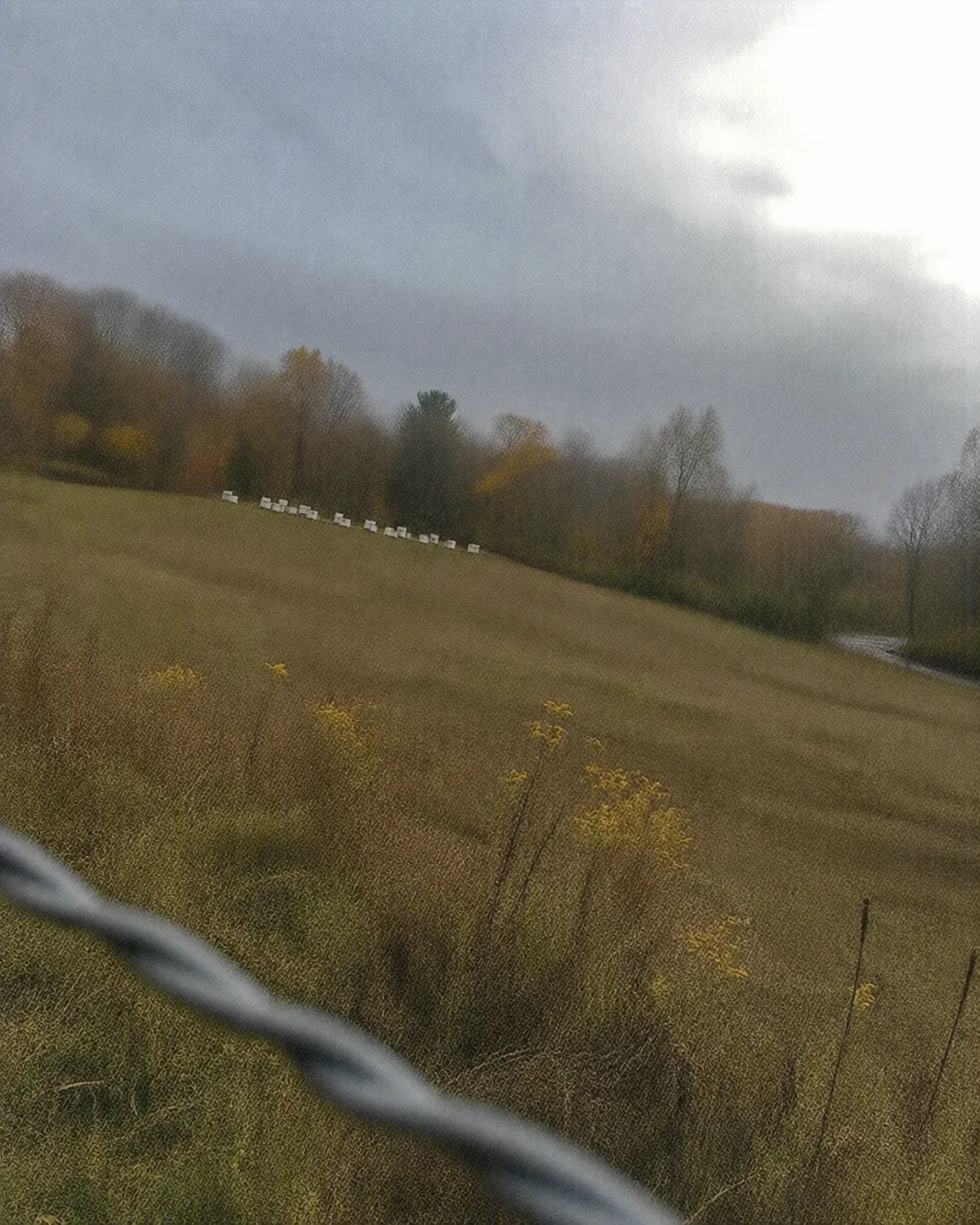
Picture a Honey Stand Where You Can See the Whole Factory From Where You're Standing. This is an illustrative story about a woman named Louise, a beekeeper named Harlan, and a jar of honey that explained itself. Picture a two-lane road in early October, the kind that exists mostly so the leaves have somewhere to be admired. Picture a woman driving it slowly on a Sunday, alone, with the radio low and no particular schedule. That's Louise. And picture, at a bend where a gravel lane meets the road, a small wooden stand with jars on it, a hand-painted sign, a cashbox — and behind it, across a sloping field, a scattered row of white boxes at the edge of the trees. The man restocking the stand from a crate, somewhere in his seventies, canvas jacket, unhurried — that's Harlan. Louise is going to stop for a gift. She's going to leave with the gift, and with a sentence she'll be quoting at her own kitchen counter for months. Let me back up. You need Louise first, and you have met her. Louise is fifty-nine, and for thirty-one years she has worked the customer-service desk of the big grocery store in her town — the desk by the doors, with the returns and the rainchecks and the "can you tell me where." Thirty-one years at that desk makes you a specific kind of expert. Louise knows the store the way a river pilot knows a river. But more than the store, Louise knows products. Thousands of them. They pass across her desk coming back the other way — opened, half-used, disappointing, confusing — with their owners attached, explaining. And after three decades of returns, Louise will tell you the quiet truth of that desk: most things don't come back because they're broken. They come back because the person could never quite tell what they were. The blend that wasn't what the front of the box implied. The device with functions nobody asked for. The product whose list of contents reads like a chemistry midterm, purchased on faith, returned on doubt. Louise doesn't judge any of it. She processes it kindly; it's her gift. But the desk has taught her something she's never quite put into words, and it's riding in the car with her this Sunday, waiting for a honey stand to give it language. Because here's the other thing about Louise: her own kitchen runs on faith too. Open her pantry. It's a wall of trust extended to strangers — boxes and canisters and bottles, most with lists she's never finished, several with words she can't say aloud. She's not careless; she's ordinary. Nobody can see into everything. You'd need a second lifetime. But the private arithmetic of it — the thing she'd admit on a slow Sunday drive — is that a woman who spends her working life watching faith get returned at a desk extends an awful lot of it at home. Keep that. The stand is about to give it words. So: the bend in the road. Louise stops because of her brother. Walt is impossible to buy for — the man owns nothing, wants nothing, and returns things, which for Louise is a professional insult. But Walt eats toast every morning of his life, and a jar of real honey from a real roadside is the one category of gift he has never once brought back. She parks on the gravel. Harlan nods the way stand-keepers nod — help yourself, I'm here if you need me — and keeps restocking. The jars are heavy and plain. Gold, amber, one nearly dark as molasses. A hand-painted price. A cashbox on a chain, made of more trust than most banks. And Louise, thirty-one years of products moving both directions across her desk, picks up a jar and does what she does: she turns it around to read the back. There's nothing on the back. She turns it again. Front: HONEY, hand-lettered, and the year. That's the whole document. "What's in it?" she asks — professionally, out of habit, the desk asking. And Harlan, who has been waiting years for someone to ask it exactly that way, sets down his crate, and points. "Ma'am, you're looking at it." He points at the white boxes at the tree line. "That's the equipment." At the sloping field between, still hazed with the last of the goldenrod and aster. "That's the ingredients." At the creek glinting past the fence line. "That's the water." At the sun, mildly. "That's the power plant." He picks his crate back up. "Everything in that jar is standing where you can see it from your car. The bees make it, I lift it out, it goes through a strainer and into the glass. There's no back of the jar because there's no back of the operation. You just walked through the whole factory on the way in — you're standing in the middle of it." Louise looks at the field for a long moment, the way you look at something that's rearranging furniture inside you. Then she asks the question the desk has been asking for thirty-one years without knowing it. "Why does that feel so different? It's just honey. But standing here, I'd believe anything you told me about it — and I don't believe anybody, it's practically my job description." And Harlan gives her the sentence she'll carry home. "It's not different, ma'am. It's just short." He nods at the jar in her hands. "Every food asks you to trust it. Every single one — mine too. The only question is how far the trust has to travel. Most things, the trust travels a long way — through a list, through a plant somewhere, through words you can't picture. By the time it reaches you, it's tired. This jar—" he taps it, once "—the trust travels about four hundred feet. Hive to strainer to glass to your hand. You can walk every step of it before lunch." He sets the last jars out. "People think they want proof. Nobody wants proof — proof is homework. What people want is a short walk. The shorter the distance between a thing and your own eyes, the less faith it costs you. That's all trust is, ma'am — arithmetic about distance." Somebody else's tires crunch the gravel then, and Harlan goes to nod at them, and the seminar's over. Louise buys three jars — the gift for Walt, one for the neighbor who takes her mail, one for herself, because you don't hear a sentence like that and leave with less. And she drives home through the leaves doing the arithmetic. You knew she would. So did she, before the stand was out of the mirror. Because she is not thinking about honey. She's thinking about distance. Thirty-one years at the desk, watching things come back — and every single return, she now sees, was the same return: the trust had to travel too far, and somewhere along the way, it gave out. The things that come back are often the things you can't see into — where the distance between what it is and what you can know about it is long, dark, and paved with fine print. And her pantry — her wall of extended faith — is mostly long walks. Bought on hope, kept on inertia, each one asking her to believe a list she can't picture the other end of. That's the discovery, and it's worth saying plainly: Trust is arithmetic about distance. Every product asks for some faith — the only difference is how much, and how far you can see into it. The shorter the walk between a thing and your own eyes — the fewer the steps between it and you — the less it costs you to believe it. Buy short walks. Not because long walks are wicked. Because faith is the scarcest thing in a pantry, and a careful person spends it where the distance is short. And that is where the beet enters the story. Because the beet, Louise would tell you now, is simple enough to recognize at a glance. It's a root, and it looks like exactly what it is. There has never been a back of the jar, because there has never been a jar — the beet is its own whole document. Beetroot naturally contains dietary nitrates, and the body converts those into nitric oxide, a molecule that helps support healthy blood flow.* Beets also carry betalains — the deep crimson pigments that give them their color and stain a cutting board for a week. But here's Louise's honest situation — and probably yours. The beet's traditional forms all ask for the apparatus her Tuesdays don't have: the roasting hour, the stained board, the juicer with its crimson sink, the canning Saturday. A short walk to trust, a long walk to actually eat — that's been the beet's bargain in a busy kitchen. Rosabella Beetroot is built to keep the walk short at both ends: two capsules, once a day. And the label keeps the product facts in plain view. 1,300mg of organic beetroot powder per serving — a serving being those two capsules. One active ingredient, with the dose printed plainly on the label, nothing to decode. Non-GMO, third-party lab tested, produced under GMP, made in the USA from globally sourced ingredients. It contains no caffeine. Sixty capsules in a bottle; thirty days. That's the whole label. And now the part you don't usually read in something like this, so read it twice — the desk would insist: Nobody here is going to promise you a transformation. We're not going to tell you what you'll feel or when. Bodies are different, and yours doesn't owe an advertisement anything. We're not going to dress it up in a story either — Louise and Harlan are illustrations, and we said so in the first lines, because that's the only honest way to use them. And let's state the ceiling the way Harlan would: we can't put a hive at the end of your driveway. A capsule's walk is longer than four hundred feet — ours included. What we can do is state what's ours to state, plainly, on the label. What we sell is what's on the label, at the dose on the label. We kept the walk as short as we could. One thing before anything goes in a cart: talk to your doctor or pharmacist before adding any supplement, especially if you take any medication. This goes alongside the rest of a routine — the meals, the walks, the sleep — not in place of any of it. Before adding it to the morning routine, Louise checked with her doctor or pharmacist, then put the bottle beside the coffee. On Amazon, Rosabella Beetroot sits at 4.4 out of 5 across 14,330 ratings as of August 12, 2026. The story's ending is small, and it's in three places, which is what happens when a Sunday drive goes right. The first is Walt's toast. The jar was delivered the following weekend, and Walt — the man who returns things — held it up to the window, turned it around once, found nothing to read, and said the five words that made his sister laugh out loud: "Now this I understand completely." It has not come back. It will not be coming back. The second place is the bend in the road. Louise went again in late October — on purpose this time, no leaves for an alibi — and bought three more jars, and stood a minute at the fence looking at the white boxes with the field gone brown behind them. Harlan nodded. That was the whole conversation, and it was plenty. She has a honey guy now. At fifty-nine, it turns out, that's still a thing you can acquire in an afternoon. The third place is her own counter. A bottle, beside the coffee maker, from the shortest shelf of her pantry — the shelf she's quietly started keeping, the one where everything on it can be read to the end while the coffee brews. The wall of extended faith is still a wall; nobody rebuilds a pantry in a month, and she wouldn't be Louise if she got dramatic about it. But the new rule is small and it holds: what comes into the house now takes the short walk. And the desk-trained eye that watched faith come back across a counter for thirty-one years finally has a place at home where none of it is on loan. P.S. If your own pantry is a wall of extended faith — the lists you never finished, the words you can't picture — the finding of this story, plainly: the point was never to become suspicious. It's to notice how far each thing asks your trust to travel. Faith is a budget. Next trip, pick something up and ask Harlan's question: how far does the trust have to travel? Then spend yours on the short walks. P.P.S. What it is, plainly: organic beetroot powder in capsules — 1,300mg per two-capsule serving, one active ingredient, dose on the label, no caffeine, non-GMO, third-party lab tested. Thirty days a bottle. That's the whole story. P.P.P.S. If you're not satisfied for any reason, return the product within 90 days of delivery for a full refund. Individual experiences vary. These statements have not been evaluated by the Food and Drug Administration. This product is not intended to diagnose, treat, cure, or prevent any disease. https://track.tryrosabella.com/8ae97cac-2146-42d6-af75-de0e59d15644
More from The Heart Health Project
Support stamina and heart health every day
The Heart Health Project
Support stamina and heart health every day
The Heart Health Project
Support stamina and heart health every day
The Heart Health Project
Support stamina and heart health every day
The Heart Health Project
Support stamina and heart health every day
The Heart Health Project

Support stamina and heart health every day
The Heart Health Project
Support stamina and heart health every day
The Heart Health Project

Support stamina and heart health every day
The Heart Health Project
Support stamina and heart health every day
The Heart Health Project

Support stamina and heart health every day
The Heart Health Project
Support stamina and heart health every day
The Heart Health Project
Support stamina and heart health every day
The Heart Health Project

 Add to Chrome