Support stamina and heart health every day
Ad Copy
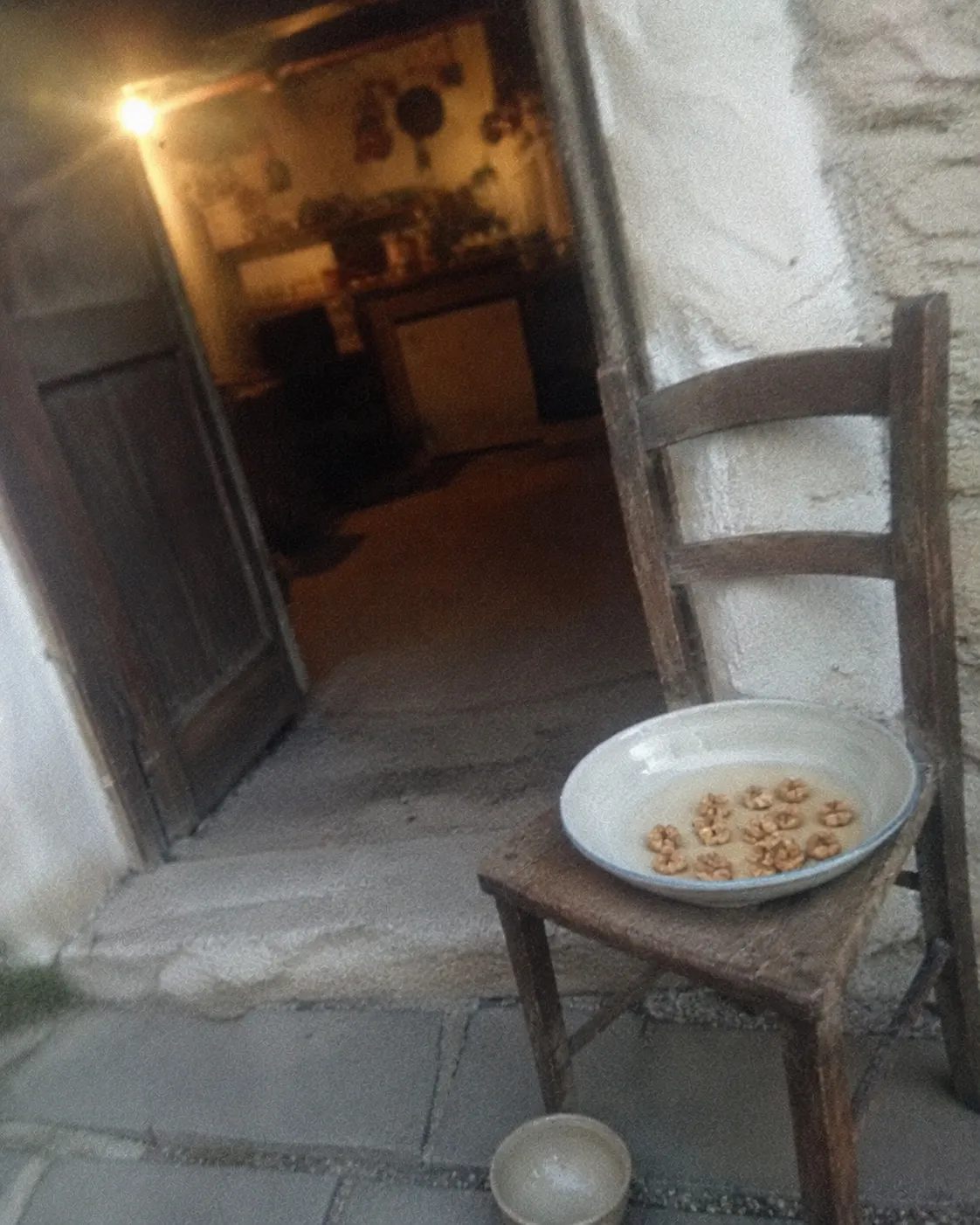
Picture a Three-Day Wedding Feast for Two Hundred People — and Not One Person Frantic in the Kitchen. Picture a village on a hillside, in an old country we're not going to name, where the lanes are stone and the gardens run right up to the back doors. Picture a wedding there — a real one, three days long, two hundred guests, tables down the middle of the lane. Picture the American aunt of the bride, arriving with a garment bag and a hostess's professional eye. Call her Margo. And picture the groom's great-aunt, who seems to run the entire feast from one chair at the kitchen door. Call her Lena. Margo and Lena are illustrative characters for this story. What Margo sees over those three days is going to fly home with her, sit quietly through customs, and then rearrange one shelf of her kitchen and most of what she believed about occasions. Let me back up. You need Margo first, and you have met her. Margo is sixty-four. For thirty-one years she ran the front office of a public high school — bells, buses, schedules, sixteen hundred adolescents and their paperwork. Retired now, and still the most organized person at any table. And in her family, Margo holds a specific office: she is the one who hosts. Thanksgiving is at Margo's. Christmas Eve is at Margo's. Graduations, showers, the retirement parties — Margo's. And a Margo occasion is a Production. Capital P. Everyone says it that way, half in awe. Look at the machinery of it. There's the binder. Menus from every holiday since the nineties, in plastic sleeves. And the rule of the binder — Margo's own rule, self-imposed, decades old — is that every year must bring new things. New sides, a new centerpiece technique, the dessert nobody's seen before. There's the equipment shelf: the springform pans, the torch for the one dessert in 2016, the ice-cream machine, the mandoline that must be respected. There's the schedule — the real one, the one taped inside a cabinet door, that starts three days out. Shopping day. Prep day. The day itself, up at five. And there's the aftermath, which nobody photographs: two days of dishes and leftovers and a kitchen that looks like weather went through it. Nobody makes Margo do any of this. That's the point everyone misses, including Margo. The Production is love, expressed in the only dialect she knows — effort. New effort. Visible, escalating, annual effort. But here's the private arithmetic of it, the thing she'd only admit in the car afterward: The occasions have been getting bigger every year — and the list of people who can throw one has been getting smaller. Her mother hosted forty people without a binder. Margo hosts fourteen with a schedule taped in a cabinet. And the generation below her, watching all that machinery, has quietly concluded that hosting is a professional sport and opted out entirely — they bring wine and admiration. It isn't a crisis. It's a hum: a standing puzzlement about why the thing her family did casually for a hundred years now requires a binder, a torch, and three days — and why she seems to be the last one who can lift it. She has concluded that standards simply rose. Keep that. The village is about to overturn it. So: the wedding. Margo's niece — her sister's girl, the one Margo taught to bake — fell in love with a man whose parents emigrated from the village. When the families met, his mother said the wedding must happen there, in the lane, the way every wedding in that family has happened. Margo flies over with the garment bag and, privately, with professional dread on the family's behalf. Because Margo knows what a wedding costs the women of a family. She has catered-adjacent every family event for three decades. Two hundred guests, three days — in her arithmetic, that's a month of prep, a rented kitchen, and somebody's aunt in tears behind a church. What she finds instead is the thing this whole essay is about. Day one, she walks into the main kitchen — the groom's family's house, doors open, tables already down the lane — and stops in the doorway and just watches, because something is wrong with the picture. Nobody is frantic. The kitchen is full — eight, ten women and a few men, moving around each other like they've rehearsed, which, it turns out, is exactly what they've been doing for fifty years. Nobody consults a recipe. There isn't a recipe in the building. Nobody asks what goes in next. Nobody is tasting anxiously. The work is loud — there's laughing, there's an argument about someone's husband — but it isn't hurried. And at the kitchen door, on a wooden chair, sits Lena — eighty-some, a bowl in her lap because her hands refuse to be idle — directing the whole operation with her chin. Margo, a professional of occasions, does what professionals do in the presence of mastery: she takes off her rings, washes her hands, and asks where she can be useful. They put her on walnuts. There is always a bowl of something that needs picking over, and it is always next to Lena's chair, and that is not an accident — it's how the village interviews strangers. And over three days of walnuts, beets, and folded dough, Margo asks Lena the question she came in holding. "How are you all so calm? Two hundred people. Three days. At home I need a binder for fourteen." Lena doesn't even look up from her bowl. "What is a binder?" Margo explains: the menus, the plastic sleeves, the new dishes every year. Her rule. And Lena stops working — actually stops, which Margo has not seen her do — and looks at her the way you look at someone who has just described, with pride, a very elaborate way of carrying water uphill. "New dishes. Every year. On purpose." She says something in her own language to the room, and the room laughs, not unkindly, and a woman rolling dough calls back something that makes Lena nod. Then Lena gives Margo the seminar, in the slow English of a woman who learned it from grandchildren. "Every dish at this wedding is older than everyone cooking it. The soup is the soup. It was the soup at my wedding. It was the soup at my mother's wedding. The bread is the bread. Nobody here has ever made it for the first time — you understand? Every hand in that kitchen learned every dish standing next to someone who already knew it." She picks up her bowl again. "That is why nobody is running. A new dish, you must carry — you read it, you doubt it, you taste it every five minutes, you are its servant all day. An old dish carries you. The hands know it. The garden planted for it in the spring. The cellar shopped for it in September. By the time the wedding comes, the feast is mostly already done — it has been getting done for a year. For a hundred years." And then the line Margo will take through customs: "You think we are calm because we are strong. No. We are calm because nothing on these tables is being lifted for the first time. Old things are light, dear. They have been carried so long they carry themselves. It is only new things that are heavy." Somebody needs Lena's chin then, and the seminar's over. But Margo spends the rest of the wedding watching it prove itself, dish after dish. The soup that four households made in their own kitchens, identically, without a word of coordination. The bread that rose on its own schedule while everyone slept. The pickled things that were done months ago — shelves of them, carried up from cellars, the deep crimson jars glowing like stained glass on the tables. The beets. Margo counts, because counting is her love language: beets in four dishes across the three days. The soup. The salad with walnuts she picked over herself. The pickles. A shredded thing with garlic she intends to learn. Nobody calls them anything. Nobody says "superfood." They're just in the repertoire — where, as far as anyone can tell, they have been for as long as there's been a repertoire. The wedding ends the way those weddings end — with singing, and with leftovers distributed by Lena's chin, and with the kitchen clean by the second morning because two hundred hands make light work of what they've all done before. And Margo flies home doing the arithmetic. You knew she would. So did she, somewhere over the ocean. Her Production, the binder, the annual escalation of novelty — she has been doing the heaviest possible version of hosting: all new things, every time, carried by one woman. Of course it takes three days and a schedule taped in a cabinet. Of course the generation below opted out — they weren't declining the love; they were declining the weight, correctly identifying it as unliftable. Her mother's forty-person ease wasn't higher standards or tougher stock. Her mother worked from a repertoire — the same twelve dishes, every year, learned at someone's elbow, carried so long they carried themselves. The binder, Margo realizes somewhere over the Atlantic, was the exact moment the repertoire died: the year she decided love had to be new to count. That's the discovery, and it's worth saying plainly: Old things are light. New things are heavy. A dish, a habit, a tradition that's been handed down doesn't have to be carried — it's been carried so long it walks on its own, and the people who keep it get to spend their effort elsewhere. Novelty is a luxury tax, and it's billed entirely to the host. The village isn't stronger than Margo. The village just stopped paying the tax a few centuries ago. Keep the old things. They're not the boring option. They're the paid-off option. And that is where the beet enters the story. Because of the four beet dishes at that wedding, and the cellar shelves behind them, and the small fact Margo couldn't stop noticing: the oldest things on those tables were also the ones nobody was carrying. The beet is the repertoire's kind of food: ugly, cheap, patient, keeps all winter, handed down so long it carries itself. Beetroot naturally contains dietary nitrates, and the body converts those into nitric oxide, a molecule that helps support healthy blood flow.* Beets also carry betalains — the deep crimson pigments that made those cellar jars glow like stained glass. But here's Margo's honest situation. She doesn't have the village. That's the part that can't be flown home in a garment bag. The four beet dishes she loved all assume the infrastructure: the garden that planted for them, the cellar that shopped for them, the eight sets of hands, the fifty years of standing at somebody's elbow. In Margo's actual kitchen, on an actual Tuesday, every one of them is a new thing — heavy, read from a recipe, carried alone. She'll learn the shredded one for occasions. She's Margo. But a Tuesday is not an occasion. Rosabella Beetroot is the beet with the carrying already done: two capsules, once a day. No garden, no cellar, no elbow to have stood at. The oldest food on the wedding table, in the one form that walks by itself on an ordinary American morning. What's in it reads in one breath. 1,300mg of organic beetroot powder per serving — a serving being those two capsules. One active ingredient, with the dose printed plainly on the label, nothing to decode. Non-GMO, third-party lab tested, produced under GMP, made in the USA from globally sourced ingredients. It contains no caffeine. Sixty capsules in a bottle; thirty days. It sits beside the coffee maker — the one appliance in Margo's kitchen that has never once appeared in the binder, because it never needed to. Some things are already part of the repertoire. One thing before anything goes in a cart: talk to your doctor or pharmacist before adding any supplement, especially if you take any medication. This goes alongside the rest of a routine — the meals, the walks, the sleep — not in place of any of it. Before adding it to the morning routine, Margo checked with her doctor or pharmacist, then put the bottle beside the coffee. On Amazon, Rosabella Beetroot sits at 4.4 out of 5 across 14,330 ratings as of August 12, 2026. The story's ending is small, and it's in two places, because two kitchens were changed. The first is Margo's holiday table, this year. The binder didn't get burned — Margo is not dramatic, and the binder is family history now, whatever else it is. But the rule died quietly over the Atlantic. This year's menu is last year's menu, minus two productions, plus the shredded beet thing with garlic — which she is making for the second time, on purpose, because the village taught her that the second time is where the repertoire begins. Fourteen people. One day of prep instead of three. And her niece — the bride, who watched her aunt pick walnuts at her own wedding — asked to learn the beet dish at Margo's elbow, which is how repertoires travel, and which is the only part of the story that made Margo cry. The second place is the counter. A bottle, beside the coffee maker, in the spot where the carried-so-long-they-carry-themselves things live. It was there before the wedding, actually. What the wedding changed is that Margo stopped thinking of it as a shortcut and started thinking of it in Lena's terms: it's the paid-off form. The one where the lifting was already done before it ever reached her counter. And now the last part, and we'll do it the way Lena would — from the chair by the door, plainly, without looking up from the bowl. Nobody here is going to promise you a transformation. We're not going to tell you what you'll feel or when. Bodies are different, and yours doesn't owe an advertisement anything. We're not going to dress it up in a story either — Margo and Lena are illustrations, and we said so in the first lines, because that's the only honest way to use them. And we're not going to hand you a binder. No program, no phases, no annual escalation, no new thing that needs carrying. You have enough that's heavy. What we sell is one of the old things — organic beetroot powder, the dose on the label, in a form with the carrying already done. Old things are light. That was the whole seminar. We just kept it old. P.S. If your own occasions have become Productions — the binder, the schedule taped in the cabinet, the two-day aftermath — the finding of this story, plainly: the point isn't that your standards fell, or that anything about you changed. The system simply got heavier. All new things, carried alone, are heavy by nature. Do what the village does: keep a repertoire. Make the good thing a second time, then a tenth. The dishes that get handed down start carrying themselves — and so does every other old, kept, boring, paid-off thing in a life. P.P.S. What it is, plainly: organic beetroot powder in capsules — 1,300mg per two-capsule serving, one active ingredient, dose on the label, no caffeine, non-GMO, third-party lab tested. Thirty days a bottle. That's the whole story. P.P.P.S. If you're not satisfied for any reason, return the product within 90 days of delivery for a full refund. Individual experiences vary. These statements have not been evaluated by the Food and Drug Administration. This product is not intended to diagnose, treat, cure, or prevent any disease. https://track.tryrosabella.com/8ae97cac-2146-42d6-af75-de0e59d15644
More from The Heart Health Project

Support stamina and heart health every day
The Heart Health Project

Support stamina and heart health every day
The Heart Health Project
Support stamina and heart health every day
The Heart Health Project
Support stamina and heart health every day
The Heart Health Project
Support stamina and heart health every day
The Heart Health Project

Support stamina and heart health every day
The Heart Health Project
Support stamina and heart health every day
The Heart Health Project

Support stamina and heart health every day
The Heart Health Project
Support stamina and heart health every day
The Heart Health Project

Support stamina and heart health every day
The Heart Health Project

Support stamina and heart health every day
The Heart Health Project

Support stamina and heart health every day
The Heart Health Project

 Add to Chrome