Support yourself today
Ad Copy
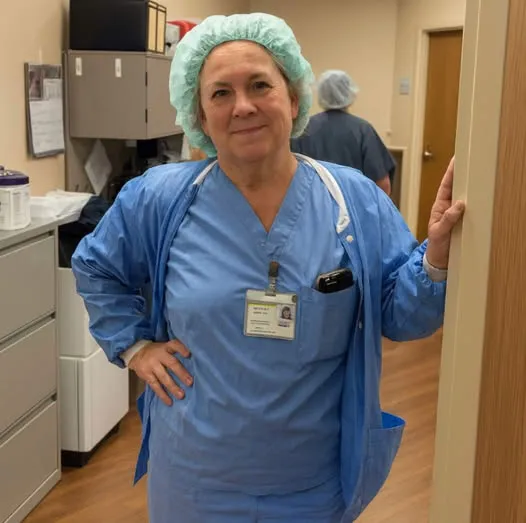
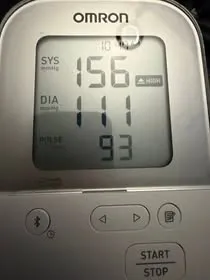
17 strokes came through my ICU this month. Every single one was on a blood pressure pill. Every single one had been told their pressure was "controlled." Every single one did everything right. I've been an ICU nurse for 19 years and I see this all the time. I've read their charts. I've seen the numbers. Reading right around 128 over 80 at their last checkup. Textbook management. And I've sat beside the bed at 2 AM watching the monitor alarm while their family falls apart in the hallway. For years I kept my mouth shut. I'm a nurse, not a doctor. It's not my place to question the protocol. Then last month, a 61 year old grandmother came through my ICU on a Sunday morning. Twelve years on lisinopril. Reading 128 over 80 at her last checkup. She was frying bacon for her grandkids when she collapsed in her own kitchen. Her 10 year old grandson was the one who called 911. He told the dispatcher, "Grandma won't wake up." She never did. Her husband of 38 years sat in the waiting room repeating the same sentence: "But her numbers were good. Her numbers were good." Her numbers were good. That was the case that broke me. That's when I knew I couldn't stay quiet anymore. Because a year ago, I almost became one of those charts myself. And what I did instead of filling the prescription they handed me is the reason you're reading this right now. If your doctor just pulled out the prescription pad for lisinopril, or any of the blood pressure pills, and something in your gut is telling you not to fill it, keep reading. If you've been on a blood pressure pill for years and you're tired of the dizziness every time you stand up, the swollen ankles by dinner, the dry cough that never quits, the bone deep exhaustion that makes you feel a decade older than you actually are, and every single one of those things your doctor calls "a minor trade off," keep reading. If you've cut the salt to nothing, tried beetroot and hibiscus and magnesium and every heart healthy thing on the shelf, and your number keeps climbing anyway, keep reading. Because after 19 years and thousands of patients, I finally understand why blood pressure pills fail the people who need them most. And what I found instead has more clinical proof behind it than most of the supplements sitting in your medicine cabinet right now. That grandmother wasn't the first. She wasn't the 14th. She wasn't the 50th. I stopped counting years ago. The 47 year old truck driver who came in on a Thursday. On a pill four years, never missed a dose. His daughter was halfway to the airport to pick up his grandkids when her phone rang. The 58 year old retired teacher. On a pill seven years. Her husband came home from the hardware store and found her on the bedroom floor. The 66 year old Marine. 23 years on the force before he retired. Tougher than anyone I've ever drawn blood from. On a pill 11 years. Dropped in his own garage on a Tuesday afternoon. All of them on a blood pressure pill. All of them "controlled." All of them gone. And every single time. Every time. The doctor would look at the chart, see the reading history, and say some version of the same thing: "I don't understand. The number was right where we wanted it." After the 50th time I heard "I don't understand," I realized something that changed everything for me. Let me be clear about what I'm NOT saying. High blood pressure is dangerous. Nobody in medicine disputes that. A high enough pressure is exactly what strokes a person. That part is real, and I would never tell you the number doesn't matter. But here's what nobody was putting together: If the pill that's supposed to lower your blood pressure is doing its job, and your reading at the appointment looks fine, and you're STILL ending up in a bed in my ICU with a bleed on the brain. Then lowering the number at your appointment isn't enough. Something else is happening. Something nobody is addressing. Something that is quietly killing people who are doing everything their doctor told them to do. I carried that question with me for two decades. Until last March. I was between patients on a slow shift when the hospital ran its annual wellness screening for staff. Quick blood draw. Vitals. Routine. I almost skipped it. Busy night. But the tech caught me at the med cart and I figured, why not. She put the cuff on my arm. 166 over 108. I pulled up the range I'd looked at ten thousand times for other people. Normal is under 120 over 80. I wasn't close. I was sitting at the nurses' station in scrubs, looking at my own reading telling me I was turning into the next chart on someone else's nightstand. The attending that night, a man I respected but barely knew outside of shift handoffs, pulled me aside after the numbers hit the system. "Viviane, you know the protocol. Lisinopril. A low dose. Your number is way above target. Recheck in 90 days." He wrote it out. Handed me the slip. I folded it. Put it in my scrub pocket. And never filled it. Because I knew something he didn't. I knew that prescription was the same kind of pill sitting in the medical history of every stroke patient I'd watched code, lose the use of half their body, or lose their life in my ICU with "controlled" numbers. The drug was doing part of the job. But it was leaving the most dangerous part completely untouched. I wasn't going to become the next chart. So I went home and I started digging. I spent four nights at my kitchen table with my laptop open until 2 AM. I read studies I didn't fully understand and read them three times. I followed footnotes into other journals. I made notes in a spiral notebook the way I used to in nursing school. My husband would come down at midnight, ask if I was okay, and go back to bed. By the fourth night, something I had been told was settled for 19 years had completely come apart. What I found made 19 years of shifts suddenly make sense. And it made me furious. Because the research wasn't hidden. It wasn't classified. It wasn't some fringe theory. It was sitting right there in peer reviewed medical journals, published and accessible, and not a single protocol in my hospital reflected any of it. Here's what they taught us in nursing school: High blood pressure means too much force on your artery walls. Medication lowers the number. Lower number means lower risk. Simple. And the first part is true. High blood pressure IS dangerous. Your number DOES matter. But here's what they didn't teach us. Here's what nobody in the break room talks about. Here's what you won't hear at your annual physical. They didn't teach us WHERE your blood pressure actually comes from. And once you understand that, everything about the last 19 years of watching compliant patients stroke in my ICU suddenly makes sense. Here's what's really going on. Your blood pressure is not one fixed thing sitting in your arteries. It is a signal. And your liver is the one sending it. There is a single protein your liver makes whose entire job is to squeeze your blood vessels tighter. It's called angiotensinogen. Your pressure at any given second is really just a readout of how much of that protein your liver is pouring into your blood right then. A normal amount, your vessels relax and your pressure is fine. Too much, your vessels clamp down and the number climbs. And here is how settled this is. The pill they wanted to put me on, lisinopril, is what they call an ACE inhibitor. ACE stands for angiotensin converting enzyme, the enzyme that switches this protein on. The next drug down the list is an angiotensin receptor blocker, it plugs the spot the same protein latches onto. Say them out loud. Angiotensinogen. Angiotensin converting enzyme. Angiotensin receptor blocker. Every one of the big blood pressure drugs is named after that one protein your liver makes. The whole cabinet was built around it. And not one of them is aimed at the organ that actually makes it. Your liver. Because your liver is directly exposed to everything you put into your body. Every bit of processed food. Every glass of wine. Every medication. It all gets filtered through that one organ, hour after hour, year after year. And over time it gets congested and overworked. Fat builds up inside the liver cells themselves, decade after decade of overload. And here's what an overworked, congested liver does with that protein. It stops pouring it out in a clean, steady stream. It floods it out. Too much of it, and never evenly. That is what's happening inside your liver right now. And that is the part that should stop you cold. Because when your liver is pouring this signal out unevenly, your pressure is never steady. It surges. It can read fine at your appointment and then climb out of nowhere on a Tuesday afternoon, nothing different, no salt, no stress, because your liver just poured out a little more of it. The reading on the cuff at your checkup is only an average. It never shows you the surges. That is why the truck driver and the teacher and the grandmother all had "controlled" numbers and still ended up in my unit. Their reading looked fine at the appointment. Their pressure was surging the whole time underneath it. And one surge, on vessels that have been clamped tight for years, is a stroke. Now here's why the pill doesn't stop it. Your pill works at the very end of the line, out at the blood vessel, blocking the protein after your liver has already poured it in. The number at your checkup drops. Your doctor sees it and says great, the medication is working. It flattens your average enough to make the reading look okay. But the liver is still flooding the signal. The pill never goes back upstream and tells it to make less. So the tap keeps running, and the pill can never catch the surges. That's why you need the medication forever. That's why the dose goes up. That's why your doctor adds a second pill. And that's why you get the side effects. The dizziness every time you stand up. The swollen ankles by dinner. The dry cough. The bone deep exhaustion that hits by 2 PM and never lifts. The men who quietly stop taking it because of what it does to them in the bedroom. Your doctor calls all of it "a minor trade off." It's the cost of blocking a signal your body uses, all day, every day, for the rest of your life, while the liver that's actually driving the pressure never gets touched. The medication is managing the average. It was never settling the liver. And it's not just the pills. Here is the truth about the salt everyone screams about. Two things set your blood pressure. How tightly your vessels are squeezed, and how much fluid is packed inside them. The squeezing is where almost all of your pressure comes from. The fluid is a small piece on top. And salt only ever touches that small piece. When you eat salt, your body holds a little extra water to go with it, and that extra fluid nudges the number up a bit. That is the whole reason salt was ever in the conversation. And that same protein your liver makes, the one clamping your vessels shut, is also the thing that tells your body to hold that water. So cutting salt shaves a sliver off the fluid and leaves the squeezing completely untouched. That's why you can cut your salt to nothing for a year and watch the number barely move. Beetroot and hibiscus give you a little bump of nitric oxide. They loosen the vessels for an hour or two, and then it wears off, because they never touch the liver. Magnesium and potassium help a little at the margins. Losing weight and exercising take some of the load off, but they don't clear what's already congesting the liver. I've watched patients try every one of them. Every one of them worked somewhere other than the source. Nothing turned off the tap. That's the gap. That's what I watched hurt people for 19 years in my ICU. And then a cardiologist I've worked beside for a decade told me what he takes himself. His name is Dr. Pham. He's an interventional cardiologist. Not the kind who writes prescriptions from behind a desk. The kind who physically opens clogged arteries for a living. He places stents. He performs catheterizations. He's held a human heart in his hands. He knows what years of high pressure do to a body up close, in real time, in ways most doctors never will. Someone I can trust. After I got my numbers, I mentioned to him casually during a slow shift that I'd refused the lisinopril. He didn't lecture me. He didn't tell me I was being irresponsible. He was quiet for a second. Then he said: "Do you know why patients with controlled blood pressure still end up in the ICU?" I looked at him. "I've been wondering that for 19 years." "Because the reading on the cuff is only the average. The real pressure is surging, up and down, all day, from a liver that's overproducing the signal that squeezes the vessels. The pill blocks that signal at the far end and smooths the average. It never touches the liver, so it never stops the surges. Nobody addresses the liver." He paused. "Look into silymarin, NAC, and choline. Together. The clinical data is real. I take all three myself." Let me say that again so it lands. An interventional cardiologist. A man who opens clogged arteries with his own hands. Who has spent his career seeing what the pressure does to the human heart and brain. Telling me, quietly, between cases, that he takes three specific compounds himself. I went home that night and started pulling research. The first thing I learned was that silymarin is the active compound in milk thistle. I'd heard of milk thistle before. Most nurses have. It's been marketed as the liver supplement for decades, and I'd watched plenty of patients waste money on cheap versions at the grocery store. My first instinct was to be skeptical. But I kept reading. Because Dr. Pham doesn't say things casually. If he told me the clinical data was real, there was clinical data. German clinical trials used pharmaceutical grade silymarin standardized to 80%, and it brought blood pressure down by shielding the liver cells so an overworked liver could recover and go back to pouring out a normal, steady amount of that protein. Not by forcing anything at the vessel the way a pill does. By settling the organ that was flooding the signal in the first place. The healers in Central Europe used milk thistle seed for over 2,000 years for liver protection. They called it "the protector." Long before any of our machines existed, they knew the liver was the seat of the body's balance, and this was the seed they reached for when someone's liver started failing them. They had named it for the work the studies were now proving it did. But here was the part I almost missed. The studies were clear that silymarin alone isn't enough. NAC stopped me in my tracks because I have been administering NAC in the hospital my entire career. We use it as the gold standard treatment for acute liver failure and Tylenol overdose. It refills glutathione, the master antioxidant the liver uses to break down the fat that's been congesting it for years. The German research is explicit. You need NAC paired with the silymarin for the silymarin to actually do its job. And then choline. The one almost nobody talks about. Over 80% of adults are deficient in it. It's the nutrient your liver physically uses to package that broken down fat and ship it out of your body. Without it, even broken down fat has nowhere to go. It just stays trapped in the cells, keeping the liver overloaded. When the liver has all three at the right doses, the overload lifts. The liver settles. And it goes back to pouring out a normal, steady amount of that protein. On its own. Not forced from the outside. The way it did when you were thirty. And when the liver pours out a steady amount, the surges stop, and the pressure comes down at the source and stays down instead of jumping on you. You didn't need a drug to block the signal at the vessel. You needed to take the load off the liver that was flooding it. Then I found the head to head clinical study. Researchers tested standardized silymarin paired with NAC against a low dose blood pressure pill. For 12 weeks. The pressure in the supplement group came down as much as the drug brought it down. But it got there by settling the liver instead of blocking the signal at the far end, and the pressure held steady instead of surging, without the dizziness, the swollen ankles, or the dose that climbs every year. Three plant compounds. Going head to head with the prescription that was sitting in my scrub pocket. Matching it on the number. And getting there by turning off what was driving the surges instead of masking them. I sat at my kitchen table staring at my screen, thinking about every patient who had come through my ICU on a pill that smoothed their average while the pressure kept surging underneath it. There was something that could bring the number down AND settle the liver this entire time. And nobody told them. Nobody. But before I ordered, I made the mistake almost everyone makes the first time. I went on Amazon and bought a bottle of milk thistle. Highest rated. 1000mg per capsule. Two day shipping. I took it every morning with my coffee for three full weeks before I checked my pressure again. 163 over 105. Down three points from 166 over 108. I almost gave up. But something nagged at me. The German research had shown real drops in 12 weeks. Mine had barely moved. I went back to my notebook. And that's when I saw what I'd missed the first time. Every single study that showed real drops specified two things. First, the milk thistle had to be pharmaceutical grade silymarin standardized to 80%. Not raw seed powder. The label might say 1000mg of milk thistle but the actual silymarin content can be anywhere from zero to a tiny fraction of what the studies used. Second, the silymarin had to be paired with NAC at clinical dose AND choline at clinical dose. All three together. The studies that used silymarin alone, or raw milk thistle, or milk thistle without NAC and choline, showed almost no effect. Just like the bottle I'd been taking. I went to my kitchen counter and read the back of my bottle again. "Milk thistle, 1000mg." That was it. No silymarin percentage. No NAC. No choline. I'd been taking ground up seed powder with no real active compound in it, missing two of the three things the research said had to be there. I called Dr. Pham. Caught him between cases. Told him what I'd done. He laughed, a tired laugh. "Viviane, almost everyone makes that mistake. Most milk thistle on the shelf is raw seed with no standardization. And almost none of it has NAC or choline. You need all three at the right doses, in one capsule, or you're wasting your money." "What do you take?" "Happy Liver. Made by Ritual Labs. It's the only brand I've found that gets it right. European pharmaceutical grade silymarin standardized to 80%, the same concentration the German trials used. NAC at clinical dose. Choline at the dose the research called for. All three in one capsule. Every milligram on the label. No proprietary blends. Third party tested. And the seed comes from Amish farming families in Lancaster County who've been growing milk thistle for over 150 years." I ordered it that night. Didn't tell anyone at work. Just added it to my morning routine with a glass of water before my shift. I want to be honest about what the first few days felt like. It wasn't a caffeine jolt. It wasn't some dramatic shift 20 minutes after swallowing a capsule. This isn't a stimulant. What it does is work inside the liver where the overload actually is, and that kind of change takes time to show up. But what I noticed was quieter than that. And more real. Within the first week, the tight, wired feeling I carried into every shift started to lift. I'd been blaming it on 12 hour shifts and age. It wasn't age. By week 2, the morning headache that used to sit behind my eyes when I stood up was gone, and so was the dizziness every time I got out of a chair too fast. By week 3, I was sleeping through the night for the first time in years. The puffiness in my face and ankles that I'd stopped noticing was gone. Nurses know that bone deep fatigue that never fully goes away no matter how much you sleep. It went away. At 6 weeks, I sat down with my home cuff. I'd been avoiding it, honestly. I didn't want a number to contradict what my body was already telling me. But at 6 weeks, I couldn't wait anymore. 142 over 92. Twenty four points down from 166 over 108. In six weeks. On three capsules every morning. And here's the part that got me. I checked it again the next night. Still 142. I checked it two days later. 141. It wasn't surging anymore. It was just lower, and it was holding. I didn't tell anyone. Not my husband. Not Dr. Pham. I wanted to see if it held. I checked my full numbers at 12 weeks. 133 over 86. Down from 166 over 108. Without a single milligram of medication. My resting heart rate had settled. Every marker better. I sat there looking at a number I hadn't seen in years, that had stopped jumping on me for the first time in longer than I could remember. But you can't keep something like that to yourself. Not when you've spent two decades watching people you couldn't save. So I told my sister in law, Angela. She's 51. Six years on lisinopril. The kind of woman who holds everything together for everyone else, then goes home dizzy and swollen and lies awake. Her doctor kept increasing her dose. Six years on that treadmill. I told her what Dr. Pham told me. Told her what it did for me. She started two weeks later. With her doctor's sign off to add it alongside her current medication. Within 6 weeks her reading came down from 152 over 96 to 134 over 84, even as her doctor began tapering the dose. The dizziness eased. Her energy came back. Then Diane, 62, one of the front desk receptionists. Her pill had taken her energy so completely she could barely get through the workday. She'd tried switching drugs twice. Same exhaustion, different name. She's three months in now. Energy is back. Her last reading was down into the 120s with her doctor tapering the dose. Word spread the way it always does in a hospital. Quietly. Nurse to nurse. In the break room over bad coffee. I know of eleven nurses on my floor taking it now. Not one of them stopped their medication without their doctor's sign off. That matters. I'll get to that. Because I need to say this clearly, and I need you to hear it: I am not telling you to stop taking your blood pressure pill. I'm a nurse. I would never tell you that. Neither would Dr. Pham. Neither would any of the eleven nurses on my floor who take Happy Liver every morning alongside whatever their doctor prescribed. What I am telling you is this: there is something your doctor probably doesn't know about, because it isn't taught in medical school and it isn't sold by a pharmaceutical rep and the studies that proved it were done in a country most American doctors have never set foot in. You can take it alongside your medication. You can work with your doctor to monitor your numbers. And if your number comes down the way mine did, the way Angela's did, the way Diane's did, you can have that conversation with your doctor about what to do next. That's how it should work. I know what some of you are thinking. "I've tried supplements before. They didn't do anything." Most supplements are garbage. I'd agree with you. I spent 19 years rolling my eyes at the shelves. What changed my mind was a cardiologist I trust with my own heart telling me this one wasn't like the others, and then watching my own readings prove it. It's called Happy Liver. From Ritual Labs. Three capsules every morning. With water. Before breakfast if you can. That's the whole protocol. Right now Ritual Labs is offering buy 2 get 1 free, which brings the cost to about $23 a bottle. They also offer a 60 day money back guarantee. Full refund, no questions, even on empty bottles. I asked before I recommended it to Angela. I wouldn't have told her about it otherwise. Sixty days is enough time to see what I saw. If you don't see a change, you send the bottles back. You're out nothing. One path: fill the prescription. Take the second pill your doctor offered you. Hope it does what it promises, even though you know what happens when it doesn't. Watch for the side effects. The dizziness every time you stand up. The swollen ankles by dinner. The dry cough that never quits. The exhaustion that hits by 2 PM. The dose increase your doctor will mention at your next visit. The second medication added on top of the first. The thing you stopped doing with your grandkids a year ago. And haven't picked back up since. And underneath all of it, the quiet dread. Because you've read this post. You know what I watched this month. 17 people, all on the same medication you're on or thinking of going on. All "controlled." And their numbers didn't save them. That 61 year old grandmother filled her prescription too. Took it every morning. Did everything right. Was "controlled." Her 10 year old grandson is still waiting for her to come home. Every headache when you stand up, every dizzy spell, every flutter when you climb the stairs, you'll wonder. Is this it? Is this the surge? Because the pill works on the average, not the liver. It blocks the signal at the vessel while the liver keeps flooding it underneath. And a flattened average isn't the same thing as a liver that's finally pouring out a steady amount. It's a curtain over a wall that's still cracking. Another path: do what I did. What Angela did. What Diane did. What Dr. Pham does every morning before he drives to the cath lab. Support the liver where the pressure is actually coming from. Let it go back to pouring out a steady amount, the way it did when you were thirty. Keep taking whatever your doctor prescribed. Track your numbers. In 90 days, have a real conversation with your doctor about what the bloodwork is telling you. Support the liver. If you're on a blood pressure pill and your numbers are "controlled" but you know something isn't right, here is the link Dr. Pham sent me. 👉 https://rituallabs.shop/products/happy-liver And if you're not on a pill yet, but your number has been climbing every year, or your doctor has started using the word "borderline," or your last visit ended with "let's keep an eye on it," it's the same link. Start before the surges get worse. Start before the second pill conversation becomes yours. I still think about that grandmother. I think about her 10 year old grandson in the waiting room. The way he looked at me when I walked out. The way no one should ever have to look at anyone. I think about the bacon still on the stove in a house she'll never walk back into. I became a nurse to keep people out of that room. 19 years in, I finally feel like I have something that actually does it. If you have grandkids. If you have a husband counting on you. If you have a Sunday morning ritual your family knows you for. Please don't wait for the number at your appointment to tell you you're fine. The average is lying. The surges are what get you. I counted 17 this month. Don't make me count you. 👉 https://rituallabs.shop/products/happy-liver ~ Viviane Ashcombe, RN, ICU, 19 years P.S. I want to be clear about something. I'm not telling you to stop your blood pressure pill if you're already on one. That conversation is between you and your doctor. What I am telling you is that the pill only smooths the average, out at the vessel. It doesn't stop the liver from overproducing the signal, which is why the pressure keeps surging underneath it. If you want to give your body a real chance to settle that surge, you need something that works inside the liver. That's what I added. That's what changed my numbers. That's why I'm writing this when 19 years of training tells me to stay quiet. P.P.S. I just checked the link before I posted this. Happy Liver was still in stock when I clicked. They produce in small batches and the Amish farms in Lancaster County have one milk thistle harvest a year, so they sell out regularly. If it doesn't say waitlist by the time you get there, get on it. 👉 https://rituallabs.shop/products/happy-liver
More from Vivienne Ashcombe
Support yourself today
Vivienne Ashcombe
Support yourself today
Vivienne Ashcombe
Support yourself today
Vivienne Ashcombe
Support yourself today
Vivienne Ashcombe
Support your liver today
Vivienne Ashcombe
Support your liver today
Vivienne Ashcombe

Support your liver today
Vivienne Ashcombe

Support your liver today
Vivienne Ashcombe

Fix what really matters
Vivienne Ashcombe
Fix what really matters
Vivienne Ashcombe

Support your liver today
Vivienne Ashcombe
Support your liver today
Vivienne Ashcombe

 Add to Chrome