at2a Nattokinase 10,000 FU
Ad Copy
My husband was a man who came home from work whistling. For about two years, I watched him quietly stop whistling, and I did not know how to bring it up. I have been married to Ray for thirty-eight years. My name is Ellen. We have lived in the same house outside Springfield, Ohio for twenty-six of those years, raised two daughters here, and watched the two maples in the front yard grow from the saplings Ray planted the spring after we moved in. Ray is sixty-two. He spent thirty-one years as a quality inspector at a machine shop two towns over, measuring other men's work to the thousandth of an inch. He is, by every measure that matters, a good man. I am telling you that because the story I am going to tell you does not make sense if you do not know what kind of man Ray has been. Ray came home from work whistling for thirty-six years. I do not mean that as a figure of speech. I mean it literally. He came in the side door at four-forty, hung his keys on the hook, and started whistling something — half the time it was a song from the radio that morning, half the time it was nothing in particular, just the sound of a man who was glad to be home. I would hear it from the kitchen and I would know he was back, and I would call out, Ray, and he would call back, Ellen, and that was the small daily ritual of our marriage for thirty-six years. About two years ago, the whistling started getting quieter. I noticed it the way you notice these things, which is over a long period of time, in small pieces, none of which I would have been able to point to individually. By the end of the first year, the whistling had mostly stopped. By the end of the second year, Ray was coming home at four-forty, hanging up his keys, and going straight to the recliner in the front room. Quiet. He would say hi, hon, and kiss the top of my head, but the whistling was gone. The whistling was not the only thing. He stopped suggesting the small Saturday drives we used to take. We have a loop we have been doing for twenty years — three little towns south of us, a couple of antique barns, a diner where the pie is better than it has any business being. Ray used to plan it on Friday nights. He stopped planning it. He stopped going to his Thursday-night league at the bowling alley. He had been rolling with the same group of men, mostly his age, for seventeen years. He stopped going one Thursday and then stopped going the next Thursday and then never went back, and when I asked him about it he said his shoulder had been bothering him, which was partly true but was not the whole truth. He stopped doing the small house projects he used to do on Sunday afternoons. The trim on the back porch had needed repainting for a year and a half. The fence by the driveway had been leaning for nine months. He started stopping on the landing when he carried the laundry basket up. Just for a second. Just long enough to breathe. He never said a word about it and neither did I. He stopped reading at night. He had been a reader for thirty-eight years. He stopped, in the small daily ways a wife notices, being the Ray I had married. I noticed all of it. He did not. I want to be clear that none of this was sudden. None of it was dramatic. He was not depressed. He was not sick. He had his physical at sixty and again at sixty-one and both times he came home and told me the numbers were fine. And they were. That is the part I need you to understand. Ray has been on a cholesterol medication since he was fifty-six and a low-dose blood pressure medication for longer than that, and both of them were doing exactly what they were supposed to be doing. His LDL was where his doctor wanted it. His pressure was where his doctor wanted it. The chart was clean. There was no chart-level problem to fix. There was just a man who had quietly stopped whistling. I should tell you the other thing that sits underneath all of this, because it sits underneath everything in our house. Ray's father died of a heart attack in his own driveway at sixty-three years old. Ray was twenty-four. He was the one who found him. Ray is sixty-two. We have never once said the arithmetic out loud. Not in thirty-eight years. But I want you to understand that it has been in the room with us the entire time, and I think it was in the recliner with him every one of those evenings. The thing that finally got me to say something out loud happened in late September. About fourteen months ago. Our older daughter, Katie, was getting married. The wedding was outside Asheville. We drove down the Friday before and had dinner with the rehearsal party at a place with a long porch. Ray was seated next to Katie's father-in-law-to-be, a man named Walt who is about ten years older than Ray — early seventies, retired lineman, very fit, the kind of man who shows up to a rehearsal dinner having walked the three miles from the hotel and not mentioning that he walked the three miles from the hotel. I was at the other end of the table. I watched Ray and Walt talk for about half an hour. At first the conversation was the kind of thing the fathers of the bride and groom talk about — the kids, the logistics, the weather forecast for Saturday. Then it became something else. I could not hear what they were saying. But I watched Ray's face change at some point in that conversation, in a way I had not seen his face change in two years. He was listening to Walt in a way that was not the way Ray had been listening to anybody. After dinner, on the walk back to our room, I asked Ray what they had been talking about. He was quiet for a minute. He said, Walt said something to me that I have been thinking about all evening. I asked him what. He said: Walt asked me how I was doing. Not the polite way. The other way. And then he told me what he had been doing for the last three years to feel like himself again. He said it took him a while to admit to himself that he had been needing to do something. He said he wished he had said something to his wife sooner. I asked Ray if Walt had told him what he had been doing. Ray said yes. He said the most important thing Walt had told him was to go to his doctor and have the conversation he had been avoiding. He told me Walt had told him about a supplement — a fermented soybean enzyme, of all things, something called nattokinase — that Walt had added to his mornings after talking to his own doctor about it. Walt told Ray the brand was At2a, and that he had picked it because the company ferments and dries it at low temperature instead of running it through heat. He told Ray that the supplement was not the point. The point was the appointment. Ray and I walked the rest of the way back without saying anything. When we got to the room, he sat on the edge of the bed and he told me, for the first time in two years, that he had been noticing the same things in himself that I had been noticing about him, and that he had not known how to say so. He said he had been tired in a way he did not have a word for. He said the stairs had started to mean something to him. He said he had been thinking about his father more than he had in thirty years. I held his hand for a long time. We talked for almost two hours that night. The next morning, our daughter got married. The Monday after we got back from North Carolina, Ray called his doctor's office and made an appointment. I want to tell you something about that appointment that matters for this letter, because Ray told me about it on the drive home and I have been thinking about it ever since. His doctor — a man in his fifties Ray has been seeing for sixteen years — did not make a face. He did not rush him. He asked careful questions. He ran the bloodwork he wanted to run. He looked at Ray's medications and confirmed that the cholesterol medication and the blood pressure medication were doing what they were supposed to be doing for him. He talked to Ray for a long time about circulation, generally, and about how blood flow
More from Bolin Eric McNulty

Brick'd Intimacy Gummies | AT2A
Bolin Eric McNulty

Okay don’t buy this yet. Just listen. I kept seeing At2a nattokinase all over my feed and I thought it was another “heart bottle” scam. Then I actually watched what it’s supposed to do in order and I got mad I spent months on cheap capsules that die in your stomach. First the liposomal capsule is built to get through stomach acid. The claim they make is 99% of supplements never even reach. Mine were definitely in that 99%. This one dissolves five actives into you instead of turning into expensive pee. Then the nattokinase part. It’s not “supports circulation” fluff. The pitch is it dissolves fibrin off the artery wall so the pipes aren’t coated and clogged. That’s the line that made me stop scrolling. After that the calcium doesn’t just float around looking for a new wall. Vitamin K2 is in there to reroute it so it doesn’t go right back where it came from. Then beetroot. Nitric oxide. Pipes flexible instead of stiff. Then CoQ10. That’s the engine oil. Helps the heart keep producing energy so it can keep pumping. And the part nobody puts in the cheap bottles: 10,800 FU of nattokinase. That’s the dose they say is actually studied to work. Not a fairy-dust sprinkle. A full serving of that. I was about to click full price like an idiot. Don’t. If you’re watching this, the bundle is 75% off plus free shipping. If the Shop Now button is still there, it’s in stock and on sale. If the button is gone, it’s sold out and you’re late. I’m not telling you this cleared my arteries in a weekend. I’m telling you this is the first bottle that had the dose, the delivery, and the sequence instead of one sad ingredient and a red label. Tap Shop Now before they pull the 75%.
Bolin Eric McNulty

at2a Nattokinase 10,000 FU
Bolin Eric McNulty

at2a Nattokinase 10,000 FU
Bolin Eric McNulty
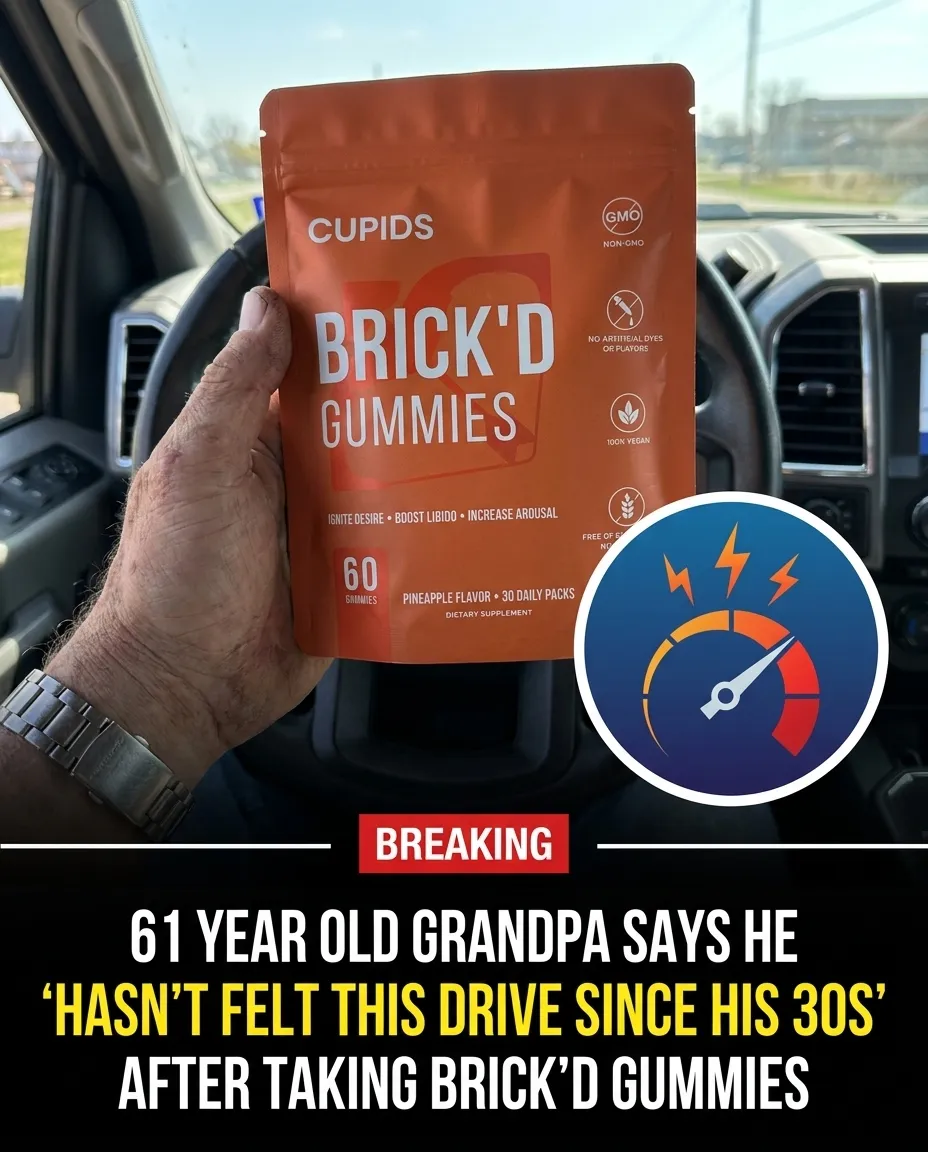
Brick'd Intimacy Gummies | AT2A
Bolin Eric McNulty
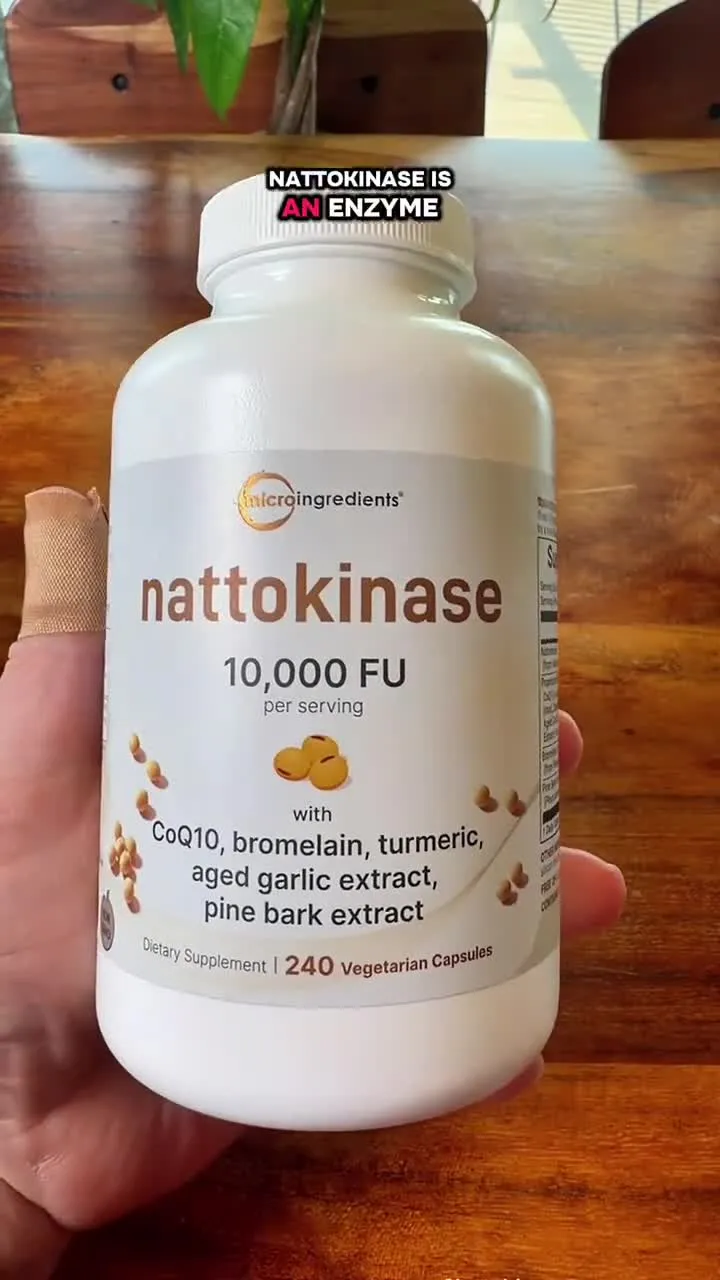
There's a number that changes how you look at your own chest. For some people it's an LDL of 186. For others it's a calcium score — that scan where they hand you a three-digit number and tell you it's the plaque already sitting in your heart's arteries. And then they tell you the part that keeps you up at night: that calcified plaque doesn't go away. So they start you on a statin. And here's what nobody explains on that table — why a drug that lowers your cholesterol can still leave the plaque exactly where it is. Because plaque isn't just cholesterol. Cholesterol is only the raw material. What actually holds it together — what lets it stack, harden and stay — is a protein mesh inside your artery wall called fibrin. Picture a wall being built inside your artery. Cholesterol is the bricks. Fibrin is the scaffolding. A statin cuts the brick delivery — the wall stops getting taller. But every brick already laid stays exactly where it is, because the scaffolding is still holding it up. That's why a physician went viral saying what the trial data actually shows: in the coronary arteries, high-dose statins reduced plaque by 0.015 millimeters. Best case in any study, 0.04. A fraction of a millimeter. His words: "It didn't reverse. It just stopped the progress. The car's in neutral." That's a medical doctor describing the drug half of American adults over 55 are on. Neutral isn't nothing. If you're 74 with advanced disease, neutral might be exactly what you want. But if you're 54, staring at the same numbers your father had at 54, neutral isn't a plan — it's a holding pattern that lasts the rest of your life. You wanted to clean the pipe. They handed you something that keeps it from getting worse. So why has no one offered you the thing that works on the scaffolding? Because it isn't a drug. Japan has one of the lowest heart-disease rates on earth and one of the longest lifespans. America's number one killer is heart disease — 700,000+ deaths a year. The difference isn't genes and it isn't luck. For a thousand years, Japanese households have eaten a fermented soybean dish called natto — and in 1980 a researcher isolated the enzyme behind what it does to blood: nattokinase. Nattokinase is fibrinolytic. It breaks down fibrin. It works on the scaffolding your statin was never designed to touch. And you've never heard the word from your doctor for one reason: you can't patent an enzyme that occurs in food. No company spends a billion dollars putting a fermented bean through FDA approval for something they can't own. There's no sales rep in your cardiologist's office. Your doctor isn't hiding it — nobody's paid to bring it up. A retrospective study followed 1,062 people over a year. In the nattokinase group, carotid plaque size and arterial wall thickness dropped by up to 36%. From "the car's in neutral" — to a 36% improvement. And if you've tried nattokinase before and felt nothing, there's one reason: the dose. Reversal only showed up at high doses. Below ~6,000 FU, the studies found nothing. The clinical dose is 10,000 FU — and almost every bottle on the shelf sits under 2,000. You didn't try nattokinase and fail. You took a fifth of a dose. At2a Nattokinase is the full 10,000 FU — in one capsule. Not three. Not four packs of natto a day. One. Stacked with CoQ10, bromelain, turmeric, aged garlic, pine bark and grape seed — a 7-in-1 complex built around the enzyme, not a token pinch of it. No prescription. No muscle aches. One capsule with breakfast. And a 90-day guarantee: take it daily, get your bloodwork, and if nothing moved, you pay nothing. There's a moment you've already played in your head — the doctor opens the printout, pauses, looks up, and instead of reaching for the prescription pad, asks what you've been doing differently. Japanese households have been getting that moment for a thousand years. Now you know why. 👉 [Get At2a Nattokinase 10,000 FU]
Bolin Eric McNulty

at2a Nattokinase 10,000 FU
Bolin Eric McNulty

Feeling bloated, puffy, swollen, sluggish, or constantly run-down? Introducing AT2A Lymphoria Wellness Drops — a fast-acting, science-backed liquid formula that supports natural lymphatic drainage and full-body vitality. 💧 Helps flush out built-up toxins and waste 💧 Supports healthy circulation and immune function 💧 Reduces puffiness, water retention, and inflammation 💧 Promotes clearer skin, less bloating, and a lighter-feeling body ✅ Powered by herbal ingredients like Red Root, Cleavers, and Burdock ✅ Alcohol-free, non-GMO, 3rd Party Tested, and easy to absorb 🍯 Taste Like Honey 🌿 Natural herbs | 3rd-party tested in the USA | Non-GMO 💗 Just a few drops in water twice a day — and let your body feel the difference. Tap Shop Now and cleanse from within!
Bolin Eric McNulty

Feeling bloated, puffy, swollen, sluggish, or constantly run-down? Introducing AT2A LymphaticWellness Drops — a fast-acting, science-backed liquid formula that supports natural lymphatic drainage and full-body vitality. 💧 Helps flush out built-up toxins and waste 💧 Supports healthy circulation and immune function 💧 Reduces puffiness, water retention, and inflammation 💧 Promotes clearer skin, less bloating, and a lighter-feeling body ✅ Powered by herbal ingredients like Red Root, Cleavers, and Burdock ✅ Alcohol-free, non-GMO, 3rd Party Tested, and easy to absorb 🍯 Taste Like Honey 🌿 Natural herbs | 3rd-party tested in the USA | Non-GMO 💗 Just a few drops in water twice a day — and let your body feel the difference. Tap Shop Now and cleanse from within!
Bolin Eric McNulty

Ceylon Cinnamon 7200mg with MCT Oil | AT2A
Bolin Eric McNulty

I almost had a heart attack on a Caribbean cruise. The ship's doctor was from Switzerland. She asked me ONE question that made my American doctor look 15 years behind. I'm 64 years old. My husband and I had been saving for this trip for almost three years. Caribbean cruise. Ten days. Puerto Rico, St. Thomas, St. Lucia. We'd talked about this trip since the kids were in college. The kind of trip you plan in your forties for your sixties. The reason you keep showing up to a job you stopped loving years ago. Day four, we're walking up the cobblestone streets of Charlotte Amalie toward Blackbeard's Castle for sunset. You've seen the pictures. White and coral colonial buildings climbing the hillside. Red tin rooftops in the sun. The turquoise Caribbean spread out below. Cobblestones underfoot worn smooth by two hundred years of Danish, then American, then tourist feet. The kind of place you put on a wall when you finally get home. My husband was walking ahead of me. He had his phone out taking pictures. Laughing at something a vendor had said in broken English. I was about thirty feet behind him. I'd noticed the climbing starting to get to me about halfway up. My heart was pounding hard. Not just the regular hard you'd expect on a hill. The deep pounding that I'd been feeling at home for the last six months walking up the stairs to our bedroom. I'd been telling myself it was just getting older. Just being out of shape from a winter of sitting at a desk. I'd been telling my husband the same thing. I stopped on the cobblestones to catch my breath. Put my hand on a stone wall. Tried to slow my breathing. It didn't slow. The pounding got worse. My chest started to feel tight, not painful exactly, but like someone was pressing a hand against my sternum. I started to sweat through my blouse. I felt the blood drain out of my face. I sat down on the wall. I tried to call out to my husband but my voice wouldn't come. Tourists kept walking around me. Stepping over my feet. Taking pictures of the view behind me. I sat there with my hand on my chest thinking about my father. My father died of a heart attack at 72. He was sitting at his kitchen table on a Sunday morning reading the sports section. He just slumped forward. I was 39 when that happened. And here I was, 64 years old, on a Caribbean cobblestone wall two thousand miles from home, doing the same thing. My husband turned around. I will never forget his face. He'd been laughing one second. The next second he dropped his phone on the cobblestones and ran back to me. 'Caroline. Caroline what's happening.' I couldn't speak. He grabbed my arm. Yelled for someone to help. A local man in his sixties from a nearby cafe came running with a chair. They got me into the chair. Somebody brought water. The cafe owner called for a vehicle. We're in the old town of Charlotte Amalie. The streets are too narrow for ambulances to move fast. They had a small cart that could navigate the cobblestones. They got me onto it and drove us down to the port. My husband held my hand the whole way down. He didn't say anything. Just held my hand and looked at me with the face I had been seeing in nightmares for twenty-five years since my father died. We got onto the tender boat back to the ship. He kept his hand on my chest the whole way across the water. I told him I was okay. I wasn't. The ship's doctor was waiting for us when we got on board. Someone had radioed ahead. Her name was Dr. Steiner. Swiss accent. White hair cut short. Maybe early sixties. She had me lie down on the exam table in the medical center on Deck 3. Hooked me up to a monitor. Took my blood pressure twice. Frowned at the reading. Drew blood. Ran a finger-prick glucose. Looked at the numbers. 'You did not have a heart attack today,' she said. 'But you came close.' I was lying there with my husband sitting next to me holding my hand. I just looked at the ceiling. 'Your blood pressure is 178 over 104. Your pulse is irregular. Your blood sugar is 264. You are diabetic, yes?' 'Type 2. Thirteen years. I'm on Metformin.' 'How long has your American doctor been calling your A1C managed?' The question hit me sideways. I said something about how my A1C had been between 6.6 and 7.1 for years and my doctor always said it was fine. He'd been talking about adding Ozempic at my last appointment. Dr. Steiner looked at me for a moment. Then she set down her stethoscope. 'How long has your American doctor been telling you your A1C is managed while your blood pressure has been climbing?' I tried to answer. Couldn't. Because the answer was years. My BP had been creeping up at every annual for at least five years. My doctor kept saying we'd watch it. Maybe add a blood pressure medication next year if it didn't come down. It never came down. 'I want to tell you something I have spent the last two years quietly frustrated about,' she said. 'I trained in Switzerland. I practiced for almost twenty years in Zurich before I took this ship contract. And what I see when I see American diabetic patients is the same thing every time.' She pulled up a chair. 'American diabetic patients come to me on cruise ships from all over the country. Different states. Different insurance plans. Different doctors. And every single one of them tells me the same story. Their A1C is well-controlled. Their doctor has been monitoring them for years. They are doing everything they were told.' 'And every single one of them is sitting in front of me with their feet tingling, their kidneys leaking protein, their blood pressure climbing, and their hearts straining to move blood through vessels that have been damaged for a decade.' 'The American healthcare system has decided that monitoring a diabetic patient is the same thing as treating one. It is not. Monitoring is watching the damage happen and writing it down. Treating is addressing what is causing the damage in the first place. American doctors are very good at the first one. They are not trained for the second one.' 'That is not a criticism of your doctor. He is doing what he was taught. He looks at your A1C. He looks at your blood pressure. He adjusts the doses. He writes the next prescription. That is the protocol. And the protocol is what is failing you.' She paused. 'And what I see, every time I treat an American diabetic patient, is what just happened to you on that hill. A 64-year-old woman with a managed A1C, on Metformin for thirteen years, with climbing blood pressure her doctor has been watching, who came within a hair of a cardiac event on what should have been a vacation walk.' I asked her what I should have been told. 'You should have been told that Type 2 diabetes is not really an A1C problem. The A1C is just the surface measurement. What is actually happening is that after years of constant carbs and elevated insulin, your cells stop responding to insulin. The doors on your muscle cells, your liver cells, your organ cells. The doors that are supposed to open when insulin knocks. They have stopped responding.' She held up her hand. 'So the sugar from every meal you eat cannot get into your cells where it is supposed to be burned for energy. It stays in your blood. Trapped. And once it is trapped, it does not sit politely. It moves with every heartbeat. It grinds against the inside lining of every blood vessel in your body. It coats the proteins. It hardens the linings. It strangles the small vessels that feed your nerves, your kidneys, your eyes, your liver, and eventually your heart.' She looked at me. 'That trapped sugar is what causes every diabetic complication. Not the A1C. The trapped sugar. And it has been damaging you for years before your doctor told you anything was wrong.' I wanted to say something but she held up her finger. 'The smallest vessels go first. The ones feeding the nerves in your feet. Do your feet tingle at night?' 'Yes.' 'The ones filtering your kidneys. Has yo
Bolin Eric McNulty
Ceylon Cinnamon 7200mg with MCT Oil | AT2A
Bolin Eric McNulty

 Add to Chrome